.webp)
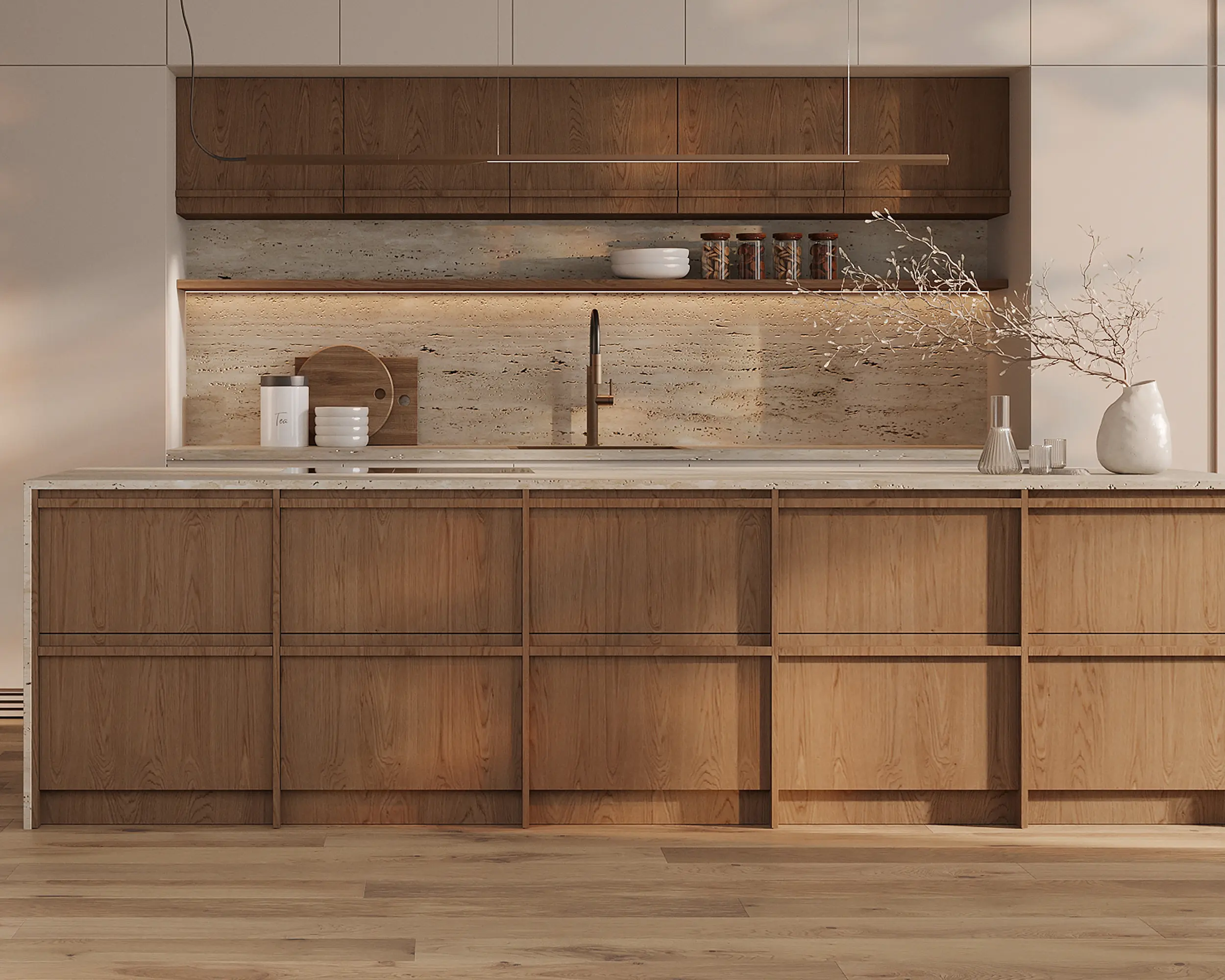
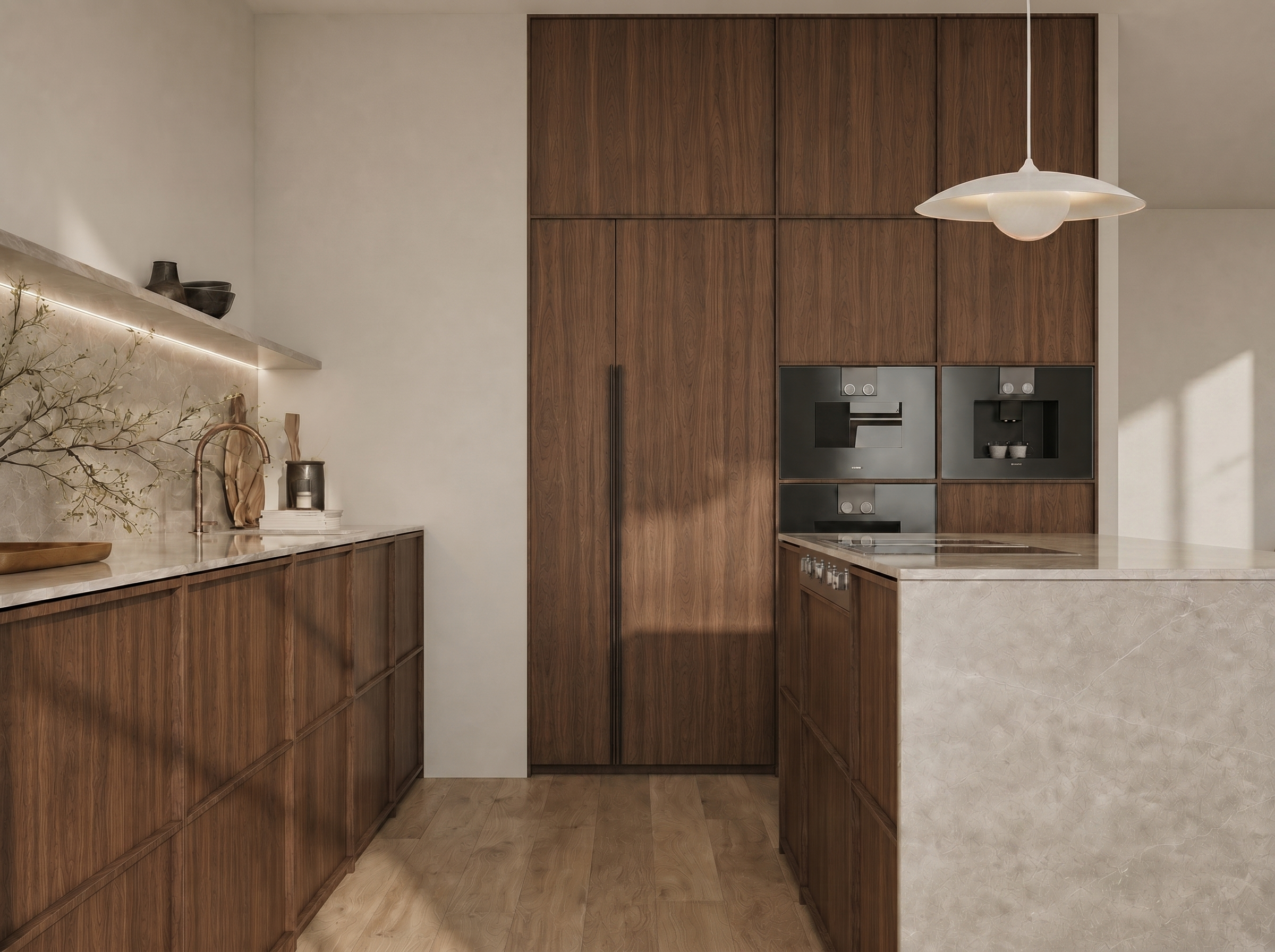
Oak and walnut can both create a warm Japandi kitchen, but they set very different moods. Oak feels lighter, calmer, and closer to the Scandinavian side of Japandi. Walnut brings deeper color and a richer, more grounded character. Neither is inherently the better choice.
The right wood tone also depends on how much wood the kitchen will have. A tall pantry or appliance wall has more visual weight than a small island, and a compact room reacts differently to dark wood than an open kitchen with strong natural light. Good storage planning matters here too. When appliances, pantry items, waste, and small appliances have dedicated places, wood cabinetry can remain visually quiet instead of competing with countertop clutter.
The practical question is: Do you want the kitchen to feel light and open, or warm and grounded?
Oak vs Walnut for a Japandi Kitchen
Oak gives a Japandi kitchen a softer, brighter character, while walnut creates greater depth and contrast. Both pair naturally with simple cabinetry, restrained hardware, warm neutrals, and stone surfaces.
The amount and placement of wood matter as much as the species. A dark walnut island can feel balanced in an otherwise light room, while the same walnut across a full wall of tall cabinetry creates a much stronger effect.
Choose Oak for a Lighter, Calmer Japandi Kitchen
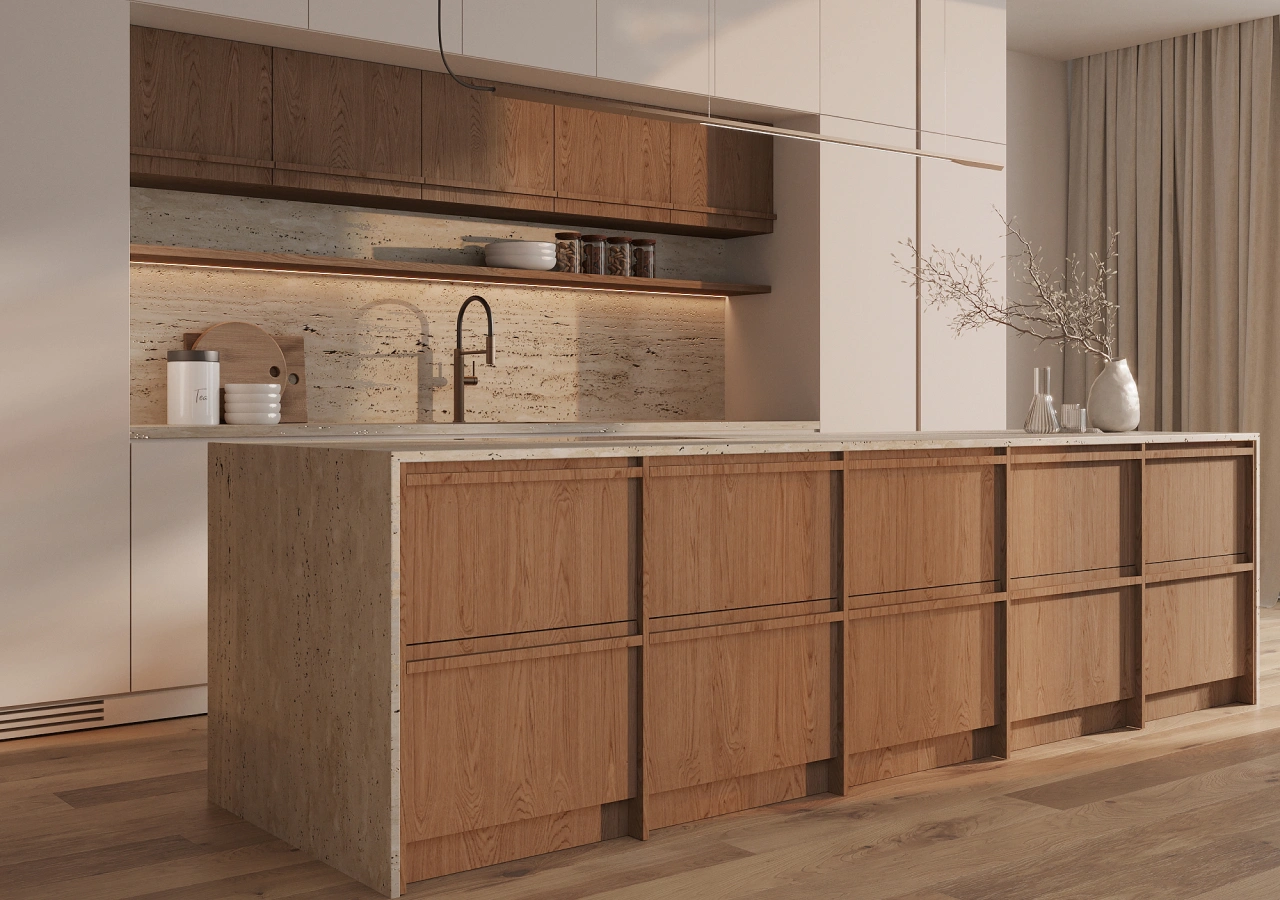
A Japandi oak kitchen works especially well when you want the room to feel open, natural, and understated. Light wood brings texture without creating a large dark visual mass, making oak particularly useful in smaller kitchens or spaces with fewer upper cabinets.
White oak, washed oak, rift-cut oak, and warmer mid-tone oak can all fit the style. They simply move the kitchen in slightly different directions. Washed oak feels pale and relaxed. White oak keeps more natural warmth. Rift-cut oak has a straighter grain that works particularly well across broad slab surfaces. Mid-tone oak adds more depth without becoming as dark as walnut.
A white oak Japandi kitchen also pairs easily with warm white walls, cream cabinetry, pale quartz, limestone-inspired surfaces, or quiet natural stone. Because the wood is relatively light, it can often extend across lower cabinets, tall pantry units, and an island without making the room feel heavy.
For a deeper look at pale finishes, the article on washed oak kitchens shows how lighter wood tones interact with minimalist cabinetry and neutral materials.
Choose Walnut for a Richer, More Grounded Japandi Kitchen
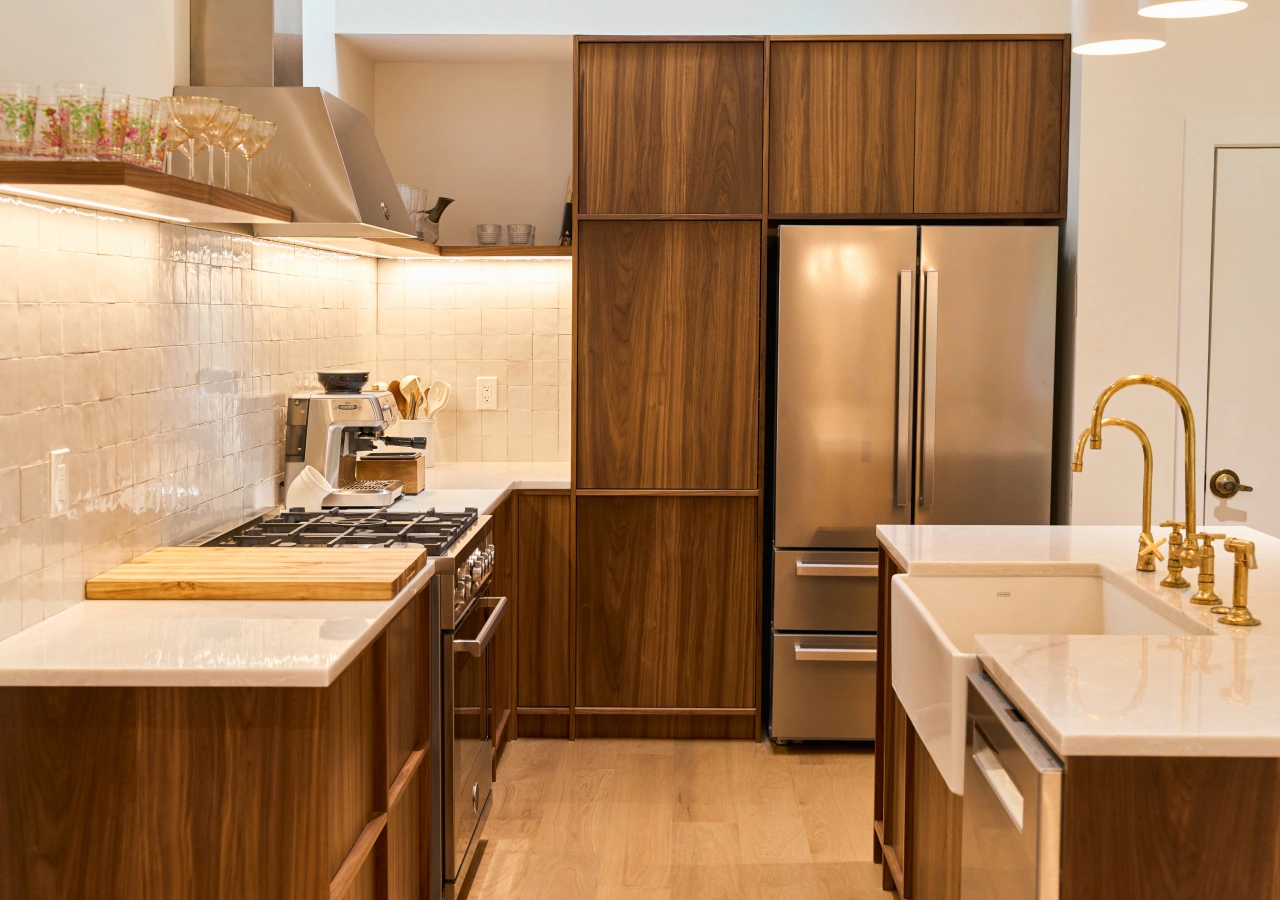
A Japandi walnut kitchen feels warmer and more architectural. American walnut has naturally deeper brown tones and a finer grain, so even simple cabinetry can create a strong visual presence.
Walnut is particularly effective when concentrated in one area. An island, lower cabinet run, tall pantry wall, or appliance wall can become the warm anchor of the room while cream, white, or pale stone keeps the rest of the kitchen lighter. This approach also works well with panel-ready appliances because the wood can read as one continuous volume.
Using walnut everywhere can be beautiful, but it needs more consideration in a compact or poorly lit room. A full dark wood Japandi kitchen with walnut cabinetry, dark countertops, and tall storage can feel visually dense. Selective use often gives the wood more impact while preserving the calm character that makes Japandi appealing.
For more examples of darker wood palettes, see our guide to walnut-tone kitchen cabinets.
Stained Oak Is Not the Same as Walnut
.webp)
Oak can be stained to produce a walnut-like brown, but stain changes the color of the wood, not its grain. The surface will still look like oak.
That distinction can be useful. Rift-cut oak with a walnut stain, for example, keeps the straighter grain of oak while adding the depth of a darker brown finish. It can work well when a kitchen needs to coordinate with existing walnut furniture, flooring, shelving, or other millwork without requiring walnut veneer throughout the room.
If you specifically want the natural grain and color variation of American walnut, real walnut veneer is the clearer choice. If the goal is simply a warm brown Japandi wood kitchen, stained oak may offer more flexibility and a different price point.
Veneer vs Solid Wood for Japandi Cabinets
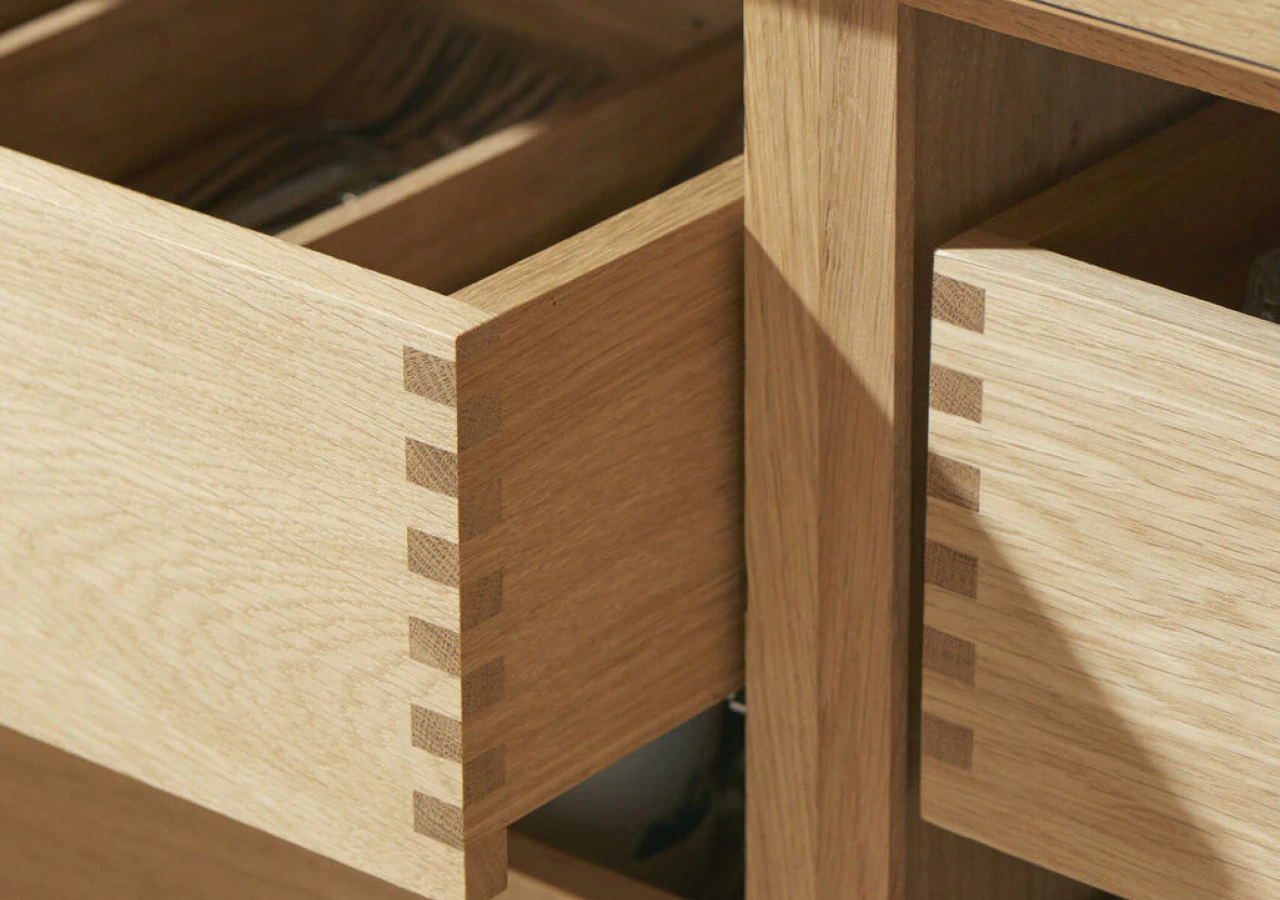
For large Japandi slab fronts, wood veneer is often more practical than solid wood. Veneer uses a thin surface of real wood over a stable core, so the cabinetry still has genuine wood grain while the panels remain well suited to large, flat contemporary forms.
Solid wood is not automatically the better or more premium construction. Natural wood responds to changes in humidity and temperature, which matters when it is used in broad flat panels. Veneer is therefore well suited to tall cabinet fronts, long base runs, islands, and integrated appliance panels.
Solid wood still has an important place in a kitchen. It can work beautifully for shelves, trims, handles, furniture-like details, and other smaller elements.
When comparing cabinet specifications, look beyond the phrase “real wood.” Ask what the visible surface is, what the core is made from, how the edges are finished, what coating protects the surface, and how the grain will run across neighboring fronts. The kitchen cabinet materials guide explains these construction differences in more detail.
What Protects Oak and Walnut Wood Surfaces
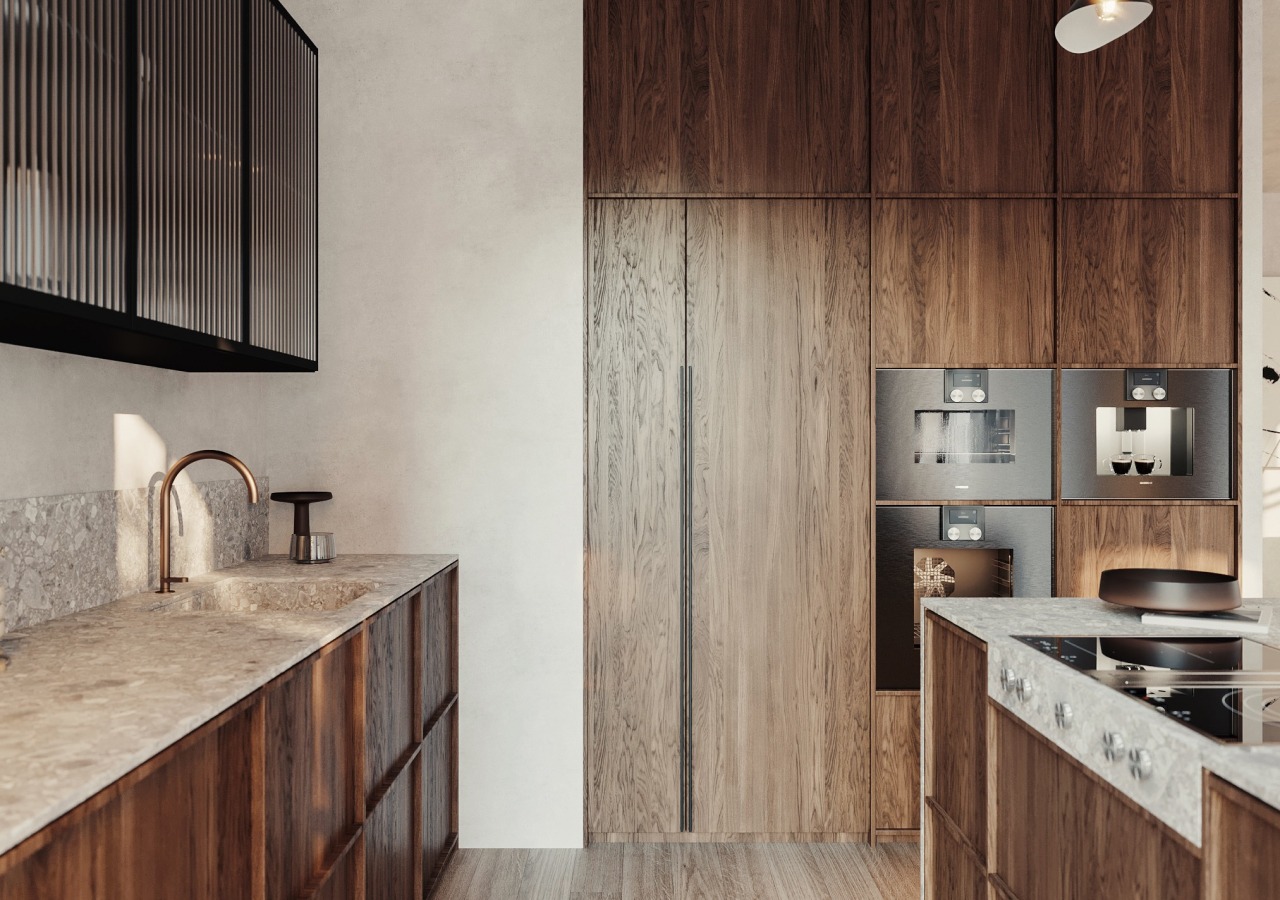
Wood species alone does not determine how well a kitchen surface wears. The protective coating, sheen, edge finishing, and cleaning habits also affect durability and how visible everyday marks become.
Low-sheen finishes work especially well in Japandi kitchens because they reduce glare and keep the grain visually natural. Standing moisture and abrasive cleaners should still be avoided. More detail is covered in wood cabinet finishes.
Where Wood Cabinetry Usually Shows Wear First
.webp)
Wear usually appears around high-use areas rather than evenly across the kitchen. Sink cabinets, dishwasher panels, trash pull-outs, coffee stations, lower drawers, and frequently opened doors see the most moisture and hand contact.
Opening systems affect where that contact occurs: knobs and pulls concentrate it around the hardware, while push-to-open fronts receive direct hand contact.
How to Get the Walnut Look on a Different Budget
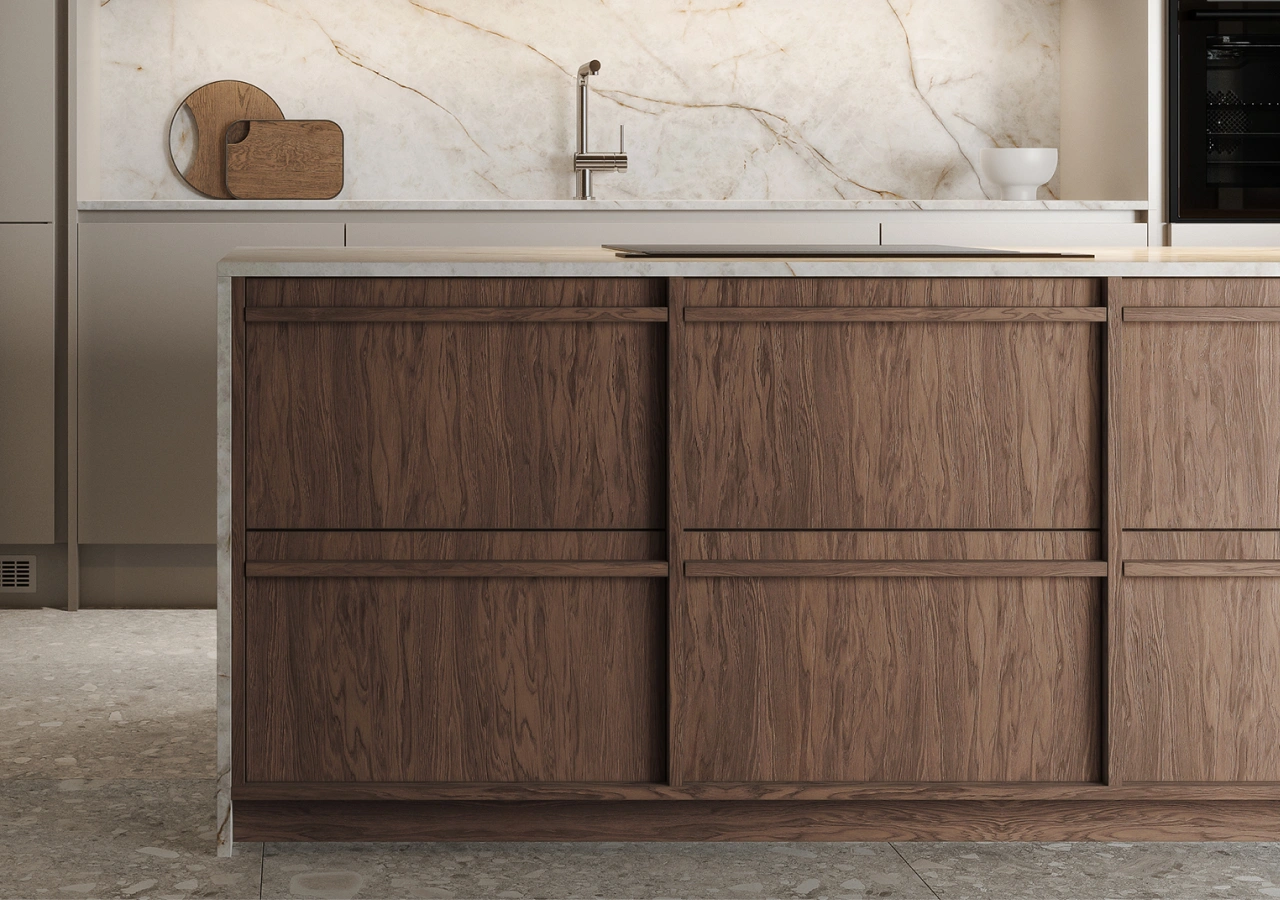
Walnut veneer is often a premium choice, but the walnut look can be approached in several ways. The right alternative depends on whether real grain, exact color, consistency, or budget matters most.
Walnut-stained oak retains a real wood surface but still shows oak grain. Mid-tone or dark oak can provide warmth without trying to imitate walnut. Engineered veneers such as Alpi offer a more controlled grain pattern, which can be useful across long runs of cabinetry. A high-quality walnut-look laminate can reduce cost further and provide greater visual consistency, but it will not have the same natural depth or variation as real veneer.
Another option is to use walnut only where it has the most visual impact. A real walnut island or tall cabinet wall combined with warm white or cream surfaces can create a convincing walnut Japandi kitchen without specifying premium wood throughout the room.
Oak or Walnut: Which Wood Tone Should You Choose?
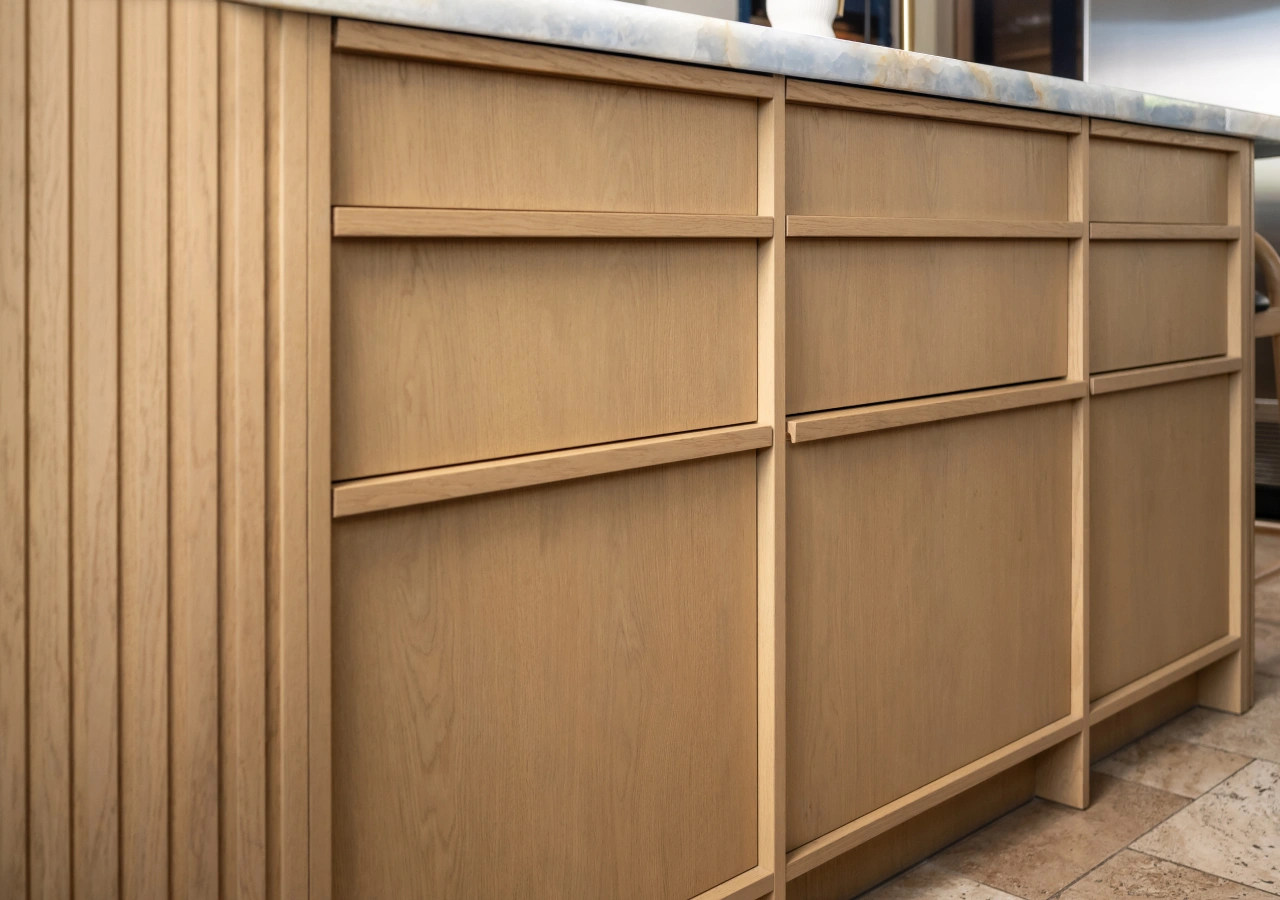
Choose oak if you want a Japandi kitchen that feels light, quiet, and open. White oak, washed oak, and rift-cut oak work particularly well with pale stone, warm white finishes, simple cabinetry, and spaces where natural light is part of the design.
Choose walnut if you want more warmth, contrast, and visual depth. It is especially effective on islands, lower cabinets, appliance walls, and tall storage, where darker wood can give the kitchen a stronger architectural presence without dominating the entire room.
If you are still deciding, look at full kitchen projects rather than isolated samples. Corner Renovation’s kitchen collections and completed kitchen projects make it easier to compare oak, walnut, stone, and mixed finishes across a complete layout.