

Wood cabinets are chosen for their warmth, grain, and natural variation, but homeowners often have a more practical question before committing to them: how will they look after years of cooking, cleaning, opening drawers, and living with the kitchen every day?
The answer depends on more than whether the front is oak or walnut. Protective coatings, stain, sheen, edge finishing, hardware, and cabinet location all affect how the surface performs over time. Understanding those details makes it easier to choose a wood finish for real-life use, not simply for how it looks in a rendering or showroom sample.
What a Wood Cabinet Finish Actually Includes
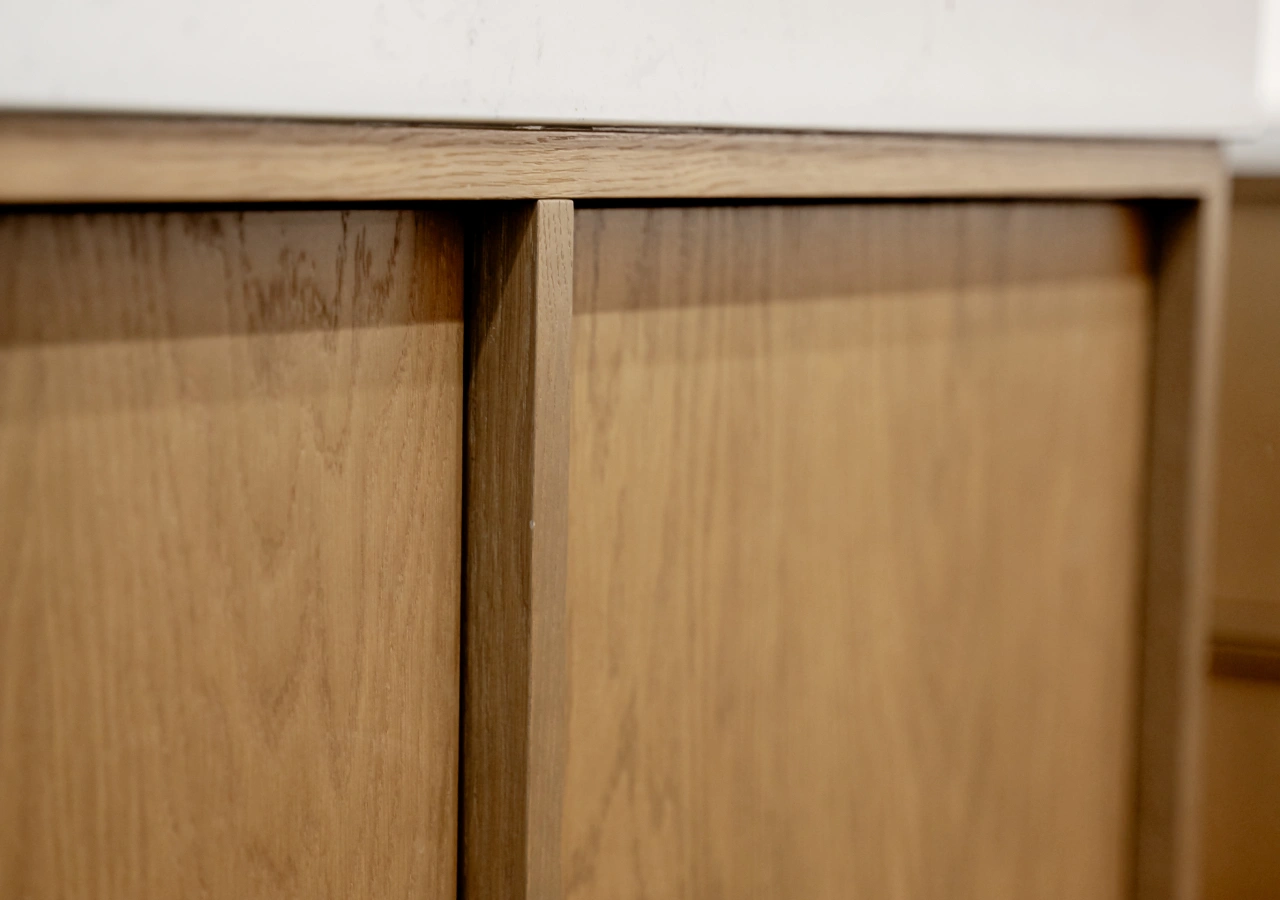
A wood cabinet finish is more than its color. It includes the wood tone, stain, surface texture, sheen, protective coating, edge treatment, and the way those elements respond to daily handling and cleaning.
Two cabinets described as light oak can look and feel quite different once their coatings are applied. One may have a natural, low-sheen appearance that leaves the grain prominent, while another may feel smoother, slightly darker, or more uniform because of the stain and protective layer.
Wood veneer can be finished with stain, lacquer, oil-wax, paint, or protective varnish, so the finishing system can affect both the final shade and the feel of the surface. These choices are closely tied to construction, especially on broad slab fronts and integrated panels, as explained in this guide to kitchen cabinet construction.
These differences are particularly noticeable in minimalist kitchens, where long slab fronts and simple cabinet runs leave grain, gaps, sheen, and alignment clearly visible.
How Protective Coatings Help Wood and Veneer Cabinets
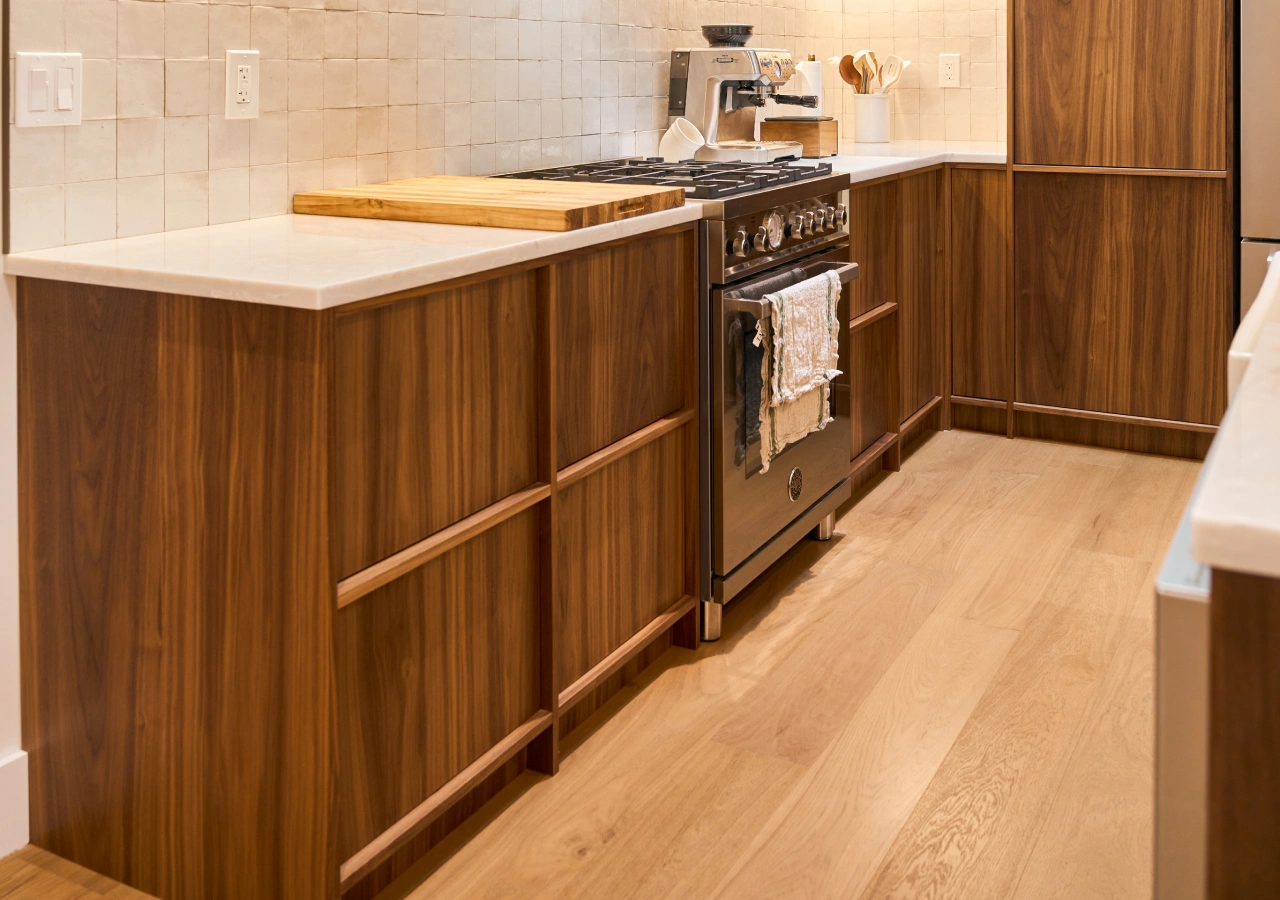
The coating over a wood or veneer front helps protect the surface from everyday handling, light moisture, staining, fingerprints, and repeated cleaning. It adds protection, but it does not make natural wood scratch-proof or waterproof.
That matters in a kitchen, where fronts regularly encounter wet hands, food splashes, cooking residue, cleaning cloths, and frequent contact. The finish also needs to preserve the quality people want from natural wood. Low-sheen coatings that keep the grain visible work particularly well in Scandinavian, Japandi, and other restrained interiors.
Care still matters. Standing water should be wiped away rather than left around seams and edges, while abrasive pads, aggressive scrubbing, and strong cleaning products can dull or affect some coatings. A slightly damp microfiber cloth with a small amount of mild soap when needed is generally more appropriate, followed by drying the surface. These slab cabinet cleaning recommendations cover common touch zones and routine care in more detail.
Stain Changes Wood Tone, Not Wood Species
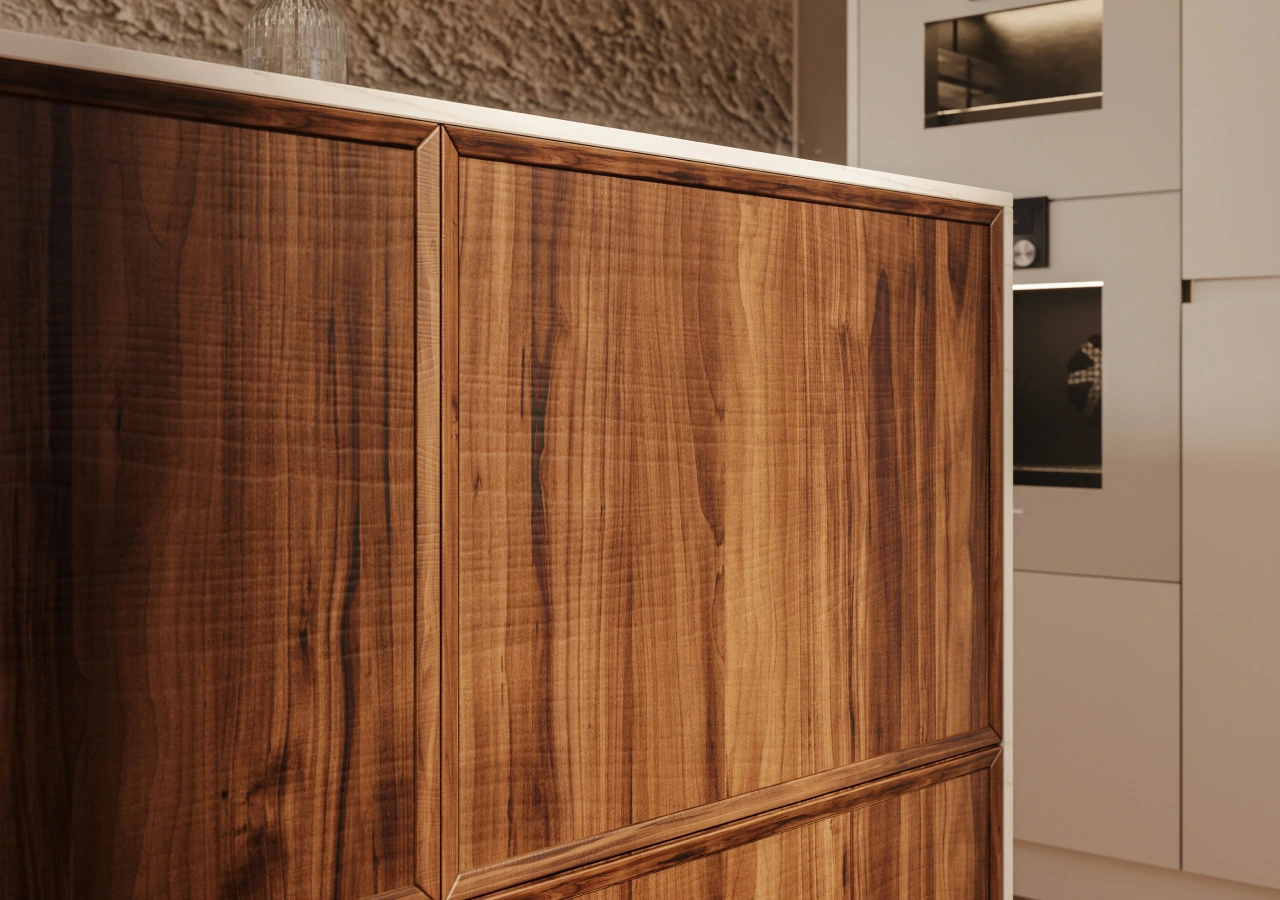
Stain changes the color of wood, but it does not change the underlying species or grain. Oak with a walnut stain can become darker and warmer while still reading as oak rather than true walnut.
A walnut-toned stain can be useful when a design calls for deeper cabinetry but the homeowner prefers the grain pattern of oak. It can also help connect cabinets with existing oak flooring, millwork, or furniture while shifting the overall palette toward a richer brown.
True walnut veneer creates a different result because its grain remains distinctly walnut. If you are choosing between darker stained oak and real walnut veneer, this walnut-tone cabinet comparison shows how the two approaches differ. American walnut veneer can also become the defining material across a full cabinet composition.
Why Wood Veneer Can Be a Practical Cabinet Surface
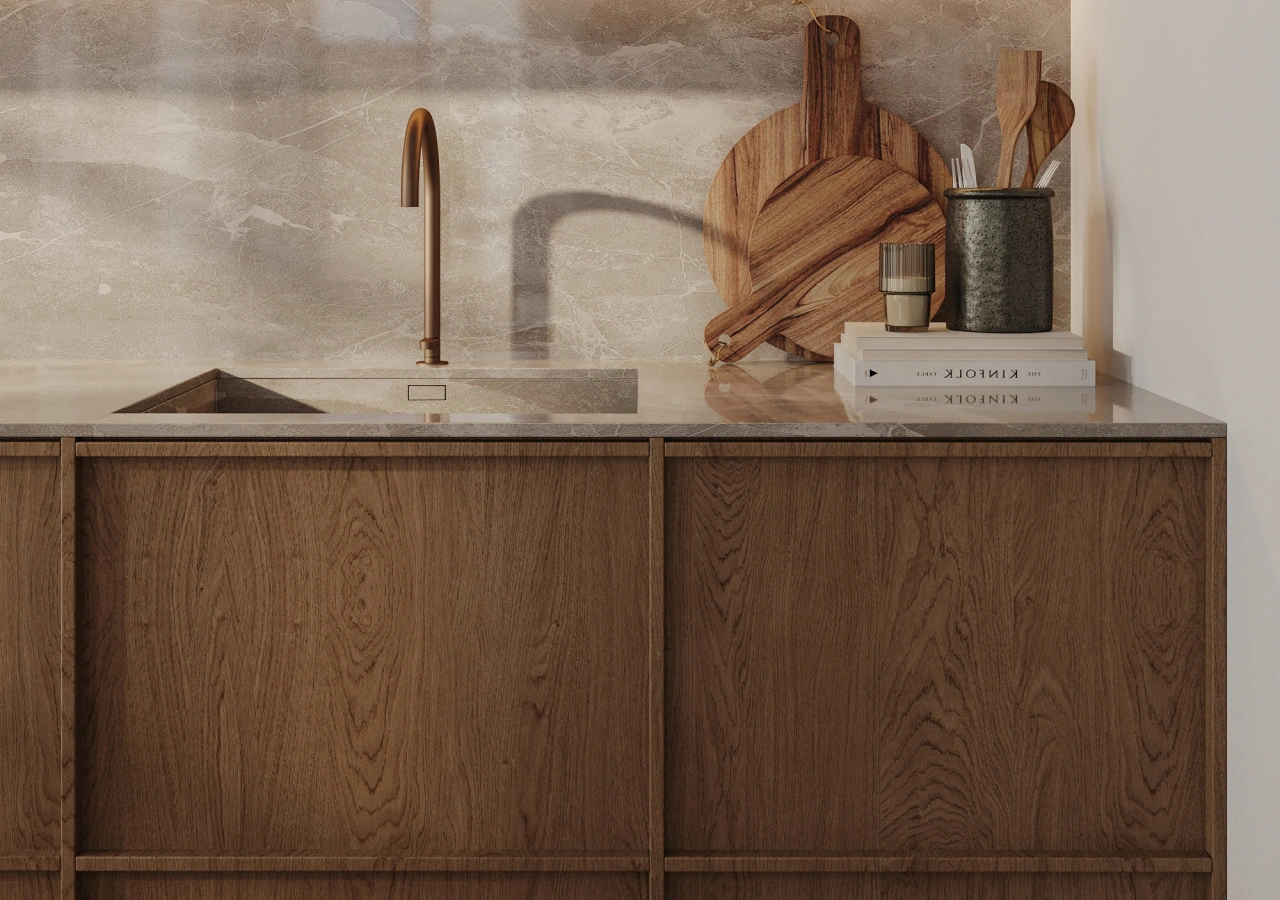
Wood veneer is a thin surface of real wood applied over a stable core. That construction makes it practical for contemporary slab fronts, tall cabinets, islands, and integrated appliance panels where large, flat surfaces are part of the design.
Veneer should not be treated simply as a cheaper substitute for solid wood. Its layered construction can support consistent cabinet geometry while retaining genuine wood grain across broad surfaces. The finish still plays a major role in performance, since the coating, edge finishing, grain direction, and maintenance all affect how the fronts behave after installation.
Veneer also works across a wide range of visual directions, from light oak to dark oak and walnut. The Essence collection shows how natural wood surfaces can be combined with simple forms and integrated storage without making the kitchen feel visually heavy.
Where Wood Cabinet Finishes See the Most Wear
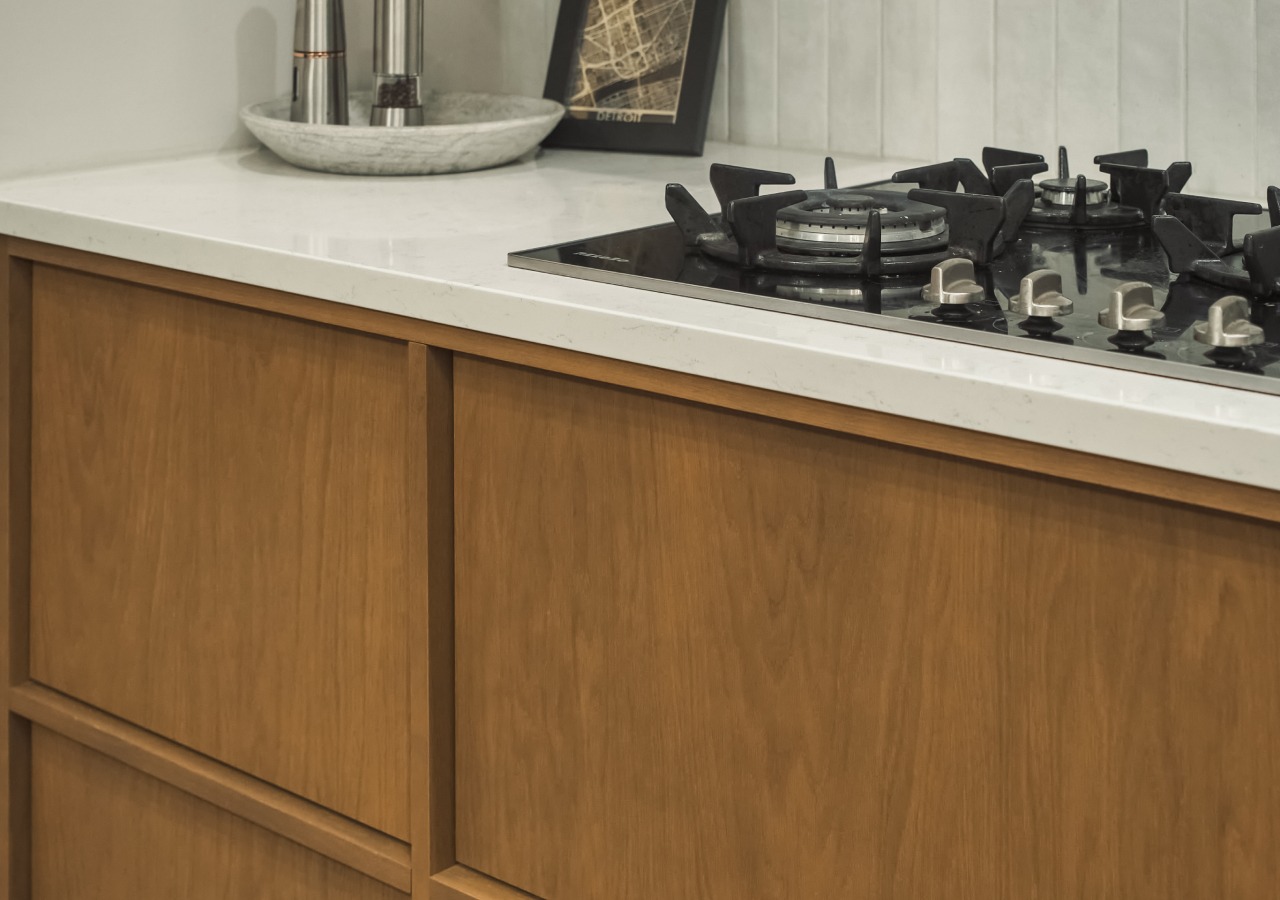
Daily wear is concentrated in specific parts of the kitchen rather than spread evenly across every cabinet. The busiest fronts are usually those around water, waste, appliances, food preparation, and frequently opened storage.
A wall cabinet opened once a week will experience very different conditions from a trash pull-out opened repeatedly throughout the day.
Common Kitchen Cabinet Wear Zones
Handle choice changes the pattern of contact. Traditional pulls concentrate use around the hardware, handleless cutouts and integrated profiles place fingers along an edge or recess, and push-to-open systems require direct contact with the front. That can make fingerprints more noticeable on some finishes. This comparison of handleless cabinet options shows how different opening systems affect daily use.
What to Expect From Matte and Natural Wood Finishes
.webp)
Matte and low-sheen finishes create the calm, understated look often associated with Scandinavian and Japandi kitchens. They can still show fingerprints, smudges, and signs of frequent contact, especially on darker or smoother surfaces.
A matte finish should therefore be chosen for its visual quality rather than because it is assumed to be maintenance-free. Dark brown and walnut-toned cabinetry can make certain hand marks easier to notice depending on the lighting, while very smooth surfaces may reveal fingerprints differently from more visibly textured wood grain.
Natural variation can also make wood forgiving in another way. Small differences in grain and tone are already part of the material, so the surface does not rely on absolute visual uniformity in the way a solid painted color often does. The aim is to choose a finish that suits realistic daily use and to clean it gently enough that the protective surface remains consistent.
What to Confirm Before Cabinet Production
.webp)
Finish decisions should be settled before the cabinet order moves into production. Approving a color name alone is not enough when natural wood is a major part of the design.
Confirm the wood species or veneer, whether the selected tone comes from the natural wood or a stain, and what protective coating and sheen will be applied. For larger compositions, also review grain direction and matching. A tall appliance wall or wide island can look much more intentional when grain continuity is considered across neighboring fronts rather than treated panel by panel.
Edge finishing and repair expectations deserve the same attention. Ask how visible edges will be treated and which care products are recommended for the final coating. Minor wear may sometimes be easier to disguise on certain natural wood finishes than on highly uniform surfaces, but repairability depends on the coating, depth and location of the damage, and the manufacturer's finishing process. A light surface mark and a deep chip through veneer are very different repair situations.
Conclusion
Wood cabinet finishes work as a system. The species or veneer provides the grain, stain adjusts the tone, the coating adds everyday protection, and the sheen and edge details determine how the surface looks and feels once the kitchen is in use.
Wear will naturally be greater around trash pull-outs, sinks, dishwashers, coffee stations, handles, lower drawers, and other high-touch areas. Choosing the right finish therefore means thinking about the kitchen's routine as well as its palette.
Before production, review a physical sample alongside the flooring, countertop, walls, and hardware, and confirm how the fronts will be coated and finished. You can also explore wood kitchen collections and completed kitchen projects to see how light oak, dark oak, and walnut work across complete kitchen compositions.


