.webp)
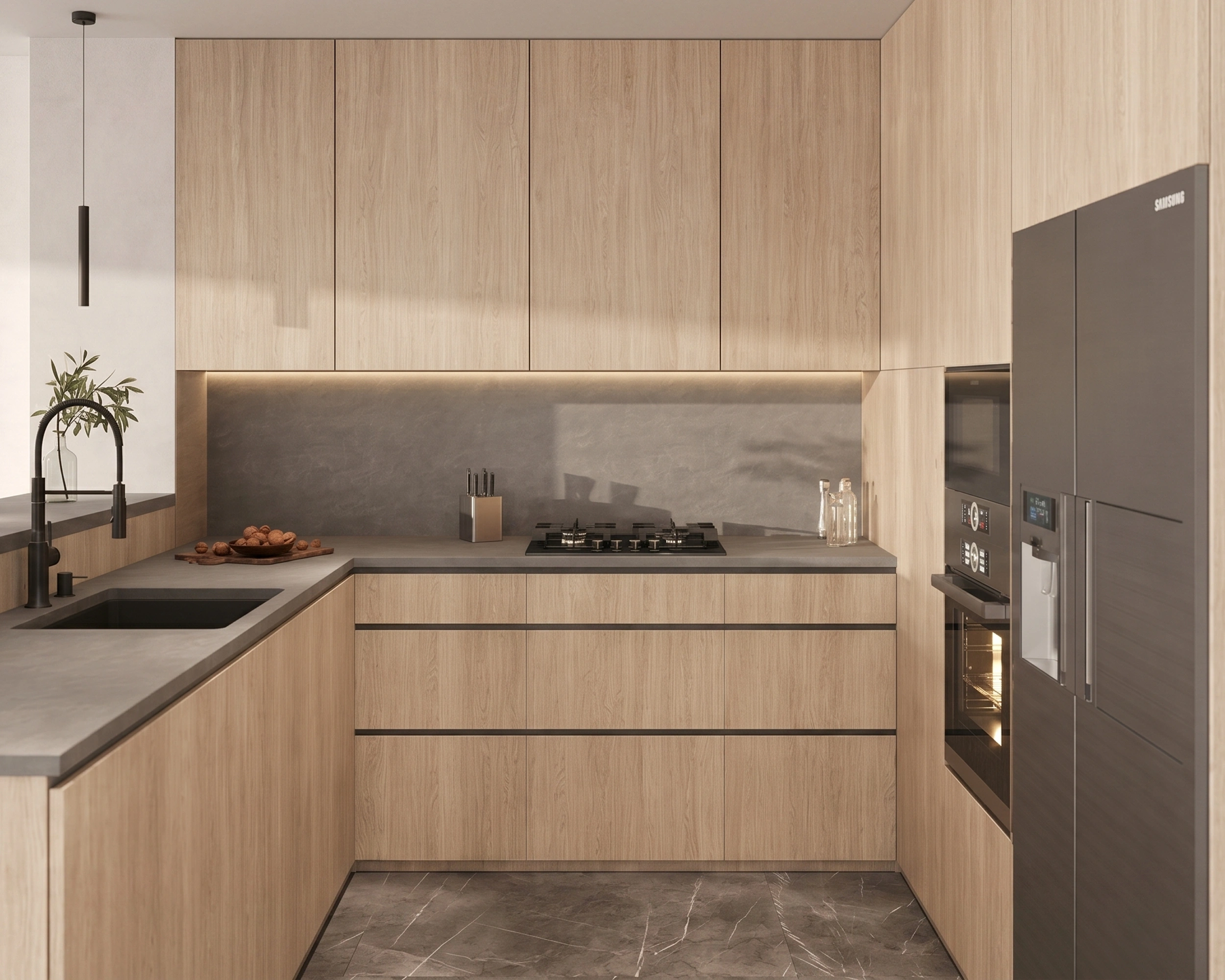
Washed oak kitchens use a light, softened oak finish direction to create acalm wood kitchen without the strong yellow or orange tone that natural oak cansometimes show. The result works especially well in Japandi, Scandinavian, and modern minimalist kitchens where homeowners want warmth, texture, and cleanvisual flow.
The key to getting washed oak right is undertone control. The cabinet finish, countertop, and other fixtures should be reviewed together so the wood feels warm and balanced instead of yellow, gray, pink, or flat.
What Is a Washed Oak Kitchen?
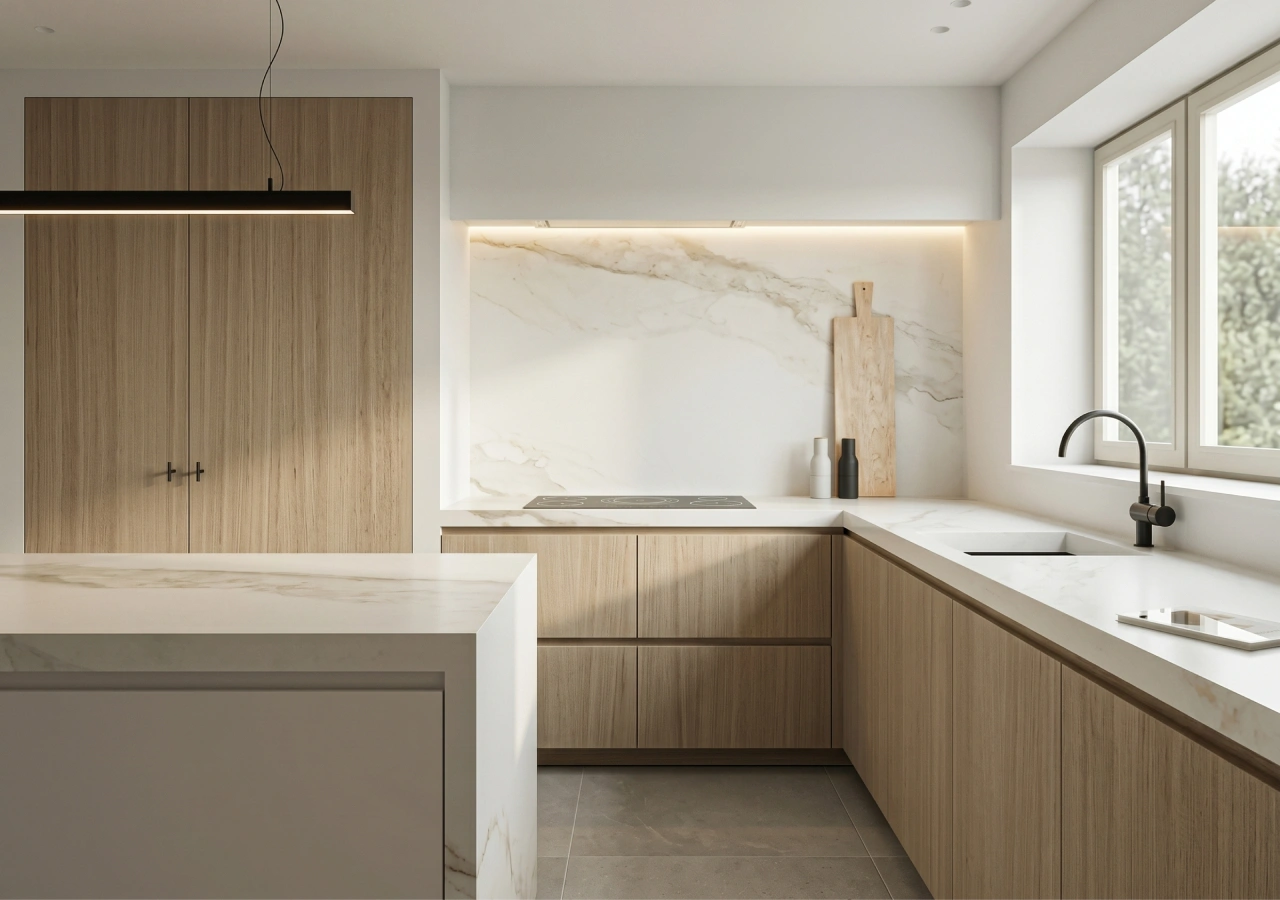
A washed oak kitchen should not be confused with white oak. White oak is a wood species; washed oak is the final visual effect. A washed oak kitchen may use white oak, oak veneer, stained oak, or another oak-look material selected for a light, softened appearance.
In kitchen design, this matters because cabinet fronts cover a large amount of visual space. If the oak turns too yellow, the whole kitchen can feel rustic, dated, or less refined than intended. A good washed oak finish keeps the warmth of wood while softening the tone, which makes it useful for modern slab fronts, handleless cabinets, pantry walls, appliance garages, and islands.
The best washed oak tones usually sit between pale beige, light neutral brown, soft taupe, and warm off-white. They should still feel like real wood, not painted beige panels. The goal is a light wood kitchen that feels calm and natural, with enough grain and depth to avoid looking flat.
For a finished example of this direction, see Loft Oak kitchen, which uses washed oak fronts and pale surfaces to create a warm minimalist look.
Why Homeowners Like the Washed Oak Look
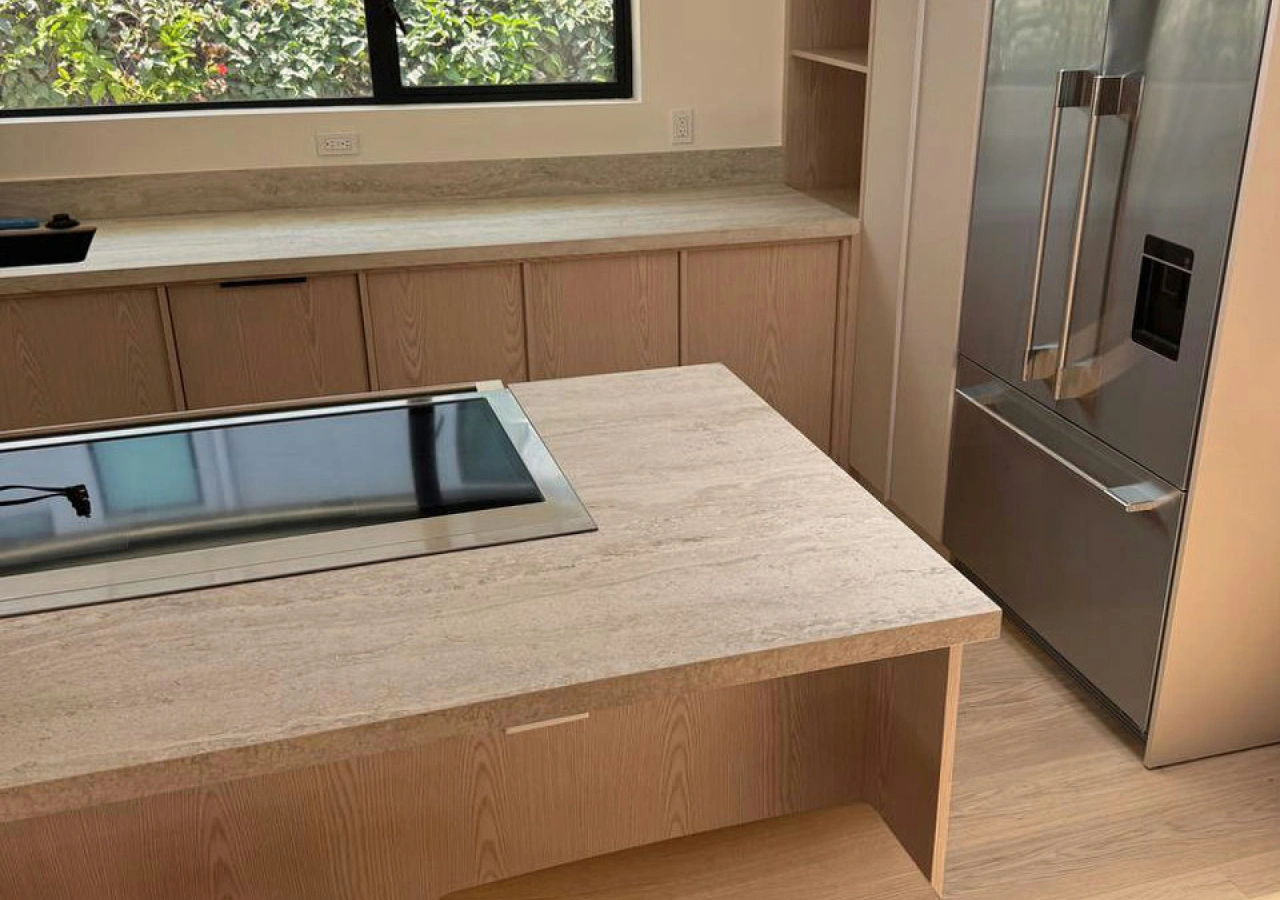
Washed oak gives homeowners the warmth of wood without making the kitchen feel dark, heavy, or overly rustic. It is especially appealing in open-plan homes where the kitchen is visible from the dining or living area.
Functionally, the finish works well because it makes storage-heavy kitchens feel lighter. Full-height pantry cabinets, appliance walls, deep drawer banks, pull-outs, and integrated appliances can add a lot of cabinetry to a room. In a darker or more saturated wood, that amount of cabinetry can feel dense. In washed oak, the same storage can feel softer and more architectural.
Aesthetically, washed oak supports the calm, natural look that many homeowners want from Japandi and Scandinavian kitchen design. It pairs well with clean cabinet lines, quiet countertops, simple lighting, warm whites, and natural stone. It adds texture without needing busy patterns or decorative details.
Washed Oak vs White Oak vs Natural Oak
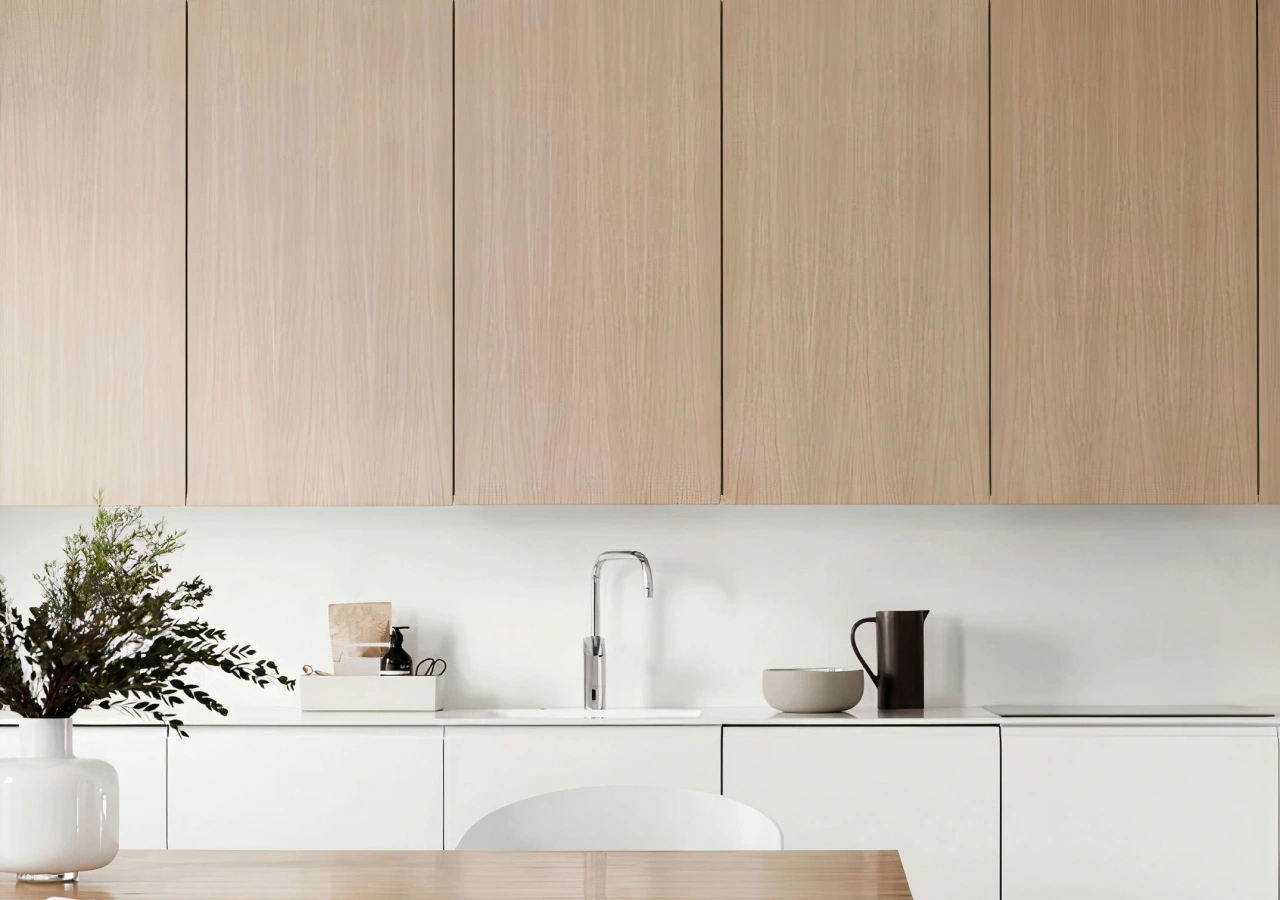
Washed oak, white oak, natural oak, and light oak are related terms, but they do not mean the same thing. White oak is a wood species. Washed oak is not a species; it is a finish or color direction. You can create a washed oak look with white oak, oak veneer, stained oak, or another oak-look surface, depending on the project.
Natural oak usually keeps more of oak’s original warmth, which can include golden, honey, or amber tones. Light oak simply means the wood reads pale or bright, but it may still lean yellow. Bleached oak is often lighter and cooler, sometimes with a more gray or desaturated cast. Washed oak is usually softer and more controlled: light, warm, muted, and less golden than traditional oak.
In other words, “washed oak” describes the final look of the cabinetry, not the wood species itself.
How to Keep Washed Oak from Looking Yellow or Gray
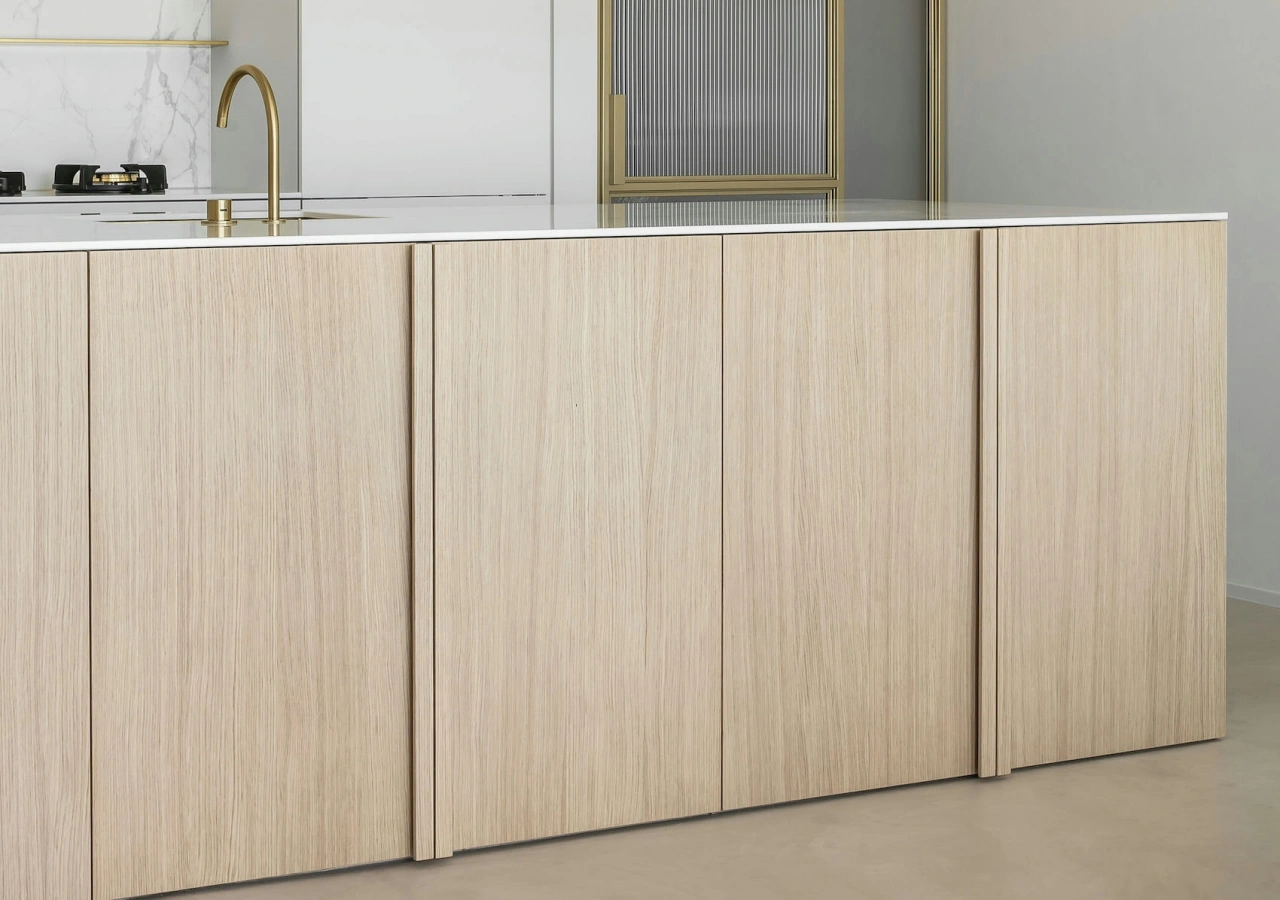
The biggest design challenge with washed oak is undertone. A small shift in color can change the whole kitchen from warm and elegant to yellow, gray, pink, or washed out.
Yellow undertones often appear when the oak finish, floor, wall color, and lighting are all warm at the same time. Gray undertones can appear when the finish is over-muted or paired with cold white walls and cool lighting. Pink undertones may show up when oak is placed beside certain beige stones, taupe paints, or red-toned flooring.
To avoid this, review the wood sample beside the actual materials that will be used in the room. Look at the sample vertically, like a cabinet front, not just flat on a table. Check it in morning light, afternoon light, and evening artificial light. A washed oak finish should still have life in the grain, but the overall color should feel calm, warm-neutral, and controlled.
Best Countertops and Colors for Washed Oak Cabinets
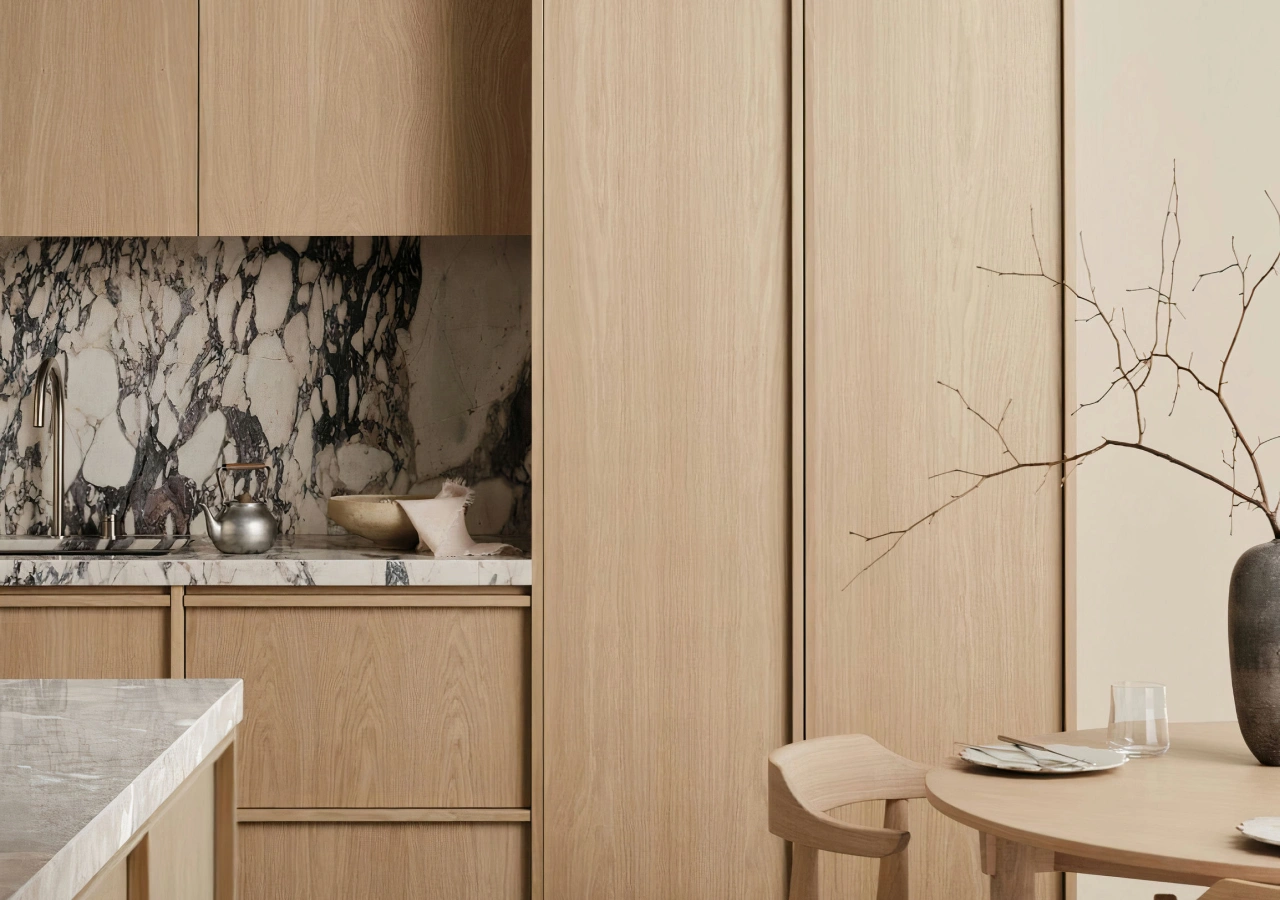
Washed oak looks best with quiet materials that support the wood instead of fighting it. Warm white, off-white, soft gray, beige stone, subtle quartz, microcement, concrete-look surfaces, and lightly veined stone are usually safer than strong yellow, orange, or very busy surfaces.
For a Japandi kitchen, washed oak can be paired with warm white walls, a soft stone countertop, simple slab fronts, and understated hardware. For a more Scandinavian look, it can work with pale walls, stainless steel, light quartz, and minimal open shelving. For a more architectural modern kitchen, washed oak can sit next to microcement, concrete-look counters, matte black accents, or integrated stainless appliances.
A simple rule helps: choose one main wood tone, one calm surface, and one controlled accent. For example, washed oak cabinets, a warm white countertop, and stainless steel appliances create a clean and livable palette. If matte black is used, keep it selective: lighting, handles, faucet, or a thin detail rather than a heavy contrast everywhere.
Where to Use Washed Oak in the Kitchen
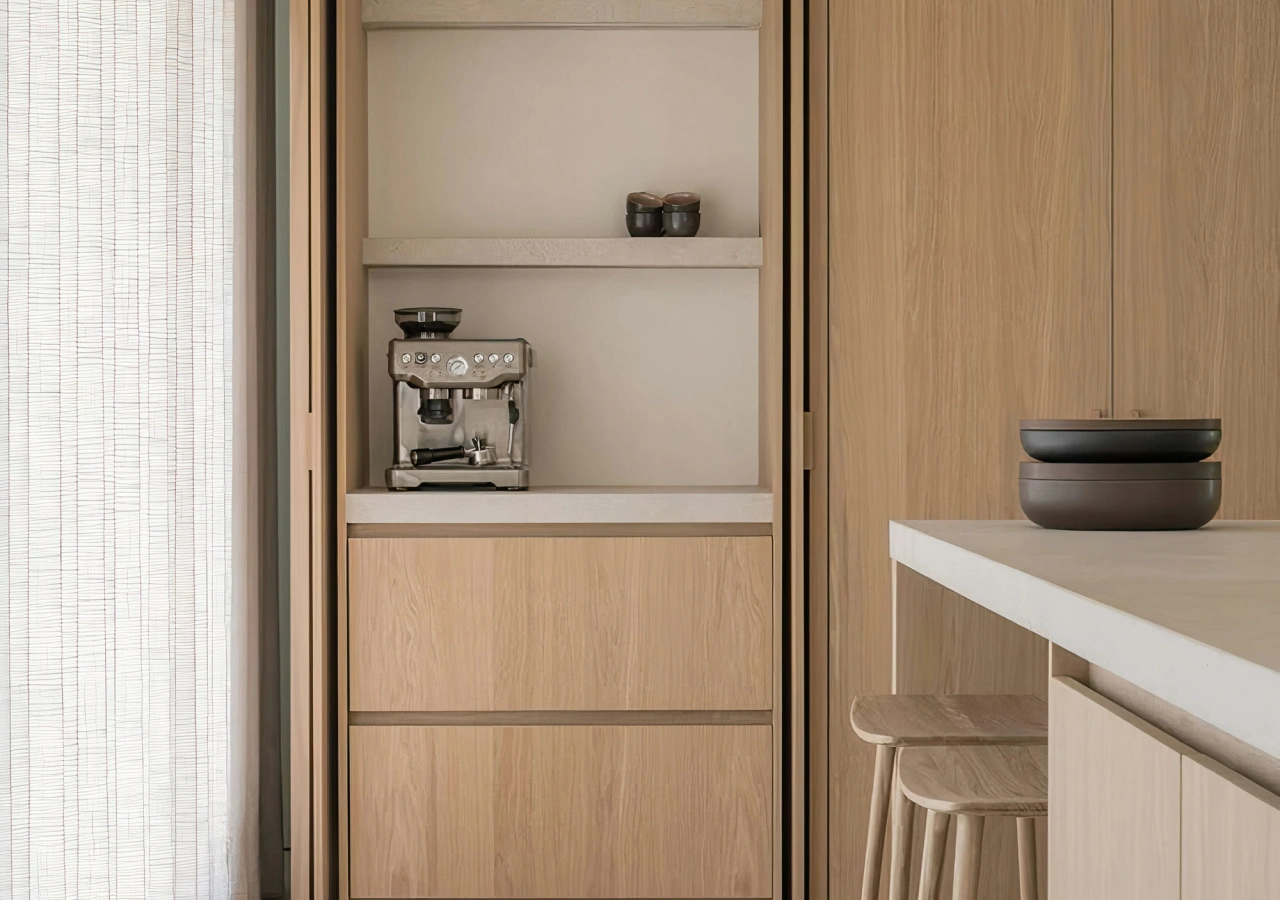
Washed oak can be used across the full kitchen, but it often works best when placed intentionally. It can cover all cabinets, lower cabinets only, an island, a pantry wall, an appliance garage, a bar area, or selected open shelving.
All-washed-oak cabinetry works well when the room has enough natural light and the surrounding materials stay quiet. Lower cabinets in washed oak with warm white uppers can feel lighter and more open, especially in smaller kitchens. A washed oak island can create a warm focal point without turning the whole kitchen into a wood-heavy space. A pantry wall or appliance garage in washed oak can soften tall storage and make practical zones feel more integrated.
This selective use is often the strongest design move. Washed oak does not need to be everywhere to make the kitchen feel warm. Sometimes one island, one storage wall, or one appliance zone gives the room enough natural texture while keeping the overall composition clean.
How to Choose a Washed Oak Finish
Choosing washed oak should be part of the full kitchen palette, not a separate cabinet decision. The right finish depends on light, flooring, countertop, wall color, and the amount of cabinetry in the room.
Start by checking the room’s natural light. A darker kitchen may need a slightly warmer washed oak, while a very sunny kitchen may need a more neutral tone. Then compare the cabinet sample with the floor. The tones do not need to match exactly, but the undertones should feel related.
Next, place the oak beside the actual countertop material. Stone and quartz can make wood look warmer, cooler, or flatter. Finally, view the sample vertically against the planned wall color. Cabinet fronts catch light differently than samples lying flat, so this step gives a more realistic sense of how the finish will read in the finished kitchen.
Common Mistakes to Avoid
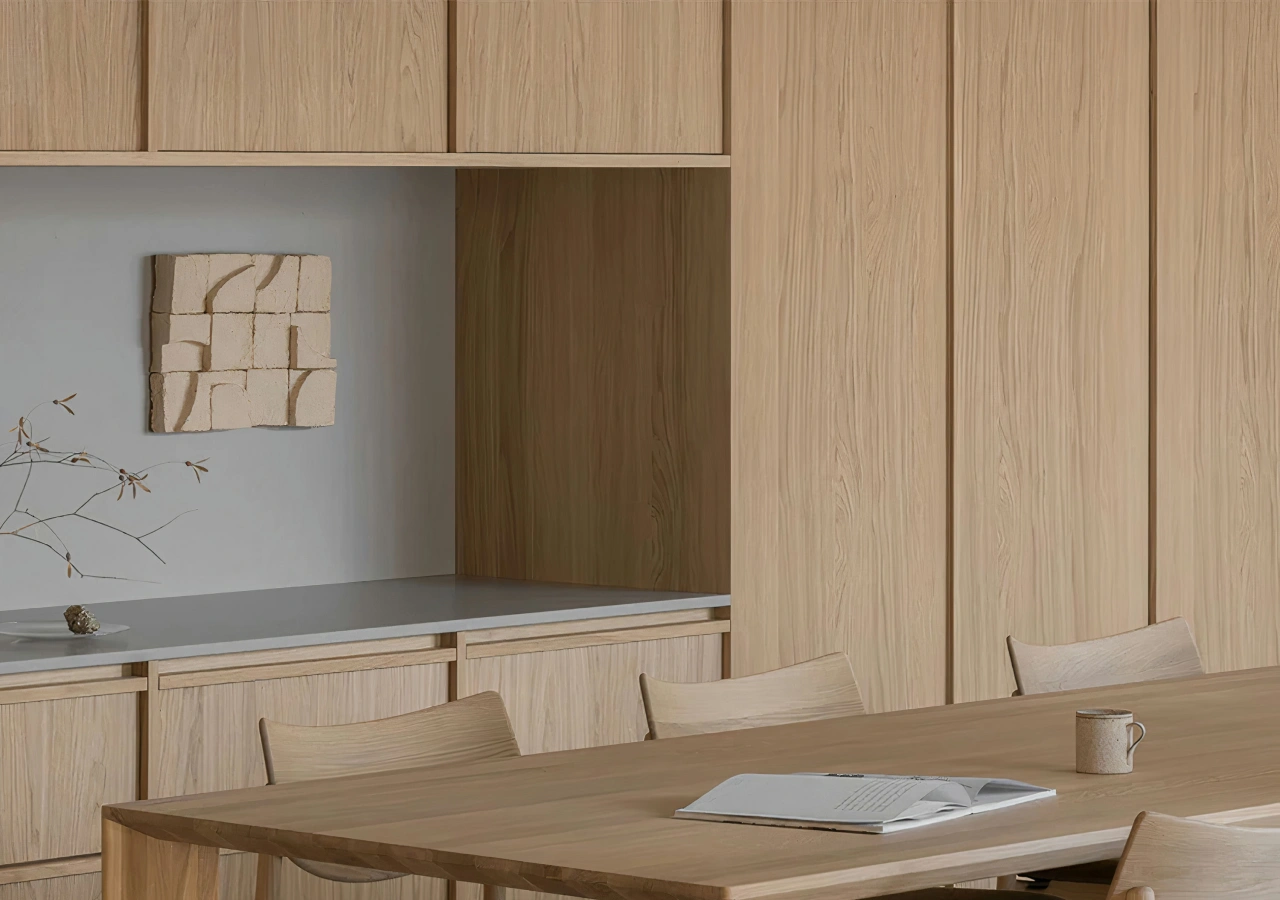
The most common mistake is choosing a washed oak sample in isolation. A finish that looks beautiful alone can turn too yellow next to warm floors, too gray beside cold white walls, or too pink beside beige stone.
Another mistake is mixing too many wood tones without a plan. Washed oak cabinets, orange oak flooring, walnut stools, pale shelves, and wood-look decor can quickly make the kitchen feel less refined. The tones do not need to match exactly, but they should feel coordinated.
It is also possible to overcorrect. Many homeowners try to avoid yellow oak and end up choosing a finish that is too gray or lifeless. A good washed oak kitchen should still feel like wood. The grain should have depth, the color should feel natural, and the overall palette should feel warm without becoming golden.
Conclusion
Washed oak kitchens are a strong choice for homeowners who want a light wood kitchen that feels calm, warm, and modern. The look works especially well in Japandi, Scandinavian, and minimalist interiors because it brings natural texture without making the room feel busy or heavy.
The key is precision. Washed oak is not just “light oak”; it is a controlled finish direction where undertone, lighting, flooring, countertop, and wall color all matter. The strongest result usually comes from using washed oak intentionally, whether across the full kitchen, on lower cabinets, on an island, or as a warm accent in a pantry wall or appliance garage.
To explore how light wood tones work in real layouts, view Corner Renovation’s kitchen collections and project examples, or book a consultation when you are ready to compare materials for your own kitchen.