.webp)
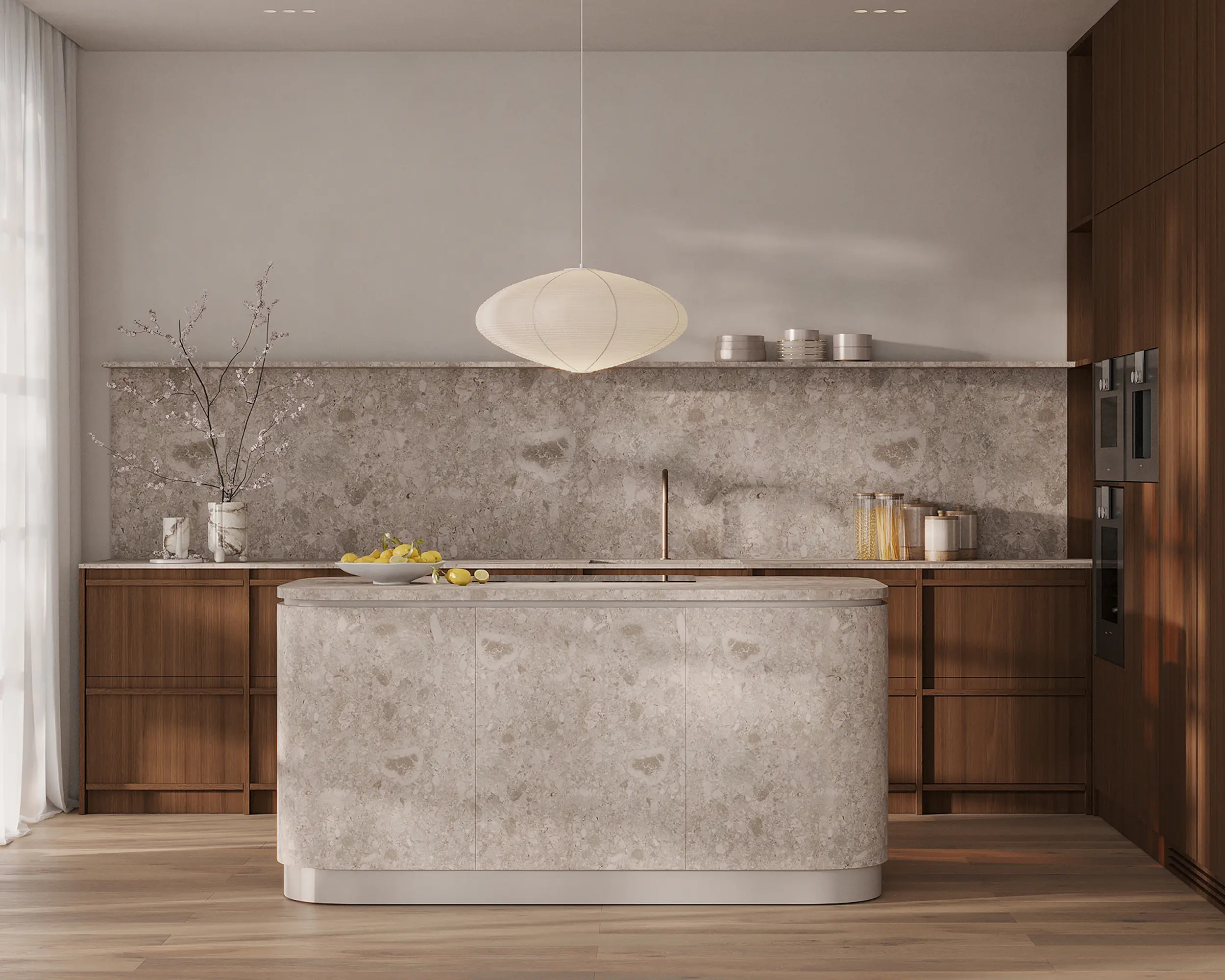
A walnut-looking kitchen does not always require solid walnut. In many renovations, “walnut” is really about the look: darker brown wood, visible grain, natural texture, and a kitchen that feels warm without becoming too heavy. American walnut veneer, stained oak, dark oak, engineered veneer, and walnut-look laminate can all create this effect when the finish works with the room.
Material choice should also be compared within the full renovation scope. A lower quote may exclude cabinet construction, hardware, storage accessories, design support, appliance coordination, delivery, or other details that affect the final result. Good organization matters too: deep drawers, pantry zones, appliance garages, pull-outs, and hidden storage help darker wood kitchens feel ordered instead of cluttered.
What “Walnut-Tone” Actually Means
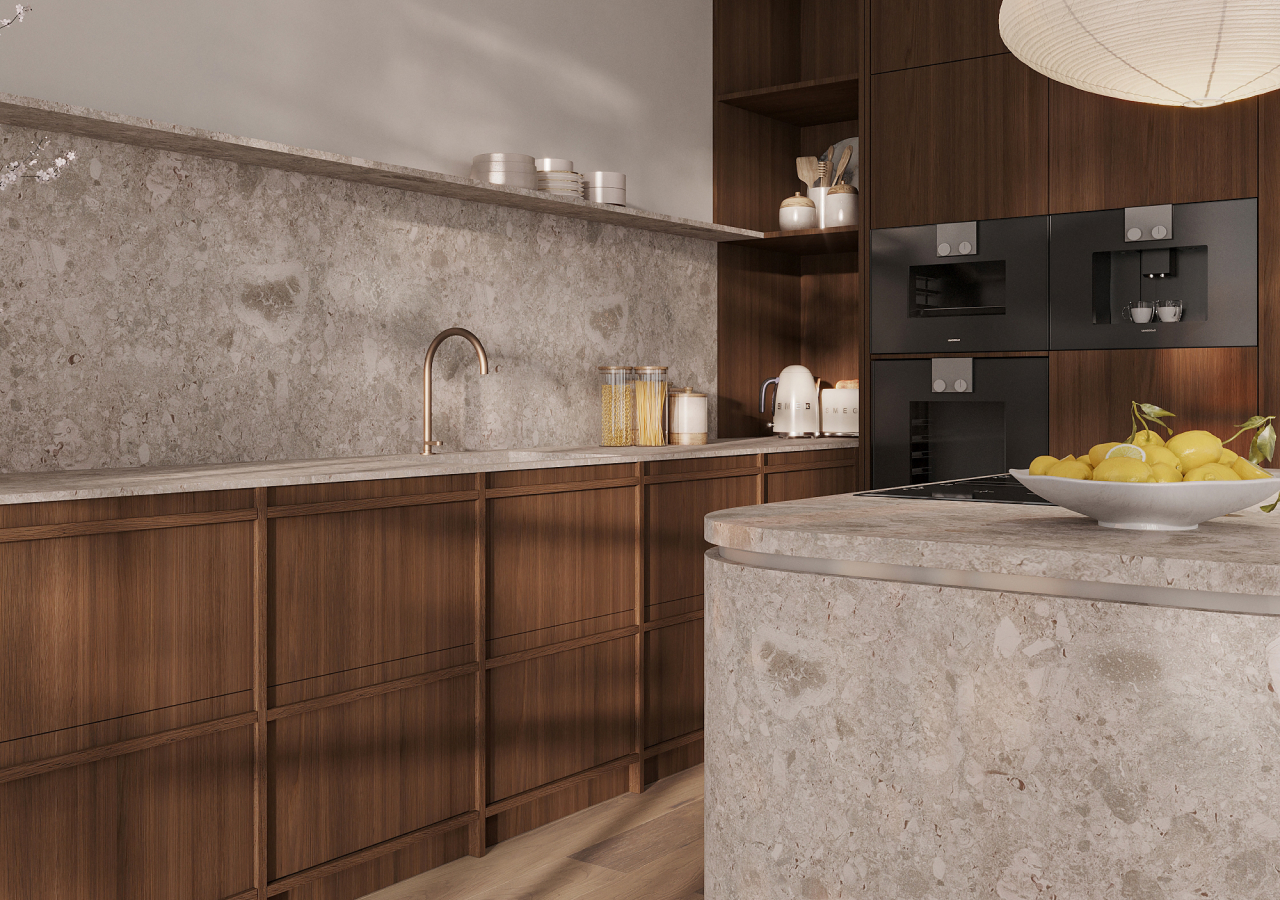
A walnut-tone kitchen visually feels darker, warmer, natural, and more grounded, but it does not always require solid walnut cabinets. The look can come from walnut veneer, stained oak, dark oak, engineered veneer, or a well-made walnut-look laminate.
In design, walnut-tone cabinetry adds depth, softens modern lines, and works well with pale stone, matte finishes, plaster textures, and integrated appliances. This is why it fits Japandi, Scandinavian, mid-century, and warm minimalist kitchens. The cabinet finish carries much of the design, so the doors do not need extra decoration.
In smaller or darker kitchens, walnut tones often work best on selected areas, such as lower cabinets, islands, pantry walls, appliance garages, or coffee bars. This adds depth without making every surface feel dark.
Why Solid Walnut Is Not Always the Best Cabinet Choice
.webp)
Solid walnut may sound like the most premium choice, but it is not always the most practical cabinet material. Kitchen doors need to stay stable through daily use, humidity changes, appliance heat, and larger front sizes.
For many modern kitchens, walnut veneer over a stable core is a smarter option. It gives you a real wood surface while supporting clean slab fronts, slim profiles, integrated pulls, and longer cabinet runs.
Veneer gives the warmth and grain of walnut without making every component solid hardwood. This is especially useful for panel-ready appliances, tall storage, appliance garages, and flat-front cabinetry. Before choosing a cheaper quote, compare what is included, such as cabinet boxes, hardware, internal drawers, pull-outs, delivery, measurement support, samples, and design coordination.
Walnut-Tone Cabinet Options: A Quick Comparison
.webp)
This table gives homeowners a clearer way to compare the main walnut-looking cabinet options. The goal is not to find the “best” material in isolation, but to choose the right material for the visual goal, budget, durability expectations, and renovation scope.
Option 1: American Walnut Veneer for the Real Walnut Feel
.webp)
American walnut veneer is the best choice when natural grain and depth are central to the design. It works well on lower cabinets, tall appliance walls, pantry zones, islands, and panel-ready refrigerators, where the wood surface has the most visual impact.
It does not need to cover the whole kitchen. Pairing walnut veneer with cream uppers, pale stone, matte gray finishes, or lighter walls helps keep the darker wood balanced.
Option 2: Oak With Walnut Stain for a Controlled Warm Wood Look
.webp)
Oak with a walnut stain is practical when you want walnut warmth without using actual walnut. It works especially well in homes with oak floors, wood trim, concrete floors, or mid-century details.
The stain can make oak feel deeper and richer, but it will still look like oak. Samples should be reviewed beside the flooring, countertops, wall color, and nearby millwork.
Option 3: Dark Oak or Mid-Tone Oak for a Walnut-Adjacent Kitchen
.webp)
Dark oak and mid-tone oak are good alternatives when the goal is a warmer, deeper wood kitchen rather than exact walnut.
Dark oak feels more architectural, while mid-tone oak feels softer and lighter. Both work well in Japandi, Scandinavian, and clean-lined kitchens where the wood tone provides most of the character.
Option 4: Engineered Veneer for Grain Control
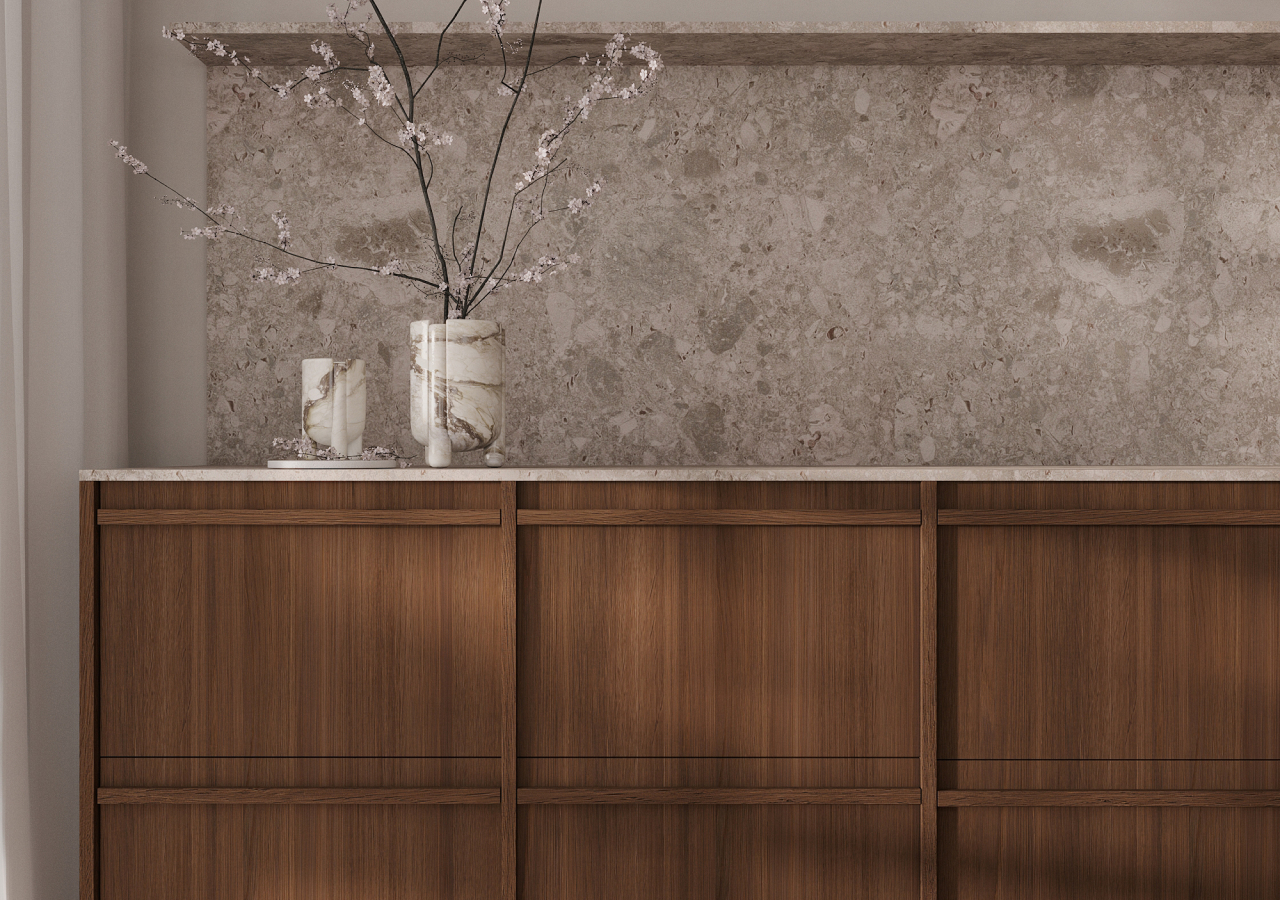
Engineered veneer is useful when a consistent wood appearance is important, especially across long islands, tall cabinet walls, and panel-ready appliance runs.
It creates a more even grain pattern than natural veneer. Grain direction should be planned early for horizontal runs, vertical pantry doors, and integrated panels.
Option 5: Walnut-Look Laminate for Budget and Durability

Walnut-look laminate is the most budget-conscious option. It is not real walnut, but it can still create the darker wood look while freeing budget for storage, appliances, lighting, countertops, or installation.
Always review samples in person. Some laminates look flat or printed, while others work well when paired with the right countertop, wall color, and lighting.
How to Keep a Walnut-Tone Kitchen From Feeling Too Dark

A walnut-tone kitchen feels too dark when every major surface is deep, heavy, or high contrast. The key is balance.
Use walnut-tone cabinets where they add the most value, such as lower cabinets, islands, pantry walls, appliance garages, and coffee bars. Then balance them with pale countertops, soft white or cream uppers, fewer wall cabinets, warm lighting, and hidden storage.
In smaller rooms, consider using darker wood in one main zone instead of across every cabinet front. A good walnut-tone kitchen should feel rich, not closed in.
What to Compare Before Choosing Samples
.webp)
Samples should confirm more than color. A cabinet sample helps homeowners evaluate grain, texture, sheen, undertone, edge detail, and how the material looks beside the floor, wall color, countertop, and appliances.
This is where quote comparison becomes important. A cheaper walnut-look quote may not include the same materials, internal hardware, storage accessories, design time, delivery, or project support.
When to Choose Real Walnut Veneer vs. a Walnut-Look Alternative
.webp)
Choose real walnut veneer when the natural grain is the feature. It is the right choice for a premium island, a warm appliance wall, a panel-ready refrigerator zone, or a kitchen where the wood itself is meant to be the main design statement.
Choose oak with walnut stain when you want warmth but need to coordinate with existing wood elements. Choose dark oak or mid-tone oak when you want a walnut-adjacent kitchen that feels natural, modern, and slightly more relaxed. Choose engineered veneer when large surfaces need controlled grain. Choose walnut-look laminate when budget, durability, or value engineering matters most.
The strongest walnut-tone kitchens are not defined by one material. They are defined by a clear mood, thoughtful storage, balanced contrast, and a finish that matches the homeowner’s expectations before production begins.
Conclusion
You can absolutely get a warm walnut-looking kitchen without using solid walnut. American walnut veneer, oak with walnut stain, dark oak, mid-tone oak, engineered veneer, and walnut-look laminate can all create a refined walnut-tone result when chosen intentionally.
The most important step is to separate the desired look from the assumed material. Start with the mood, then compare samples, scope, storage, grain, and budget. A lower quote may look attractive, but the real value depends on what is included and how much risk is being handled.
The best walnut-tone kitchen is not the one with the most expensive materials. It is the one where the finish, storage, lighting, and layout all support how the kitchen will actually be used.