

If your Japandi kitchen proposal is over budget, start by identifying which details matter most to you. Natural wood grain, a particular color, or simple cabinet proportions may be more important than using the same material everywhere.
Compare specific veneer, laminate, and solid-wood options while keeping the layout and included features clear.
Decide What You Want to Preserve First

Before changing the cabinet specification, decide which parts of the design you want to protect. It may be the visible wood grain, a light oak or walnut tone, simple slab fronts, or the balance between wood and lighter cabinet finishes.
Japandi kitchen cabinets are not defined by one material. Corner projects use oak, walnut, painted finishes, and other coordinated surfaces in different combinations. The overall result depends on proportion, color, grain, storage, and how the materials relate to the rest of the room.
If natural wood on the island is important to you, that may be worth preserving. If the main priority is a warm neutral color rather than natural grain, ask the supplier to show suitable laminate options as well. Defining the priority first makes it easier to reduce the quote without changing everything at once.
Compare Laminate and Veneer in the Same Kitchen Proposal
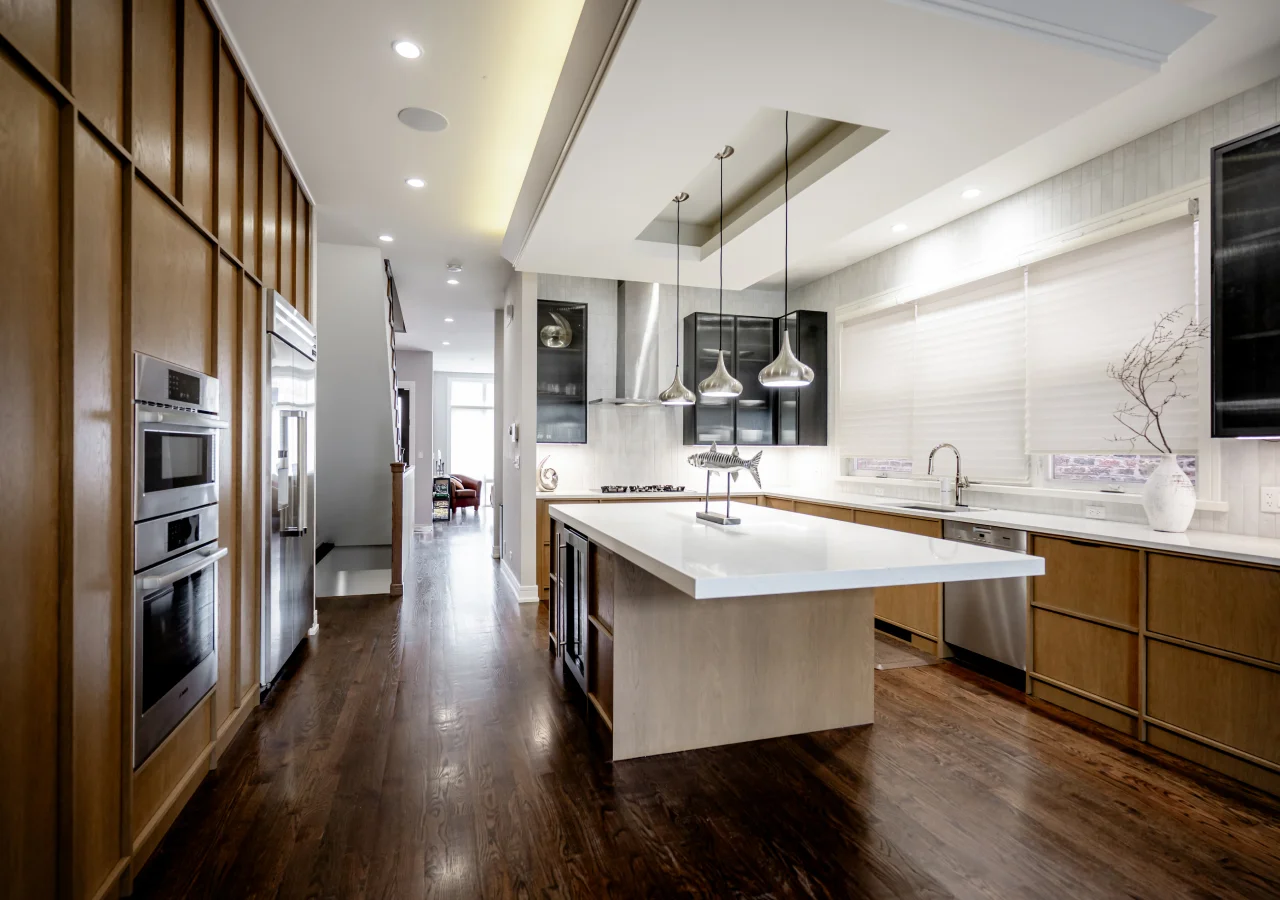
For many homeowners, laminate and veneer are the most useful options to compare when a Japandi kitchen exceeds the target budget.
Wood veneer is a thin layer of real wood bonded to a substrate, commonly an engineered wood panel. The core, finish, and edge treatment remain separate specifications to check. Laminate is a manufactured decorative surface available in solid colors, wood patterns, and other finishes.
Corner consultations have included homeowners reviewing veneer and laminate versions of a kitchen proposal when they wanted a more budget-friendly option. That does not establish a standard percentage saving. Instead, compare both materials against the same layout and review what has actually changed.
Check more than the front material. Confirm whether the cabinet boxes, cores, hardware, organizers, appliance panels, fillers, finished sides, and delivery scope remain the same. Otherwise, a lower total may reflect several specification changes rather than the front material alone.
Use Veneer Selectively and Compare Laminate Elsewhere
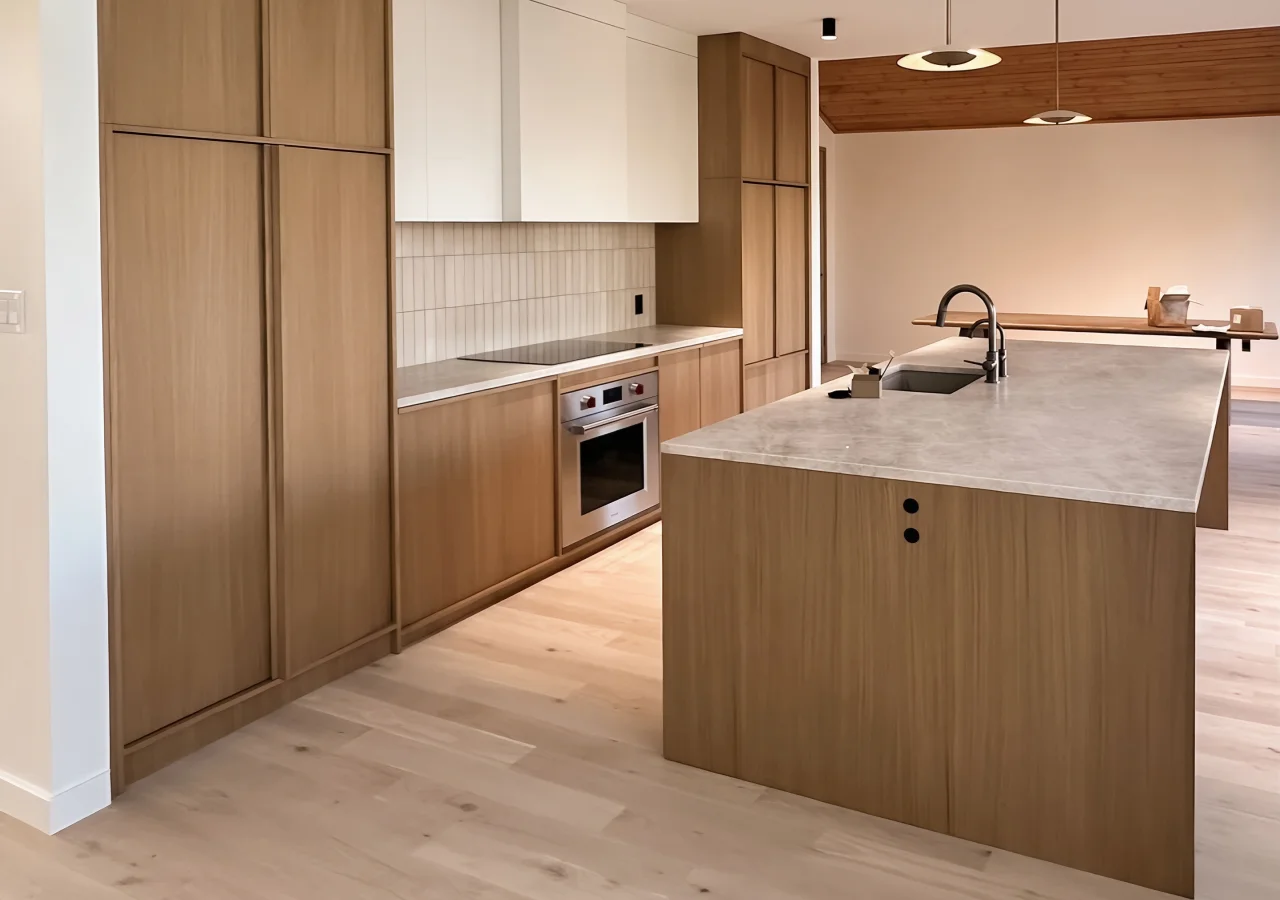
Using real wood on every cabinet is not necessary to create a Japandi kitchen. Veneer can be reserved for selected fronts where visible wood grain matters most, while laminate is priced for other areas.
For example, you might use veneer on an island, tall cabinet wall, or lower cabinet run and compare a specified laminate on the remaining fronts. This is a pricing option to explore, not a guaranteed saving.
Corner’s Dallas Japandi kitchen pairs oak cabinetry with matte white upper cabinets and pale stone, showing how different finishes can work together. For your own project, ask the supplier to price the proposed combination.
When reviewing laminate, use physical samples. A wood-look laminate uses a manufactured pattern rather than natural veneer. Compare the texture, sheen, pattern repetition, and edges on actual samples. For solid-color laminate, compare the color and surface next to the countertop, floor, backsplash, and any retained wood fronts.
Treat Solid Wood as a Construction Choice, Not an Automatic Upgrade
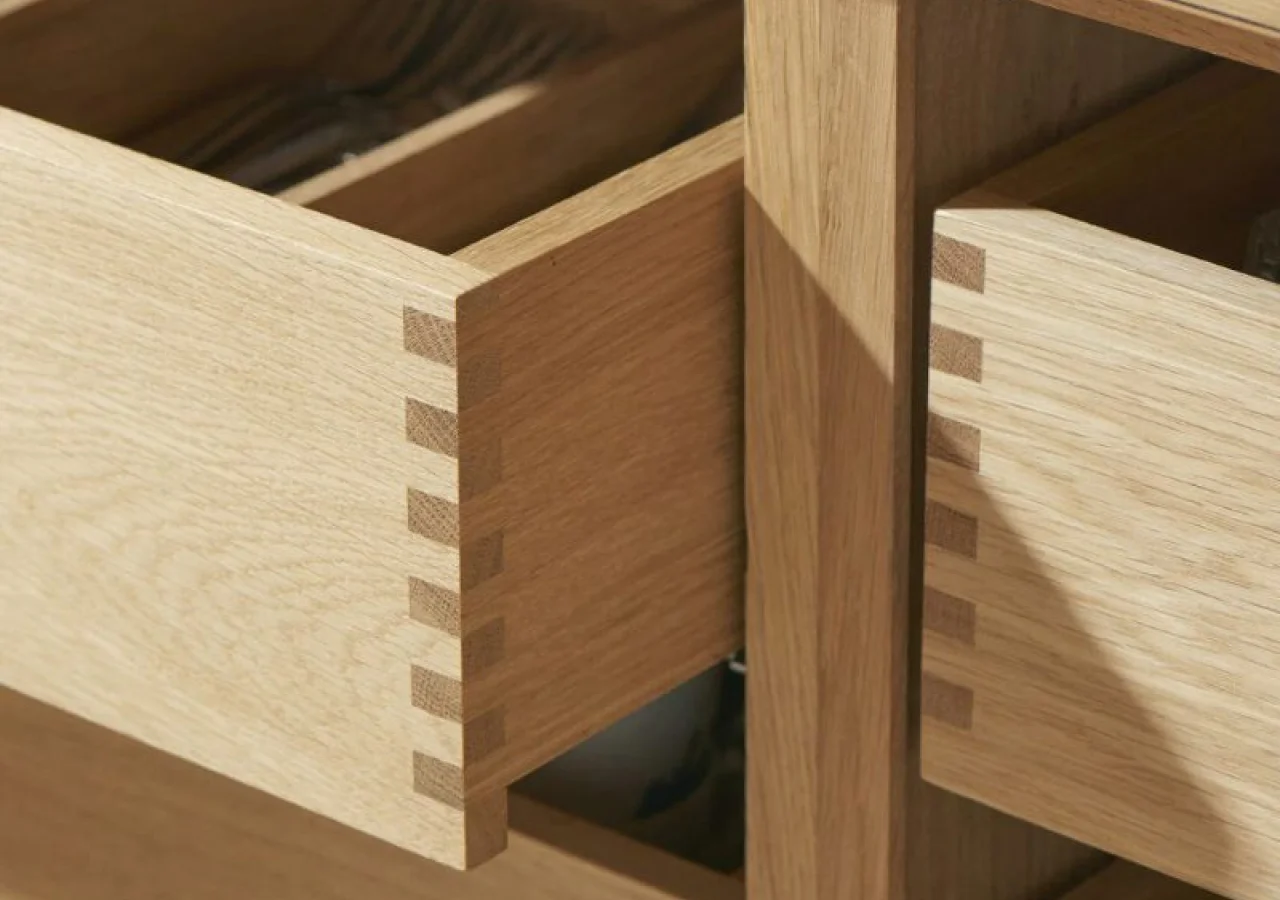
Solid wood should not automatically be treated as the best option for every cabinet front. Whether it makes sense depends on the design, dimensions, construction, and the specific component.
Large slab-style fronts and tall panels need to remain properly aligned as part of the cabinet system. Solid wood also responds to changes in environmental conditions, including humidity. Veneered panels have their own substrate, adhesive, finish, and edge requirements, so they should not be treated as unaffected by those conditions either.
If solid wood appears in a proposal, confirm whether it describes the entire door or selected parts such as a frame, handle, or trim. Ask how the component is constructed and whether it suits the proposed dimensions.
Look for Targeted Savings Before Redesigning the Kitchen
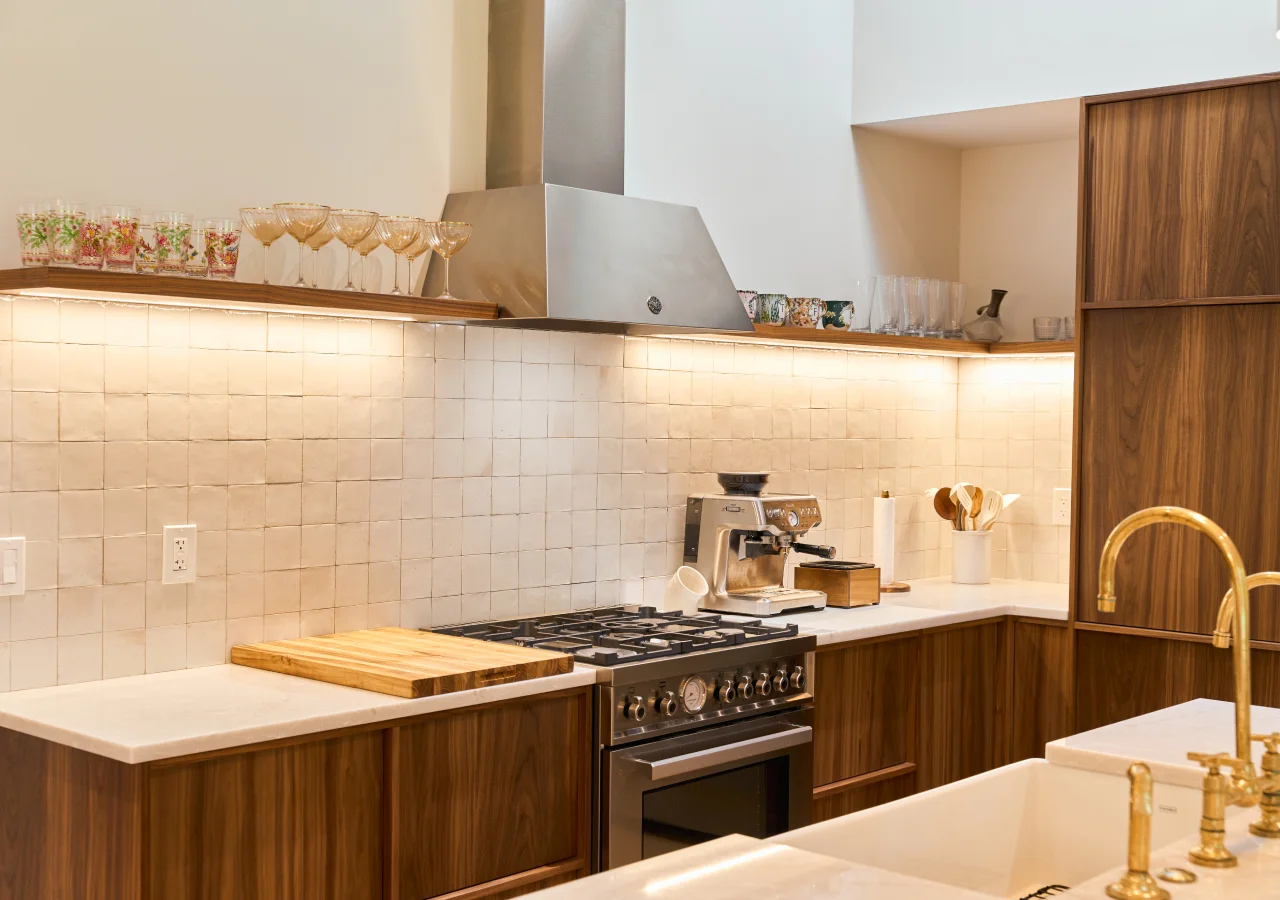
If the proposal is above budget, ask the supplier to reprice individual changes before removing storage or redesigning the layout.
Request separate prices for simplifying a front detail or changing a decorative component. Itemizing each change makes it easier to decide which savings are worth the compromise.
Prioritize the features you rely on every day, such as accessible drawers and adequate pantry storage. Then decide whether matching appliance panels or decorative details matter more to you than using the same front material throughout.
The most useful comparison is not simply veneer versus laminate versus solid wood. It is the original proposal versus a revised version with clearly identified changes. Compare the price, appearance, included scope, construction, and maintenance requirements before deciding which specification gives you the best balance.
Conclusion
A lower-cost Japandi kitchen does not have to mean changing the whole design. Preserve the details that matter most, then compare specific material and detail changes against the original proposal. Veneer can remain on selected surfaces, while a specified laminate may reduce the price elsewhere, depending on the product and fabrication required. Review the full specification before approving the change.
Explore Corner Renovation’s kitchen collections and real kitchen projects to see how wood, neutral finishes, and simple cabinet forms can work together across a complete kitchen.


