
.webp)
A kitchen cabinet quote can look straightforward at first: one layout, one number, one decision. Then you compare it with IKEA, a local carpenter, a showroom, or a nearby cabinet shop, and the prices start to feel impossible to line up. Most of the time, the issue is scope.
One quote may cover only cabinet boxes and fronts. Another may include inner drawers, appliance panels, pantry accessories, fillers, lighting preparation, shipping, installation coordination, countertops, or technical drawings. Both may be called a “kitchen cabinet quote,” but they are not pricing the same kitchen.
In consultations, we often hear some version of this question: “Why is this quote higher than the estimate I saw online?” Usually, the answer is not that one option is simply expensive and another is cheap. It is that the two quotes include different parts of the project.
Before comparing totals, compare what is actually inside the quote.
Cabinet Price vs. Full Kitchen Cost: Compare This First

A cabinet price usually refers to the cabinetry itself: fronts, boxes, and sometimes basic hardware. A fuller kitchen estimate may also include countertops, lighting, appliance panels, shipping, installation, and design work.
Those two numbers should not be compared as if they mean the same thing.
One homeowner asked whether the estimate included delivery only, not installation. Another asked whether the price shown online represented the cabinets themselves or the full kitchen cost. These are the right questions to ask before comparing providers.
Do not compare total numbers until you compare what is inside them.
The 12-Point Kitchen Cabinet Quote Checklist
.webp)
A useful cabinet quote should show more than the cabinet price. It should make clear what is included, what is optional, and what will need to be handled separately.
Use this checklist when comparing Corner with IKEA, a showroom, a carpenter, or another cabinet shop.
1. Cabinet Fronts: The Visible Design Layer
Cabinet fronts are the doors, drawer fronts, and visible panels that define the look of the kitchen. They shape the style, whether the design uses light oak, dark walnut, matte lacquer, slim shaker fronts, glass panels, or a handleless profile.
Price can change depending on the material, finish, edge detail, thickness, handle system, and any specialty fronts. Before comparing two quotes, make sure both are based on the same front material, color, finish, handle detail, and decorative panels.
2. Cabinet Boxes: The Structure Behind the Kitchen
.webp)
Cabinet boxes are the bodies behind the fronts. They determine the layout, storage capacity, alignment, and long-term stability of the kitchen.
This is where quotes can start to separate quickly. One provider may include only basic base cabinets. Another may include wall cabinets, tall pantry units, island cabinets, appliance housings, and specialty storage. Ask for a cabinet-by-cabinet breakdown so every part of the layout is accounted for.
3. Drawer Systems: The Part You Use Every Day

Drawer systems include deep drawers, inner drawers, runners, dividers, and soft-close hardware. They make cookware, utensils, pantry goods, and everyday dishes easier to reach.
They affect price because drawers usually cost more than doors with shelves. Another client was comparing a cabinet quote with a local shop that excluded interior drawers and accessories; the lower quote was not the same scope. Ask how many drawers, inner drawers, and drawer organizers are included.
4. Opening Systems: Handles, J-Pulls, Push-to-Open, and Lift-Ups

Opening systems are the hardware and mechanisms used to open cabinets. This includes standard handles, recessed pulls, J-pulls, push-to-open systems, and lift-up mechanisms for upper cabinets.
They affect price because hardware complexity changes from one system to another. A quote that says “hardware included” should still explain what kind. Ask which opening system is included for base drawers, tall cabinets, wall cabinets, and specialty storage.
5. Interior Accessories: The Hidden Storage Upgrades
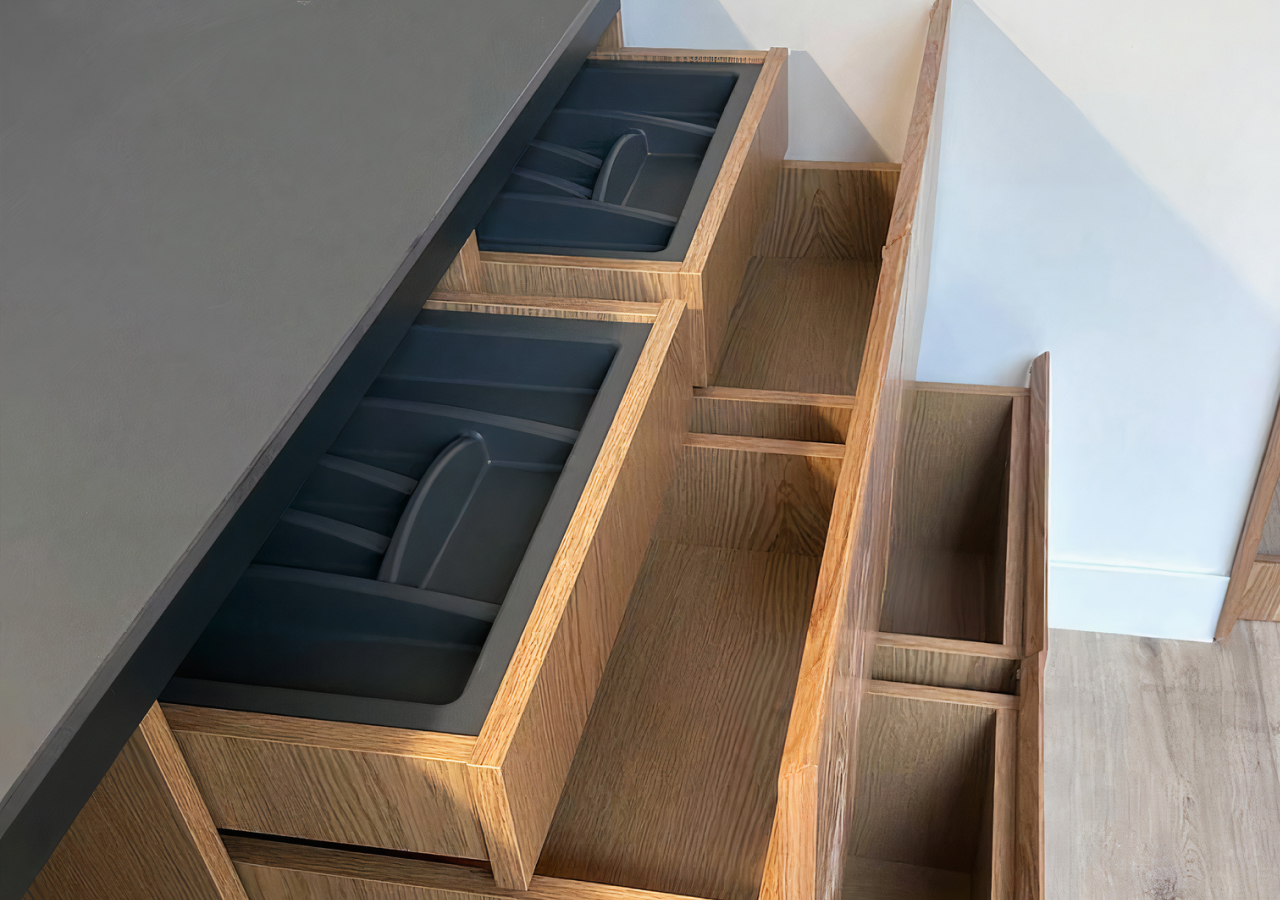
Interior accessories include pull-out bins, cutlery trays, spice inserts, pantry drawers, corner systems, appliance garages, and internal organizers. These details keep the kitchen easier to use and help reduce countertop clutter.
They affect price because they are often treated as upgrades. In consultations, homeowners often ask whether “normal upgrades” are already included. Ask what is included by default, what is optional, and what is necessary for the design to function as shown.
6. Appliance Garages and Panels: Built-In vs. Truly Integrated
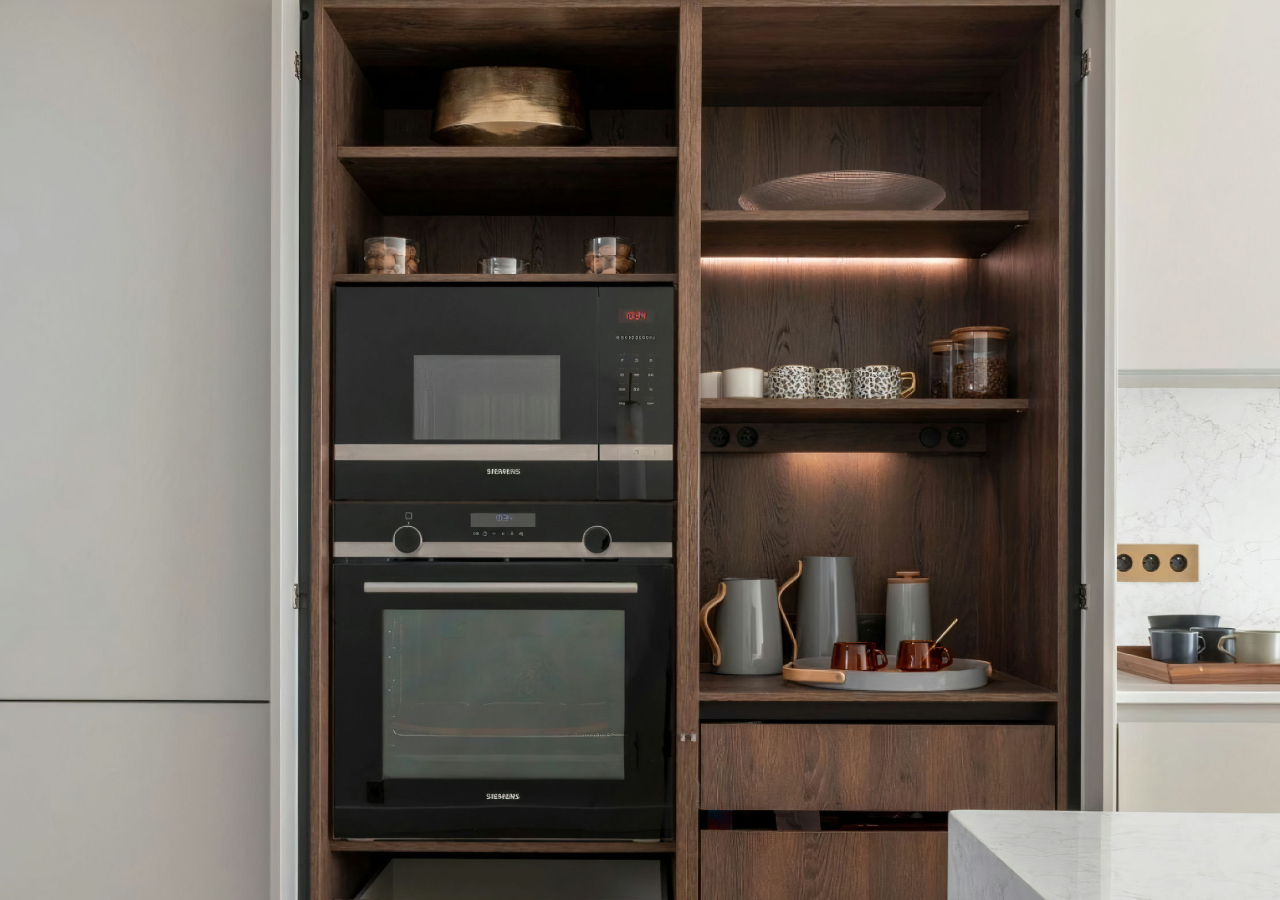
Appliance garages and panels allow refrigerators, freezers, dishwashers, ovens, and other appliances to sit cleanly within the cabinetry plan. They are essential for a seamless, built-in look.
They affect price because integrated appliances require matching fronts, housings, fillers, side panels, and precise alignment. One homeowner specifically asked whether appliance cabinets and panels were included. Ask whether every panel-ready appliance and tall appliance cabinet is included in the quote.
7. Fillers, Side Panels, Toe Kicks, and End Panels: The Finishing Pieces
.webp)
Fillers, side panels, toe kicks, end panels, and island back panels close gaps and finish exposed areas. They are not the most exciting part of the kitchen, but they make the final installation look intentional.
They affect price because they add material, planning, and site adjustment. This is especially important in older homes, where walls and floors may not be perfectly square. Ask whether all finishing pieces are included or priced separately.
8. Lighting: Function, Mood, and Finish

Kitchen lighting can include under-cabinet lights, interior cabinet lights, glass-front cabinet lighting, or cabinet-prepared LED systems. It improves prep work and adds warmth to minimalist kitchens.
It affects price because some quotes exclude lighting entirely, while others include lighting products, cabinet preparation, or design coordination. Ask whether lighting is included as product only, design planning only, or full installation support.
9. Shipping and Delivery: The Cost That Often Appears Later
.webp)
Shipping and delivery cover how the cabinets get to the home. Some quotes include freight, while others add it later or only include curbside delivery.
They affect price because delivery type, distance, handling, storage, and damage support can vary. In client consultations, we often hear: “Does the quote include shipping?” Ask whether the quote includes freight, local delivery, handling, inspection, or replacement support.
10. Installation and Assembly: Who Makes the Kitchen Real?
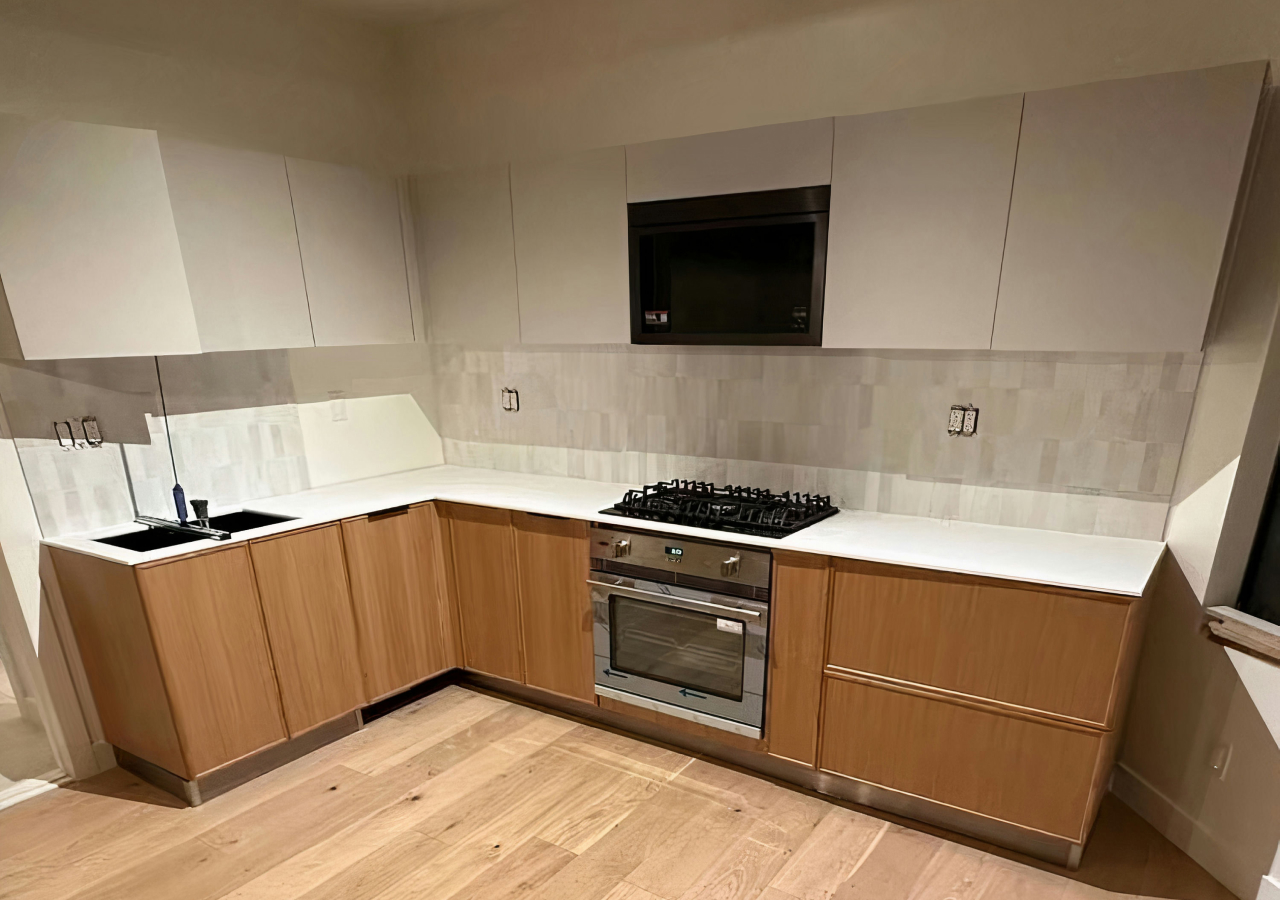
Installation includes assembling, leveling, securing, aligning, adjusting, and finishing the cabinets on site. This is the stage where cabinet parts become a working kitchen.
It affects price because product-only, flat-pack delivery, assembled, and installed quotes represent very different levels of service. One homeowner asked about installation costs and flat-pack delivery, which gets to the heart of the issue. Ask who assembles, installs, adjusts, and solves fit issues if something does not align.
11. Countertops: Cabinet Quote or Full Kitchen Quote?

Countertops are often separate from cabinetry. They may include material, templating, fabrication, delivery, installation, sink cutouts, edge details, and backsplash work.
They affect price significantly, especially with islands, waterfall edges, full-height backsplashes, integrated sinks, or premium surfaces. A recurring consultation question is: “Are countertops included?” Ask this early because a cabinet-only quote and a quote with countertop fabrication are not comparable.
12. Design Work and Technical Drawings: The Risk-Reduction Layer
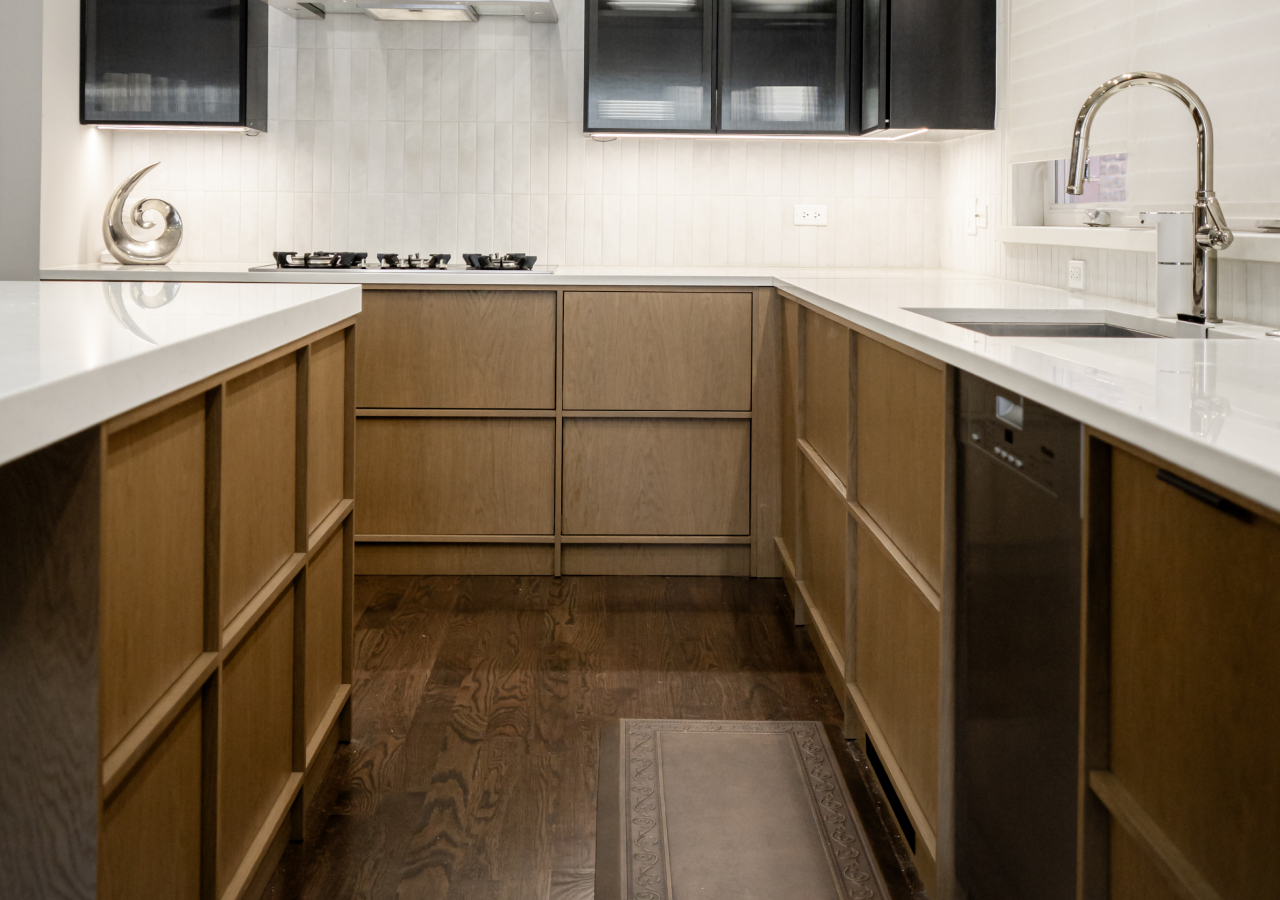
Design work includes layout planning, elevations, cabinet schedules, appliance coordination, lighting locations, countertop coordination, and installer-ready drawings. It helps turn an idea into a buildable kitchen.
It affects price because detailed planning takes time, but it can reduce mistakes, delays, and change orders. Ask whether the quote includes technical drawings or only a general concept and product list.
Corner vs. IKEA vs. Showroom vs. Local Carpenter: Short Comparison

Different providers may be quoting different scopes. A lower number may still be the right choice, but only if you know what is included and what is left for later.
Optional Quick Reference: What Often Raises a Cabinet Quote
Conclusion
A kitchen cabinet quote should not be judged by the total number alone. It should be judged by what that number includes: fronts, boxes, drawers, organizers, appliance cabinets, appliance panels, lighting, shipping, installation, countertops, and design work.
A cheaper quote may still be the right choice, but only if you understand what has been removed, simplified, or left for later. The goal is not to choose the most expensive option. It is to choose the quote that clearly explains the kitchen you are actually buying, the support included, and the risks you are taking on.
To take the next step, explore Corner Renovation’s kitchen collections, review real kitchen project examples, or book a consultation with this checklist in hand.


