
.png)
What Makes an Open-Concept Kitchen Work?
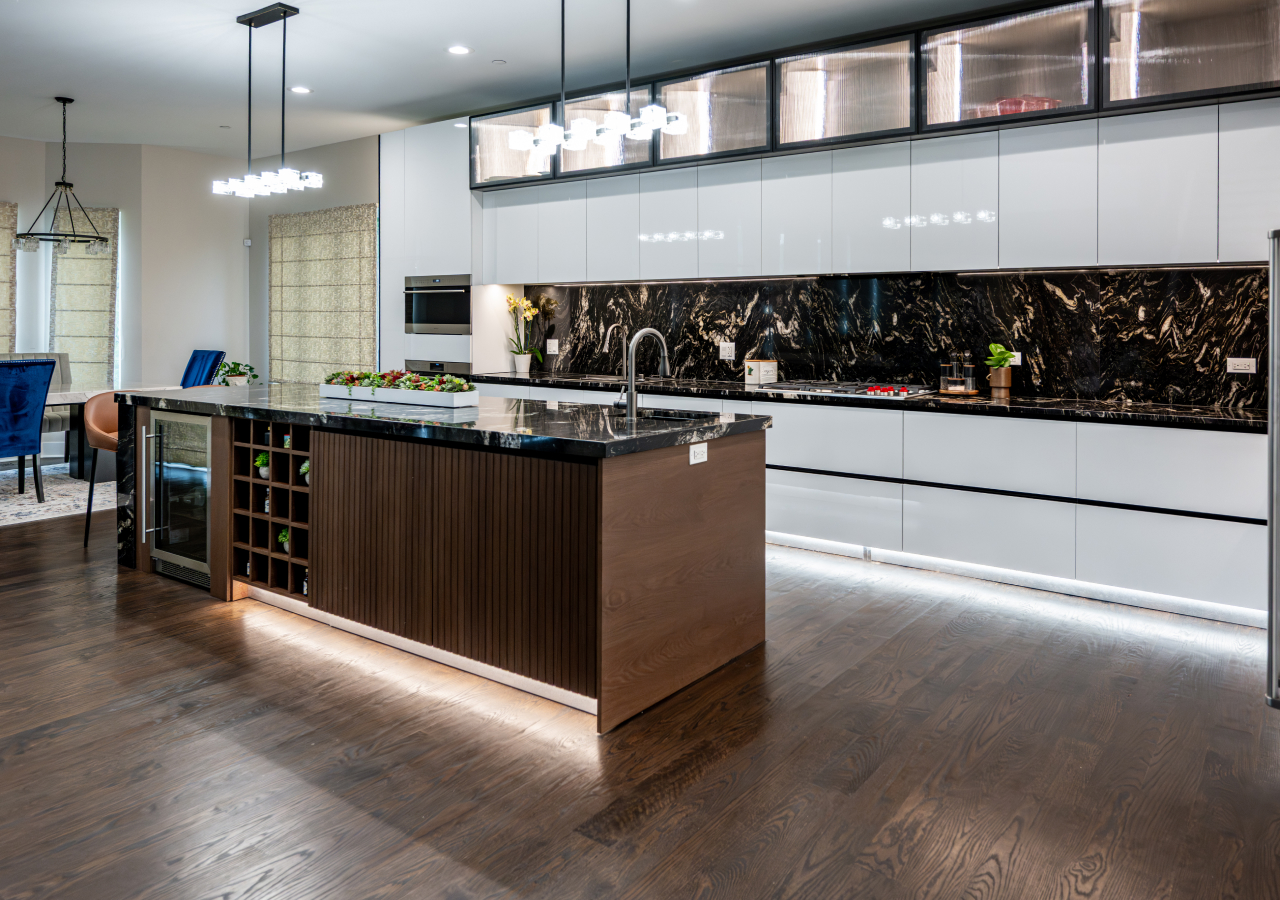
An open-concept kitchen works best when the kitchen, dining area, and living space feel connected without turning into one undefined room. The goal is to create clear zones for cooking, storage, seating, lighting, and circulation while keeping the space visually calm.
This is why a good open kitchen is not only about removing walls. It also depends on how the island is placed, where appliances are located, how much storage is hidden, how lighting is layered, and how the kitchen looks from the living area.
A beautiful open kitchen should feel easy to use every day. It should support cooking, conversation, entertaining, and family routines without making the whole room feel busy or exposed.
Open-Concept Kitchen Planning Checklist
Before choosing finishes or furniture, start with the practical parts of the layout. These details decide whether the open space will feel comfortable or frustrating.
Create Clear Zones Without Closing the Space

The main challenge in an open-concept kitchen is defining areas without adding walls back into the room. The kitchen, dining space, and living area should each have their own purpose, but they should still feel connected.
A kitchen island is often the easiest way to create this separation. It can mark the edge of the kitchen while still allowing conversation and movement across the room. A dining table, rug, pendant light, or change in ceiling detail can also help define each zone.
The key is subtle separation. You do not need heavy dividers or dramatic visual breaks. A change in lighting, furniture placement, or material can be enough to make the room feel organized.
Use the Island as the Main Divider

In many open kitchens, the island becomes the bridge between the kitchen and the living area. It can work as a prep surface, serving area, casual dining spot, storage zone, and visual anchor.
For this reason, island placement matters more in an open-concept layout than in a closed kitchen. The island should support the cooking workflow without blocking the main path through the room. It should also look good from multiple angles, because it will usually be visible from the dining and living spaces.
A large island can work beautifully, but bigger is not automatically better. The right island size depends on the room width, appliance locations, seating needs, and required walkways around it.
Plan Walkways and Appliance Clearances

Open kitchens can feel spacious, but only if the layout gives people enough room to move comfortably. Walkways around the island, cabinet doors, appliance doors, and seating areas all need to be planned together.
This is especially important around refrigerators, dishwashers, ovens, and pull-out storage. A panel-ready refrigerator may look clean, but it still needs proper door swing and access. A dishwasher near the sink may be practical, but it should not block a main walkway when open. Island seating also needs enough space behind the stools so people can sit without interrupting traffic.
A good open kitchen should feel relaxed, not like everyone is constantly moving around each other.
Keep Storage Integrated and Calm
.webp)
Storage is one of the biggest reasons open-concept kitchens succeed or fail. Because the kitchen is visible from the living area, everyday clutter becomes more noticeable.
This does not mean you should avoid tall cabinets or closed storage. In fact, tall cabinet walls can work very well in open kitchens when they are clean, integrated, and balanced with lighter areas. A well-planned pantry wall, appliance garage, or full-height storage run can make the open space feel calmer because more items are hidden.
As an alternative to removing upper cabinets everywhere, think about balance. You might use tall cabinets on one wall, drawers under the island, and a lighter shelf or backsplash area where the kitchen needs breathing room.
Connect Materials Across the Kitchen and Living Area
.webp)
An open kitchen should relate to the rooms around it. The materials do not need to match exactly, but they should feel connected.
Wood tones, cabinet colors, countertop materials, flooring, hardware, and lighting should all work with the dining and living areas. For example, warm oak or walnut cabinetry can connect nicely with wood furniture nearby. A soft neutral cabinet color can help the kitchen blend into the room instead of dominating it. A stone countertop or backsplash can become a focal point if the rest of the space is quieter.
The goal is continuity. The kitchen should feel like part of the home, not a separate design dropped into the middle of the room.
Use Lighting to Define Each Zone
.webp)
Lighting is one of the most effective tools in an open-concept kitchen. It can separate the kitchen, dining, and living areas without using walls.
The kitchen needs task lighting for prep and cooking. This can include recessed lights, under-cabinet lighting, and focused light above the island. The dining area may need a warmer, lower fixture that creates a softer mood. The living area can use lamps or ambient lighting to feel more relaxed.
Pendants over the island can look beautiful, but they should not be the only source of light. A layered lighting plan makes the whole open space feel more comfortable throughout the day and evening.
Decide How Much Seating You Really Need

Island seating is one of the main reasons homeowners like open-concept kitchens. It makes the kitchen feel social and gives people a place to gather while someone cooks.
But seating should be planned realistically. Too many stools can make the island feel crowded, reduce storage, or interrupt the walkway behind it. Before deciding on the number of seats, check the island length, overhang depth, stool width, and space behind the seating area.
For some homes, three comfortable seats are better than four tight ones. In other layouts, a dining table near the kitchen may do most of the work, while the island only needs two casual seats for coffee or quick meals.
Control Visual Clutter
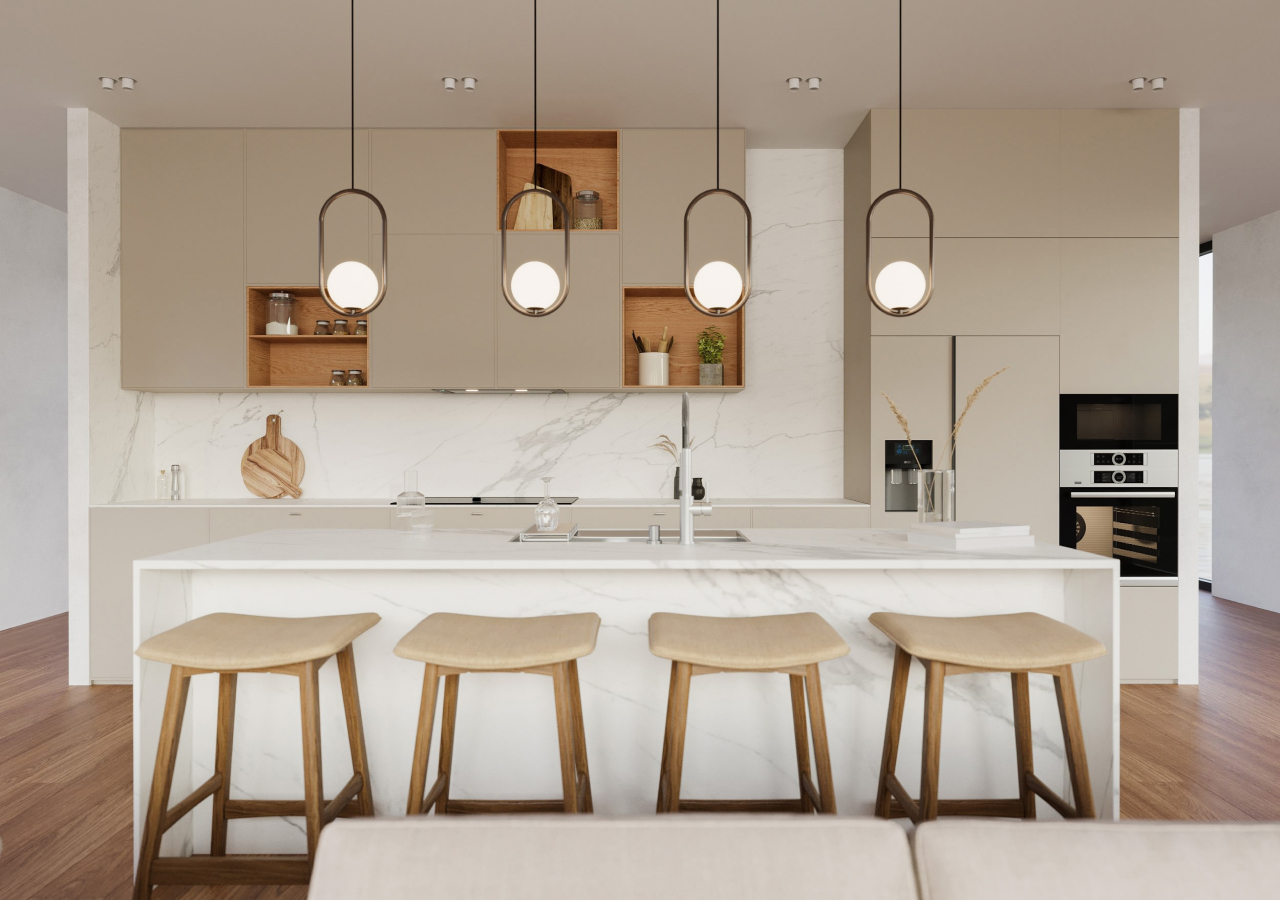
Open kitchens are exposed by nature. That is part of their appeal, but it also means small items can quickly make the space feel busy.
Closed storage, deep drawers, integrated appliances, appliance garages, and organized pantry zones help keep the kitchen visually calm. If you use open shelving, keep it limited and intentional. Open shelves can add warmth, but they are not always the best place for everyday storage.
Think about what will be visible from the sofa, dining table, or entryway. A clean cabinet wall, hidden coffee station, or panel-ready appliance can make the kitchen feel more finished even during regular daily use.
Plan Ventilation, Noise, and Appliance Visibility
.webp)
Open-concept kitchens need extra attention to ventilation and appliance planning because cooking smells, appliance noise, and visual clutter can travel into the living area.
If the cooktop is on the island, ventilation becomes especially important. A ceiling hood, downdraft system, or integrated cooktop ventilation can affect the island design, cabinet storage, electrical planning, and the look of the room.
Appliance noise also matters more in an open layout. Dishwashers, range hoods, refrigerators, and ventilation systems are closer to the living area, so quieter models may be worth considering.
Visibility is another detail. A panel-ready refrigerator, integrated dishwasher, hidden microwave, or appliance garage can help the kitchen feel less appliance-heavy from the rest of the room.
Make a Small Open Kitchen Feel Larger
.webp)
An open concept can work well in a smaller home, but it needs careful editing. Removing a wall can make the kitchen feel larger, but the space still needs enough storage, clear circulation, and comfortable proportions.
In a small open kitchen, avoid oversized furniture and islands that block movement. A peninsula, compact island, or dining table may work better depending on the room shape. Use closed storage wherever possible so the open space does not feel crowded.
Light wood tones, simple cabinet fronts, integrated appliances, and consistent materials can also help a smaller kitchen feel calmer and more spacious.
.webp)


