
.webp)
A calm, organized kitchen starts before installation. Appliance placement, storage, clearances, utilities, and workflow must be coordinated before cabinetry enters production.
Panel-ready appliances can make a kitchen feel quieter and more architectural, but the seamless appearance depends on exact technical information. Selecting models early protects storage, supports accurate production, and reduces revisions later.
Quick answer: Before final cabinet drawings, provide the brand and exact model number for every appliance, plus its specification sheet and installation guide. Confirm panel dimensions, cutouts, clearances, hinge swing, ventilation, opening method, and utility locations before approving the drawings.
What Are Panel-Ready Appliances?
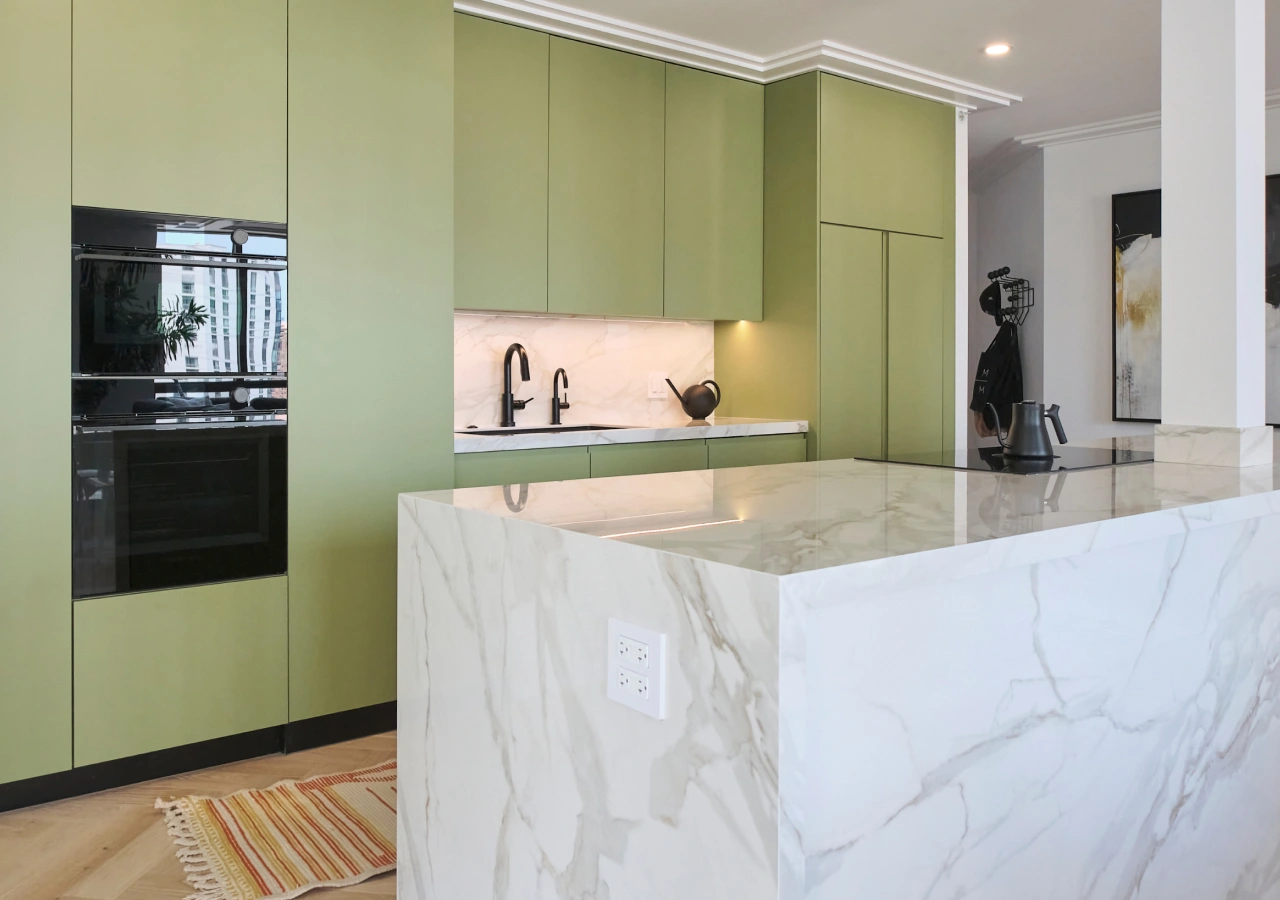
A panel-ready refrigerator or dishwasher accepts a custom cabinet front. The panel helps the appliance blend into the kitchen, but it does not simply disappear. Hinges, reveal gaps, toe kicks, ventilation, handles, panel weight, and required clearances still shape the cabinetry.
This approach works well in calm, integrated kitchens where appliances and tall cabinets form one continuous elevation. Сorner's kitchen collections show how quiet fronts and controlled cabinet lines support that effect.
Why Exact Appliance Model Numbers Are Required
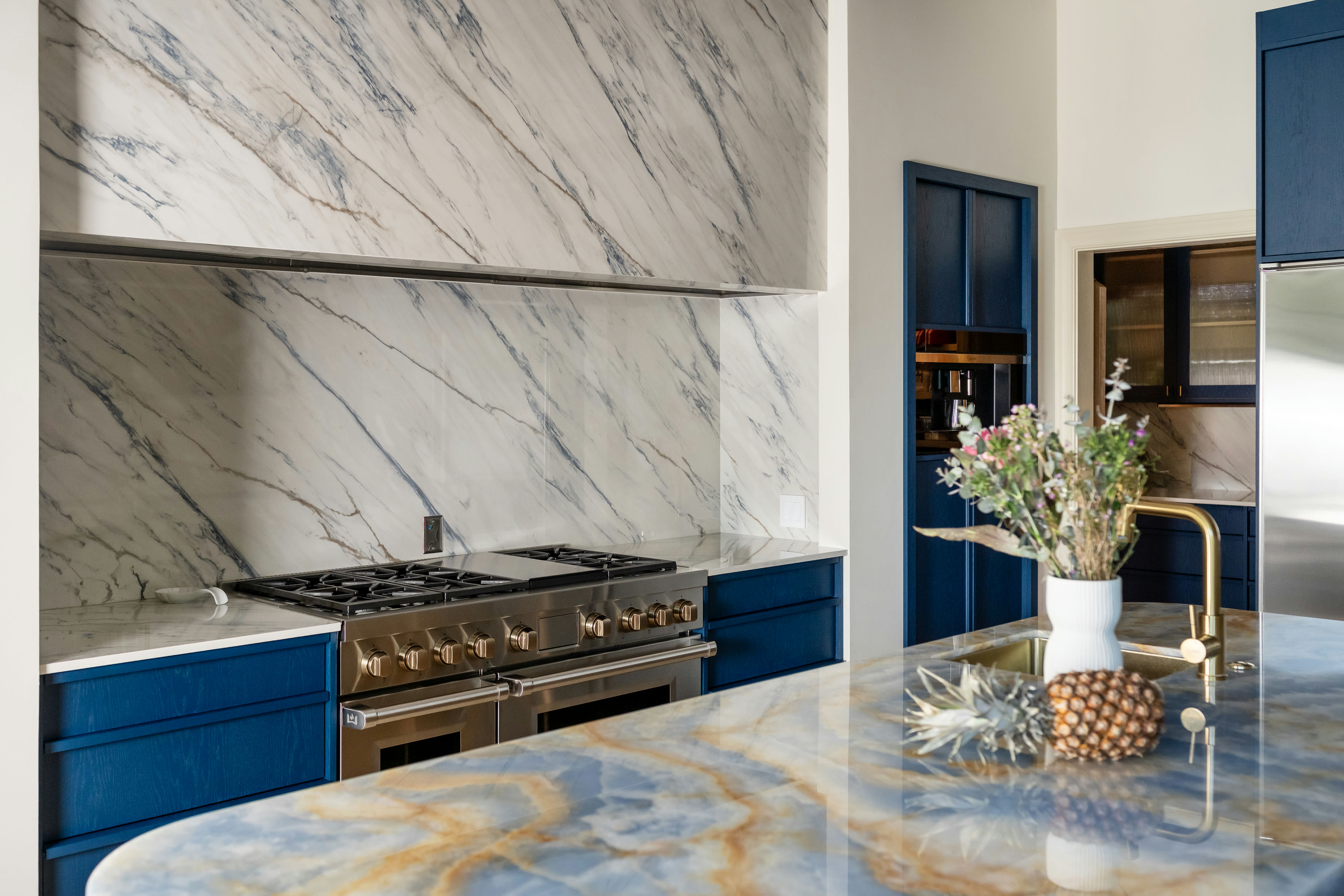
A cabinet drawing cannot accurately hide an appliance until the exact appliance model is known. “Panel-ready refrigerator” or “36-inch dishwasher” is not enough for production drawings.
Models with the same nominal width may require different openings, panels, hinge clearances, ventilation paths, or accessories. A small difference can change a filler, narrow an adjacent pantry, alter the toe kick, or create a collision between doors.
For a broader overview of how appliances influence the layout, see the complete kitchen appliance planning guide.
Which Appliances Must Be Selected Before Cabinet Drawings?
.webp)
Confirm every appliance or fixture that touches the cabinetry:
- Refrigerator and freezer
- Dishwasher
- Wall ovens
- Range or cooktop
- Hood and ventilation
- Microwave drawer or concealed microwave
- Sink
- Wine or beverage refrigerator
- Warming drawer
- Integrated washer or dryer
Placement should also support organization and daily movement. The dishwasher should connect naturally to the sink, trash cabinet, and dish storage. Ovens need nearby landing space, while a microwave should be accessible without interrupting the main preparation zone.
The goal is not simply to fit each appliance into an opening. It is to protect useful storage and create a workflow that feels natural once the kitchen is in use.
Appliance Coordination Risk Benchmark
This benchmark ranks appliances by the number of fixed cabinet variables they affect. A high-risk appliance may alter several openings, panels, utilities, or adjacent cabinets if the selected model changes.
Refrigerator and Freezer: The Biggest Drawing Driver
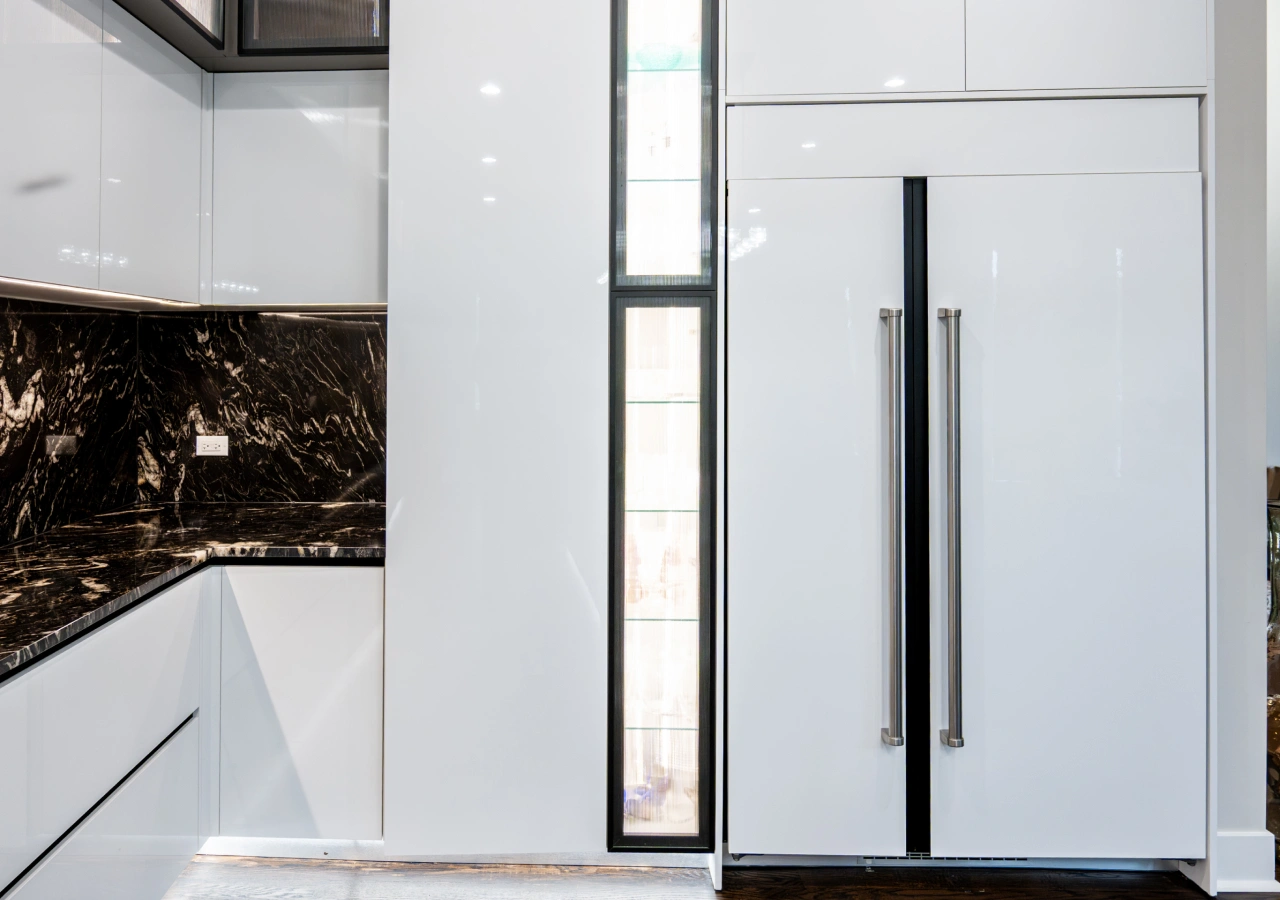
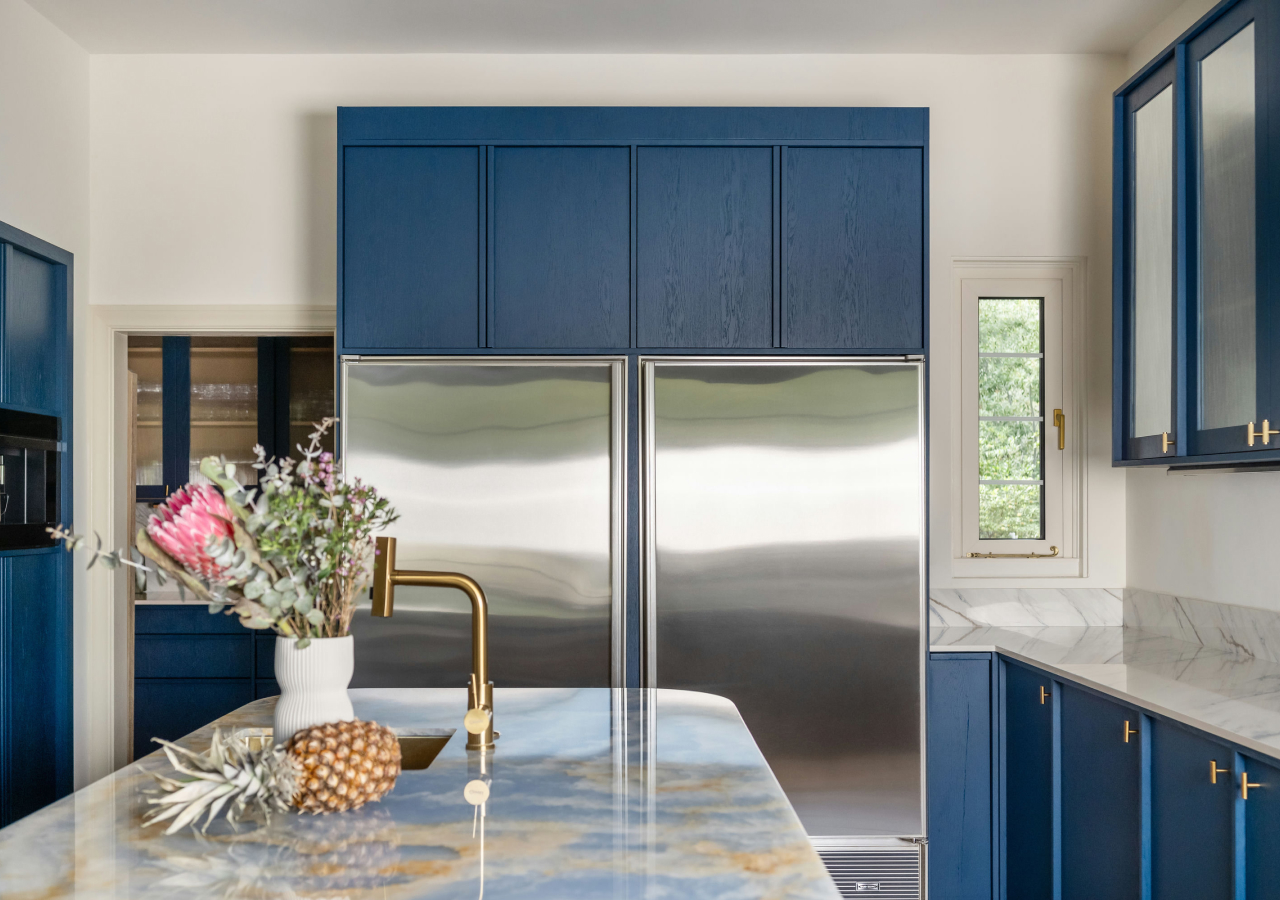
The refrigerator is usually the highest-risk appliance because it can shape the entire appliance wall. Its width, height, depth, hinge side, door swing, panel thickness, ventilation, side clearances, and handle projection must all work with the adjacent cabinetry.
A refrigerator beside a wall may appear to fit until the installation guide shows that the door needs additional space to open fully or release the interior drawers. The solution may require a wider filler, a different hinge side, a narrower pantry, or another refrigerator model.
The kitchen floor plan and clearance guide covers similar door-swing and circulation conflicts. Check these conditions while the drawing can still be adjusted—not after the cabinets have been made.
Panel-Ready Dishwasher Panels, Handles, and Workflow
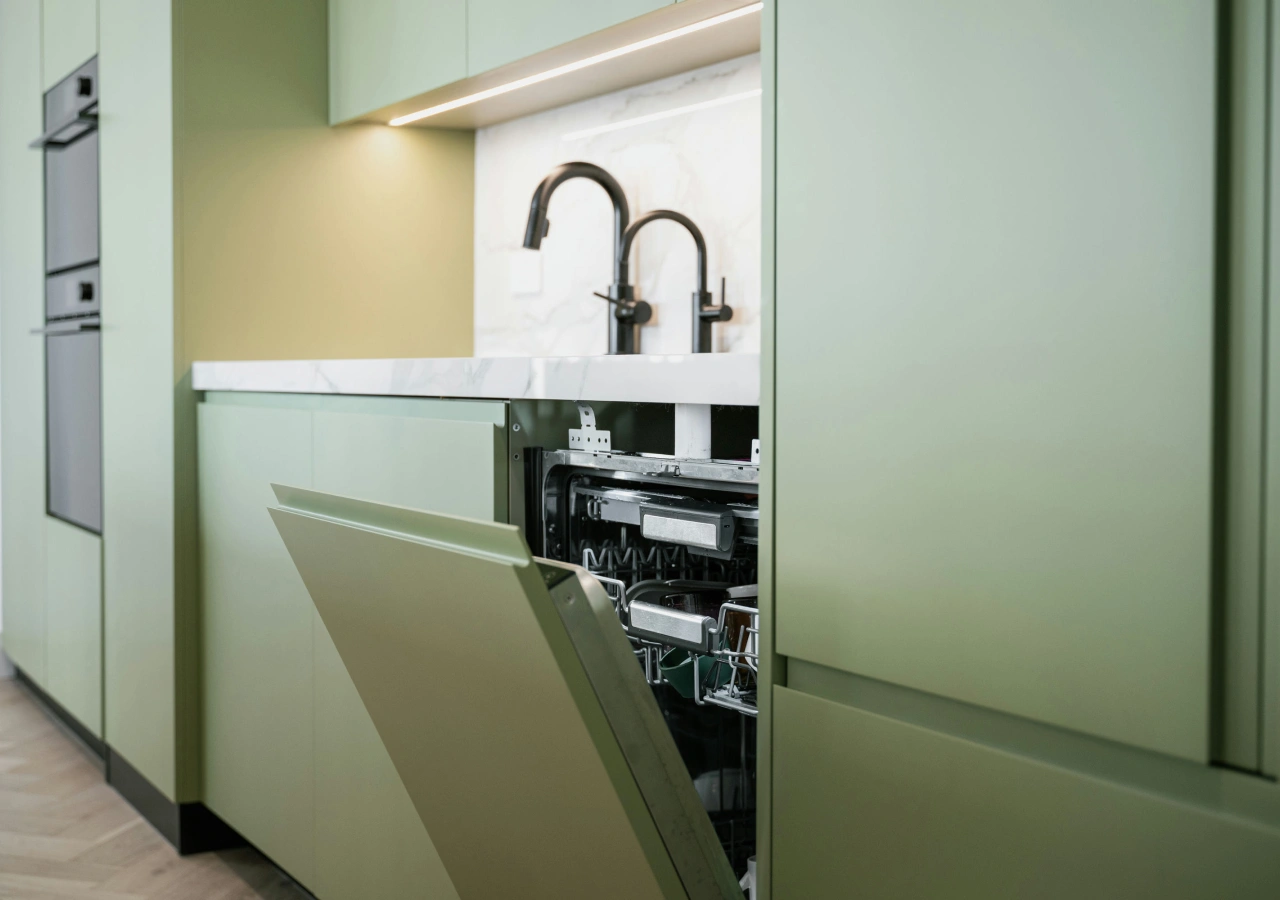
A panel-ready dishwasher needs more than a matching door. Its front must follow the manufacturer’s panel dimensions and weight limits, and the visible handle or compatible handleless method should be selected before the panel is finalized.
The dishwasher should sit naturally between the sink, trash, and dish-storage zones without blocking the main walkway. Plumbing, electrical connections, adjacent drawers, cabinet doors, corners, and toe kicks also need to be coordinated.
Confirm that the dishwasher panel, handle, fillers, and finishing pieces appear in the quote. The kitchen cabinet quote checklist explains why reviewing the full scope is more useful than comparing the headline price alone.
How Ovens, Cooktops, Hoods, and Microwaves Change Cabinetry
.webp)
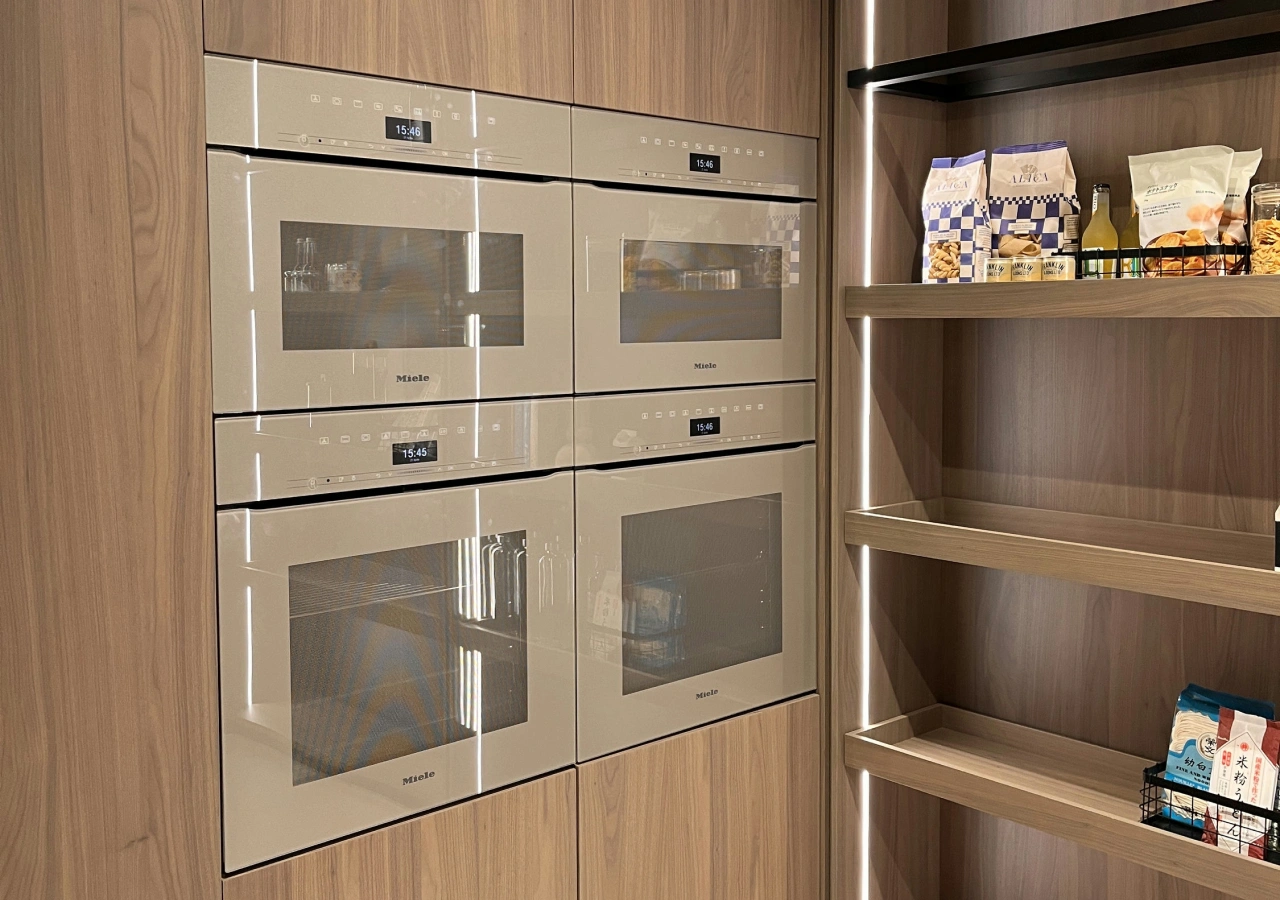
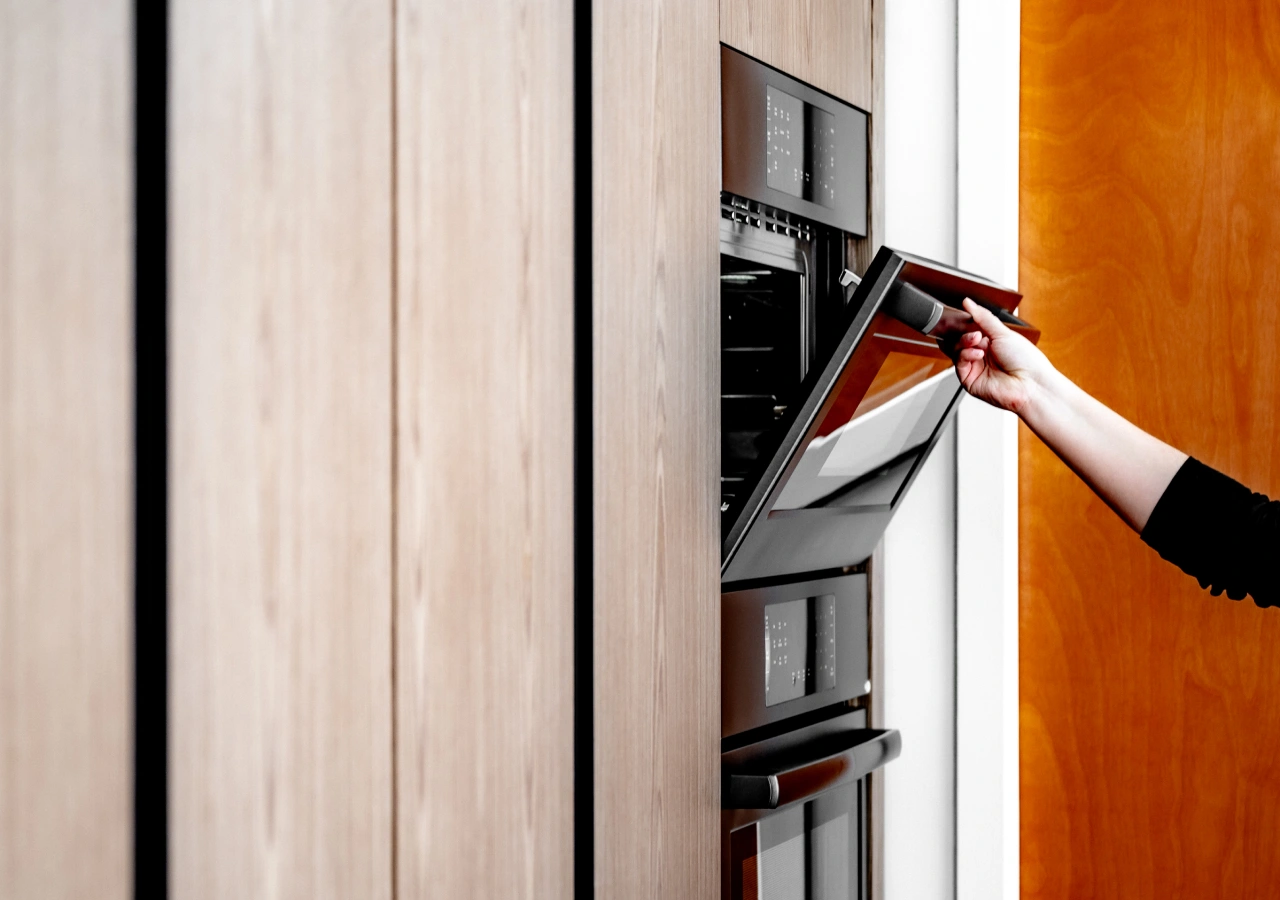
Cooking appliances create exact cabinet and countertop openings. Wall ovens require model-specific cutouts; a cooktop determines the countertop opening and may reduce usable drawer space below; a range fixes the width and endpoint of a base-cabinet run.
A hood affects cabinet width, mounting height, duct routing, and any wood, plaster, or cabinet surround. A microwave drawer or concealed microwave changes cabinet width, ventilation, electrical access, and landing-space requirements.
These appliances may be less visually dominant than a refrigerator, but they can be just as important technically. The contractor and relevant trades should confirm utilities, ventilation, installation conditions, and local-code requirements before production begins.
Final Appliance Checklist Before Cabinet Production
Before approving the final drawings, confirm:
- Exact brands and model numbers
- Specification sheets and installation guides
- Whether each appliance is panel-ready or standard
- Width, height, depth, cutout, and required clearances
- Door swing and hinge side
- Panel dimensions, thickness, and maximum weight
- Handle or handleless opening method
- Ventilation and service-access requirements
- Electrical, plumbing, and gas locations
- Appliance panels, fillers, and toe kicks in the cabinet quote
- Contractor review of rough-in and local requirements
The guide to when to order kitchen cabinets places confirmed appliance specifications among the decisions that should be completed before production.
What Happens If You Change an Appliance Later?
An appliance change after technical approval may require revised drawings. A new model can alter an opening, panel, clearance, ventilation path, utility location, filler, countertop cutout, or nearby storage.
If production has already started, the change may add cost, affect timing, reduce feasibility, or require replacement parts. The custom kitchen design process and timeline guide explains why controlled approvals are important to the renovation sequence.
Common mistakes include choosing a panel-ready refrigerator without confirming the exact model number. Homeowners may also assume that appliances with the same listed width require the same opening. Other issues include changing models after drawing approval, overlooking a refrigerator door swing next to a wall, or leaving a dishwasher handle undecided.
Problems can also arise when a microwave is concealed without checking ventilation requirements. Some homeowners assume the cabinet company will supply the appliances. Others forget to include appliance panels in the cabinet quote.
Conclusion
Panel-ready appliances can create a calm, continuous kitchen, but only when exact models are confirmed before production. Installation guides, panels, hinges, clearances, ventilation, and utility locations should all be resolved before final cabinet drawings are approved.
Integration also involves tradeoffs. Custom panels, fillers, more detailed fabrication, and early commitment to a specific model can affect cost and replacement flexibility. Selective integration often creates the best balance: use it where it meaningfully improves the composition while protecting storage, workflow, budget, and service access.
Explore the kitchen collections and completed kitchen projects, or bring a preliminary appliance list to a design consultation before the technical drawing stage.


