

Kitchen islands have evolved from optional add-ons into the true working center of the modern kitchen. They are where prep happens, where people gather, and where meals begin. But an island only improves a kitchen when it is planned with intention: size, circulation, storage, seating, lighting, and utilities all have to work together. Otherwise, what looks impressive in a showroom can feel oversized, cramped, or awkward in daily life.
This guide is the starting point for planning a kitchen island. It gives you the numbers that matter, the order in which to decide things, a checklist of the mistakes that cause rework, and real islands from Corner projects. Each section links to a focused article when you need more depth.
In this guide: island type · size and clearances · height · seating · storage inside · outlets and lighting · island or peninsula · style · checklist · 7 steps · Corner islands
Kitchen Island Planning: Start Here

The five decisions that decide whether an island works, in the order to make them:
- Size and clearances: Kitchen island size guide (cm and inches)
- Height: Kitchen island height: standard sizes and seating
- Storage inside the island: Which cabinets are used for an island
- Outlets and lighting: Outlets on kitchen islands: placement and code
- Island or peninsula: Kitchen island vs peninsula
Style comes last: Japandi islands, Scandinavian islands, minimalist islands and curved islands all follow the same planning rules.
Pick the Right Kitchen Island Type for Your Layout
| Layout | Best island type | Seating | Clearance note | Guide |
|---|---|---|---|---|
| One-wall | Slim rectangular island | 2–3 stools | Keep 36–42 in clear around it | Size guide |
| L-shape | Standard rectangular island | 3–4 stools | Protect corner circulation | Size guide |
| U-shape | Compact island or no island | Limited | Avoid squeezing the work zone | Dimensions + planning |
| Galley | Usually no island unless the room is wide enough | Minimal | Walkways usually matter more than adding an island | Size guide |
| Open plan | Large rectangular or curved island | 4+ stools | Focus on flow from kitchen to living area | Curved island guide |
Kitchen Island Size and Clearances
.webp)
Size is the first thing to resolve because it decides whether the kitchen feels open or cramped. Protect the walkways first, then size the island to what is left.
- Minimum fixed island: about 60 × 120 cm (24 × 47 in), enough for a run of drawers and a usable worktop.
- Comfortable prep island: 80–90 cm deep (32–36 in) and 140–180 cm long (55–71 in).
- Open-plan island with seating: about 90 cm deep and 180–240 cm long (71–94 in), with roughly 60 cm (24 in) of counter width per stool.
- Clearance: 90–105 cm (36–42 in) on working sides; 105–120 cm (42–48 in) behind stools so someone can pass a seated person.
- The 10% rule: the island’s footprint should stay around a tenth of the kitchen’s floor area, or it starts to read as a block dropped in the middle of the room.
Full tables in cm and inches, the work-triangle rule, and worked examples: Kitchen island size guide.
Kitchen Island Height

Most islands sit at counter height, 90–91 cm (36 in), so prep surfaces line up. A raised bar section at about 105 cm (42 in) separates cooking from eating and hides the mess from the dining side, but it needs taller stools and a second countertop seam. Knee space is the detail people forget: plan about 38 cm (15 in) under a counter-height overhang and 30 cm (12 in) under a bar-height one.
Charts, stool heights and the one-level versus two-level decision: Kitchen island height guide.
Seating: Plan It So It Doesn’t Break Circulation
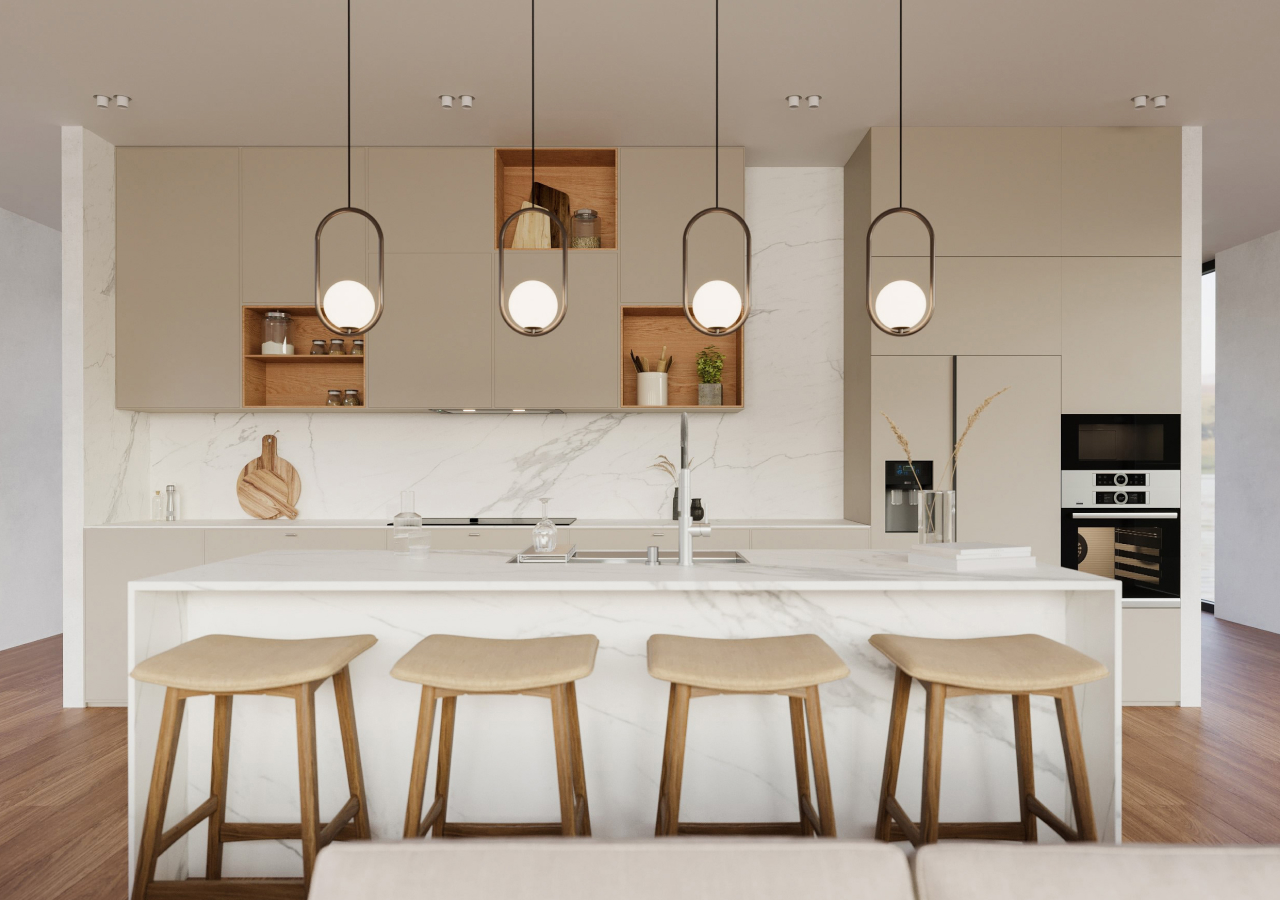
Island seating is one of the most requested features, and it needs more space than most people expect. The counter overhang is only one part of the equation; you also need room for stools, knees, people getting in and out, and traffic behind the seats. A stool tucks neatly under the counter when no one is sitting there, but the kitchen has to work when the stool is pulled out and someone is using it.
Before adding seats, decide how the island will actually be used: quick coffee, kids’ homework, full meals, or conversation while someone cooks. Count about 60 cm (24 in) of width per person and keep 105–120 cm (42–48 in) clear behind the stools. If space is tight, three comfortable seats work better than four cramped ones.
Design the Inside First: Storage and Zones

The most successful islands are designed from the inside out. Start with the island’s job: prep, seating, storage, cleanup, serving, or a mix. The answer shapes the cabinet layout.
On the working side, prioritise drawers. They are easier to reach than deep shelves, and a wide drawer holds pots and pans while inner drawers organise smaller tools. Keep trash and recycling next to the main prep zone: a pull-out bin on the island makes prep and cleanup faster every single day. Open shelves and display storage can work on the back or the ends, but only when they support the layout; a beautiful island with no useful storage creates clutter elsewhere.
Base cabinets, drawer stacks, pull-outs, and whether an island should carry a sink or a cooktop: Which cabinets are used for a kitchen island.
Outlets and Lighting: Plan Them Before the Countertop
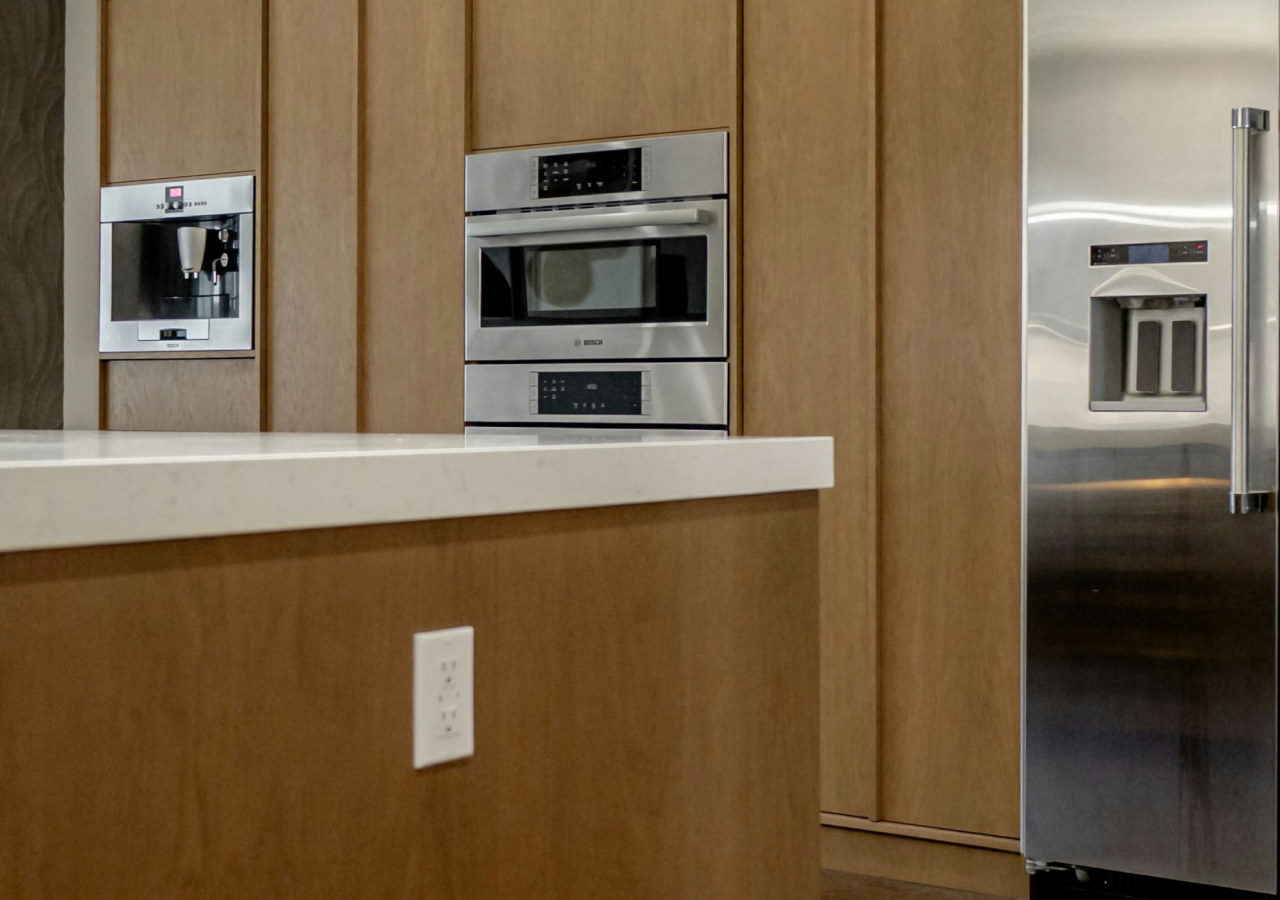
Decide outlet placement early. Once the stone, waterfall panels, cabinet fronts, and finished sides are designed, moving an outlet is expensive. Islands usually need power for small appliances, phone charging, laptops, and mixers; US code (NEC) also sets a minimum number of receptacles for island countertops. Outlets can sit on side panels, end panels, under the overhang, or in pop-up countertop units; a waterfall island limits where they can go cleanly.
Plan lighting at the same time: pendant positions, ceiling junction boxes, and island proportions have to agree, so if the island changes size late in the process the lighting moves too.
Placement options, code rules, and safety: Outlets on kitchen islands.
Island or Peninsula?
If the clearances do not work, do not shrink them; change the shape. A peninsula attached to a wall or a cabinet run needs clearance on three sides instead of four, keeps the same storage and seating, and often suits galley and L-shaped kitchens better than a free-standing block. The comparison of flow, seating, and storage is in Kitchen island vs peninsula.
Style Directions for Kitchen Islands
.webp)
Style is the last decision, and it changes proportions more than rules. For calm, warm-minimal rooms, see Japandi kitchen islands; for light, functional design, Scandinavian kitchen islands; for clean-lined simplicity, minimalist kitchen islands. Rounded forms soften open-plan rooms: 12 curved island ideas shows the shapes, the curved kitchen island guide covers sizes and clearances, and rounded vs straight island helps you choose. For a broad tour of shapes and features, see 15 kitchen island ideas for modern homes.
Kitchen Island Checklist: Common Problems and Quick Fixes
Use this before you finalise cabinets, electrical, countertops, or installation drawings.
| Checklist item | What it affects | Quick rule of thumb | Common mistake |
|---|---|---|---|
| Aisle clearance around the island | Day-to-day movement | Set clearances before choosing island size | Oversizing the island and shrinking walkways |
| Seating clearance behind stools | Traffic flow | Plan space behind seating so people can pass | Adding stools without checking circulation |
| Door swings | Collisions and frustration | Test dishwasher, fridge, oven, and pantry doors open in the plan | Dishwasher door blocks the main path |
| Prep zone placement | Efficiency | Put the main prep zone close to the sink and trash | Prep happens far from cleanup |
| Trash and recycling location | Daily speed | Keep waste near the prep zone | Trash is across the kitchen |
| Storage inside the island | Clutter | Use drawers on the working side where possible | Too many doors and deep shelves |
| Outlet placement | Usability | Plan outlets early, before counters are finalized | Cords run across the countertop |
| Countertop seams and overhang | Final look and comfort | Decide seams and seating overhang up front | Seams land in awkward places |
How to Plan a Kitchen Island (7 steps)
- Start with clearances first. Make sure walkways around the island stay comfortable so drawers, doors, and people can move easily through the kitchen.
- Decide on seating early. Think about how many people the island should support and whether it will be used for quick meals, casual gathering, or both.
- Plan storage inside the island around daily use. Add drawers, cabinets, or specialty storage based on what you actually want close at hand during prep, serving, or cleanup.
- Add outlets where they will actually help. Plan for small appliances, laptop use, or phone charging so the island is practical, not just visually clean.
- Choose lighting for both function and atmosphere. Good island lighting should support prep work while also helping the kitchen feel warm and balanced when the space is in everyday use.
- Think through the workflow. Check how the island relates to the sink, cooktop, and fridge so movement feels natural instead of interrupted.
- Do a final walkthrough test. Mentally or physically simulate cooking, seating, and cleanup to make sure nothing blocks movement or creates awkward bottlenecks.
Kitchen Islands Corner Has Built
Five islands from recent projects, each solving a different brief. The project pages have the full photo sets.
1. Dallas: an island planned around a pony wall
.webp)
Oak Japandi kitchen. The island provides a generous work surface, storage below and seating for four along one side; matching paneling conceals the dishwasher, and the utilities were planned and pre-installed inside a pony wall before the cabinets arrived. See the Dallas project.
2. Bulgaria: a stone-clad island facing the garden
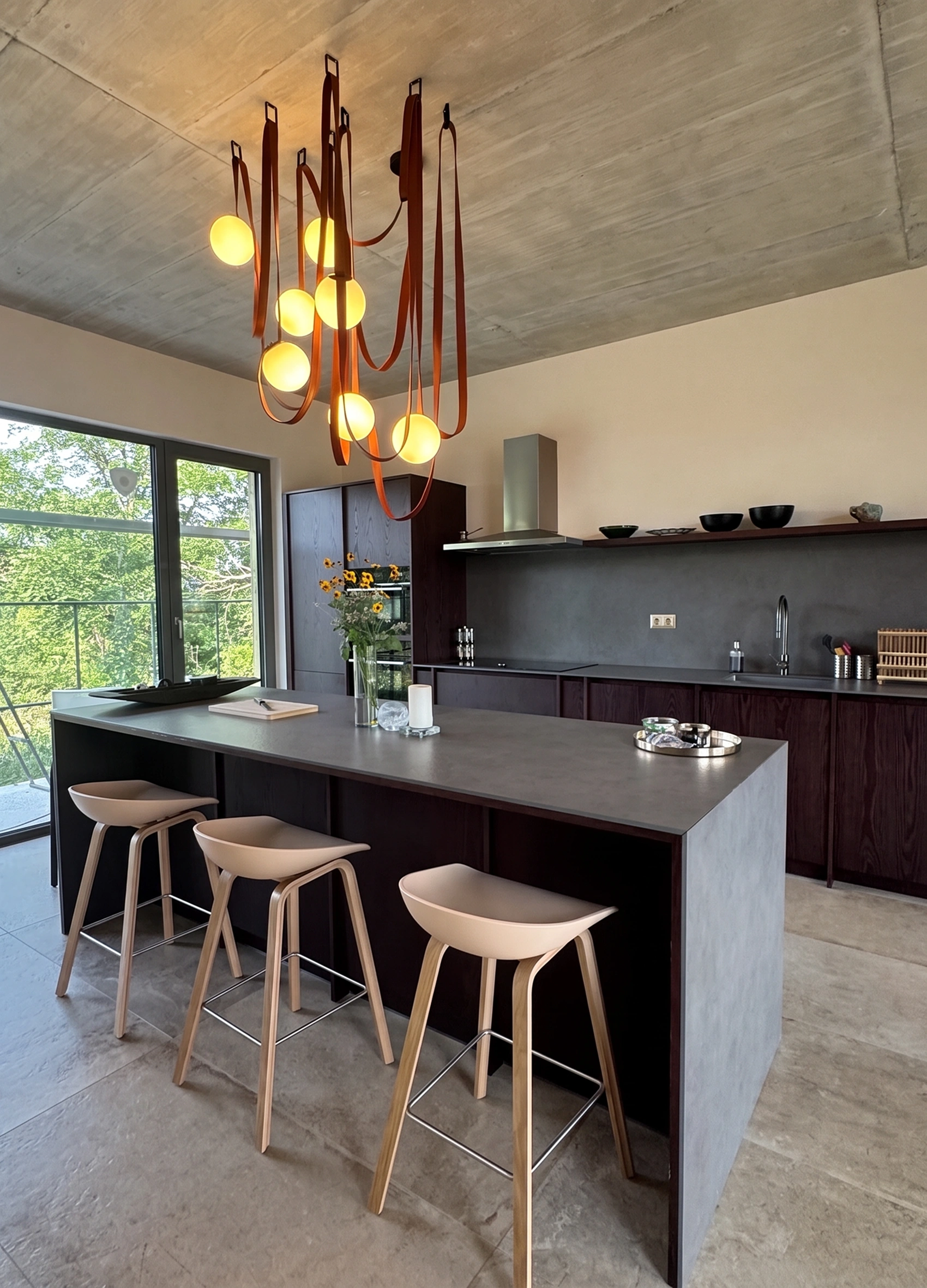
Dark oak fronts and a gray stone island with three light-wood stools beneath a sculptural pendant. The island separates the kitchen from the dining area while keeping the open plan connected, and faces the glazed doors so daylight lands on the worktop. See the Bulgaria project.
3. West Town, Chicago: an island with a built-in wine cellar

Wood and stone in balance; the island is the heart of the kitchen, combining prep space with a built-in wine cellar on the dining side. See the West Town project.
4. Downtown, Chicago: the cooktop on the island

A matte green minimalist kitchen with the island clad in glossy Dekton Aura. The cooktop sits on the island, which moved the main work zone into the room and freed the wall run for storage. See the Downtown Chicago project.
5. Boston: a rounded, fluted island

Warm oak millwork and a rounded island with vertical fluting under a softly curved stone top. The curve keeps the worktop generous while making the kitchen feel softer from the living side. See the Boston project.
How to Sanity-Check a Kitchen Island Plan
A kitchen island should not only look right on a floor plan. It should still work once people, appliances, seating, and daily movement are added:
- Protect clearances first. Do not size the island before the aisles work.
- Decide how many seats you actually need, and make sure people can pass behind the stools.
- Place the prep zone and trash together.
- Plan storage from the inside: drawers on the working side wherever possible.
- Lock outlets and lighting early, before countertops and finished panels.
- Check door swings and pinch points: test the dishwasher, fridge, ovens, and pantry doors fully open.
- Do a real walkthrough test: two people moving through the kitchen while one appliance door is open.
Conclusion
A kitchen island works best when the planning happens in the right order: clearances and size first, then height, seating, storage, outlets and lighting, and only then the style direction. Use the guides linked above to go deeper into each decision, and if you are planning a custom kitchen, Corner can design an island that fits the space, supports your workflow, and feels integrated with the rest of the kitchen.
FAQ: Kitchen Island Planning


