.webp)
Choosing between a kitchen island and a peninsula should start with how the room works, not how it looks in a photo. Both can add counter space, seating, and storage, but they shape the kitchen in different ways. The right choice depends on walkways, appliance doors, stool clearance, cabinet storage, and how people move between the sink, refrigerator, range, dishwasher, and dining area.
An island may feel like the obvious dream feature, but it is not always the better layout. In some kitchens, a peninsula gives more usable counter space and storage without making the room feel tight. The goal is not to force a feature into the plan. The goal is to choose the layout that makes cooking, sitting, entertaining, and storage easier in daily life.
Quick Answer: Island or Peninsula?
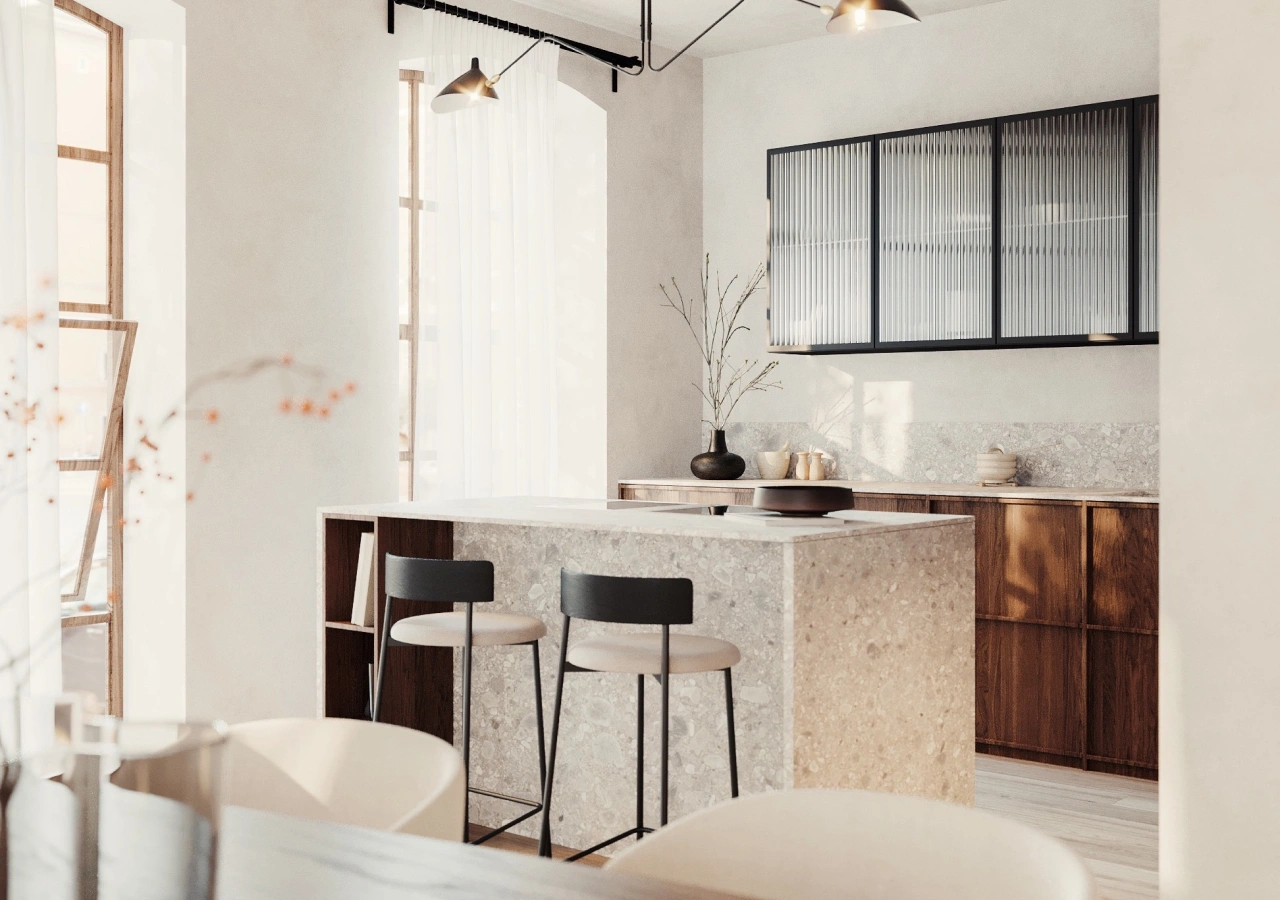
A kitchen island works best when there is enough clearance on all sides, and the homeowner wants a central feature for prep, seating, storage, and design. It is often a good fit for open-plan kitchens where people can move around the island without squeezing past stools, cabinet doors, or appliances.
A kitchen peninsula works best when space is tighter, but the room still needs extra counter space, storage, or seating. Because a peninsula is connected to a wall or cabinet run, it does not need circulation on all four sides. That makes it useful in smaller kitchens, narrower rooms, and layouts where a full island would crowd the main walkway.
The first question is not “Can I fit an island?” It is “Can people still move comfortably around the kitchen when the island is there?”
Island vs Peninsula: Quick Comparison
Start With Flow, Not the Photo
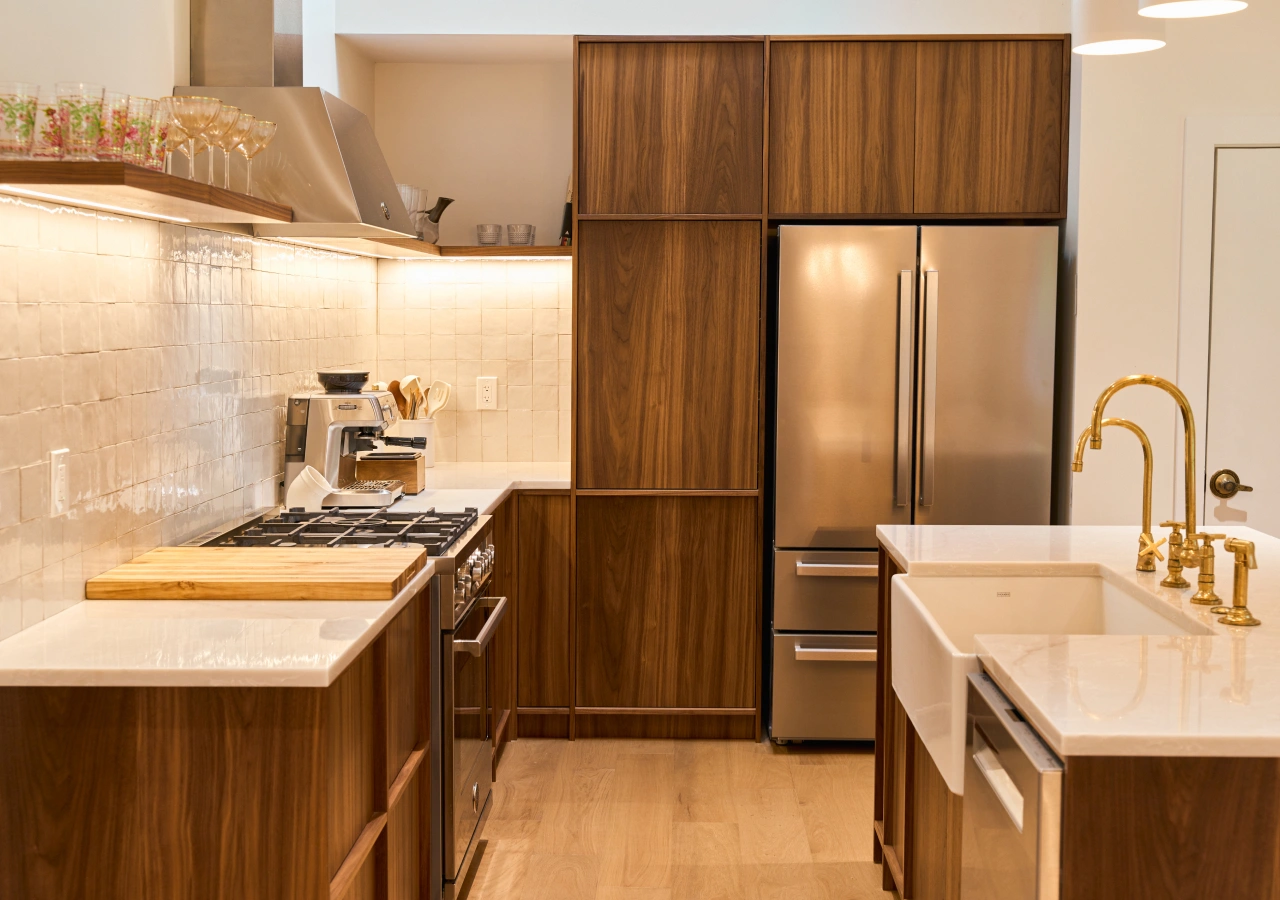
An island may look better in photos, but it only works if the kitchen has enough space around it. Kitchen flow comes first: walking, cooking, opening appliances, sitting, and passing through without the room feeling blocked.
Start by testing the real paths people use every day: fridge to sink, sink to prep, prep to range, dishwasher to storage, and cooking to serving. If an island crowds the fridge, blocks the dishwasher, or makes people move awkwardly around the room, it is not helping the layout.
A peninsula can sometimes solve the same problem with less open floor space because one side connects to a wall or cabinet run. This choice should happen early, since it affects cabinets, counters, outlets, lighting, appliance clearances, and installation details.
Compare Seating: Stools, Peninsula Seating, or a Nook
.webp)
Island seating works well for quick meals, coffee, kids, guests, homework, and conversation while someone cooks. A peninsula can offer a similar counter-seating function in a smaller footprint.
Stools need more space than people often expect. Each seat needs width, knee room, countertop overhang, and enough space behind it so people can pass. As a simple rule, plan about 24 inches of width per person, plus extra clearance if the seating faces a main walkway.
If the goal is more comfortable daily dining, a nook or bench may work better than stools. Stools are useful for casual use, but they do not always replace a proper dining spot.
Compare Storage: Island Drawers vs. Peninsula Cabinet Runs

An island can add useful storage if it is large enough for drawers, pull-outs, trash, prep tools, or serving pieces. It works especially well when the kitchen needs a central prep zone.
But size matters. A small island may not add much storage once seating, countertop overhangs, and clearances are included. Making the island bigger only helps if the walkways around it still feel comfortable.
A peninsula can sometimes be more practical in a smaller kitchen because it extends the main cabinet run. It can add counter space, base cabinets, and a clearer edge between the kitchen and living area. The better choice is the one that adds storage without making movement harder.
How to Know Which Layout Fits Your Kitchen

An island is usually the better choice when the kitchen has enough space for clear walkways on all sides. It can create one central area for prep, seating, storage, and gathering, especially in an open-plan kitchen.
A peninsula is usually better when a full island would crowd the room, but the kitchen still needs more counter space, storage, or seating. It can define the kitchen edge without taking over the middle of the room.
The easiest test is movement. If the island improves the kitchen without tightening the walkways, it may be right. If the room works better with one side attached, a peninsula is probably the stronger layout.
Design Details Come Last

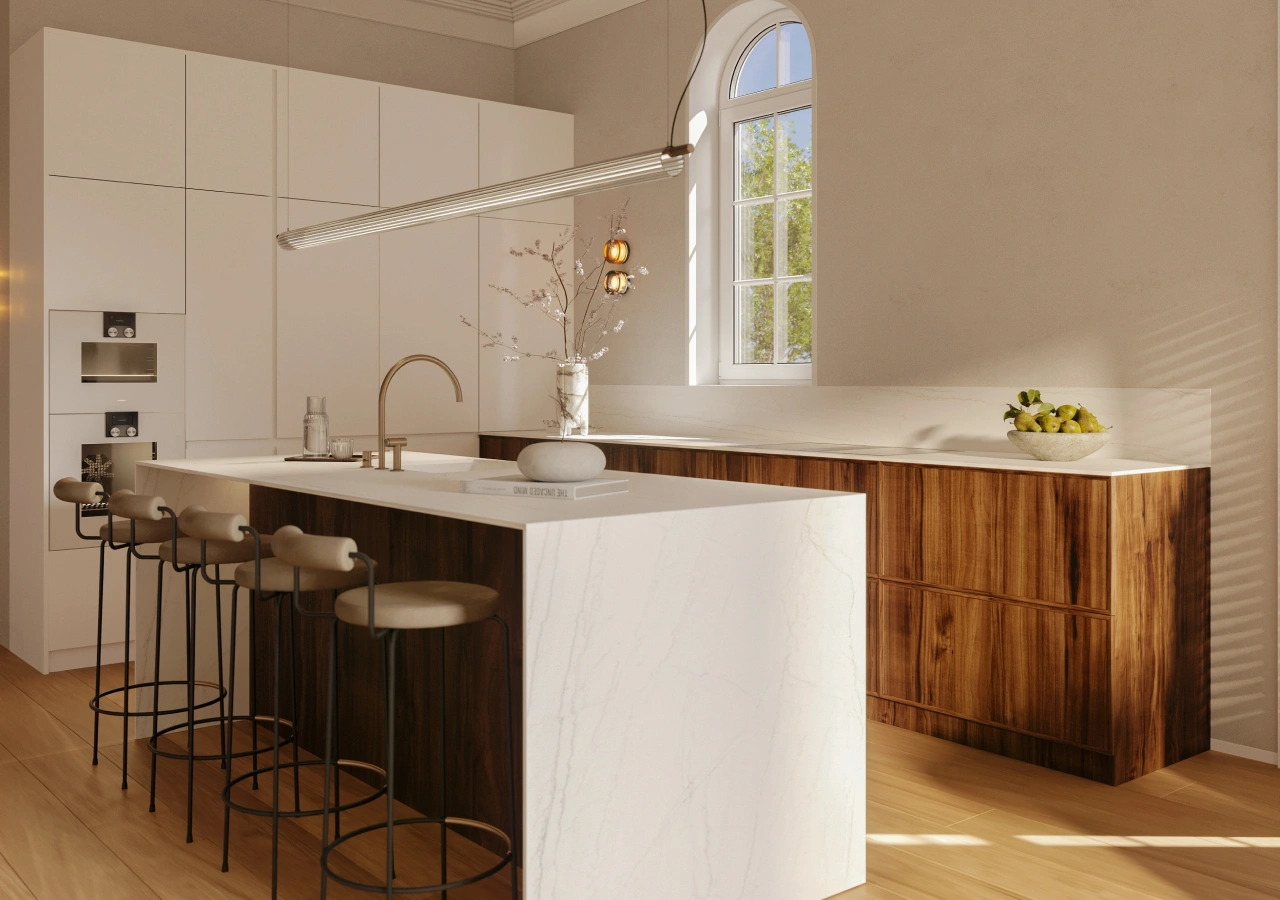
Waterfall sides, fluted panels, rounded corners, curved ends, and feature panels should come after the layout works. These details can make an island or peninsula feel more custom, but they cannot fix poor clearance, tight seating, or awkward appliance placement.
A waterfall side can make the island feel more architectural. A fluted panel adds texture. A rounded end can soften the look and make movement around the end feel easier.
Use these details when they have a purpose, like finishing an exposed side, softening a walkway, or adding interest to a simple cabinet shape. If a detail adds cost but makes the layout less practical, a simpler design is usually better.
Common Mistakes to Avoid
Most island and peninsula problems start when the feature is chosen before the room is tested. These are the issues to catch before drawings are approved:
- Choosing an island because it looks better in photos
- Making the island too large for the room
- Adding stools without checking the walkway behind them
- Forgetting dishwasher, fridge, and oven door clearances
- Putting seating where people will block the prep zone
- Choosing waterfall or fluted details before confirming size
- Assuming a peninsula is less refined than an island
- Forgetting that a nook or bench may be better for real meals
Conclusion
The best choice is not the island or peninsula that looks strongest in a photo. It is the one that makes the kitchen easier to move through, cook in, sit in, and organize. Choose an island when the room has enough clearance and the feature can support prep, seating, storage, and design. Choose a peninsula when space is tighter but you still want counter space, storage, seating, and a clear kitchen boundary.
Rounded ends, waterfall sides, and fluted panels can add warmth and character, but they should be used with a clear purpose. Curves can soften flow and visual weight, but they may also add cost, fabrication complexity, or storage tradeoffs. The most reliable approach is simple: solve the layout first, then choose the details that make the kitchen feel finished.