
.webp)
Kitchen island height seems like a small detail until the island feels uncomfortable to use.
Part of our kitchen island planning guide. Related: size and clearances, cabinets for an island.
If it is too high, daily prep can strain your shoulders. If it is too low, you may find yourself bending over while cooking, washing, or serving food. If the seating height is wrong, stools can feel awkward even when the island itself looks beautiful.
Most kitchen islands are built at standard counter height, but that does not mean every island should be treated the same way. The right height depends on how you plan to use the island, who uses the kitchen most often, whether you want seating, and how the island connects to appliances, storage, and walkways.
What Is the Standard Kitchen Island Height?

The standard kitchen island height is usually 36 inches, the same as most kitchen countertops and base cabinets.
This height works well for everyday kitchen tasks: chopping, cooking, cleaning, serving, and casual dining. It also keeps the island aligned with nearby base cabinets, dishwashers, sinks, ranges, and other built-in elements.
For most modern kitchens, a 36-inch island is the safest and most flexible choice. It gives you one continuous work surface and makes the kitchen feel cleaner, especially in minimalist, Scandinavian, and Japandi-style layouts.
Kitchen Island Height Chart
| Island type | Typical height | Best stool height | Best for |
|---|---|---|---|
| Standard counter-height island | 36 in. | 24–26 in. | Prep, cooking, everyday seating |
| Bar-height island | 42 in. | 28–30 in. | Raised seating, entertaining, visual separation |
| Lower custom island | 30–34 in. | Chair height or custom stool | Baking, accessibility, seated prep |
| Two-level island | 36 + 42 in. | Depends on each section | Separating prep and dining zones |
Is 36 Inches the Best Height for a Kitchen Island?
.webp)
In most kitchens, yes. A 36-inch island is usually the best height because it supports the widest range of uses.
You can prep food, serve meals, work at the island, help children with homework, or use it as a casual breakfast spot. It also works with standard counter-height stools, which are easier to find than custom seating.
A 36-inch island is especially useful when the island includes a sink, dishwasher, cooktop, microwave drawer, pull-out waste bin, or deep storage drawers. These features are usually designed around standard base cabinet height, so keeping the island at counter height makes planning cleaner.
When Does a 42-Inch Bar-Height Island Make Sense?
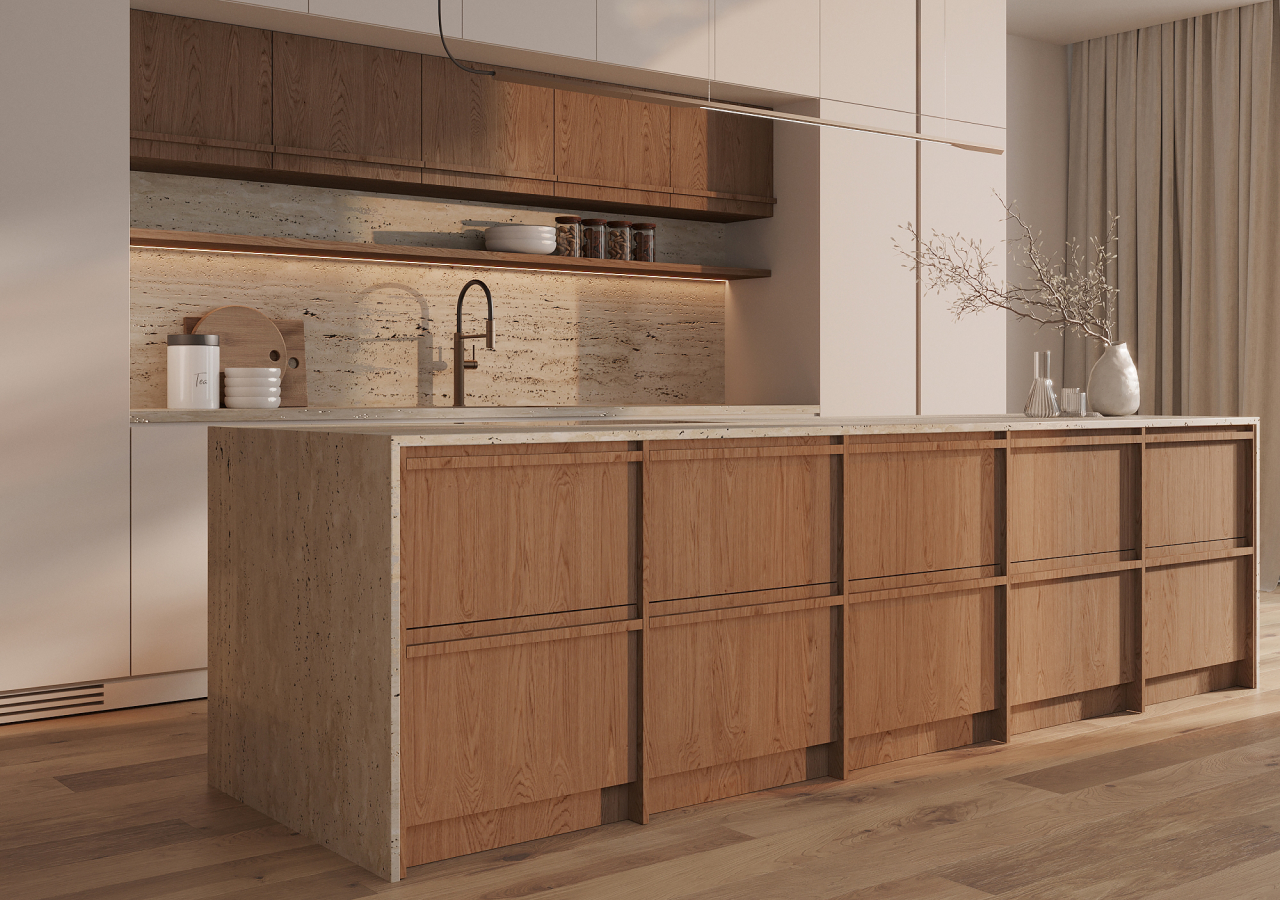
A 42-inch island is considered bar height. It can work well if you want raised seating or a stronger separation between the kitchen and an adjacent living or dining area.
Bar-height islands can also help hide prep mess from view, especially in open-plan spaces. If someone is sitting on the outside of the island, the raised section can create a visual barrier between the seating area and the working side of the kitchen.
The tradeoff is flexibility. A 42-inch surface is less comfortable for food prep and harder for children or shorter adults to use. It can also make the island feel bulkier and more dated than one continuous counter-height surface.
For many modern kitchens, a single-level 36-inch island feels cleaner, calmer, and more useful.
Should You Choose a Custom Island Height?

A custom island height can make sense if the kitchen is designed around specific needs.
A slightly lower island may be useful for baking, seated prep, children, or accessibility. Lower surfaces can make rolling dough, mixing, or working from a seated position more comfortable.
A slightly taller island may help very tall homeowners avoid bending during daily prep. Even a small adjustment, such as moving from 36 inches to 37 or 38 inches, can make a difference if the main user of the kitchen is taller than average.
The key is to decide this before cabinet drawings are finalized. Lowering or raising an island after production is difficult, especially if the island includes appliances, panels, plumbing, stone, or custom storage.
Kitchen Island Seating Height: How to Choose Stools
.webp)
The island height and stool height need to work together. A beautiful stool will still feel wrong if the seat is too high or too low.
For a 36-inch island, choose counter stools that are usually 24 to 26 inches high.
For a 42-inch island, choose bar stools that are usually 28 to 30 inches high.
A good rule is to leave about 10 to 12 inches between the stool seat and the underside of the countertop. This gives enough room for legs without making the seating feel too low.
Also check the shape of the stool. Thick cushions, arms, backs, swivel bases, and wide legs can all affect how comfortably the stools fit under the island.
Don’t Forget Knee Space and Overhang
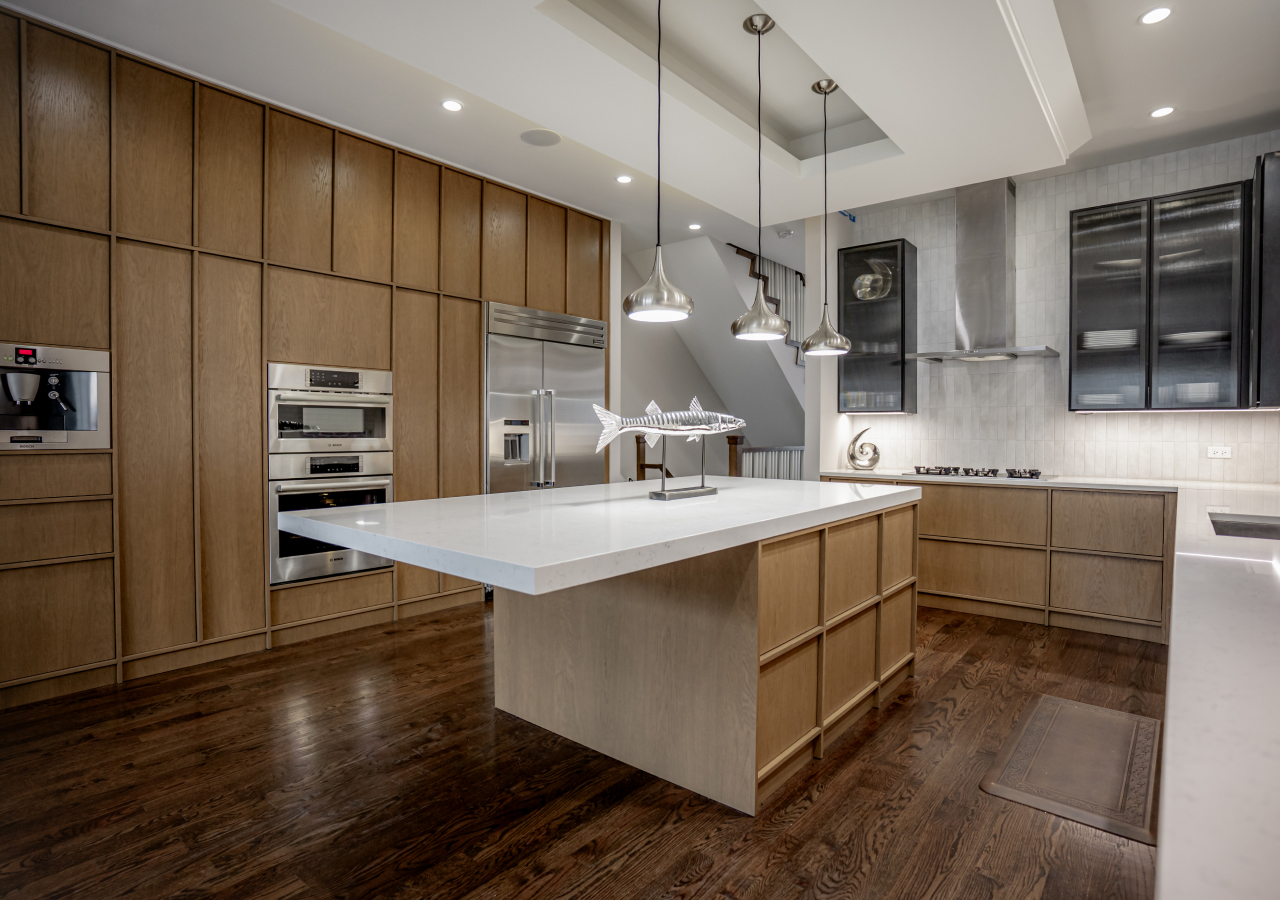
Island seating is not only about height. The countertop overhang matters too.
A shallow overhang can work for quick casual seating, but it may feel uncomfortable for longer meals. In many kitchens, 10 to 12 inches of overhang can work for occasional seating. If space allows, around 15 inches is usually more comfortable.
You should also plan enough width per seat. A common starting point is about 24 inches per person, but wider stools or armrests may need more space.
Before finalizing the island, check:
- how many stools you actually want
- whether the stools can tuck in
- whether people can sit without blocking walkways
- whether the overhang affects drawers, panels, or supports
- whether countertop material needs brackets or extra support
This is especially important for stone countertops, waterfall sides, curved islands, or long seating runs.
Clearance Around the Island Matters Too
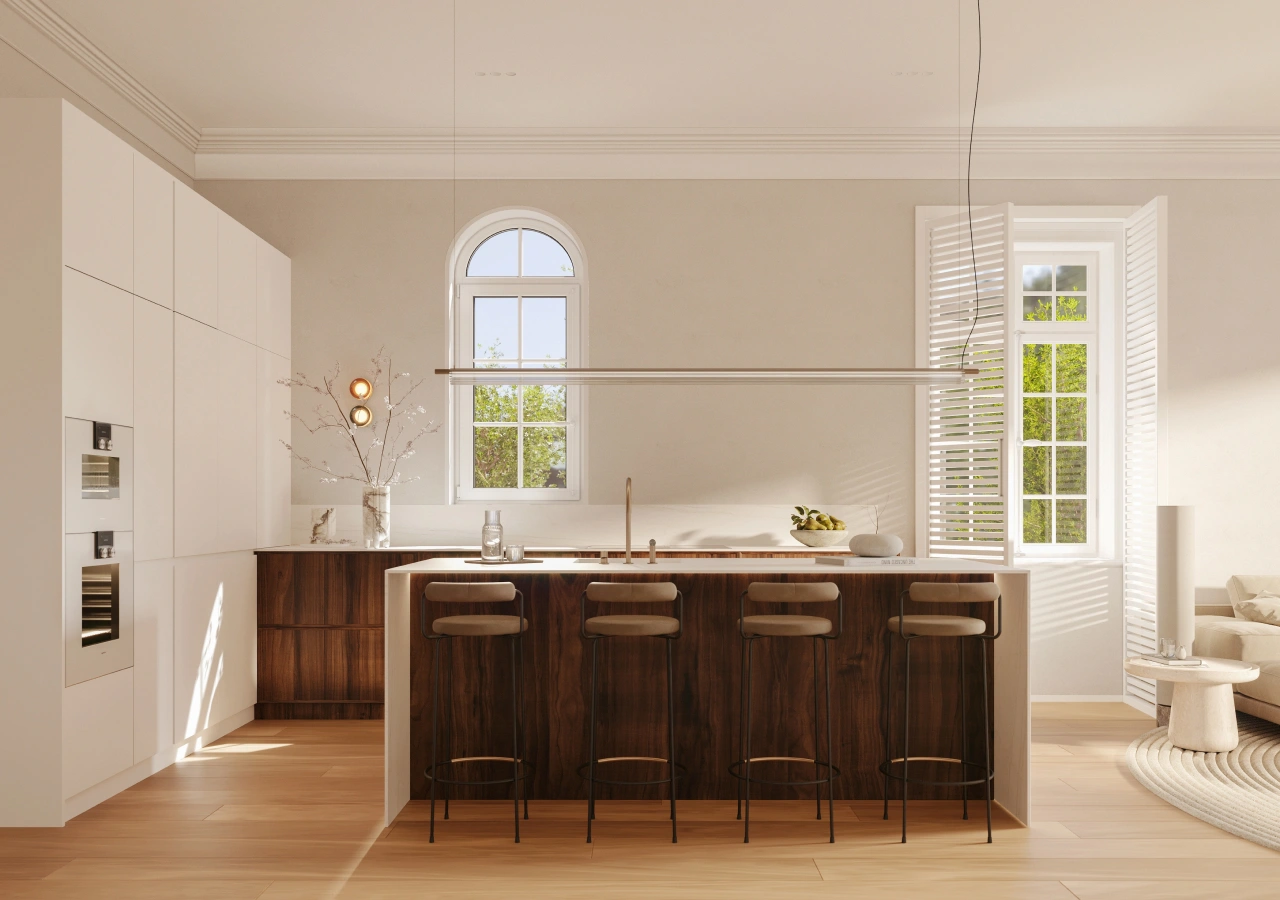
The island height will not matter much if the clearances around it are wrong.
A kitchen island needs enough space around it for people to move, cook, open drawers, and use appliances comfortably. You also need to think about what happens when someone is sitting at the island while another person is cooking.
Check clearance around:
- main walkways
- dishwasher doors
- refrigerator doors
- range or oven doors
- pull-out waste bins
- deep drawers
- corner storage
- seating behind the island
- appliance garages or tall cabinet doors nearby
The goal is not just to fit the island into the floor plan. The goal is to make sure the island works when the kitchen is actually being used.
One-Level vs Two-Level Kitchen Islands
.webp)
Two-level islands used to be very common. A lower 36-inch section was used for prep, while a raised 42-inch section created a bar or seating zone.
This can still work in some kitchens, especially when the goal is to visually separate the cooking area from the living area. But in many modern kitchens, a one-level island is the stronger choice.
A single-level island gives you a larger continuous surface. It is better for prep, serving, baking, family meals, and casual gathering. It also tends to look cleaner, which works well in minimalist, Scandinavian, and Japandi kitchens.
If the kitchen is compact, one level usually feels less busy. If the island is large, one level makes the surface more flexible.
How Island Height Affects Appliances and Storage
Island height can also affect what fits inside the island.
If you plan to include a microwave drawer, sink, dishwasher, pull-out waste bin, wine fridge, deep drawers, or hidden outlets, the cabinet height needs to support those choices. Some appliances are designed around standard cabinet dimensions and may not work as cleanly with a lower or unusual island height.
Storage matters too. A taller or lower island can change drawer proportions, toe-kick height, panel alignment, and the look of the cabinet fronts. In a custom kitchen, these details can be adjusted, but they need to be planned early.
This is why island height should be decided before technical drawings, not after the design is mostly finished.
What Is the Best Kitchen Island Height for a Modern Kitchen?
For most modern kitchens, the best island height is 36 inches.
It works with standard cabinets, standard appliances, counter-height stools, and everyday kitchen tasks. It also creates a cleaner visual line than a raised bar section.
A custom height can still make sense if there is a specific reason: accessibility, baking, seated prep, very tall homeowners, or a special layout. But if the island needs to handle cooking, prep, seating, storage, and appliances, standard counter height is usually the most practical choice.
Conclusion
Kitchen island height affects much more than appearance. It changes how the island feels for prep, seating, storage, appliances, and daily movement through the kitchen.
For most homes, a 36-inch counter-height island is the most practical and timeless choice. Bar-height and custom-height islands can work well too, but only when they solve a specific layout or comfort need.
Explore Corner’s kitchen collections to see how island height, storage, seating, and clean modern cabinetry can work together in a more thoughtful kitchen design.


