
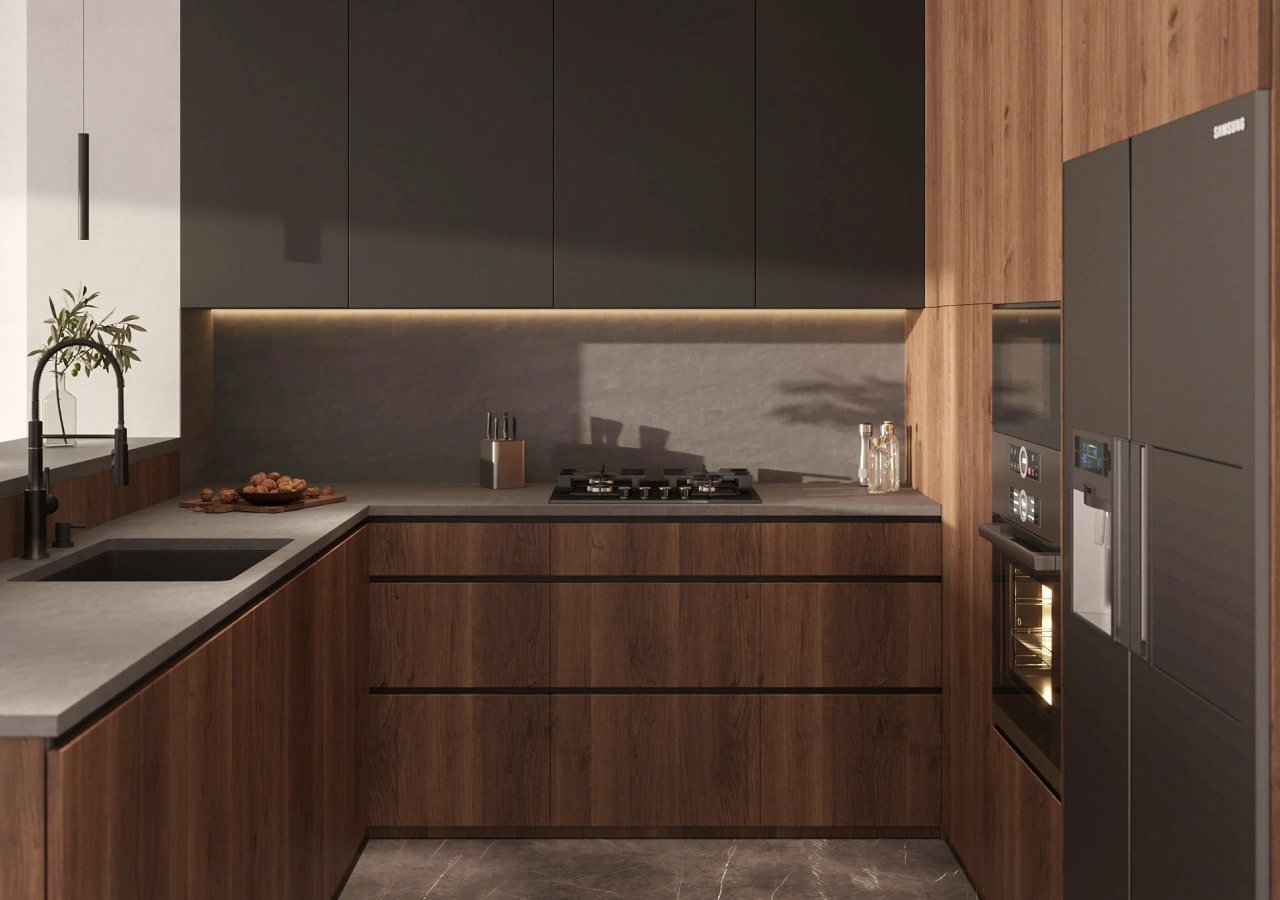
Choosing between one-color and two-tone kitchen cabinets can make a renovation feel more complicated than it needs to be. One finish can make a kitchen feel calm and seamless. Two finishes can add warmth, contrast, and depth, especially when wood, painted fronts, or matte materials are used together.
The better choice depends on the space itself, not just the color sample. Kitchen size, natural light, flooring, countertop, appliance placement, and nearby rooms all affect whether one finish or two will feel more balanced.
Quick Answer: One Color or Two Tone?
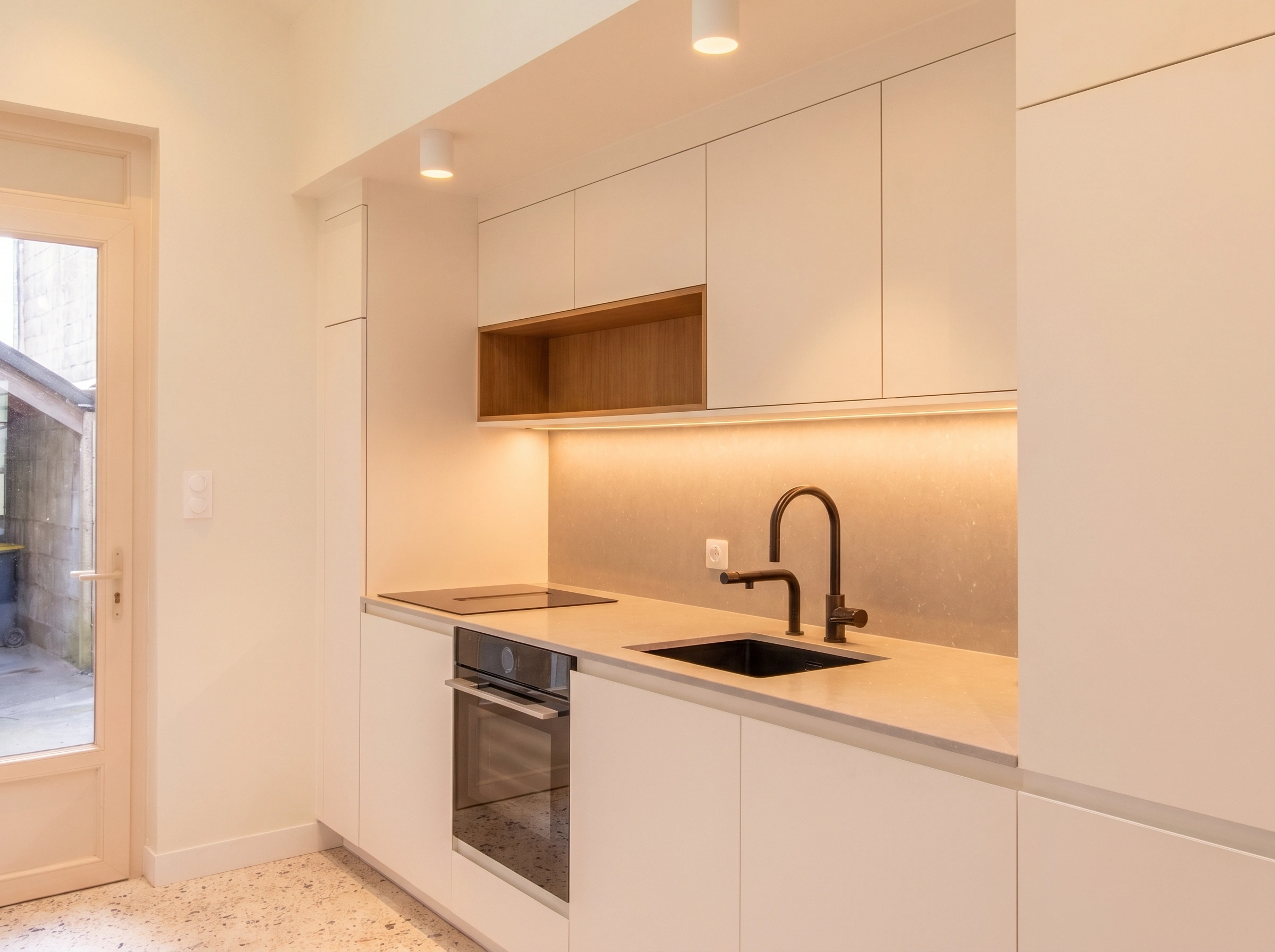
A one-color kitchen uses one main cabinet finish throughout the room. It works well when cabinetry should feel calm, continuous, and built into the architecture. This is often the right direction for small kitchens, minimalist kitchens, tall pantry walls, or rooms where the countertop, lighting, appliances, or open shelving already add enough detail.
A two-tone kitchen uses two cabinet finishes with a clear design purpose. Wood lower cabinets can bring warmth. Light upper cabinets can reduce visual weight. A darker island can become a focal point. An off-white bar or pantry wall can soften a stronger wood tone.
When One-Color Kitchen Cabinets Work Best
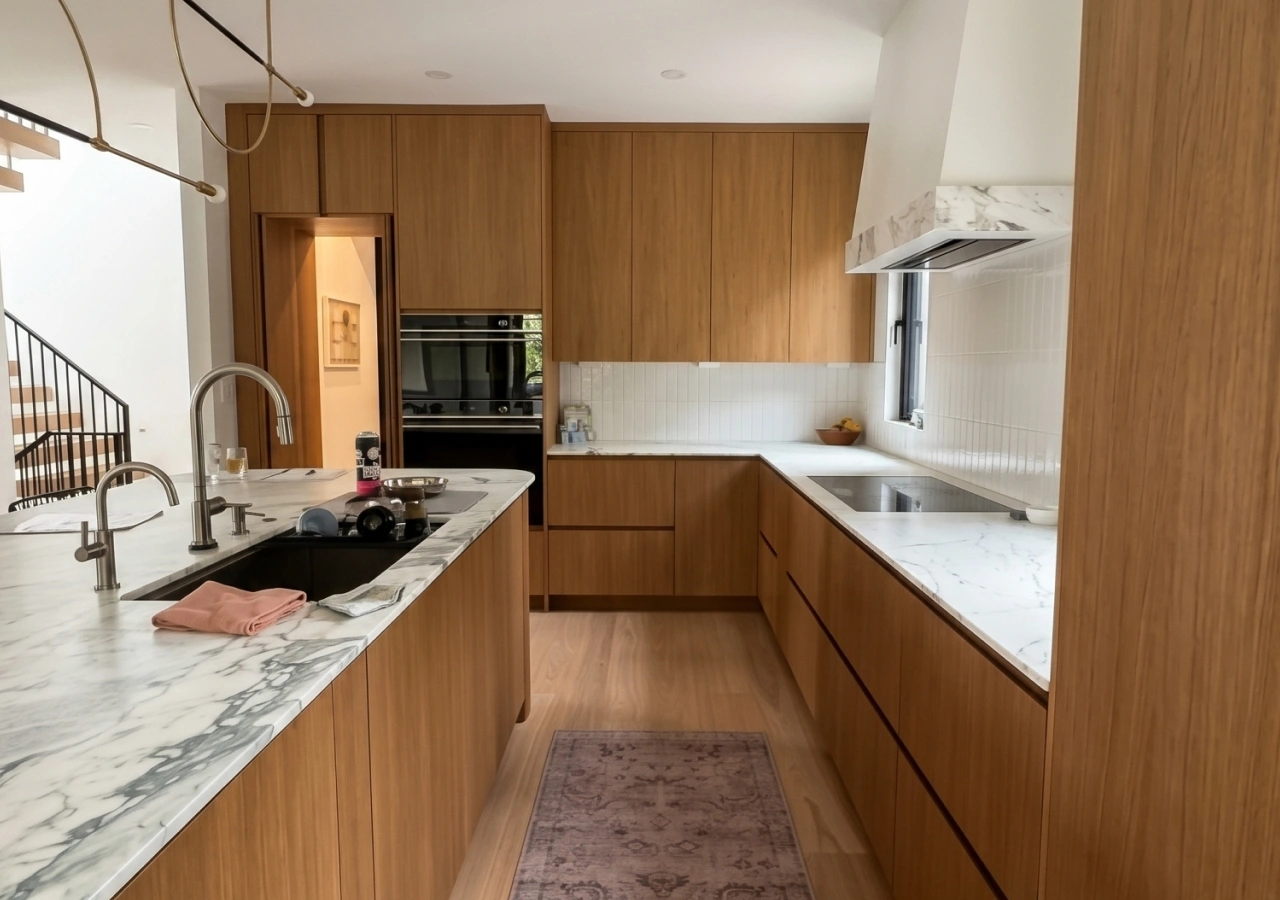
One-color cabinets work best when the kitchen needs visual calm. A single finish reduces breaks between cabinet zones and often makes the room feel more organized, especially in compact layouts.
One-color does not mean boring. A full oak kitchen can feel warm and natural. A soft white or beige kitchen can feel quiet and architectural. Walnut can feel deep and refined when balanced with pale stone and warm walls. Texture, grain direction, cabinet proportions, handleless details, lighting, and countertop choice can all add depth without adding a second cabinet color.
This approach also helps when the room already has several accents, such as open shelving, visible appliances, pendant lights, a strong floor, or an expressive countertop. In a minimalist or Japandi kitchen, one finish can create the quiet foundation, while deep drawers, concealed storage, integrated waste bins, and appliance garages keep the calm look practical.
When Two-Tone Kitchen Cabinets Work Best
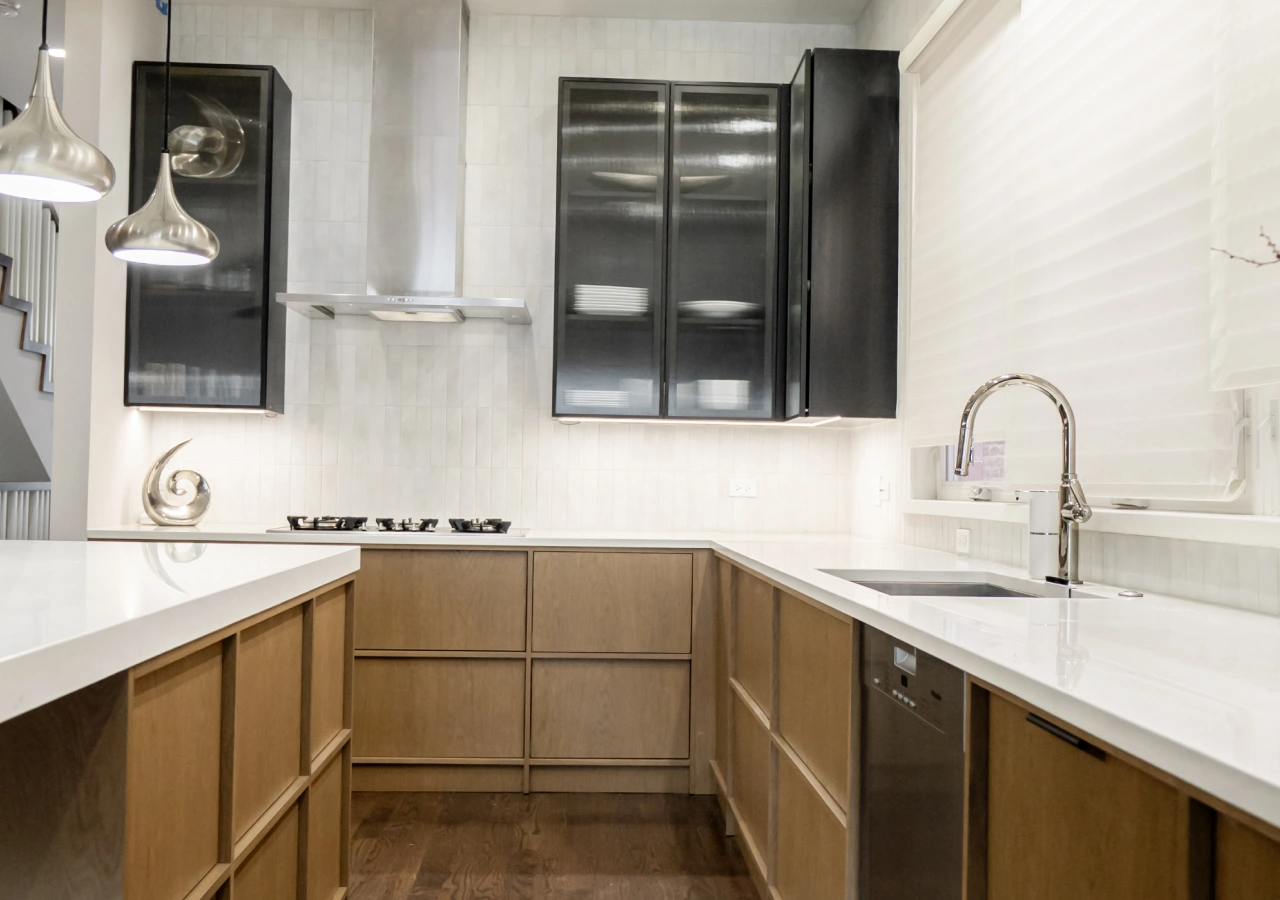
Two-tone cabinets work best when the second finish has a job. It should make the kitchen warmer, lighter, more structured, or better connected to nearby spaces.
The strongest two-tone kitchens solve a specific design issue. Wood can make a kitchen feel warmer. Light upper cabinets can keep the room open. A darker island can give the layout structure. A painted pantry wall can make tall storage feel quieter. An off-white bar beside a walnut kitchen can give the darker wood room to breathe.
This is why two-tone kitchens often work well in warm minimalist interiors. Many homeowners want the natural feeling of oak or walnut, but not the heaviness of wood everywhere. Mixing wood veneer with painted, laminate, or matte fronts can create a more balanced room.
A two-tone kitchen should be easy to explain. If the answer is only “we liked both colors,” the palette may need more structure.
The Most Reliable Two-Tone Layout: Wood Lowers + Light Uppers
.webp)
Wood lower cabinets with white, cream, or off-white upper cabinets are one of the most reliable two-tone kitchen layouts. Heavier materials feel natural at the base, while lighter finishes keep the upper part of the room open.
This combination works especially well in Japandi, Scandinavian, and warm minimalist kitchens. Oak lower cabinets feel relaxed and natural. Walnut lowers feel richer and more architectural. Darker stained wood can also work when the surrounding materials stay soft.
Light uppers reduce the visual weight of wall cabinets and can make the room feel brighter, especially in kitchens with limited daylight or a full run of upper storage. A quiet stone, pale quartz, or subtle marble-look surface can connect the wood and painted fronts. If the countertop is very busy, the cabinet palette may need to stay simpler.
Other Two-Tone Options: Island, Pantry, Appliance Wall, or Bar
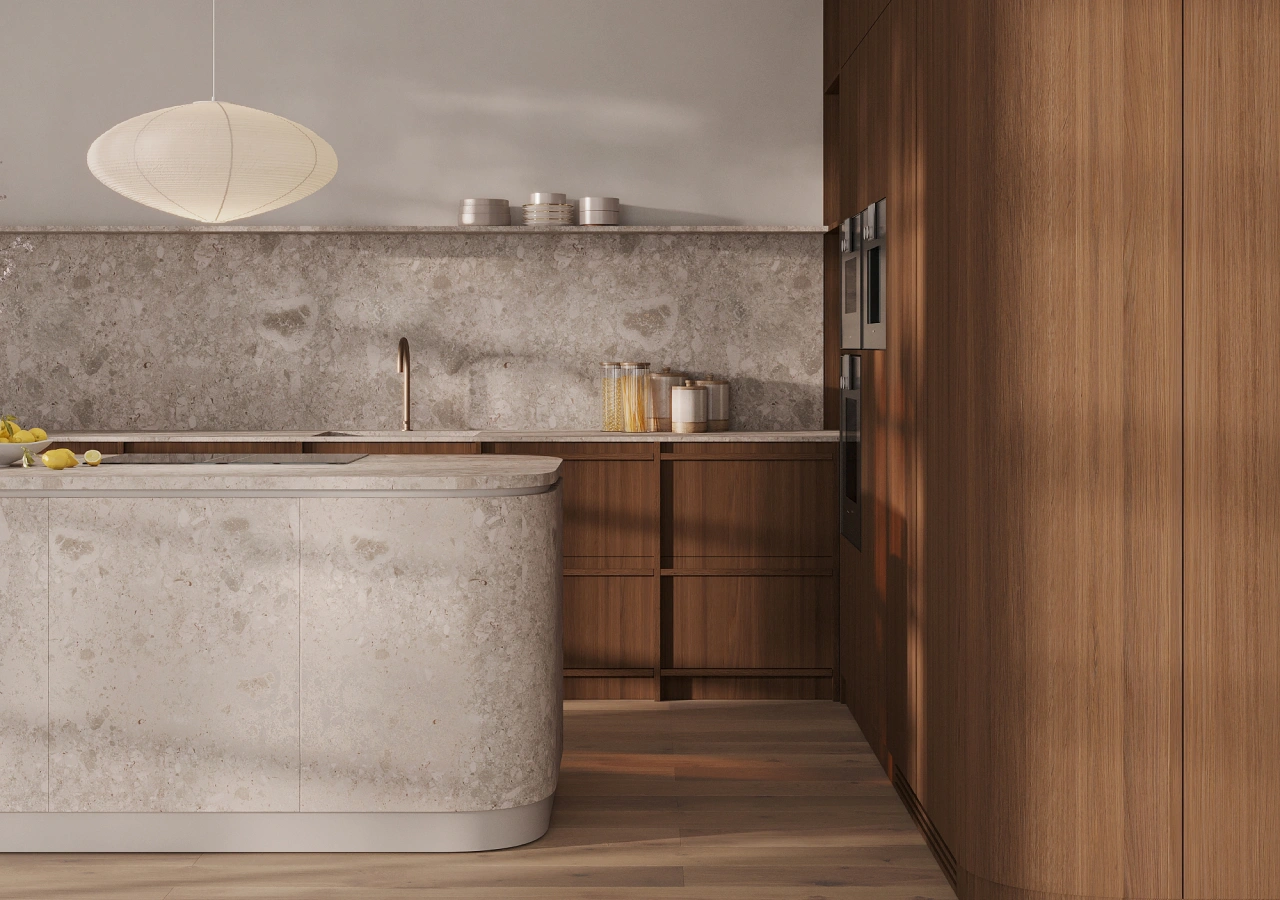
Two-tone kitchen cabinets do not have to be split between upper and lower cabinets. In many custom kitchens, it makes more sense to separate finishes by zone.
A wood island can make the center of the kitchen feel like furniture. A painted pantry wall can keep tall storage quiet. A darker appliance wall can create structure. A lighter bar or side cabinet can support a darker main kitchen without matching it exactly.
Good two-tone options include a wood island with neutral perimeter cabinets, wood base cabinets with a painted pantry wall, walnut kitchen cabinets with an off-white adjacent bar, a dark appliance wall with a lighter working zone, or muted green accent cabinets with oak as the main material. The finish change should follow the architecture of the room, not just the cabinet count.
How Adjacent Rooms and Budget Affect the Decision
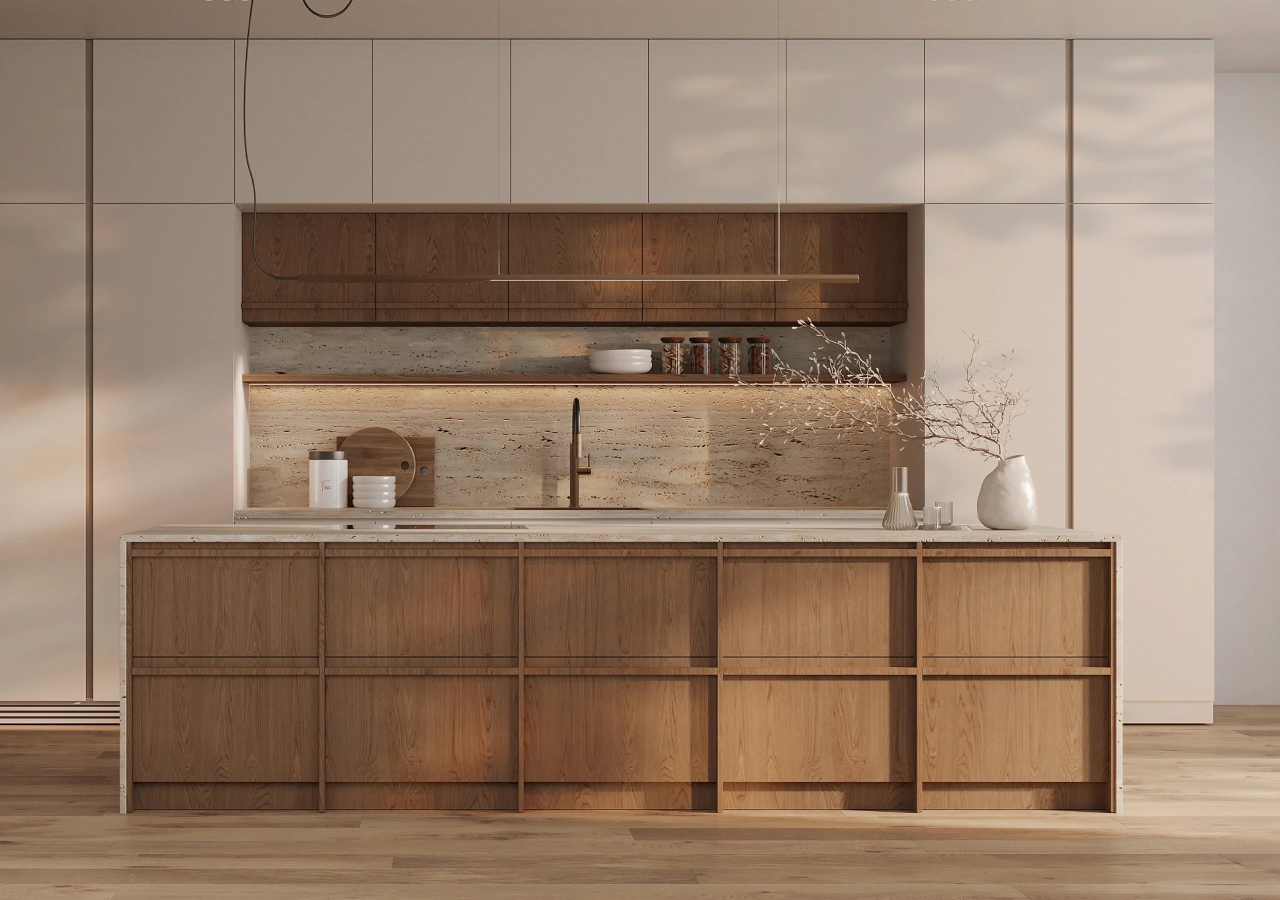
Kitchen cabinet colors should be chosen with the surrounding rooms in mind. In an open-plan home, the floor, dining area, living space, dry bar, pantry, and appliance wall all affect how the cabinet finish reads.
Flooring is usually the biggest fixed material. If the floor already has a strong wood tone, the cabinet wood should relate to it. The tones do not need to match perfectly, but they should not fight each other.
Budget also matters. A full kitchen in premium wood veneer usually costs more than a kitchen that mixes wood with painted, laminate, or matte fronts. That does not make a mixed-material kitchen a downgrade. When planned intentionally, it can be the smarter design choice.
If wood is the lead material, place it where it matters most: base cabinets, island, open shelving, or a visible tall run. If a matte painted or laminate finish is the support, use it in larger calm planes, such as uppers, pantry walls, appliance walls, or secondary storage. Cabinet colors should be checked with countertop, flooring, and wall samples whenever possible before final approval.
Common Mistakes to Avoid
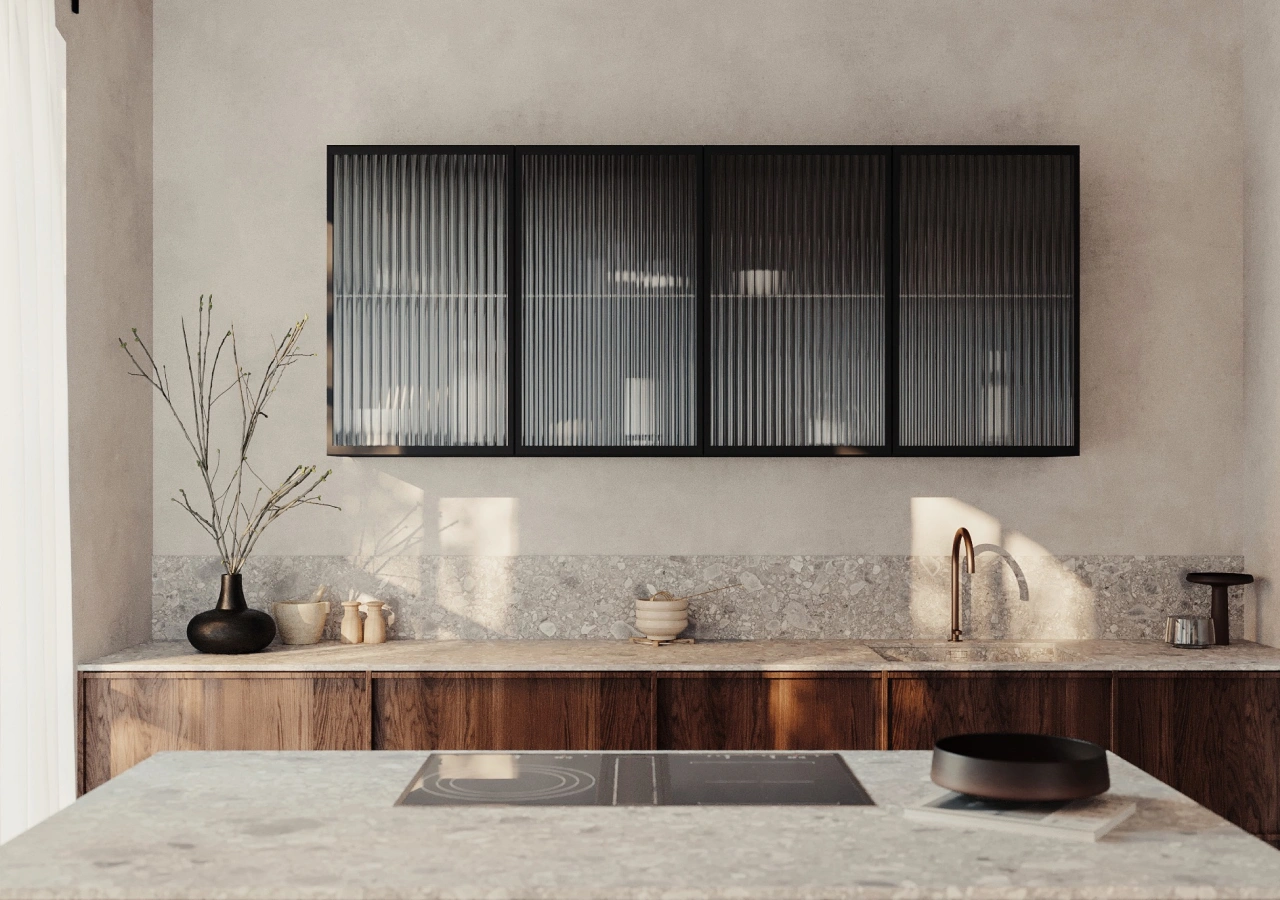
The biggest mistake is choosing two-tone cabinets only because they feel trendy. Two-tone can be timeless, but only when the finish placement has logic. Another common mistake is mixing too many wood tones. Several wood finishes can work, but only with clear hierarchy.
Dark upper cabinets can look beautiful in the right room, but in a low-light kitchen they may make the ceiling feel lower and the room heavier. Dark finishes often work better on lower cabinets, islands, appliance walls, or bar zones.
Avoid choosing cabinet colors before reviewing countertop and floor samples. A white that looks clean online may feel cold beside walnut. A muted green may feel stronger in real light. Cabinet color should be chosen as part of the full material palette.
Conclusion
One-color and two-tone kitchen cabinets can both feel timeless when they are chosen with intention. A one-color kitchen is best for calm continuity, smaller spaces, seamless storage walls, and rooms where the cabinetry should stay quiet. A two-tone kitchen is strongest when each finish has a clear role, such as wood lowers for warmth, light uppers for openness, or a darker island for structure.
Before deciding, look at the whole room: floor, countertop, walls, appliances, adjacent spaces, and daily function. To explore the direction that fits your home, start with Corner Renovation’s kitchen collections, real project examples, or a design consultation focused on your layout and materials.


