
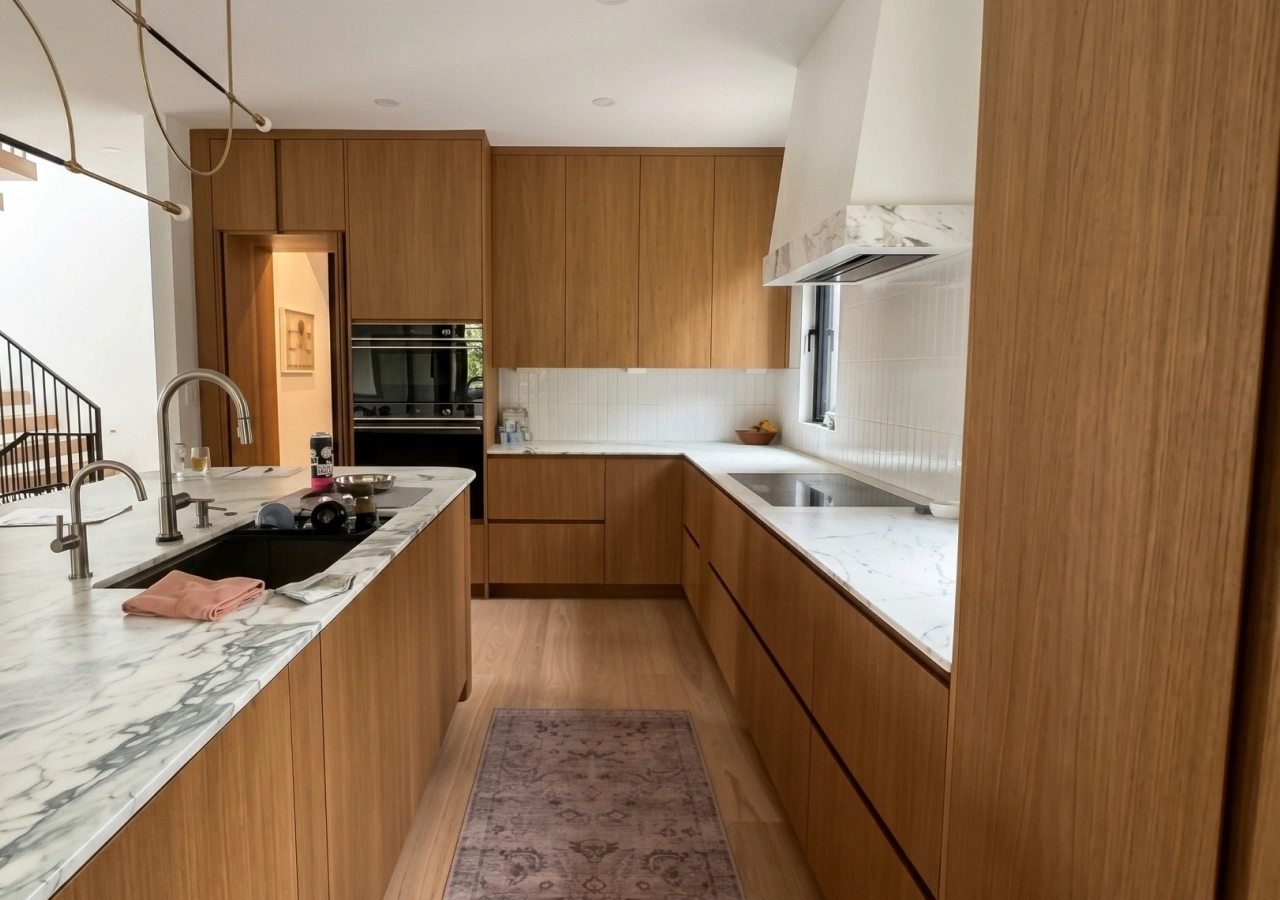
Wood kitchens feel natural, calm, and more personal than a fully painted kitchen. They work especially well in modern renovations because wood adds warmth to clean lines, pale stone, matte finishes, and integrated storage. The challenge is using enough wood to make the room inviting without making it dark, heavy, or busy.
The answer is to give wood a clear role. Good storage also matters because clear counters allow the wood and surrounding materials to feel calmer.
How Do You Keep a Wood Kitchen From Feeling Heavy?
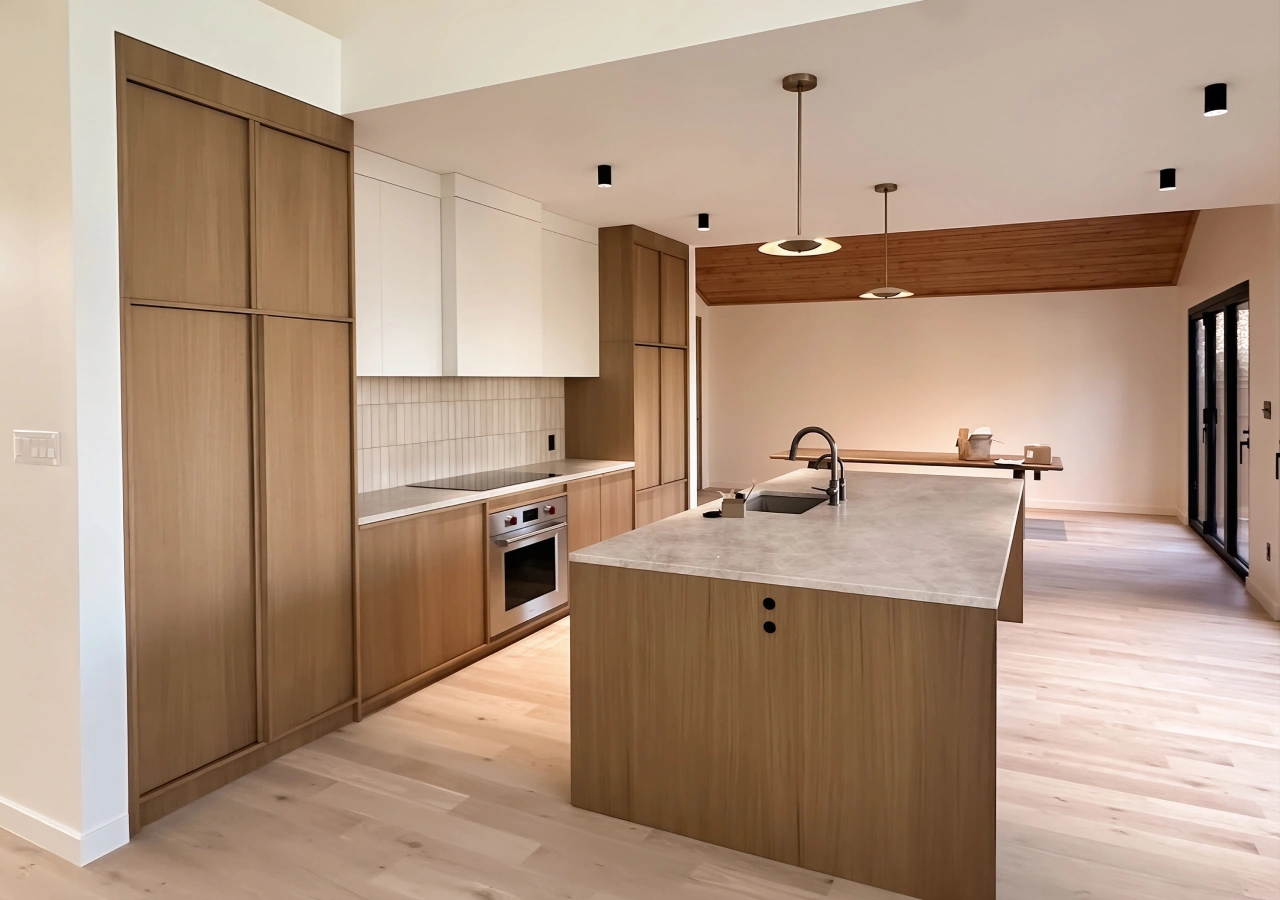
A wood kitchen feels lighter when the wood tone, placement, and contrast are planned together. Light oak creates an airy look, golden oak feels warm and grounded, and walnut or dark oak needs stronger contrast from pale counters, light uppers, glass, or layered lighting.
Use wood strategically rather than on every surface. Wood lower cabinets, a wood island, or a wood pantry wall can all bring warmth while leaving visual breathing room.
Wood Tone and Placement at a Glance
| Wood Direction | Best For | Balance Move |
|---|---|---|
| Light oak or washed-out oak | Airy, Scandinavian, Japandi, small kitchens | Pair with warm white, pale stone, and soft floor contrast |
| Mid-tone or golden oak | Warm, natural, grounded kitchens | Use calm counters and avoid overly yellow flooring combinations |
| Walnut or dark oak | Rich, architectural kitchens | Add light counters, lighter uppers, glass, or integrated lighting |
| Wood lowers + light uppers | Two-tone kitchens that need openness | Keep the upper half quiet and bright |
| Wood island + neutral perimeter | Open-plan kitchens | Let the island act as the warm focal point |
Start With the Right Wood Tone
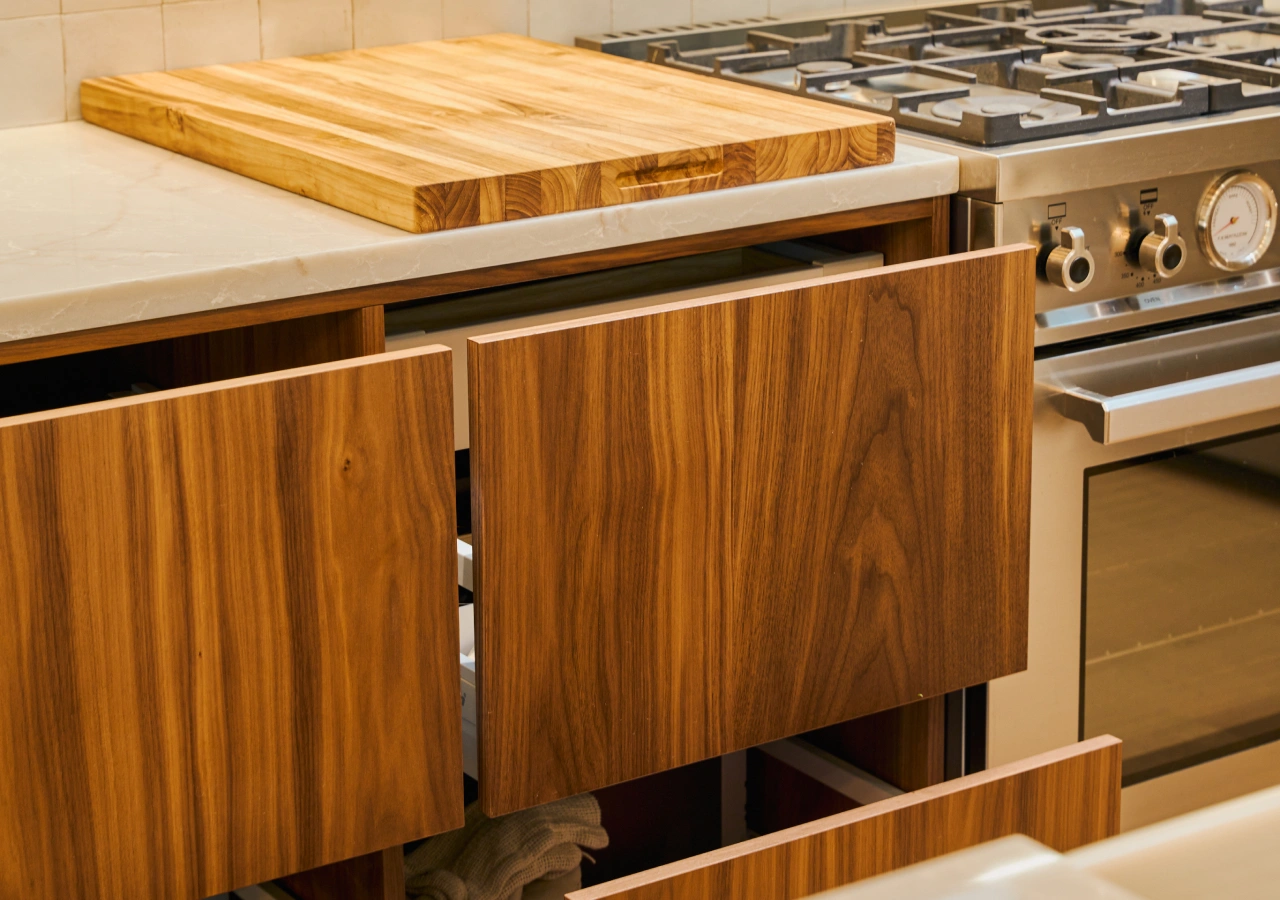
Choose the wood tone before deciding how much wood to use. Tone affects nearby surfaces, including countertops, flooring, hardware, wall color, appliances, and lighting.
A light and airy kitchen usually starts with light oak, natural oak, or washed-out oak. White oak lower cabinets with white or off-white uppers show how wood can add warmth while keeping the upper half open.
A warm and grounded kitchen often uses mid-tone oak, golden oak, or rift-cut oak with a warmer finish. These tones feel inviting without becoming too dark. A rich and architectural kitchen leans toward walnut, dark oak, or walnut-stained oak. These woods bring depth and structure, but they need more contrast. Walnut lowers with cream uppers, for example, can feel elegant without overwhelming the room.
Decide Where Wood Should Appear
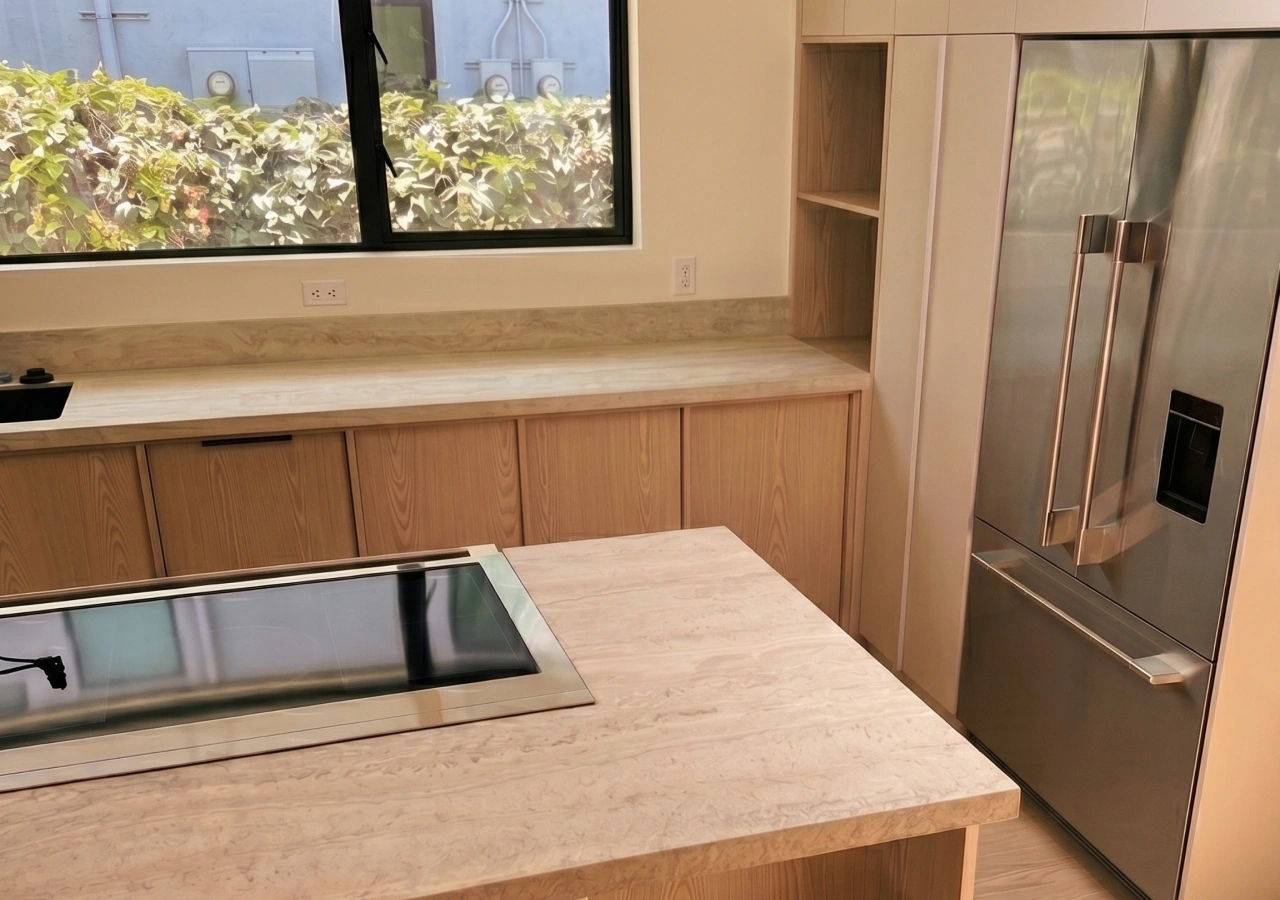
Wood does not need to appear everywhere to make a kitchen feel warm. Selective wood often looks more refined because it gives the material a clearer purpose.
One dependable approach is wood lower cabinets with white, cream, or off-white uppers. The wood grounds the room below the counter, while the lighter upper cabinets keep eye level open. This palette works well because it puts visual weight below and lightness above.
Another strong option is a wood island with neutral perimeter cabinets. A walnut island paired with light stone and glass-front storage can become the warm focal point without making the whole kitchen feel dark.
Wood can also work on a pantry wall, a coffee station, base cabinets with minimal uppers, or the most visible furniture-like element. Ask where wood will add the most warmth, function, and value.
Balance Wood With Quiet Materials
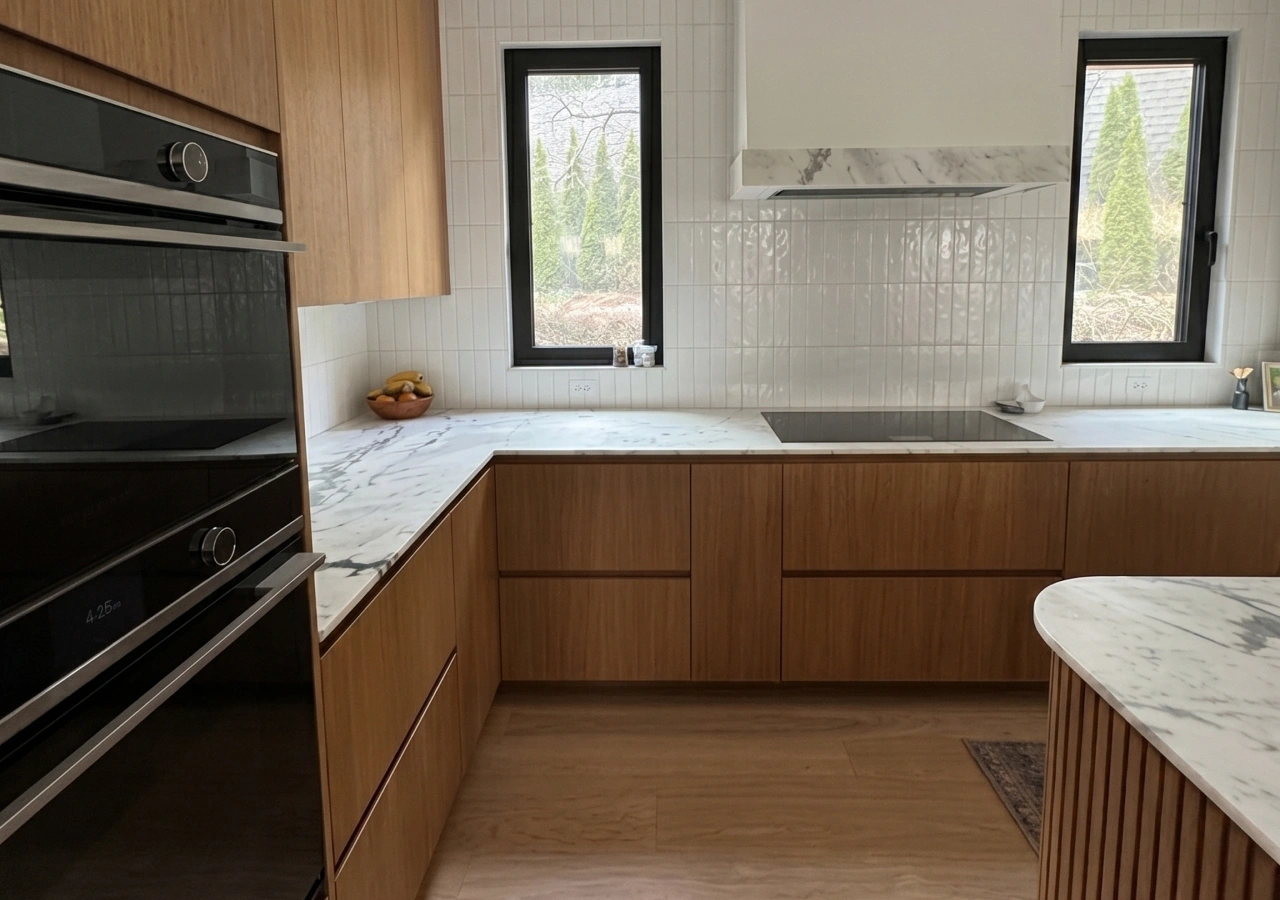
Wood already brings texture, so nearby materials should support it rather than compete with it. If the cabinetry has strong grain, the countertop, backsplash, hardware, and wall finishes should be calmer.
Corner’s collections show several useful versions of this balance: natural oak with calm surfaces, darker wood against light matte fronts, white-and-oak layouts, and muted green used as a soft color contrast. The thread running through these kitchens is restraint. One material leads, and the rest of the palette is edited.
Reliable pairings include cream, off-white, warm white, muted green, natural stone, marble, stone-look counters, concrete, microcement-style surfaces, plaster hoods, restrained stainless steel accents, glass-front cabinets, and matte solid-color fronts.
Oak with muted green can feel soft and natural, while walnut with stainless steel feels sharper and more architectural. Both can work beautifully as long as the rest of the palette stays edited.
Coordinate Wood Cabinets With Flooring
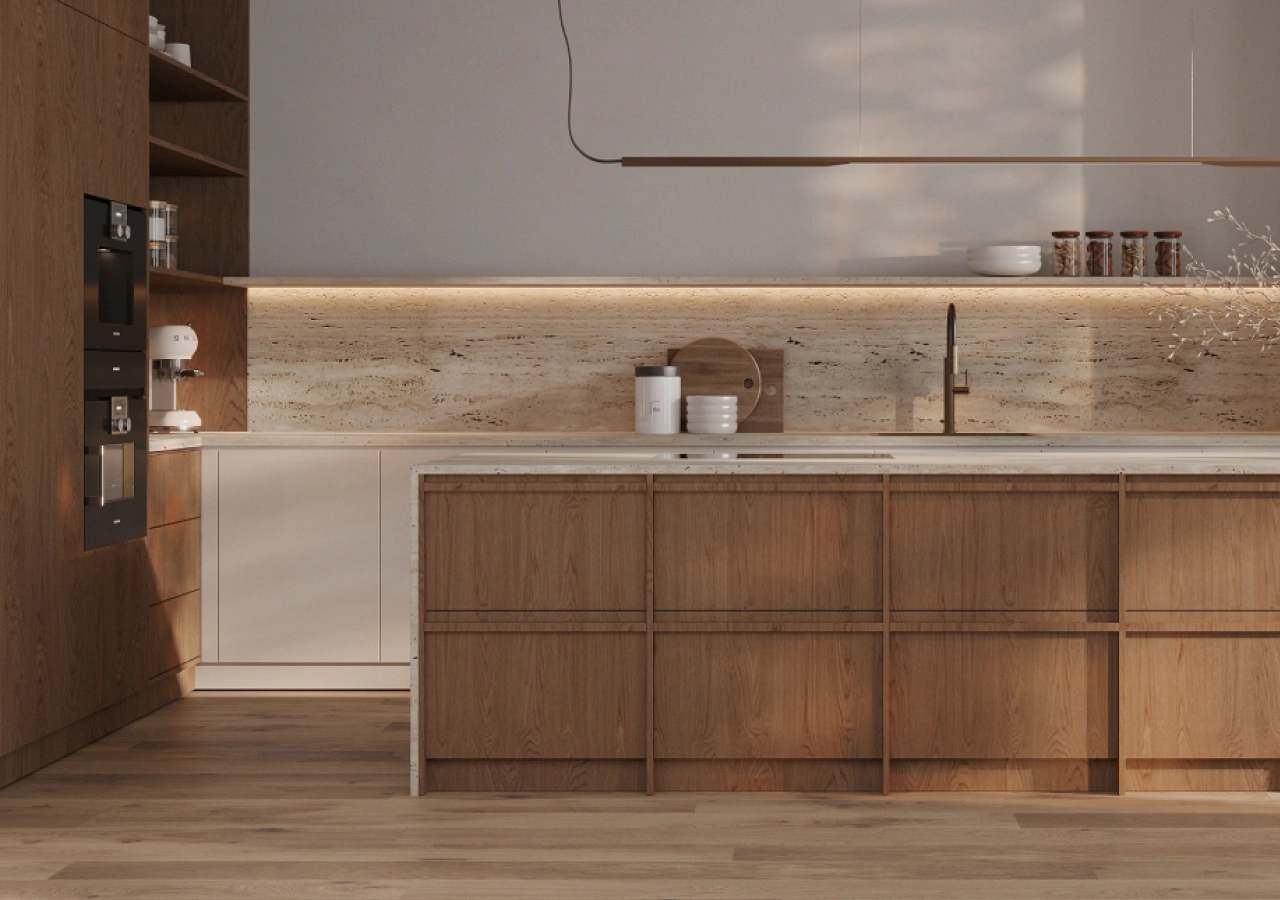
Wood cabinets and wood floors should relate to each other, but they do not need to match exactly. A near-match can look accidental when the tones are only slightly different.
Coordinate undertones and create soft contrast. If the floor is pale and neutral, the cabinetry can be slightly warmer or deeper. If the floor already has strong warmth, a quieter cabinet finish can prevent the room from feeling too yellow or orange.
Warm natural cabinetry can work with light oak floors, but the relationship needs to be planned with physical samples. Put the cabinet sample next to the flooring, countertop, and wall color, then check the group in morning, afternoon, and evening light.
Keep Wood Tones and Grain Direction Intentional
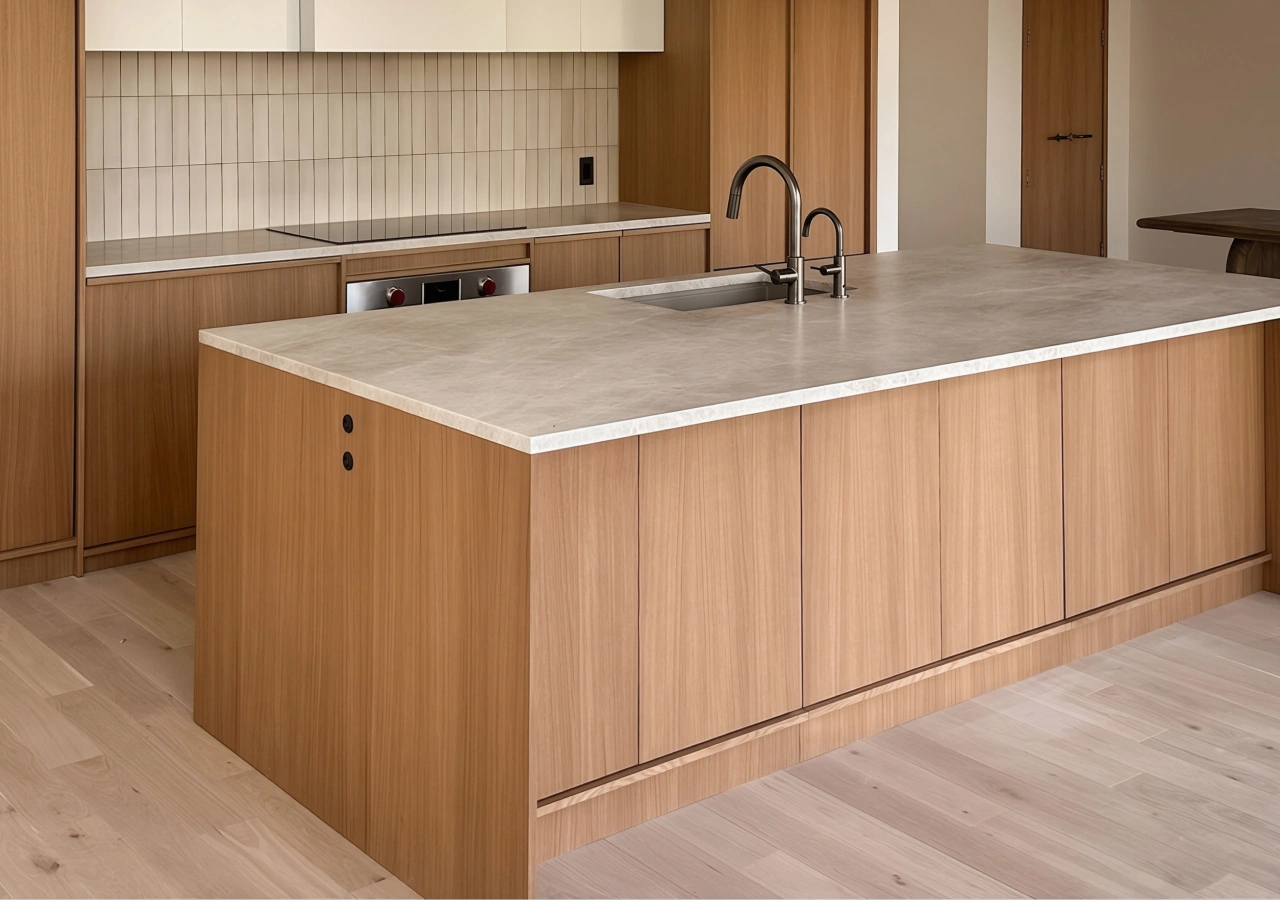
Mixed wood tones can look beautiful when each tone has a clear role. They feel messy when several unrelated finishes appear without a system.
A practical starting point is one main wood tone and one clearly defined secondary tone. For example, the main cabinetry might be light oak, while the island uses a darker walnut tone. Shelves, handles, or open details can then repeat one of those finishes so the palette feels connected.
Grain direction also affects how calm the kitchen feels. Continuous grain can make slab fronts look custom and quiet. Vertical grain emphasizes tall pantry units. Horizontal grain can visually widen a base cabinet run. Framed fronts naturally break up larger wood surfaces.
Reduce Visual Weight Above Eye Level
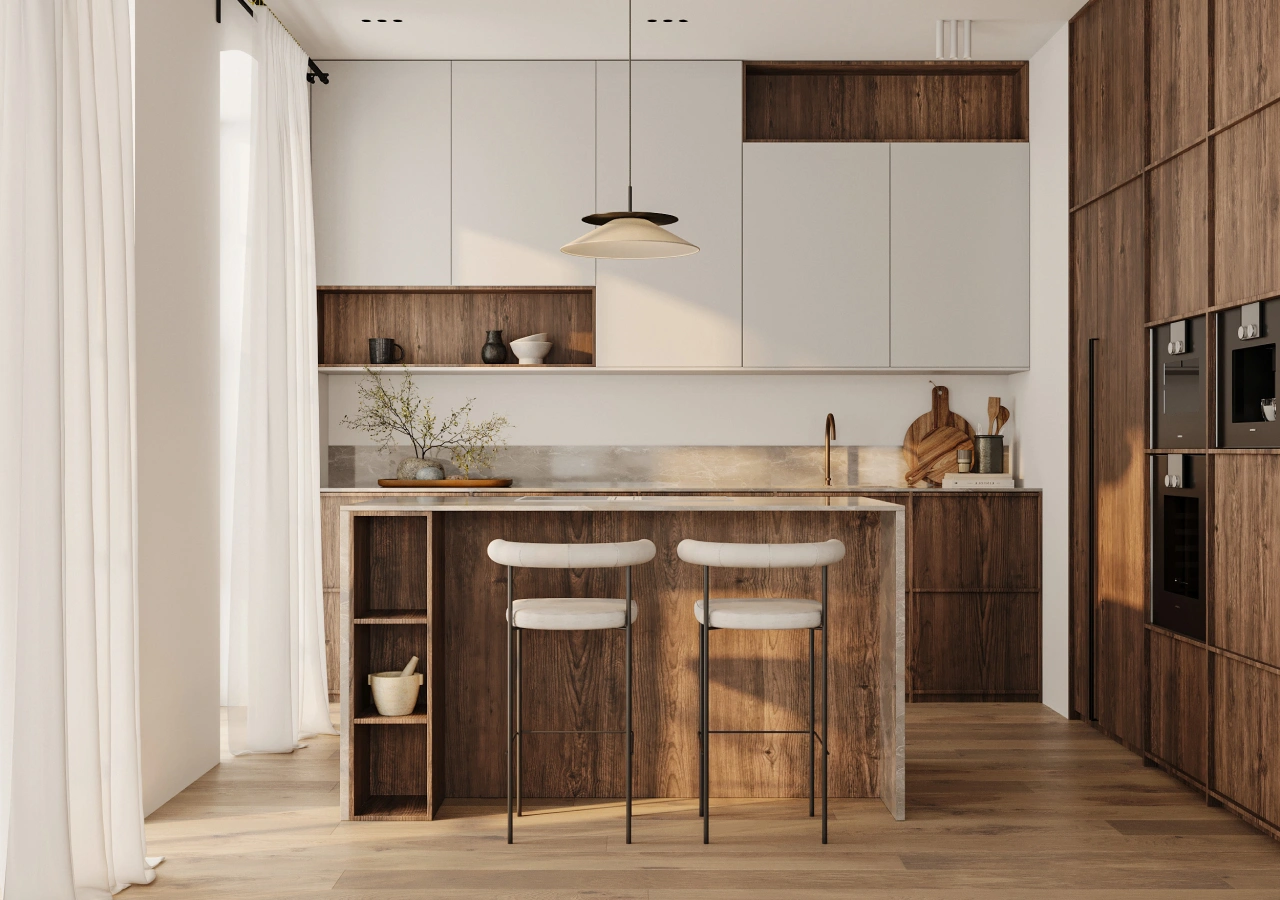
The upper half of the kitchen strongly affects whether wood feels warm or heavy. Dark wood above eye level can make a room feel more enclosed, especially in smaller or lower-light kitchens.
This is why many wood kitchens use lighter uppers, fewer upper cabinets, open shelves, plaster hoods, or glass-front cabinets. White oak lowers with off-white uppers, walnut lowers with cream uppers, and natural oak with lighter upper cabinets all follow the same design logic: keep warmth grounded and let the upper half breathe.
If upper storage is reduced, the function still needs to be replaced. Deep base drawers, tall pantry cabinets, appliance storage, or island storage can keep counters clear while preserving a lighter look.
Use Lighting to Shape the Wood Tone
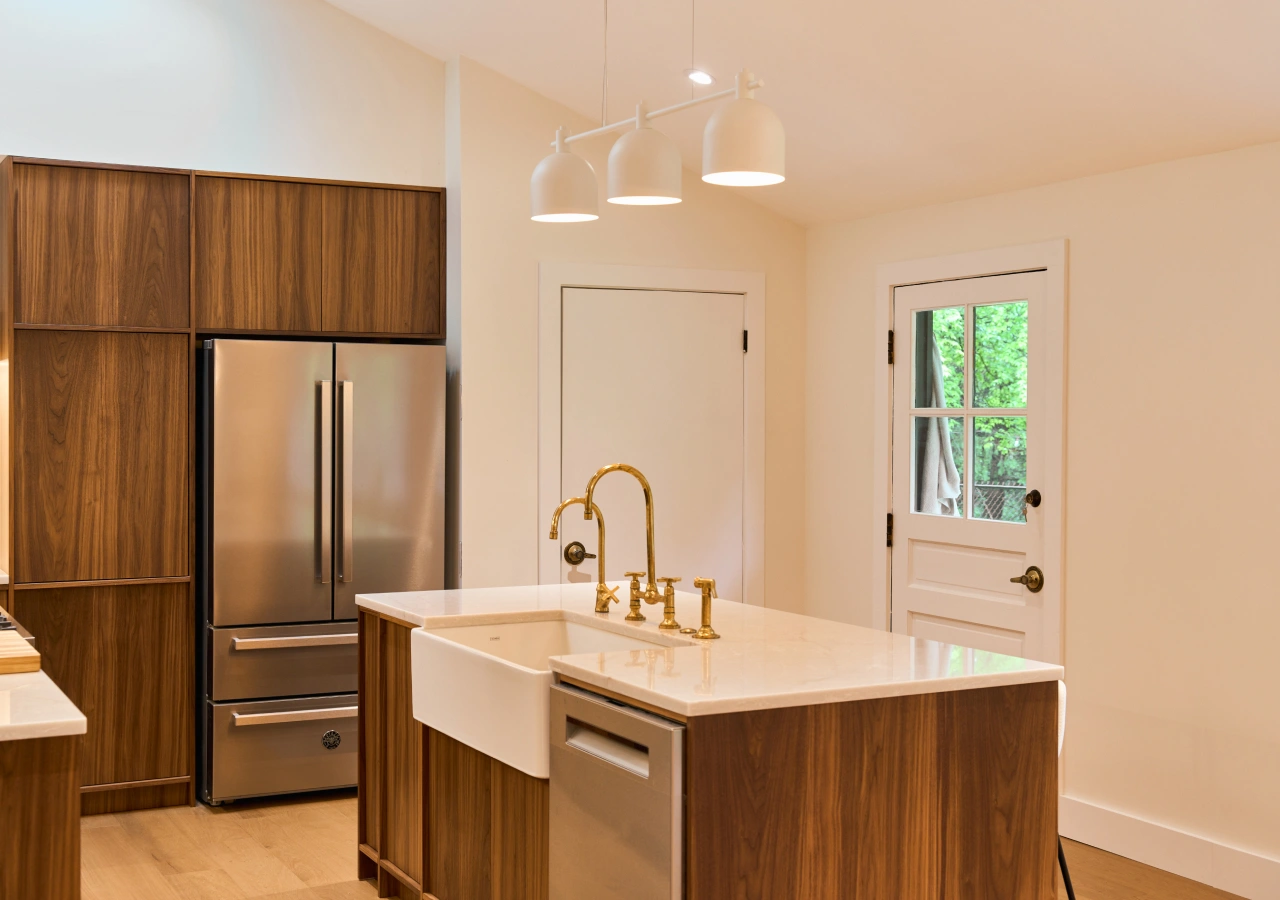
Lighting changes how wood reads. Golden oak can look more yellow under warm light, walnut can look deeper at night, and cool lighting can make some woods feel gray or flat.
Layered lighting is the safest approach. Use ceiling lighting for brightness, task lighting for counters, under-cabinet or shelf lighting for work zones, and softer accent lighting for atmosphere. Integrated lighting is especially helpful with darker wood because it brings out the grain.
Before committing, review wood samples in the actual kitchen throughout the day.
Conclusion
A warm wood kitchen is not about using wood on every surface. It is about giving wood a clear purpose and balancing it with the right tones, materials, lighting, and storage. Light oak can keep a kitchen airy, golden oak can feel warm and grounded, and walnut or dark oak can create a richer architectural mood when paired with enough contrast.
Use wood where it adds warmth, function, and character, then support it with quieter surfaces like cream cabinetry, muted green, natural stone, glass, concrete, or restrained stainless steel. Before committing, compare real samples in the space and check them in different light. To see how these ideas work in finished kitchens, explore Corner Renovation’s collections, view real kitchen projects, or book a consultation.


