
.webp)
Dark oak kitchens bring depth, contrast, and a more tailored look than lighter wood kitchens. The challenge is making the room feel balanced instead of heavy. In larger American homes, that usually comes down to clear storage zones, a controlled material palette, the right island size, and careful handling of large appliances.
Dark oak also depends on organization. Pantry walls, integrated appliances, drawer storage, and appliance garages can keep more of the daily clutter hidden, which lets the wood feel intentional rather than visually dense. That is one reason dark oak works especially well in Japandi-inspired kitchens, where the goal is warmth, simplicity, and function without unnecessary decoration.
Quick Reference: Which Dark Oak Move Fits Which Kitchen?
Dark oak does not need to be used the same way in every kitchen. Some layouts benefit from contrast, while others need lighter surfaces and fewer material changes to keep the room open and balanced.
1. Pair Dark Oak With Warm White Walls

Warm white walls are one of the easiest ways to balance dark oak cabinetry. They reflect more light, soften the contrast, and help the room feel open without making the palette cold. Dark oak usually looks richer when it sits against a soft background rather than a sharp white or strong wall color.
This is especially useful in larger American kitchens that connect directly to dining or living areas. A warm white wall color helps the cabinetry transition into the rest of the home more naturally, which matters when the kitchen is visible from several angles.
2. Add a Limestone or Pale Stone Worktop
.webp)
Pale stone or limestone-look worktops can brighten a dark oak kitchen without stripping away its depth. The combination keeps the wood grounded while bringing more light to the working surfaces. Richer wood tones usually pair best with calmer stone surfaces rather than busy, high-contrast slabs.
This choice works well for islands, perimeter counters, and kitchens that need more lift without losing their mood. It is also one of the safer combinations for open-plan homes, where the kitchen needs to feel connected to surrounding rooms.
3. Go Tonal With Dark Stone for a More Architectural Look
.webp)
Dark oak and dark stone can create a more tailored, architectural kitchen than dark oak with white stone. The key is to keep the finishes matte and the veining restrained. Otherwise, the room can start to feel too dramatic or overly staged.
This approach works best in kitchens with strong natural light, generous spacing, and a simple layout. If the room already has enough openness, a darker countertop or backsplash can make the whole kitchen feel more intentional.
4. Choose a Full-Height Stone Backsplash
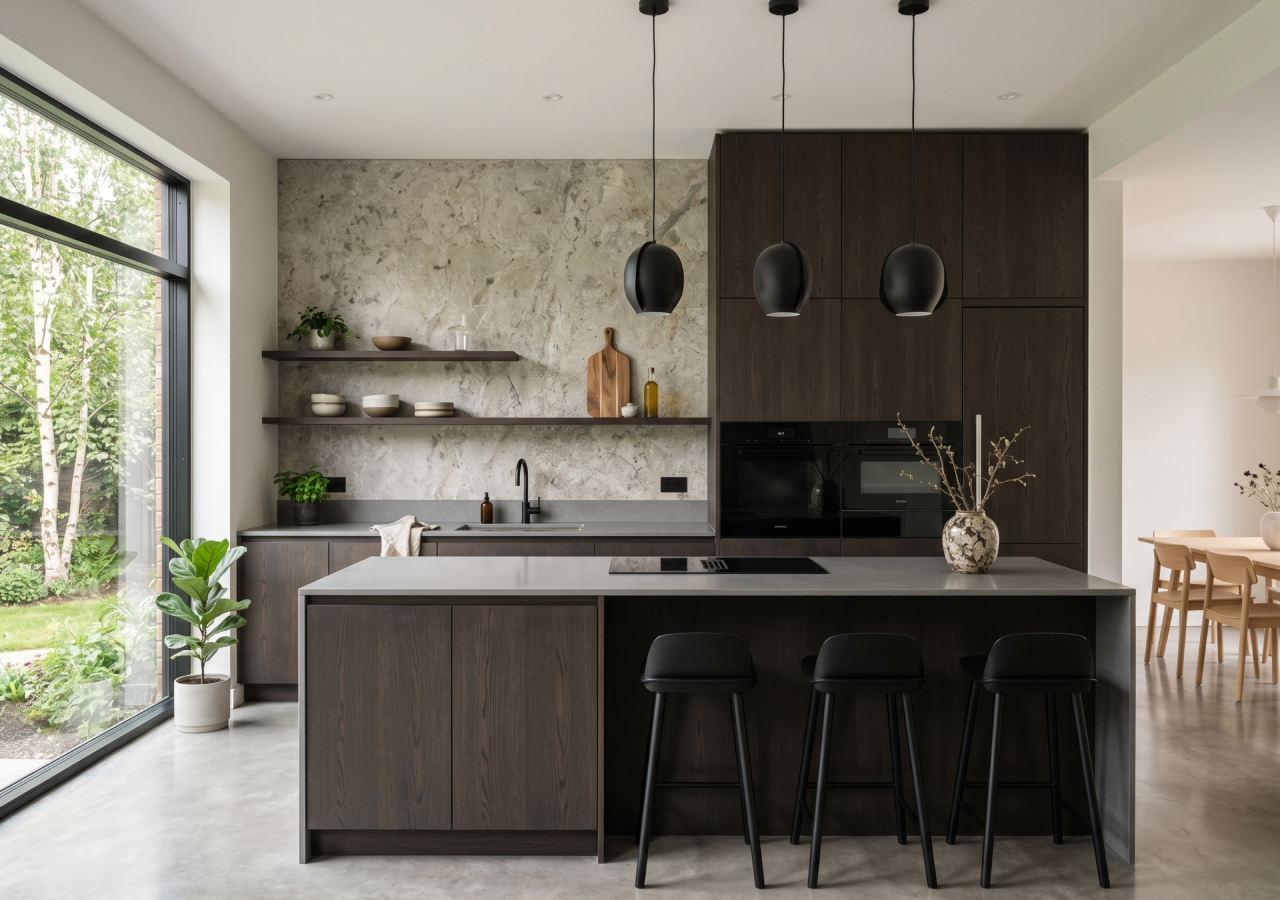
A full-height stone backsplash simplifies the wall and makes dark oak cabinetry feel more resolved. Instead of breaking the cooking wall with paint, trim, tile, and multiple surface changes, one continuous material keeps the backdrop cleaner.
For US kitchens with longer walls and larger appliance zones, reducing those surface breaks can make a real difference. It helps the cabinetry and backsplash feel like one planned composition rather than separate design decisions.
5. Use a Large Dark Oak Island as the Focal Point

A large island suits dark oak because the material has enough depth to anchor the room. In bigger American kitchens, though, the island should be planned around function first. Prep space, seating, storage, circulation, and cleanup all need to work comfortably before the island becomes a visual statement.
Dark oak helps here because it brings natural weight without needing extra decorative details. A simple island in a rich wood tone can often feel stronger than one with too many added features.
6. Repeat the Oak Tone Inside the Cabinetry

A dark oak kitchen feels more complete when the warmth continues inside the cabinetry, not only on the visible fronts. Matching or coordinating the interiors gives the kitchen a more finished feel, especially when drawers, pantry cabinets, and tall storage are opened every day.
This is a subtle design move, but it improves the experience of using the kitchen. It also supports the Japandi preference for consistency across materials and details.
7. Extend Warm Wood Into Nearby Millwork or Flooring

Dark oak feels stronger when it does not stop abruptly at the kitchen line. Repeating warm wood tones in shelving, a pantry surround, flooring, or nearby millwork helps the kitchen settle into the wider home.
This is especially useful in open-plan layouts, where the kitchen needs to feel connected rather than boxed off. The goal is not to match every wood tone perfectly, but to create enough continuity that the dark oak feels like part of the home’s architecture.
8. Mix Dark Oak With Green Marble or Richly Veined Stone
.webp)
Dark oak can handle a more expressive stone, but the rest of the room needs restraint. A green marble or richly veined surface introduces color and movement, while the oak keeps the kitchen warm and substantial. This works best when the stone is treated as one focused feature rather than repeated everywhere.
The practical rule is simple: if the stone is doing more, the cabinetry, walls, and hardware should do less. That keeps the kitchen from becoming too busy.
9. Use Metal Accents Sparingly
%20(1).webp)
Metal accents can help dark oak feel current, but they should be used carefully. Stainless steel, muted brass, or dark metal details can all work when they support the wood rather than compete with it.
This is usually the better move in Japandi-inspired kitchens, where the warmth should come mainly from wood, stone, and texture. Too much metal can make the space feel more polished than natural.
10. Add Black Details for Cleaner Definition

Black details give dark oak a sharper outline. A black faucet, dark-framed glass cabinet, black lighting detail, or slim black handle can add enough contrast to define the room without making it feel harsh.
This works best when the rest of the palette is soft and controlled. Used carefully, black gives the kitchen structure. Used too often, it starts to pull attention away from the oak.
11. Incorporate Glass-Front Uppers Sparingly
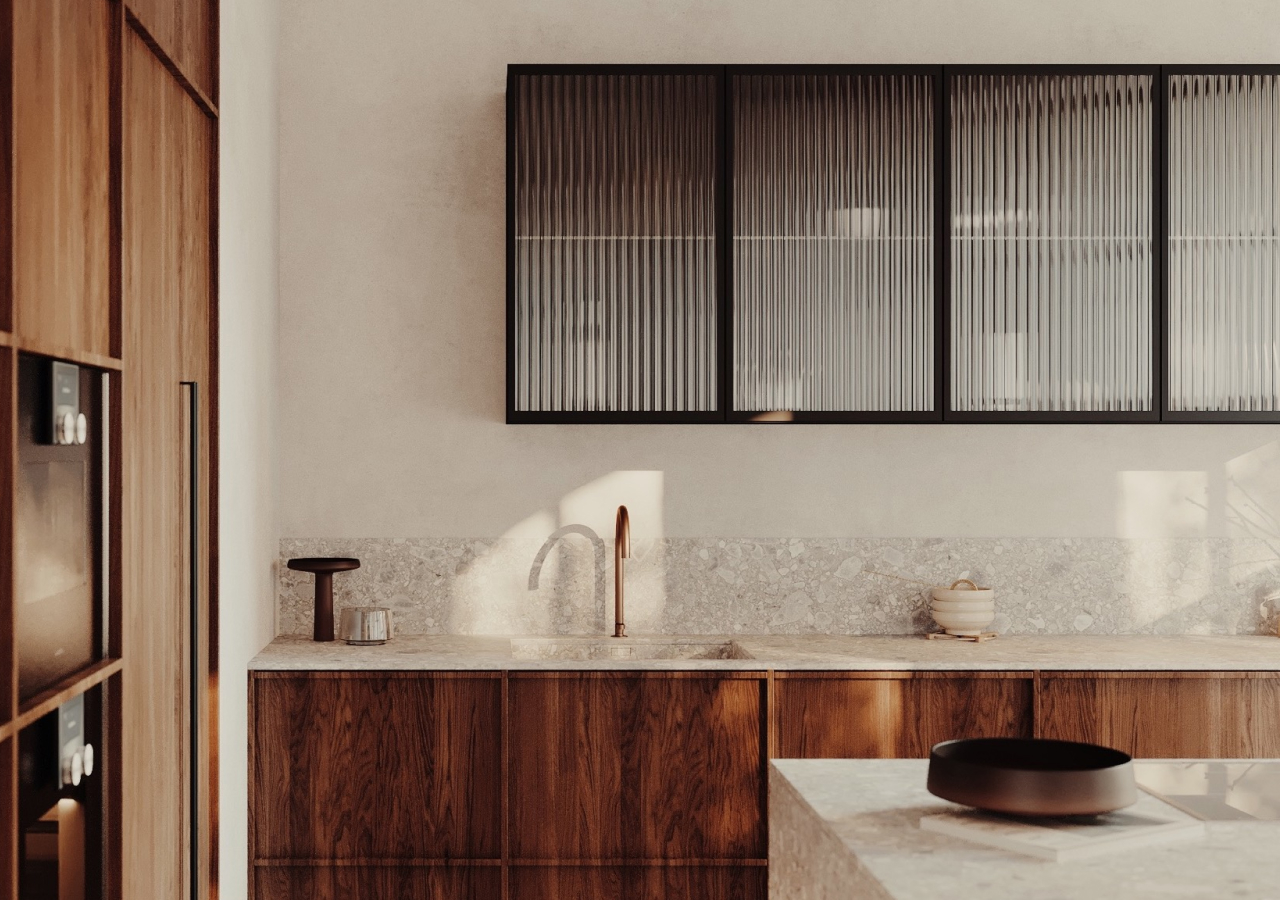
Glass-front upper cabinets can lighten long runs of dark cabinetry and help the room feel less closed in. This works especially well when the glass is paired with soft internal lighting, so the upper cabinets do not read as one heavy wall of wood.
The word here is sparingly. One controlled section is usually enough to lift the room without creating visual clutter. Too much glass can make the kitchen feel busier and harder to keep styled.
12. Choose Handleless or Seamlessly Integrated Fronts
.webp)
Handleless fronts help dark oak feel cleaner because they reduce visual interruption across long cabinet runs. Push-to-open doors, recessed pulls, integrated handle channels, or slim finger-pull details all keep the focus on the wood grain and the overall proportions of the kitchen.
This is a good example of a design choice that improves both appearance and order. The fewer breaks there are across the cabinetry, the more intentional the dark oak feels.
13. Keep the Layout Minimal and the Walkways Clear

Dark oak looks better when the layout itself is doing less. Bigger US kitchens often have room for more cabinetry, more appliances, and more features, but the better move is usually stronger grouping, cleaner sightlines, and enough breathing room around the island and main prep areas.
A restrained layout also makes the wood feel more built-in. It becomes part of the structure of the room rather than a decorative layer added on top.
14. Brighten the Wood With a Light Slab or Softly Textured Tile

A light-toned backsplash helps dark oak feel more open and readable. If a full slab is not the right fit, softly textured tile in a quiet tone can bring back light without turning the wall into a feature.
The aim is not contrast for its own sake. It is to give the wood a cleaner, brighter backdrop. This is often the more practical move in kitchens that want warmth but still need some visual lift around the cooking wall.
15. Layer in Earthy Companion Materials
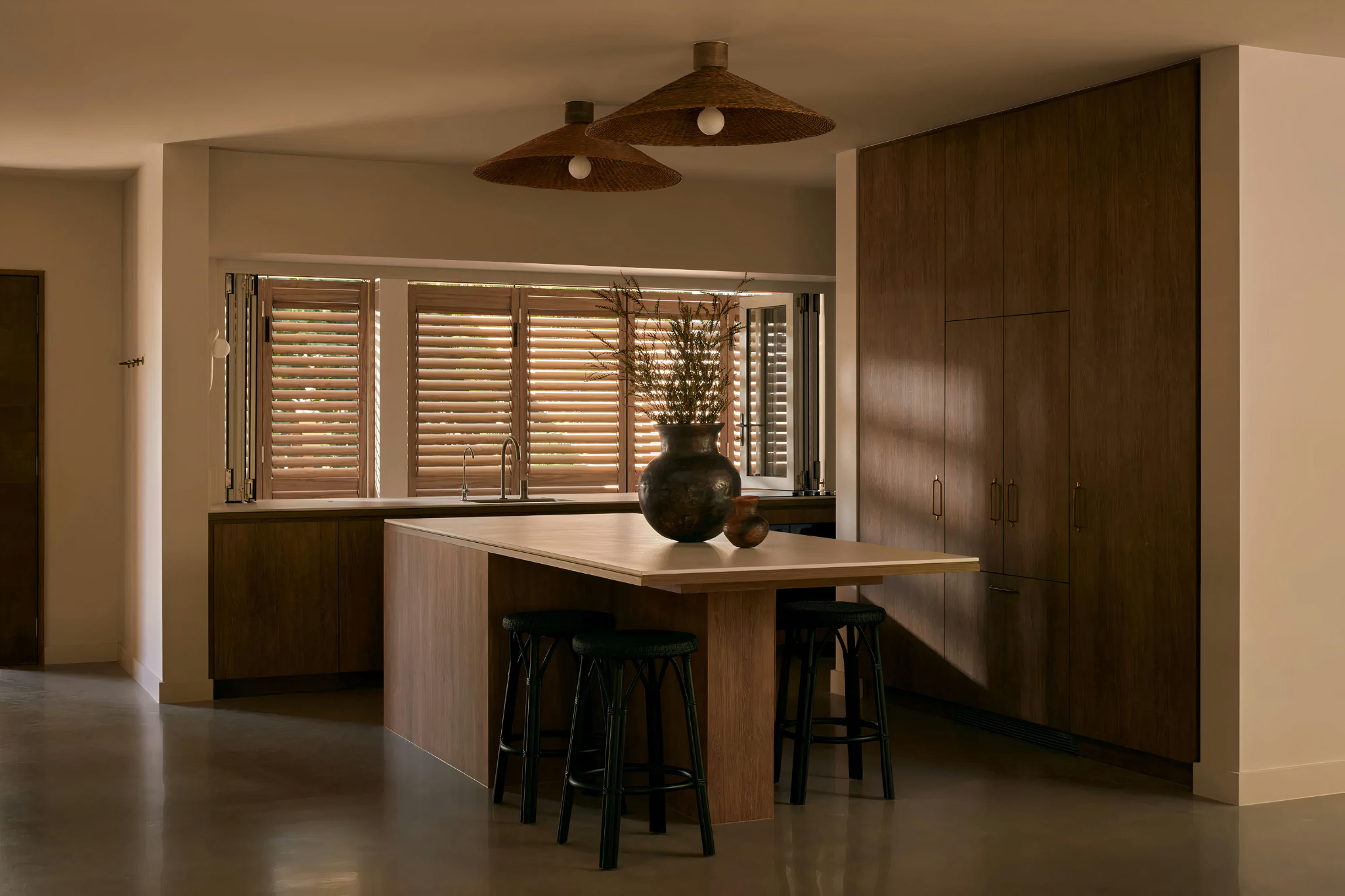
Dark oak works best when it is part of a short, controlled material palette. Warm neutrals, muted stone, matte whites, stone-look tile, and soft gray tones can complete the room without competing with the cabinetry.
This restraint is what keeps the kitchen feeling rich without becoming too busy. The darker the wood, the more important it is to edit the surrounding materials.
Dark Oak With Light Stone vs. Dark Oak With Dark Stone

Both combinations work, but they create different kitchens. Dark oak with light stone feels brighter, softer, and easier to adapt in family kitchens or open-plan homes. Dark oak with dark stone feels more tonal, more architectural, and usually more dramatic.
Choose light stone if the room needs lift. Choose dark stone if the room already has strong natural light, enough scale, and a simple enough layout to handle a deeper palette.
Conclusion
Dark oak kitchens work best when the richness of the wood is balanced by careful planning. In a US home, that usually means larger appliances, wider walkways, and bigger islands need to be handled with more discipline, not more decoration. When storage is concentrated, the material palette is limited, and the layout stays simple, dark oak can feel warm, elegant, and easy to live with.
The strongest results usually come from selective moves rather than trying to make every surface dramatic. A dark oak island, pale or tonal stone, one well-handled backsplash, and cleaner cabinetry often go further than a long list of statement features.


