.webp)
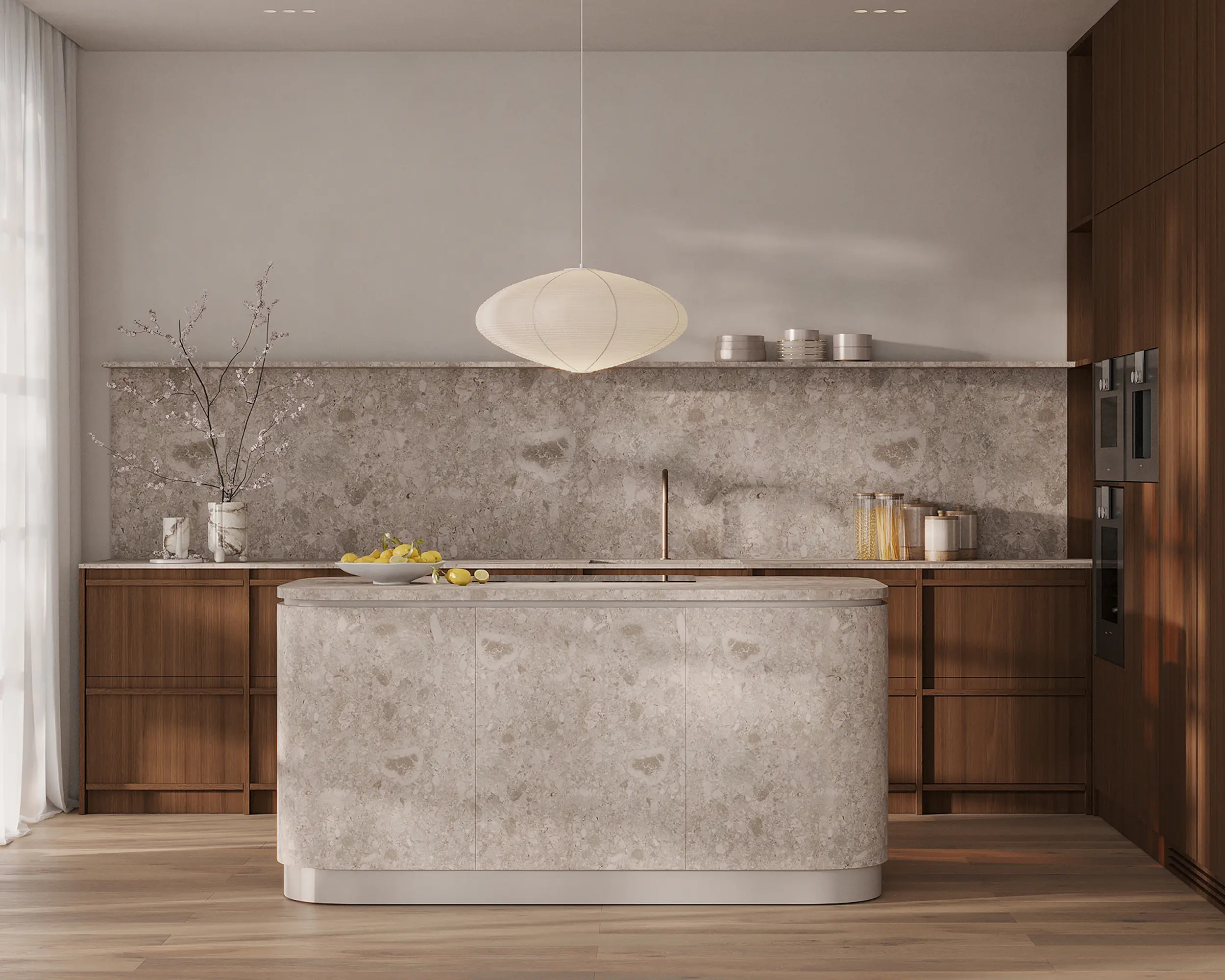
A Japandi kitchen backsplash is usually most successful when it does not demand attention. Its role is to connect the countertop, cabinets, flooring, and wall rather than introduce another strong pattern. With oak or walnut cabinetry already bringing grain and texture, a quieter backsplash often gives the kitchen more room to breathe.
Tile scale, surface texture, grout color, stone movement, and finish can all add depth without making the wall feel busy. The backsplash also needs to work around cooking, cleaning, outlets, and appliance garages. The goal is to choose a surface that makes the rest of the kitchen feel more intentional.
Start With the Cabinets and Countertop
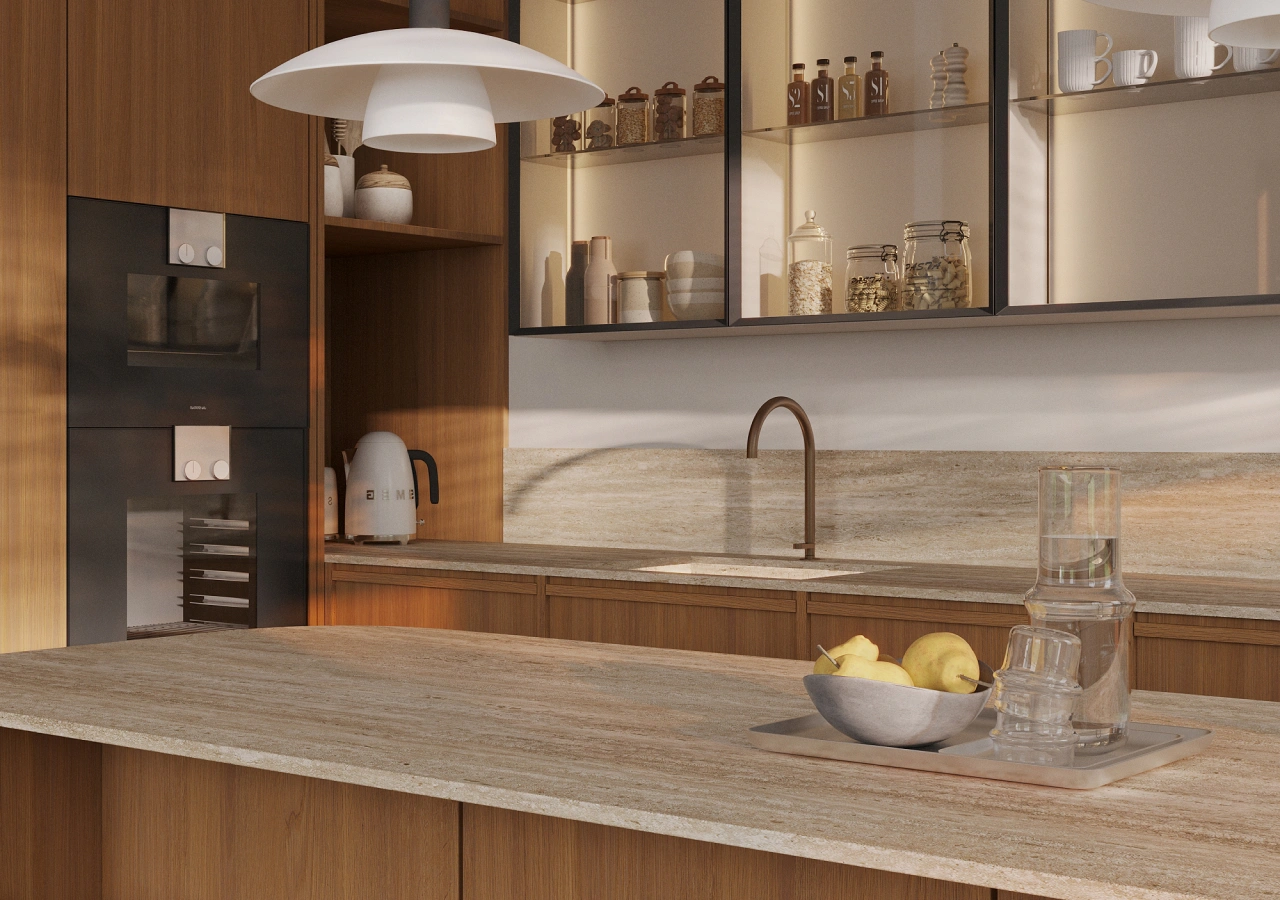
A Japandi backsplash should be selected as part of the kitchen palette. Start with the cabinet wood tone and countertop, then decide what the wall needs to contribute.
Light oak and washed oak work naturally with warm white, cream, pale greige, soft stone, and light concrete tones. Walnut has more visual weight, so a creamy or muted backsplash can provide relief. If cabinetry already combines wood with another color, a strongly patterned backsplash can make the palette harder to balance.
The countertop sets the level of movement the wall can handle. A nearly solid surface leaves room for subtle tile texture, while strong marble-like veining usually needs a calmer background. Cabinet, countertop, backsplash, flooring, and wall samples are therefore better reviewed together.
Tile Scale Changes How Calm the Kitchen Feels
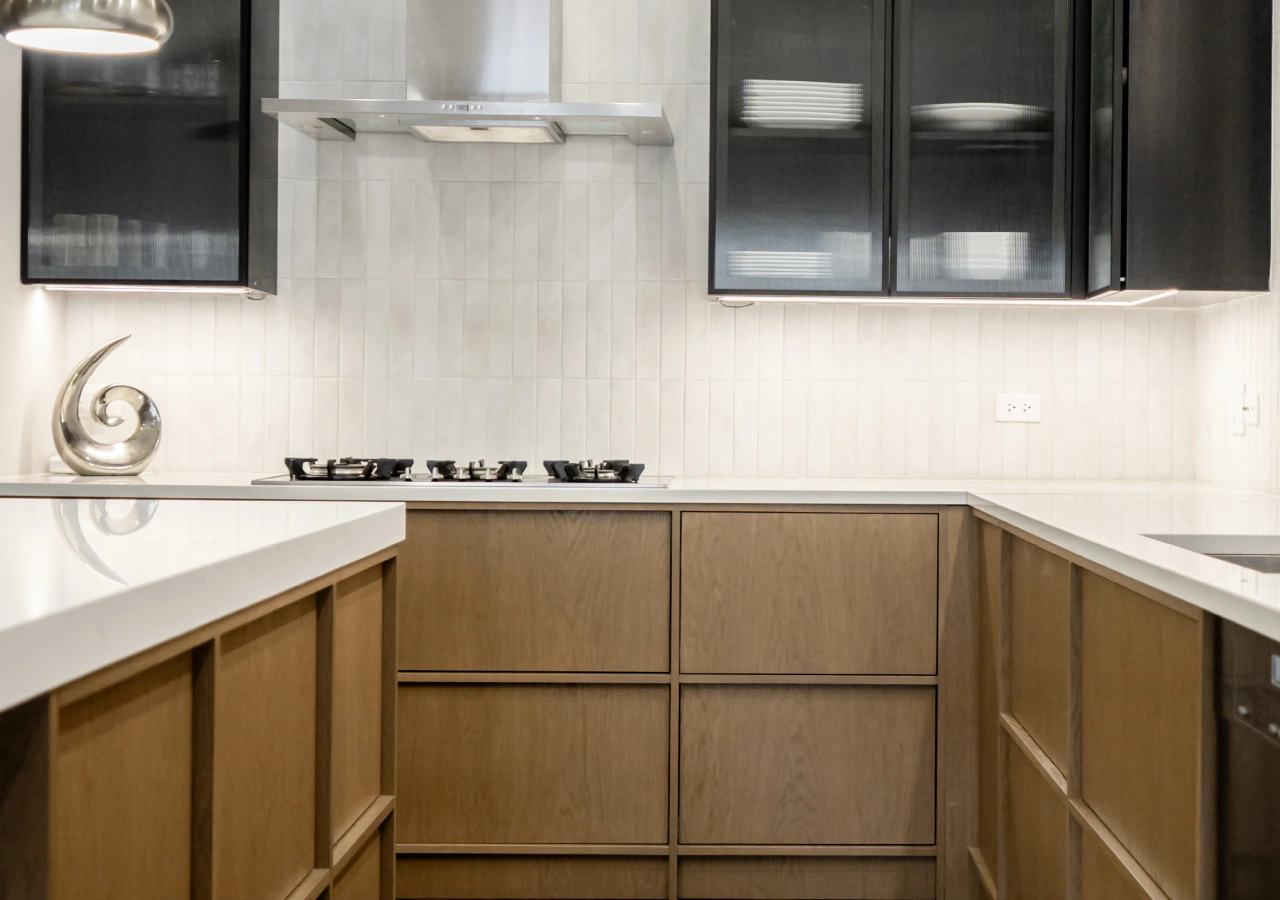
Tile size affects a Japandi kitchen almost as much as tile color. Smaller pieces create more edges and grout lines, while larger formats allow the wall to read as a broader, more continuous surface.
Small Japandi kitchen tiles are not automatically wrong. A simple rectangular or square tile can work well when its color is soft and the grout does not create a strong grid. Problems start when small tile, contrast grout, visible wood grain, dramatic stone, and multiple cabinet colors appear together.
Large-format tile reduces those interruptions. Fewer grout lines can make the backsplash feel calmer and more architectural, particularly beside slab-front cabinetry and visible wood grain.
Use a Stone Slab for a More Continuous Backsplash
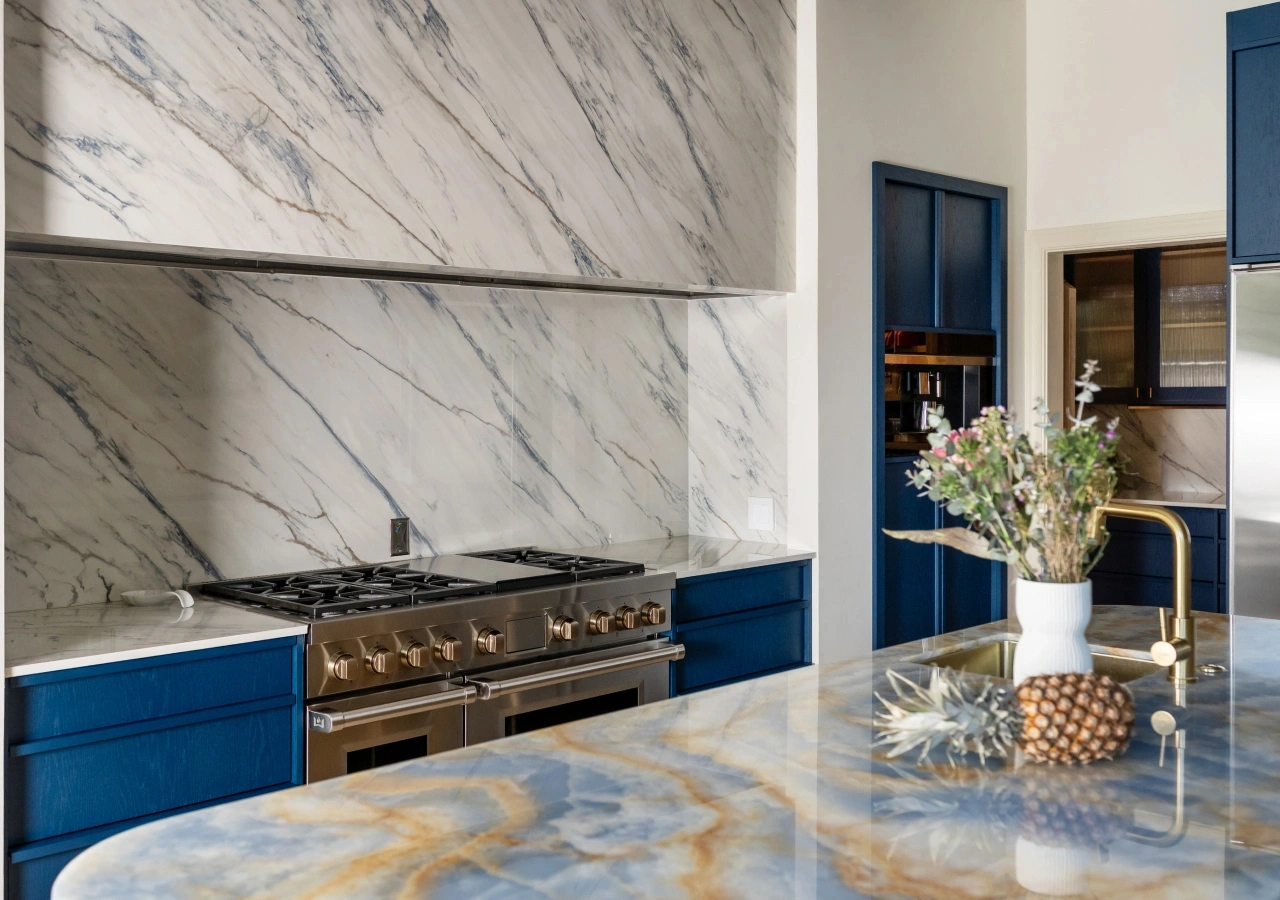
A stone or stone-look slab can make a Japandi kitchen backsplash feel architectural rather than decorative. Continuing the countertop material onto the wall removes a separate tile pattern and allows both surfaces to read together.
This works particularly well behind a range or across a full-height backsplash. Warm white quartz, pale stone, muted Dekton, gentle marble-look surfaces, and subtle mineral patterns can support oak or walnut without overwhelming the cabinetry.
Corner’s Pacific Palisades Japandi kitchen shows this well: a white Dekton countertop and full-height backsplash sit beside natural oak, deep blue cabinetry, fluted glass, and an appliance garage without making the room feel crowded.
A slab backsplash needs careful coordination around seams, outlet cuts, and installation access. Maintenance also varies by material, especially with natural stone, so appearance and everyday use should be considered together.
Keep Grout Lines Quiet
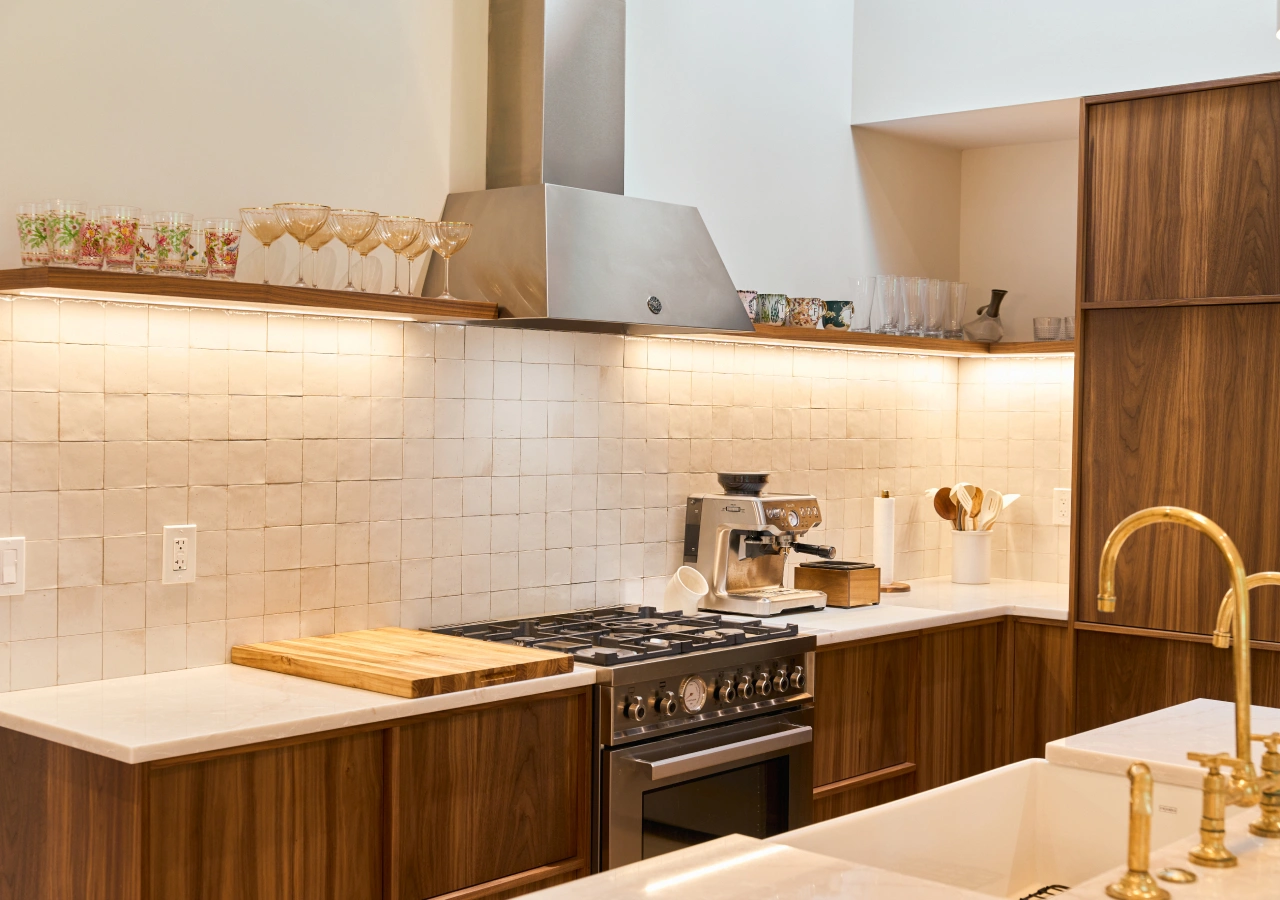
Grout can change the character of a Japandi kitchen tile more than homeowners expect. When grout strongly contrasts with the tile, every piece becomes visible and the backsplash starts to read as a pattern.
For a quieter backsplash, keep the grout close to the tile color. Warm white tile with soft cream grout, beige tile with similar beige grout, and muted gray tile with related gray grout can create texture without turning the wall into a grid.
Contrast grout can work when the geometry itself is meant to be a feature. If wood grain, stone veining, glass cabinets, or metal details already bring texture into the room, subtle grout usually creates the better balance.
Backsplash Colors and Materials That Work With Japandi Kitchens
The most flexible Japandi kitchen backsplash ideas tend to come from warm neutrals and natural-looking surfaces.
Warm White Tile
Warm white works easily with oak, washed oak, beige cabinetry, and pale stone. A stark or blue-white tile can look surprisingly cold beside natural wood.
Soft Beige or Greige Tile
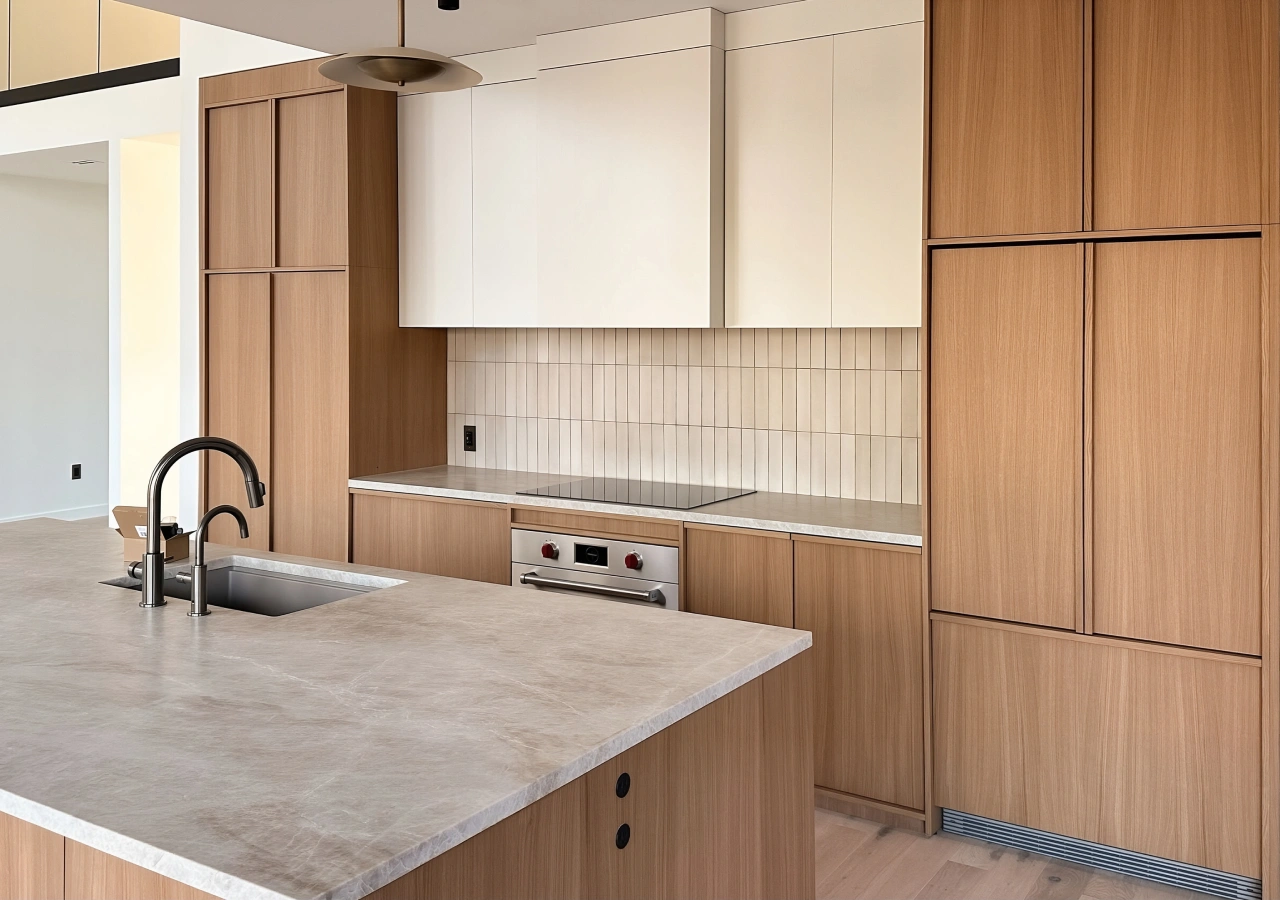
Beige and greige add warmth without demanding much attention. They can be useful when white creates too much contrast with wood cabinetry.
Pale Stone or Stone-Look Slab
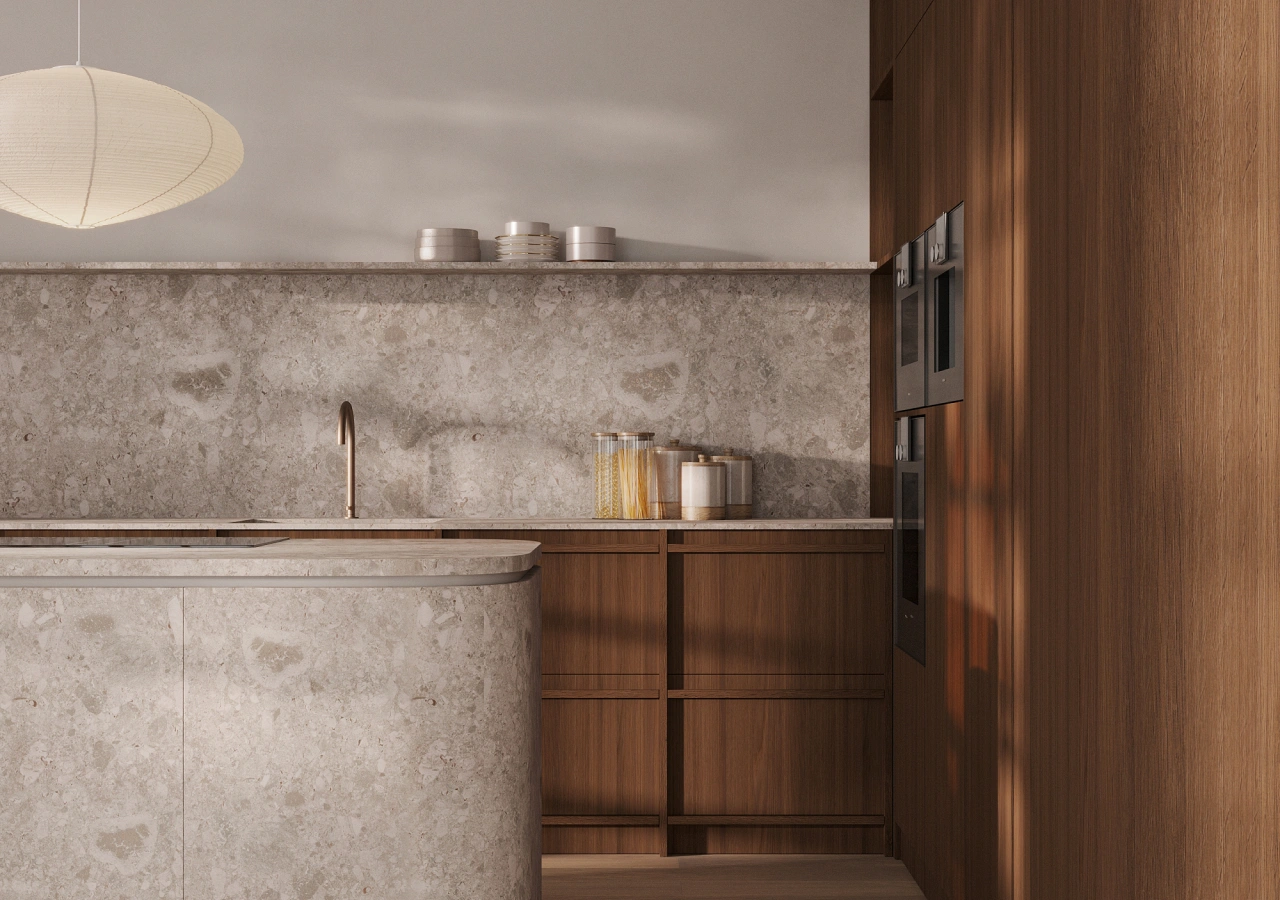
Subtle limestone, travertine-inspired, and softly veined stone looks add natural movement while keeping the wall quiet. They work well when the kitchen should feel continuous and architectural.
Concrete-Look or Microcement
Concrete-look finishes, microcement, and warm plaster effects can give a Japandi kitchen a slightly more industrial direction while still feeling calm. They pair well with oak, walnut, stainless steel, and slab fronts, but surface preparation, sealing, wall condition, and workmanship all matter.
Handmade or Zellige-Style Tile
Zellige and other handmade tiles can work in a Japandi kitchen, but their irregular edges, glaze variation, texture, and grout create more movement than a flat large-format surface. In a very minimal kitchen, choose a muted color and let the handmade finish provide the texture.
Let One Material Have the Strongest Voice
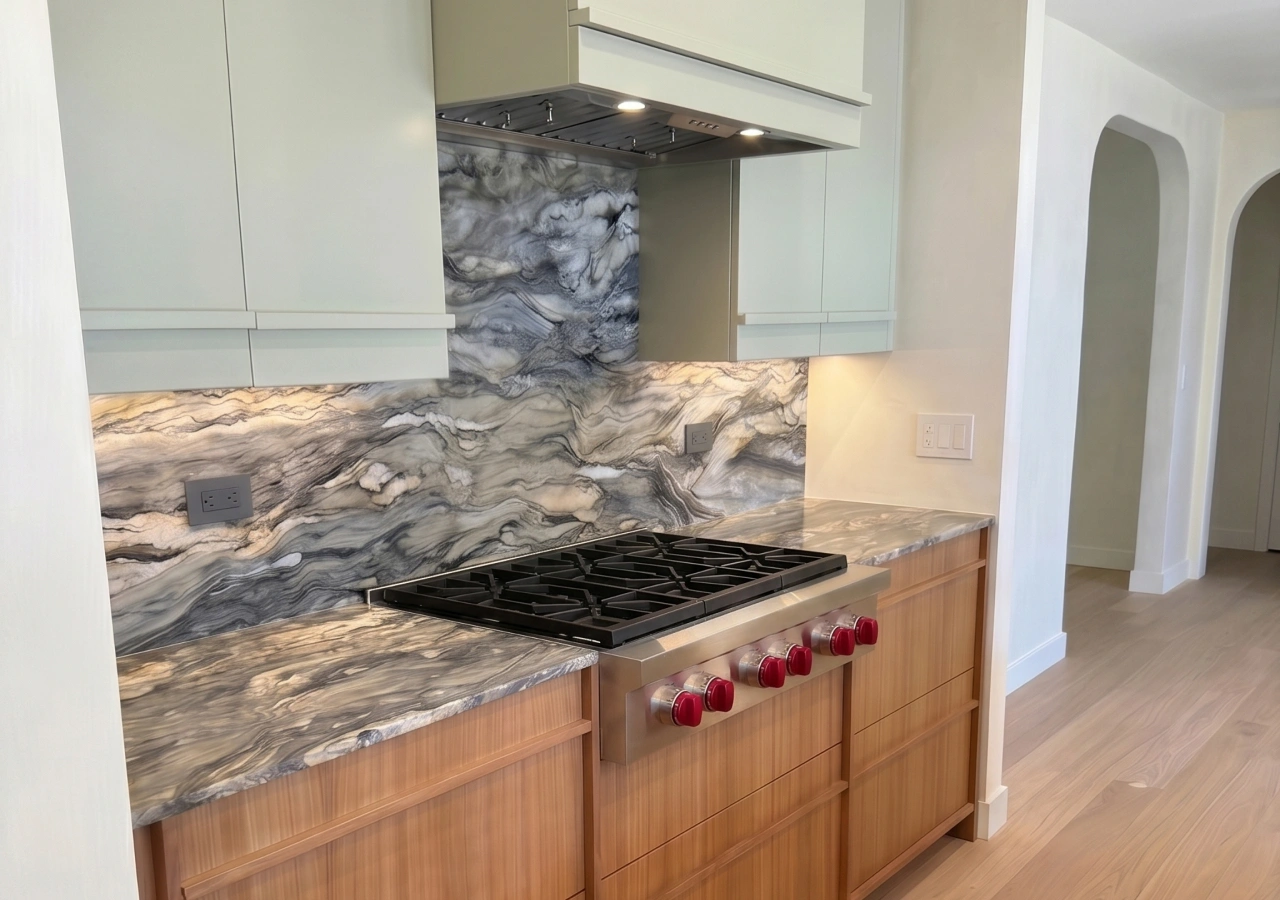
A calm Japandi kitchen does not require every material to be plain. It requires deciding which material carries the most character.
If the kitchen has heavily grained walnut, the backsplash can be a creamy stone or warm off-white tile. If the countertop has strong veining, avoid adding a small patterned backsplash. If the backsplash is handcrafted, reduce contrast elsewhere.
Glass-front cabinets, stainless steel, waterfall stone, open shelving, and feature hardware can all work in a Japandi composition, but not every surface needs to compete for attention.
Plan Outlets, Appliance Zones, and Slab Details Early
.webp)
A minimalist backsplash often looks simple because the technical details were resolved before installation. Outlet positions, slab seams, appliance garages, power, and ventilation should be considered before the final layout is confirmed. An outlet can interrupt a large tile or stone vein, while an appliance garage may require coordination between cabinetry, backsplash thickness, power, and door movement.
Full-height slabs need additional planning because outlet cuts, seams, range locations, and wall conditions affect fabrication. Stone and tile are often sourced and installed locally, while the cabinet design should account for the intended backsplash and countertop conditions. Once site conditions can be measured accurately, the local fabricator can confirm final seams, openings, edges, and pieces.
What Usually Makes a Japandi Backsplash Feel Too Busy
.webp)
The biggest mistake is rarely the material itself. It is asking too many surfaces to be the focal point at the same time.
Be especially careful with:
- small mosaics combined with strongly contrasting grout;
- dramatic stone paired with another patterned backsplash;
- cold glossy white tile beside warm oak or walnut;
- several unrelated materials across cabinetry, countertop, backsplash, flooring, and metal details;
- choosing the backsplash before comparing it with countertop and flooring samples.
Physical samples matter because lighting changes undertones. Review the materials together in daylight and artificial light before making the final choice.
Conclusion
The best Japandi kitchen backsplash is usually a supporting surface rather than the room’s main feature. Tile can add texture, but scale and grout determine how active the wall feels. Large-format tile and slab surfaces create more continuity, while warm white, beige, pale stone, muted gray, and concrete-inspired finishes pair naturally with oak and walnut.
Look at the backsplash together with the countertop, cabinetry, flooring, lighting, and appliance zones. If one material already has strong grain or veining, give the others more restraint. To see how backsplash, stone, wood tones, and appliance zones work together in finished spaces, explore Corner Renovation’s Japandi kitchens and collections.