
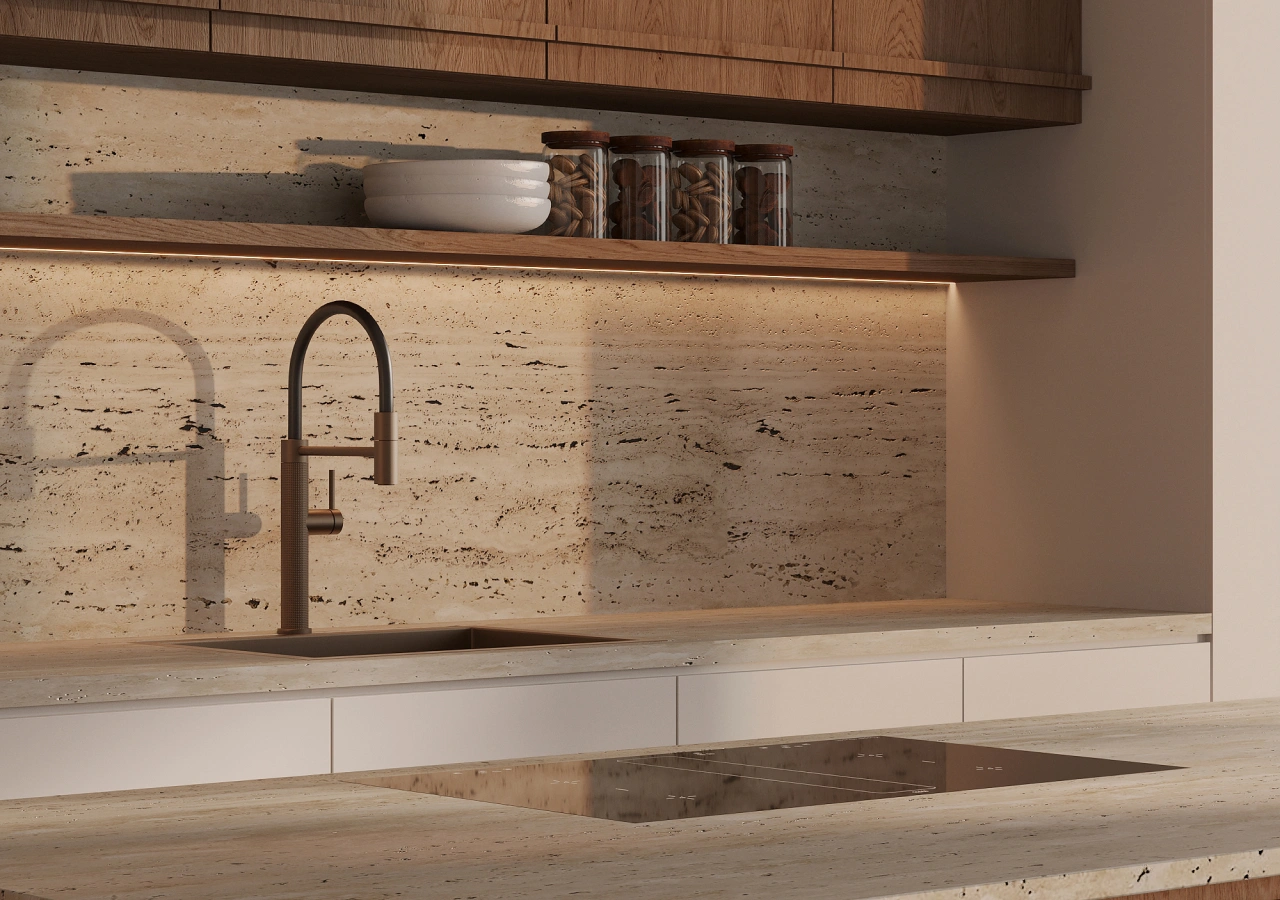
A Japandi kitchen countertop has to do more than match the cabinets. As one of the room’s largest visible surfaces, it shapes the overall material palette while supporting cooking, cleaning, and everyday prep.
The strongest options usually have warm undertones, limited veining, and a matte or honed appearance. Good cabinet storage also matters. When small appliances and prep tools have a dedicated place, the countertop remains practical without becoming visually crowded.
What Makes a Countertop Feel Japandi?
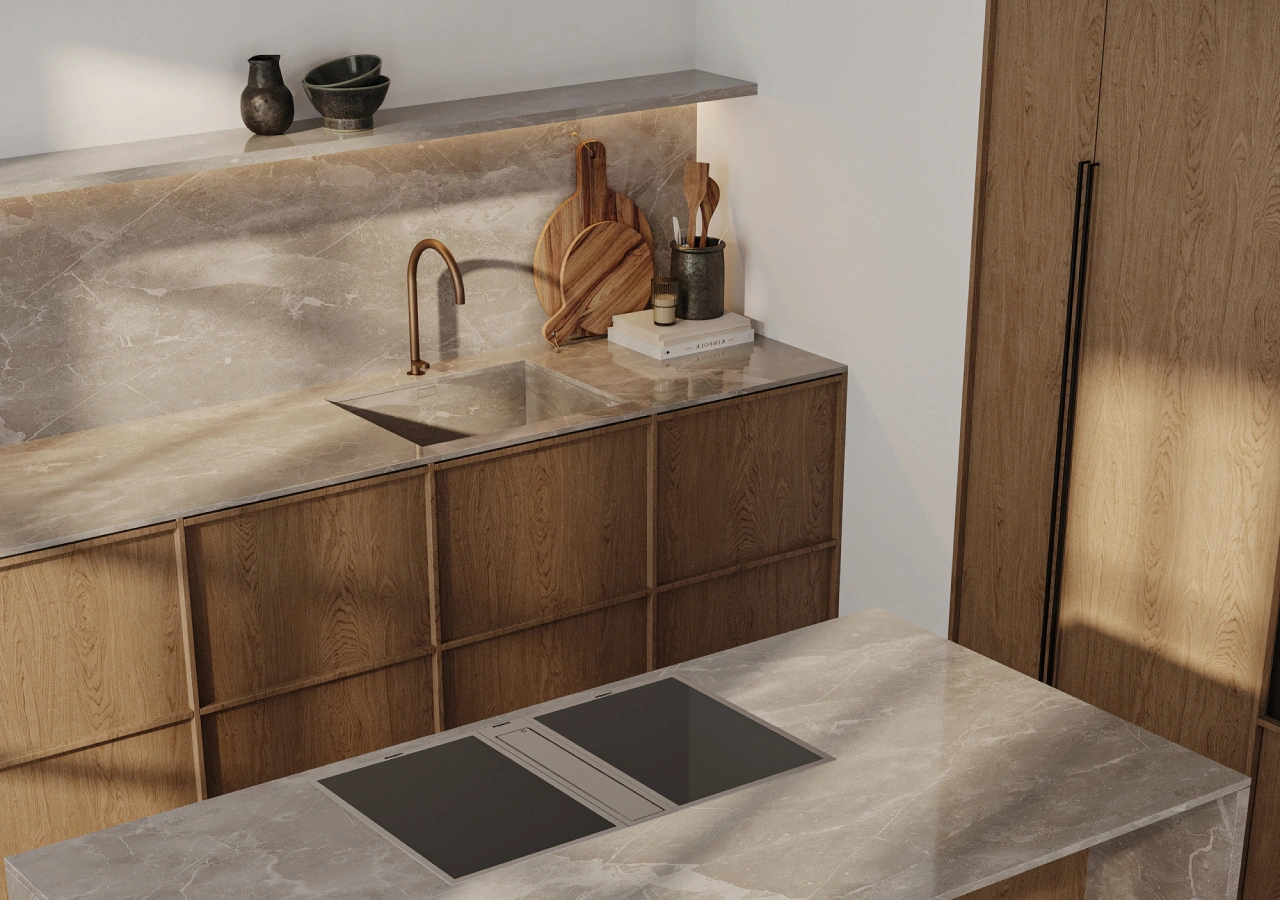
A Japandi countertop usually acts as a supporting surface rather than the main visual feature. Warm whites, cream, greige, muted concrete tones, natural texture, and low-contrast movement tend to work better than icy whites, high gloss, or dramatic veining.
The goal is not to remove all character. Natural stone can vary, concrete can show texture, and a dark surface can create contrast. The pattern should complement the wood grain instead of competing with it.
A useful starting point is to choose one main wood tone, one simple cabinet color, and one stone direction. This keeps the material palette focused while leaving room for variation in lighting, flooring, and smaller details.
Japandi Countertop Materials at a Glance
Best Countertops for Light Oak and Washed Oak
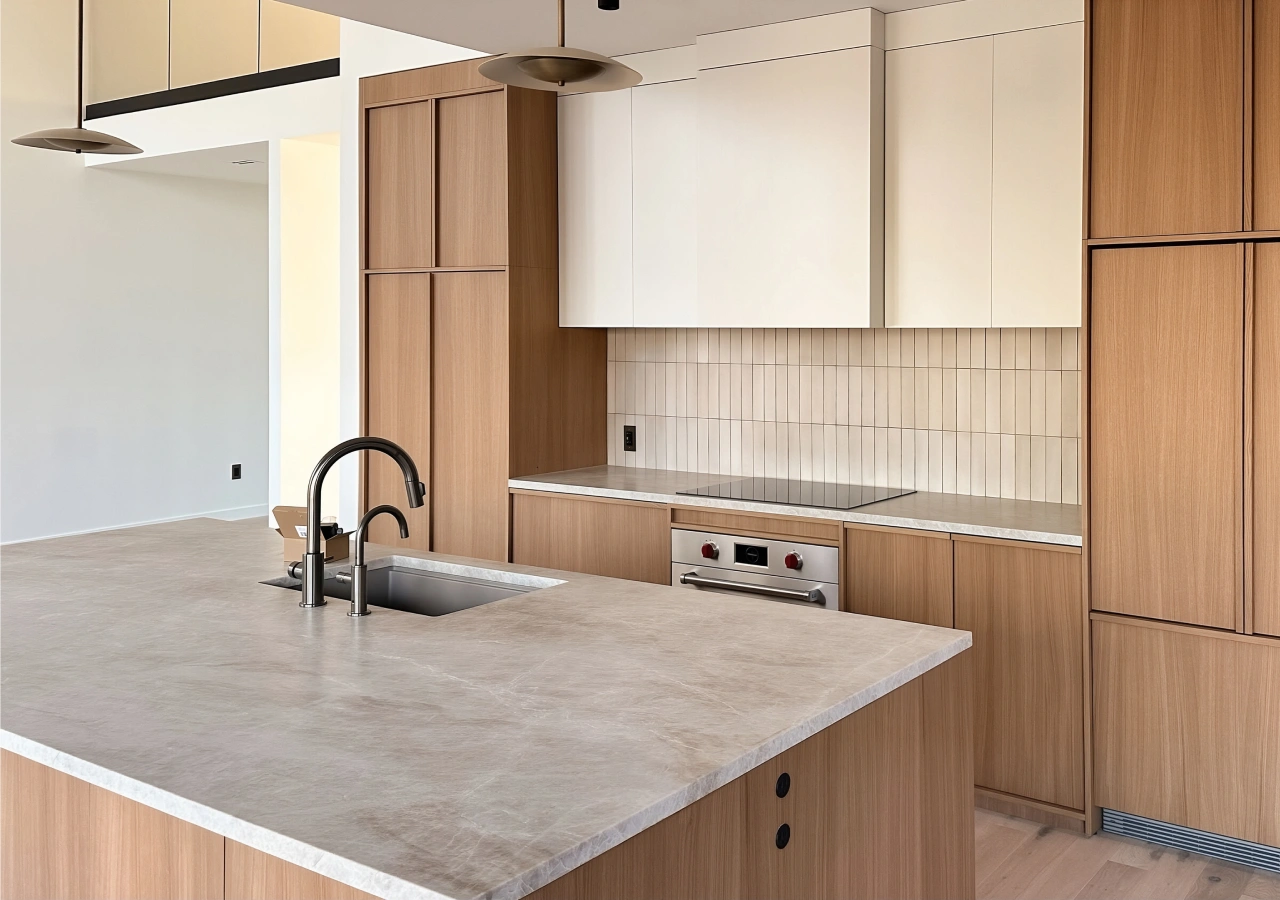
Light oak and washed oak give a Japandi kitchen a bright, natural foundation. Warm white, cream, pale greige, light concrete, and gentle stone-look surfaces maintain that openness without making the room feel cold.
Quartz is a practical choice for long perimeter runs and islands. A warm base with subtle veining usually pairs more naturally with oak than stark white with strong gray lines. Dekton can provide a similarly refined look with a slim profile, while honed natural stone introduces more texture and variation.
A light countertop can also balance tall oak cabinetry or improve the feeling of brightness in kitchens with limited daylight. In handleless or integrated kitchens, the surface often becomes the visual pause between wood fronts, appliances, and the backsplash.
Best Countertops for Walnut Kitchens
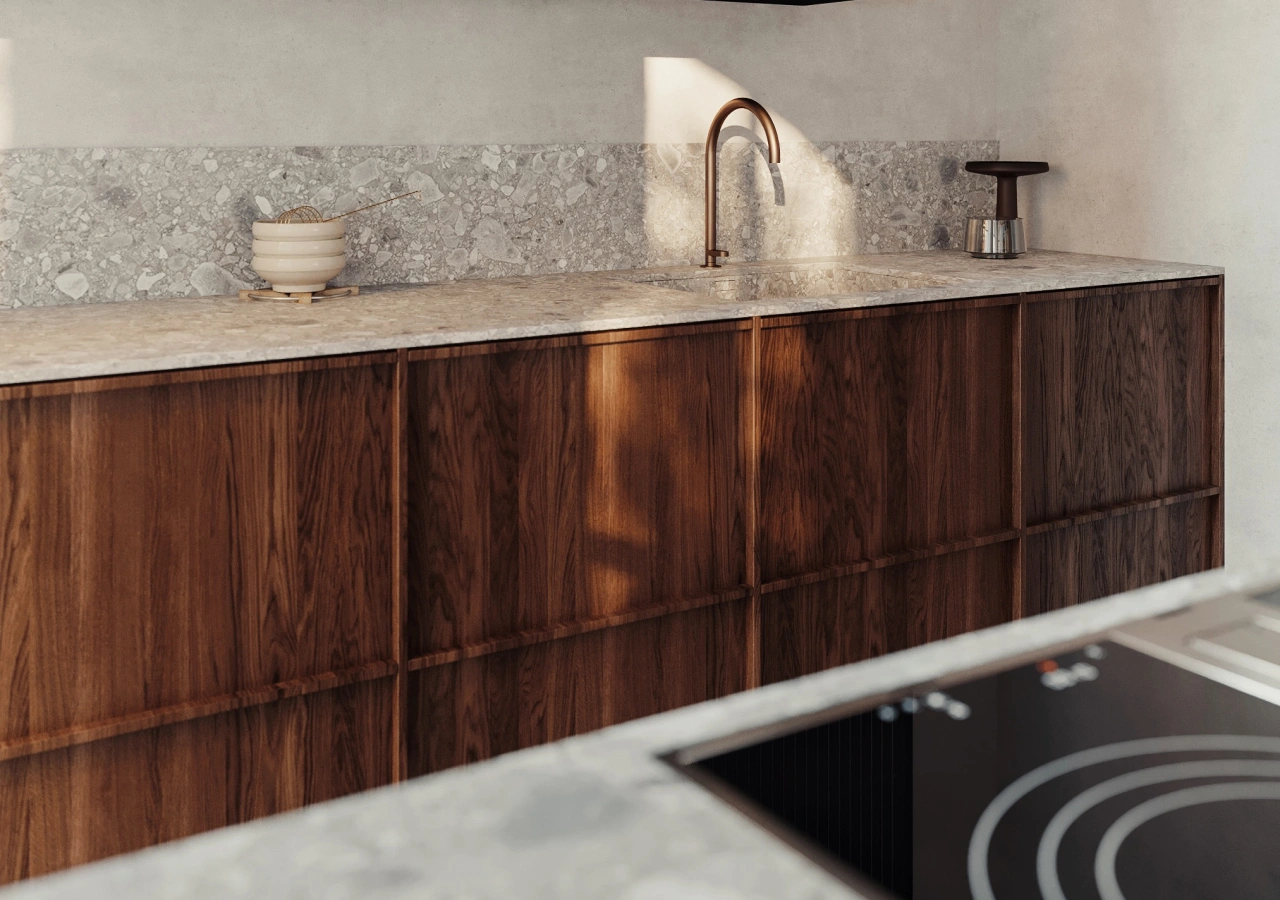
Walnut has more depth and visual weight than light oak, so the countertop often needs to provide contrast and relief. Creamy stone, warm white quartz, muted Dekton, soft marble-look patterns, dolomite, and warm concrete tones can all work well.
Undertone matters more than the material name. A cool white surface can make walnut appear redder or heavier, while cream, beige, and warm greige connect more naturally with its brown tones. Large black or blue-gray veins may create more contrast than the room needs.
Marble or dolomite can bring an organic quality to walnut, especially with a honed finish. However, natural stones vary in porosity and sensitivity to acids or stains. Quartz or Dekton may be better when consistent appearance and easier maintenance are higher priorities.
Can a Black Countertop Work in a Japandi Kitchen?
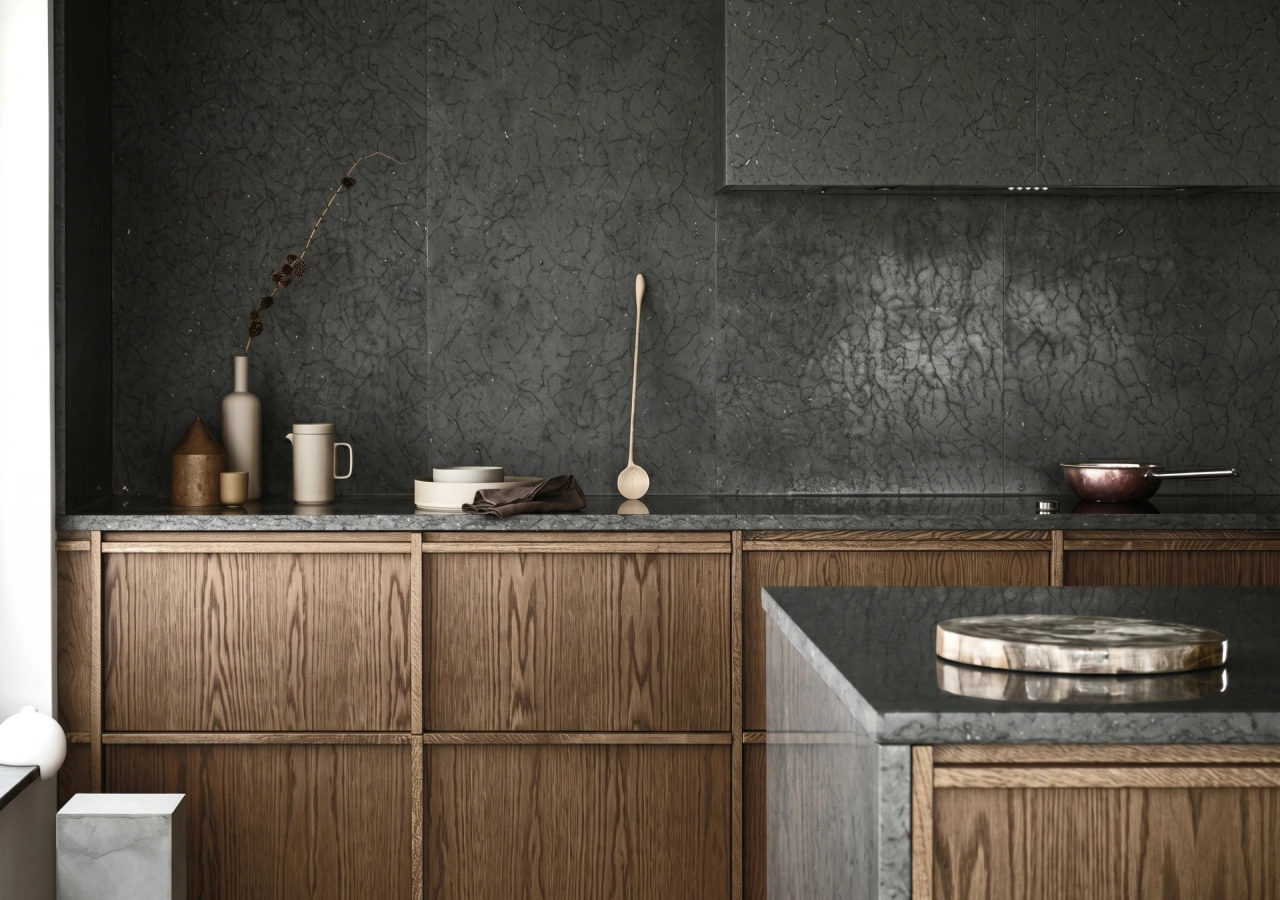
A black countertop can work in a Japandi kitchen when it has a clear role. Dark stone or charcoal can ground pale oak, define an island, or connect black appliances, lighting, and fixtures. The effect is usually softer when the surface is charcoal, brown-black, or lightly textured rather than glossy jet black.
Using black in one area often creates better balance than covering every counter. It may work on an island while the perimeter remains light, or on a short run beside tall wood cabinets. Review the sample in the kitchen’s actual lighting because dark finishes may show dust, fingerprints, water marks, and crumbs more clearly.
Quartz vs Dekton vs Natural Stone
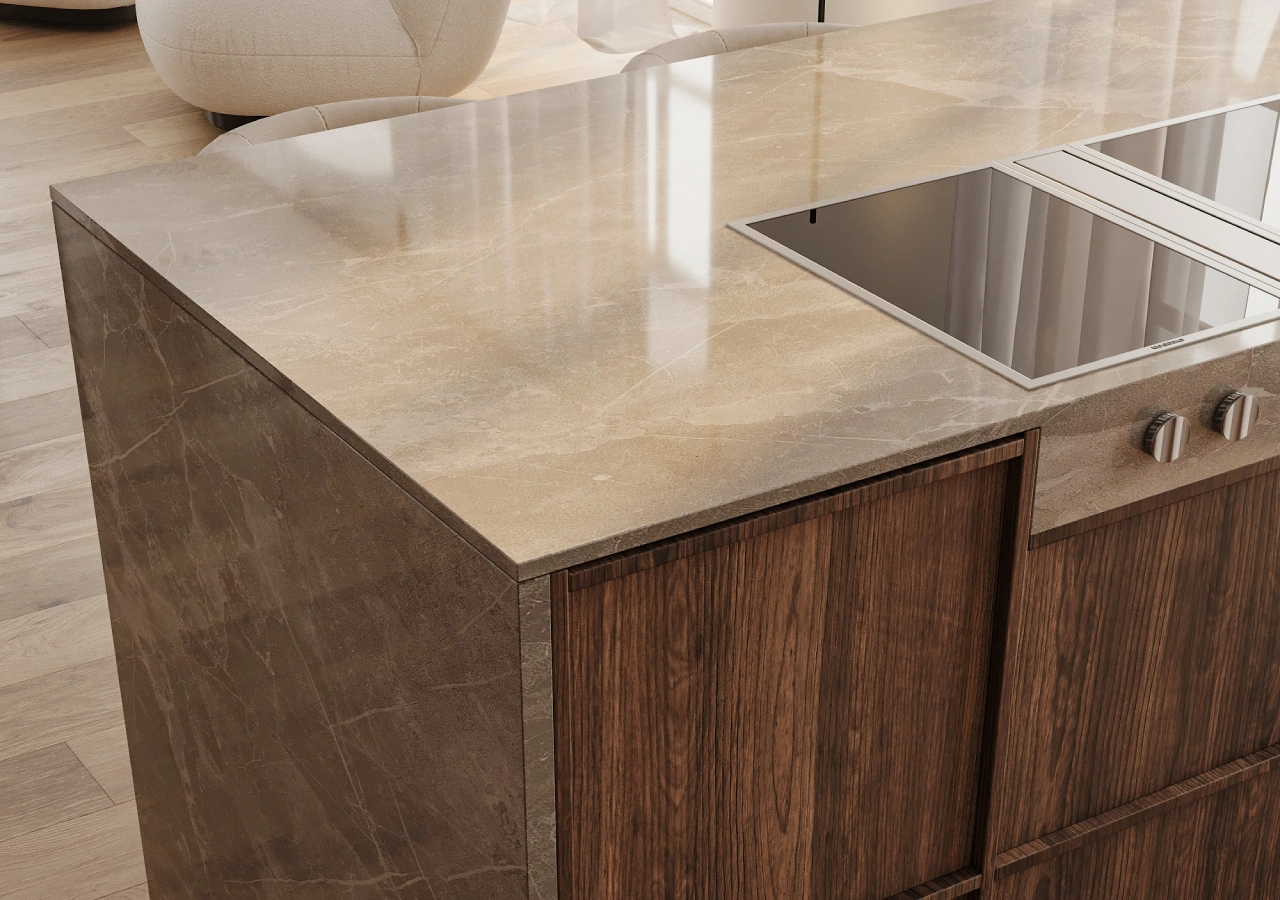
Quartz, Dekton, and natural stone can all suit a Japandi kitchen, but they offer different combinations of consistency, maintenance, heat performance, and natural variation. The choice should reflect how the kitchen will be used as well as how the surface looks.
Concrete and microcement offer another direction for homeowners who want a tactile, monolithic surface. They can work well in warm minimalist kitchens but depend heavily on substrate preparation, sealing, specialist workmanship, and realistic expectations around variation or hairline cracking.
Plan Waterfall Islands Early
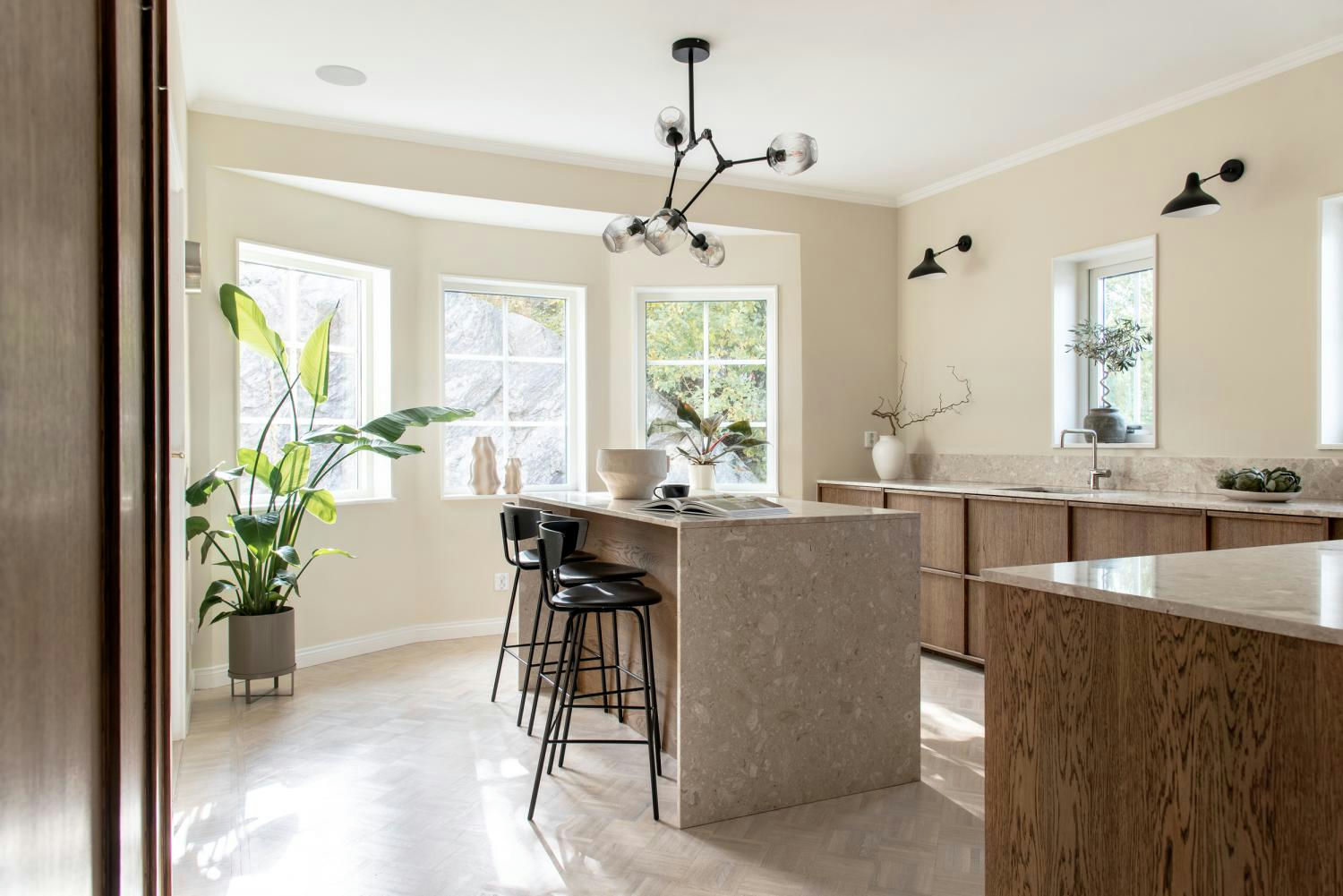
A waterfall island can suit a Japandi kitchen because it turns the countertop and sides into one simple volume. The detail needs to be resolved before the island design and cabinet drawings are finalized.
Thickness, pattern direction, seam placement, side panels, outlets, structural support, slab dimensions, and cost all affect the result. Strong marble-look patterns need especially careful alignment across the horizontal top and vertical side.
Quartz, Silestone, and Dekton are common waterfall-island options. A subtle pattern is generally easier to align than large directional veining. Selective use can also create a stronger result: one waterfall side may frame an exposed end, while a wood or matte panel keeps the other side warmer and reduces fabrication complexity.
How Countertop and Cabinet Coordination Works
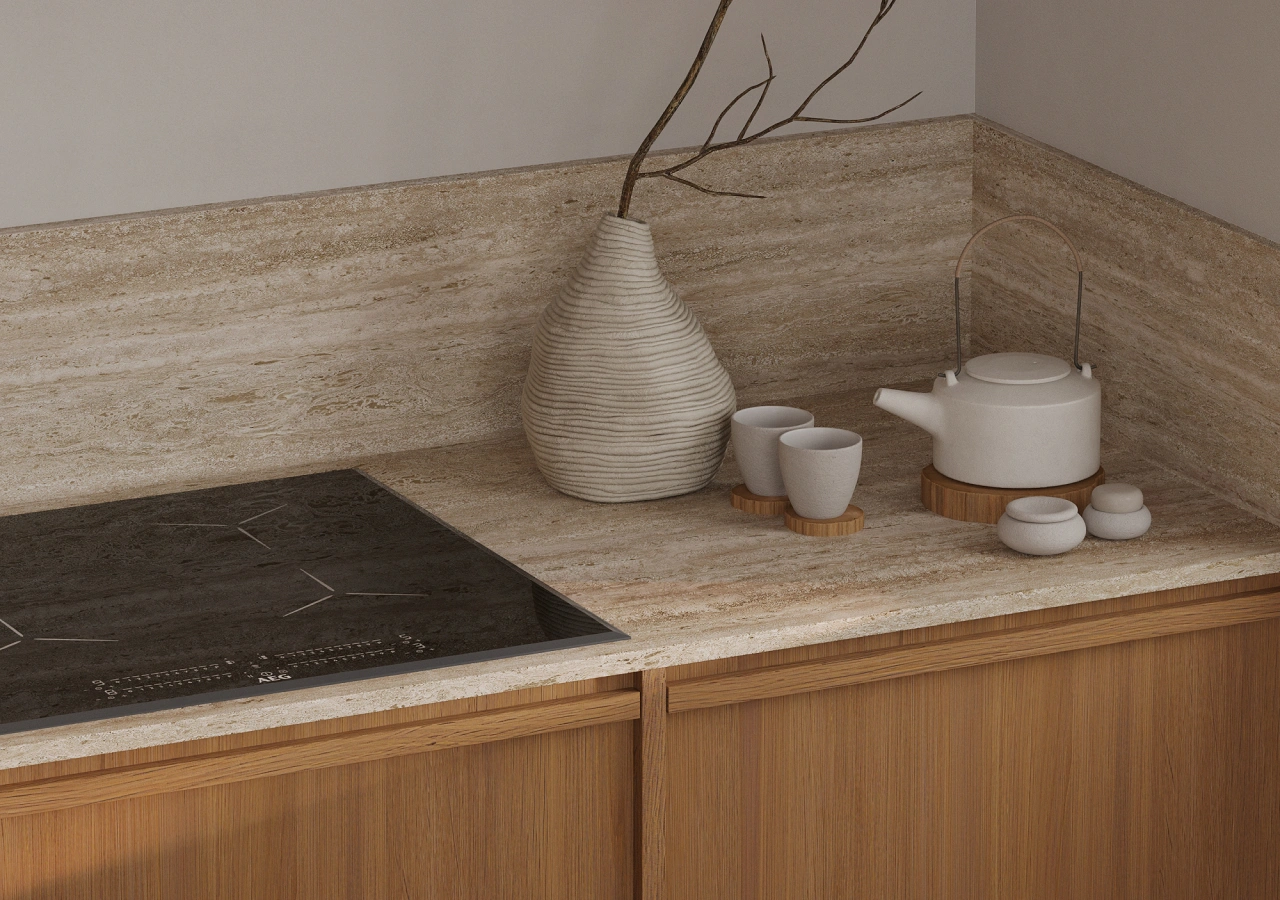
Countertops are usually separate from the cabinet quote, especially when natural or engineered stone is involved. The final template is normally created after the cabinets have been installed, secured, and leveled because the fabricator needs accurate site dimensions.
The material direction still needs to be chosen much earlier. Cabinet drawings should account for countertop thickness, overhangs, waterfall sides, sink and cooktop openings, appliance positions, support, and backsplash relationships.
Corner can help guide the material direction and coordinate cabinet-related decisions, including thickness, overhangs, waterfall sides, openings, and drawings. Stone is often better sourced locally because templating, weight, breakage risk, delivery, installation, and site conditions depend on the project location. Where possible, Corner can also connect clients with local options.
Conclusion
A successful Japandi kitchen countertop feels connected to the cabinetry and appropriate for daily use. Light oak often pairs well with warm white, cream, greige, pale concrete, and subtle stone-look surfaces. Walnut benefits from creamy contrast, honed natural stone, muted mineral tones, or warm concrete.
Every material comes with tradeoffs. Quartz offers consistency, Dekton creates a precise architectural look, natural stone provides unique depth, and concrete or microcement requires specialist coordination.
Waterfall islands can be effective, but seams, structural support, fabrication complexity, and cost need early review. Selective use is often more successful than wrapping every exposed surface.
Explore Corner Renovation’s collections and completed kitchen projects to see how wood, stone, and cabinet finishes can work together, then use those examples to build a focused material shortlist for your own space.


