

Countertops are one of the easiest areas to misunderstand during kitchen planning. In many projects, stone or quartz is priced, templated, fabricated, and installed by a local specialist rather than included in the cabinet quote.
Not included does not mean not coordinated. In many custom kitchen projects, the countertop is priced and fabricated locally, while the cabinet company still helps align the layout, drawings, sink, appliances, overhangs, waterfall details, and design direction.
- Why Countertops Are Usually Separate From Cabinet Quotes
- Why Stone Countertops Are Often Sourced Locally
- What the Cabinet Company Coordinates
- Countertop Details That Should Be Reflected in Cabinet Planning
- What the Local Countertop Fabricator Handles
- Cabinet Company vs. Local Countertop Fabricator
- When Countertop Decisions Need to Happen
- Countertop Coordination Timeline
- Special Details That Need Early Coordination
- How to Coordinate Cabinets and Countertops Before Ordering
- Questions to Ask Before Ordering Cabinets
- How Corner Can Help Even When Stone Is Local
- Conclusion
- FAQ
Why Countertops Are Usually Separate From Cabinet Quotes
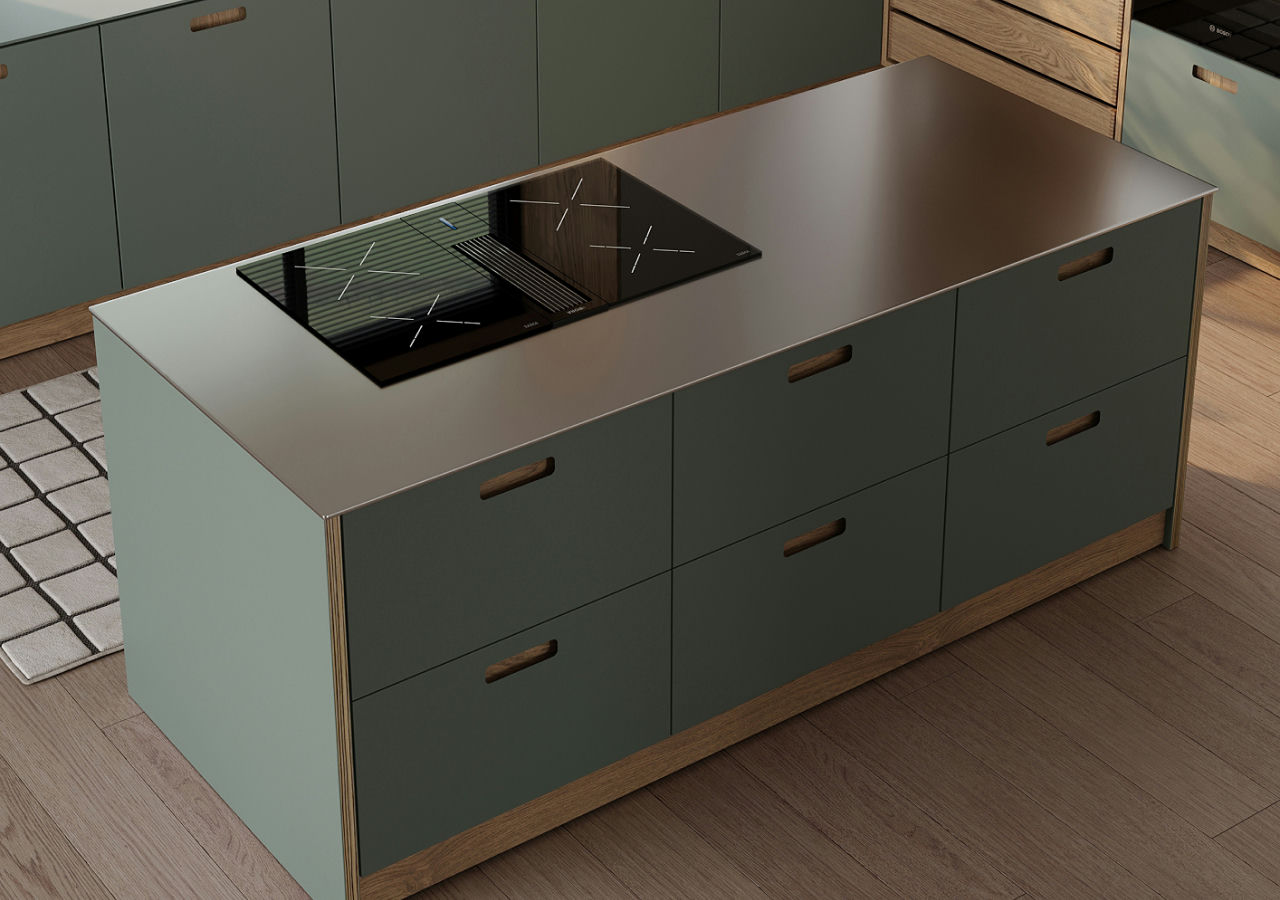
Countertops are usually separate from a cabinet quote because stone, quartz, concrete, and similar surfaces are typically measured, fabricated, delivered, and installed by a local countertop fabricator. A cabinet quote usually covers the cabinet system itself: boxes, fronts, panels, internal hardware, finishes, and production drawings.
This separation can feel confusing, but it is normal in many custom kitchen projects. The countertop may be a separate line item, but it still affects the cabinet plan, including island dimensions, sink placement, appliance clearances, backsplash height, overhangs, and support details.
A better way to understand the workflow is this: the cabinet company plans the kitchen structure and design intent, while the local fabricator confirms the final surface measurements and installs the countertop.
Why Stone Countertops Are Often Sourced Locally
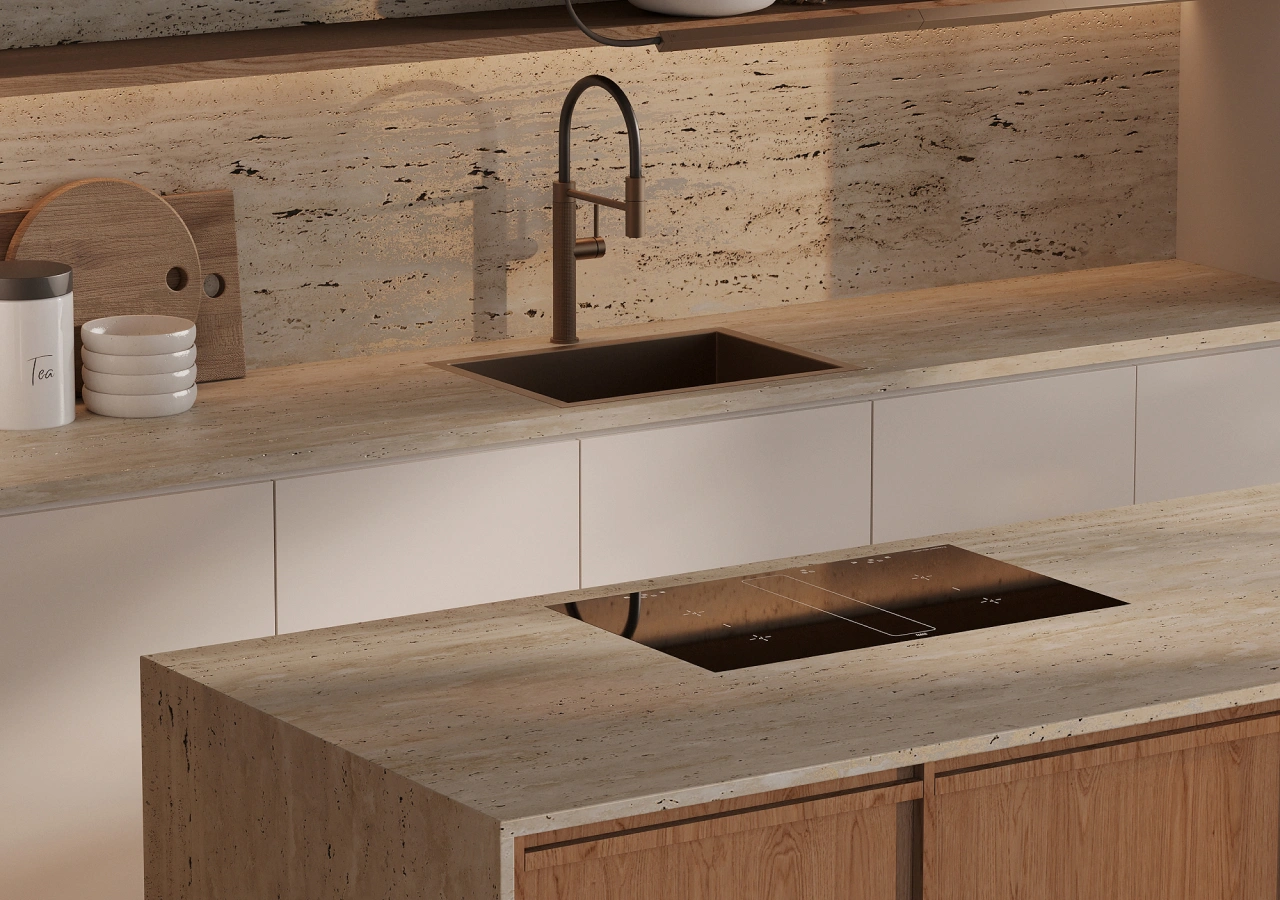
Stone countertops are usually sourced locally because they are heavy, breakable, and dependent on exact site conditions. Unlike cabinets, which can be manufactured from approved drawings, countertops often need final field measurements after the cabinets are installed.
Large slabs are difficult to ship and are more prone to damage in long-distance transport. A local fabricator can measure the room, confirm seams, fabricate cutouts, install the surface, and return for small adjustments if needed.
This is especially important for long islands, full-height backsplashes, waterfall sides, concrete counters, and large-format stone. These details can look simple in a finished kitchen, but they depend on accurate measurements and a fabricator who can work with the actual site.
What the Cabinet Company Coordinates
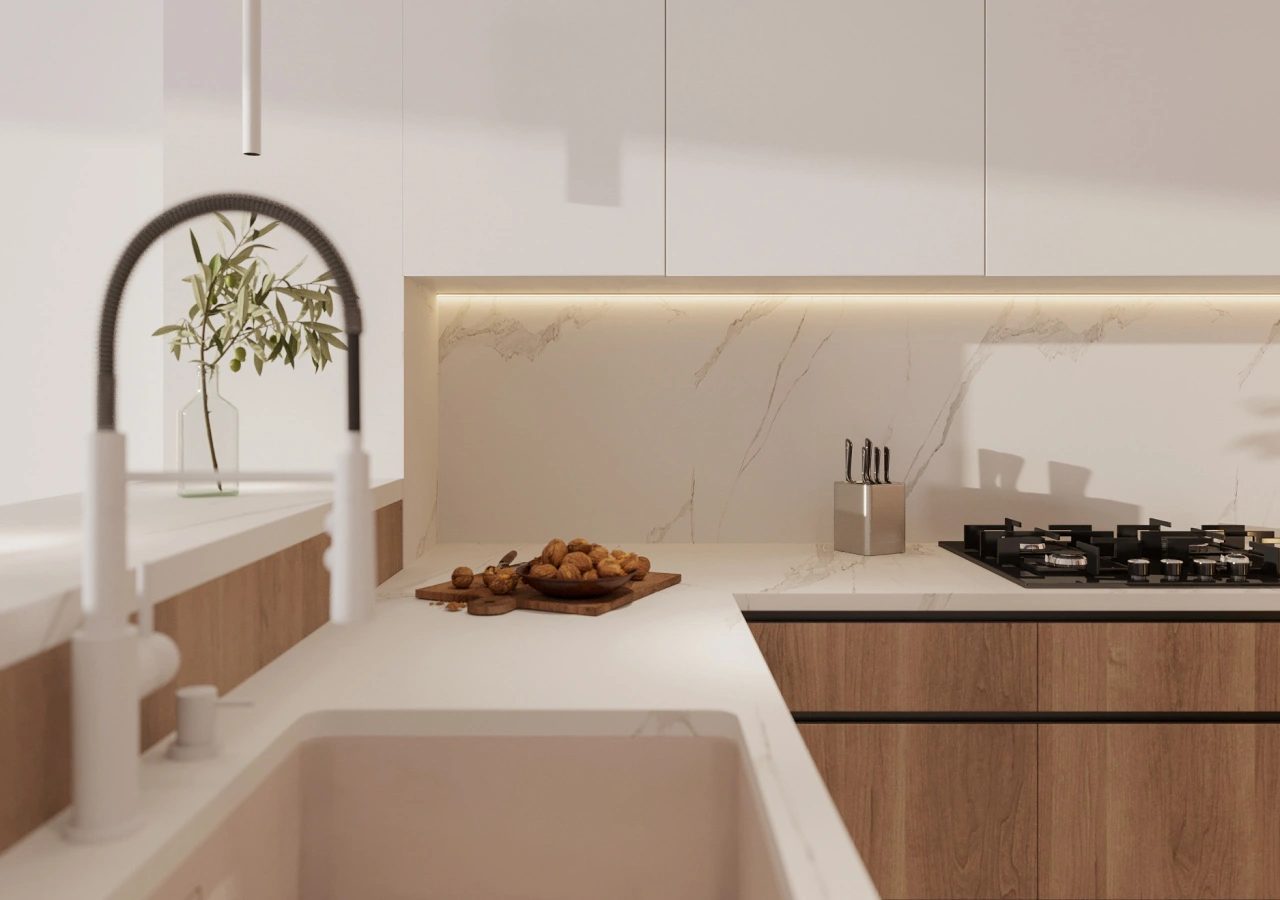
The cabinet company coordinates the parts of the countertop plan that affect the cabinet design. This includes the base cabinet layout, island size, finished panel locations, sink cabinet, appliance openings, overhangs, waterfall sides, backsplash intent, and areas that may need extra support.
This is where good planning protects both the function and the finished look of the kitchen. A countertop changes how people sit at the island, where appliances fit, how drawers open, and how clean the finished lines feel.
Countertop Details That Should Be Reflected in Cabinet Planning
| Countertop Detail | Why It Matters for Cabinet Planning |
|---|---|
| Countertop thickness | Affects finished height, appliance alignment, panels, and proportions |
| Island overhang | Impacts seating comfort, support needs, and cabinet depth |
| Waterfall sides | Must align with island panels, outlets, seams, and cabinet structure |
| Sink location | Affects the sink cabinet, plumbing, drawers, and under-sink storage |
| Cooktop location | Affects ventilation, heat clearances, drawer planning, and appliance specs |
| Backsplash height | Needs to work with uppers, shelves, outlets, and appliance zones |
| Support brackets | May be needed for heavy stone, large overhangs, or special island shapes |
The goal is to give the fabricator a clear, accurate cabinet plan before final templating.
What the Local Countertop Fabricator Handles
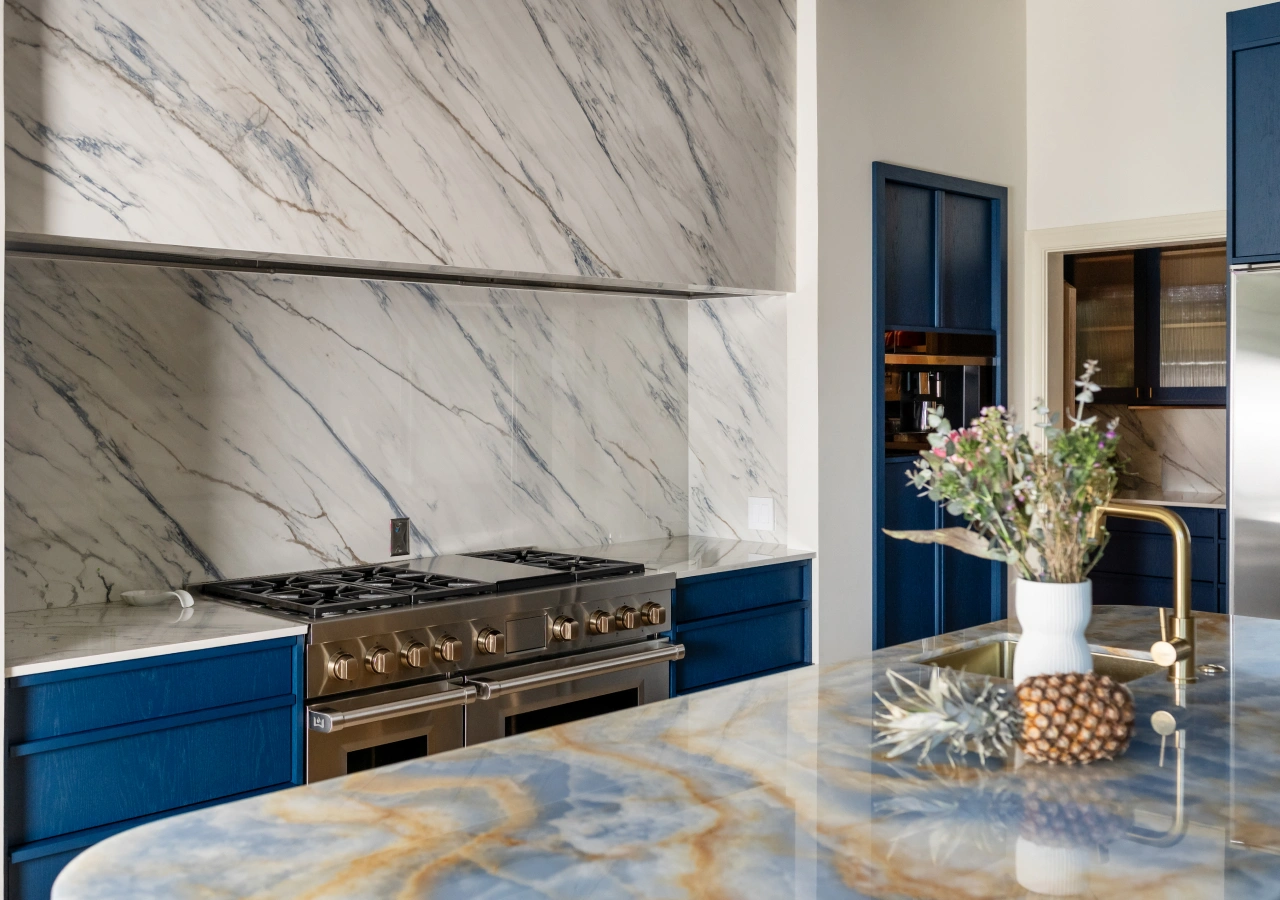
The countertop fabricator handles the final surface scope. This usually includes field measurements, templating, seam planning, edge profiles, cutouts, fabrication, delivery, installation, and on-site adjustments.
Templating usually happens after the cabinets are installed. The fabricator needs to measure the actual cabinet runs, island position, wall conditions, appliance openings, and any irregularities in the room. Even a small shift in a wall or cabinet line can affect the final countertop shape.
Cabinet Company vs. Local Countertop Fabricator
| Responsibility | Cabinet Company | Local Countertop Fabricator |
|---|---|---|
| Cabinet layout | Creates and coordinates | Uses for reference |
| Production drawings | Provides | Uses for planning and templating |
| Countertop material direction | Can advise | Confirms options and availability |
| Final field measurements | No | Yes |
| Seams and edge profiles | Can note design intent | Confirms and fabricates |
| Delivery and installation | Cabinet delivery/install support, depending on scope | Countertop delivery and installation |
This division of work keeps each trade focused on what it does best while still connecting the design decisions.
When Countertop Decisions Need to Happen
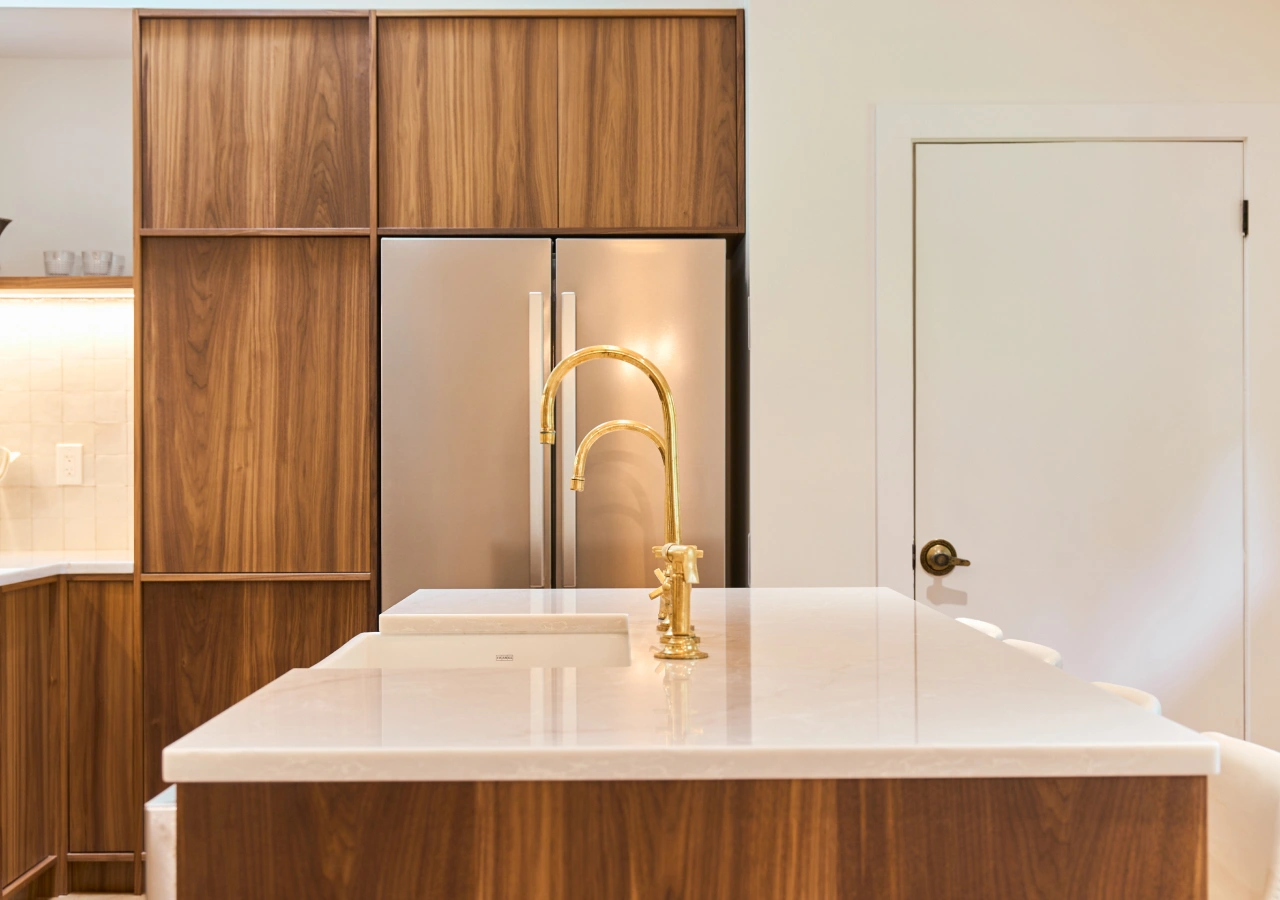
Countertop direction should be discussed early, even if the final slab is selected later. The cabinet drawings need to account for the general material type, thickness, island shape, sink, cooktop, overhangs, backsplash height, and any waterfall or specialty details.
Final templating happens later, after cabinet installation. That sequence is normal. What creates problems is changing major countertop decisions after the cabinet drawings are approved or production has started.
Countertop Coordination Timeline
| Stage | What Should Be Confirmed |
|---|---|
| Early design | Material direction, overall look, island shape, and countertop thickness range |
| Cabinet drawings | Sink, cooktop, appliance zones, island size, overhangs, and backsplash intent |
| Before production | Waterfall sides, support brackets, outlets, panel alignment, and special edges |
| After cabinet installation | Local fabricator templates the exact cabinet and wall conditions |
| Before stone fabrication | Seams, edge profile, cutouts, slab layout, backsplash pieces, and delivery timing |
Late changes can affect the cabinet plan. A larger sink, a moved cooktop, a deeper overhang, a new waterfall side, or an added stone backsplash may require drawing revisions, support changes, or timeline adjustments.
Special Details That Need Early Coordination
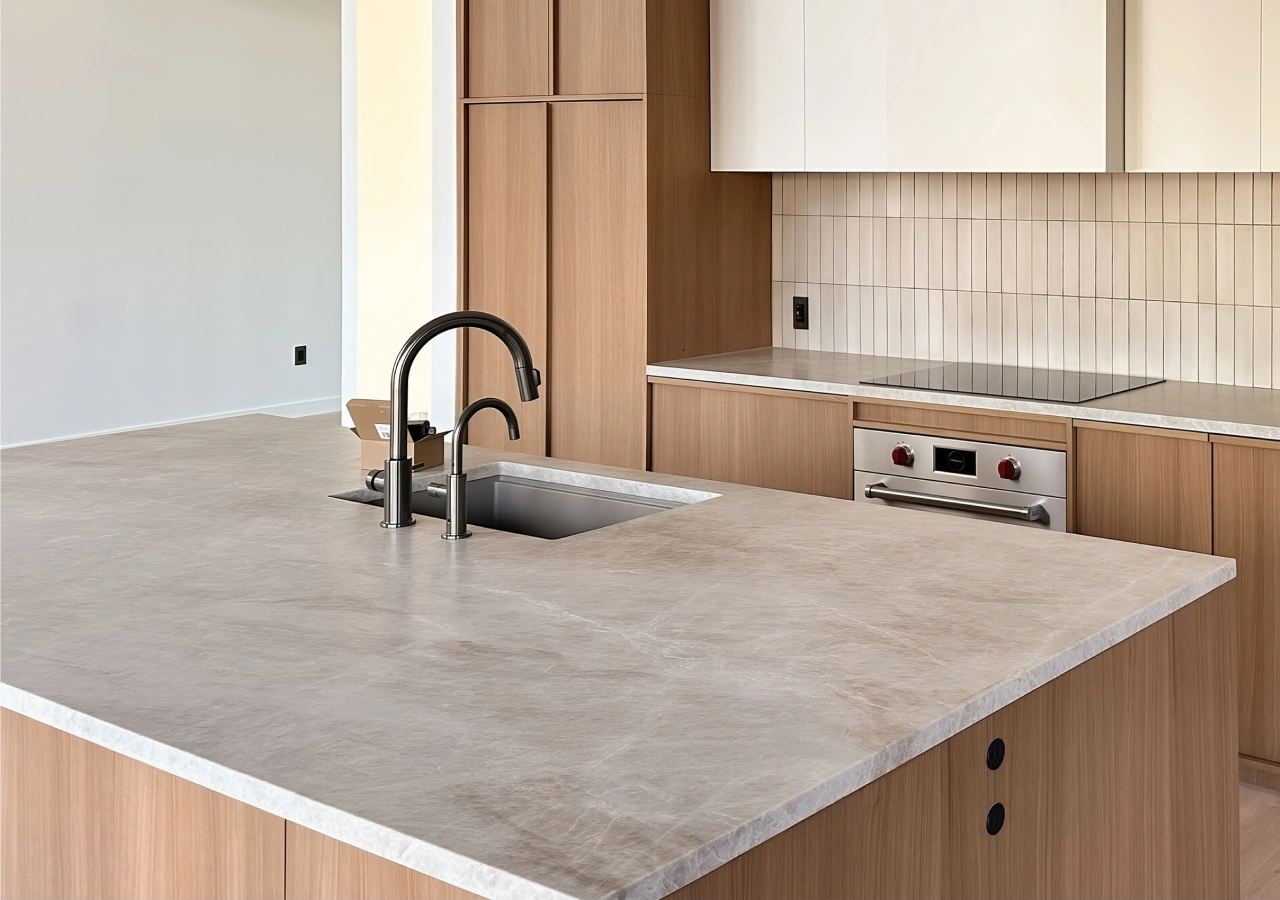
Some countertop decisions need earlier coordination because they affect both the cabinets and the surface fabrication. Waterfall islands, oversized slabs, heavy natural stone, concrete counters, full-height backsplashes, curved islands, and large overhangs should be discussed before production because they can affect panels, seams, outlets, support, and installation sequence.
In some projects, the discussion may also include non-stone or stone-alternative surfaces such as FENIX, ARPA, stainless steel, compact surfaces, or other synthetic materials, depending on the design and scope. These materials still need coordination around thickness, edges, seams, appliance openings, and how the surface meets the cabinetry.
How to Coordinate Cabinets and Countertops Before Ordering
The simplest way to avoid countertop problems is to make the countertop part of the cabinet conversation early. Clear decisions before production help the fabricator template accurately after the cabinets are installed.
-
Choose the countertop direction early. Decide whether the kitchen is moving toward quartz, Dekton, Silestone, marble, granite, concrete, microcement, stainless steel, compact surface, or another material.
-
Confirm appliance and sink specifications. Sink size, faucet location, cooktop model, range position, dishwasher placement, and panel-ready appliances can all affect the cabinet drawings.
-
Review the island details. Confirm island size, seating overhang, waterfall sides, outlets, support brackets, finished panels, and any special edge details before production.
-
Share cabinet drawings with the fabricator. The local fabricator should understand the cabinet layout, sink cabinet, appliance openings, overhangs, backsplash plan, and overall design intent.
-
Template after cabinet installation. Final countertop measurements should be taken from the installed cabinets and real site conditions, not only from early drawings.
-
Confirm fabrication details before cutting. Review seams, edge profiles, cutouts, slab orientation, backsplash pieces, delivery timing, and installation access before the surface is fabricated.
This process keeps the design flexible at the right stage and firm before changes become expensive. It also helps the countertop feel like part of the kitchen architecture, not a separate surface added at the end.
Questions to Ask Before Ordering Cabinets

Before approving cabinet production, homeowners should understand how countertop coordination will work. These questions help clarify responsibility, timing, and possible design risks.
- Are countertops included in the cabinet quote or priced separately?
- Who is sourcing the countertop material?
- When will templating happen?
- Are the sink, faucet, cooktop, and appliance specs confirmed?
- Are waterfall sides, overhangs, seams, outlets, and support needs shown in the drawings?
- Who confirms the final slab, edge profile, fabrication, delivery, and installation?
These questions are not just about cost. They help protect the cabinet plan, the countertop fit, and the final look of the kitchen.
How Corner Can Help Even When Stone Is Local
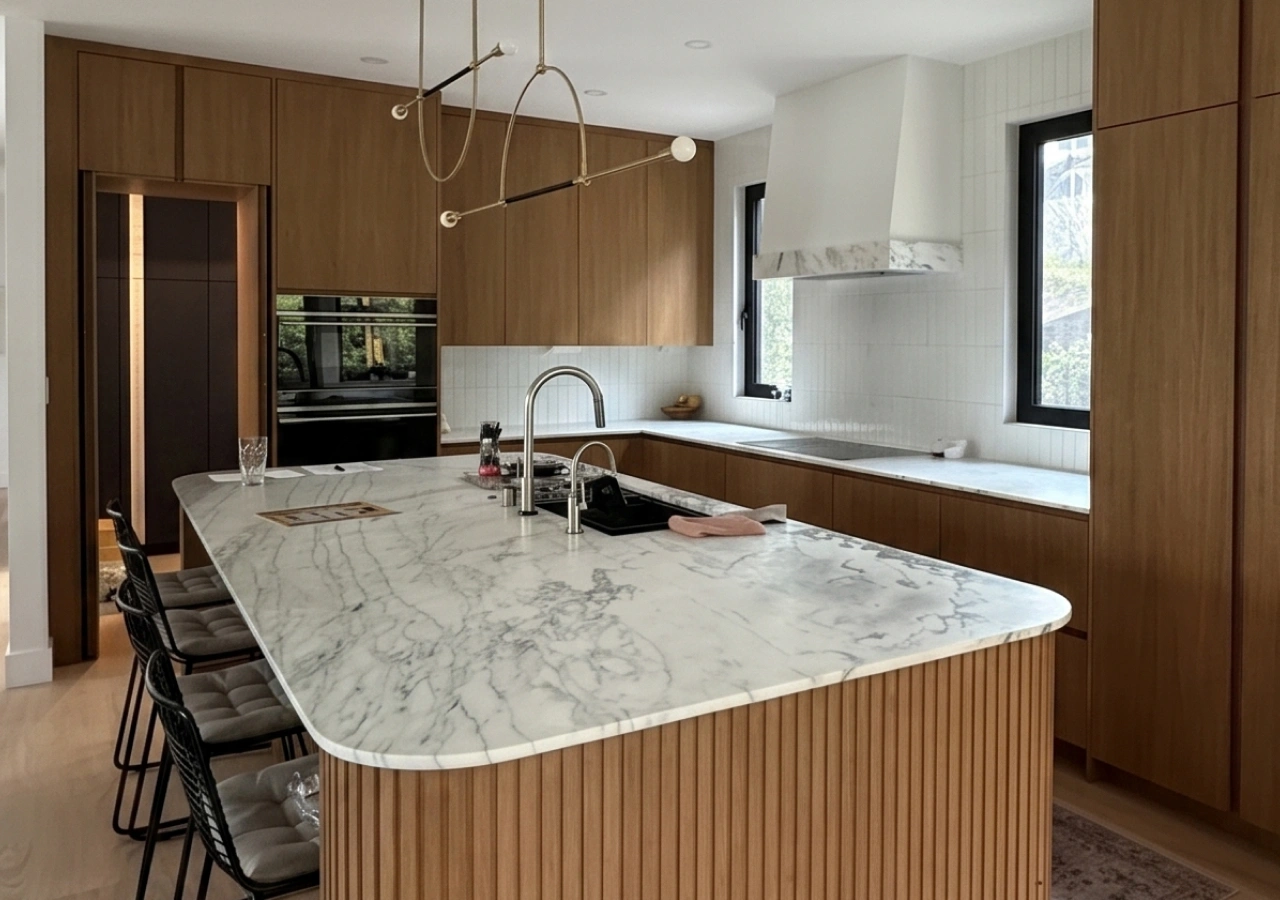
Corner can help coordinate the design direction and cabinet details that affect the countertop. That includes layout planning, island proportions, appliance placement, sink location, waterfall intent, overhangs, backsplash direction, and drawings that can be shared with a local fabricator.
The countertop may be fabricated locally, but the planning should still be connected to the cabinet design. This is what helps the finished kitchen feel intentional, practical, and visually clean.
Supplier or fabricator introductions can help with direction and access, but they do not guarantee a lower price. Final pricing depends on the material, slab availability, fabrication, edge details, delivery, and local installation scope.
Conclusion
Countertops are often local because surface work depends on exact measurements, material handling, fabrication, delivery, and installation. Still, they should be planned together with the cabinets from the beginning. Sink placement, appliances, island overhangs, waterfall sides, backsplash height, and support details can all affect the final result.
The strongest kitchens come from clear coordination between the cabinet plan and the countertop scope. Special details can be worth it, but they should add real functional or visual value rather than complexity alone. To plan the next step, explore Corner Renovation’s collections, view real kitchen examples, or book a consultation.


