
.webp)
White Japandi kitchens combine warm white cabinetry, natural wood, matte finishes, and restrained detailing to create spaces that feel bright without feeling cold. Unlike a stark all-white kitchen, this style relies on undertone, texture, and storage planning to keep the room soft, usable, and visually quiet.
For modern homeowners, that balance matters. A white Japandi kitchen can make the room feel larger and lighter, while still holding onto warmth, depth, and everyday practicality. When the layout is efficient and storage is built in properly, the result is a kitchen that looks clean and stays easier to live with.
At Corner Renovation, this approach comes up often in projects shaped by Scandinavian and Japanese design principles: warm woods, integrated appliances, fewer visual breaks, and surfaces that feel calm rather than shiny or overworked.
What Makes a White Japandi Kitchen Different
.webp)
A white Japandi kitchen is not simply a white kitchen with wood added afterward. The style is defined by softer whites, natural materials, low-glare finishes, and a stronger focus on restraint. It takes the brightness of a white kitchen and gives it more texture, more warmth, and a more grounded feel.
Compared with many Scandinavian white kitchens, Japandi spaces usually lean less crisp and more tactile. The whites tend to be warmer, the contrast is softer, and the surfaces are quieter. Instead of depending on bright white paint and sharp definition, the look comes from subtle layering and better material balance.
That difference changes the mood of the room. A standard white kitchen can feel clean but slightly hard-edged. A white Japandi kitchen still feels minimal, but it reads softer and more settled because the materials work together instead of competing.
White Japandi vs Scandinavian White Kitchens
Why White and Wood Feels Light but Not Cold
.webp)
White and wood work well together because each one corrects the weakness of the other. White helps the kitchen feel open and uncluttered. Wood adds tone, grain, and visual depth, which keeps the room from feeling flat.
Light oak is one of the easiest pairings in this style. It reflects light gently, keeps the palette open, and adds just enough texture to soften white cabinetry. Walnut does something different. It adds weight and definition, which can be useful when you want an island, tall cabinet run, or lower base cabinets to feel more anchored.
The best results usually come from keeping the wood application controlled. Instead of using wood everywhere, it tends to work better when applied where it has a clear role: shelving, tall units, drawer interiors, a niche panel, or a single focal run. That gives the kitchen warmth without making it visually busy.
Stone surfaces can help tie the palette together. Light quartz or Dekton with soft movement can bridge white cabinetry and wood tones, especially when the backsplash and countertop are treated as one continuous surface.
Best White Japandi Pairings
Designing for Light, Space, and Flow
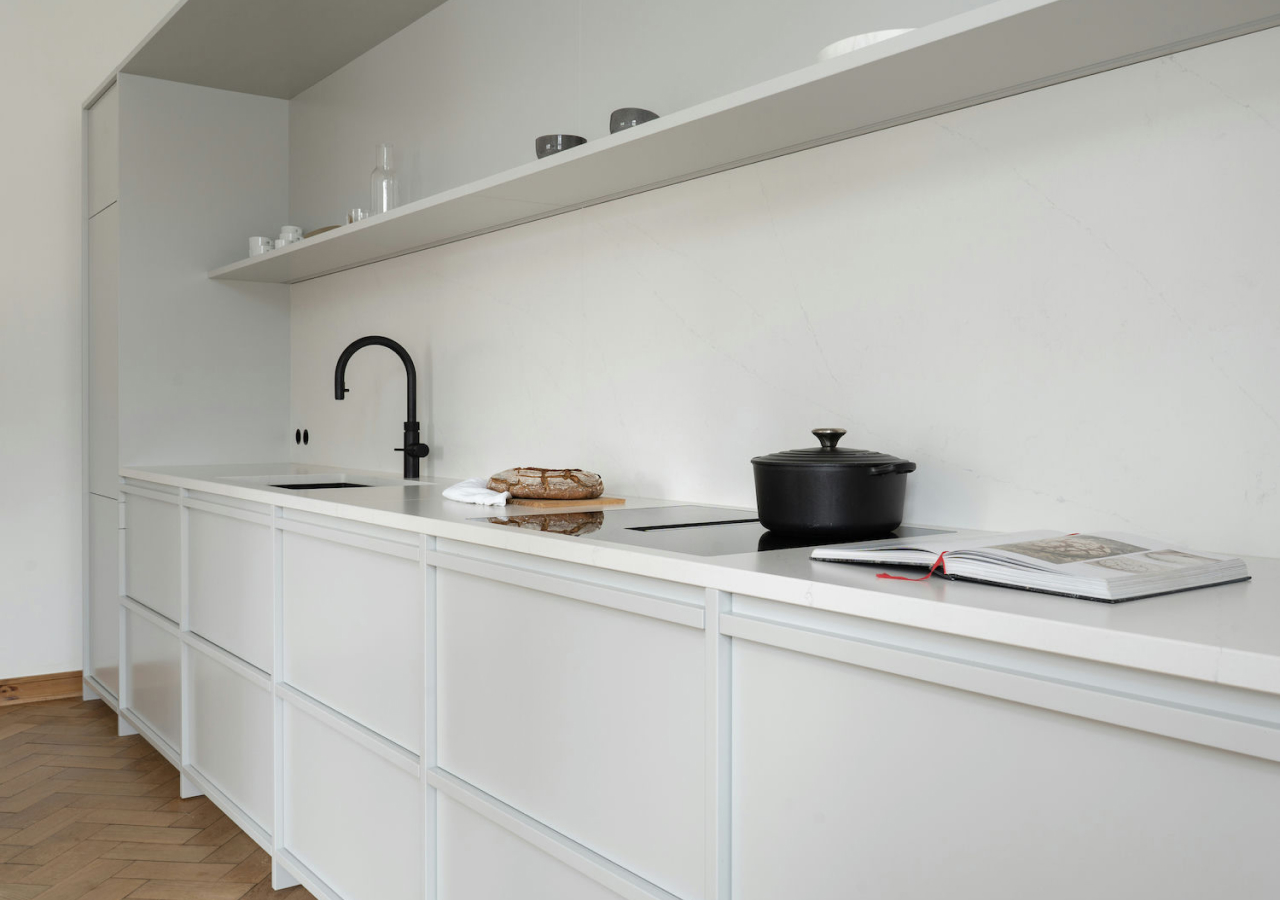
A white Japandi kitchen depends as much on layout as on materials. The palette may be light, but if the room is over-segmented or crowded, it will not feel calm. Clean planning is what allows the visual simplicity to hold up.
Full-height cabinetry is often useful here because it reduces horizontal interruptions and creates a cleaner wall line. Instead of breaking the kitchen into many upper and lower pieces, it lets the storage read as part of the architecture. That can make even a compact room feel more composed.
Handleless cabinetry also helps. Recessed profiles, integrated rails, or carefully detailed edge pulls reduce visual clutter and keep the surfaces uninterrupted. In a style that depends on low visual noise, those small details make a real difference.
The same goes for spacing. A single strong island, one continuous run of cabinetry, or a well-planned galley often feels better than a layout broken into many fragments. Fewer elements, sized properly, usually produce a calmer result than a kitchen filled with small design gestures.
Materials That Feel Natural and Last
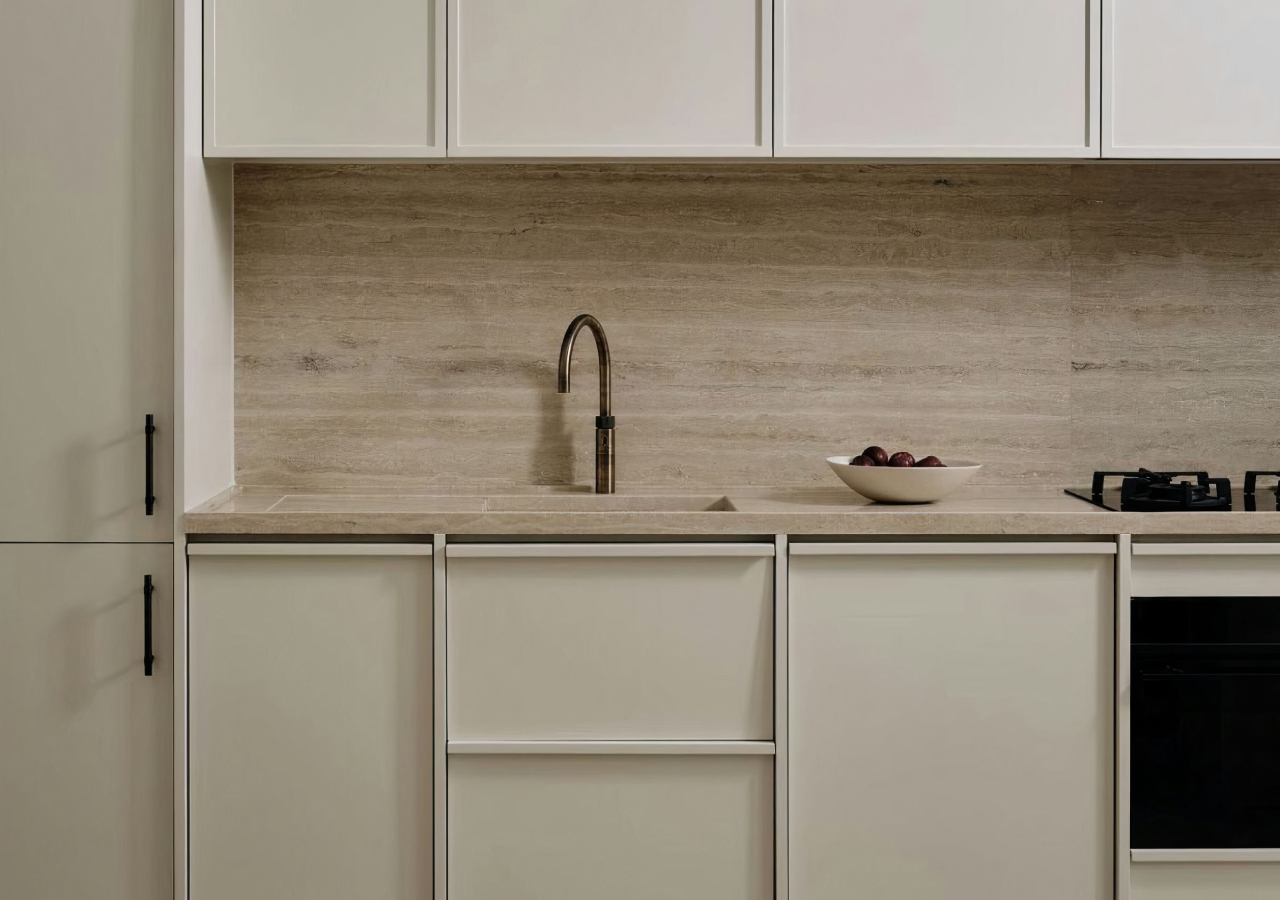
White Japandi kitchens usually work best with a restrained material palette. The point is not to add variety for its own sake. It is to choose a few durable finishes that sit well together and continue to look good with daily use.
Matte and super-matte cabinet fronts are especially useful because they reduce glare and tend to feel quieter than gloss. Large-format countertop and backsplash materials help in the same way. They simplify the wall plane, reduce grout lines, and make the kitchen easier to wipe down.
Wood veneers bring in warmth without making the room feel heavy, especially when the grain is clean and the tone is well matched to the white. The key is consistency. A kitchen with one white, one wood tone, and one or two supporting surface materials usually feels stronger than one trying to show too many finishes at once.
Storage That Keeps the Kitchen Calm
.webp)
A white Japandi kitchen only works long term if the storage is doing its job. Minimalism falls apart quickly when everyday items have nowhere to go. Good storage is what allows the room to stay visually quiet without becoming inconvenient.
Deep drawers are often more useful than standard lower cabinets because they bring everything forward and make access easier. Internal dividers, cutlery organizers, and drawer inserts help keep small items controlled instead of shifting around in larger compartments.
Hidden utility matters too. Pull-out waste bins, appliance garages, corner pull-outs, and interior storage systems reduce the number of objects that end up sitting out on the countertop. That makes a noticeable difference in a white kitchen, where visual clutter tends to stand out faster.
Open shelving can still have a place, but it usually works best in small doses. One short shelf with a few useful or tactile items can warm the room up. Too much open storage starts to work against the whole point of the style.
Lighting That Feels Soft and Natural
.webp)
Lighting has a major effect on how white surfaces read. In a white Japandi kitchen, the goal is not maximum brightness. It is balanced, low-harshness light that supports both function and comfort.
Warm light temperatures in the 2700K to 3000K range usually work well because they soften white cabinetry and bring out the warmth in wood. Cooler light can make the room feel sharper and more clinical, especially in the evening.
Layering matters just as much as color temperature. Ambient light handles the room overall, task lighting supports prep areas, and accent lighting can bring depth to shelving, niches, or an island. Under-cabinet lighting is often especially useful because it improves function while also highlighting the texture of the backsplash and worktop.
When lighting is handled well, the kitchen feels steady and easy to use across the whole day, not just in bright morning light.
How to Keep a White Japandi Kitchen Easy to Live In
.webp)
A white Japandi kitchen stays practical when the design choices are slightly forgiving from the start. Warm whites, matte finishes, integrated storage, and larger surface materials all reduce the visual and cleaning burden of daily use.
What usually causes trouble is not the white itself, but the wrong kind of white or the wrong surrounding choices. Blue-based whites, glossy fronts, over-detailed backsplashes, and poor storage planning can make a minimalist kitchen harder to maintain and harsher to look at.
The more durable version of this style is usually the simpler one: fewer materials, fewer visual breaks, better storage, and finishes that do not demand constant upkeep.
Common Mistakes in White Japandi Kitchens
.webp)
Some white Japandi kitchens miss the mark not because the idea is wrong, but because the details are pulling in different directions.
Common problems include:
- choosing a cool white that clashes with warm wood
- mixing too many wood tones in one room
- using glossy fronts that create glare and show marks easily
- relying on small-format backsplash tile with heavy grout lines
- leaving too many everyday items on open shelving
- adding decorative pieces to create warmth instead of using better materials
- using cool lighting that makes the room feel clinical at night
Most of these issues are avoidable. A more restrained palette, better storage, and more attention to undertones usually solve them early.
Conclusion
A white Japandi kitchen offers a softer version of minimalism. It keeps the openness and clarity people like in white kitchens, but adds enough warmth, grain, and material depth to make the space feel more settled and easier to live with.
The strongest versions of this style are usually the simplest in structure: warm white cabinetry, one clear wood tone, low-glare finishes, practical storage, and lighting that supports the room instead of flattening it. When those pieces are handled well, the kitchen feels light without becoming cold and minimal without becoming severe.
If you’re exploring this direction, take a look at Corner Renovation’s kitchen collections or book a consultation to see how these ideas could translate into your own space.


