

A Scandinavian white kitchen is one of the most reliable ways to make a space feel brighter, larger, and more composed. The risk is that “white” can quickly turn glossy and cold, which reads more like a builder finish than a designed home. Scandinavian design avoids that by treating white as a light-reflecting base layer, then adding warmth through natural materials, softer surfaces, and lighting that looks good after dark.
This guide covers the core decisions behind a Scandinavian white kitchen, explains how to avoid the sterile look common in a white kitchen, and finishes with practical scandi white kitchen ideas and a step-by-step method for a Scandinavian white and wood kitchen that stays calm in daily use.
The Role of White in Scandinavian-Style Kitchens
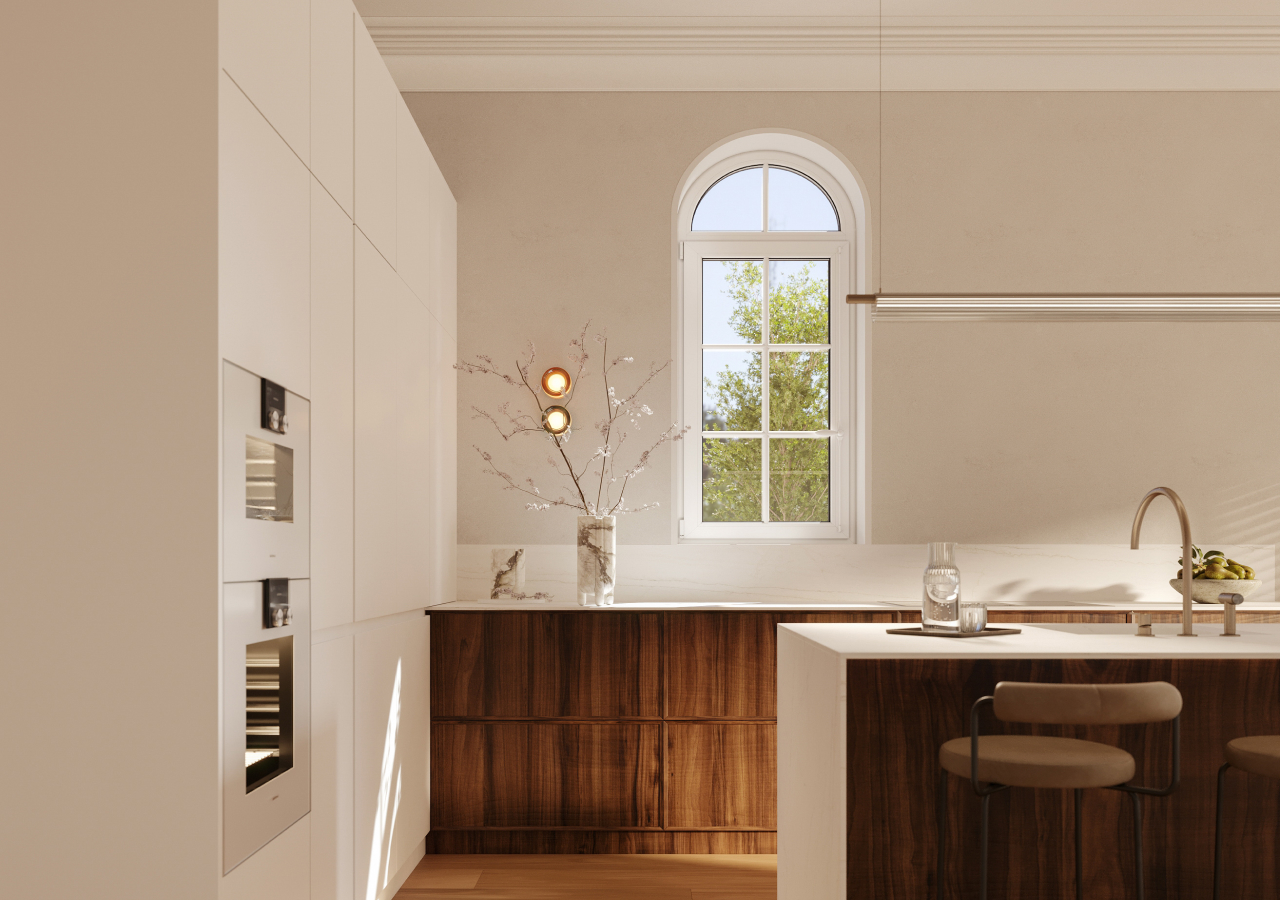
White is a functional foundation in Scandinavian kitchen designs. It reflects daylight, keeps the room visually open, and makes the overall palette feel calm rather than contrasty. Whites that are matte or low-sheen and slightly warm usually perform best because they stay soft in daylight and avoid looking harsh under evening lighting.
In northern design logic, white acts like a daylight amplifier. The kitchen is meant to feel pleasant even on dim days, so lighter palettes and visually quiet surfaces are prioritized, supported by lighting that keeps the room comfortable after sunset.
The most successful whites here are rarely stark or glossy. Scandinavian kitchens lean toward visual clarity with calm cabinet planes, minimal ornament, and a restrained palette that is easy to read. Pairing warm matte white with light woods and quiet stone-like surfaces does more than add style. It holds the palette together and keeps the space feeling bright without looking clinical.
Wood in Scandinavian Kitchen Designs
.webp)
Wood is what keeps white from feeling like a blank box. Grain adds depth, warmth, and tactility, so the kitchen reads as real materials rather than only painted surfaces. Wood is less an accent and more the counterbalance that makes the palette feel livable.
Lighter woods like oak, ash, and birch are classic Scandinavian choices because they warm up white while keeping the room airy. They pair especially well with softer, slightly warm whites, particularly when the wood tone stays natural and not too orange. The goal is not high contrast, but quiet texture that adds comfort without visual noise.
Darker woods can work too, but they are strongest when used with restraint. A single island or one lower run in a deeper tone can ground the space and make the white feel brighter by comparison, as long as the dark wood reads like a deliberate anchor rather than a second competing palette.
Balancing White and Wood in Scandinavian Kitchens
.webp)
A strong white-and-wood balance comes from hierarchy. White carries brightness and continuity, while wood adds warmth and rhythm. The simplest way to avoid a random mix is consistency in three places: one cabinet “language,” one wood tone, and one countertop surface that visually connects them.
What makes white-and-wood feel scattered is usually over-mixing. Multiple door styles, multiple wood undertones, and surfaces that compete for attention break the calm. Scandinavian kitchens stay composed by repeating the same visual rules across the whole room.
The most reliable combinations tend to stay in the same family: white with oak, white with a quiet light stone or stone-like countertop, and very soft grays used as supporting neutrals. A light stone surface works especially well as a bridge because it sits between white and wood, adding depth without introducing a busy pattern.
| Element | Most reliable choice | What makes it feel sterile | Why it matters |
|---|---|---|---|
| Cabinet white | Matte or slightly warm | Glossy bright white | Glare and harsher night feel |
| Wood tone | One consistent oak or light wood | Mixed undertones | Reads accidental, not designed |
| Countertop | Quiet light stone or stone-like | High-contrast pattern | Adds depth without noise |
| Handles | Recessed, cutout, or handleless | Heavy protruding hardware | Breaks the calm plane |
| Lighting | Layered and warm at night | Cold single overhead | White starts looking clinical |
White Scandinavian Kitchen Design Ideas
The best white Scandinavian kitchens follow one repeatable formula: a calm white cabinet plane, one consistent wood tone for warmth, and a quiet countertop surface that bridges the two. The goal is not a “perfectly white” room, but a space that stays bright in daylight and still feels comfortable after sunset. These examples show how different door styles and handle systems can keep the look minimal while staying practical for daily cooking and storage.
Modern Scandinavian White Kitchen with Cutout Handles

Recess White is a strong example of a white Scandi kitchen that stays warm because the warmth is built into the material pairing, not added as decor later. Matte white fronts sit next to light natural wood, so the space reads bright in daylight but still feels welcoming. Recessed handles add a subtle shadow line that gives the cabinetry definition without interrupting the clean plane.
The finish choice does a lot of the work here. Fenix is positioned as matte, soft-touch, and anti-fingerprint, which aligns with the broader Scandinavian preference for low-reflection surfaces that don’t look shiny or smudgy. The pantry functions as a “calm keeper,” combining built-in appliances, an appliance garage, and shelves plus drawers that keep daily objects from migrating onto the countertop. Even the island earns its footprint by carrying real storage, which supports the uncluttered look in everyday use.
Japandi-Style Scandinavian White-and-Wood Kitchen

Nordic shows a slightly different approach: white is used for visual calm up high, while warm wood grounds the room. The collection is described as inspired by Copenhagen, combining handleless oak cabinets with a bespoke shelf solution and a durable Dekton countertop. What’s interesting here is how the palette is staged: the countertop becomes the bridging layer between white uppers and a deeper wood base, creating contrast that feels measured rather than sharp.
The result feels structured and edited. Keeping white consistent on uppers and walls increases visual continuity, while the wood base adds weight and comfort. Open shelving is treated as an intentional moment rather than a storage substitute, which helps the room stay composed.
Scandinavian White Kitchen with Slim Shaker Cabinets
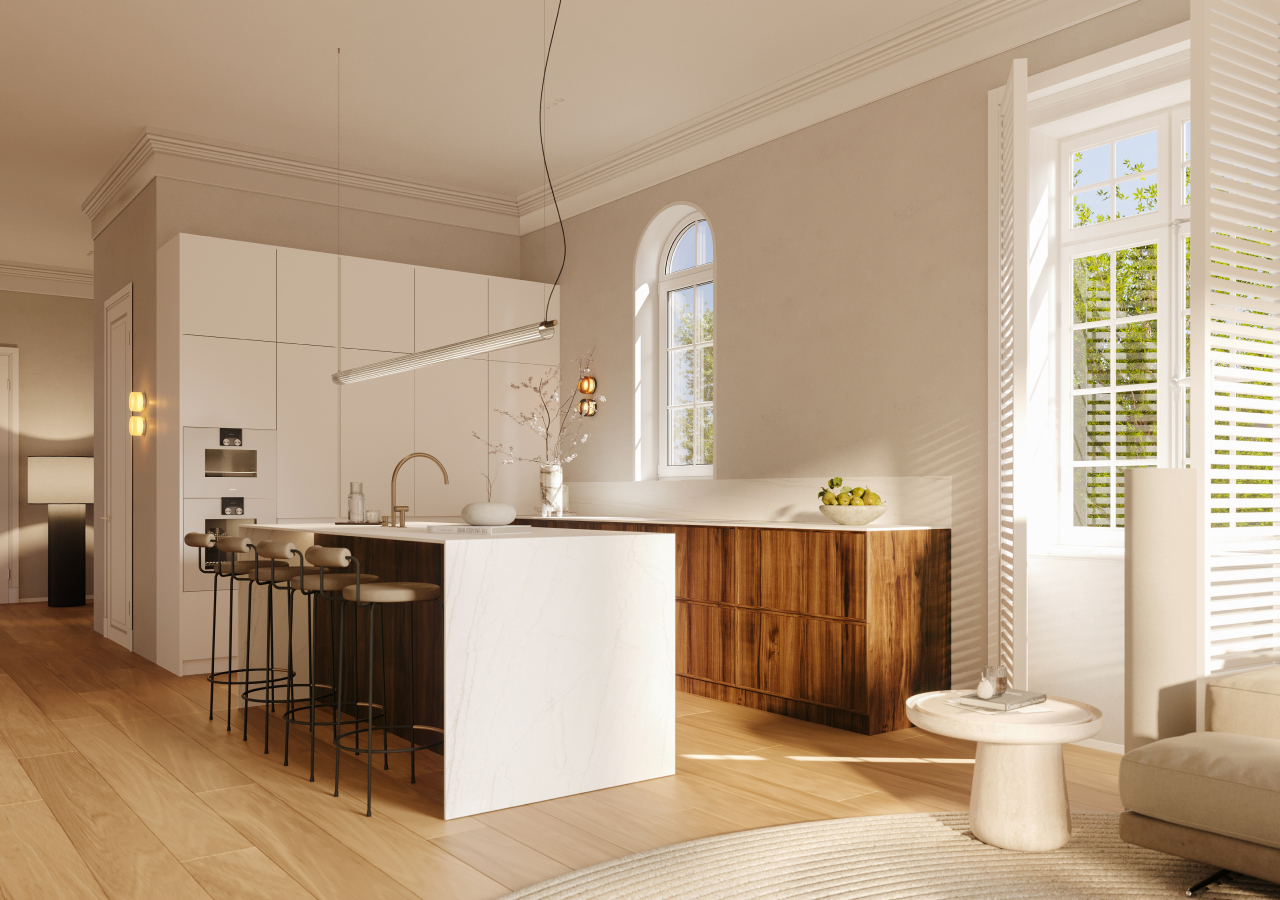
Evoke is the coziest version of this look, leaning more “warm and livable” than “high-contrast minimal.” It’s described as blending Scandinavian traditions with a modern twist on shaker cabinets, using natural materials and thoughtful lighting to create a comfortable space. Slim shaker-style fronts add definition without feeling ornate, and the light wood veneer brings warmth while staying restrained.
This example also reinforces a practical Scandinavian principle: visual calm usually comes from functional calm. Pocket doors are called out as a way to access a pantry/coffee section quickly while keeping the room visually clean when closed—exactly the kind of decision that keeps white kitchens from feeling fussy or high-maintenance.
How to Get This Look in Your Home (Step-by-Step)
- Choose a warm, matte white for the main cabinet plane. Pick a slightly warm, low-sheen white so the cabinets read soft in daylight and don’t create glare at night.
- Pick one consistent wood tone and repeat it. Use the same oak or light wood on 2–3 key elements—like the island, a lower run, shelves, or niches—so it feels intentional rather than random.
- Use a quiet bridge surface. Choose a light stone or restrained stone-like worktop that adds depth between white and wood without a busy, high-contrast pattern.
- Commit to one cabinet language. Decide on flat, slim shaker, or minimal framed fronts and keep hardware discreet so the cabinet plane stays calm and consistent.
- Plan storage before styling. Build in deep drawers, tall pantry storage, and integrated waste/recycling so countertops can stay clear with minimal daily effort.
- Layer lighting for evenings. Combine pendants, under-cabinet lighting, and a warm ceiling light so the kitchen feels inviting and atmospheric after sunset.
Conclusion
A Scandinavian white kitchen only feels sterile when white is forced to carry the entire room alone. The warmer version is more deliberate: a slightly warm, matte white as the backdrop; wood to add texture and depth; a quiet, light countertop surface to connect the palette; and layered lighting that stays comfortable in the evening. When storage is planned as part of the design—deep drawers, a functional pantry zone, integrated waste—white stops highlighting clutter and starts doing what it does best: making the space feel lighter and more open.
For real-life references, explore Scandinavian kitchen ideas in Corner’s collection kits and catalog, or book a consultation to see how these principles can be adapted to your own layout.


