
.webp)
A Japandi kitchen looks calm because it’s built to stay calm. Japandi kitchen organization blends Japanese order with Scandinavian restraint: zone-based storage, defined “homes” for daily items, and a reset that takes minutes.
If you love the look of a modern Japandi kitchen but your counters fill up the moment you cook, the issue is rarely styling. It’s the storage plan behind the doors. When tools live where you use them, counters stop acting like a default shelf and the kitchen returns to clear surfaces fast. That’s the core of Japanese kitchen organization, and why these kitchens feel easy to live with.
Japandi Organization Principles
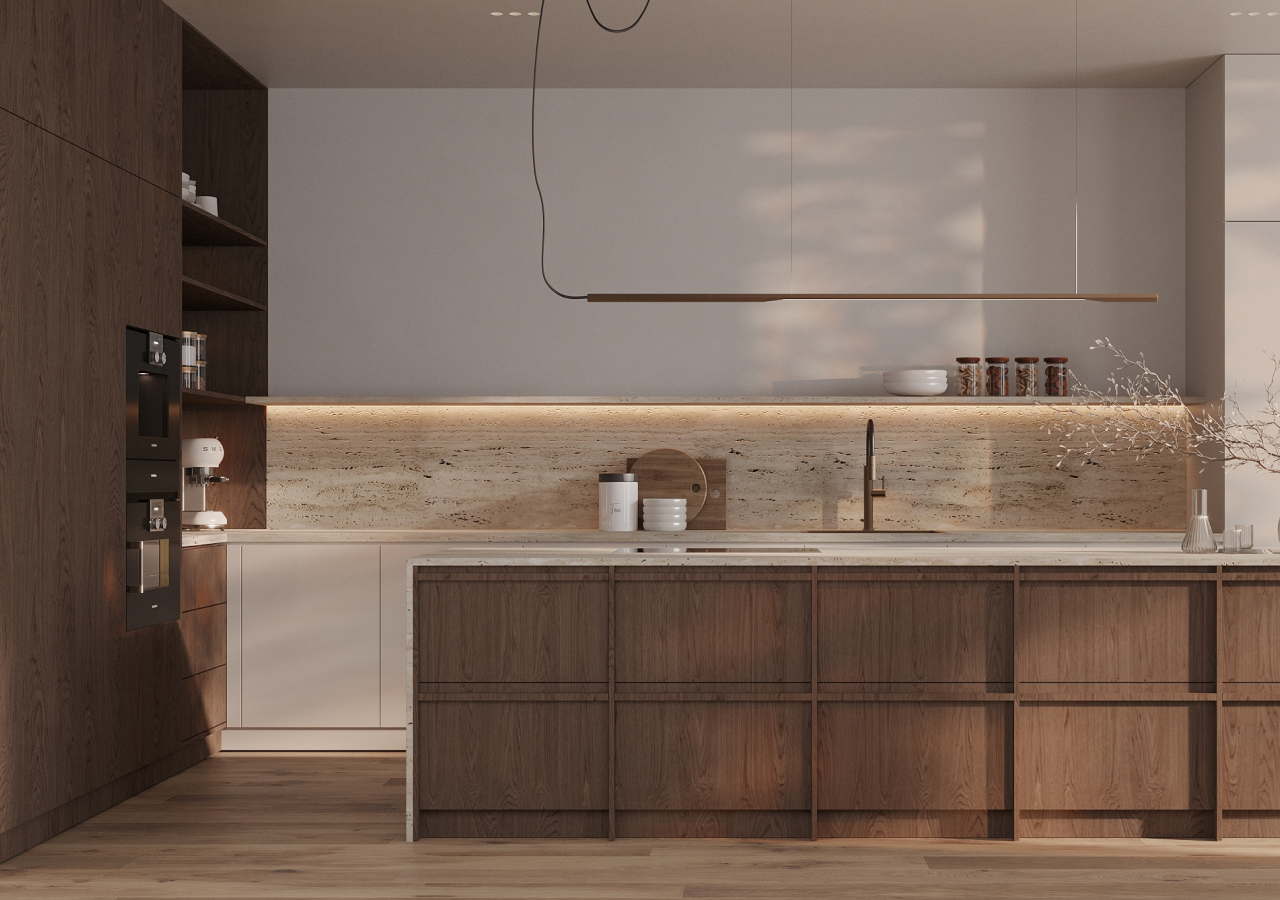
Japandi organization starts as a mindset and becomes a layout: fewer, better tools; a defined home for every category; and a system that makes the end-of-day reset automatic.
First, less, but better. Japandi kitchen organization works when you reduce duplicates and retire single-use gadgets that create constant overflow. In a Japandi interior design kitchen, the most valuable storage is the the one that supports everyday cooking, not the items you use once a month. When you keep only what earns its place, you make room for order without forcing yourself into perfection.
Second, everything has a home. Kitchen organization in Japanese style removes daily decision-making by assigning each category a specific drawer or shelf, at a specific height, near where it’s used. If you have to “find a spot” each time, items end up on the counter. If every category has a defined home, the counter stops being a default shelf. A home can be represented by a specific drawer, at a specific height, near the place you use the item.
Third, clutter hides, calm shows. Japandi kitchen design is anti-noise, so visual busyness lives behind fronts while only a few intentional items stay out. The items that create visual busyness should live behind fronts: small appliances, packaging, piles of bottles, stacks of tools. What stays visible should support the mood: a warm wood board, a ceramic bowl, a plant, a neutral tray. The goal is a kitchen that looks quiet even when you live in it.
Finally, reset is part of the design. Japanese kitchen organization is all about making it easy to return to clear surfaces every evening. When trash is integrated, cleaning supplies slide out smoothly, and drawers are divided by category, you can clear surfaces quickly because the kitchen is designed for it.
Counter-Clearing Japandi Kitchen Zones
.webp)
Clear counters depend on zone-based storage. Place drawers, pull-outs, and bins where you prep, cook, and clean, and items return to their home faster than they accumulate on the counter.
Prep zone: where order either begins or breaks
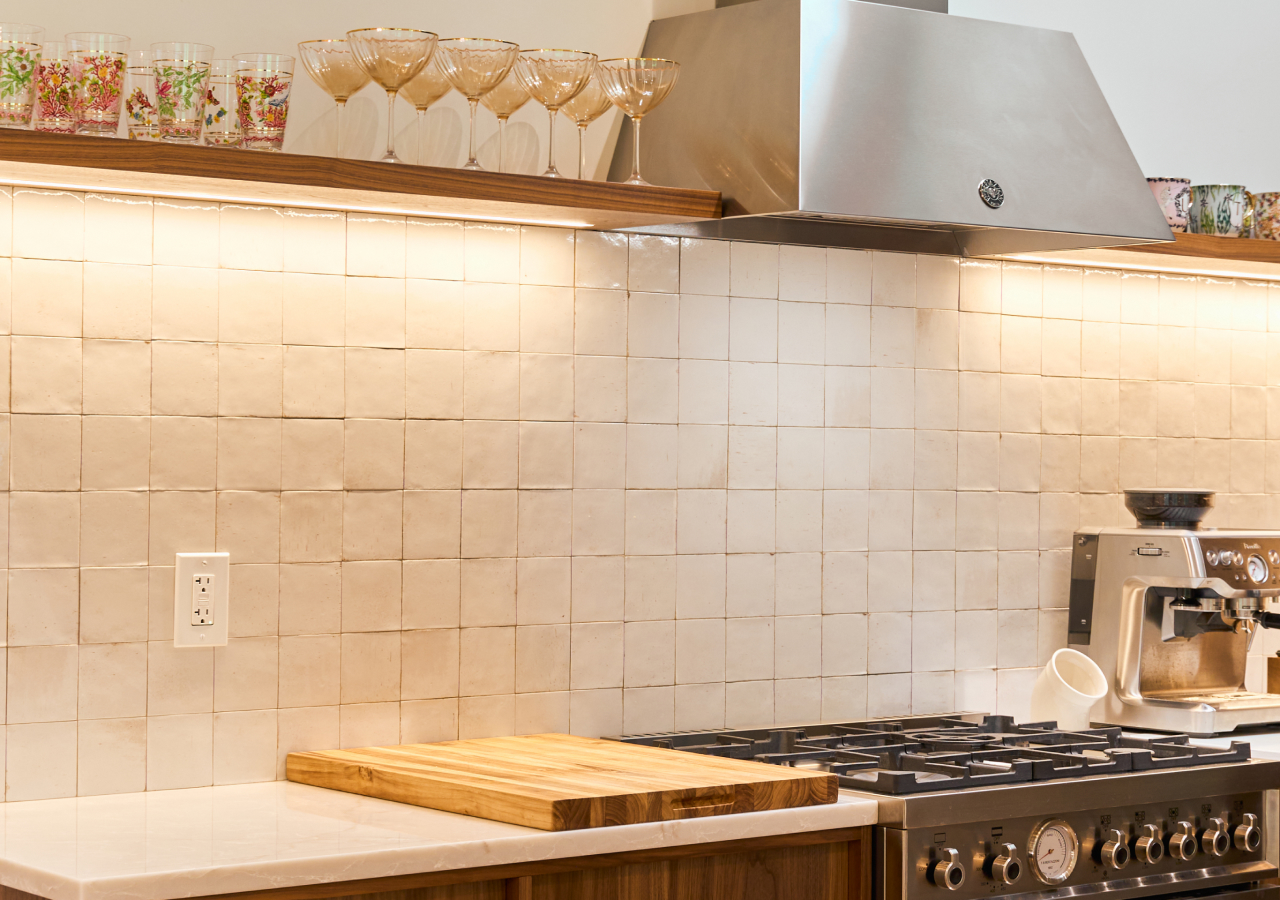
The prep counter is where clutter multiplies fastest: boards, knives, bowls, oils, salt, paper towels. A Japandi setup keeps this surface open by putting daily tools directly under the prep run: usually with deep drawers plus an inner drawer for small essentials.
A Japandi setup keeps the prep surface open by putting daily tools directly under the prep run, usually in drawers. Deep drawers handle bulky items and an upper inner drawer handles the small essentials. That combination is what stops the counter from becoming a parking lot.
Before: knife block, utensil crock, three oils, a salt box, boards leaning against the backsplash, and a towel pile by the sink.
After: one small tray at most, usually oil plus salt and pepper, while boards, tools, and bowls live in a drawer that opens right where you stand.
This is also where Japandi cabinet choices show up in daily life. A drawer-first base is easier to keep tidy because you see everything at once and categories do not collapse into each other.
Cooking zone: make the heat area visually empty
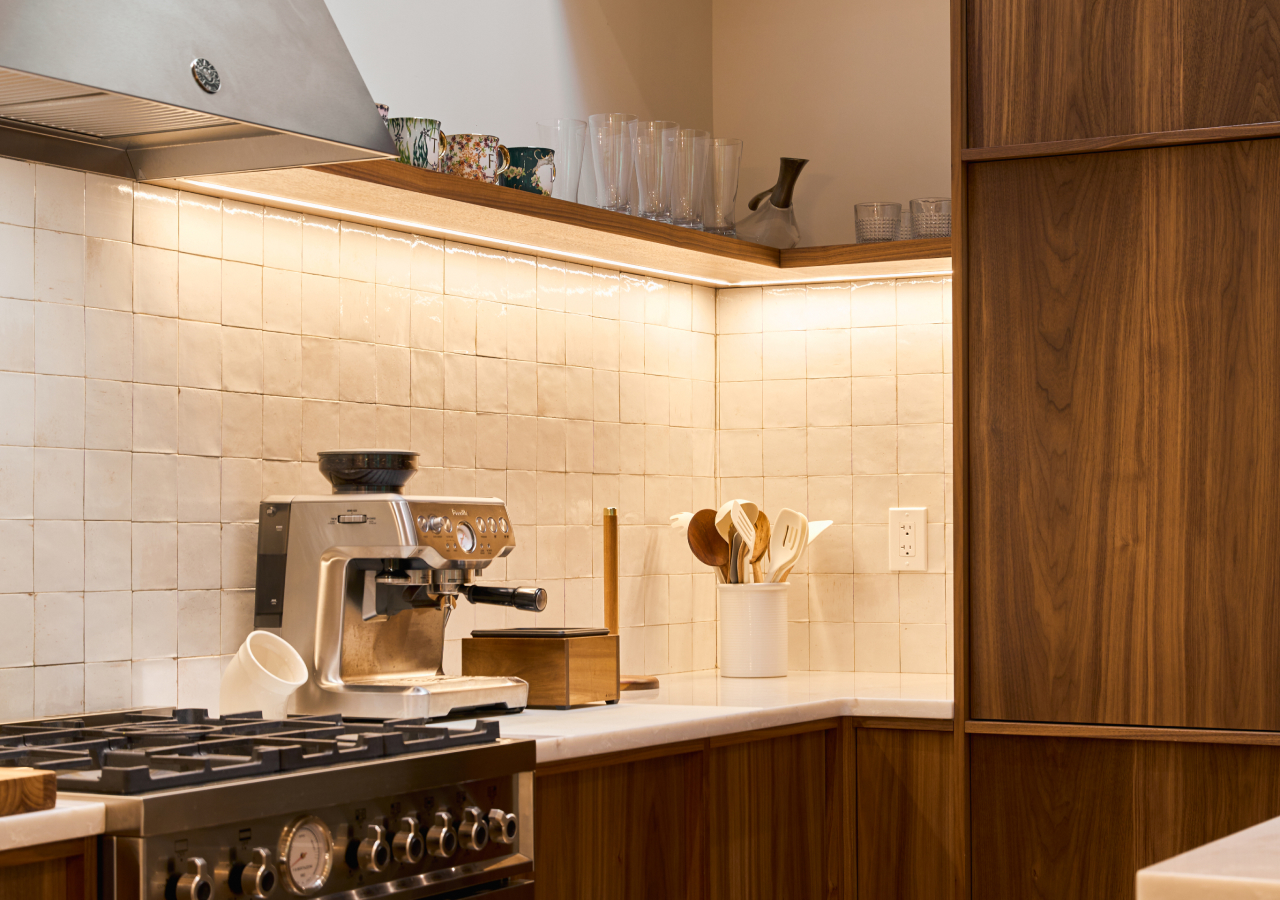
The cooking area stays visually calm when nothing “lives” around the cooktop. Store pans, lids, and tools in drawers under the cooking zone, and keep spices in a dedicated nearby home so they don’t migrate to the backsplash.
A simple rule helps: if you use it at the cooktop, store it within one step of the cooktop. This is how a Japanese kitchen setup prevents the slow build of countertop clutter. Another helpful move is splitting spices into two groups: the daily set near the cook zone and the backstock in pantry storage. That keeps the cooking drawer calm instead of turning into a spice warehouse.
Cleaning and reset zone: stop the sink from acting like storage
.webp)
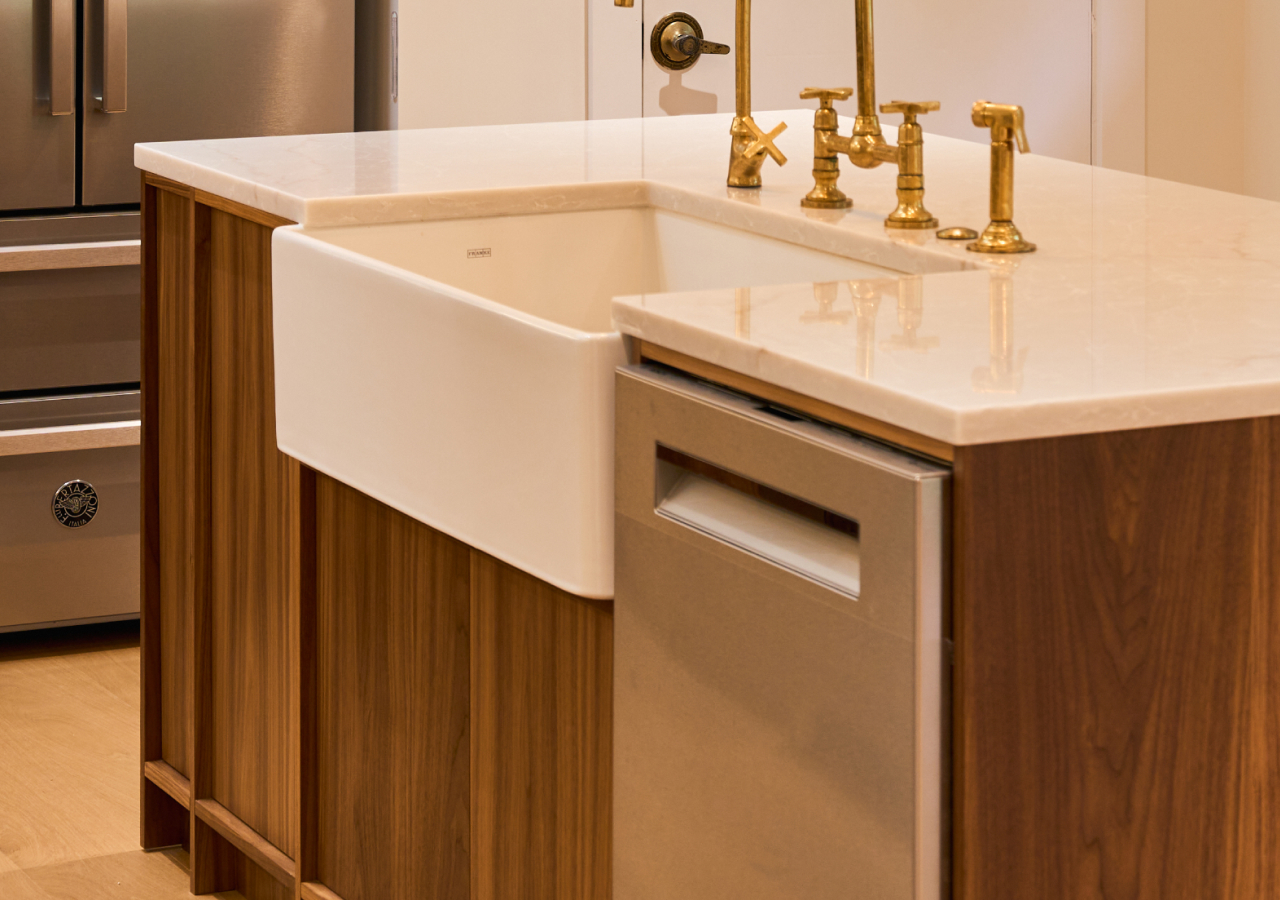
The sink gets messy because it’s where tasks end—soap, sponge, tabs, cloths, bottles. Japandi organization keeps the sink edge clear by giving those items a hidden, defined home—often under-sink drawers or pull-outs designed around plumbing.
Japandi organization treats the sink zone as a working zone with hidden support. Under-sink drawers and pull-outs are powerful because they turn an awkward space into a structured one, even around plumbing. The payoff is speed. When supplies slide out and go back easily, you stop leaving them out “for later.”
You do not need a lot here. You need a defined home for the daily basics and a separate home for overflow items elsewhere. That separation is what keeps the sink edge clear.
Trash zone: the fastest way to protect clear counters
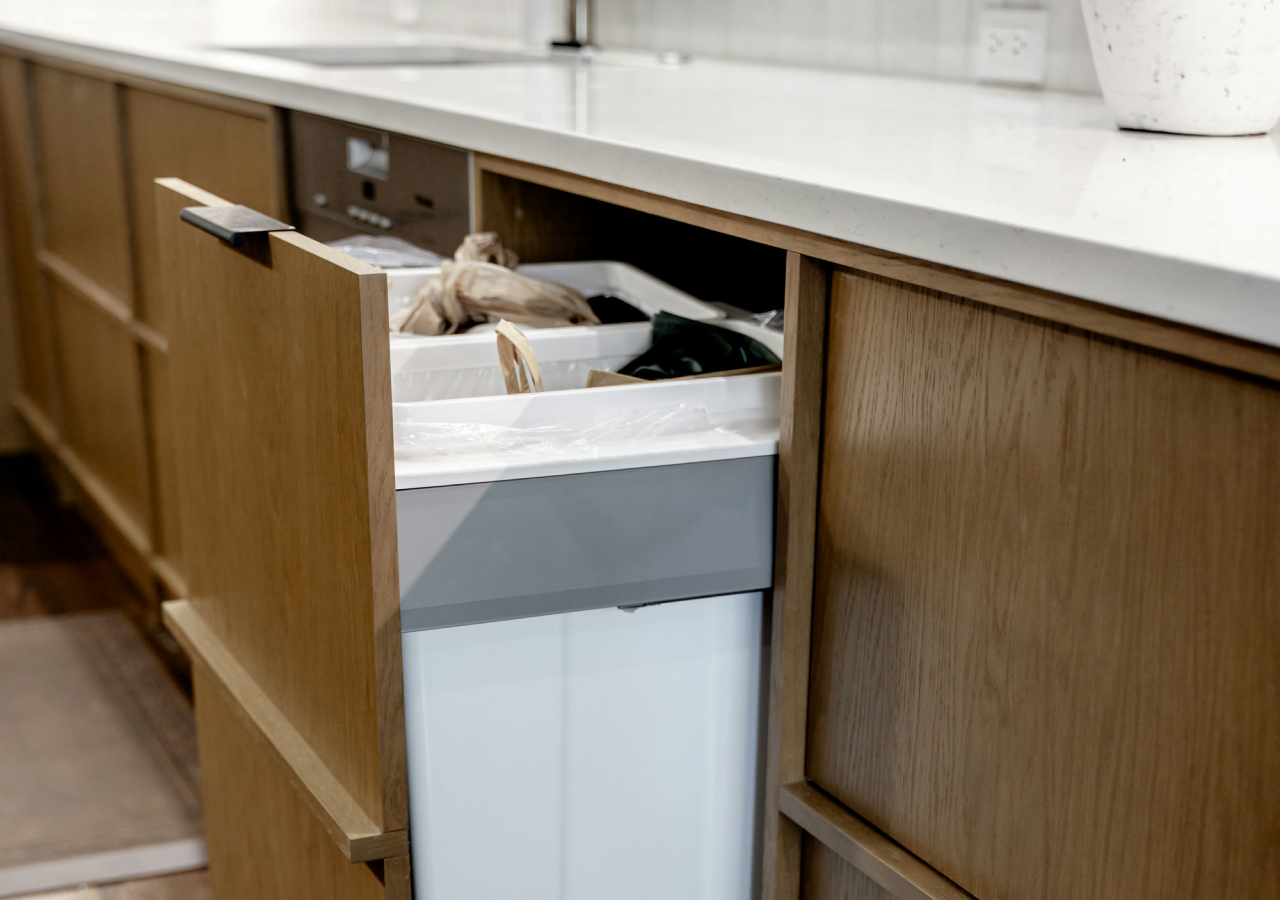
If you want counters to stay clear, trash must be effortless. An integrated pull-out waste system near prep and sink prevents scraps and packaging from sitting on the counter while you “finish up.”
Think of this as one of the key Japanese kitchen must haves, reframed as a storage feature. It supports the nightly reset: prep scraps go straight into the bin, cleanup flows without detours, and the counter stays open.
Pantry and tall storage zone: protect the calm by moving backstock away
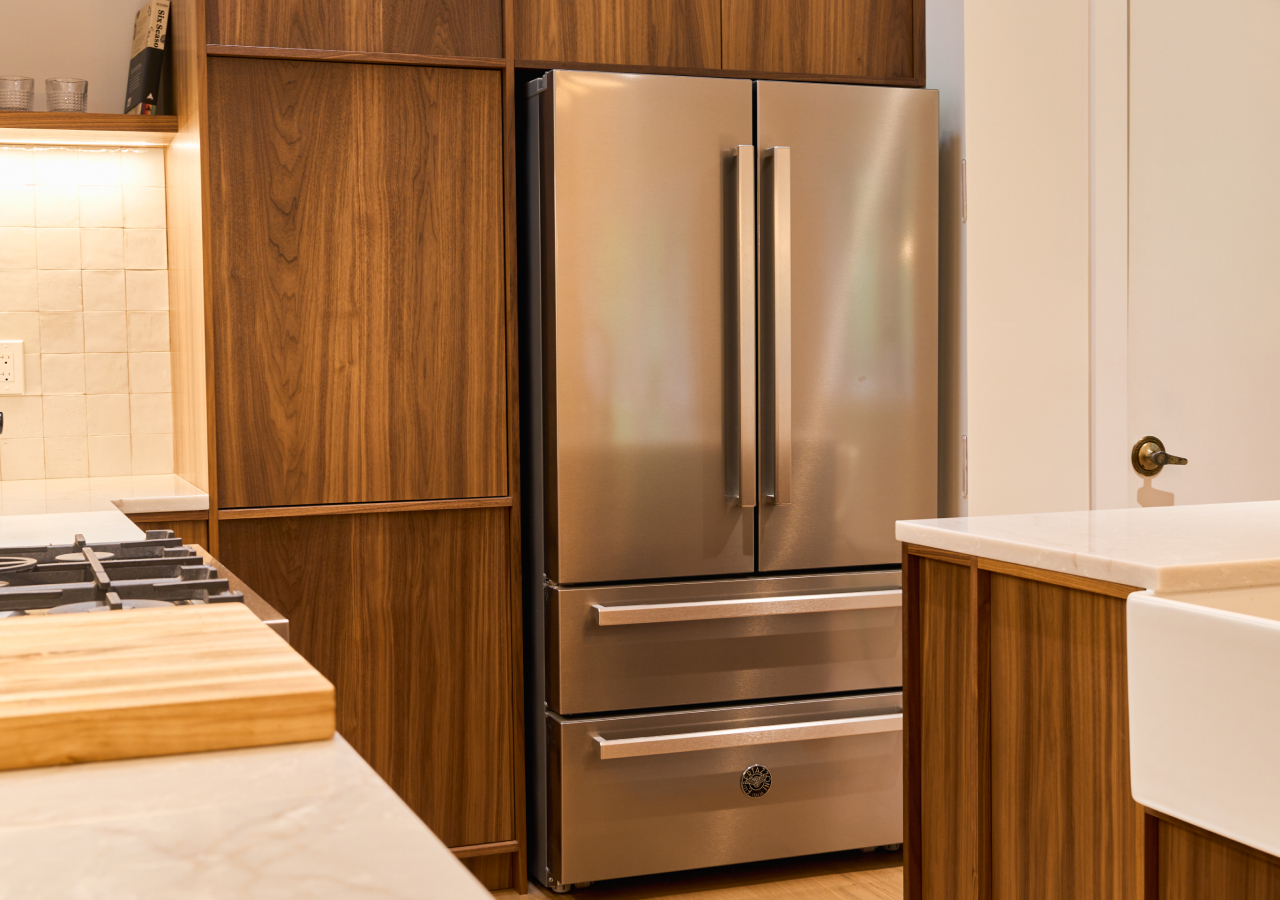
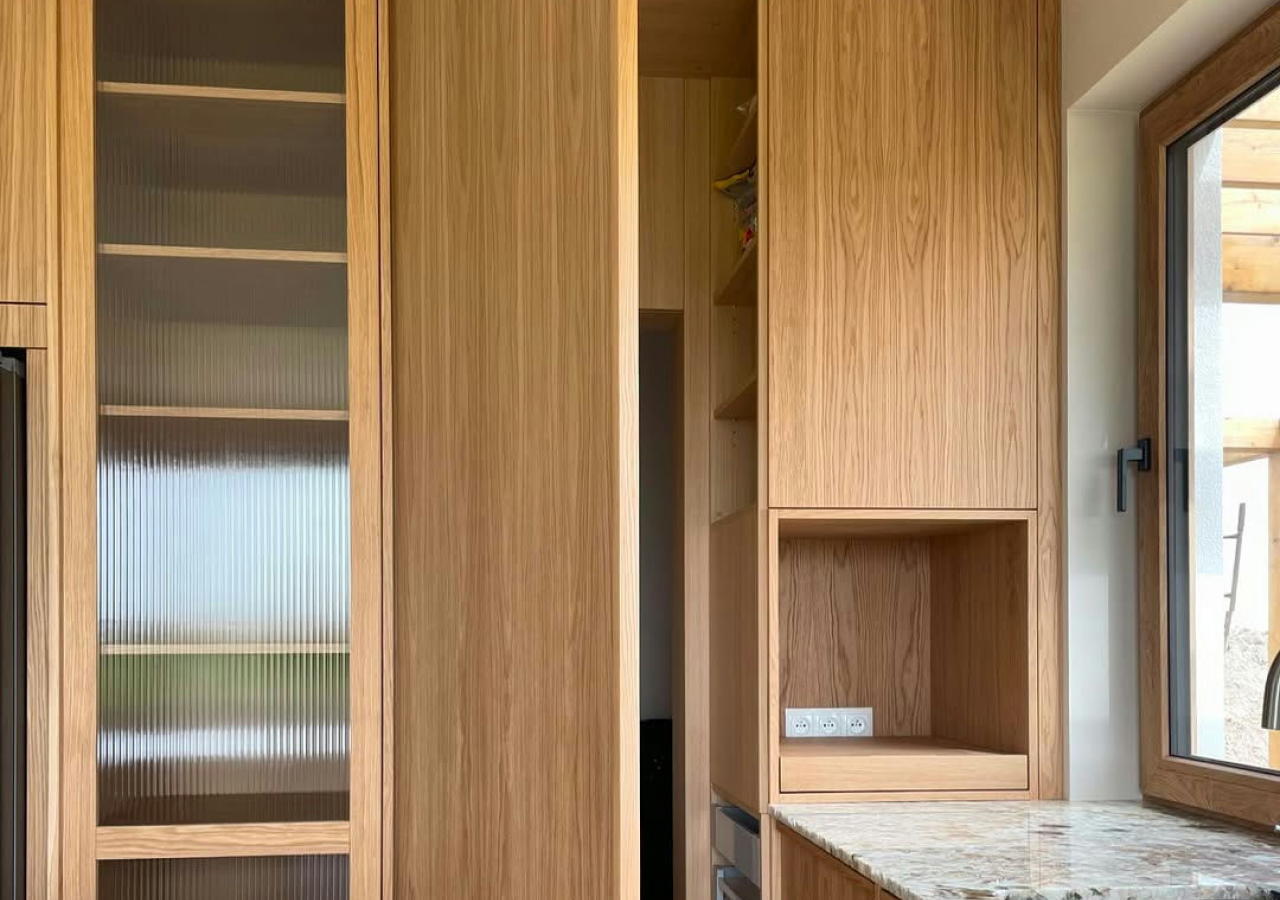
Tall storage protects daily zones. Bulk items, backstock, and less-used appliances belong in tall cabinets so the prep surface doesn’t become overflow storage.
The key is structure. A tall cabinet becomes chaotic when everything is stacked randomly. It becomes calm when it is divided into repeatable categories that match real life: dry goods, snacks, breakfast items, baking supplies, cleaning overflow. When the categories are stable, the counter does not get pulled into the storage story.
Breakfast, tea, and coffee zone: a station that can disappear
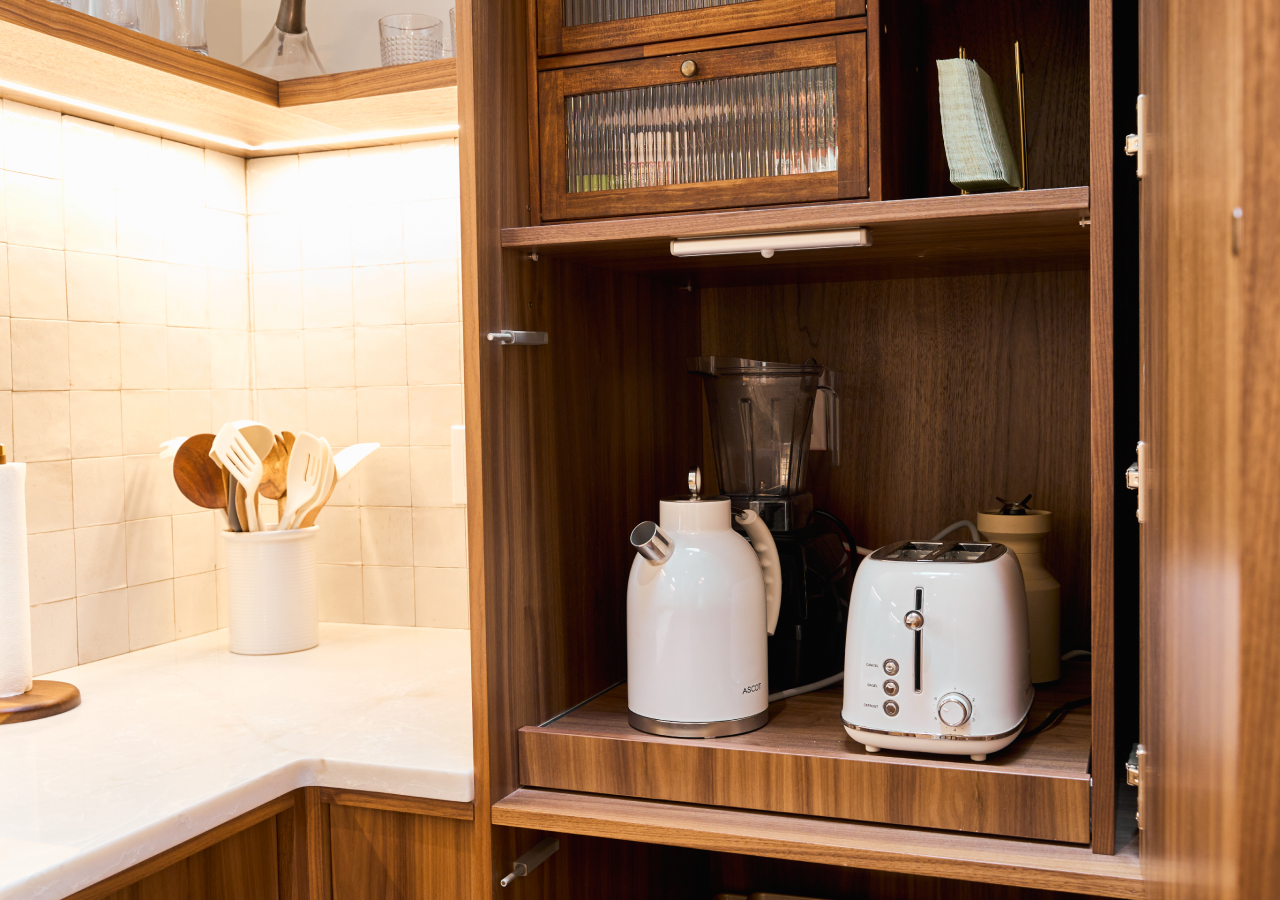
Coffee stations steal calm when they spread across the counter—machine, mugs, jars, filters, spoons. A Japandi approach groups everything into one station that can disappear behind pocket doors or an appliance garage; if not, contain it on one tray.
A Japandi approach turns this into a station. Everything is grouped and stored together, ideally hidden behind pocket doors or inside an appliance garage. If hiding is not possible, the second-best approach is containment: one tray that holds the essentials so the station still looks intentional and can be lifted and wiped around easily.
Japandi-Style Storage Ideas That Give Everything a Place
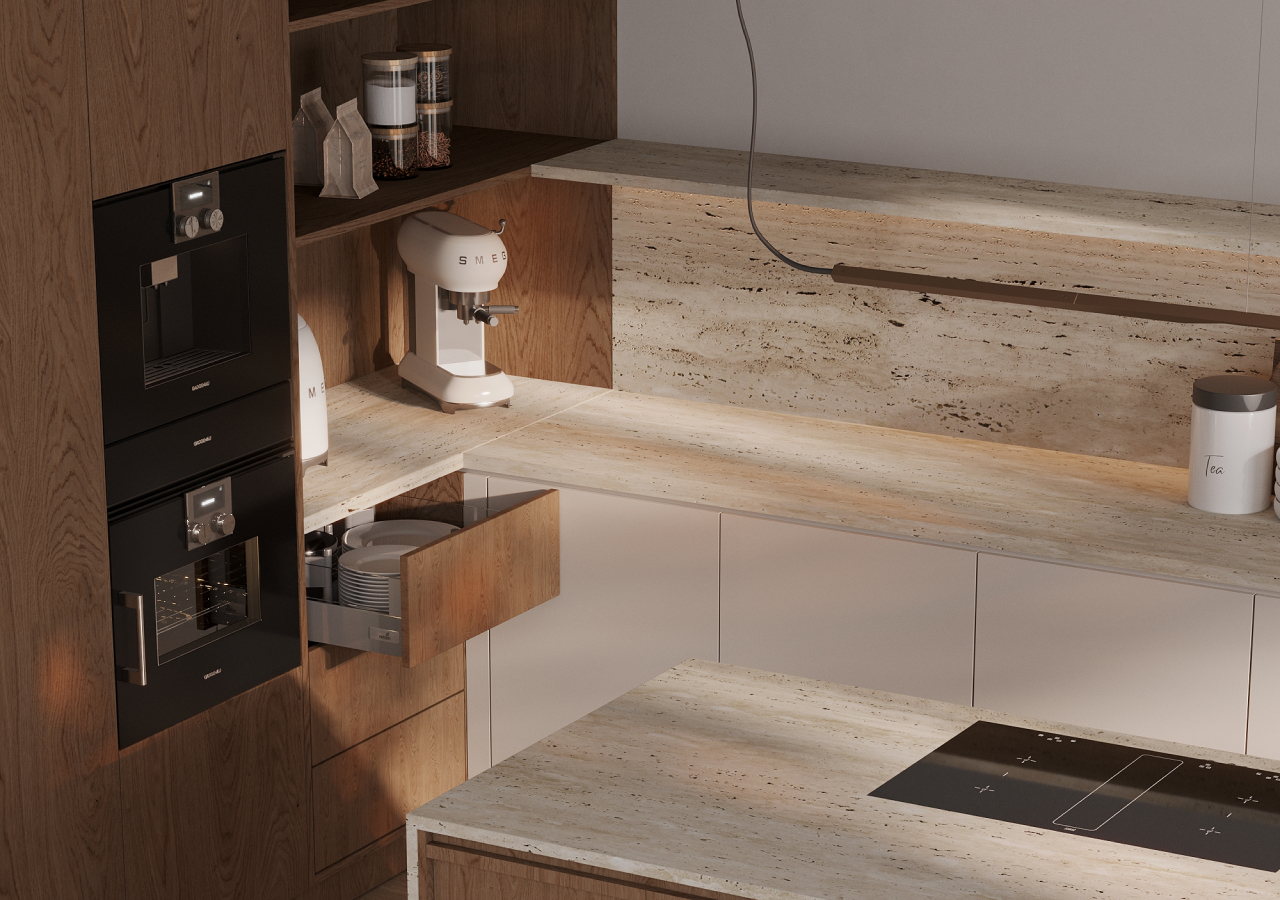
The main gial of Japandi kitchen storage is reducing friction. The best solutions keep daily categories visible, separated, and easy to put away, so counters don’t become a parking lot.
Deep drawers paired with inner drawers
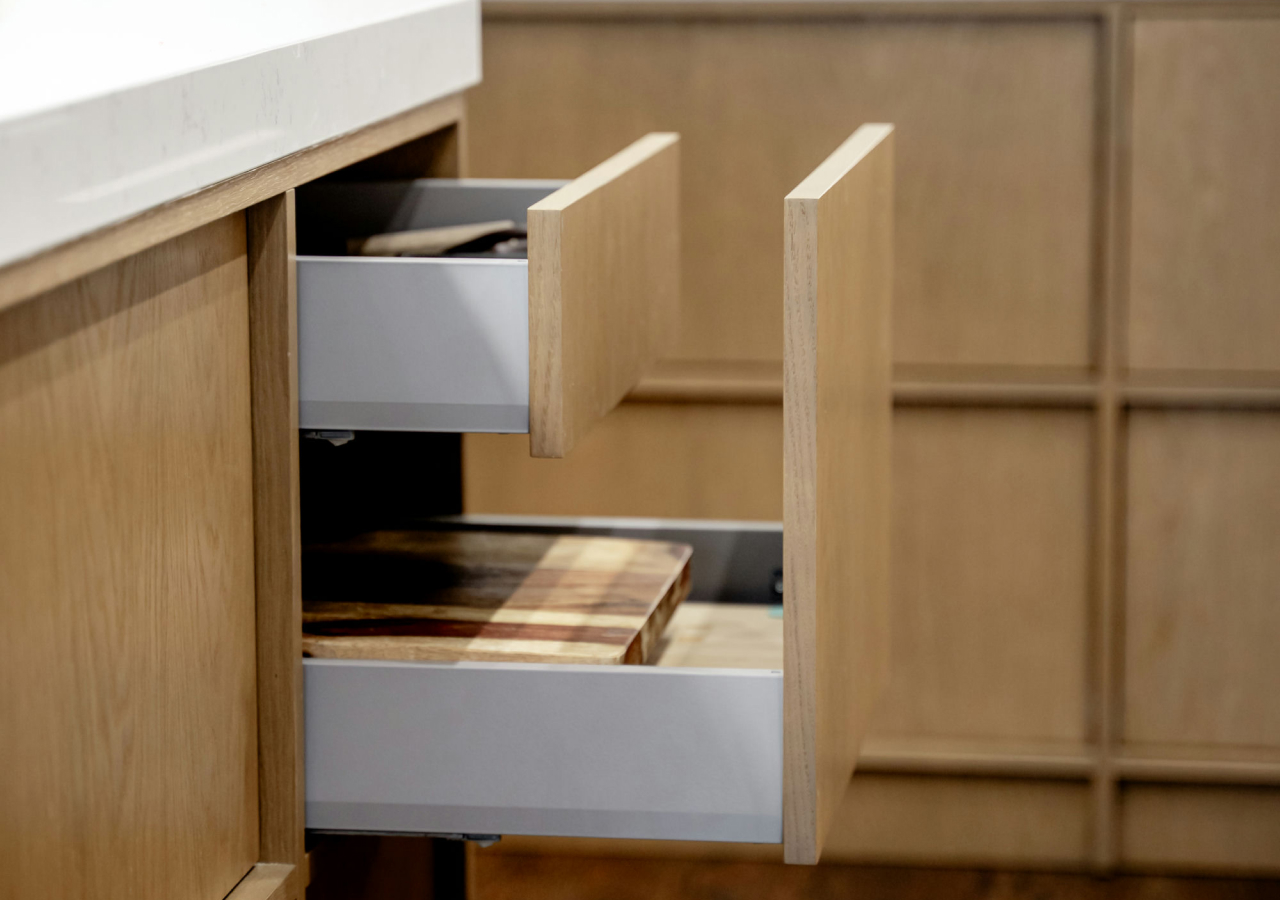
This is the quiet luxury of a well-organized kitchen. It is similar to what people admire in a modern European kitchen or even luxury European kitchens, not as an aspiration, but as a practical mechanism. Clean outer lines stay possible because the interior is doing the work.
Under-sink drawers and pull-outs that tame the messy zone
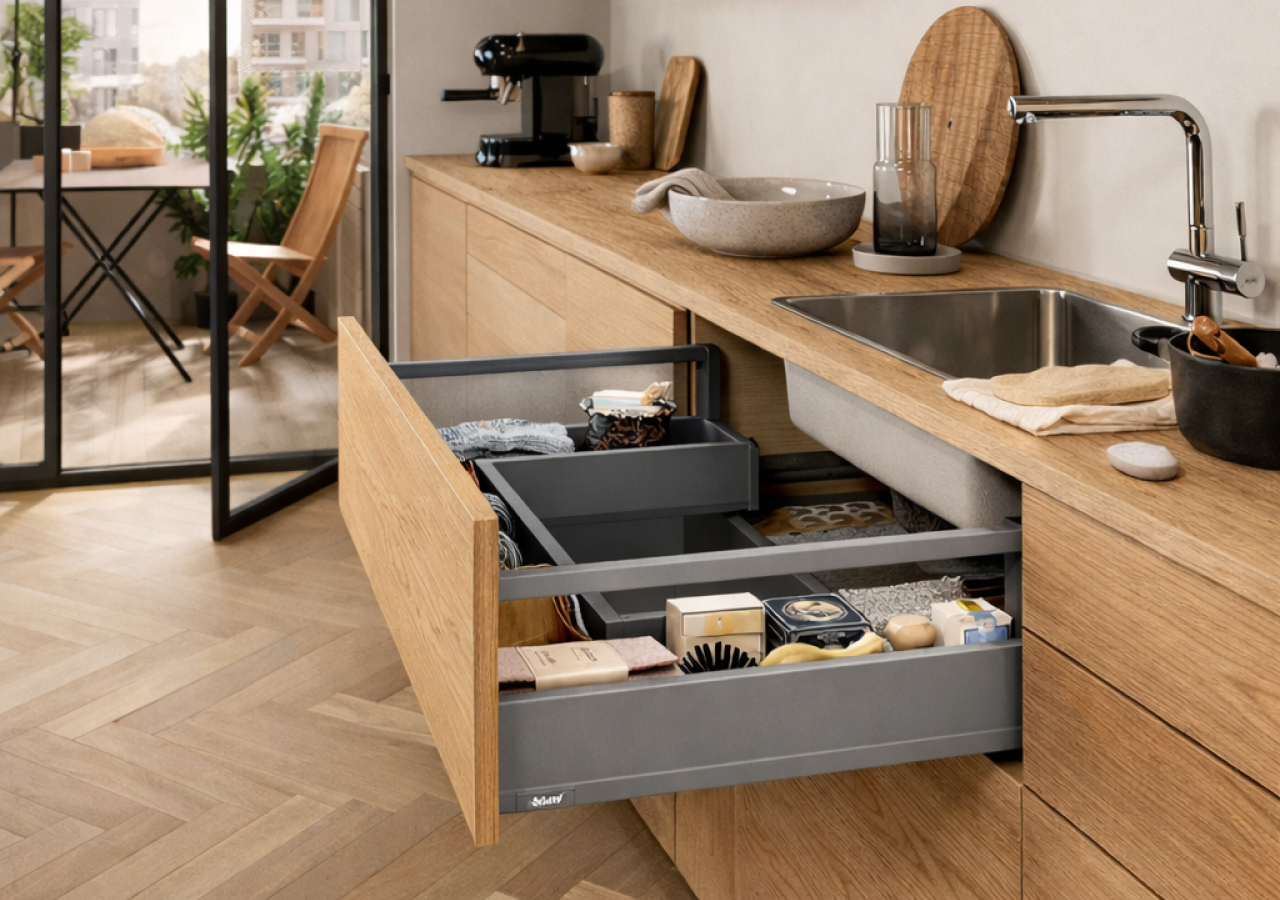
A helpful trick is deciding what counts as “daily” and what counts as “backup.” Daily items live under the sink. Backup items live in tall storage. That split prevents the under-sink area from becoming a dumping ground.
Pull-out waste and recycling that supports sorting
Tall pull-outs, pantry drawers, and the “store more without seeing more” idea
Pocket doors and appliance garages for the busy stuff
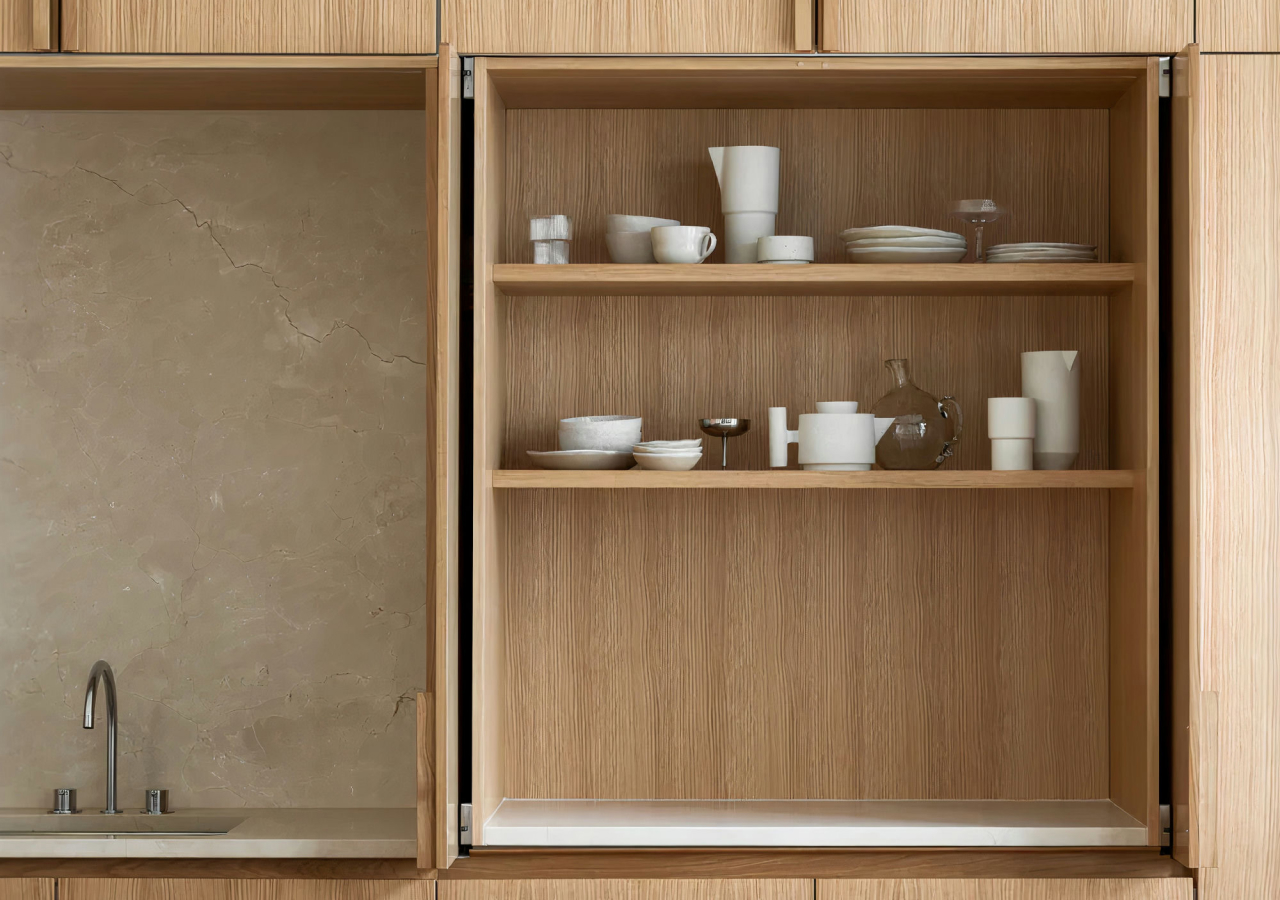
This is also where expensive European kitchens often look so clean in photos. It is not magic. It is concealment and zones. Japandi applies that idea with a stricter rule about what deserves to be seen, which is why it can feel calmer than some European luxury kitchens.
Toe-kick drawers for flat, low-use items
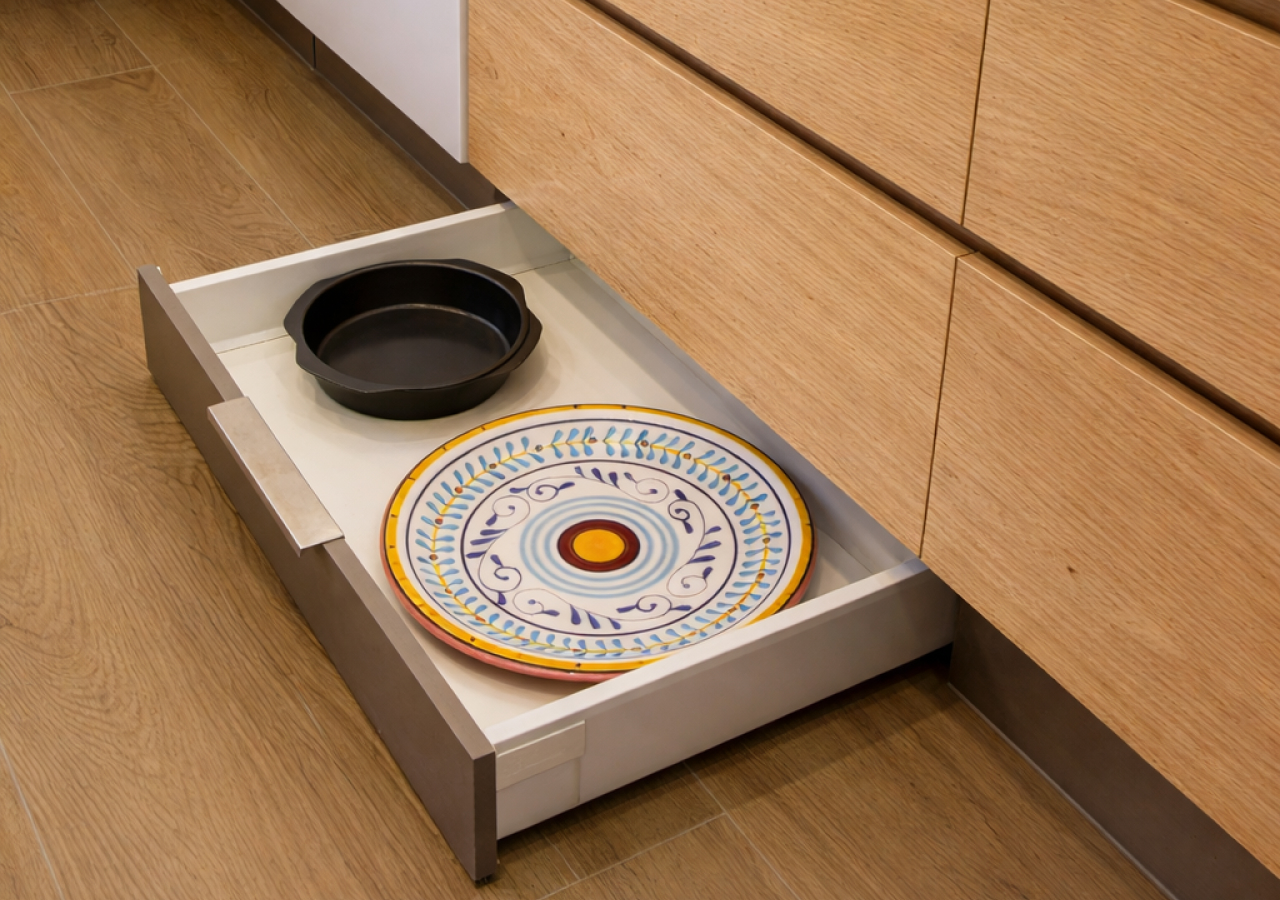
Corner solutions that prevent dead zones
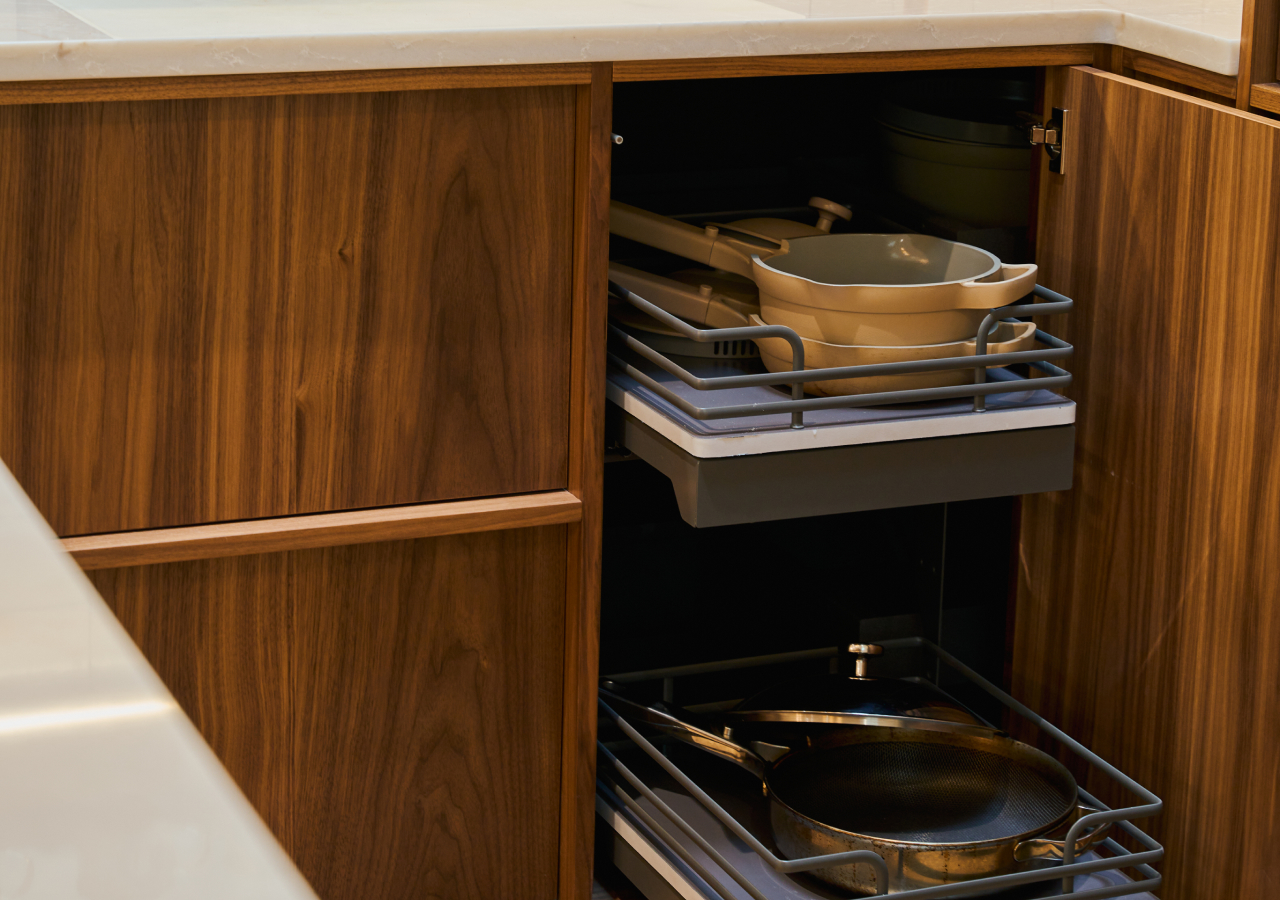
Corner pull-outs turn dead zones into usable storage, reducing overflow that eventually migrates to counters. When corner cabinets become dead space, you end up storing overflow in random places, which often becomes countertop clutter later. Smart corner pull-outs make that space usable again, which helps keep the rest of the storage plan intact.
Japandi Display Rules: What Stays Out, What Stays Hidden
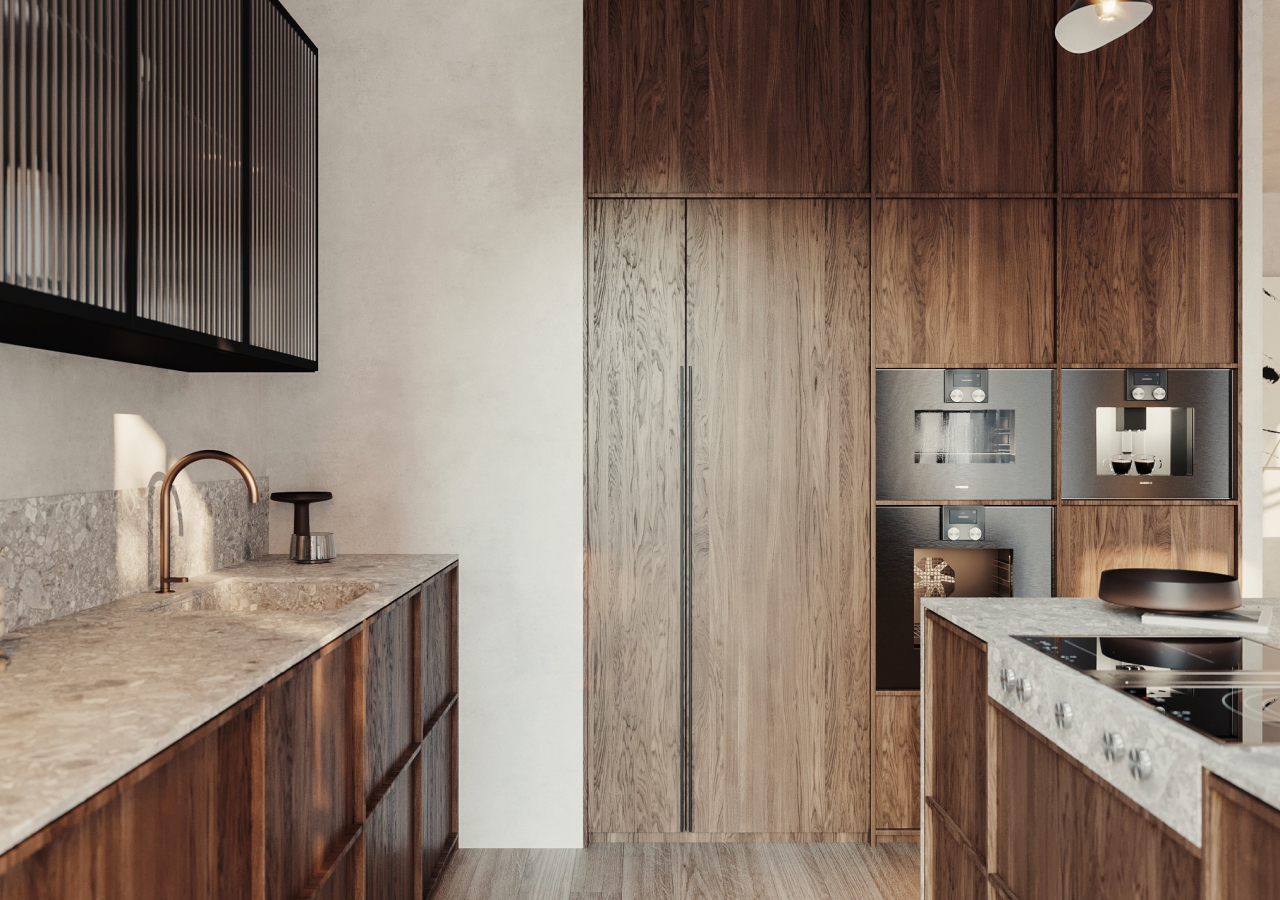
Japandi kitchen display is a rule set, not decoration. The kitchen stays calm when each surface has one contained “cluster,” materials repeat, and packaging stays hidden.
Rule 1: One cluster per surface. Each long run or island gets one small cluster max. A tray with oil plus salt and pepper counts as a cluster. A kettle plus canister counts as a cluster. Everything else gets a home.
Rule 2: Repeat materials, not objects. Japandi kitchens feel cohesive when the material palette repeats (wood, ceramic, glass, linen) instead of the object count growing. This is why a simple wood tone plus matte cabinetry reads so “together.”
Rule 3: Hide packaging, decant what you see. If it lives on the counter, make it worthy of the counter. Branded packaging belongs in drawers and tall cabinets. Calm containers belong on display.
Rule 4: The end-of-day reset is the real aesthetic. A Japandi kitchen is not “always perfect.” It is easy to return to perfect. This is also why people who admire a european luxury kitchen often respond to the same principles: clean lines, clear surfaces, and storage that makes resetting easy.
Before (realistic clutter scene): coffee machine, grinder, sweetener, mugs, spoon jar, mail, keys, dish soap, sponge, two cutting boards, and a freestanding trash can photobombing the whole room.
After (Japandi counter clarity): coffee setup behind pocket doors or in an appliance garage, one tray on the counter, sink supplies inside under-sink drawers, trash in a pull-out, boards and tools in deep drawers. Same kitchen. Different system.
Conclusion
A Japandi kitchen is calm because it is designed for calm. The Japanese side brings order through zones and clear homes. The Scandinavian side keeps choices simple and intentional. Together, they create a kitchen that resets easily, looks quiet, and still functions beautifully on real weekdays.
If you want counters to stay clear, focus on storage that supports daily life: drawer-first bases with inner drawers, under-sink storage that actually works, integrated waste, tall pantry logic, and a plan for small appliances. When the system is right, the visual calm follows naturally.


