
.webp)
A minimalist kitchen can look incredible in photos, and still feel oddly cold in real life. The fix isn’t “more decor.” It’s better decisions in the parts that shape daily living: storage that protects your counters, materials that feel good up close, and lighting that makes everything read softer.
Warm minimalism is that promise in one sentence: minimal clutter + functional simplicity + tactile, inviting finishes. You still get clean lines and calm surfaces, but the kitchen feels welcoming. And because kitchens are high-traffic, high-mess spaces, warm minimalism only works long-term when organization is designed in from the start, not improvised later.
What is a Warm Minimalist Kitchen?
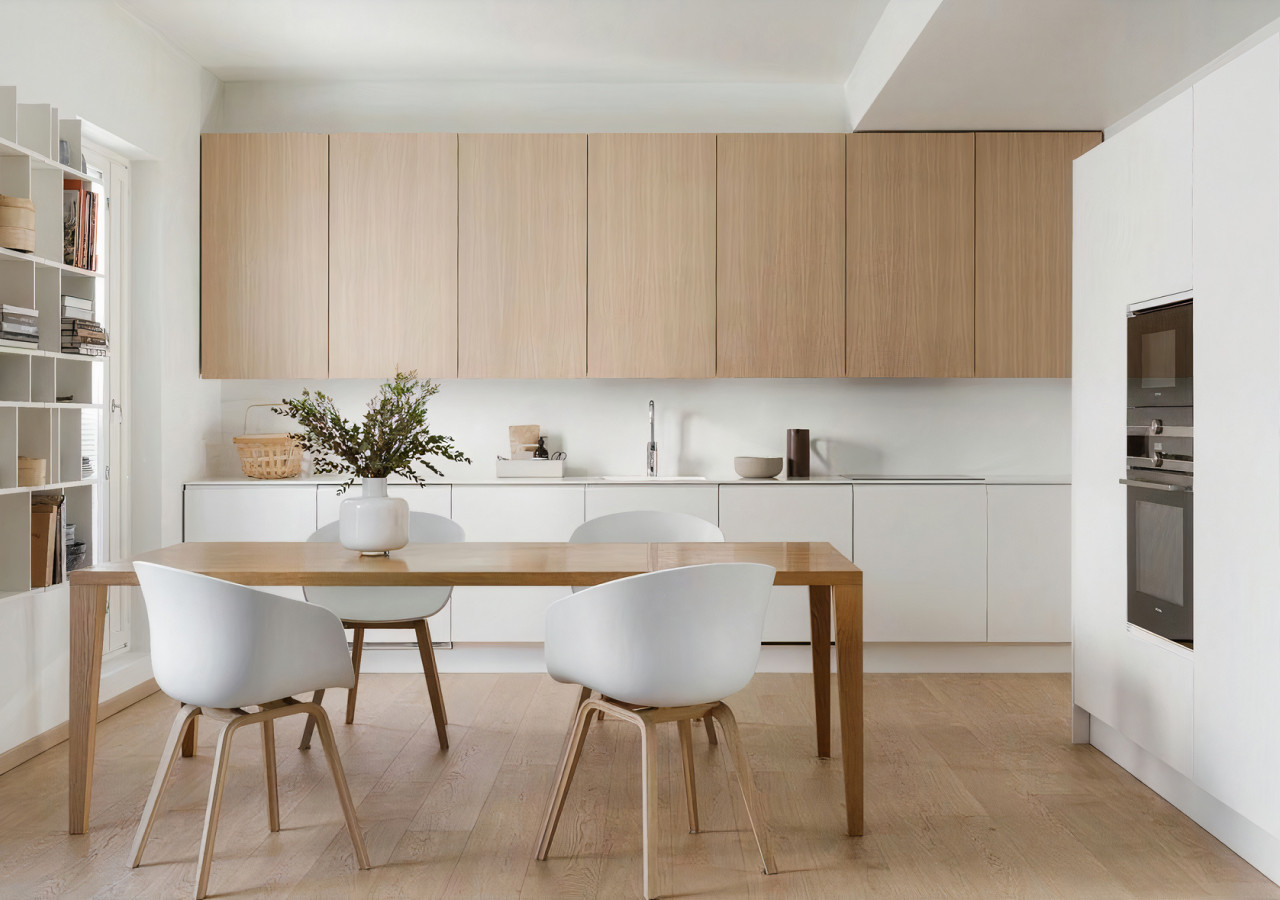
A warm minimalist kitchen is intentionally edited with fewer visual breaks and fewer competing finishes, without feeling empty. It uses clean geometry, a restrained palette, and smart storage so daily items live behind closed fronts, then adds warmth through undertones, natural texture (like wood grain), and layered, soft lighting.
In other words, it is a calm, functional system first, and a vibe second. When layout supports real workflow and storage matches real habits, the kitchen stays tidy with less effort. That is what makes the minimalist look genuinely livable.
Warm Minimalism vs Cold Minimalism
Cold minimalism usually happens when the design leans too hard on visual purity and forgets the human side. Stark whites, high contrast, glossy finishes, and flat lighting can make every surface feel harder. Warm minimalism keeps the same clarity, but shifts the inputs so the room reads softer, more tactile, and more comfortable.
| Element | Cold minimalism | Warm minimalism |
|---|---|---|
| Whites | Icy, blue-leaning | Warm, creamy undertones |
| Surfaces | Glossy, reflective | Matte, tactile, low-glare |
| Contrast | High contrast, harsh edges | Soft contrast, blended tones |
| “Pattern” | Decorative features | Texture (wood grain, matte) |
| Lighting | One flat overhead source | Layered plus controllable warmth |
The 3 Rules That Make It Feel Warm
These three rules prevent a minimalist kitchen from turning into a sterile white box. Follow them in order and the kitchen stays calm and welcoming, without relying on styling to do the work.
Rule 1: Calm Surfaces Come From Concealed Storage
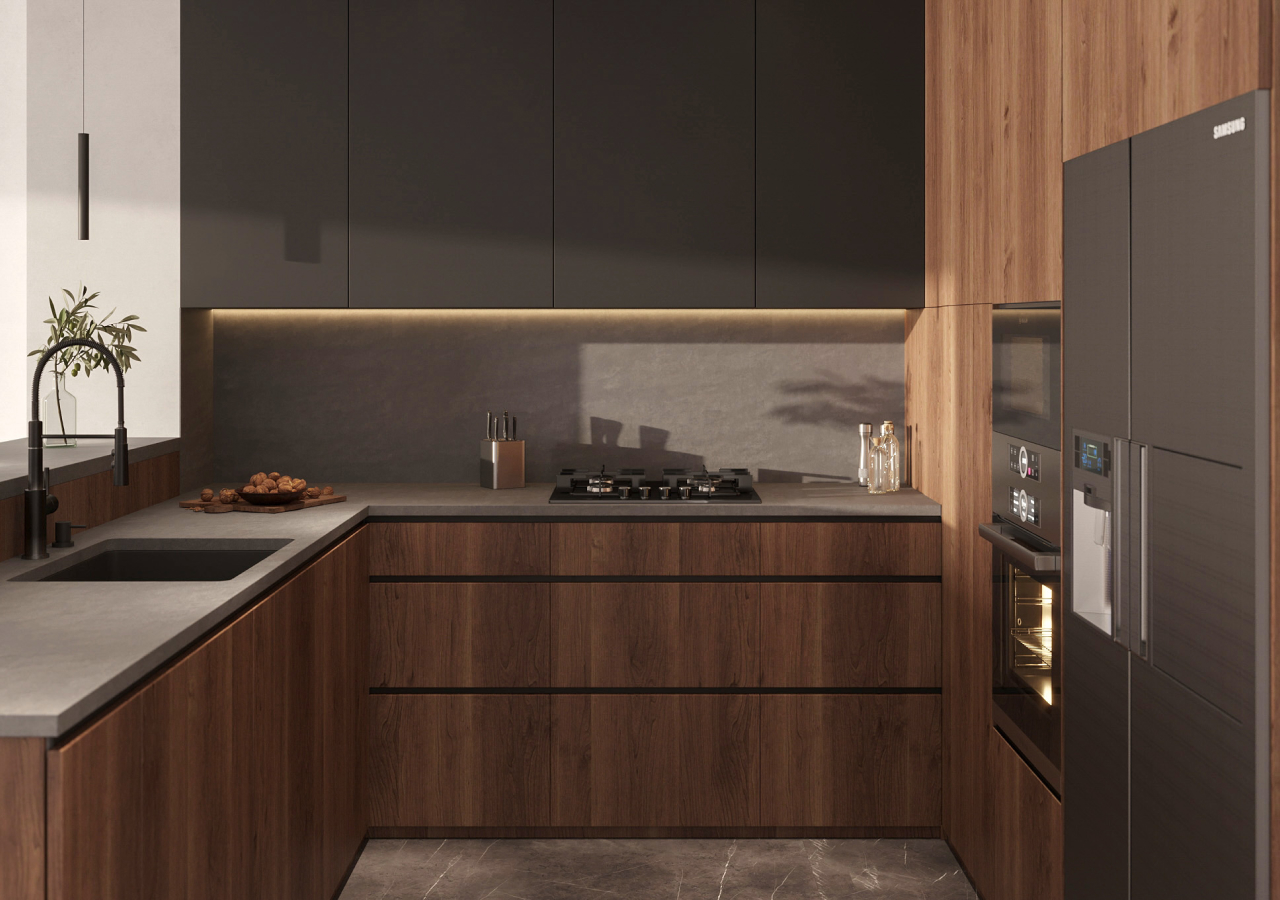
Minimalism does not start with throwing things out. It starts with giving everyday items a clear home so they do not migrate onto countertops. The strongest warm minimalist kitchens treat storage like an anti-clutter system: plan zones first (prep, cook, clean, pantry), then build the right interceptors into those zones.
In practice, that usually means deep drawers near prep so tools do not sprawl, an integrated waste pull-out placed where you actually prep and clean, under-sink organization that prevents the “junk zone,” and a pantry strategy that keeps food visible so duplicates do not pile up.
A cozy minimalist kitchen is often just a kitchen where counters stay mostly clear without effort, because daily clutter is contained by design. Closed appliance zones, like an appliance garage or a coffee cabinet, are especially effective since they hide the mess that breaks the minimalist look in seconds.
Rule 2: Texture Does the Decorating
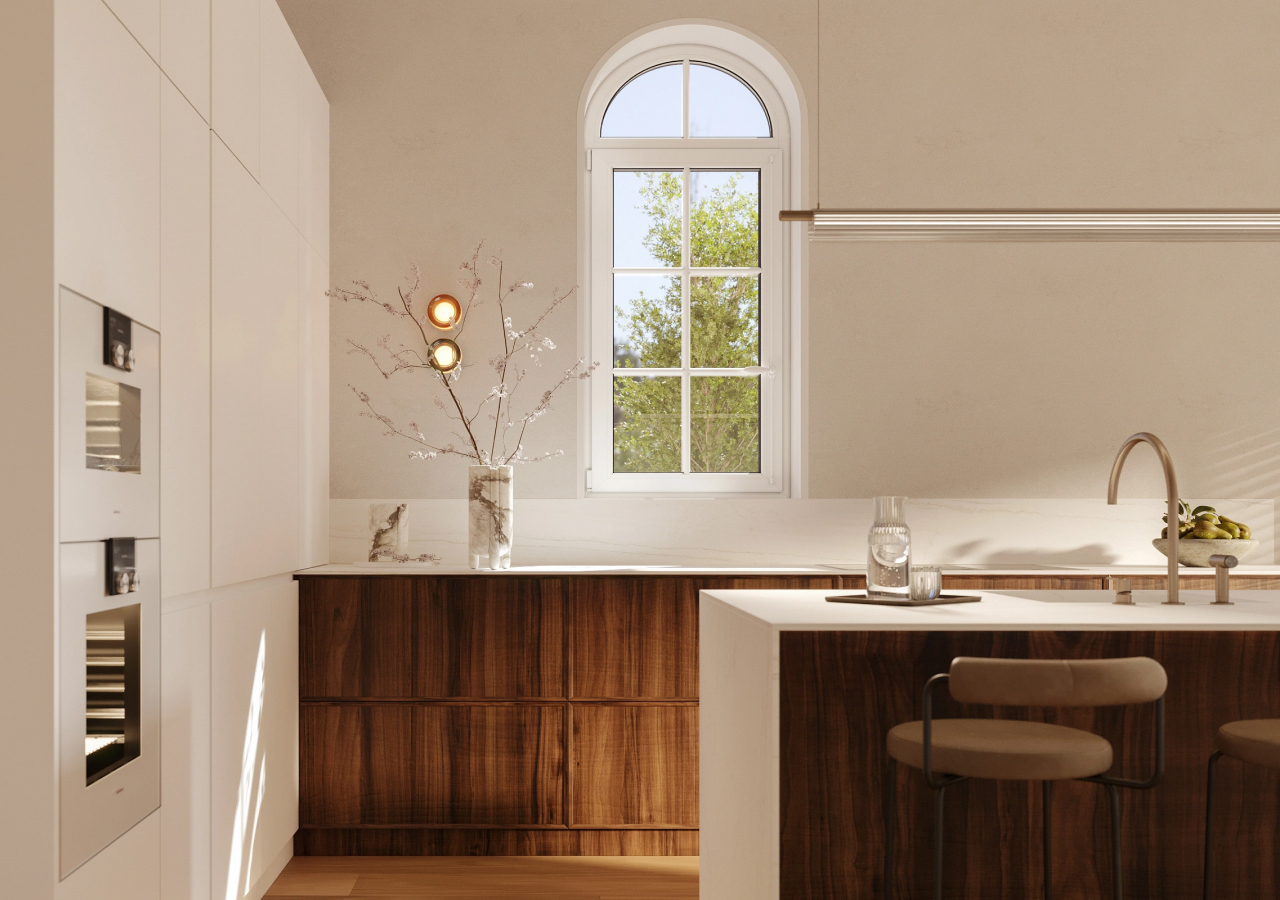
When you remove ornament, the kitchen becomes material-forward. Proportion, lighting, and finish quality do the heavy lifting. Warm minimalism works because texture replaces “stuff,” so you get depth without clutter.
Wood grain is the biggest lever. In Japandi-leaning warm minimalism, grain becomes the pattern, so everything else can stay quiet: calmer counters, fewer competing textures, and simpler hardware decisions. If you want extra lift without visual noise, use one controlled texture moment, like a limited run of reeded or fluted glass uppers.
The key is restraint, because too much quickly stops reading minimalist. Decor should follow the same logic, meaning low-noise and contained, not accumulated.
Rule 3: Light is Part of the Materials Palette
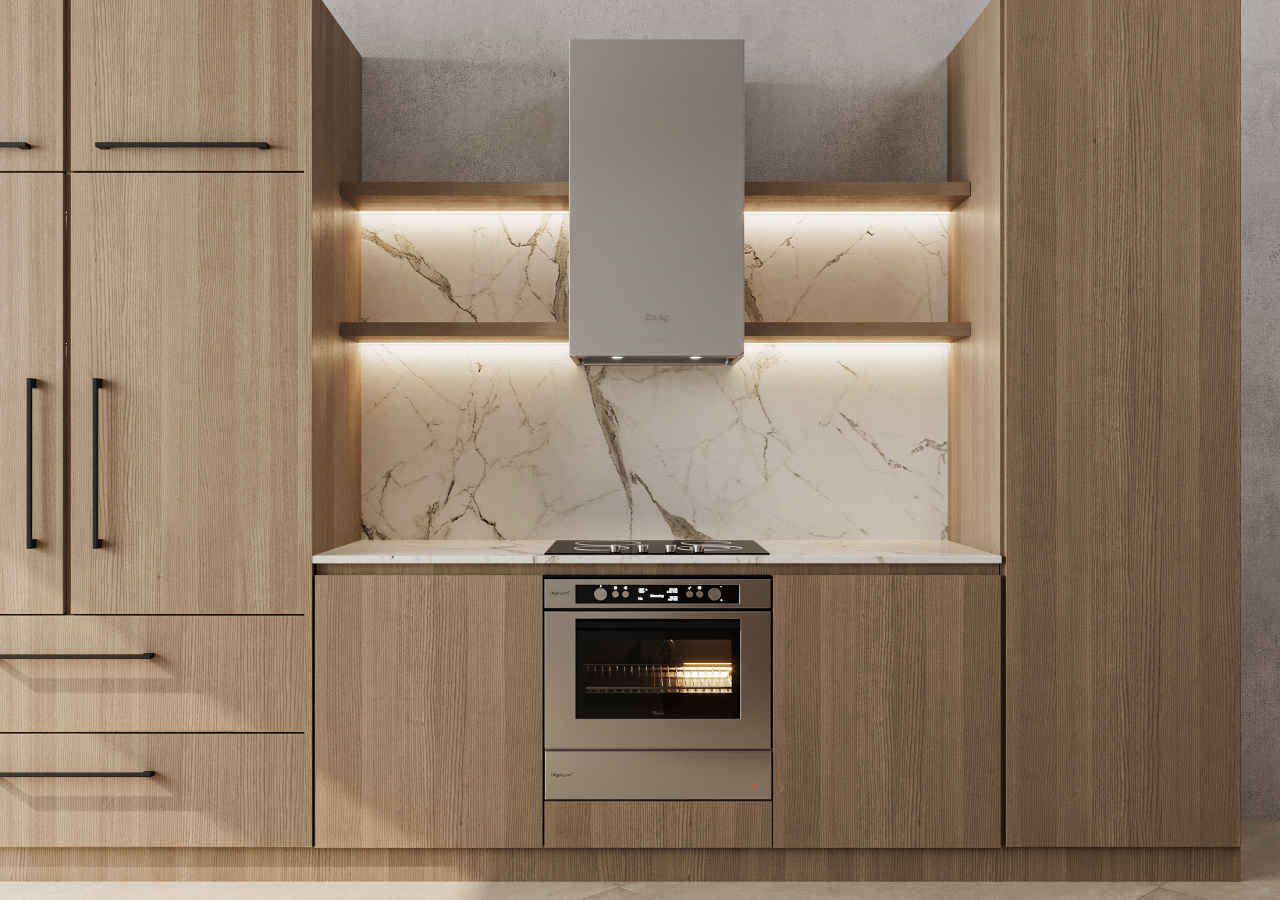
If lighting is flat, finishes look flat, and warm minimalism will not land. A high-performing approach is layered lighting: ambient ceiling light for the room, under-cabinet task light for work zones, and one focused feature (a simple pendant or a clean wall wash) to add depth.
Warm, controllable lighting is what makes wood and matte finishes read soft rather than clinical. It also affects wiring and cabinet details, so treat it as part of the build, not a styling step at the end.
Warm Minimalist Color Palettes That Work Every Time
Color is where minimalist kitchens often go cold. You do not need bold color to create warmth. You need warm undertones and consistent repetition across the largest surfaces, so the kitchen reads calm instead of patchy.
Start with Warm Undertones
.webp)
“Neutral” is a family of undertones. Warm whites feel soft and welcoming, cooler whites feel crisp and contemporary, and beige or cream tones are often the fastest route to warmth that still looks modern.
Undertones matter because they react to flooring, counters, and lighting. The same beige can look cozy in one home and oddly pink or gray in another, so test larger samples in your actual space in both morning and evening light.
Palette Formulas from Corner’s Kitchens
Nordic: Walnut + Sand Dekton + Warm White

A classic warm minimalist kitchen palette: bright and calm up top, grounded warmth below, and a sand-toned surface that bridges the two so the room never feels stark. Works especially well in handleless kitchens because the contrast comes from materials, not visual clutter.
Forma: Light Oak + Beige Dekton + Soft Neutrals
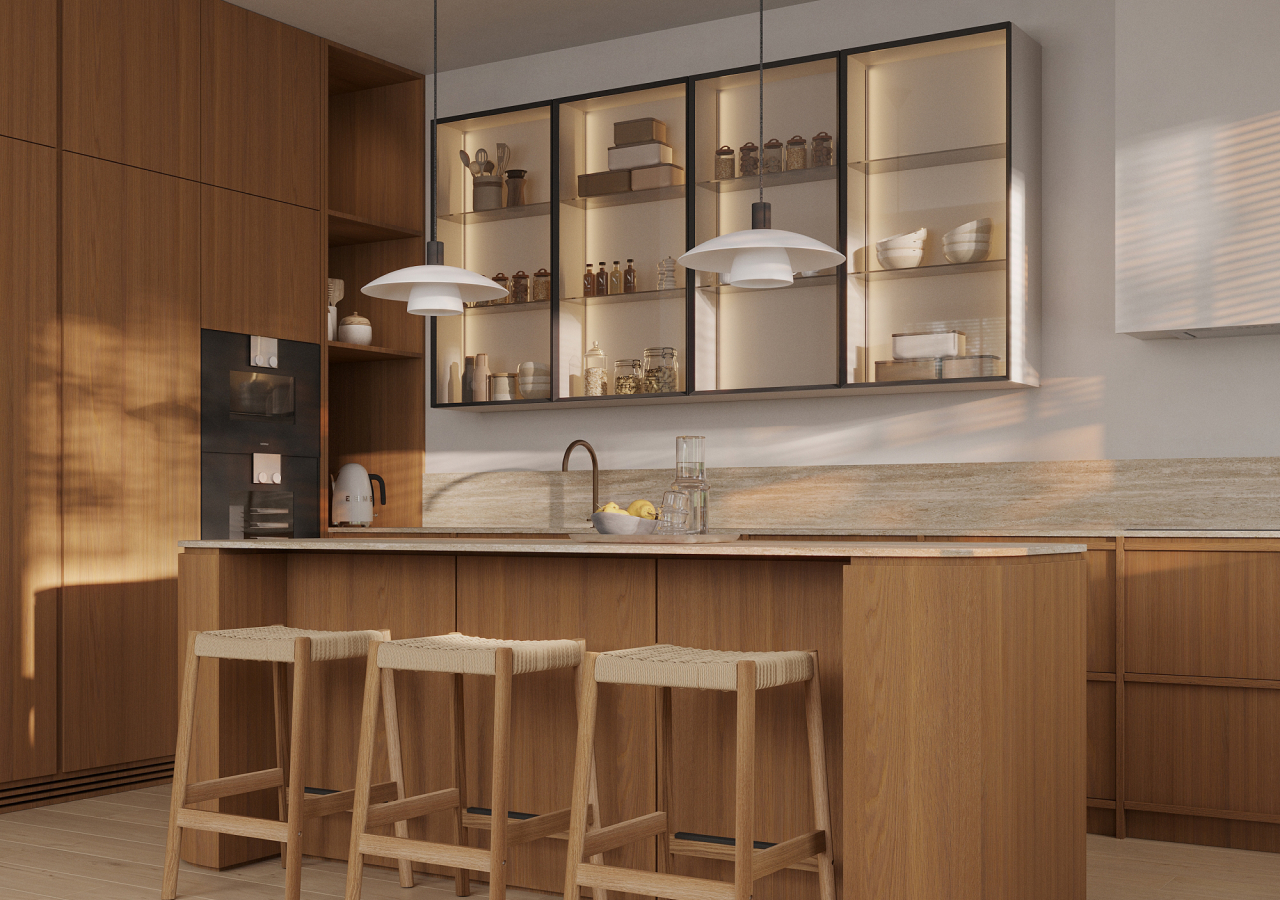
Warm and airy, with a quiet “gallery” feel. Oak grain adds life, beige Dekton keeps everything soft, and the overall palette stays quiet enough to feel minimalist and authentic to Japandi style. Best when metals are muted (brushed nickel, stainless, or matte black used sparingly).
Recess: Matte Beige Fenix + Light Oak + Stainless Steel
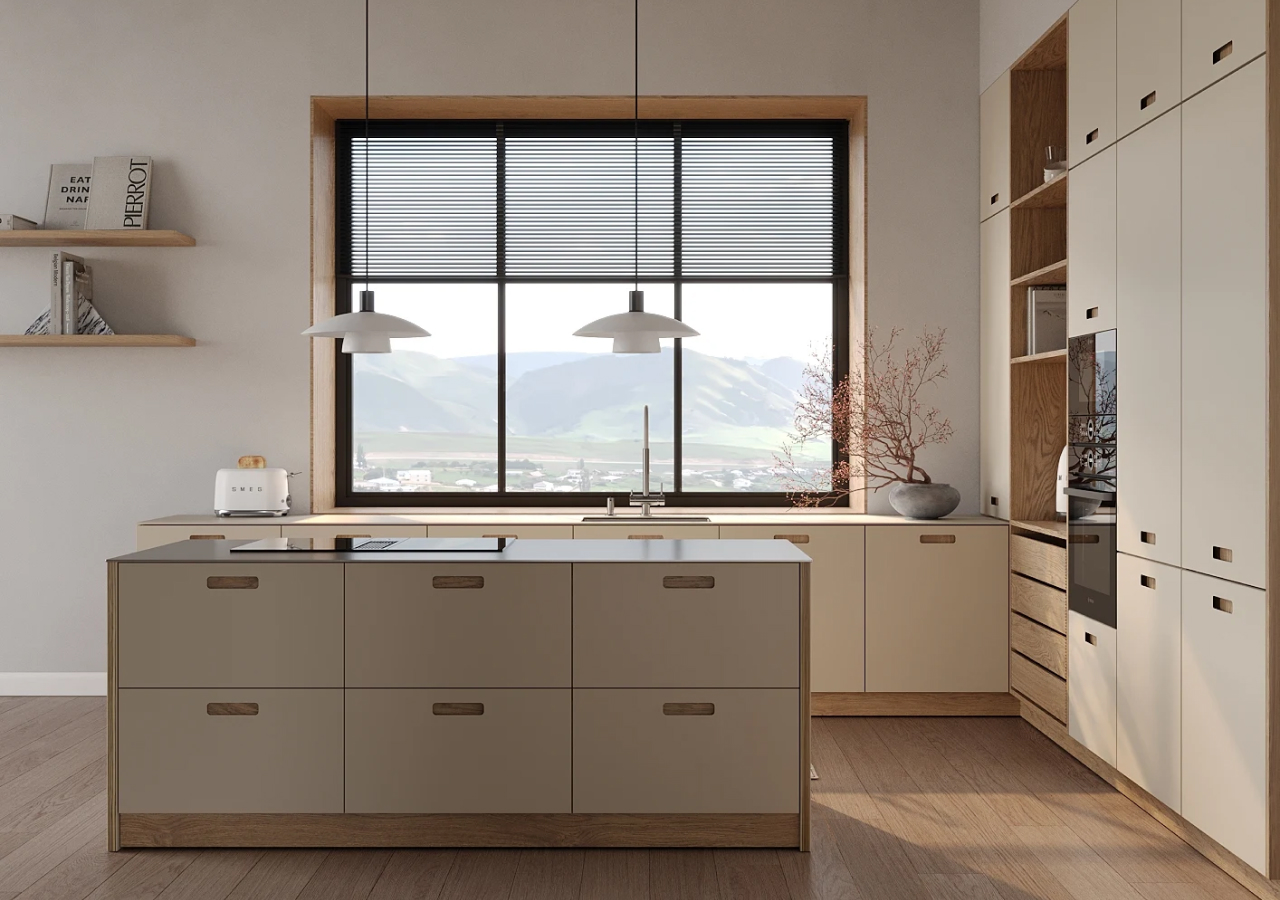
A modern Scandi-meets-minimalistl balance: soft, tactile cabinetry paired with a crisp, highly functional stainless surface. Beige and oak do the warming; stainless adds clarity and durability without adding visual noise—ideal for people who cook a lot.
Rebel Beige: Warm Beige + White Marble-Look Dekton + Warm Wood
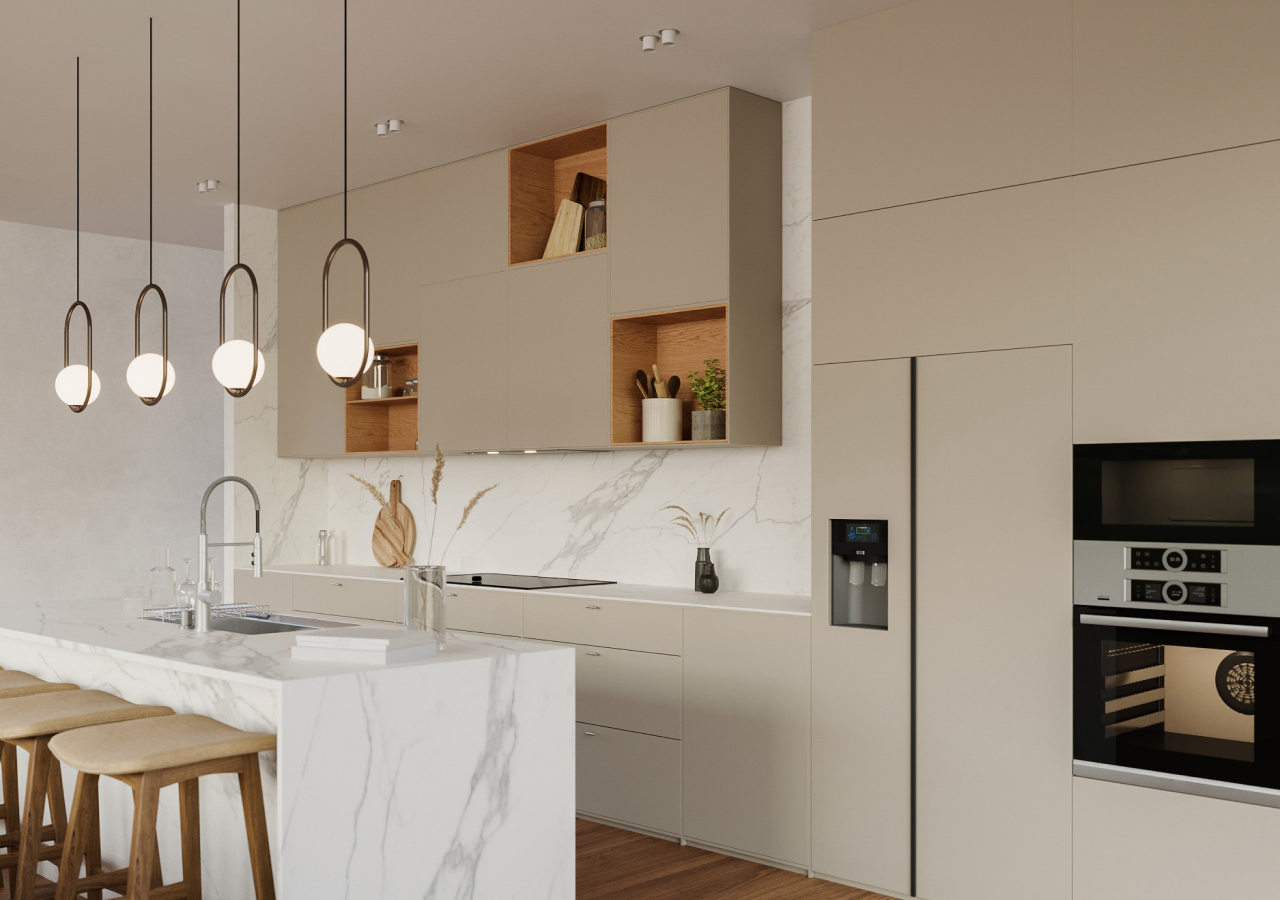
Monochrome warmth done right. Beige creates softness, the bright stone lifts the room, and the continuous surface keeps everything cohesive and intentional rather than “decorated.” Great for open-plan spaces where you want the kitchen to read calm from a distance.
Loft Light: Light Oak + Quiet Quartz + Warm White
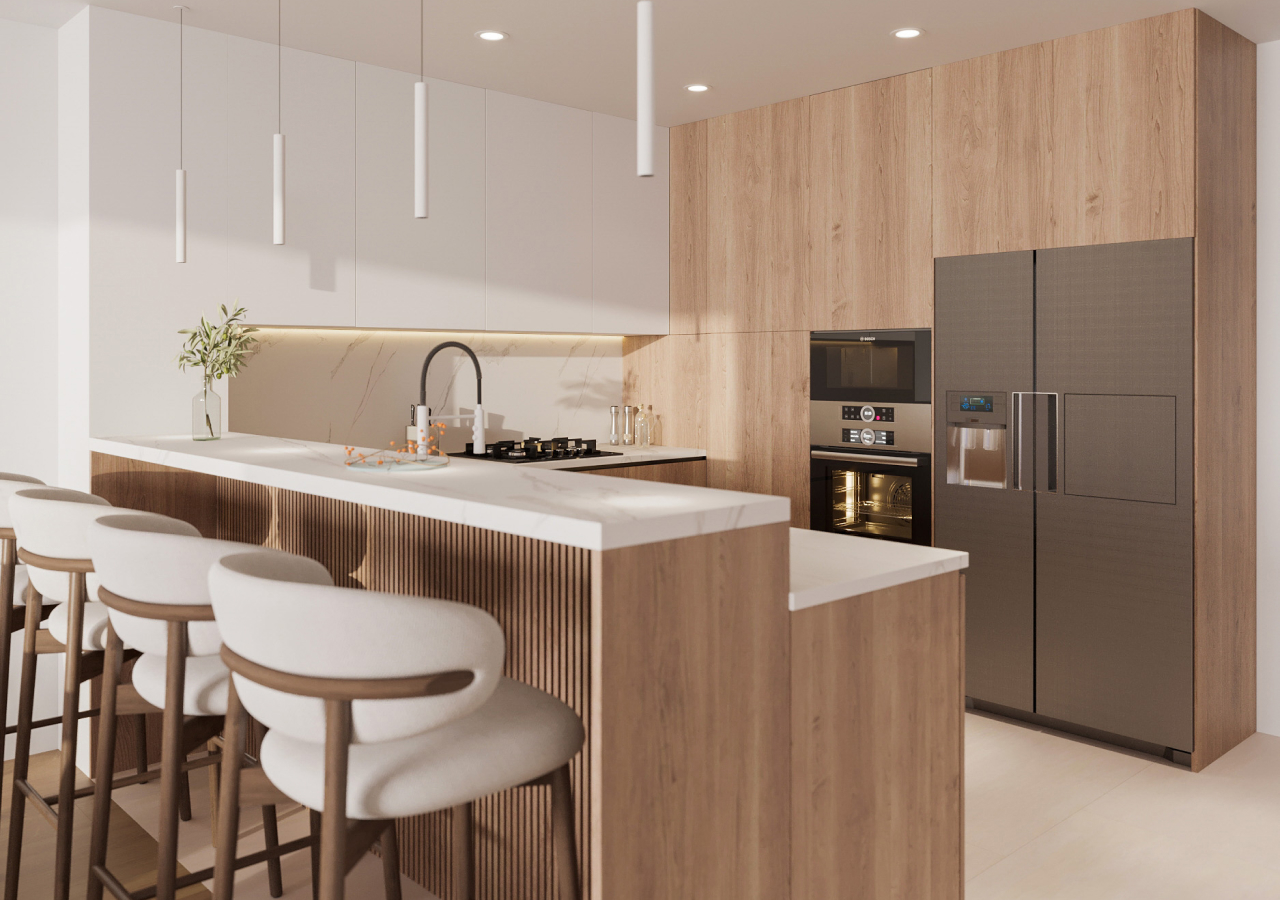
Clean but cozy. White keeps it bright, oak makes it feel lived-in, and gentle veining adds depth without turning the counter into the main statement. A safe “always works” option for a Scandinavian-inspired kitchen with a warmer edge.
Where to Put Color in a Minimalist Kitchen
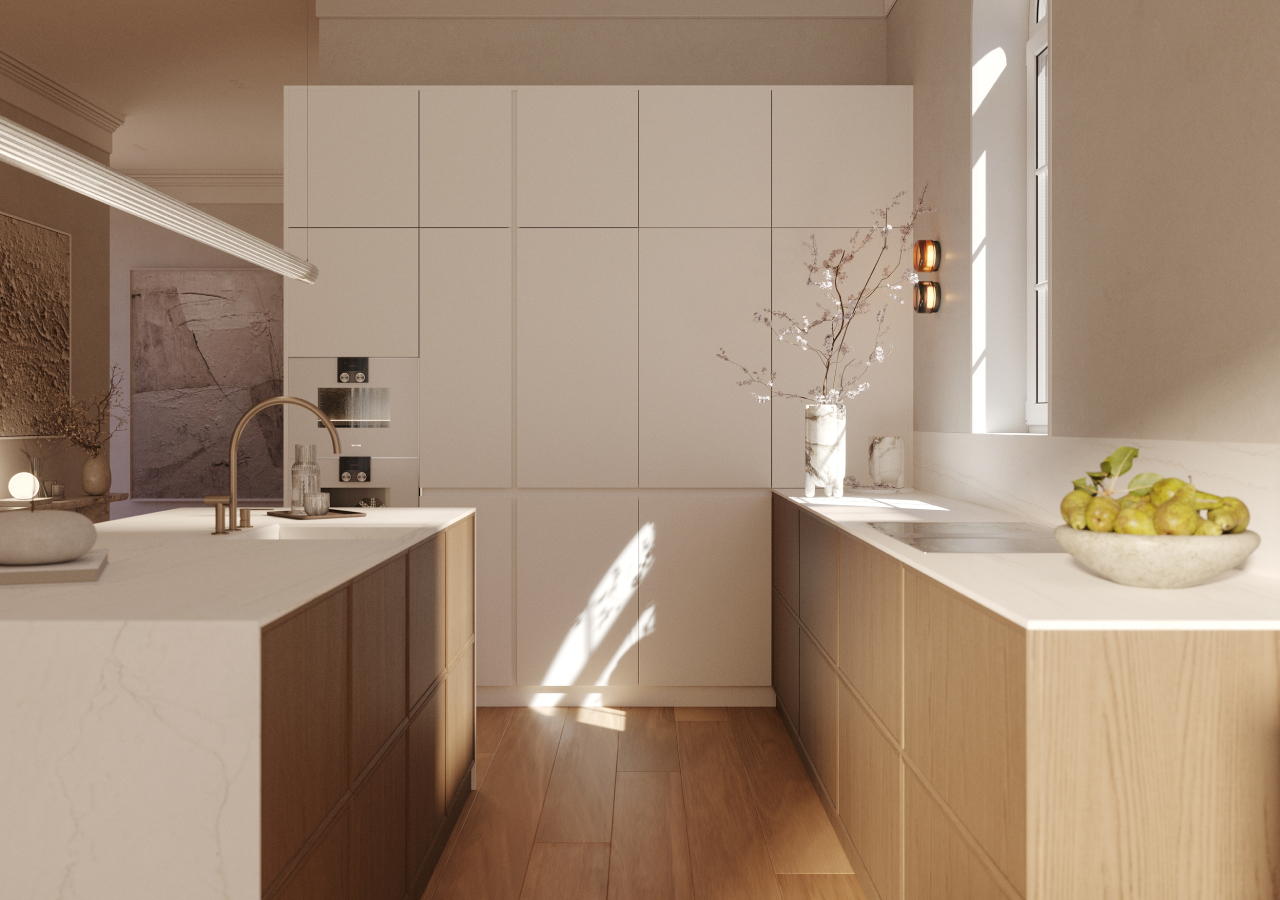
In warm minimalism, color works best when it is concentrated, not scattered. Treat color as an anchor or a zone, not “color everywhere.” A warm green minimalist kitchen, for example, stays calm when green lives on a single consistent plane (the main run or a tall bank), while wood and soft neutrals do the balancing work.
If you are nervous about commitment, put color where it is most controlled, meaning cabinetry. Small decor objects in different colors feel easy, but they create visual noise and break minimalism faster than one intentional cabinet tone.
Materials that Make Minimalism Feel Lived-In
Warm minimalism is not one material. It is a small set of finishes used consistently, chosen for both feel and performance. The goal is depth you can touch, not decoration you have to maintain.
Cabinetry
.webp)
Cabinet fronts set the emotional temperature because they are the biggest surface in the room. Slab fronts are the most architectural and minimalist, but if everything else is equally flat, the room can feel hard. A warmer minimalist approach pairs slab geometry with tactile finishes, like wood veneer grain or matte surfaces, so the kitchen still reads clean but feels human.
Hardware choices matter, too. Recessed or handleless strategies reduce visual clutter and keep the cabinet plane calm, especially in open-plan spaces where the kitchen is always visible. The more consistent the front language, the calmer the kitchen feels at a distance.
Countertops and Backsplashes
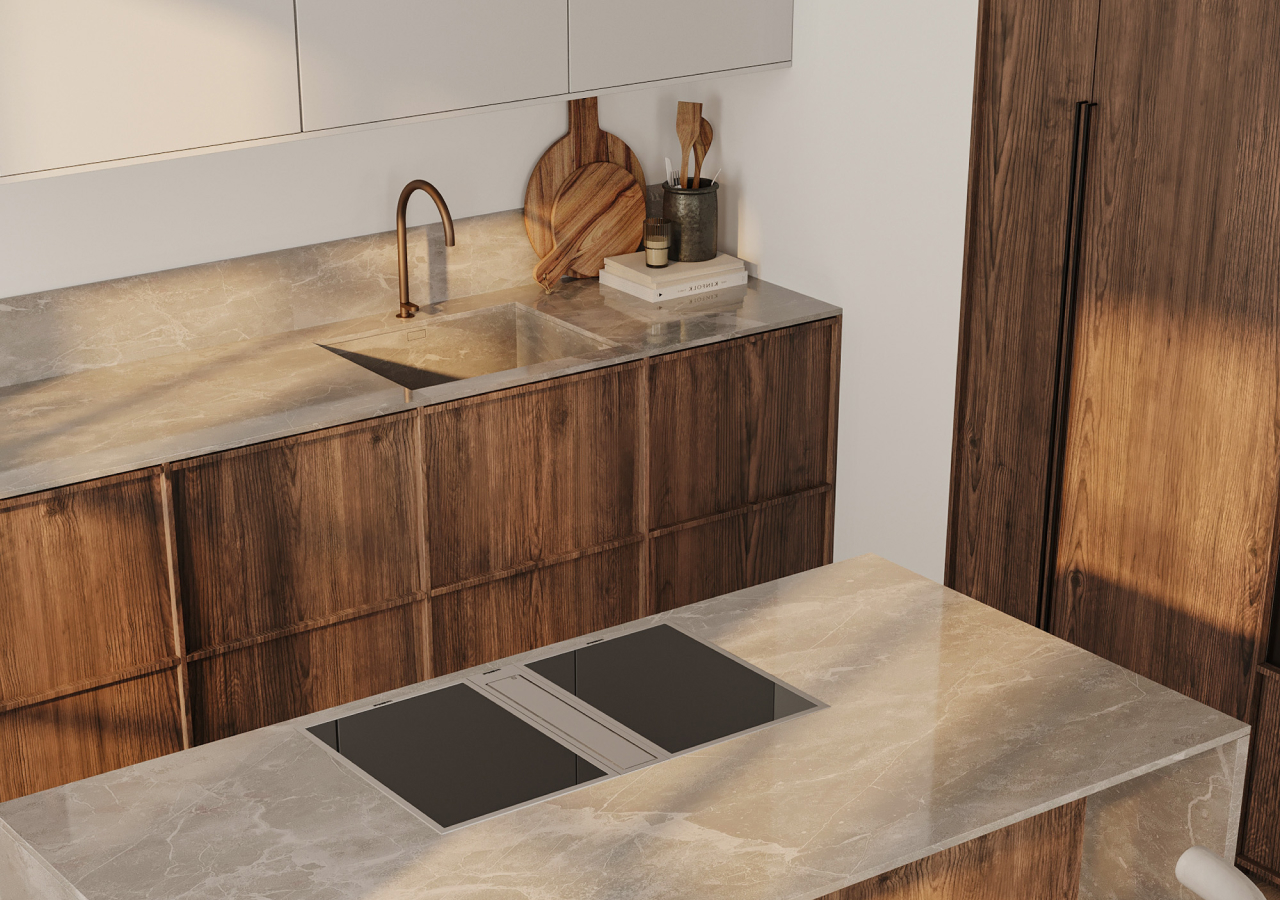
For a warm minimalist kitchen, countertops should support the calm goal: consistent tone, low visual movement, and low-glare finishes. Busy veining can be beautiful, but in a minimalist room it often becomes the dominant feature, and the kitchen stops feeling quiet.
Backsplashes follow the same logic. Fewer seams and fewer competing materials read warmer and more intentional. If you want a “designed” look without decorating, continuity (counter + backsplash) is your friend because it reduces visual breaks.
Flooring
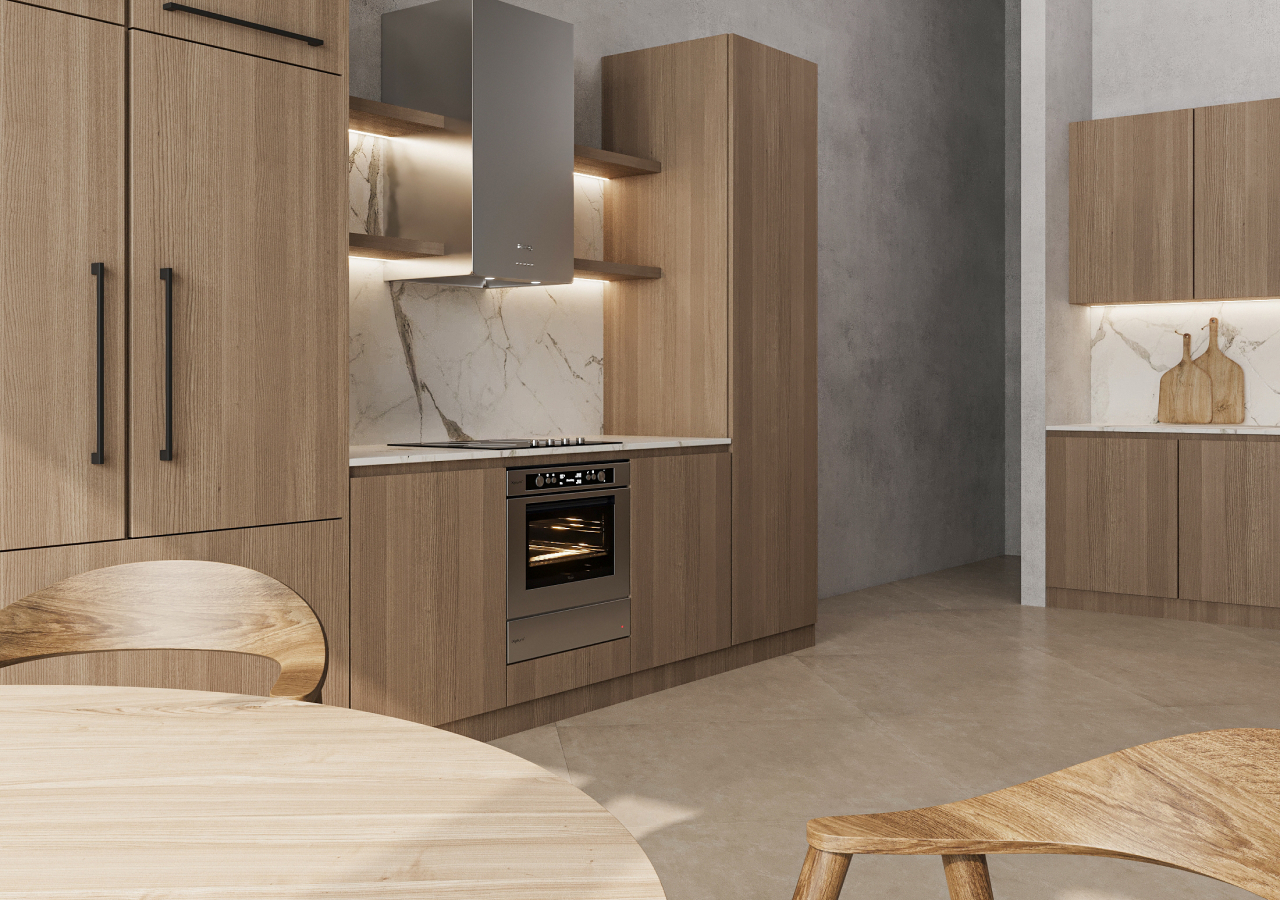
Flooring is an underrated warmth lever. Warm-toned wood (or a wood-look surface) softens minimalist geometry immediately. If your floors are cooler (concrete, gray tile), make sure something else brings warmth: wood cabinetry, warmer whites, and lighting that adds softness.
Metals and Accents
.webp)
Warm minimalism works best when metals are consistent and understated. Pick one metal “language” and repeat it so it reads like punctuation, not pattern.
Keep accents contained: one plant zone, a small set of ceramics, or one open-shelf moment, minimal but intentional.
Lighting for Warm Minimalist Kitchens
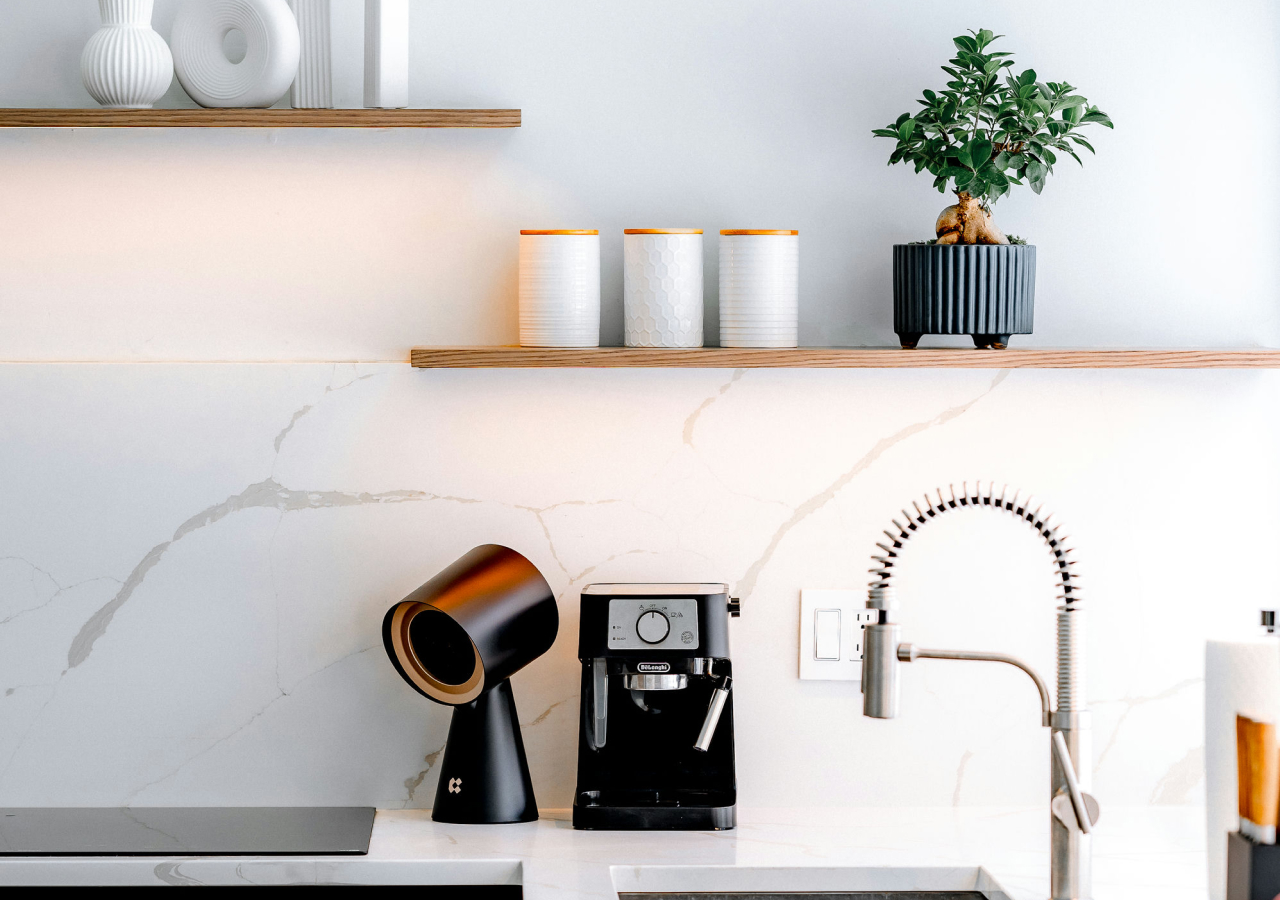
Lighting is where sterile minimalism usually shows up. If you only have one overhead source, finishes look flatter and harsher, especially in the evening. A layered plan makes the kitchen feel warmer because it creates gentle contrast: bright where you work, softer where you live, and a little highlight where you want texture to read (wood grain, matte fronts, stone).
Controls matter, too. Being able to dim and separate circuits lets the same kitchen feel crisp and functional in the morning, then calm and inviting at night.
How to Keep It Minimal and Functional
- Map your real routine. Note your daily sequence (coffee, prep, cooking, dishes) and identify exactly where clutter builds up now.
- Design storage to protect counters. Use deep drawers for daily tools, integrated waste near prep and clean zones, and under-sink organisation that turns an awkward void into usable space.
- Hide small appliances. Place coffee gear, toasters, and blenders in an appliance garage or dedicated cabinet so worktops stay visually quiet.
- Limit open shelving. Keep shelves shallow and selective; a short run can feel airy, but a full wall often becomes visual noise and hard to maintain.
- Pick one cabinet style and handle strategy. Choose your front style and opening method once, then apply it consistently so the kitchen reads as one calm plane.
- Lock a controlled palette. Choose a scheme you can describe in one sentence and repeat it across the largest surfaces for a truly minimal feel.
- Plan lighting as part of the materials palette. Combine layered ambient light, practical task lighting, and flexible controls so the room feels warm and usable at night.
- Use a simple maintenance rhythm. Rely on a quick nightly reset and a quarterly declutter so the minimal look stays easy to maintain rather than fragile.
Conclusion
Warm minimalism is minimalist design done in the right order. Start with layout and storage so surfaces stay calm. Choose a palette with warm undertones and repeat it consistently. Let texture do the decorating—wood veneer, matte finishes, quiet stone—then use layered lighting so everything feels soft and inviting in real life, not just in daylight photos.
If you want a simple way to start, pick one of the five palette formulas above and build decisions around it. A warm minimalist kitchen is about having fewer, better choices that make the kitchen feel calm every day.
FAQ: Warm Minimalist Kitchens


