

A Japandi kitchen does not need perfectly uniform surfaces to feel calm. Visible wood grain, subtle stone movement, and softly brushed metal can add depth without introducing decorative clutter. Wabi-sabi influences this approach through an appreciation of natural variation and the changes materials experience over time.
Part of our Japandi kitchen guide.
Because kitchens are working spaces, these finishes face water, spills, repeated handling, and regular cleaning. Their appearance after installation may be different from what you see in a showroom. The important question is which changes you are comfortable living with, which require maintenance, and when wear becomes damage that needs attention.
Texture, Patina, and Damage Are Not the Same
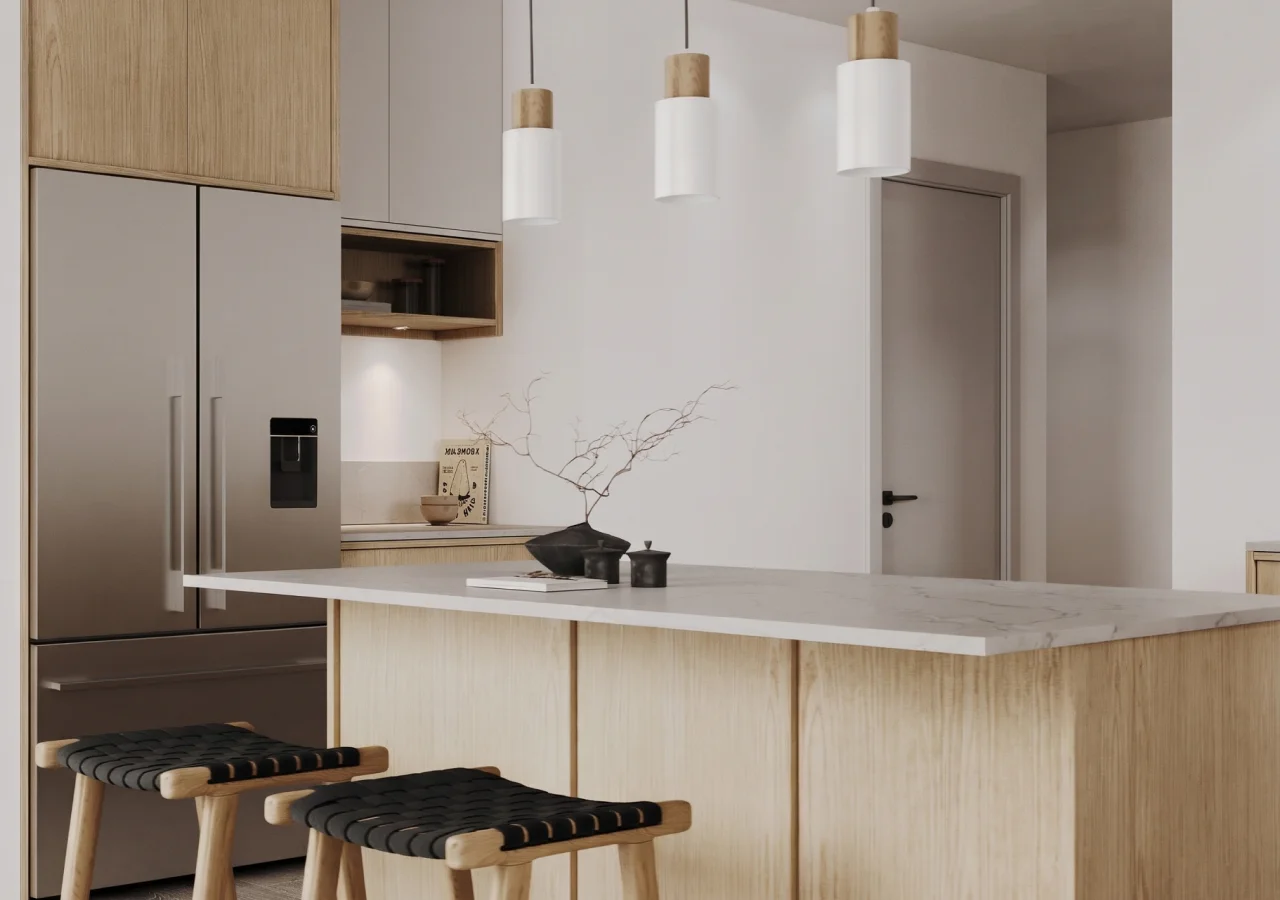
Texture is the surface quality you choose from the beginning. It might be the visible grain of oak veneer, the soft appearance of honed marble, or the directional pattern of brushed stainless steel. Texture can bring character to a new kitchen without making it look worn.
Patina develops over time through use, exposure, and aging. Depending on the material, it may appear as subtle changes in color, sheen, or surface markings. Some homeowners appreciate these changes, while others prefer finishes that retain a more consistent appearance.
Damage is different. A failed coating, swollen cabinet edge, lifting veneer, or unsafe crack does not become acceptable simply because the kitchen has a wabi-sabi influence. Choosing a finish means understanding which changes are expected, which can be maintained, and which require repair.
How Different Kitchen Materials Change With Use
Wood, stone, and metal can all introduce natural-looking texture into a Japandi kitchen. However, their appearance changes in different ways, and the same finish may behave differently depending on its location.
Wood Veneer: Natural Variation vs Finish Damage

Oak and walnut veneer bring natural grain and tonal variation to contemporary slab fronts. Over time, a wood surface may experience changes in color or sheen, depending on its finish, exposure, and use. These changes are not necessarily uniform, even across cabinets made from the same species.
The distinction is whether the wood's appearance is changing or its protective surface is failing. Subtle variation may be acceptable, but peeling coatings, water-related swelling, and lifting veneer indicate problems that should be addressed. Essence collection shows how natural oak veneer can provide texture within a clean, modern cabinet composition.
Repair options for wood veneer depend on the veneer thickness, coating, edge construction, and depth of the damage. Do not assume it can be sanded or refinished in the same way as solid wood. For more on protective coatings and maintenance, see guide to wood cabinet finishes.
Honed Marble: Soft Texture With Visible Changes

Honed marble has a low-reflection surface that creates a softer visual contrast beside wood cabinetry. Its natural veining introduces variation, while the finish avoids the strong reflections of polished stone. However, choosing honed marble does not eliminate its sensitivity to everyday kitchen conditions.
Acidic ingredients such as lemon juice or vinegar can etch marble, altering the stone's surface finish. Etching is different from staining, which involves discoloration. According to the Natural Stone Institute, sealing can improve stain resistance but does not make natural stone stain-proof. It also does not prevent the acid reaction that causes marble to etch.
Some homeowners accept minor etching as part of a lived-in stone surface, while others find the changing sheen distracting. If visible marks would bother you, consider using marble in a less demanding location or comparing alternative countertop materials with different maintenance requirements.
Brushed Stainless Steel: Direction, Scratches, and Patina
Brushed stainless steel has a directional surface pattern that influences how light, fingerprints, water spots, and scratches appear. Compared with highly polished metal, it usually produces softer reflections, but the finish does not prevent everyday marks.
Fine scratches may become part of the surface's appearance over time. However, natural wear should not be confused with a specified decorative patina or factory-applied finish. If a particular appearance is important, confirm whether it is present from installation or expected to develop through use.
Availability and repair options depend on the product and fabricator. Depending on the supplier and fabrication method, a brushed finish offered for countertops may not be available for cabinet fronts. Ask whether localized restoration is possible and how it may affect the original pattern. Specialized finishes may affect availability, fabrication requirements, lead time, or price, so confirm them in the project specification and quote. stainless steel Japandi kitchen guide covers broader design applications.
Use Texture Selectively in a Japandi Kitchen
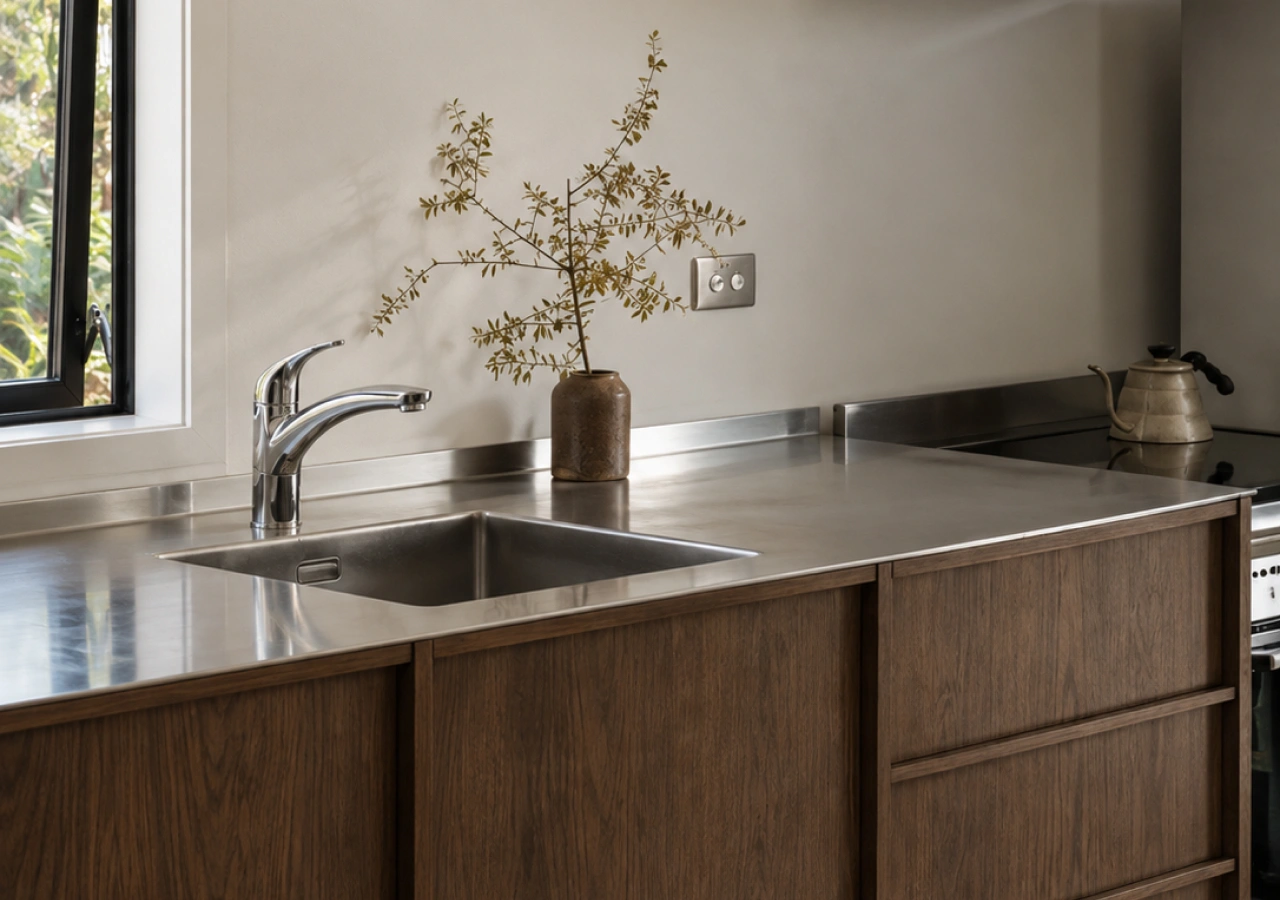
Wabi-sabi finishes do not require a kitchen to look rustic. Distressed cabinetry, decorative beams, and deliberately worn surfaces are unnecessary. In a contemporary Japandi kitchen, simple slab fronts, precise cabinet divisions, and uninterrupted surfaces provide a calm background for one or two more expressive materials.
For example, natural oak cabinets can sit beside a quiet cream countertop, allowing the wood grain to remain the main feature. Dark walnut creates a different effect when paired with pale stone and warm walls. Essence Walnut collection illustrates this balance through American walnut veneer and light Dekton Nacre surfaces.
Keeping the surrounding materials restrained allows natural texture to stand out without making the kitchen visually busy. For a broader explanation of how these ideas relate to Japanese and Japandi interiors, see Japanese Kitchen Design Guide.
Match the Finish to the Kitchen Zone

A material suited to a vertical panel may frustrate you on a worktop. Backsplashes, cabinet doors, and countertops experience different kinds of contact. You can enjoy pronounced wood grain or stone movement in one area while choosing more visually consistent finishes for heavily used surfaces.
A textured backsplash may be easier to live with than the same material on a preparation countertop, provided it tolerates splashes and cleaning. Countertops face utensils, food acids, and frequent wiping. Around sinks and dishwashers, moisture resistance and protected edges matter more than the possibility of developing patina.
High-touch areas deserve particular attention. Integrated handles, push-to-open fronts, and frequently used drawers can show fingerprints or changes in sheen around contact points. A finish that looks beautiful across a tall cabinet wall may need more frequent cleaning around a trash pull-out or coffee station.
What to Ask Before Approving a Finish
A new showroom sample shows the intended appearance, but it rarely explains how a surface will look after months of cooking, cleaning, and handling. Before approving a finish, compare physical samples and clarify the expected changes.
-
Can I see a used sample? Ask for a handled sample or an installed example showing typical marks. Compare it with the new finish to understand how its appearance may change.
-
Which changes are considered normal? Ask specifically about scratches, fingerprints, discoloration, sheen changes, etching, and staining. Different materials require different expectations.
-
What cleaning and maintenance does the finish need? Confirm approved cleaning products, moisture precautions, and whether periodic maintenance is necessary.
-
Can localized damage be repaired? Find out whether scratches, chips, or coating failures can be treated individually or whether the affected section would require professional refinishing or replacement.
-
What exactly will be supplied? Confirm the material, finish, sheen, protective treatment, grain or brushing direction, edge construction, and any custom fabrication requirements in the final specification.
Review the samples beside the actual countertop, flooring, wall colors, and hardware. Natural and artificial lighting can reveal different surface qualities, particularly on darker wood and brushed metal.
The goal is to understand more than the initial appearance. Know what normal wear looks like, which changes you can accept, and what happens if the finish needs repair.
Conclusion
Wood grain, honed stone, and brushed metal can add depth to a Japandi kitchen, but they come with different expectations for use and maintenance. Understanding how each surface changes helps you distinguish acceptable marks from problems that require attention. A finish that works beautifully on a cabinet panel may be less practical on a heavily used countertop, so consider both its initial appearance and its behavior over time.
Choose expressive finishes where visible change feels acceptable, and more consistent surfaces where water exposure, maintenance, or heavy daily use matters most. Compare used samples and confirm repair options before ordering to avoid surprises later. Explore Corner Renovation's kitchen collections to compare natural wood, stone, and metal finishes in completed compositions.
Ready to start your kitchen project?
Share your project details and get a personalized kitchen estimate from Corner.
GET YOUR ESTIMATE


