
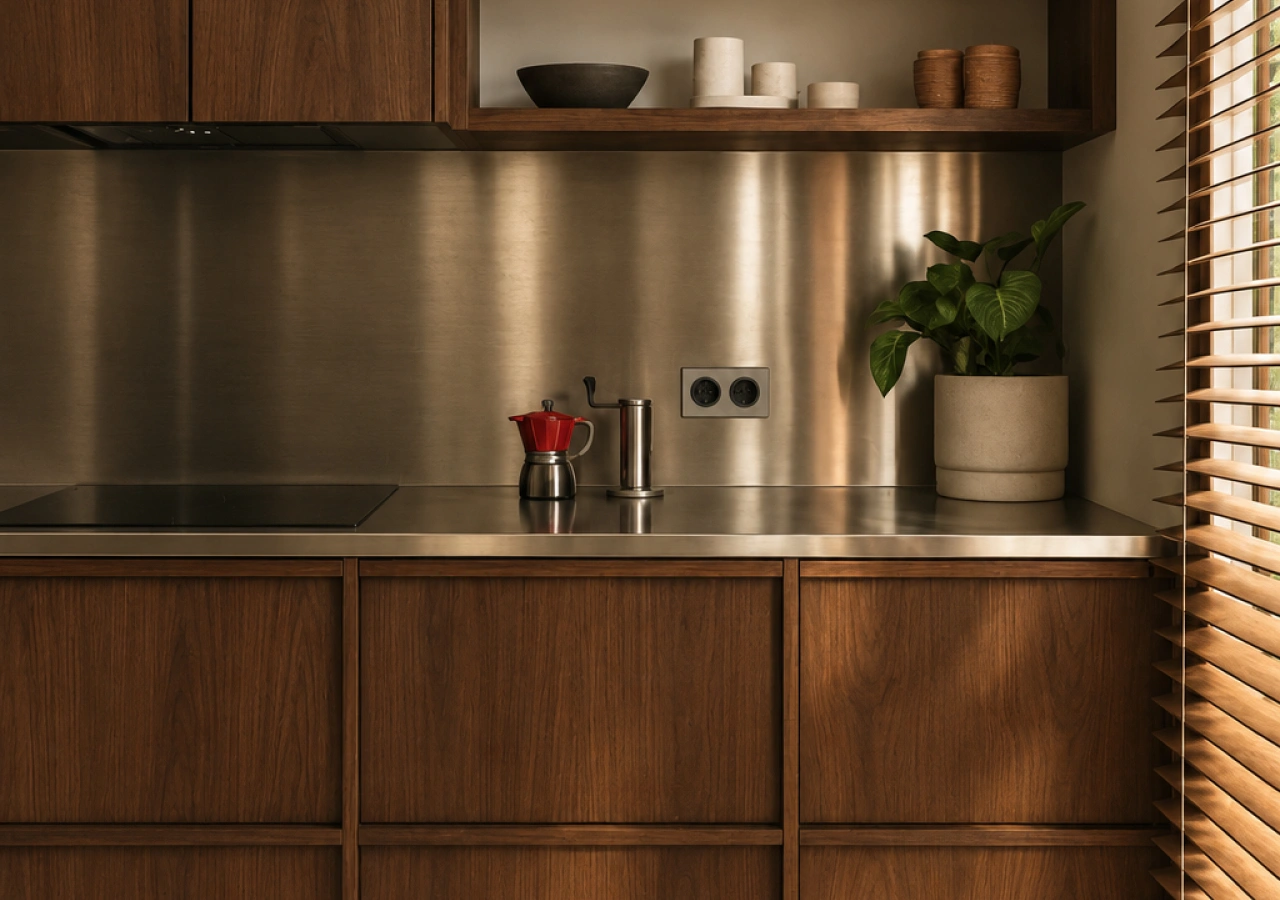
A Japanese stainless steel kitchen can feel surprisingly warm when metal is used with restraint. Japandi interiors usually rely on wood, muted colors, matte stone, and simple cabinetry, so stainless steel is not a core material of the style. It works better as a deliberate contrast.
A stainless island, countertop, lower cabinet run, or appliance zone can add precision and durability, while oak, walnut, creamy stone, warm concrete, and softer lighting keep the room calm and residential.
Why Stainless Steel Can Work in Japandi Design
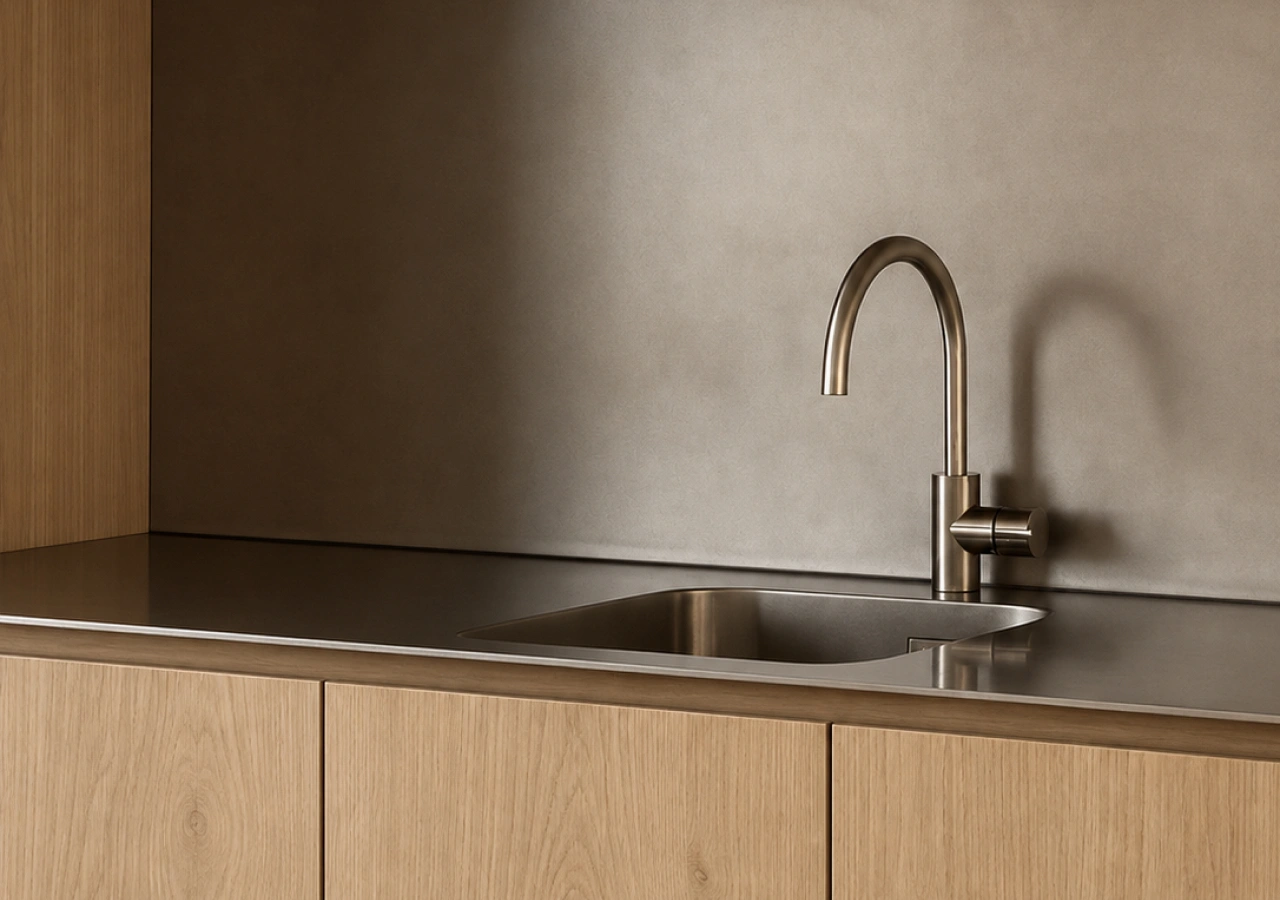
Stainless steel fits most naturally into Japanese-modern, industrial-Japandi, and Scandinavian-warm minimalist kitchens. Its smooth surface and simple detailing can sit comfortably beside frameless cabinetry, integrated appliances, wood veneer, and quiet stone.
It also makes sense in hard-working areas. Stainless steel is non-porous, easy to wipe down, and often chosen for surfaces that see regular cooking, water, or prep, although exact performance depends on the finish, fabrication, and installation. Brushed or satin steel usually feels softer and less reflective than polished stainless. If metal spreads across the cabinet fronts, countertop, backsplash, appliances, hardware, and fixtures at the same time, however, the kitchen can quickly feel more commercial than Japandi.
Best Places to Use Stainless Steel
.webp)
For most homes, stainless is easier to introduce in one defined area rather than across the entire kitchen. This gives the metal a clear role without letting it dominate the palette.
A stainless countertop is one of the easier ways to introduce metal because the cabinetry below can stay in oak, walnut, or a matte finish. A stainless island with metal fronts makes a stronger statement and needs more warmth around it. In one Corner consultation, a small ADU kitchenette used real stainless steel fronts with a creamy Dekton countertop and warm concrete backsplash, giving the metal a prominent role without making the space feel like a professional prep kitchen.
How to Keep Metal Warm and Residential
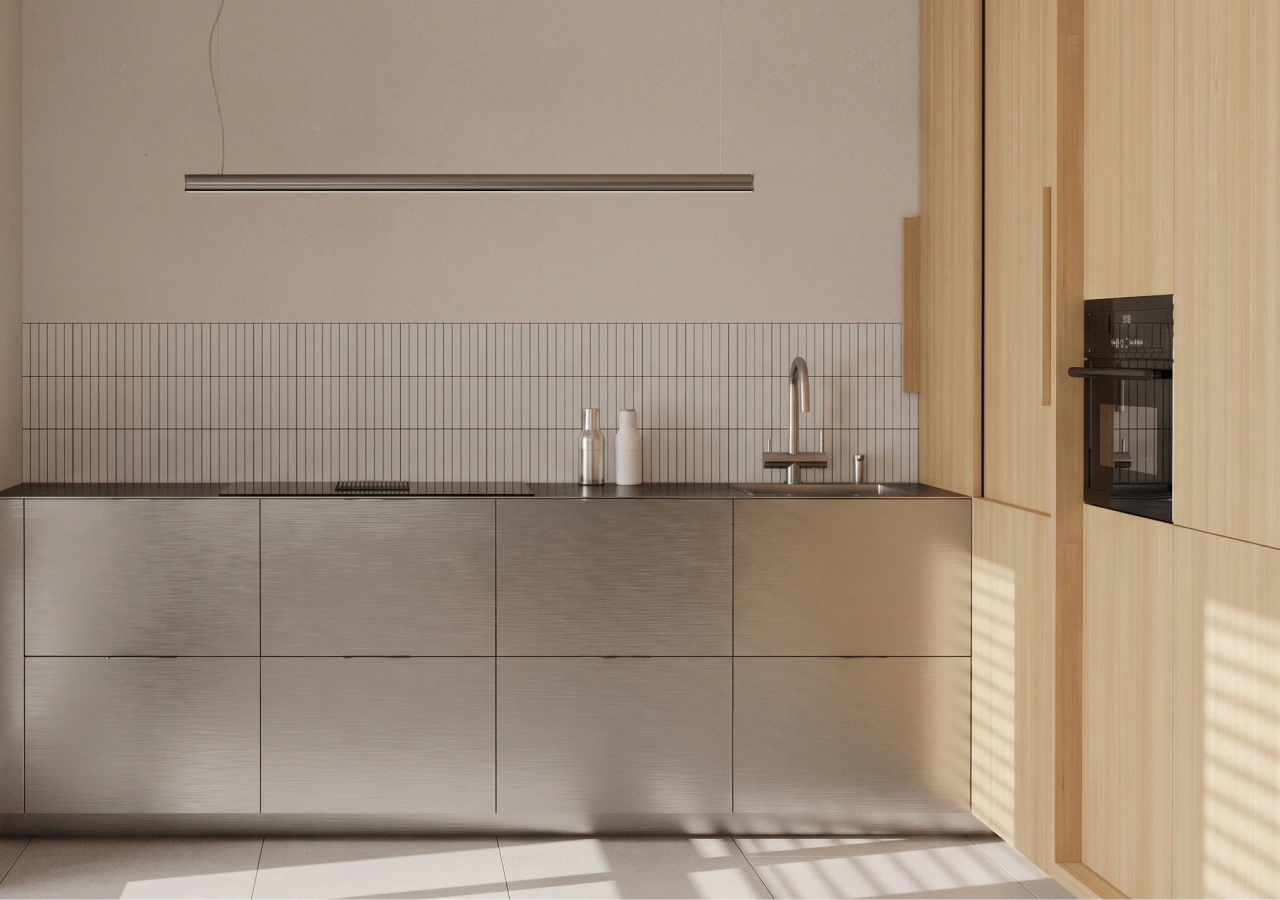
Light oak can make stainless feel brighter and softer, while walnut gives it a deeper, more grounded contrast. Warm whites, creamy stone, pale quartz, Dekton, and concrete-look surfaces also help connect cool metal with the rest of a Japandi palette.
Lighting and detailing can change the result just as much as material choice. Strong cool light, glossy tile, chrome hardware, and reflective finishes can make stainless feel harder and more industrial. Frameless fronts, narrow reveals, integrated pulls, concealed storage, warm-neutral lighting, and quieter surrounding surfaces keep it closer to a residential Japanese-modern look.
Stainless Island vs Full Stainless Kitchen
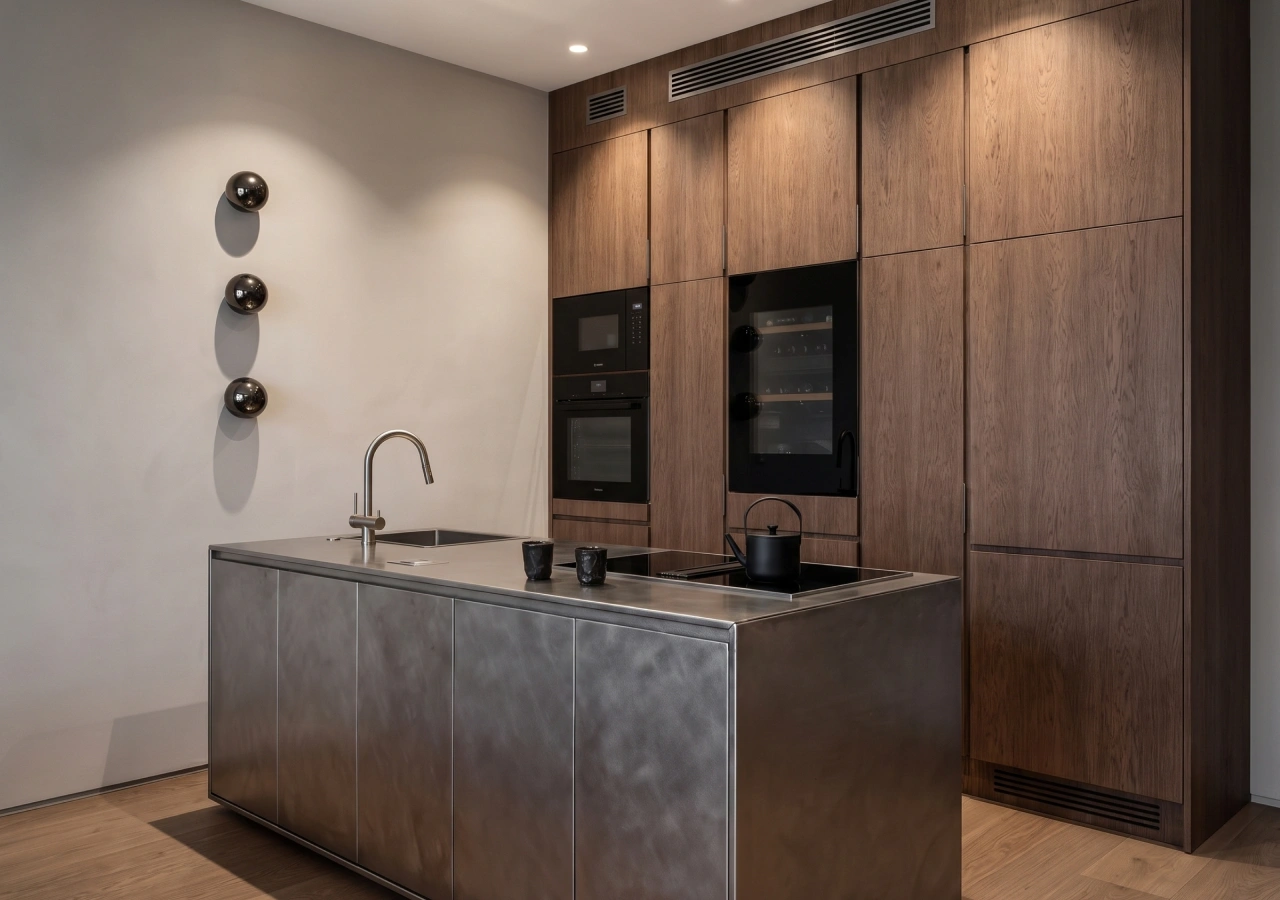
A stainless island is usually easier to balance than a full stainless kitchen. It gives metal one defined place while perimeter cabinetry can remain warmer in wood veneer, matte finishes, or stone. Stainless with light oak feels softer and more Scandinavian, while walnut creates a stronger contrast.
A full stainless kitchen makes a much bolder statement. It can suit a compact urban kitchen, ADU, or industrial-Japandi interior, but warm flooring, timber, stone, plaster, and softer wall colors become more important. If the goal is clearly Japandi rather than industrial minimalism, selective stainless is usually the easier direction.
Finish, Fingerprints, and Daily Use
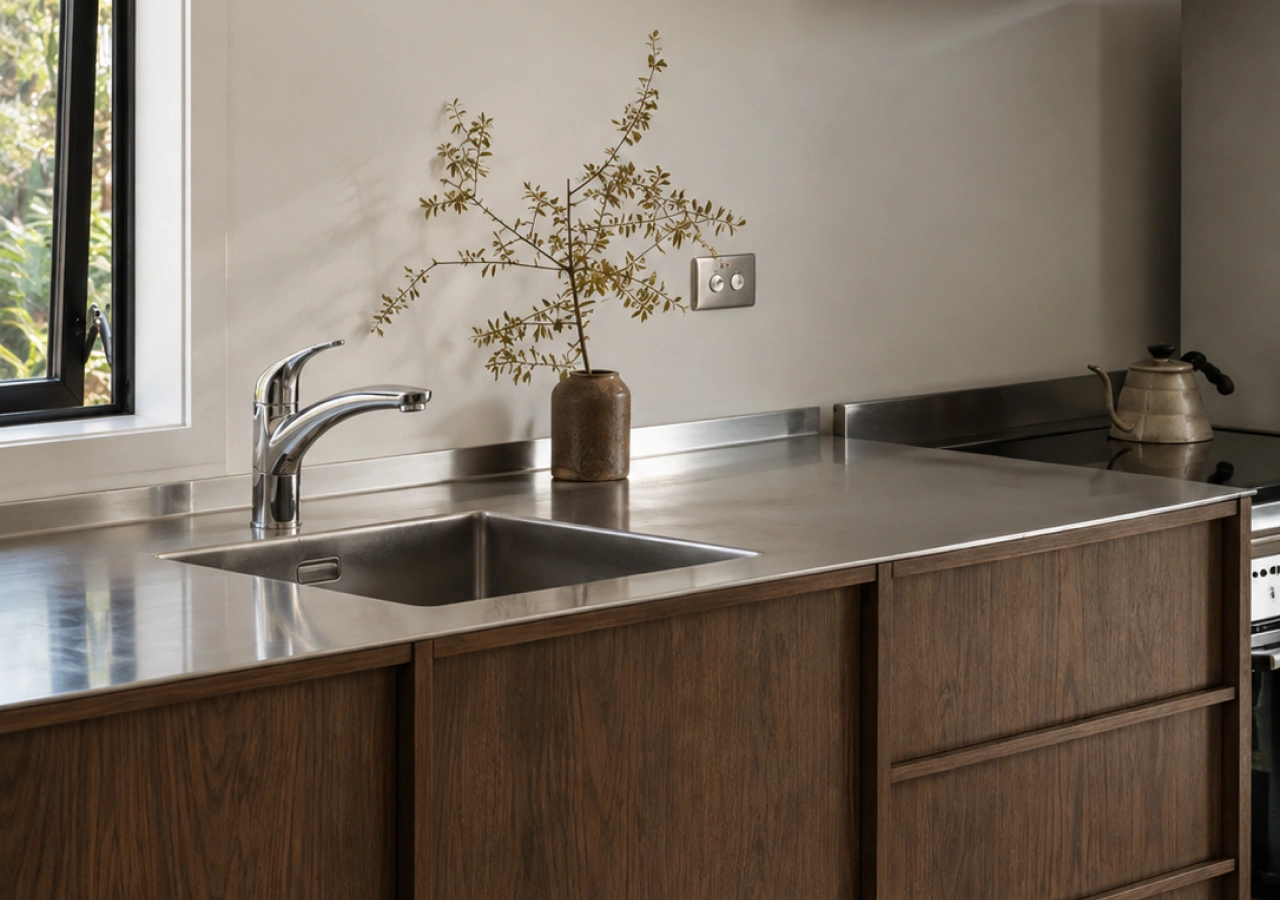
Stainless steel is practical, but it is not visually maintenance-free. Fingerprints, water spots, fine scratches, and gradual patina are normal considerations. Brushed and satin finishes generally feel softer than polished stainless and tend to make small marks less noticeable.
Placement matters too. Island drawers and push-to-open fronts receive far more hand contact than side panels or tall appliance enclosures. Strong daylight from the side can also make smudges and streaks more visible.
For homeowners who want every surface to remain visually untouched, a large amount of stainless may require more wiping than expected. For others, the small signs of use are simply part of having a working material in a hard-working part of the kitchen.
Conclusion
A Japanese stainless steel kitchen does not need much metal to make an impact. A countertop, island, lower run, or appliance wall may be enough to give the space a sharper, more functional edge while oak, walnut, warm stone, and muted cabinetry provide balance.
Stainless can show fingerprints and scratches, custom fabrication may add cost, and too much metal can push the room toward a colder commercial look. Selective use usually leaves more room for the warmth associated with Japandi design. To see how wood, stone, integrated appliances, and minimalist cabinetry work together, explore Corner Renovation kitchen collections and completed projects.


