
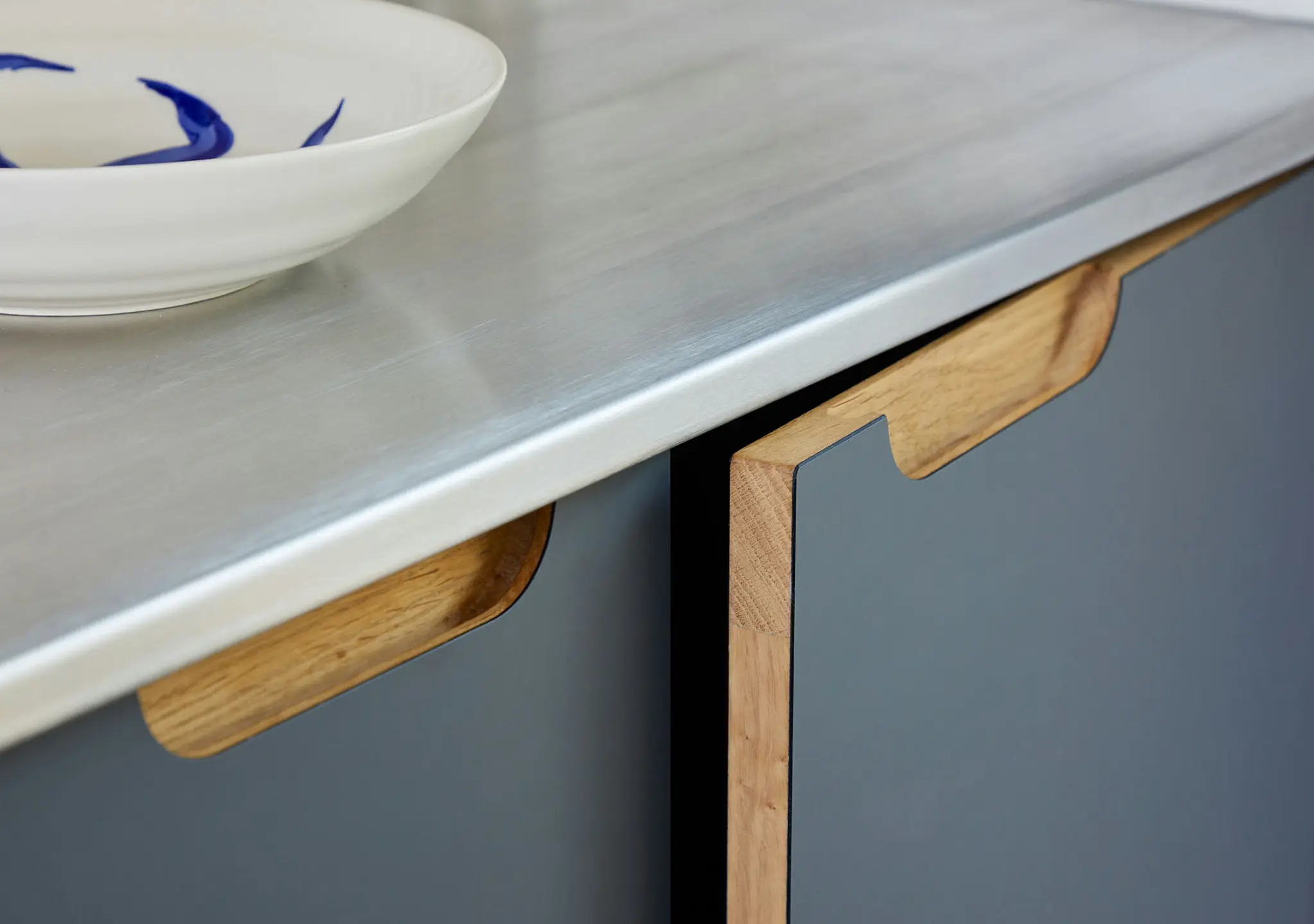
Stainless steel countertops are best for people choosing a kitchen surface based on performance, hygiene, and ease of cleaning rather than a “perfect forever” appearance. They’re non-porous, heat tolerant, and easy to sanitize, which is why they’ve long been used in professional kitchens. In residential spaces, they make the most sense for heavy cooking, fast cleanup, and integrated sink zones where fewer seams mean less grime buildup.
The tradeoff is visual. Stainless steel does not stay pristine. It develops fine scratches, fingerprints, and a lived-in patina that reflects daily use. That is not a defect; it is the normal behavior of the material. The key decision is not whether stainless will mark, but which finish makes those marks easier to live with.
Stainless Steel Countertop Finishes
What to Expect from Daily Use
.webp)
Stainless steel will show life. Over time, it develops a patina that reflects how the kitchen is actually used. Brushed and satin finishes are usually the most forgiving because scratches visually blend into the grain, while polished finishes show almost everything faster. Water spots, streaks, and fingerprints are also part of the material, especially if the surface is not dried after cleaning.
A few habits make a noticeable difference. Wiping with the grain helps reduce streaks, and drying the surface after washing helps prevent haze and mineral spotting. It also helps to clear crumbs and grit before wiping, since small particles are one of the easiest ways to create unnecessary scratching. Around the sink, a bottom grid can reduce the circular wear that often comes from pots and pans.
Benefits of Stainless Steel Countertops

Stainless steel is popular for a few simple reasons: it handles heat well, stays hygienic without sealing, and can be fabricated into seamless details that make the kitchen easier to clean. In real use, that means hot cookware and steam are less of a concern than they are with many other surfaces, spills stay on the surface rather than soaking in, and sink areas can be designed with fewer joints and crevices.
That fabrication flexibility is one of its biggest advantages. A stainless steel countertop can include an integrated sink or drainboard, which makes the work zone feel cleaner, more continuous, and easier to maintain. For people who cook often, that practical value is usually more important than the surface staying visually perfect.
Caring for Your Stainless Steel Countertops

Stainless steel countertop care is straightforward, but it does reward consistency. In most kitchens, mild dish soap, warm water, and a soft cloth are enough for daily cleaning. After washing, rinse the surface, wipe with the grain, and dry it fully. That last step matters more than many people expect, since much of what people describe as staining is really water spotting, soap haze, or mineral residue.
Most avoidable wear comes from abrasive tools or trapped grit. Steel wool, scouring powders, and rough scrub pads can alter the finish, and dragging heavy or dirty items across the surface will make scratches more visible. The routine is simple: clear debris first, wash gently, rinse, then wipe and dry.
Pros and Cons of Stainless Steel Countertops
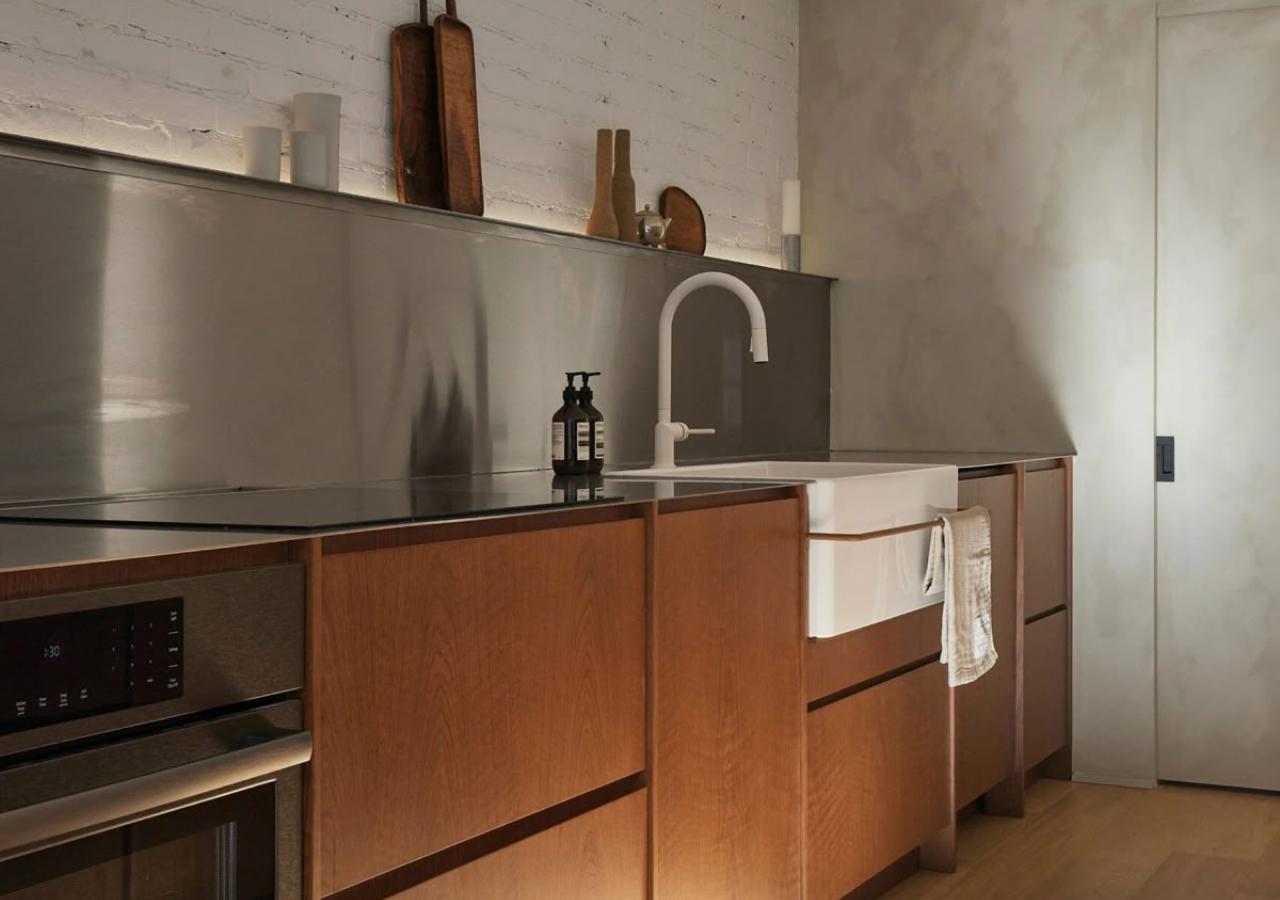
Stainless steel is a very good fit when you want a countertop that behaves like a working surface. It is resilient, hygienic, and easy to maintain, and it works especially well in kitchens centered around frequent cooking. It also suits modern, minimalist, and loft-style interiors because it has a clean, architectural quality.
Its drawbacks are mostly visual and sensory rather than structural. It will show scratches and patina over time, and that should be treated as a certainty rather than a possibility. It can also show fingerprints and water marks, especially in shinier finishes, and it may sound noisier than stone when objects are set down on it. Some homeowners also find it colder and more utilitarian in feel than wood or stone. These issues can be softened, but not eliminated. Choosing brushed or satin finishes, drying the surface after cleaning, and pairing the metal with warmer materials all help make it easier to live with.
Stainless Steel in Warm Minimalism
.webp)
Stainless steel does not have to make a kitchen feel commercial. In residential design, it usually works best when treated as the practical element within a warmer composition. Paired with oak, walnut, or matte cabinetry, it can feel calm and precise rather than industrial. Brushed or satin finishes are usually the best choice here because they reduce glare and make everyday wear less visually aggressive.
Lighting matters too. Warm lighting helps the metal read more softly, especially at night, and surrounding the countertop with wood grain or other textured materials keeps the room from feeling cold. In that context, stainless steel becomes less of a style statement and more of a quiet performance surface.
Conclusion
Stainless steel countertops are best for people who want a surface that is hygienic, heat tolerant, and easy to clean without a sealing routine. They are especially useful in hardworking kitchens, integrated sink zones, and homes where daily function matters more than keeping every surface visually untouched.
The key is expectation-setting. Stainless steel will not stay perfect, and that is part of the material rather than a failure of it. For the right homeowner, that lived-in quality is acceptable or even appealing. For the wrong one, it becomes the reason to choose another surface. In most homes, a brushed or satin finish paired with warm materials offers the best balance between practicality and a more residential look.


