
.webp)
A Scandinavian wood kitchen works when it feels bright, warm, and easy to live with. Scandinavian design is calm by design: simple forms, honest materials, and a layout that keeps countertops from becoming a “stuff shelf.” Wood is what gives Scandinavian minimalism its warmth, as long as the tone is used intentionally and the finish stays calm and modern.
In real kitchens, the look holds up when storage is doing the quiet work in the background: deep drawers, tall pantry runs, and planned landing zones so daily clutter has a home. When that foundation is right, oak, ash, stained oak, and even walnut can all feel Scandinavian without tipping the room into heavy, dark, or dated.
What Makes a Scandinavian Wood Kitchen
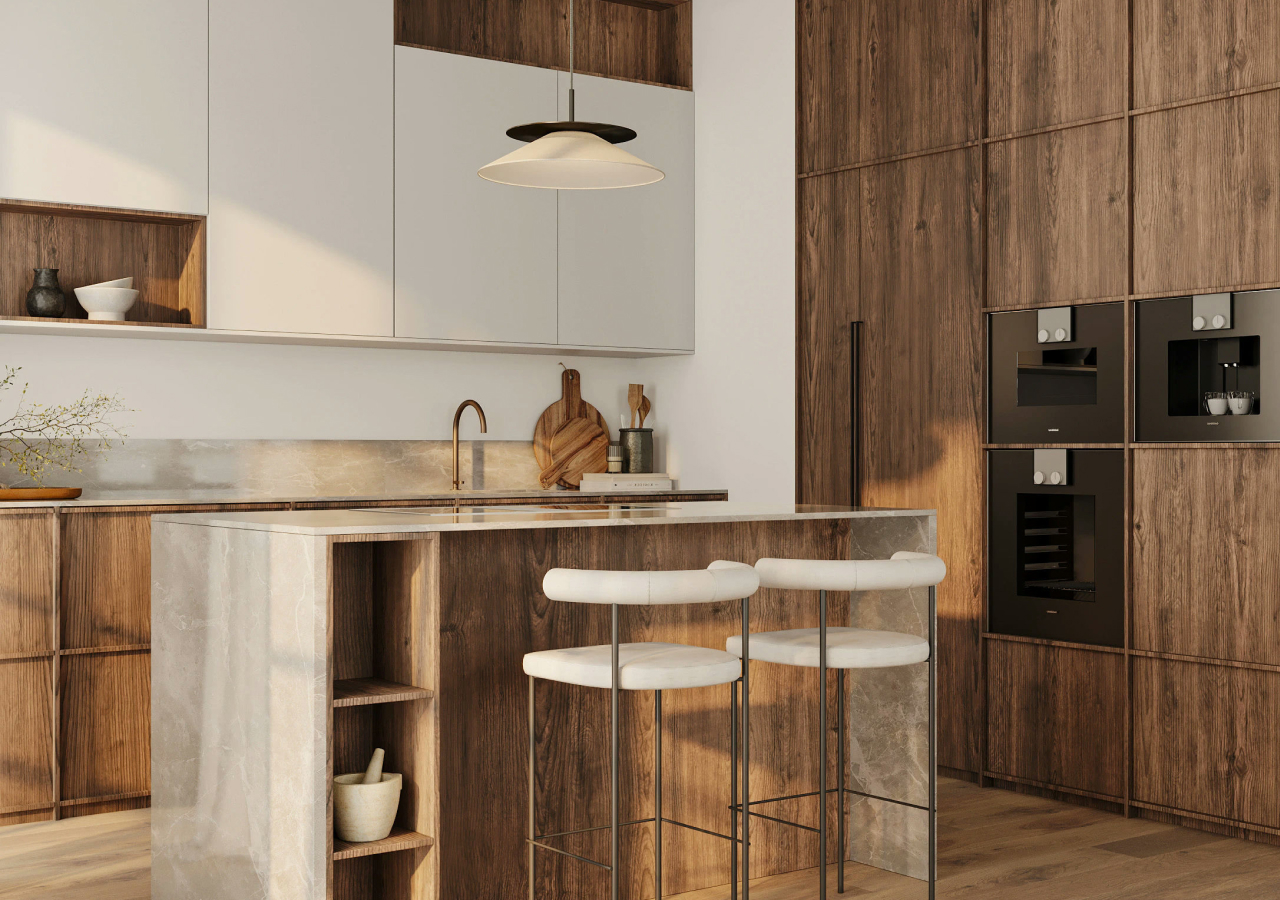
A Scandinavian wood kitchen is built around five repeatable basics: a light base, natural wood for warmth, matte finishes, layered lighting, and storage that keeps counters clear. The goal isn’t “empty.” It’s low visual noise with high day-to-day usability. When those pieces align, the kitchen reads as one calm composition and stays practical in real life.
That’s why Scandinavian style prioritizes long, uninterrupted lines and consistent materials. Fewer visual interruptions makes the room feel quieter and often larger than it is. The comfort comes from planning: drawers where you need them, pantry space that matches what you actually buy, and lighting that works in the morning but still feels soft at night. Pressure-test the plan against habits early. Where will coffee gear live? Where do small appliances park? Where do trash and recycling go?
Scandinavian kitchens also stay calm through simplified lines and discreet hardware. Flat or slim shaker fronts, discreet pulls, or handleless approaches keep elevations clean and consistent, while durability-first materials and convenient handle solutions make the “simple” look work in real life.
Why Wood Matters in Scandinavian Kitchens
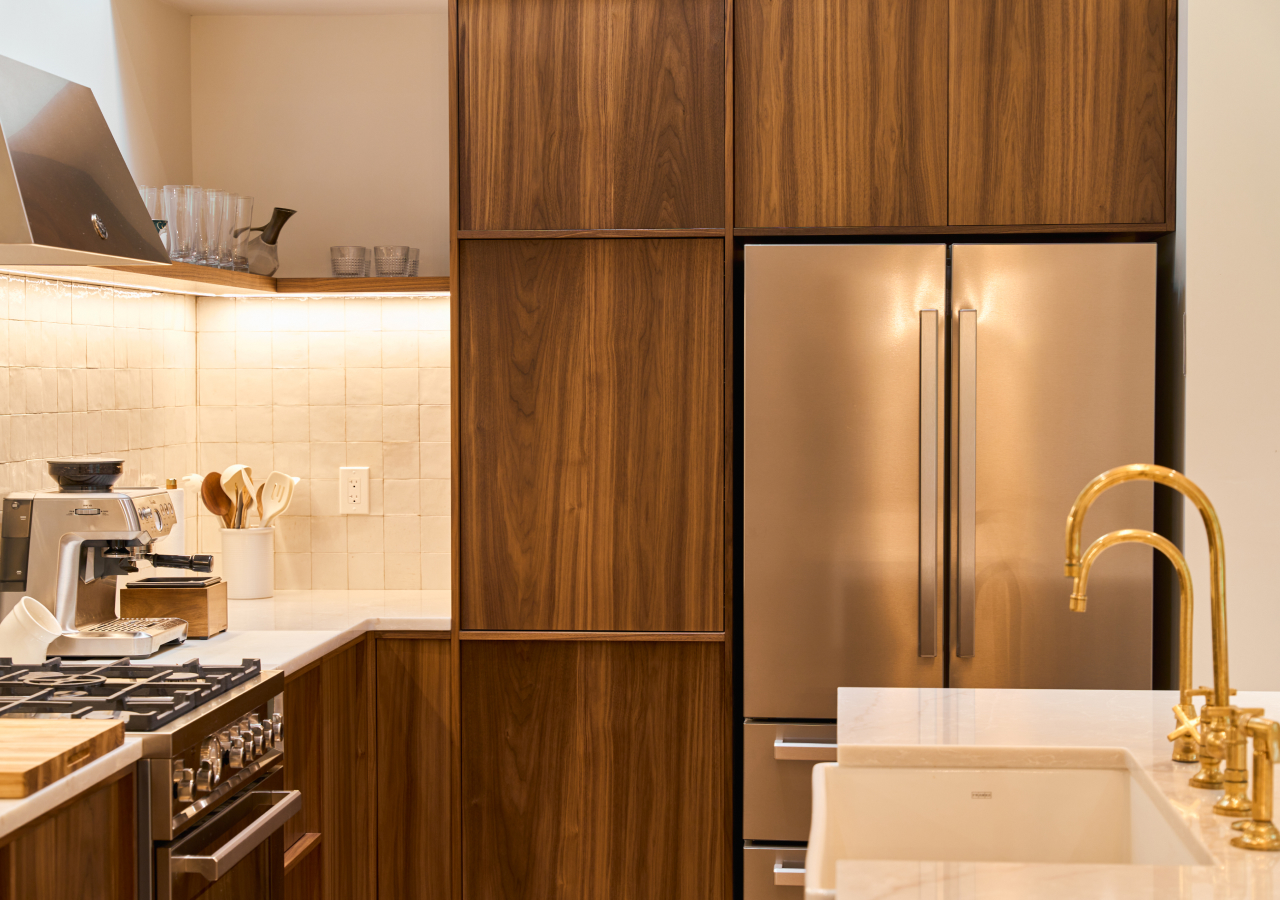
In Scandinavian design, wood is the warmth layer. It adds texture and depth without adding extra colors or decorative clutter. It works best when the finish stays matte or low-sheen, so the grain reads soft in daylight and doesn’t glare under task lighting. Pair wood with a quiet countertop surface and the whole palette stays bright, modern, and easy to live with.
Wood’s job is balance. A light base in warm whites or soft neutrals keeps the room bright. Wood adds comfort and dimension so the space doesn’t feel flat. The longevity upside is real, too. Subtle grain and quiet mineral variation tend to age gracefully, becoming richer over time rather than looking dated.
How Wood Tones Shape the Space
.webp)
Wood tone is a light-management decision. It changes how big, bright, and heavy the kitchen feels. Lighter woods, like oak and ash, reflect more light and keep elevations airy. Mid-tones add depth without turning the room dense. Darker woods can still feel Scandinavian when they’re used as controlled contrast against light, matte planes. The simple rule is this: the darker the wood, the more you need light surfaces and layered lighting to keep the room calm.
Light oak: the bright, warm baseline
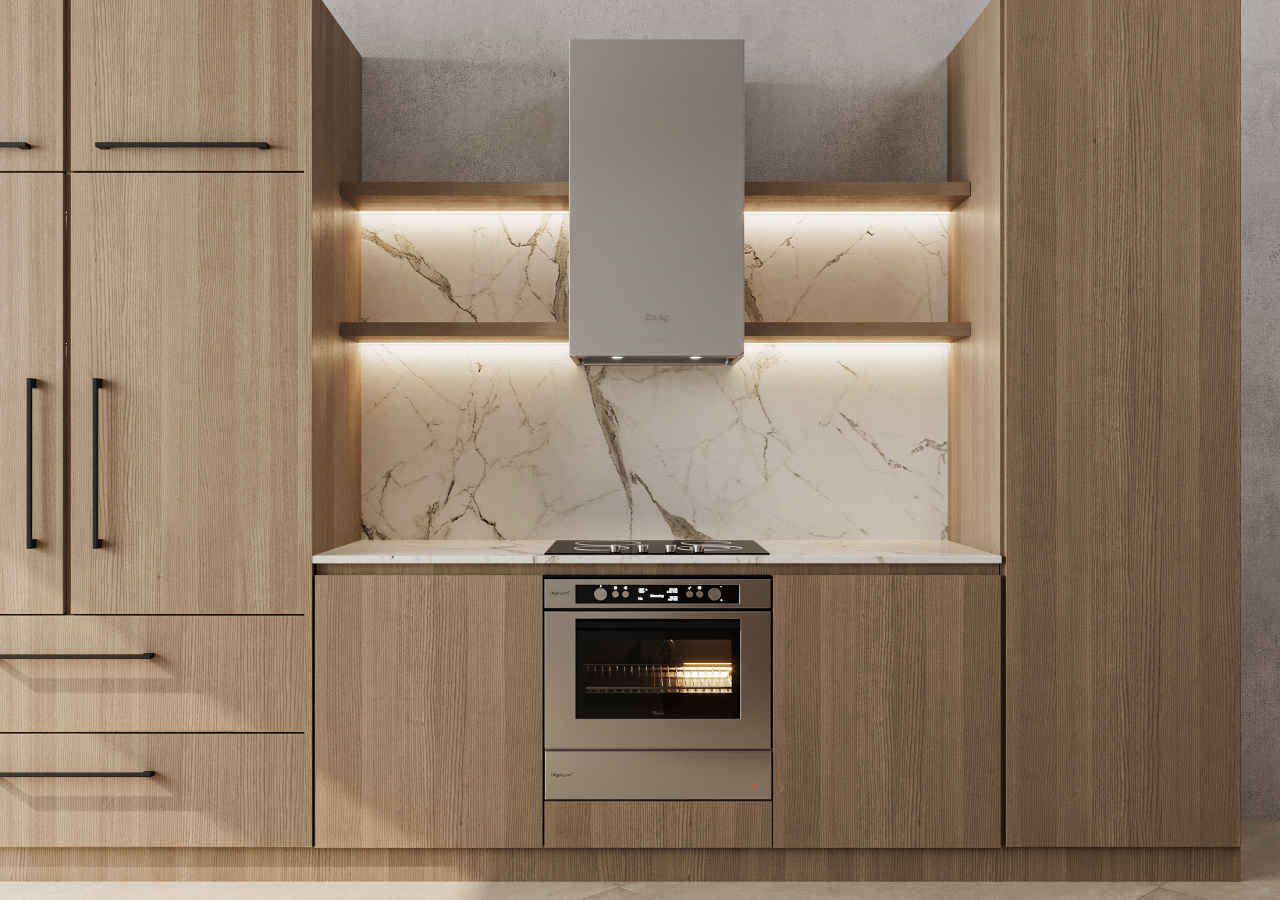
Light oak is the classic Scandinavian move because it amplifies daylight while still adding warmth. White countertops and light cabinet planes let natural light fill the space, while the wood reads radiant rather than dominant.
Light oak is also flexible. It pairs easily with warm whites and soft neutrals, and it works across bases, islands, and shelving without making the room feel dense, as long as the palette stays restrained.
Ash: slightly cooler, cleaner, very modern
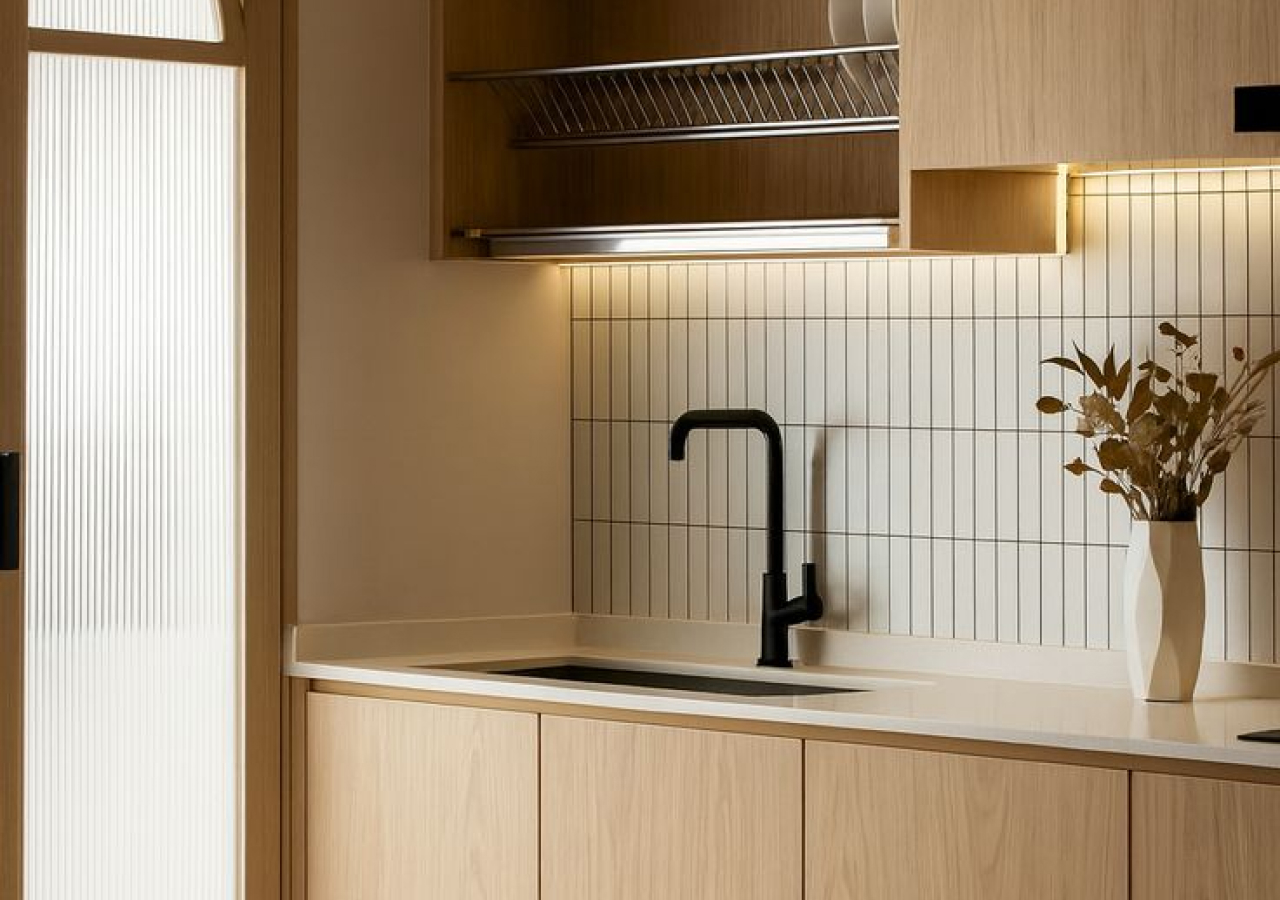
Ash is often grouped with oak as a Scandinavian staple, and it’s useful when you want a cleaner, slightly cooler read without losing warmth. Ash tends to feel crisp next to matte whites and pale stone. The key is keeping undertones compatible so the room stays calm under different lighting.
Mid-tone and stained oak: depth without going heavy
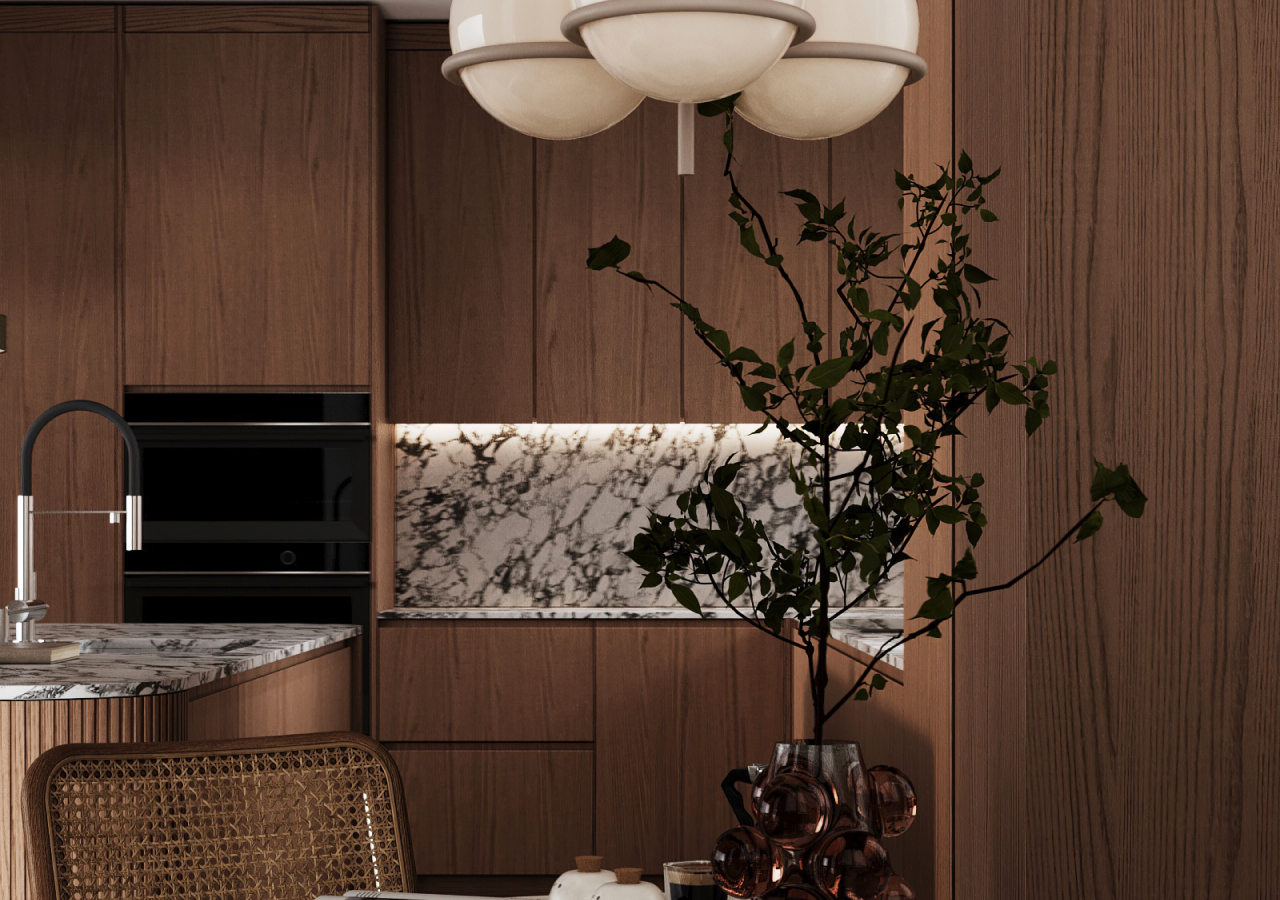
Mid-tone or stained oak is often the sweet spot when light oak feels too pale but dark wood feels risky. Stained oak veneer paired with a light, veined stone backsplash can enhance warmth while keeping the overall mood in kitchen light and calm.
Mid-tones work best when the surrounding planes stay light through white or neutral cabinetry, lighter countertops, or both. That keeps the elevation from turning into a wall of brown.
When dark wood still feels Scandinavian
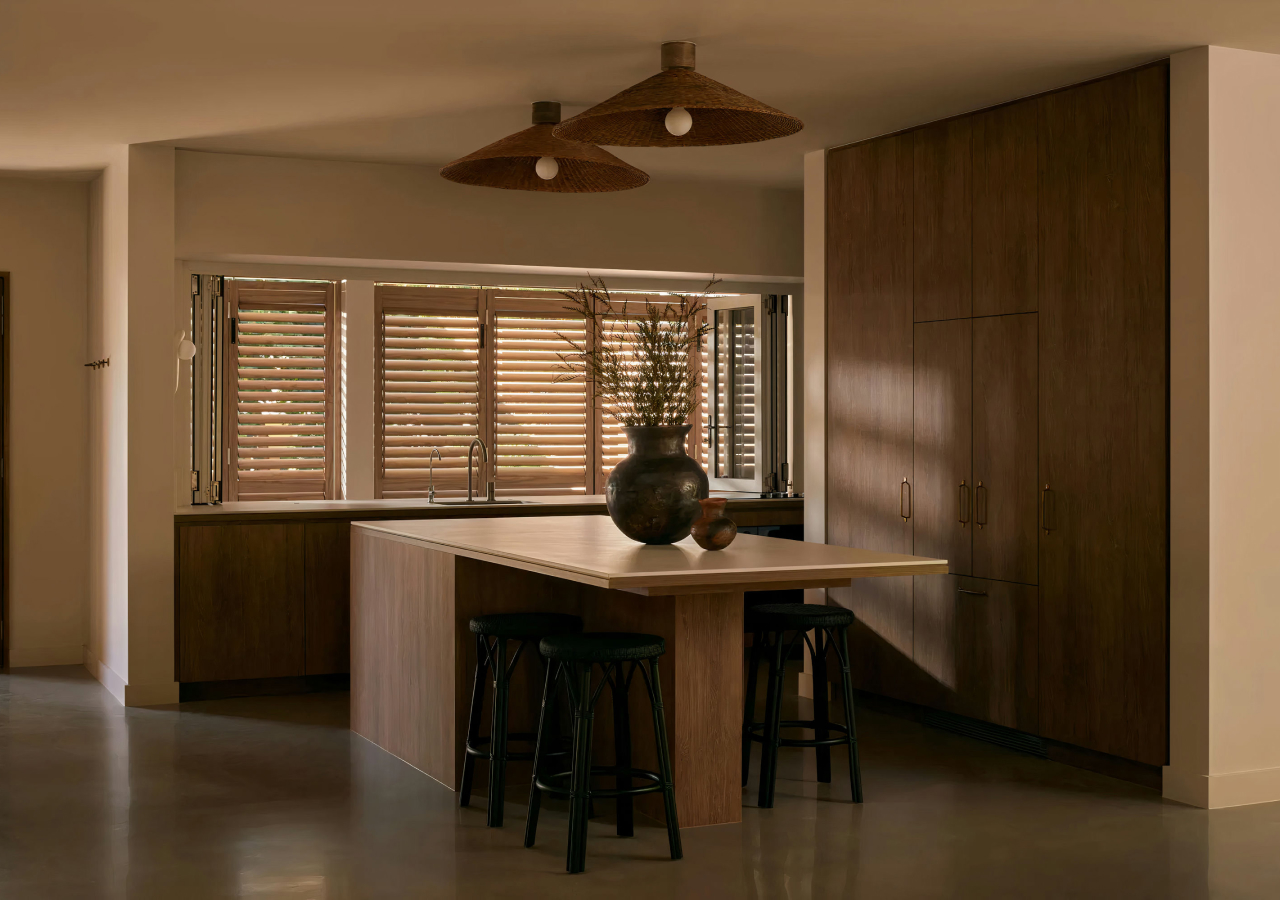
Scandinavian style doesn’t ban darker wood. It warns against heaviness. Darker wood can still feel Scandinavian when it’s used as controlled contrast in one anchored feature, while the rest of the room stays light and matte.
If you’re going dark, choose one primary wood surface, often the island or bases, and keep other major cabinet planes lighter.
Design Elements to Highlight Wood in Scandinavian Design
Wood reads most Scandinavian when it looks architectural, not decorative. Use one primary wood plane, such as bases, an island, or a tall run, then repeat it once or twice in shelves, niches, or toe-kicks for continuity. Keep the door geometry simple so the grain provides the interest. Then plan closed storage so the clean elevation survives daily life, not just photos.
Cabinetry & Paneling
.webp)
Cabinetry is the dominant visual plane, so it’s the most powerful place to use wood without adding extra colors or decor. Wood cabinetry adds depth even when the lines are simple, and that’s the point. When the fronts stay clean, the grain becomes the detail.
If you’re deciding between handleless and minimal hardware, treat it like a visual-noise choice. Handle-free or discreet hardware keeps the elevations quieter, especially in smaller kitchens where every break in the line reads louder.
Implementation tip: give wood a clear job. Use it to ground the kitchen with bases or an island, create a warm feature with a tall storage run, or add a controlled accent with panels, toe-kicks, or niches. These are high-impact placements that still keep the room light.
Open Shelving & Display
.webp)
Open shelving stays Scandinavian when it’s a light, intentional accent, not a second pantry. A small run of wood shelves can repeat the wood tone and break up uppers without making the elevation heavy.
Implementation is about limits. Put shelves where they’re genuinely convenient, like a coffee zone or daily dishes. Keep what’s displayed in the same quiet palette, and cap it at what you’ll realistically maintain.
Flooring & Ceiling Details
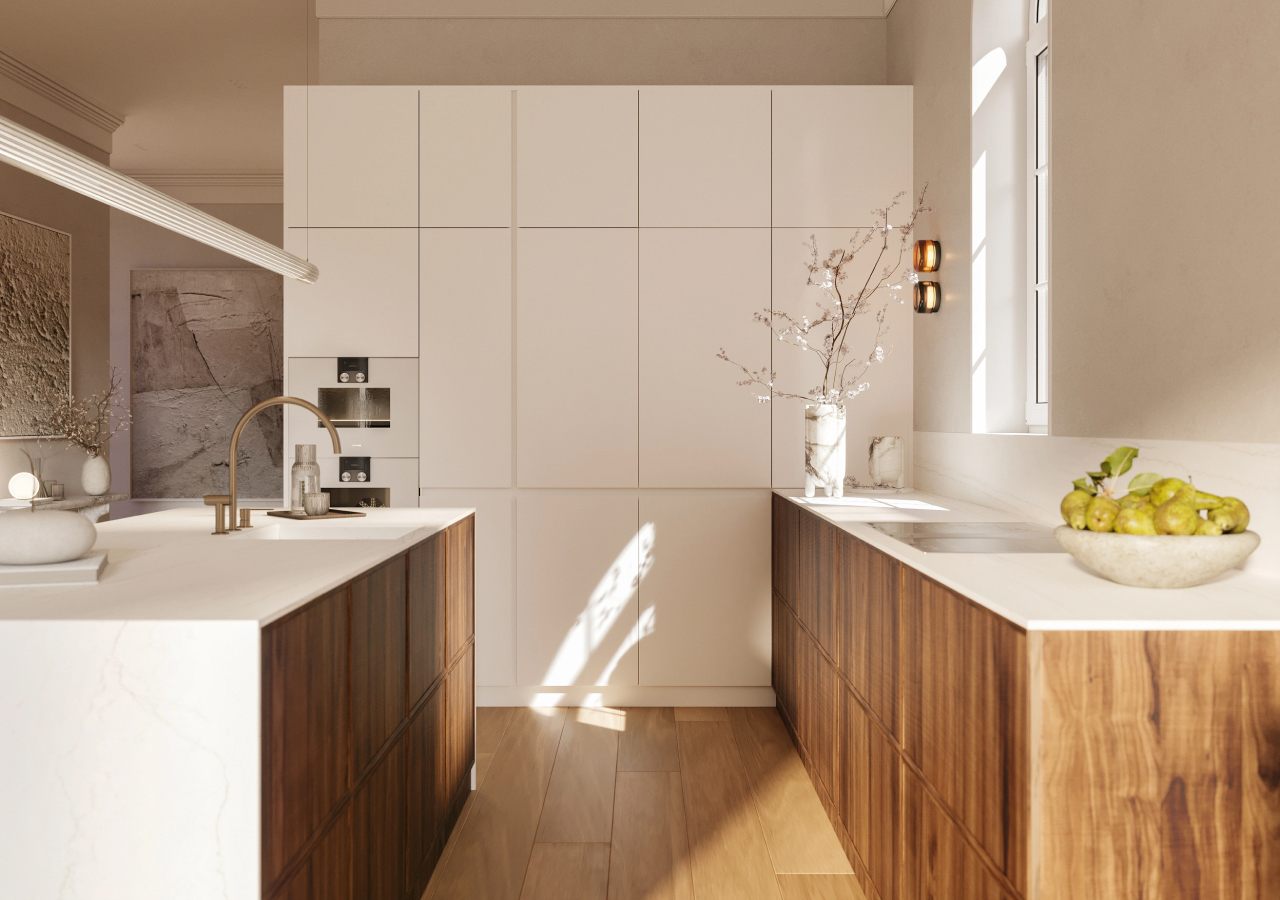
Flooring and ceiling details help the wood feel cohesive across the whole room by repeating warmth at a larger scale. A warm wood floor makes white kitchens feel inviting, while a lighter floor keeps the space airy. Subtle ceiling wood, like a niche, slats, or a simple beam detail, can add depth without introducing new colors or patterns.
Implementation: aim for compatible undertones and repetition rather than perfect matches. Bridge small differences with your countertop tone and wall color so the overall composition stays harmonious.
Color Palette & Textures That Complement Wood
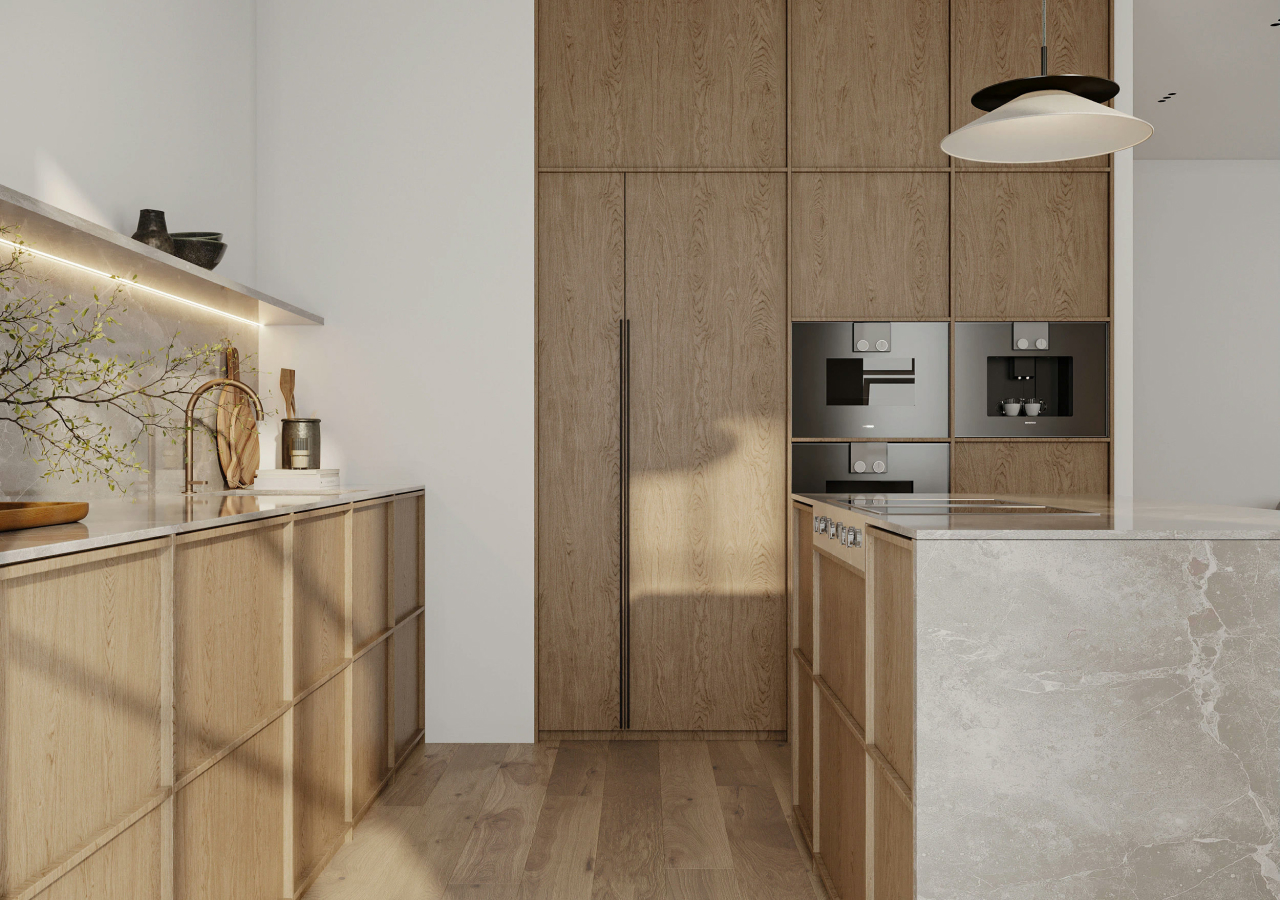
A Scandinavian palette works like a system: one wood tone for warmth, one calm cabinet color for the main planes, and one quiet worktop surface, repeated across the room. Matte finishes keep reflections controlled, and layered lighting makes wood look richer at night without making the kitchen feel heavy. If you add color, keep it muted and nature-led so wood stays the main source of warmth rather than competing with color.
Wood + white: airy, warm, and classic
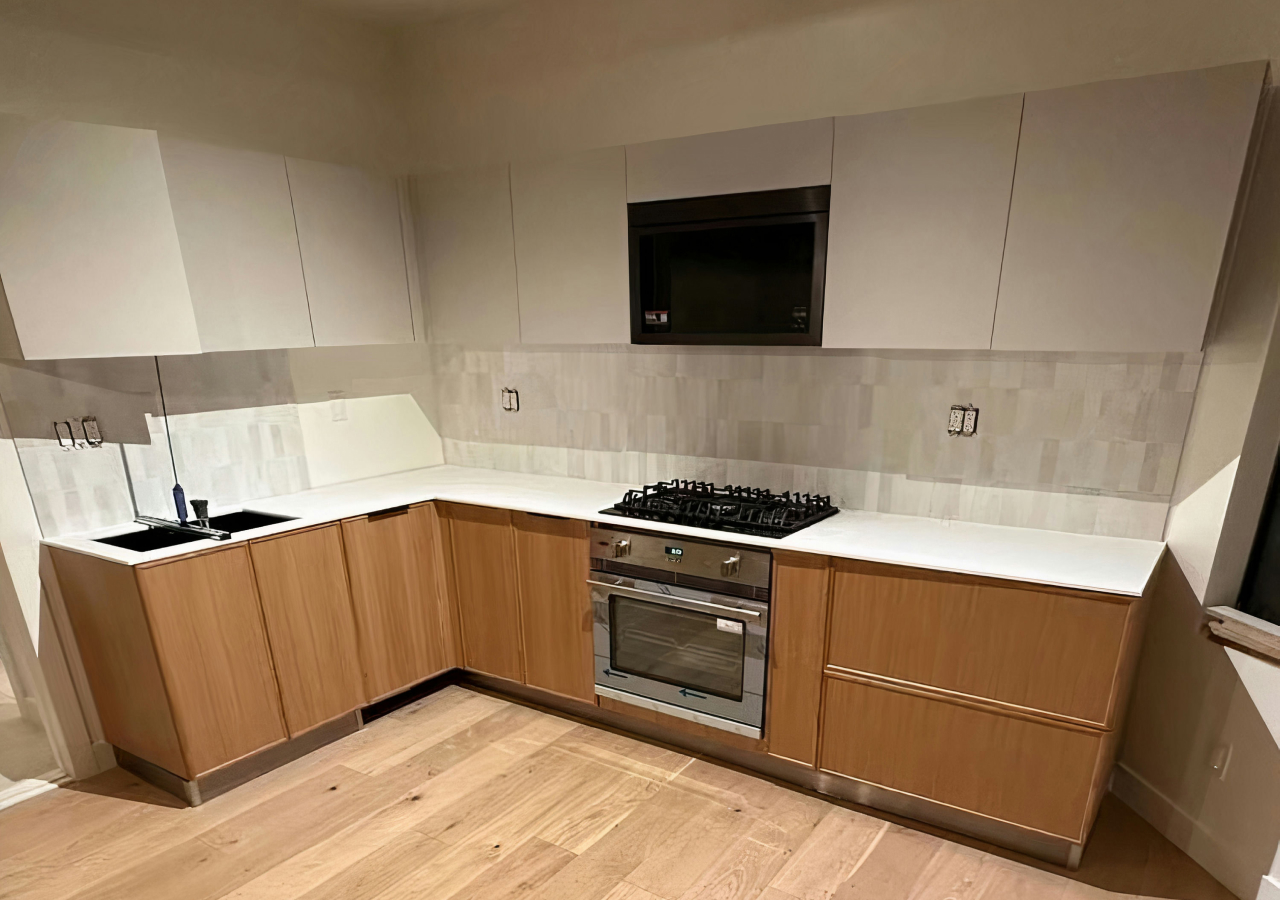
Wood + white preserves the Scandinavian light base while letting wood provide comfort. The detail that matters most is undertone. Choose a slightly warm white, then repeat your wood tone in deliberate placements so the room feels designed instead of random.
Wood + soft color: calm personality without visual noise
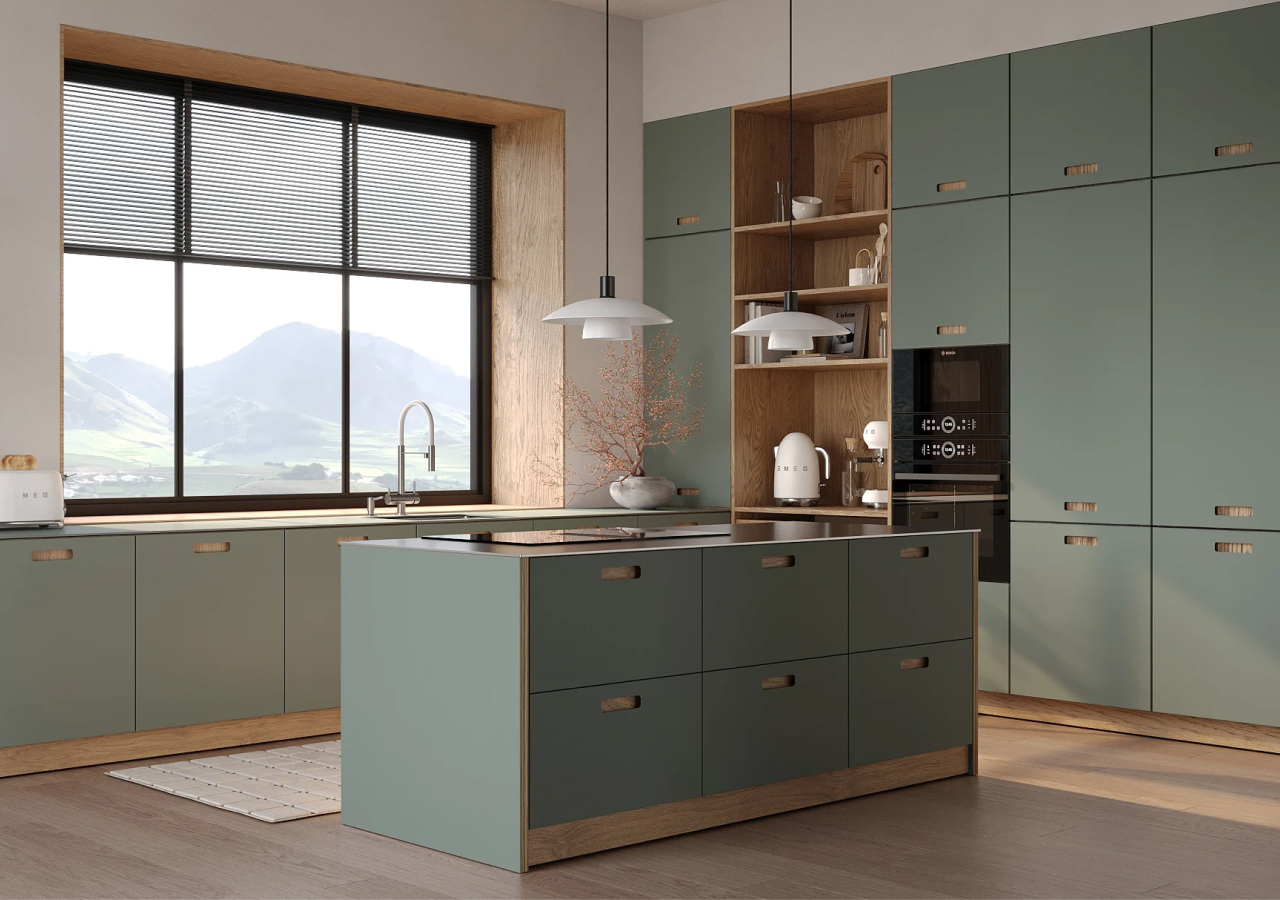
Soft color can work beautifully in Scandinavian kitchens, but it needs to stay quiet. Think green sage, dusty blue-gray, or warm greige. These tones feel nature-led and restrained, so wood can still bring the warmth and texture.
Texture: let one material lead
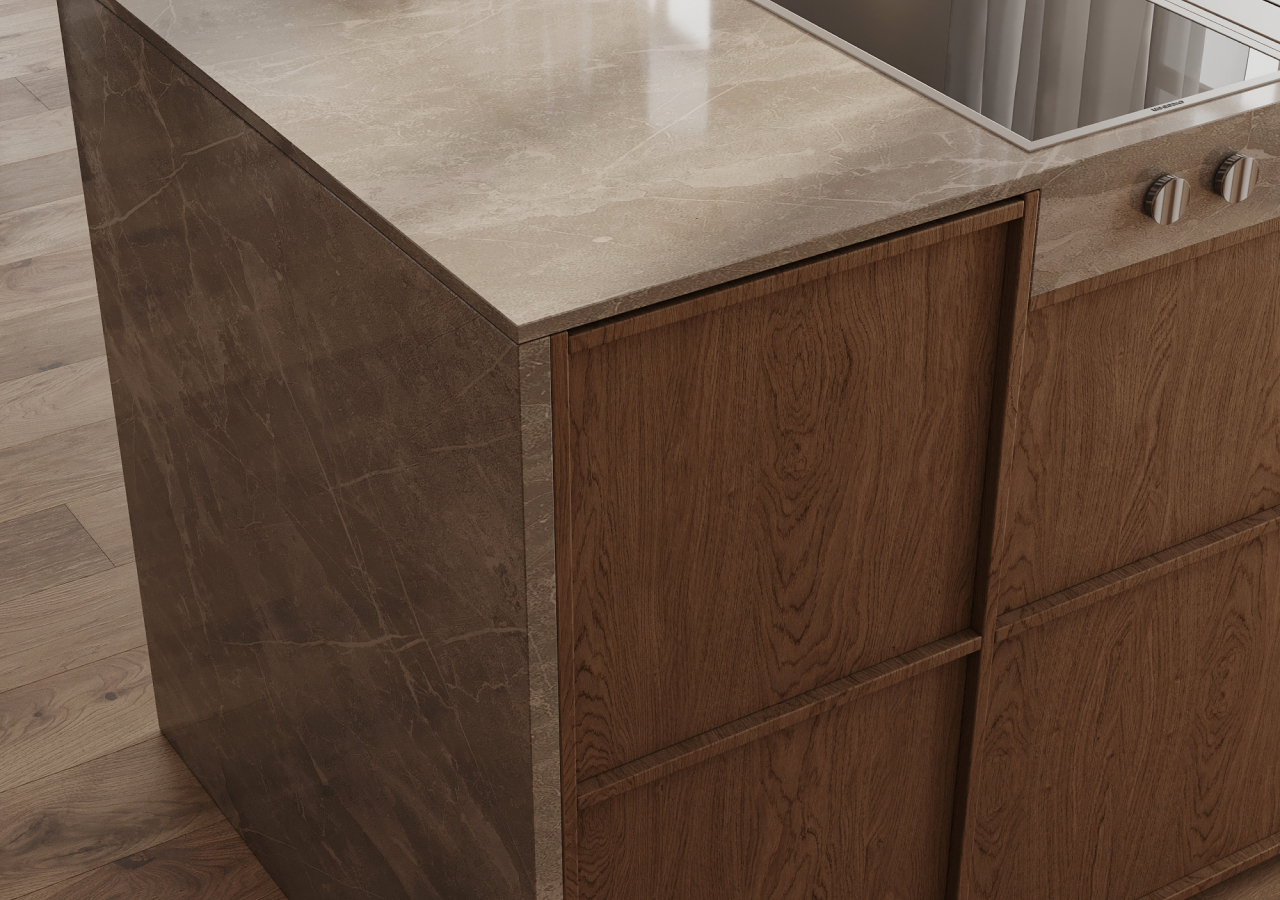
If your wood grain is prominent, keep the countertop and backsplash quieter. If you choose a more active stone, use it in a controlled way and keep the other surfaces calmer so the room still reads cohesive and light.
Conclusion
A Scandi wood kitchen isn’t about chasing the “perfect” oak or ash. It’s about using wood as a calm warmth layer, then keeping the rest of the room light, matte, and organized. Light oak and ash keep spaces bright. Mid-tone and stained oak add depth without drama. Darker woods can still feel Scandinavian when they’re used sparingly and balanced by light, quiet planes.
If you want to see how these wood tones look across real kitchens, explore Corner Renovation’s Scandinavian collections and material guidance on the blog. Then build your plan around continuity, undertones, and storage that protects the calm look day to day.


