
.webp)
A green Scandinavian kitchen is an easy way to bring nature, calm, and quiet character into the room where you spend the most time. Instead of feeling bold or trendy, the right shade of green becomes another soft neutral that works with light oak, stone, and white walls. In a well-planned Scandinavian kitchen, where storage is integrated and surfaces stay clear, green reads as fresh and grounded rather than loud. Deep drawers and tall pantries keep the visual focus on the architecture and color, not on clutter.
This guide walks through why green works so well in Scandinavian design, how to choose a shade, where to place it, and how Corner’s green-front kitchens translate these ideas into real spaces you can use as a reference.
Why Green Works So Well in Scandinavian Kitchens
.webp)
Scandinavian kitchen design is already built around light, nature, and calm, which makes green a natural fit. The style relies on simple cabinet fronts, minimal visual clutter, and integrated storage to keep the room bright and easy to live in.
Green echoes what Scandinavian interiors are trying to bring indoors: soft forest tones, mossy hillsides and muted leaves rather than sharp, saturated color. In a green Scandinavian kitchen, the color feels like an extension of the view outside rather than a painted feature wall. Muted greens also sit comfortably next to the whites, beiges and soft blues that Scandinavian palettes rely on.
From a practical point of view, green can be more forgiving than pure white. Everyday splashes and fingerprints tend to be less visible on matte sage or olive fronts than on bright, cool whites. Paired with wood veneer and stone, a Scandinavian green kitchen feels warm and lived in, not precious.
Choosing the Right Shade of Green
Not every green will feel Scandinavian. The style favors muted, nature-inspired tones rather than bright emeralds or neon shades. The goal is a Scandi green kitchen that still looks light and easy, even when you introduce color.
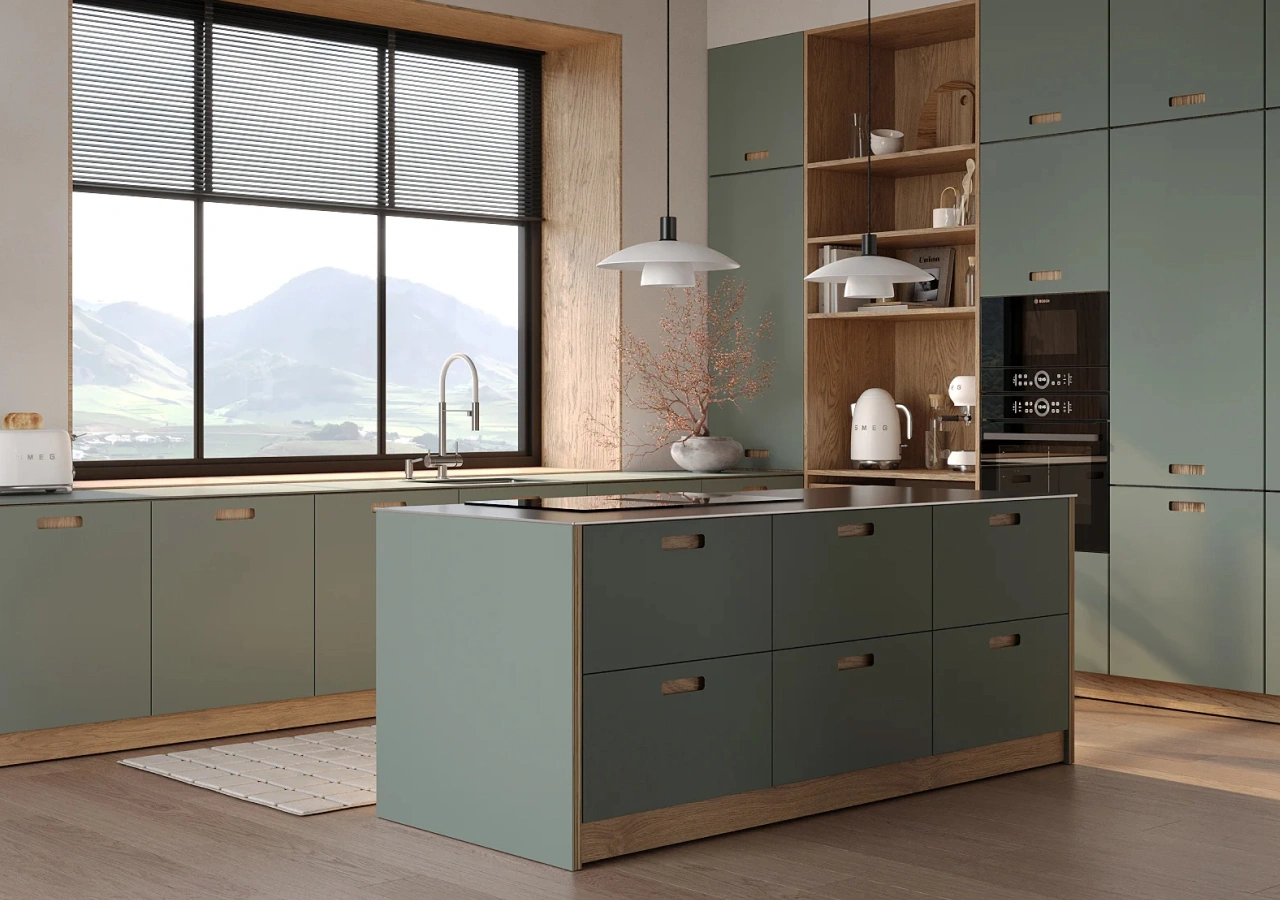
Sage green is often the easiest starting point. It sits between gray and green, which makes it feel soft and relaxed, and it works well with light wood and white walls.
.webp)
If you prefer more depth, olive and mossy greens feel grounded and richer. Paired with oak fronts, warm stone, and matte finishes, they can create a Scandinavian green kitchen that is more dramatic but still understated.
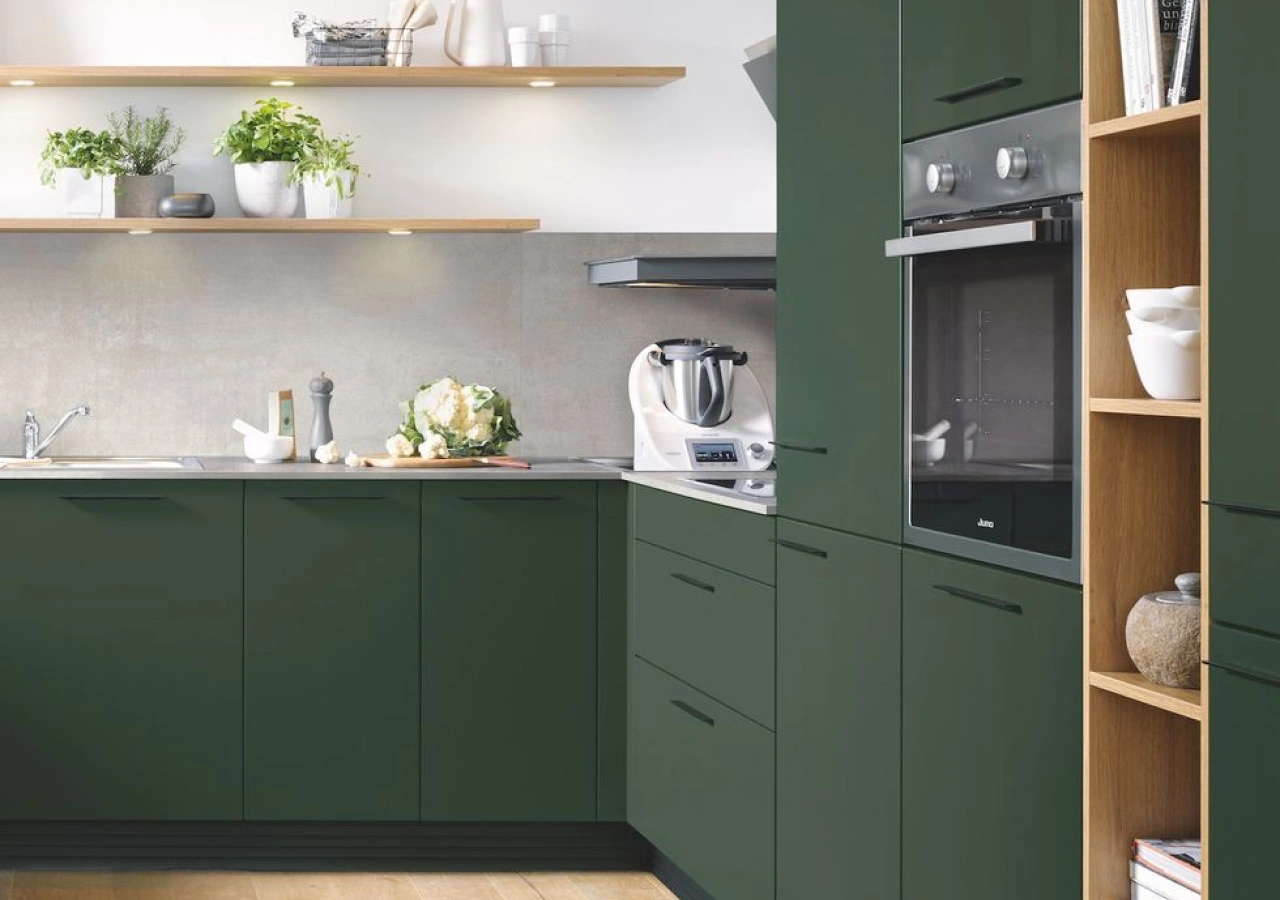
For those drawn to stronger contrast, forest green can still belong in a Scandinavian palette when it is softened by texture and light. A forest green island or a run of tall cabinets in a bright, open space can read as calm and architectural instead of heavy.
A practical way to choose your shade is to look at your light and surrounding finishes. In darker or north-facing rooms, lean toward warmer sage or olive so the green does not feel cold. In bright, open spaces, you can use cooler or deeper greens, because natural light will keep them from closing in the room. Then simplify: pick one main green, one wood tone and one countertop or stone.
| Shade family | Undertone | Best in this light | Pairs best with | Common risk | Easy fix |
|---|---|---|---|---|---|
| Sage | gray-green | low to medium daylight | light oak, off-white walls, light stone | can feel washed out | add warmer wood + warm lighting |
| Olive | earthy-green | medium daylight | oak, warm whites, beige stone | can feel “muddy” in dark rooms | choose a lighter countertop + stronger task lighting |
| Moss | muted organic green | medium daylight | textured stone, matte finishes | can look dull if everything is matte | add one gentle contrast (hardware, faucet, lighting) |
| Soft forest | deeper green | bright daylight | light walls, oak accents | can feel heavy in small kitchens | limit to island or tall run only |
Where to Use Green in a Scandinavian Kitchen
You do not have to use green everywhere for it to define the room. Where you place color is just as important as which shade you pick, and Scandinavian kitchens are a good example of how to be selective.
Base Cabinets and Lowers
.webp)
For many homes, the most comfortable starting point is green on the lower cabinets. A row of sage or olive base units under a white or light stone countertop keeps the color at a practical level while leaving the upper walls and shelving light. That balance supports the Scandinavian focus on daylight and visual openness, especially in small kitchens where too many dark uppers can feel heavy.
Islands and Peninsulas
.webp)
Another natural place for green is the island. A sage or olive green island with oak stools can pull the whole room together in an open-plan layout where the island is visible from the living area. The rest of the kitchen can stay in light wood or white, so the island becomes a gentle focal point rather than competition.
Tall Runs and Appliance Walls
.webp)
In rooms with strong natural light and simple layouts, full green runs can work very well. A tall Scandi green kitchen with integrated appliances and a mix of closed storage and a few open shelves can read as one calm volume instead of a wall of color. Panel-ready appliances and continuous fronts help the elevation feel unified.
Smaller Accents and Niches
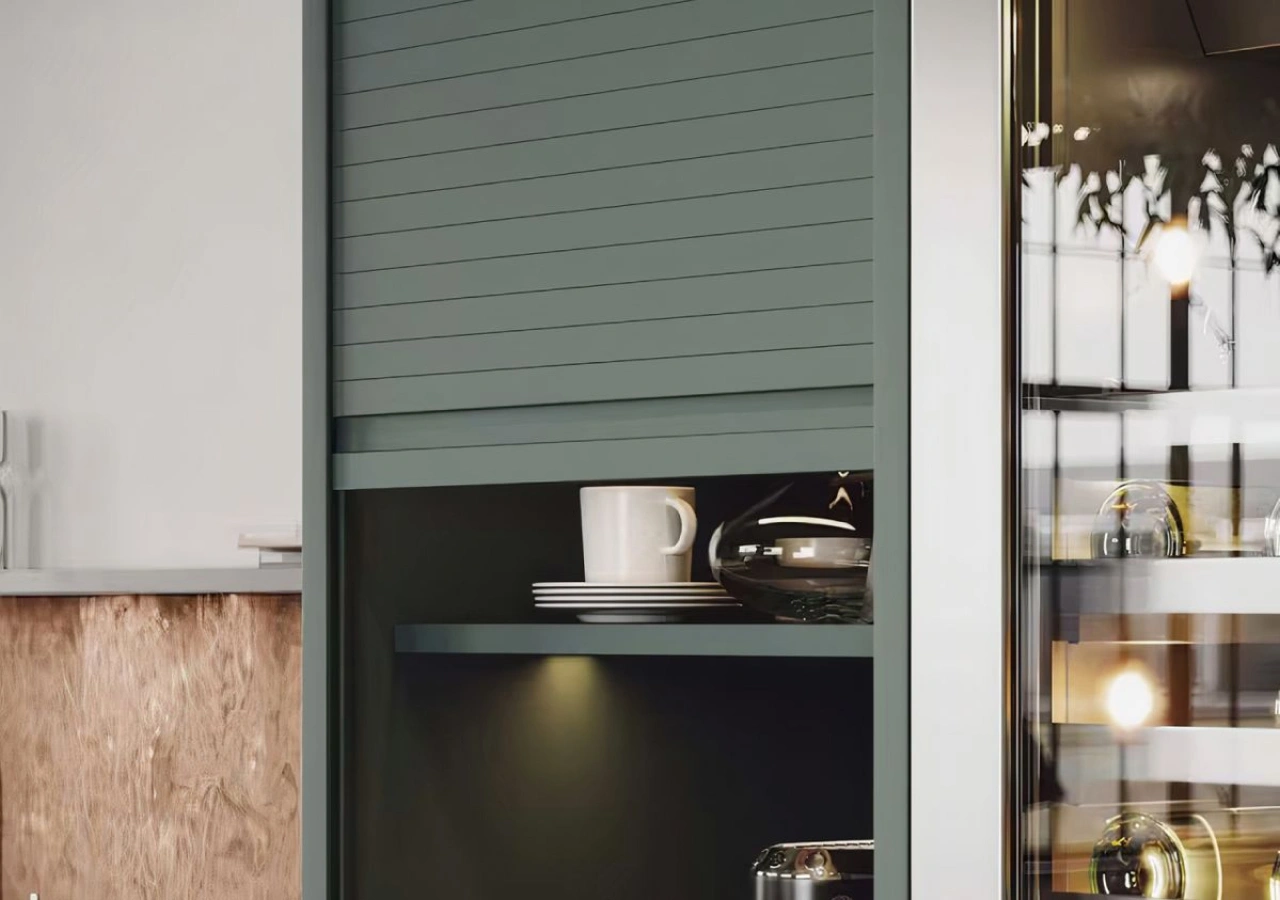
If you want to start smaller, green can live in more compact architectural elements: a framed appliance garage, a niche for a coffee station, the back panel of open shelves, or a short run of base cabinets by a window. Each of these adds depth and character while keeping the overall palette light and flexible.
| Where to use green | Best for | Why it works | Keep it Scandinavian by… |
|---|---|---|---|
| Base cabinets (lowers) | small kitchens, low daylight | color stays “grounded,” uppers stay light | keeping uppers white, wood, or open shelving |
| Island | open-plan kitchens | adds a focal point without darkening the walls | keeping perimeter cabinets light and simple |
| Tall run / appliance wall | bright rooms, clean layouts | reads as one calm volume | using panel-ready appliances + continuous fronts |
| Niche / coffee zone | cautious first step | adds depth without committing everywhere | keeping the rest of the palette very restrained |
Inside Corner’s Recess Green Kitchen
.webp)
Corner’s Recess Green kitchen is a clear example of how a green Scandinavian kitchen can feel both modern and timeless. Soft, earthy green cabinet fronts are combined with light-colored wood to create a calm, nature-inspired palette. The color is understated yet striking, offering a sense of tranquility that fits the Scandinavian love of light and simplicity.
The fronts stay flat and minimal, in line with Scandinavian preferences for handleless or discreet hardware. Storage is integrated into tall units and deep drawers, so everyday items can disappear behind the green fronts and the counters stay clear. You notice the gentle contrast between wood and color, not piles of objects.
From a practical standpoint, Recess Green also shows how green can support daily routines. Tall pantry units, internal organizers, and appliance integration make it easier to keep surfaces clear and zones well defined, so the kitchen feels calm even on busy days.
Design Principles That Keep a Green Kitchen Calm
.webp)
Introducing green does not mean stepping away from Scandinavian design rules. The color looks its best when it sits on top of a very calm structure.
- Simple fronts and clean lines
Flat or slim-profile fronts keep the look quiet, so the green does not have to compete with heavy detailing. Handleless or discreet hardware fits the Scandinavian mindset and lets the eye read the kitchen as a few simple shapes instead of lots of small parts.
- Natural materials and a limited palette
Green feels most “Scandi” when it is paired with real materials like oak, ash, stone, or a soft matte worktop. Choose one main green, one wood tone, and one or two neutrals for walls and counters. A small amount of black, stainless or brass can act as an accent, but the bulk of the room should stay within this short list so it feels calm rather than decorated.
- Light as a design tool
Scandinavian interiors are built around daylight. Green cabinets can gently deepen a room, so lighting needs to work a little harder. A mix of ceiling light, under-cabinet or under-shelf strips, and a few warm accent points keeps the space bright and lets the color shift softly throughout the day instead of looking flat.
- Storage that supports minimalism
A green kitchen will only feel calm if the storage does its job. Tall pantries with inner drawers, deep drawers by the cooktop, and integrated trash pull-outs help keep everyday items off the counters. When the layout and storage work, the green reads as one clear surface rather than a backdrop for clutter.
Styling a Green Scandinavian Kitchen
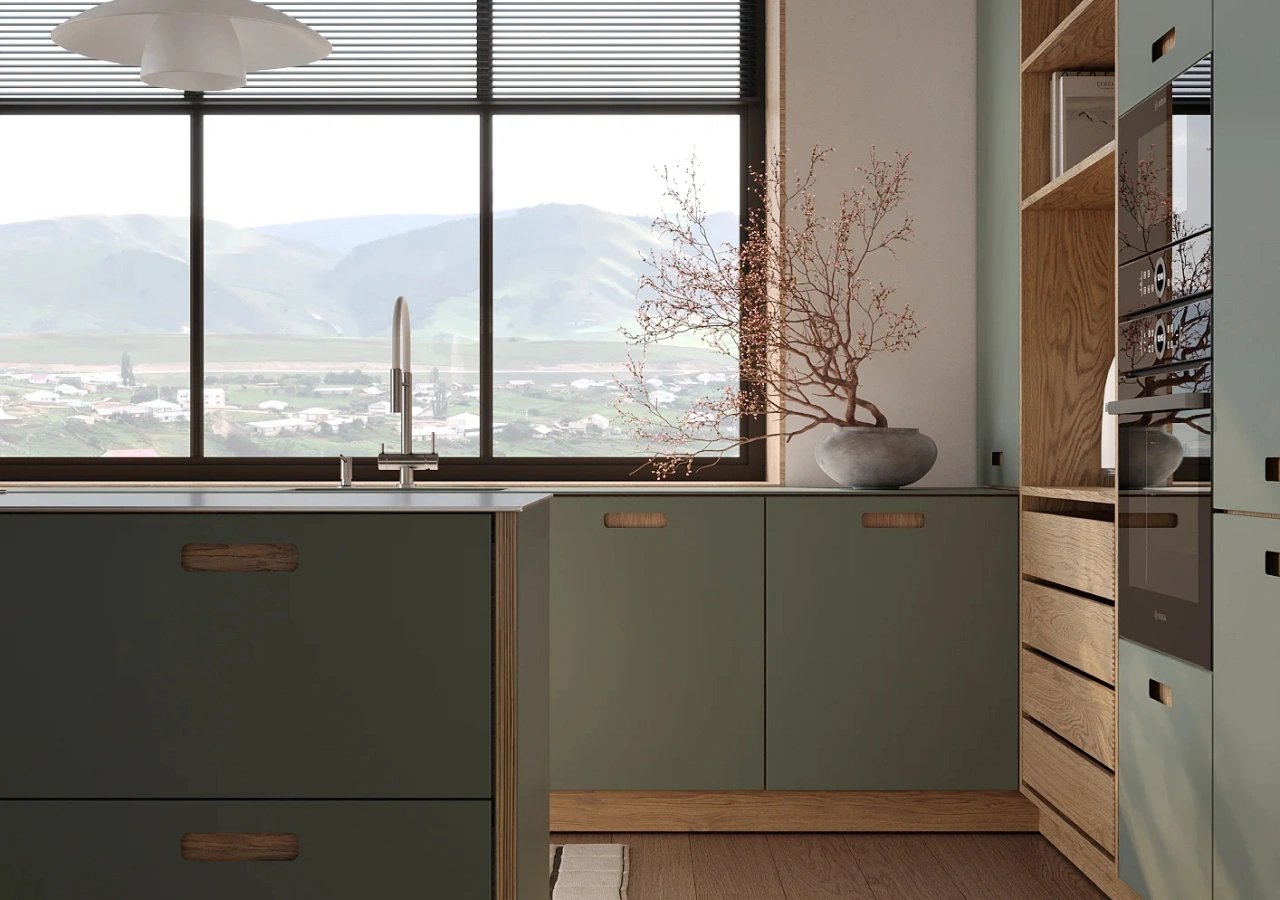
Once the structure and color palette are in place, styling is there to support the mood, not to overwhelm it. Scandinavian and Japandi-inspired decor leans toward warm minimalism: a mix of wood, linen, stoneware, and a few carefully chosen objects rather than a dense layer of accessories.
In a Scandi green kitchen, styling can lean into the nature-inspired theme. Open shelves with everyday ceramics in white and sand tones, a single vase with branches, or a stack of linen napkins in muted shades all echo the cabinet color without copying it exactly. Plants are especially effective near green fronts, because they extend the natural feeling rather than introducing a completely different accent.
Function is part of styling here. Open shelves work best for items that are both beautiful and used daily: plates, mugs, and cutting boards. This keeps shelves from becoming purely decorative zones and gives the color enough breathing room.
Conclusion
A green Scandinavian kitchen is not about chasing a micro trend. It is about using color to strengthen what Scandinavian design already does well: light, calm, function and a close connection to nature. When you choose a muted shade, pair it with natural materials and keep storage and layout thoughtful, green becomes a quiet constant in the room rather than a loud statement.
If you are drawn to sage, olive or forest tones and want to see how they might look in your own layout, explore Corner’s Scandinavian-inspired collections, including green-front kitchens. When you are ready to turn a mood into a plan, you can book a consultation and work with Corner’s team to map out a green Scandinavian kitchen that feels calm, practical, and tailored to the way you live.


