
.webp)
Blue is rarely associated with Scandinavian interiors, but it is precisely muted, natural shades of blue that can emphasize the calm and warm character of the northern style. They add depth, contrast softly with natural wood, and create an atmosphere of clarity and comfort—everything we value in Scandinavian design.
Contemporary projects demonstrate how blue facades, clean lines, matte textures, and thoughtful functionality blend harmoniously. And smart storage solutions help maintain a sense of order, making the interior look particularly calm.
In this article, we will look at the features of Scandinavian blue kitchen designs, which shades to choose, and how to achieve that balanced, bright, yet warm aesthetic.
Why Choose a Blue Scandinavian Kitchen?
.webp)
Scandinavian kitchen design in blue tones is based on soft, calm shades, not just contrasts. In a modern Scandinavian kitchen, blue cabinets in muted tones keep the space calm and minimal rather than flashy. It traditionally relies on light neutral colors, which are complemented by delicate accents. Muted blue is one such accent: it blends easily with wood and stone and does not clash with natural lighting.
In a blue Scandinavian kitchen, color helps to create a mood: it can resemble the sky, the ocean, or even the sunset — it all depends on its depth. Unlike completely white interiors, blue facades look more individual, but remain minimalistic. The space becomes sufficiently expressive while retaining its lightness and ease.
Functionality remains a key principle: blue facades are just as practical as any other surface, but it is important to combine them with a layout that prioritizes storage. Scandinavian design always starts with how you move, store, and cook, and only then with the choice of color. That is why continuous rows of cabinets, tall storage areas, and built-in appliances are particularly valued.
If you are unsure, you can start with a partial solution: for example, make the cabinets on the island or storage wall blue and leave the rest white or oak. This will keep the kitchen balanced and modern, and it will be especially easy to match textiles, bar stools, or ceramics to it.
Modern Scandinavian Blue Kitchen with Recessed Handles
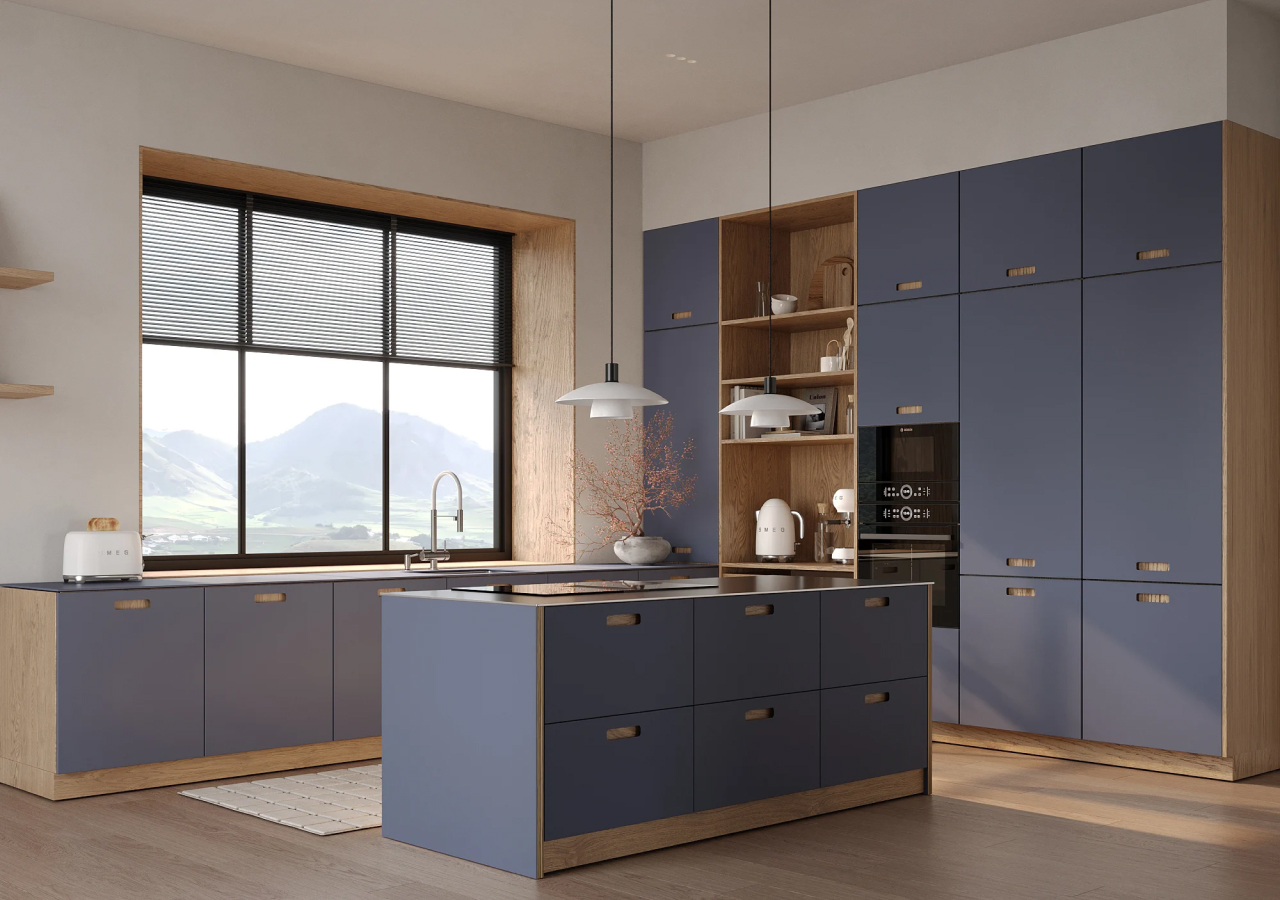
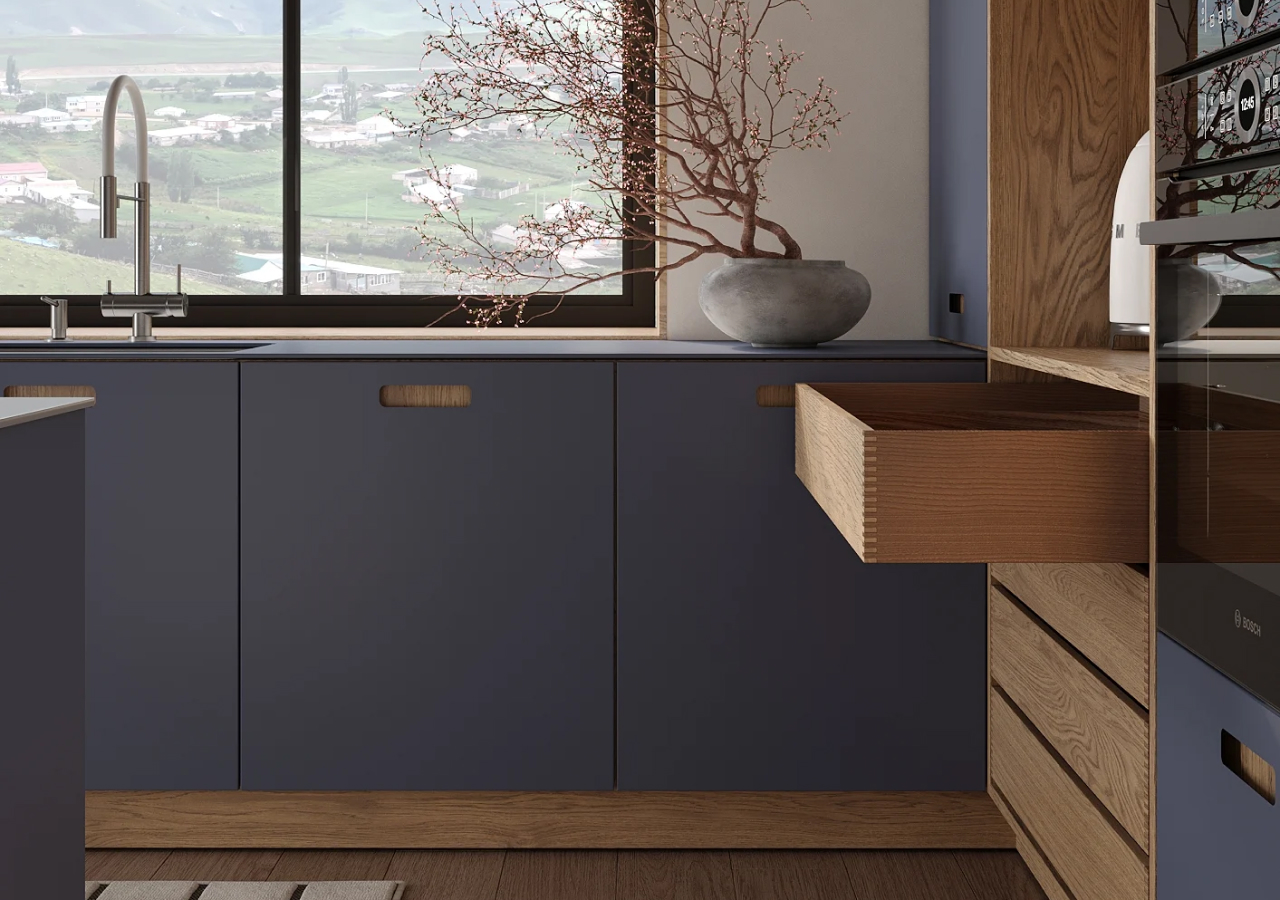
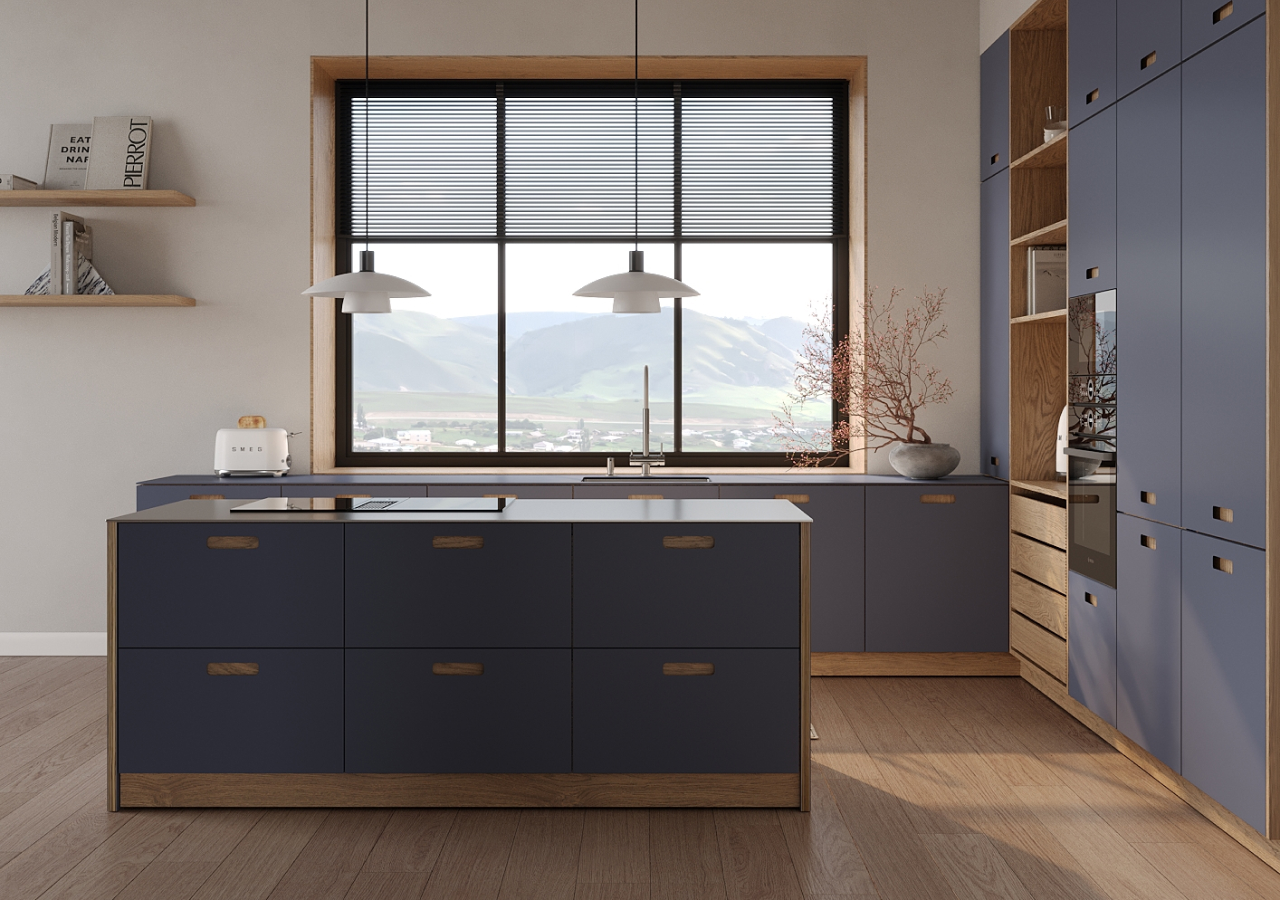
Recess Blue is a Scandinavian kitchen in the spirit of contemporary design. The fronts are made of Fenix NTM in a soft, muted blue shade with a matte texture that does not attract fingerprints. This keeps the color calm and elegant, without gloss or visual noise. Recessed handles make the profile completely handle-free, emphasizing the integrity and conciseness of the interior.
The layout of ths blue Scandinavian kitchen is compact but carefully thought out. The central island with a built-in hob and steel worktop creates movement in the space, while the long storage wall combines the lower cabinets, tall modules, and built-in appliances into a single architectural block. Inside the tall cabinet are oak shelves, a “garage” for household appliances, and pull-out drawers. It's a convenient area for preparing breakfast or storing small appliances.
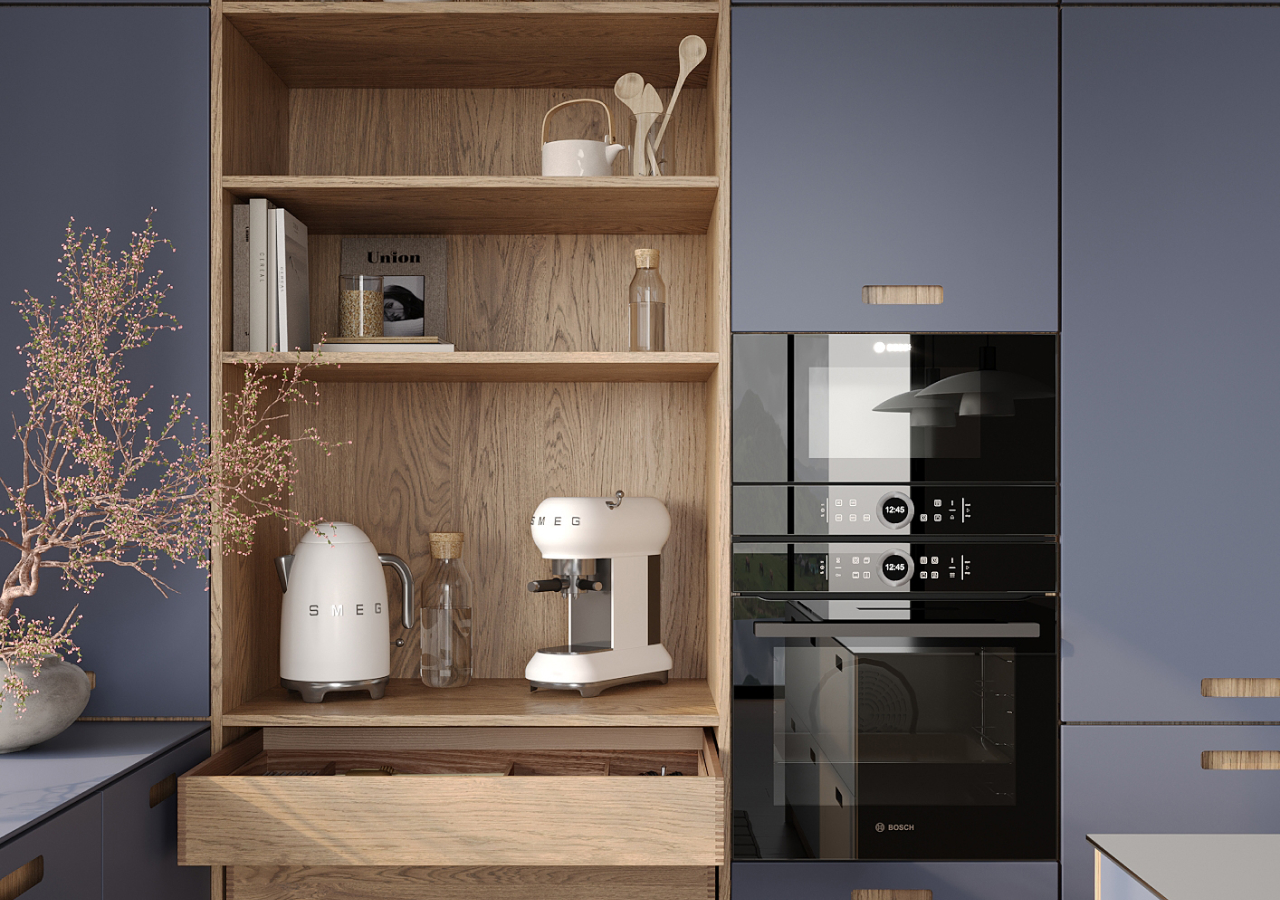
It is the well-thought-out storage system that makes this blue kitchen truly Scandinavian. It features deep drawers for dishes, pull-out mechanisms for food, built-in waste sorting containers, and lift-up fronts that hide visual clutter. This keeps the countertops free and the blue surfaces looking neat and calming.
If you want to create your own Scandinavian blue kitchen in a similar style, focus on the principles rather than a precise plan: one powerful storage wall with integrated appliances, a simple island with a sturdy worktop (made of steel, stone, or Dekton), and a unified handle-free system. Light oak in niches or plinth areas will help soften the blue tone and neatly highlight key elements.
Japandi-Inspired Blue Kitchen with Fluted Island
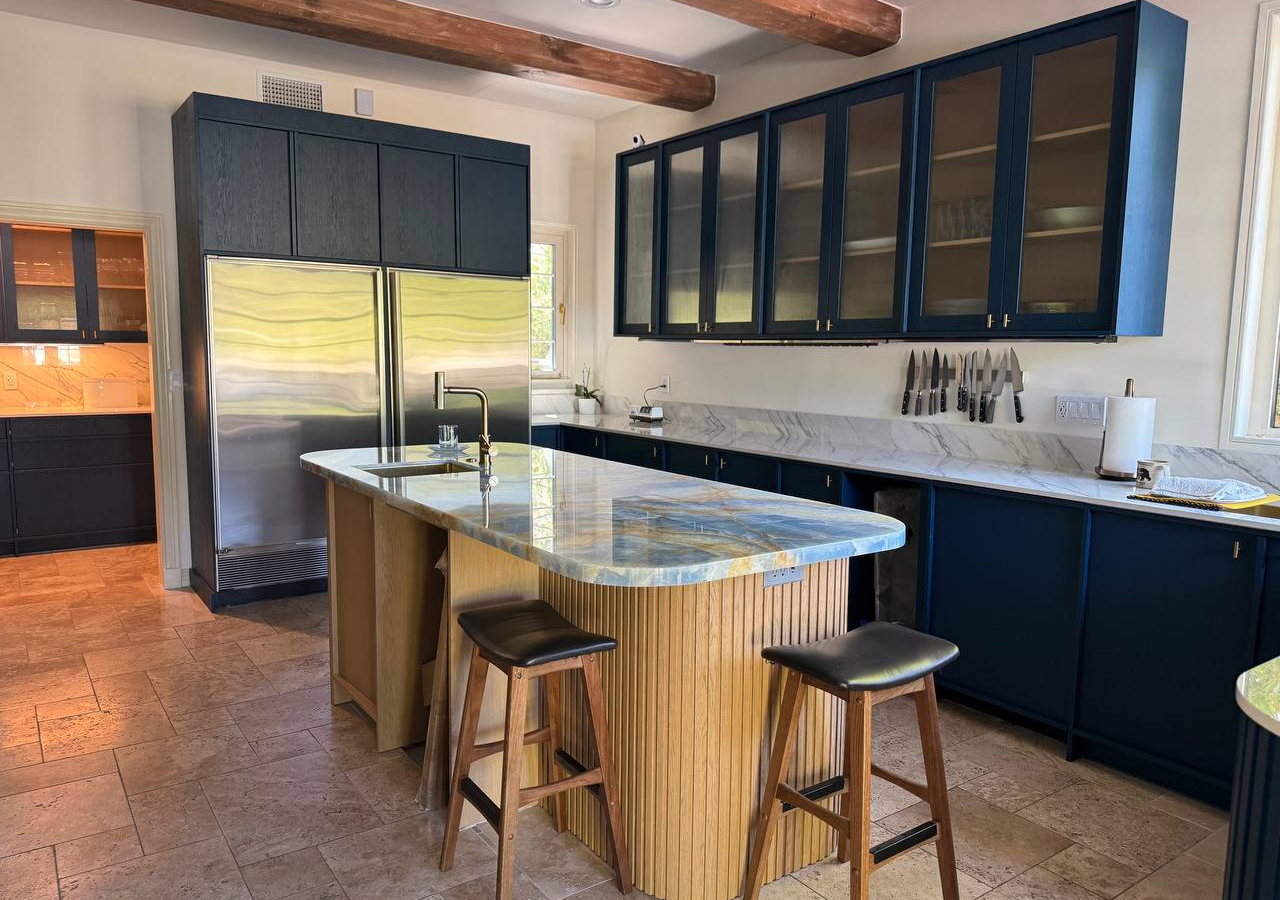
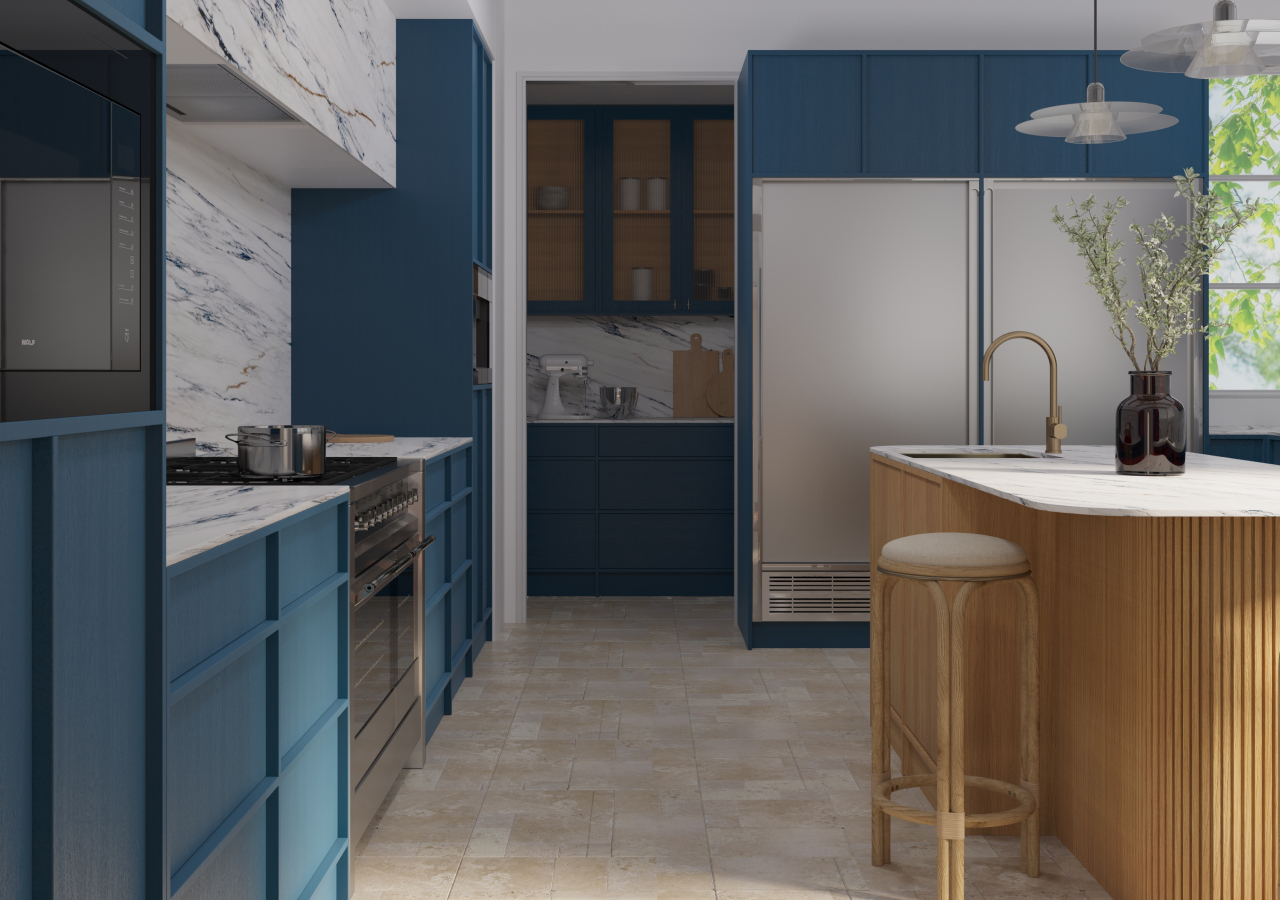
This Japandi-style kitchen in Pacific Palisades is a great example of a blue Scandinavian kitchen that looks more dramatic but still feels super calm. The deep blue color of the cabinets surrounds the room, contrasting with the light oak island with grooved fronts and sculptural curved panels.
Both aesthetics are combined here: Scandinavian love for clean lines, symmetry, and light space, and Japandi’s striving for naturalness, smooth forms, and tactility. Despite the depth of color, the interior remains soft and warm thanks to wood and thoughtful lighting.
This Scandinavian blue kitchen does not overload the space with upper cabinets. The visual accent is distributed between the fluted island and the glass upper modules, while the dark blue background recedes, creating a calm, even plane. Natural materials soften the richness of the shade, preventing it from looking cold.
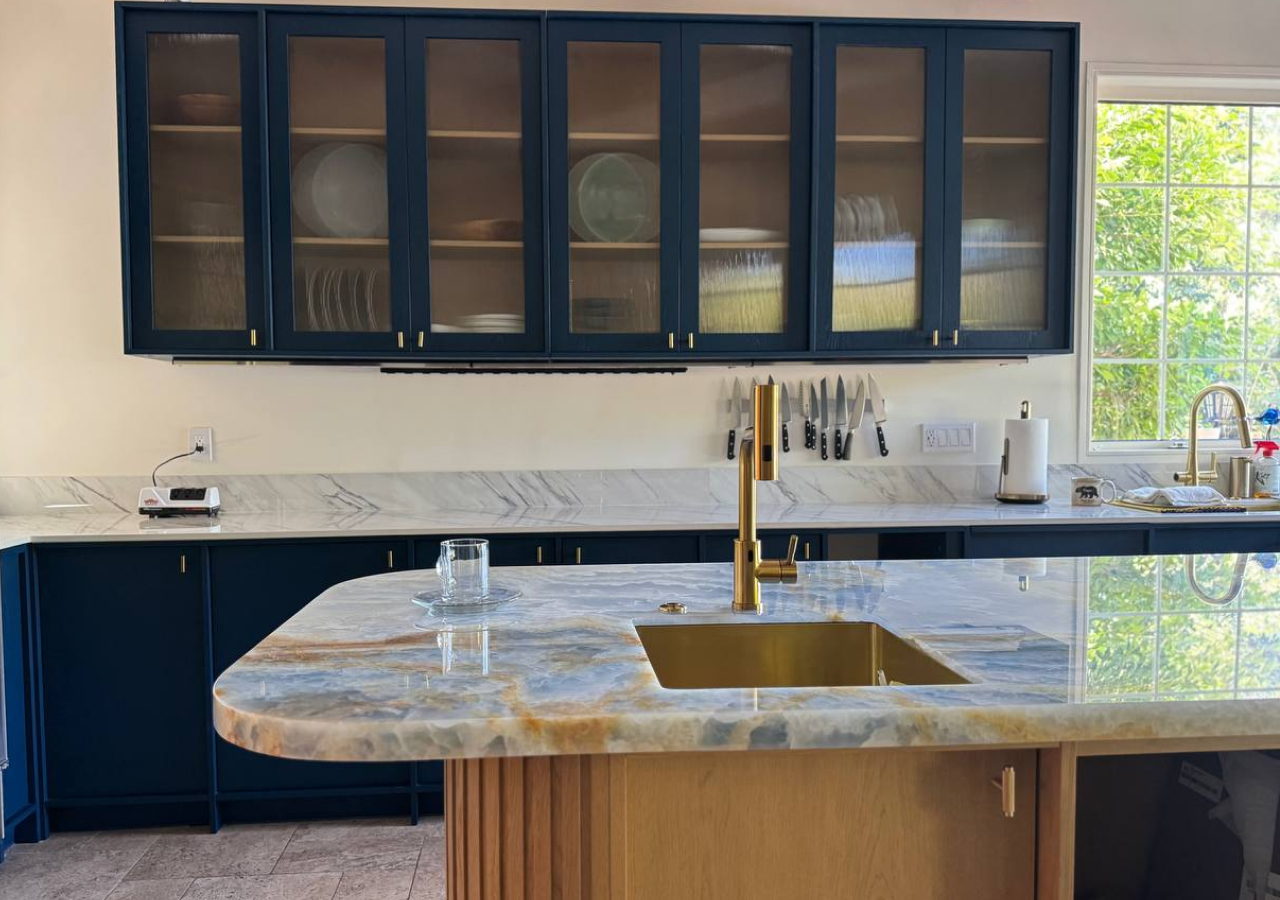
If you want to create a blue Scandinavian kitchen with a slight hint of Japandi style, you can adopt several techniques from this project: use a deep ultra-matt blue for the main facades, combine it with light golden oak, add corrugation or thin ribbed textures, as well as soft curves in the details of the island or panels.
This combination of Scandinavian functionality and the smooth, “sculptural” aesthetics of Japandi allows you to create a kitchen that looks both elegant and homely — a space created with attention to form and materials, rather than simply playing with color.
Planning the Layout for a Blue Scandinavian Kitchen
In a blue Scandinavian kitchen design, layout matters more than color. A clear workflow, good storage, and integrated appliances make the space practical before you even choose the shade of blue. Once the plan is set, blue can highlight the island or tall storage wall without overwhelming the room.
The basis is a well-thought-out workflow, that usually includes three elements:
- a clear main area for the sink, dishwasher, and everyday food preparation.
- a tall storage wall or pantry with built-in appliances,
- an island or peninsula that combines a workspace, storage, and seating area.
Deep drawers and pull-out systems provide the main storage. They are more efficient than doors and create long, continuous lines that emphasize the blue color and visually maintain order. Built-in appliances maintain a minimalist look, and open shelves can partially replace upper cabinets, adding warmth and lighting the space.
First, it is worth defining the main work areas, and only then deciding where to use blue. In modern Scandinavian kitchens, it is most often used on the most “architectural” elements, such as islands and tall storage walls. The remaining surfaces are decorated in warm wood or soft neutral tones so that the rich blue emphasizes order and structure rather than highlighting each cabinet.
Balancing Blue with Wood, Light, and Texture
The secret to an attractive blue Scandinavian kitchen lies in harmony: color, light, and textures should complement each other. Scandinavian kitchens are traditionally built around warm neutral walls, natural wood, and soft matte finishes, creating a bright and cozy space.
Blue works best in this palette when paired with the same natural elements. In projects such as Recess Blue and Pacific Palisades, blue cabinets are balanced with wood, whether in the form of plywood inserts and open shelves or corrugated island fronts and decorative trim.
This combination makes the blue Scandinavian kitchen warm and inviting, rather than austere. Textures complement the effect: fluted panels, thin wood veneer, and glass upper cabinet doors create depth without overwhelming the interior.
Lighting is equally important. Daylight in Scandinavian design is complemented by multi-layered artificial lighting: ceiling lights, LED strips under shelves and cabinets, and accent lamps. On blue facades, this lighting emphasizes the matte surface and makes the color rich and soft without losing volume.
How to Plan Your Own Blue Scandinavian Kitchen
If you want to bring your blue Scandinavian kitchen ideas to life, approach the process simply and logically.
- Plan the areas and movement
Start with how you use the space: where you cook, clean, and store food. Decide on the shape of the kitchen—straight, L-shaped, or with an island — and think about where to place tall cabinets so that they don't block the light. This will create a logical foundation for your kitchen before choosing the finishes.
- Decide where the blue will go
Choose one or two areas for blue: the island, a tall wall, or the lower cabinets. This approach makes the kitchen calm and harmonious, as opposed to a colorful “mosaic.”
- Add warm wood
Light oak or natural wood on shelves, islands, or baseboards adds warmth and ties the kitchen to the overall Scandinavian palette of the home.
- Minimalist matte fronts
Flat cabinets, recessed handles, or handle-free systems with a matte finish create a calm atmosphere, as in Recess Blue: the cabinets are perceived as color planes rather than shiny objects.
- Lighting and order on the shelves
Consider multi-level lighting: ceiling lights, work areas, and accents. Keep open shelves tidy and store everyday items in deep drawers, pull-out pantries, and under-sink organizers to keep the kitchen visually calm and organized.
Conclusion
A blue Scandinavian kitchen does not necessarily look bold or overloaded. A well-thought-out layout, sufficient storage, natural materials, and soft matte surfaces allow the color to become a harmonious element of a bright and calm interior. In projects such as Recess Blue, blue facades emphasize order, while deeper shades, as in Pacific Palisades, create a sculptural and cozy look when combined with wood and flowing shapes.
When designing your own kitchen, it is important to start with how you use the space: your cooking habits, storage needs, and desired atmosphere. Based on this, color and texture can support the architecture of your life.


