
.webp)
Small Scandinavian kitchens work because the style functions like a blueprint for living well in limited square footage: calm lines, practical storage, and a light palette that opens up the room. Scandinavian kitchens rarely rely on décor to solve a tight footprint. Planning does the heavy lifting—daily items disappear into smart zones, counters stay clear, and the space resets fast after breakfast or a weeknight dinner.
If you’re researching Scandinavian small kitchen design or saving Scandinavian small kitchen ideas, focus less on styling and more on the mechanics that change daily life: choosing the layout that matches your footprint, placing tall storage where it can carry the load, and building zones that prevent everyday clutter (especially around the sink and cooking area). In a Scandinavian kitchen apartment small setup, that combination creates the Scandinavian feeling: quiet surfaces, natural warmth, and a kitchen that recovers quickly after real life.
What “Small Scandinavian Kitchen Design” Means
.webp)
Small Scandinavian kitchen design goes beyond warm whites and light oak. The concept centers on two outcomes that make compact rooms feel larger: clear counters and continuous lines. When food, dishes, cleaning items, trash, and appliances each have a defined home, the kitchen stays calm without daily effort.
That’s why Scandinavian kitchens often look simple while performing well. Simplicity comes from decisions you can feel: fewer broken cabinet runs, drawer-first base storage, tall storage that replaces countertop overflow, and a sink zone that contains mess instead of exporting it onto the counter. This approach also supports small kitchen Scandinavian design goals in open-plan apartments, where the kitchen stays visible from the living area and visual noise becomes exhausting fast.
Best Layouts for Small Scandinavian Kitchens
The best layout reduces steps, avoids bottlenecks, and supports storage without chopping the room into tiny pieces. Scandinavian planning favors layouts that read as one continuous system because continuity improves function and reduces visual clutter. A small Scandinavian kitchen feels bigger when cabinet runs stay calm, storage stays dense, and workflow stays predictable.
Layout Cheat Sheet
| Layout | Best for | Why it works in a Scandinavian small kitchen | Watch-outs |
|---|---|---|---|
| Galley | Long, narrow rooms | Most space-efficient workflow; continuous runs reduce visual clutter | Keep aisle comfortable; avoid clutter-prone open shelving |
| L-shape | Open-plan rooms, small family kitchens | One open side + good storage; easy to create one tall “anchor” | Don’t scatter tall units across both legs |
| One-wall | Studios, compact apartments | Can read as a calm “system wall” when storage is tall and organized | Counters become storage unless vertical capacity is planned |
| U-shape | Small rooms that are wide enough | High storage + tight workflow | Too tight in narrow rooms; corners must be resolved early |
Galley Layout: The Most Space-Efficient Choice
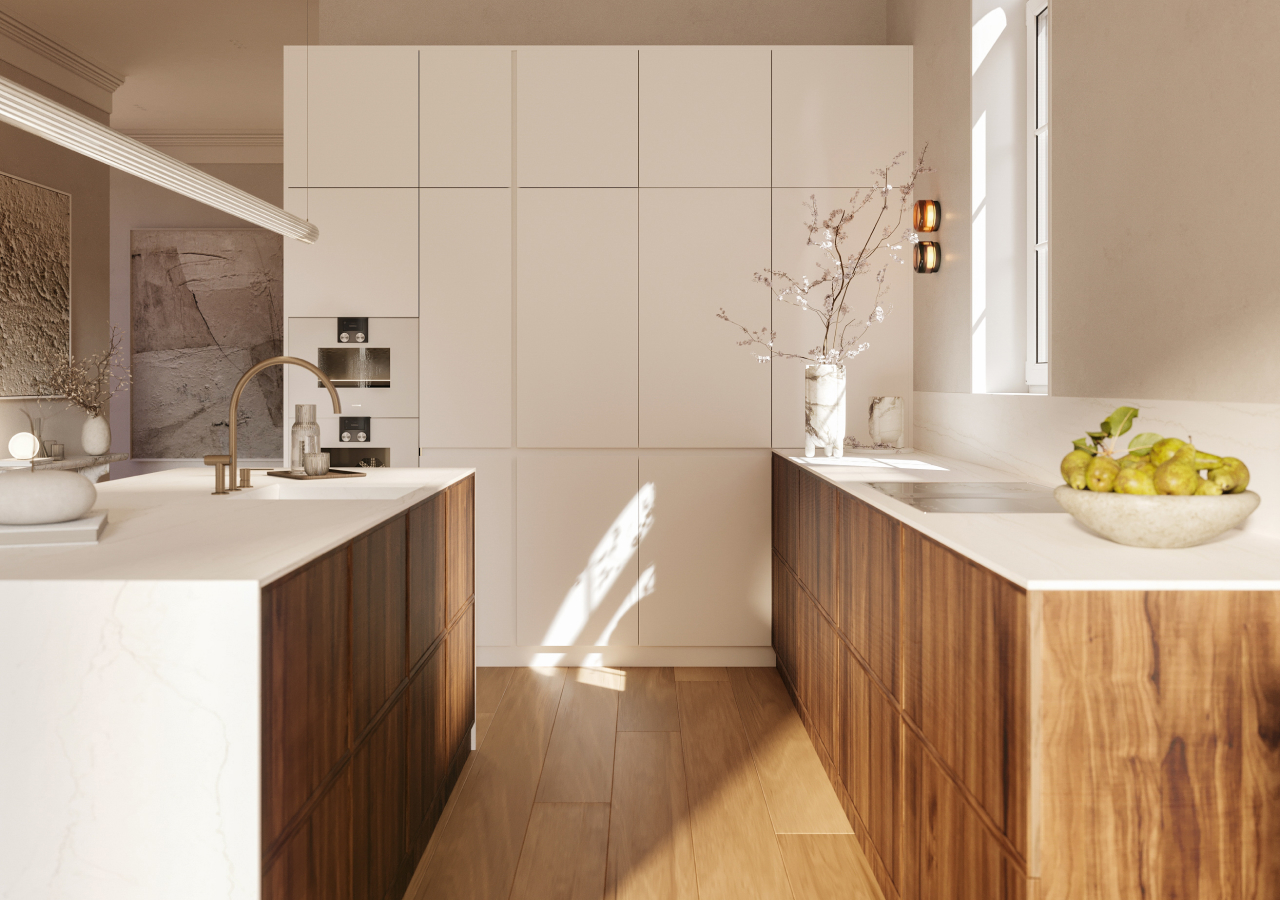
A Scandinavian galley kitchen often fits best in long, narrow rooms because two parallel runs keep everything within a few steps. When planned well, a galley feels efficient rather than cramped because surfaces stay quiet and storage stays dense. This is the layout where Scandinavian planning shines: simple runs, consistent proportions, and fewer places for clutter to land.
A strong Scandinavian galley kitchen also depends on one basic discipline: keep the runs continuous and go drawer-first. Drawers hold more, make items visible, and reduce the “digging through shelves” problem that creates countertop piles. In practice, that means fewer upper-cabinet fragments, fewer awkward gaps, and base storage that supports cooking the way people actually move through the space.
A Scandinavian galley kitchen can still feel tight if circulation gets squeezed. The fix rarely comes from adding more cabinets. Better results come from protecting the aisle, keeping tall units consolidated, and avoiding features that interrupt the run. A quiet galley feels open because the eye travels smoothly and the counter stays available for prep, not storage.
L-Shaped Layout: The Best Balance of Openness and Storage
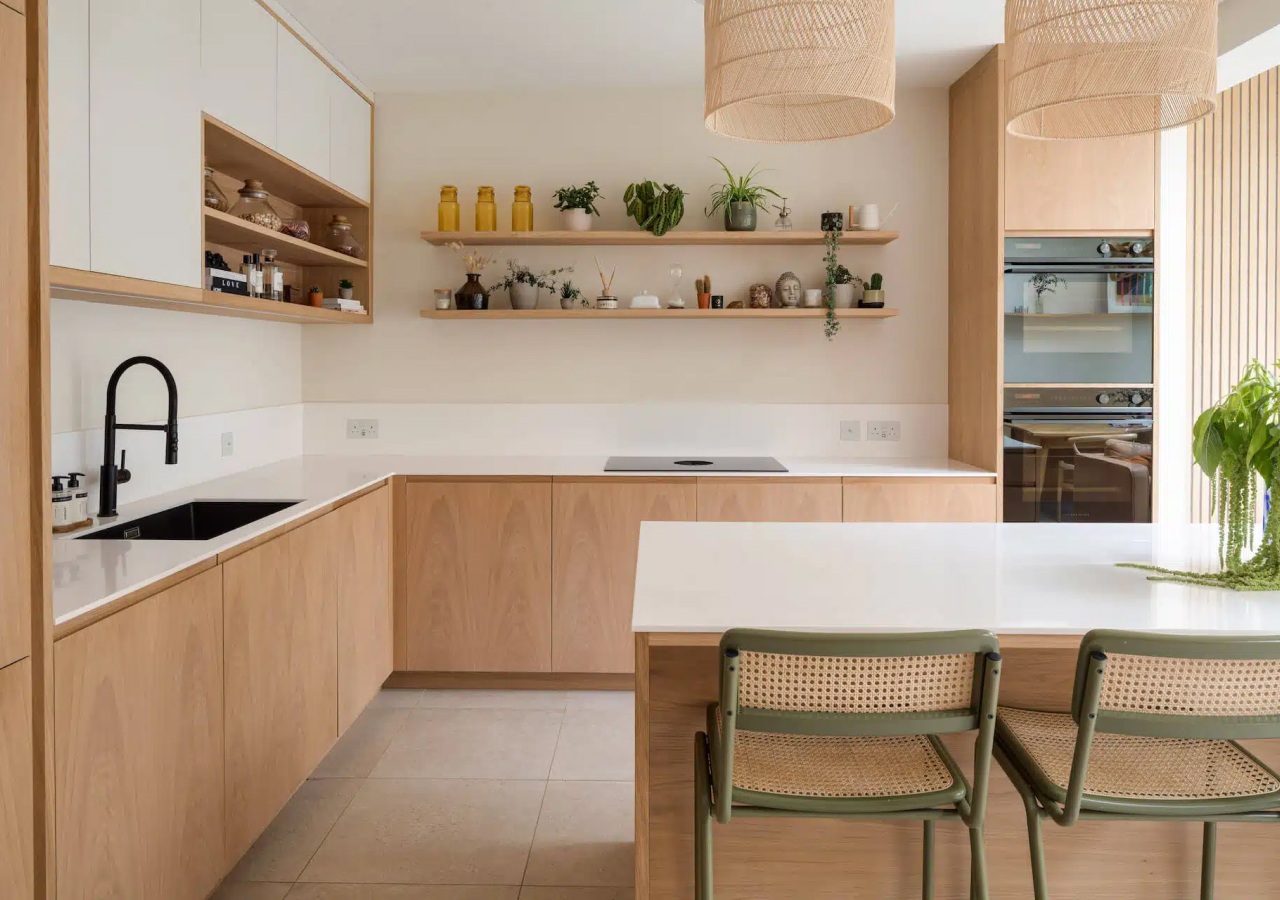
An L-shaped layout often gives the best balance in a small kitchen: one open side, but enough cabinetry to hide daily items. It works especially well when the kitchen connects to dining or living space and the room needs to feel less boxed in.
The key move for small kitchen Scandinavian design in an L-shape comes from one tall “anchor” zone, often a pantry with a fridge tower (or pantry + oven stack). That anchor prevents food, appliances, and utilities from spreading across the counters. Concentrating tall storage also keeps the rest of the kitchen visually calm, which matters in open-plan homes where cabinet fragmentation reads as clutter.
L-shapes also benefit from one clear prep run. A continuous stretch of counter supported by drawers changes daily cooking more than most people expect. The kitchen stays usable without constant reshuffling, and cleanup gets faster because categories stay contained.
One-Wall Layout: The Smallest Footprint for Apartments and Studios
.webp)
One-wall kitchens are common in studios and open-plan apartments, and they can look beautifully Scandinavian when planned as a complete system. The main risk comes from weak vertical capacity: the counter becomes permanent storage. A one-wall setup needs more than a clean finish; it needs enough structure to keep daily items off the surface.
The Scandinavian rule stays simple: go taller, not busier. Use full-height cabinets where possible, keep fronts calm, and plan internal organization so the counter stays clear. In a Scandinavian kitchen apartment small environment, that quiet counter effect often determines whether the whole apartment feels spacious or visually crowded. A composed “system wall” reads like furniture, while fragmented cabinets read like storage problems.
One-wall layouts also benefit from a closed station for daily appliances. Even a compact cabinet zone for coffee gear and breakfast items can protect the counter, which protects the entire room’s calm.
When a U-Shape Works
.webp)
A U-shape performs well when the room supports comfortable circulation. Narrow footprints often feel pinched with a U-shape, and corners become hard to use. When the width supports it, a U-shape can deliver strong storage and short steps between prep, cooking, and cleanup.
A good U-shape depends on corner decisions made early and at least one run designed around drawers that support prep and cooking. Door collisions, tight pathways, and corner voids usually signal a U-shape pushed into a space that suits a galley or L-shape better.
Clearance Benchmarks That Prevent “Cramped”
Good small-kitchen planning often comes down to a few clear numbers. When circulation feels tight, the kitchen feels smaller no matter how refined the finishes look. Protecting the path through the room also protects workflow, especially in apartment kitchens where the kitchen doubles as a corridor.
Use these benchmarks as planning guardrails:
| What you’re measuring | Practical target | Minimum (tight but workable) |
|---|---|---|
| Aisle between galley runs | 100–120 cm (39–47") | ~90 cm (35") |
| Clear path in front of cabinets/appliances | 100–110 cm (39–43") | ~90 cm (35") |
| Space behind seating (if stools exist) | 105–120 cm (41–47") | ~90–100 cm (35–39") |
Space-Saving Storage Moves That Matter Most
In compact kitchens, storage planning prevents clutter from landing on the countertop. Scandinavian kitchens feel calm because daily life has a home: food, dishes, cleaning supplies, small appliances, trash, recycling, and the “where does this go?” items that create mess. The goal stays practical: fewer decisions, faster resets, and less visual noise.
Go Taller, Not Deeper

When space is limited, many people try to add deeper counters or more base cabinets. Height usually wins. Tall pantry units, fridge towers, and ceiling-height storage increase capacity without eating floor space, and they keep storage consolidated in one clean vertical zone instead of scattered across small cabinets. In a Scandinavian kitchen apartment small plan, tall storage matters even more because you store bulk groceries, small appliances, and the unglamorous stuff—brooms, vacuums, and cleaning products—so the counter stays clear.
Drawer-First Base Cabinets

For a kitchen that feels Scandinavian in daily life, go drawer-first. Drawers hold more than shelves and keep everything easier to access and maintain. Deep drawers handle pots, pans, plates, and pantry overflow, while shallow drawers handle cutlery, tools, wraps, and the small items that otherwise turn into junk. Inner drawers make tight kitchens work better by separating small items inside a deeper drawer without sacrificing storage.
Win the Corner With One Clear Strategy
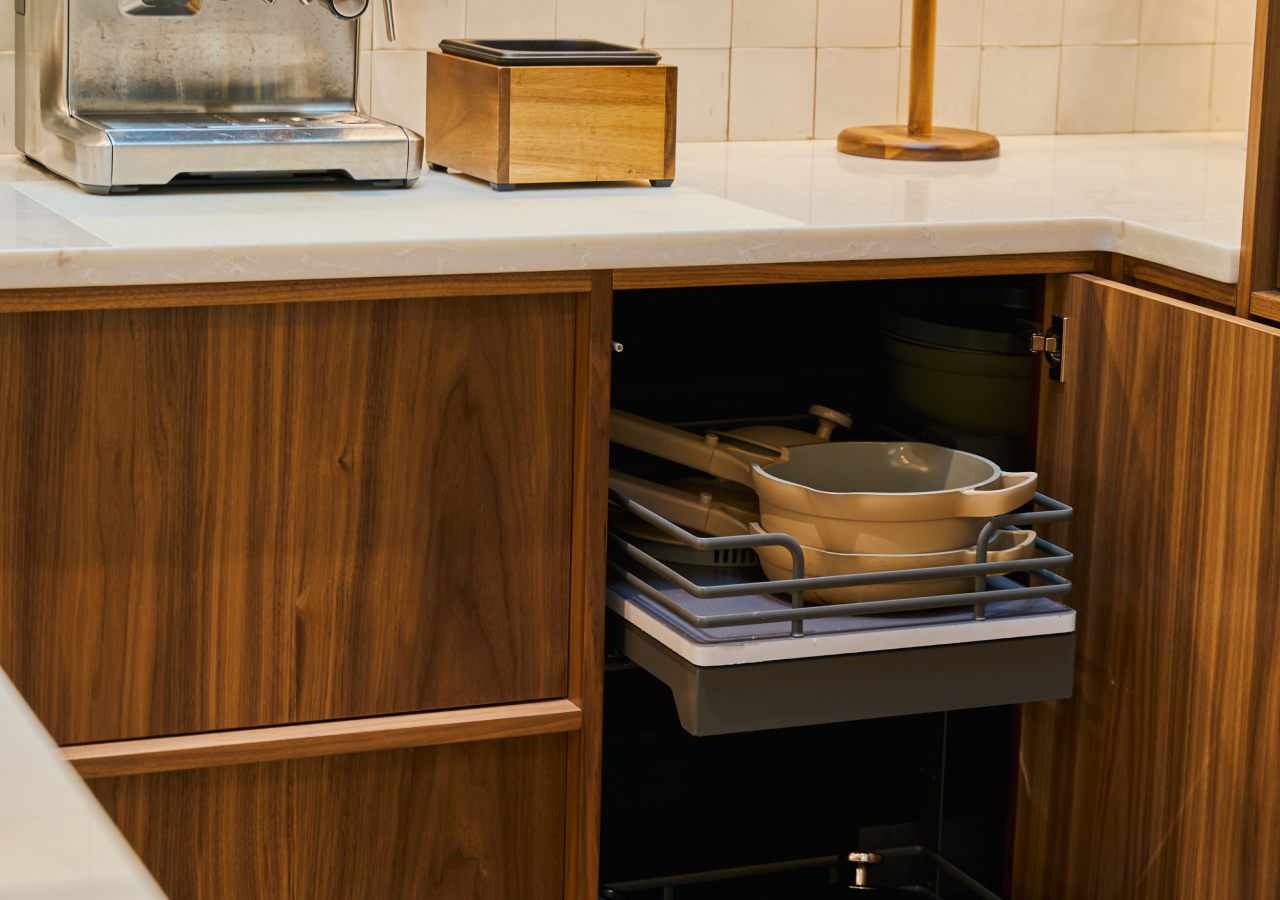
Corners waste space when planning stays vague. Scandinavian layouts work best when the corner gets one clear strategy and a full commitment. A corner pull-out makes sense for everyday items because storage comes forward instead of disappearing into a void. Simple shelves work for low-frequency items when inventory stays disciplined. A dead corner can also be practical, especially with tight budgets or awkward access, because a clean run of drawers next to it often performs better than a complex corner that rarely gets used.
Build a Real Sink With a Waste Zone
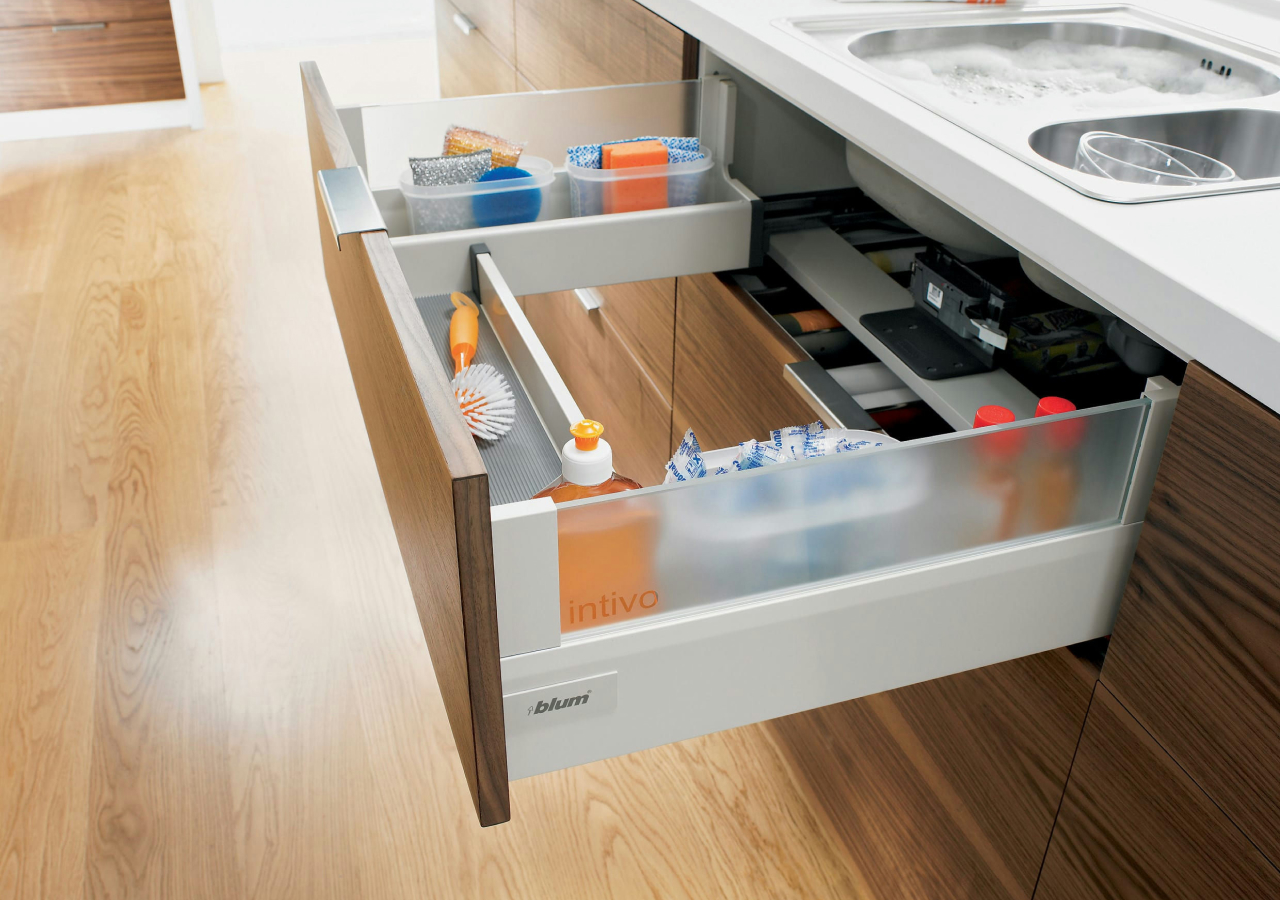
The sink zone creates clutter fast when planning stops at “we’ll figure it out.” Without a real setup, dish soap, sponges, bags, and random items end up living on the countertop. A pull-out waste bin near the sink supports real workflow—scrape, sort, rinse, toss—and under-sink organization (or under-sink drawers when plumbing allows) keeps the area from becoming a mess magnet. This upgrade protects the quiet-counter look without constant tidying.
Use Slim Filler Space on Purpose
.webp)
Narrow gaps can become useful micro-storage when placed intentionally. Slim pull-outs work well for spices near the cooktop, trays near prep, or oils near cooking. The Scandinavian rule stays simple: skip a narrow pull-out if it breaks a clean run or forces you to downgrade a better drawer. In small kitchens, fewer strong features beat many mediocre ones.
Hide Appliances With an Appliance Garage
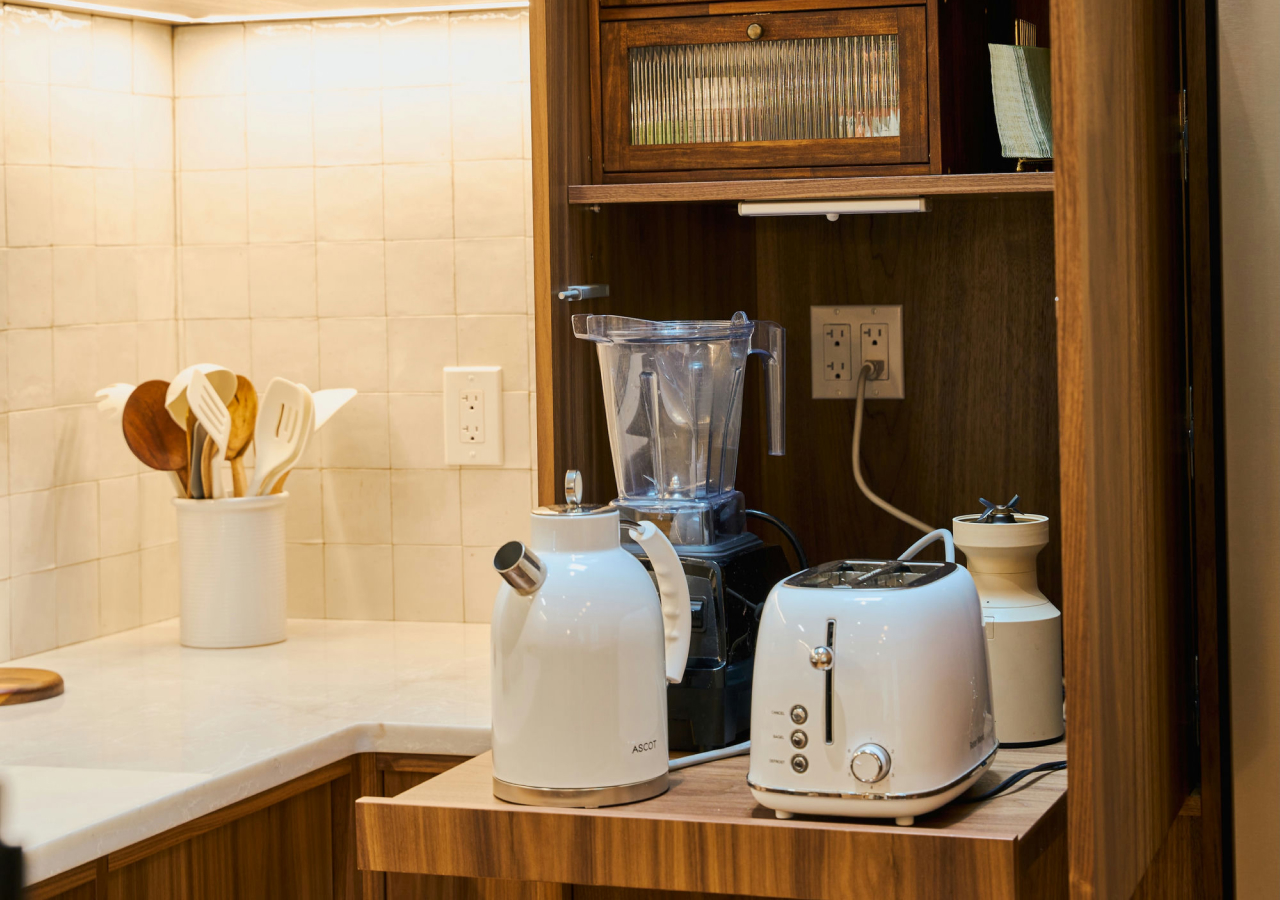
A full counter makes any kitchen feel smaller. Scandinavian planning treats small appliances as active-use tools, not permanent countertop residents. An appliance garage keeps coffee gear, toaster, and mixers accessible while maintaining visual calm. In apartment kitchens, even a compact station behind doors can make the whole room feel quieter because the kitchen stops looking busy between uses.
Island vs Peninsula in Apartments and Narrow Rooms
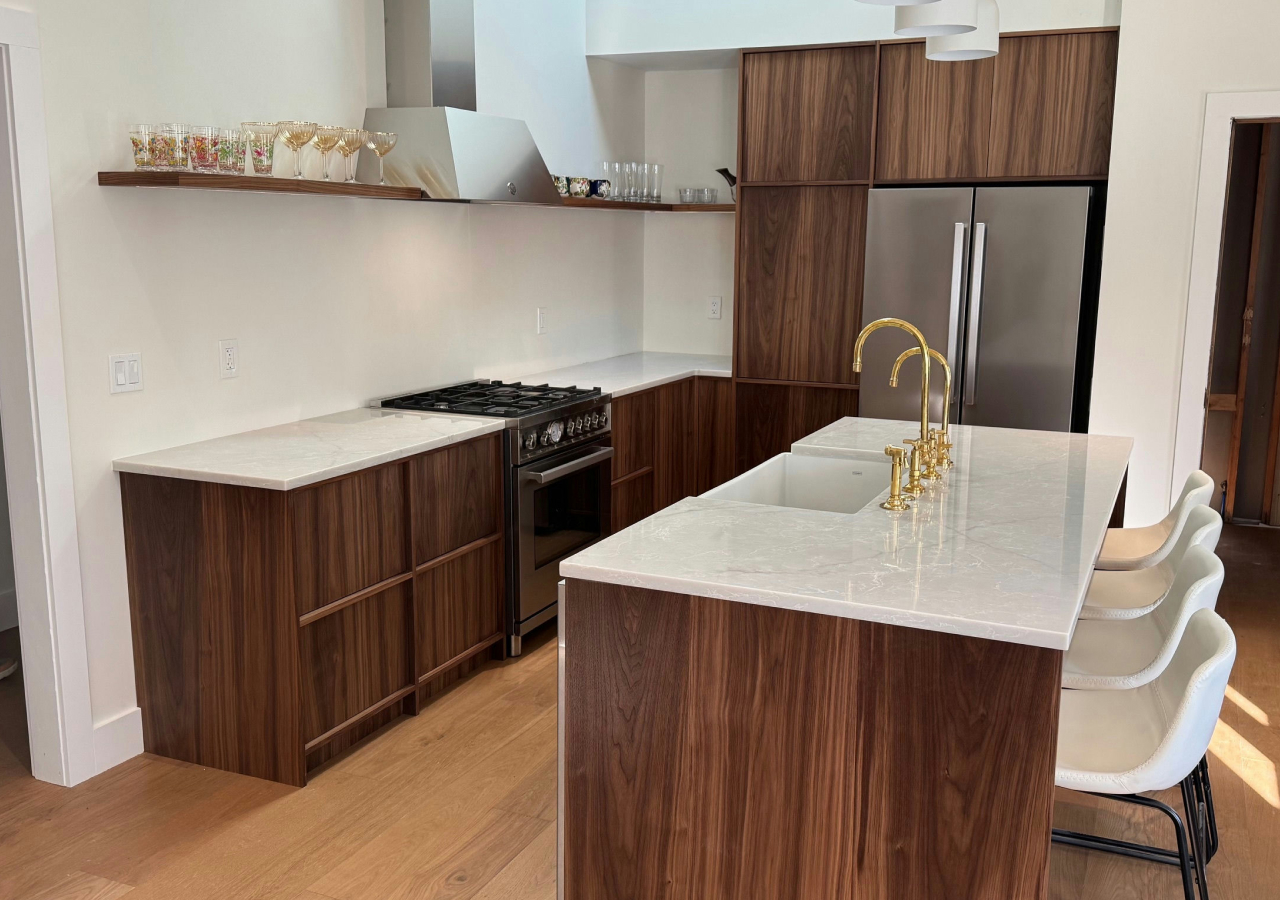
A small kitchen can support an island when the footprint supports circulation. When an island blocks movement or creates a squeeze path, the room feels tighter and the island turns into a clutter landing zone. In many apartments and narrow rooms, a peninsula works better because it adds work surface and seating without splitting the space into two tight corridors.
| What you’re measuring | Practical target | Minimum (tight but workable) |
|---|---|---|
| Aisle between galley runs | 100–120 cm (39–47") | ~90 cm (35") |
| Clear path in front of cabinets/appliances | 100–110 cm (39–43") | ~90 cm (35") |
| Space behind seating (if stools exist) | 105–120 cm (41–47") | ~90–100 cm (35–39") |
In open-plan rooms, treat island/peninsula as a full system: storage used daily, seating that keeps movement smooth, and a calm palette that matches cabinetry. When that balance fails, better tall storage and drawers usually deliver more value.
Keep It Scandinavian: Visual Calm That Makes Small Kitchens Feel Bigger
.webp)
Small Scandinavian kitchens feel larger when the eye moves smoothly across the space. Harsh contrast, busy materials, and broken cabinet lines interrupt that flow and make the footprint feel smaller.
Continuous cabinet runs help because the room reads as one quiet composition rather than a collection of parts. A low-contrast palette (warm whites, soft neutrals, light oak) reflects light and reduces visual clutter. Matte finishes reduce glare and keep the space from feeling noisy. For contrast, one restrained accent repeated in a few places (faucet, lights, small hardware details) tends to look intentional rather than random.
Lighting plays a bigger role than most people expect. Dark corners shrink a small kitchen. Layered lighting (ambient plus task lighting) keeps brightness even and makes the footprint feel more open. Under-cabinet lighting helps in small kitchens because function improves and shadowy dead zones disappear, which supports both comfort and cleanliness.
Open Shelving in a Small Scandinavian Kitchen
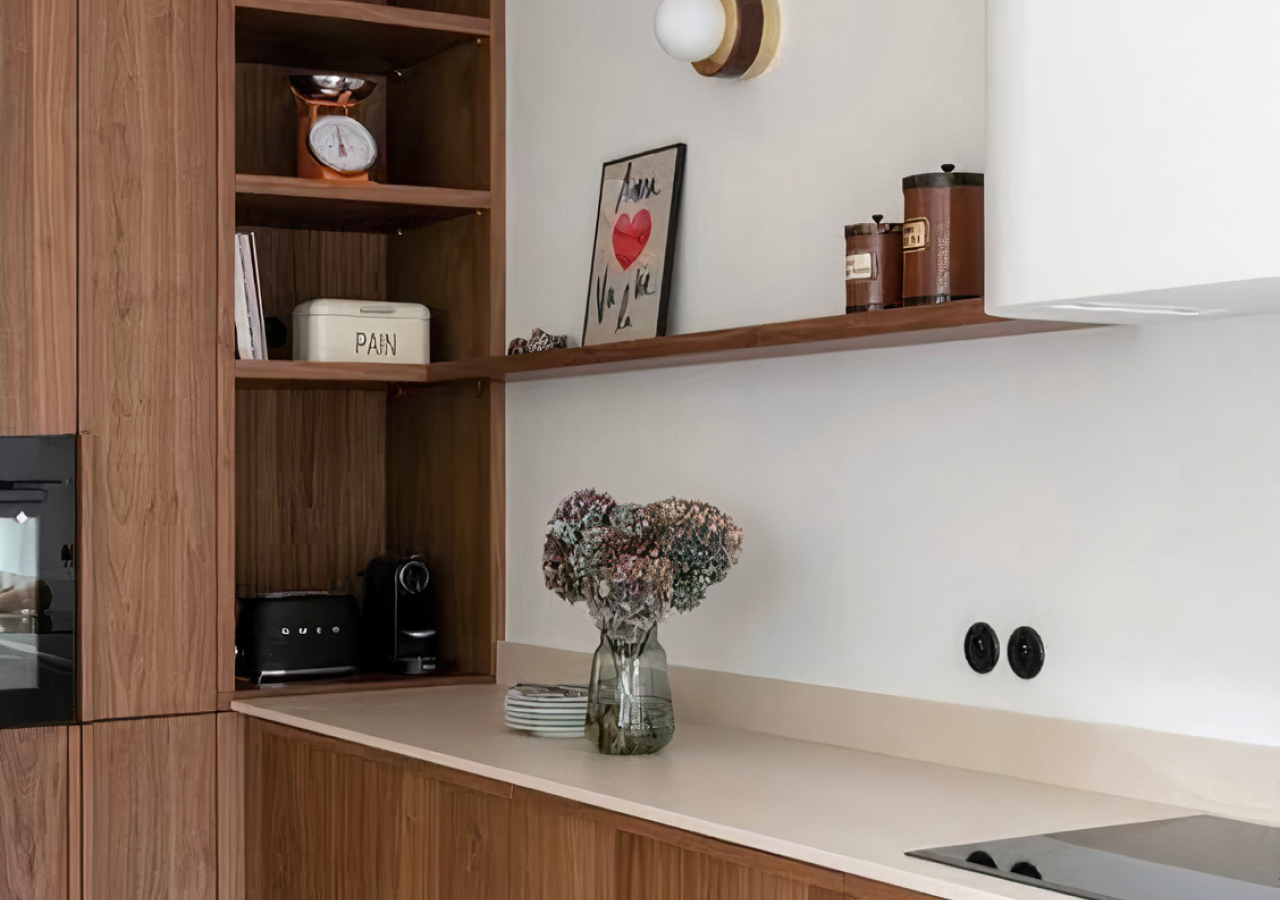
Open shelving can lighten a small kitchen visually, and it can also destroy Scandinavian calm when shelves become overflow storage. Targeted shelving works best: a short run near a window, a niche, or a coffee zone where quick access helps.
Treat shelves as a curated layer rather than pantry replacement. Keep shelf length modest, repeat simple dishes instead of mixing everything, and keep closed storage nearby for daily-life chaos. In a small Scandinavian kitchen, shelving should support quiet counters, not replace real storage planning.
Common Mistakes That Waste Space
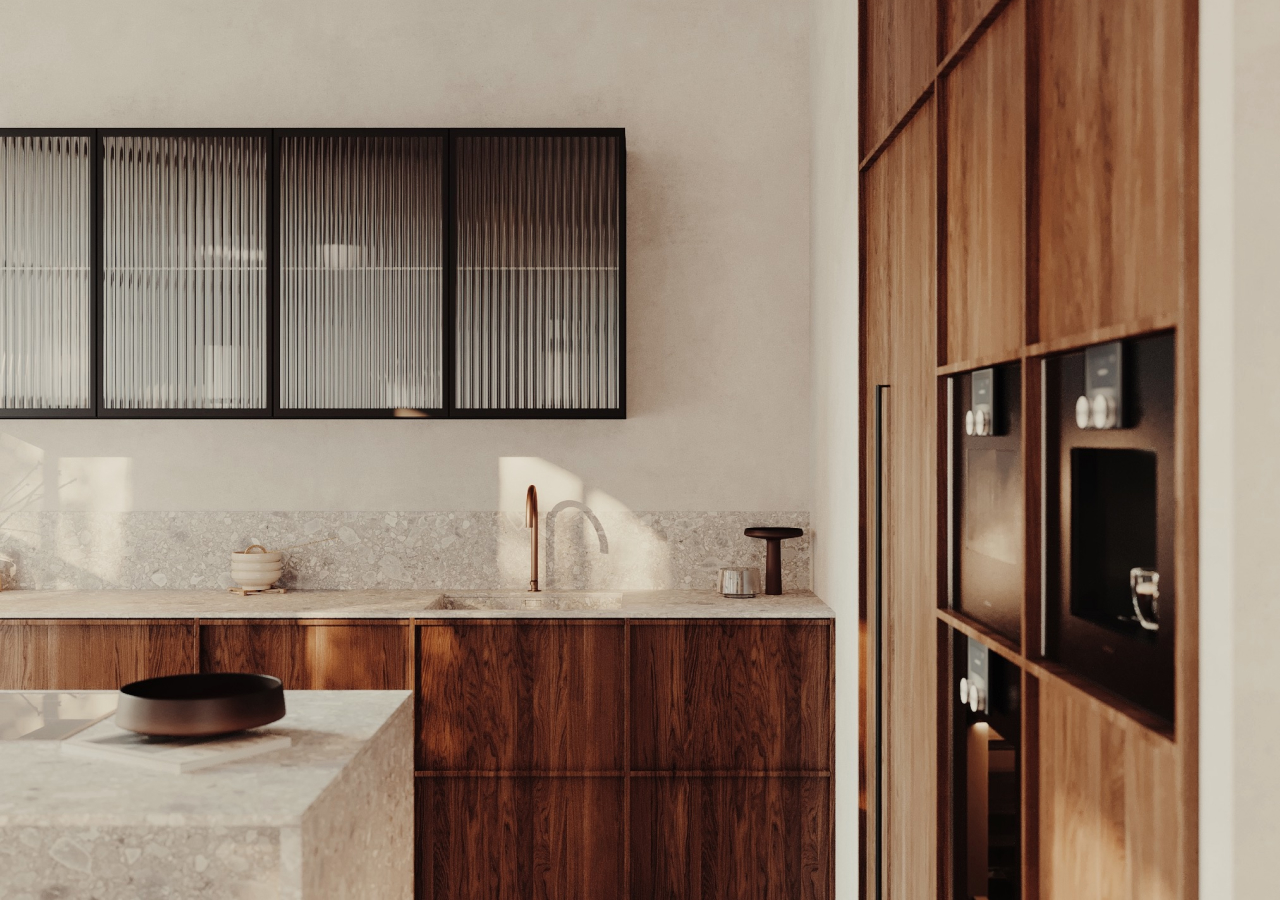
Small kitchens lose space fastest through fragmentation. Many small uppers and gaps create visual clutter and reduce usable storage, so the room feels busy even when clean. Another common issue comes from too few drawers; shelves encourage piles, and piles land on counters.
Pantry planning gets skipped, then food lives on the countertop by default and the space never fully resets. Corners get ignored and turn into wasted volume or a black hole where items disappear. Open shelving often gets overused without enough closed storage behind it, then calm only shows up on perfectly styled days.
Most of these problems trace back to planning rather than style, and a tall anchor zone, drawer-first bases, and a sink/waste plan usually solve the root cause. That combination supports both Scandinavian small kitchen design and the daily reality of cooking in a compact space.
Conclusion
The best small kitchen Scandinavian design isn’t about squeezing in more cabinets. It’s about planning the room so it stays calm: a layout that fits your footprint, tall storage that replaces clutter, drawers that make access effortless, and smart zones for corners, sink/waste, and appliances.
When the mechanics are right, the Scandinavian look follows naturally: quiet surfaces, natural warmth, and a space that feels bigger because it’s easier to use.


