
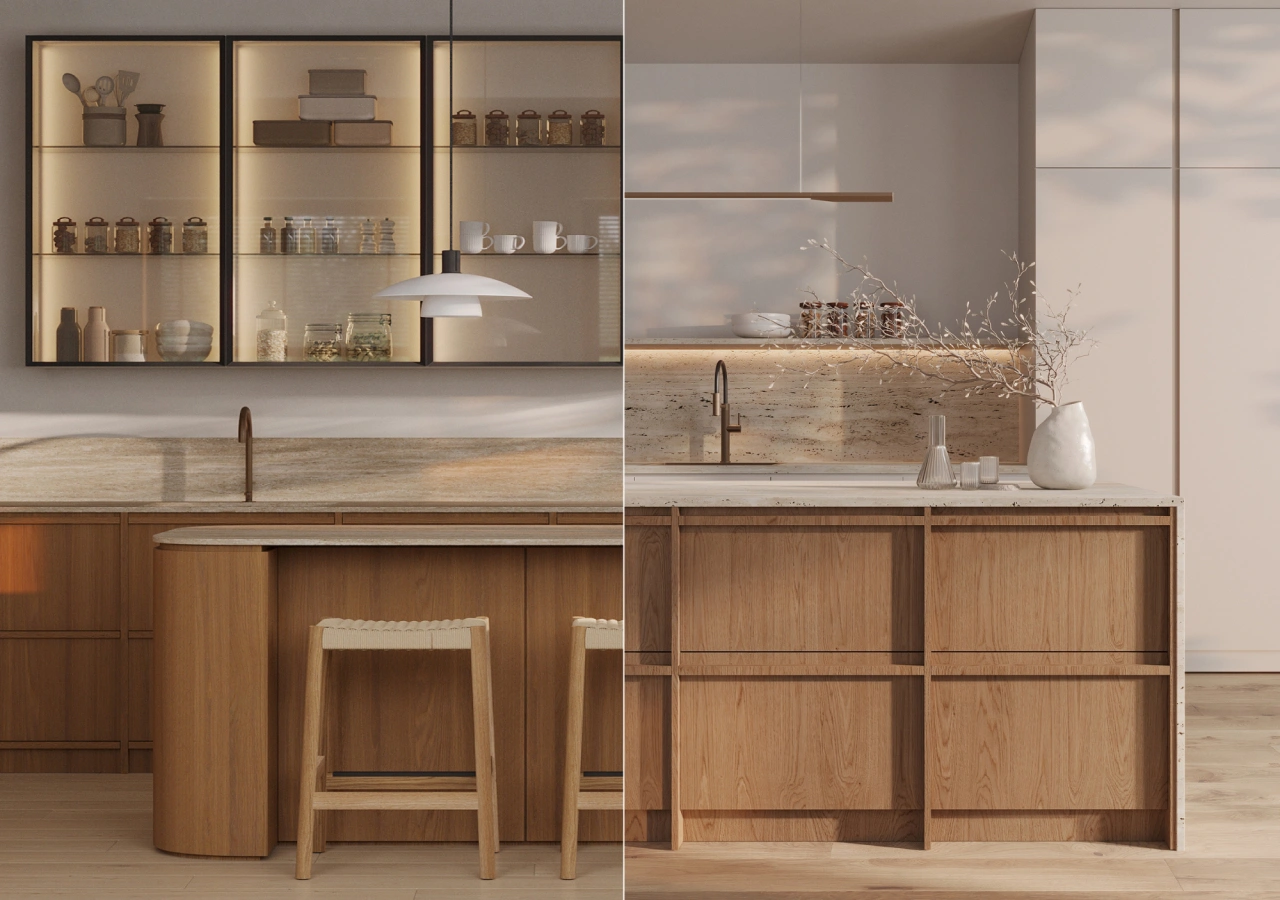
A kitchen island is often the main working surface, storage zone, seating area, and visual center of a modern kitchen. That is why its shape matters.
Rounded kitchen islands feel softer and more furniture-like. They can work beautifully in Japandi, Scandinavian, and warm minimalist kitchens, especially in wood, walnut, oak, or fluted finishes. Straight islands are usually more efficient for drawers, stools, appliances, and straightforward installation.
Before choosing the kitchen island shape, start with the practical questions. Will people move around it comfortably? Will the dishwasher open? Is there enough room for stools? Will the island improve storage, or only look good in a rendering?
Quick Answer: Rounded vs Straight Kitchen Island
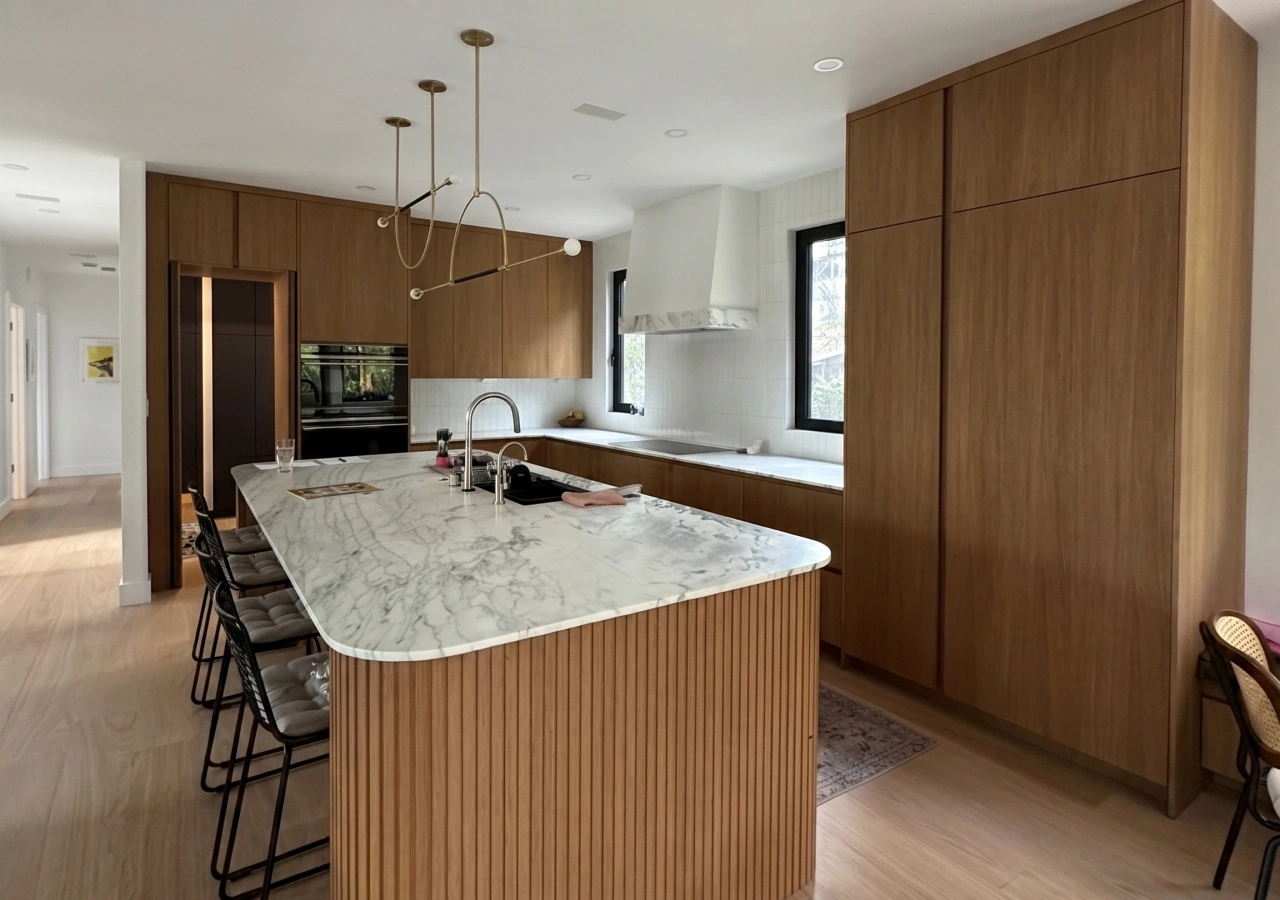
A rounded island works best when the curve has a real purpose: improving movement, softening a sharp corner, or making the island feel like a designed focal point. A straight island works best when the priority is storage, seating capacity, cost control, and simpler fabrication.
This guide assumes you have already decided that an island works for your layout. If you are still choosing between an island and a peninsula, start with overall traffic flow and room shape first.
Start With Flow, Not the Shape
The island shape should come after the layout is solved. First, check walkways, door swings, appliance clearances, sink placement, dishwasher access, refrigerator access, and traffic between the kitchen and nearby rooms.
If a sharp island corner sits in a main walking path, a rounded end can make movement feel more natural. If the island needs to hold wide drawers, trash pull-outs, or appliances, a straight working side may be the smarter choice. A curve will not help if the stools block the walkway or the dishwasher opens into a tight zone.
When a Rounded Kitchen Island Makes Sense
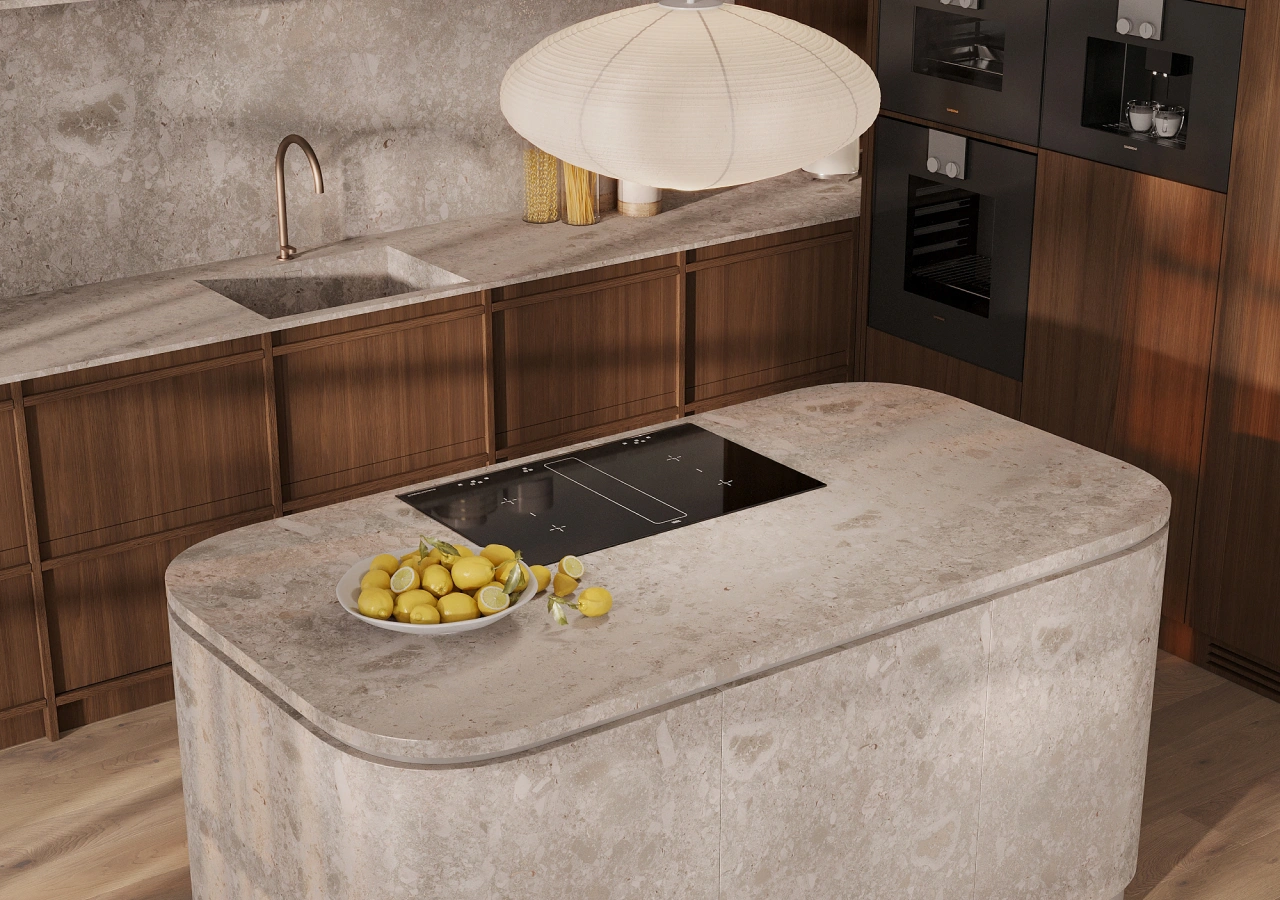
A rounded kitchen island makes sense when the curve improves the room. It can soften an open-plan kitchen, reduce the feeling of hard corners, or turn the island into a calmer focal point.
This works especially well in kitchens with slab fronts, wood veneer, walnut tones, light oak, fluted panels, quiet stone, and clean minimalist lines. The curve adds softness without adding decoration, especially when the island is visible from the living or dining area and reads more like furniture than a cabinet block.
A rounded island does not need to be fully curved. In many homes, a softened corner, rounded end, or curved seating side gives enough visual softness without making the whole cabinet package more complicated. The key is restraint: one strong gesture usually feels more refined than several competing details.
When a Straight Island Makes More Sense
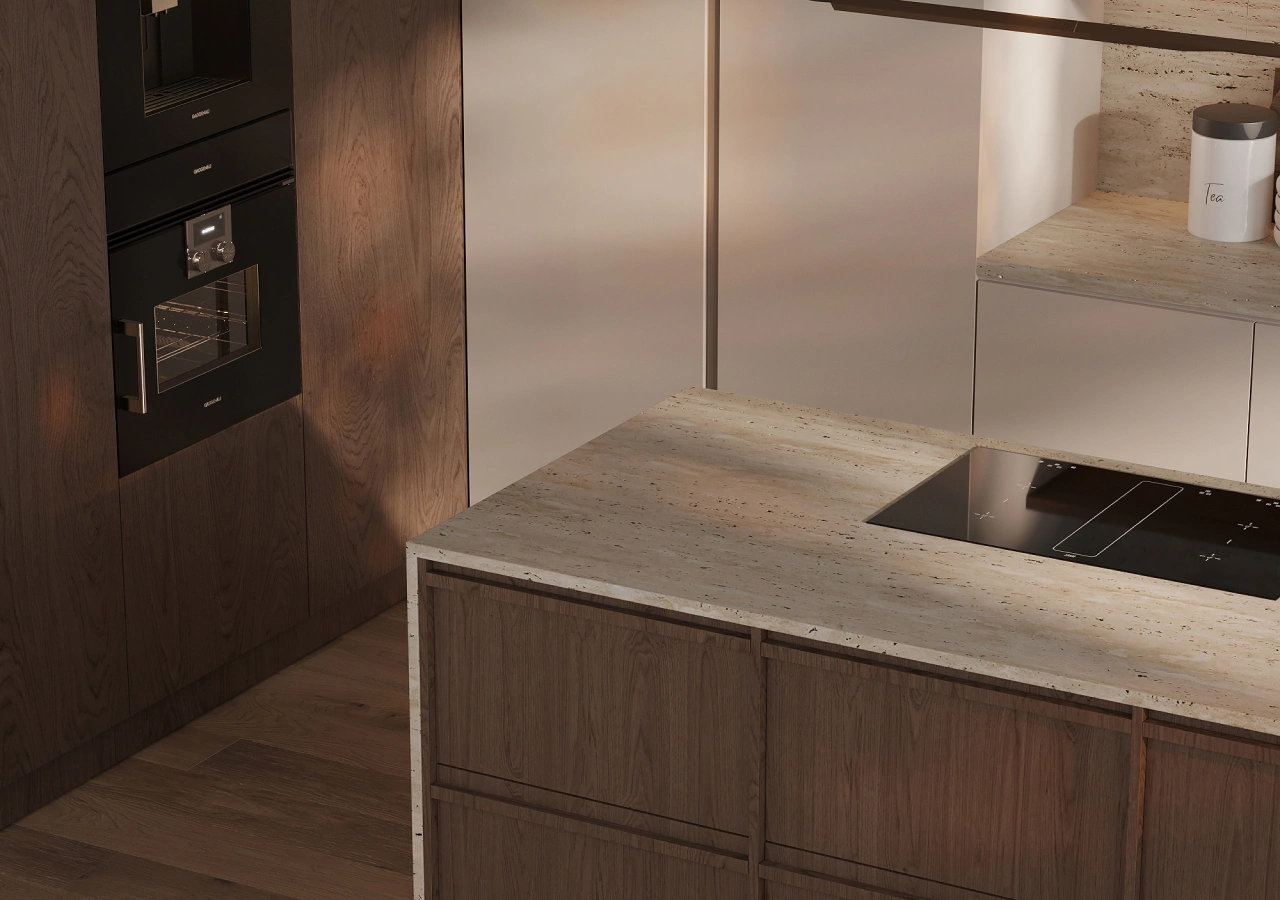
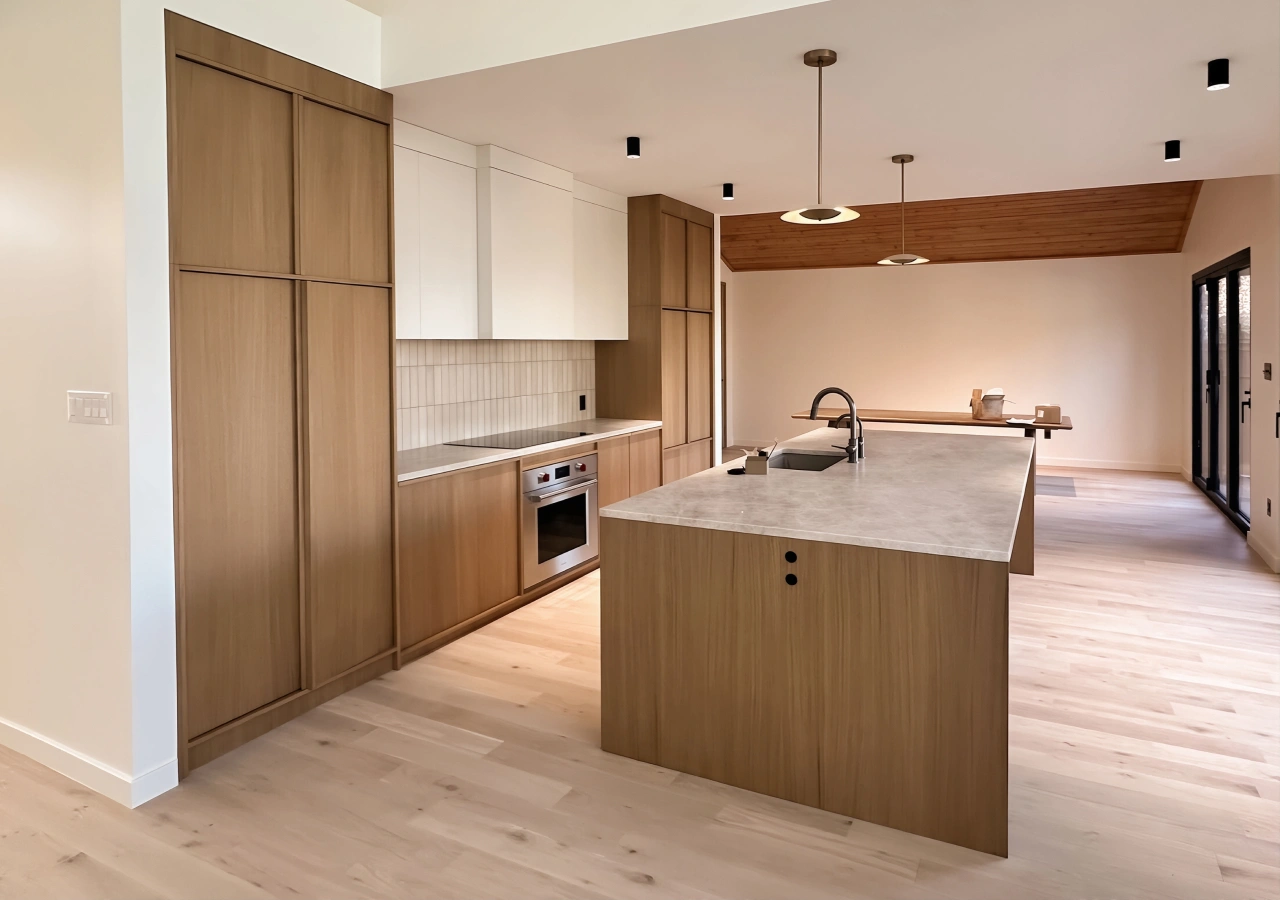
A straight kitchen island is usually better when the island needs to work hard. It gives you more predictable storage, cleaner seating, easier countertop planning, and a simpler installation path.
Straight sides are easier for wide drawers, cutlery storage, pots and pans, pull-out waste bins, dish storage, appliance zones, and seating overhangs. They also make it easier to align the island with tall cabinets, panel-ready appliances, and the main countertop run.
For seating, a straight island is often the cleaner option. If you want three or four stools in a line, a consistent overhang, and clear leg room, a straight edge is easier to plan and easier to use. A simple rectangular island with strong proportions, warm fronts, calm stone, and well-planned drawers can feel more elegant than a complicated curved island that gives up useful storage.
Seating, Storage, and Daily Use
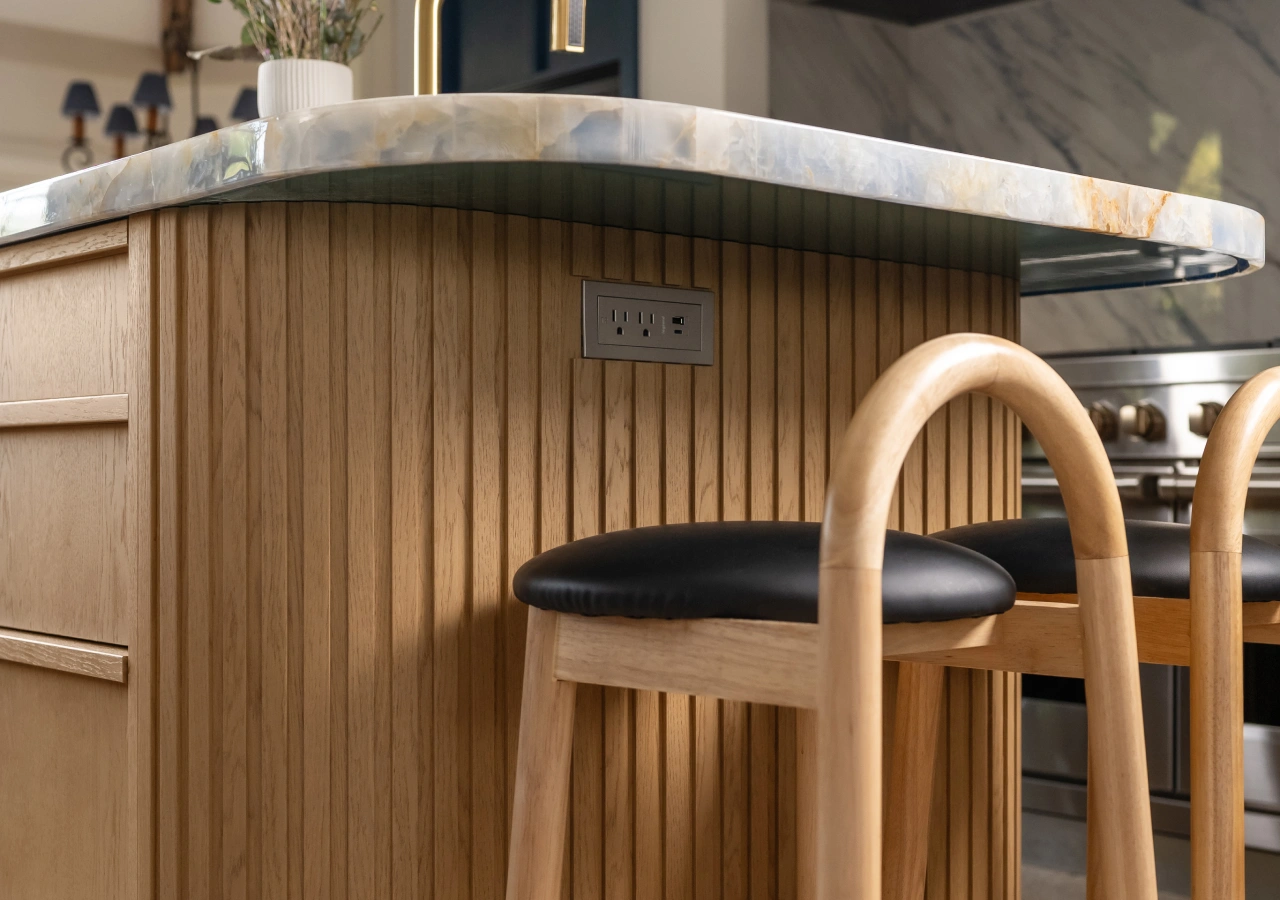
Storage and seating are the biggest tradeoffs between a rounded and straight island. A rounded end can look beautiful, but it can reduce usable cabinet space or make the cabinet construction more complicated. Straight sides are usually better for drawers, pull-outs, appliances, trash storage, and deep organized storage.
Rounded seating can feel softer and more social because people are not sitting in one strict line. But the overhang, stool spacing, leg room, and walkway behind the stools need to be planned early. A good compromise is to keep the working side straight and use the curve on the exposed end or seating side.
Countertops, Curves, and Installation Details
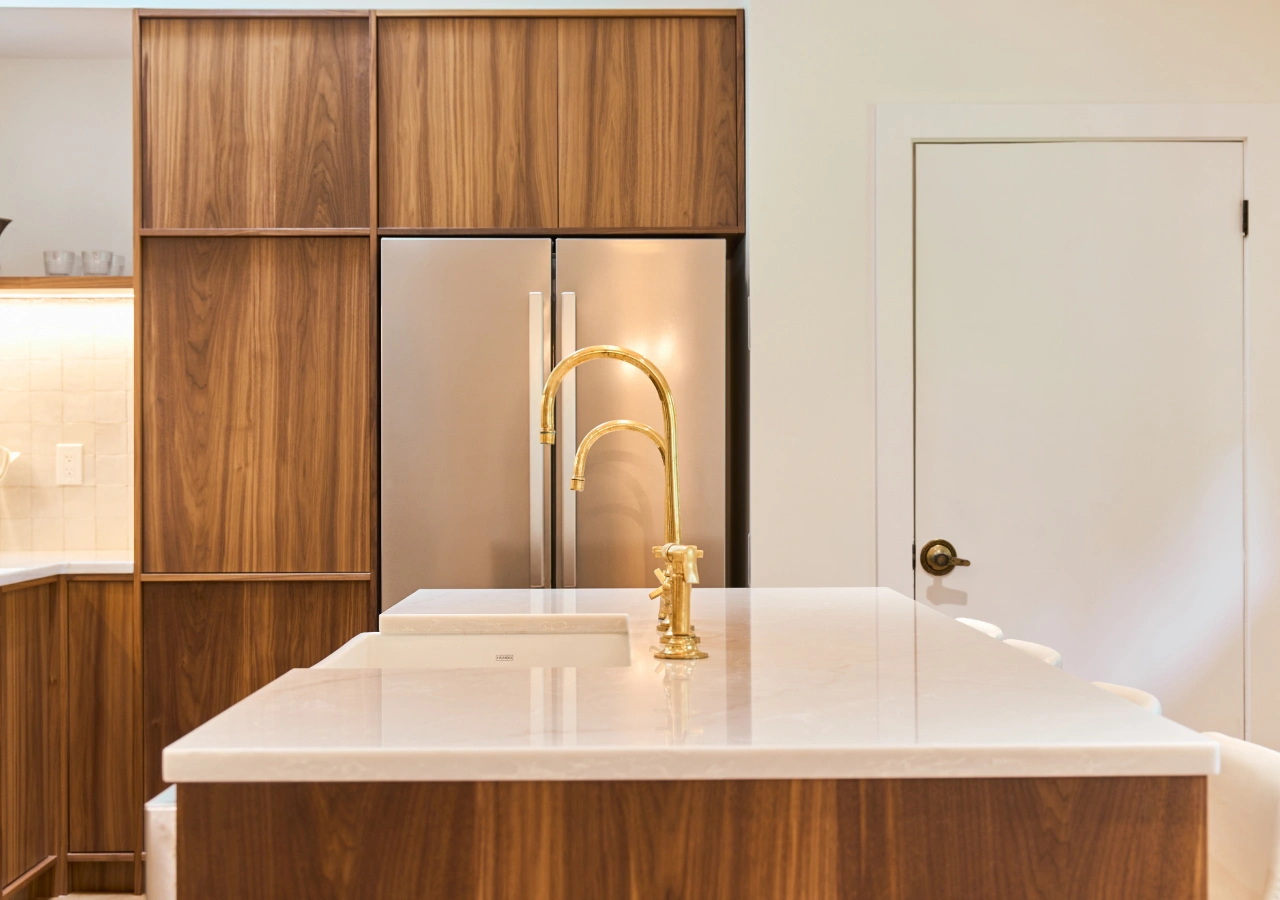
A rounded island affects more than the cabinet fronts. It also affects the countertop template, edge detail, seams, waterfall panels, outlet placement, and installation sequence.
This is one reason curved islands can cost more and take more coordination. The cabinet maker and countertop fabricator need to confirm the radius, edge profile, material limits, seams, and support details before production. Quartz, stone, and ultra-compact surfaces can all work with curved islands, but the shape has to be realistic for the chosen material and local fabrication.
A straight island is usually simpler. Rectangular slabs, straight waterfall panels, and standard overhangs are easier to template, fabricate, and install. That can help with cost, timing, and coordination between the contractor, electrician, countertop fabricator, and installer.
Conclusion
A rounded kitchen island is not automatically better, more premium, or more modern than a straight island. It works best when the curve improves movement, softens the room, or creates a clear focal point in an open-plan kitchen.
A straight island is often stronger when storage, seating, cost, timeline, and straightforward installation matter most. It gives you more predictable drawers, simpler countertop details, and an easier build. The best curved kitchens use curves selectively, whether that means a rounded end, curved seating side, or softened corner.
To choose the right direction, explore Corner Renovation’s collections and real kitchen examples, or use a design consultation to test the shape before the layout is finalized.
.webp)
.webp)


