.webp)
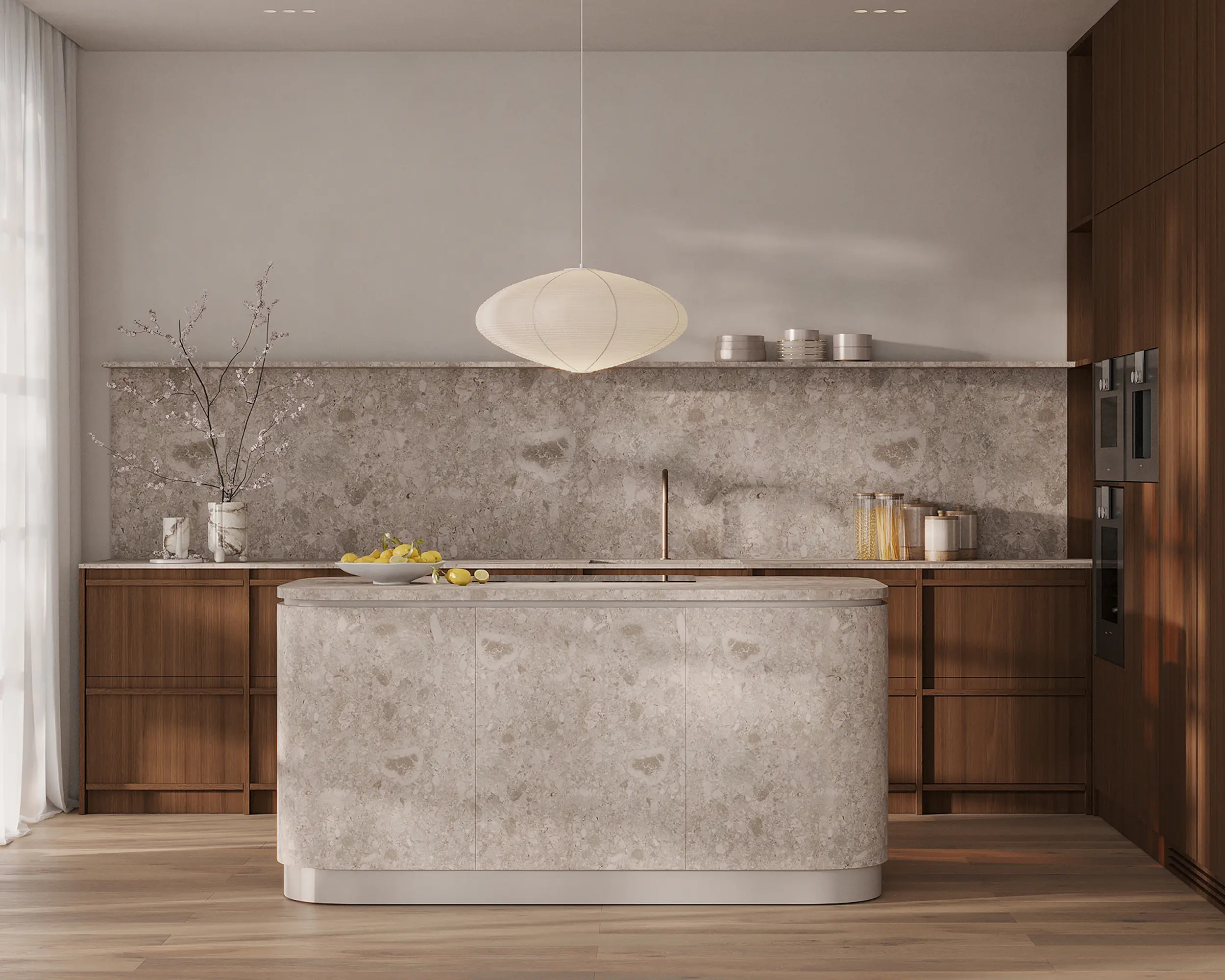
Curved kitchens have become more visible in recent years, but they are not always the right choice. While curves can soften a space and improve movement around an island or cabinet run, they also add complexity in layout, cabinetry, stone fabrication, and cost. The look is clearly having a moment, but the real question is whether the curve improves how the kitchen works in your space.
This article breaks down the real pros and cons of curved kitchens, where they make sense, where they do not, and what to consider before committing to the design.
What Is a Curved Kitchen?
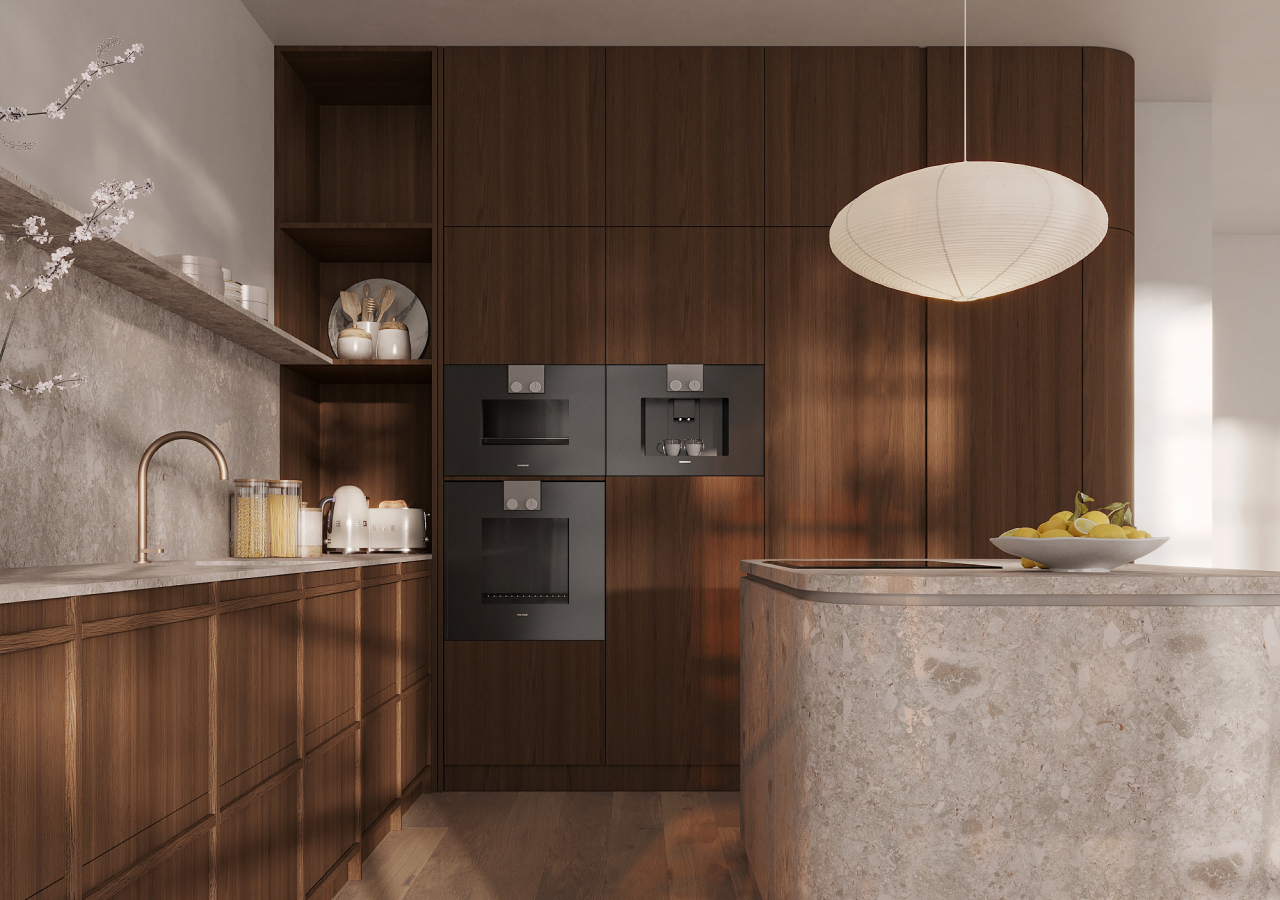
A curved kitchen uses rounded forms to soften the geometry of the space. In most cases, the curve appears in one main element, usually the island, and is supported by smaller details like rounded end panels, radius corners, or softened countertop edges.
The key point is that curved kitchens are rarely fully curved. Most functional storage stays linear, and the curve is introduced where it affects movement, comfort, or how the kitchen sits within the room.
Pros of Curved Kitchens
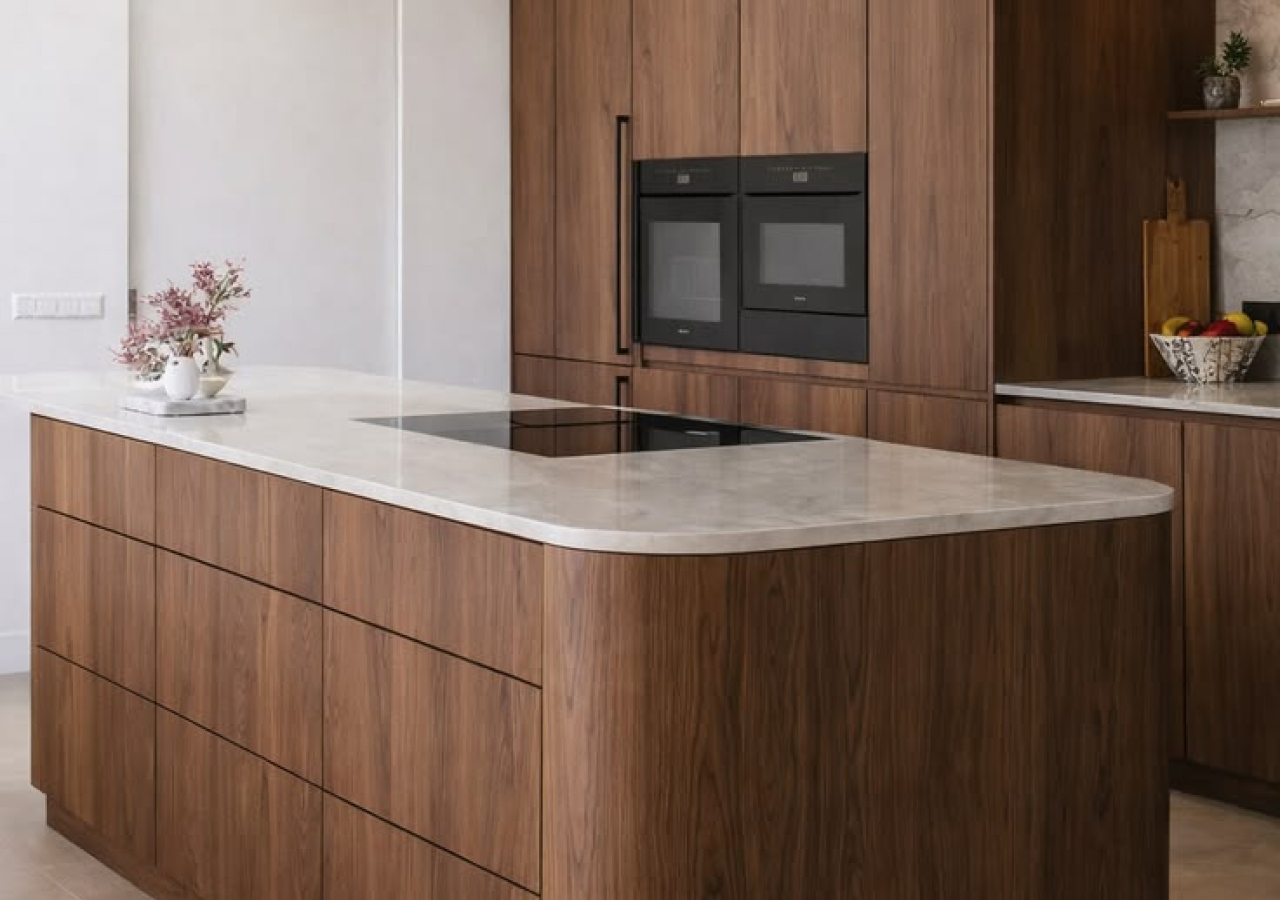
Softer presence in open-plan spaces
In open layouts, the kitchen is visible from multiple angles. Straight cabinet blocks can feel rigid or heavy. A curved island or rounded end helps the kitchen read more like furniture and less like a built-in unit.
Better movement around key areas
Rounded edges improve circulation, especially around islands where people pass by frequently. The difference is small on paper but noticeable in daily use, particularly in busy households.
More comfortable seating zones
A curved island edge removes sharp corners near seating. This makes stools easier to approach and reduces awkward contact with hard edges.
A softer visual rhythm
Straight lines stacked across cabinetry, counters, and walls can feel sharp. A curve breaks that repetition and introduces a more relaxed visual rhythm without adding extra materials or decoration.
Fits restrained, minimalist kitchens
Curves can add variation without relying on contrast, color, or ornament. That makes them useful in kitchens where everything else is intentionally controlled.
Cons of Curved Kitchens
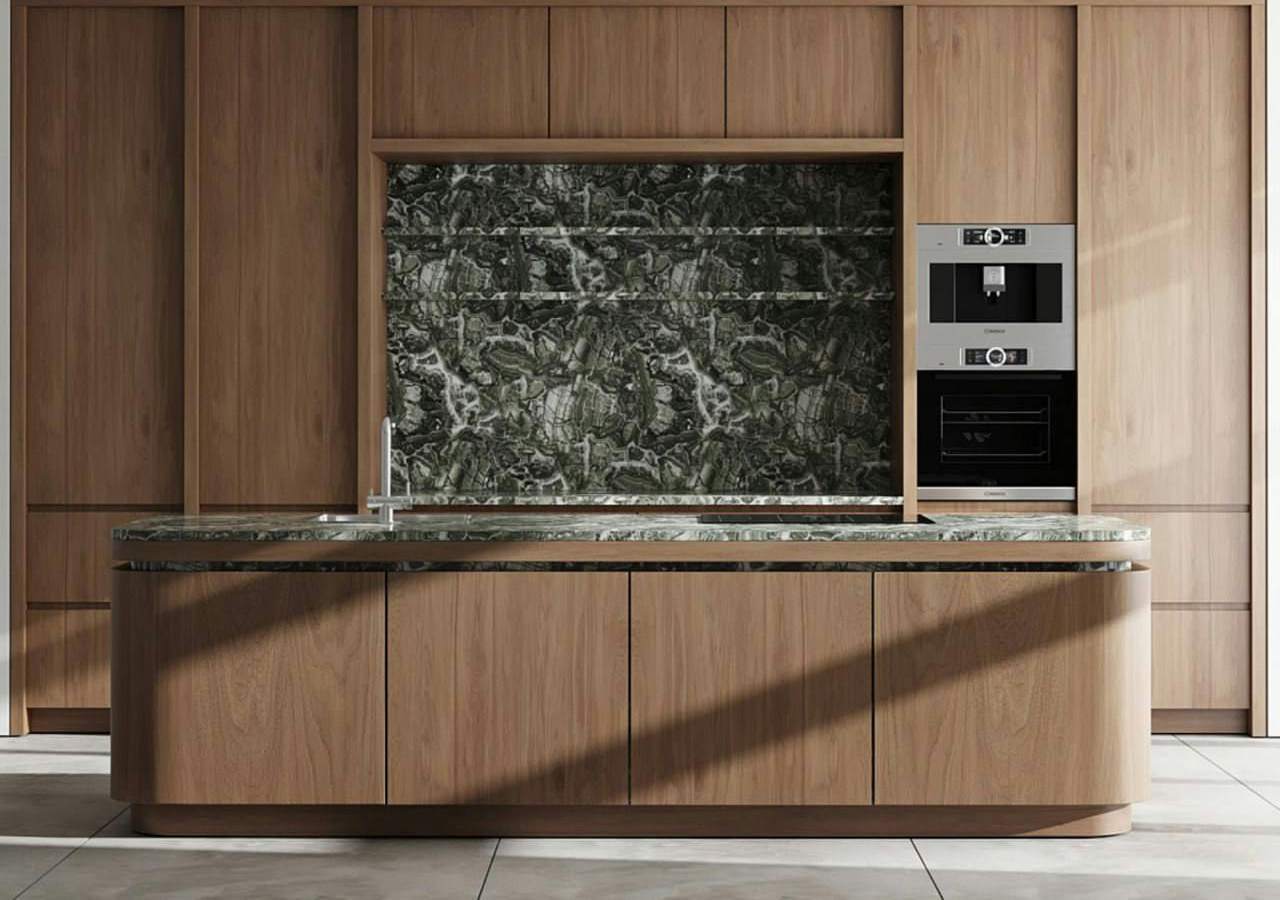
Higher cabinetry cost
Curved elements are almost always custom. Radius panels, curved doors, and shaped components take more time to produce and install than standard flat panels.
More complex stone fabrication
Curved countertops or overhangs require careful templating, specialized fabrication, and tighter coordination during installation. This adds cost and increases the chance of delays if not planned early.
Potential storage loss
Fully curved cabinet faces are less efficient than straight drawers. Internal storage becomes harder to organize, and usable volume often drops. Most practical designs avoid this by keeping storage linear.
Harder to execute cleanly
Curves need precision. Poor alignment, uneven radii, or rushed installation will be obvious. A straight kitchen is more forgiving.
Can feel forced in small layouts
In tighter kitchens, curves can reduce clearances and complicate the layout without adding real functional value. In these cases, the tradeoff is usually not worth it.
Fewer off-the-shelf options
Most kitchen systems are designed around straight modules. Introducing curves limits standard options and requires more custom work across cabinetry and countertops.
Where Curved Kitchens Make the Most Sense
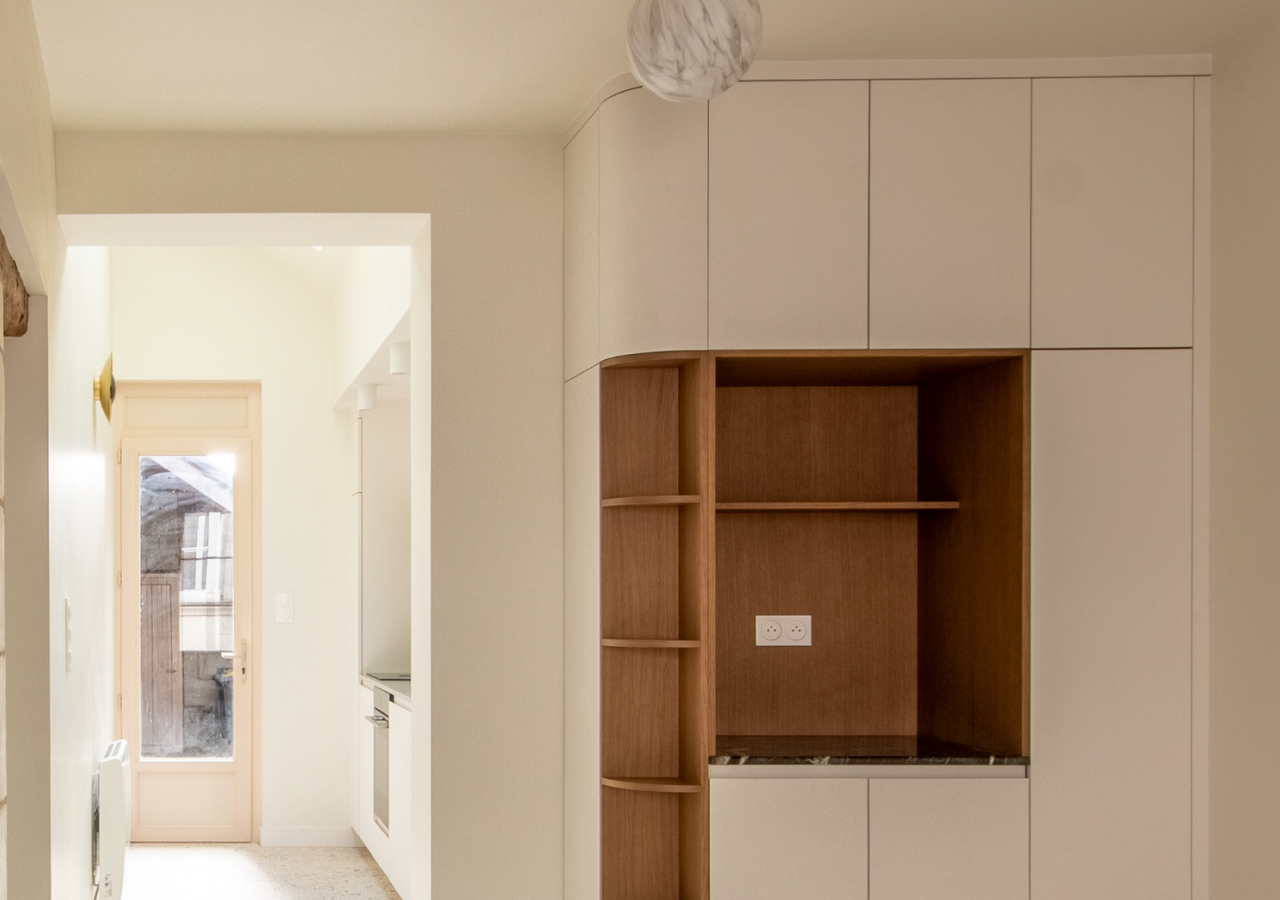
Curves tend to work best when they solve a real spatial problem or improve how the kitchen connects to the rest of the home. They are often most effective in open-plan kitchens, where the island is visible from the living or dining area and needs to feel more integrated with the overall space. In larger layouts, curves also have more room to work properly because clearances can be maintained without making the kitchen feel tighter or less efficient.
Curves can also make sense when the island sits at the center of movement and acts as a circulation hub. In that kind of layout, rounded edges can make everyday movement feel easier and more natural. Curves are also useful when the kitchen needs to read more like furniture than a purely functional work zone.
In homes where the kitchen is constantly in view, that softer presence can make a noticeable difference. The same is true in layouts with heavy foot traffic around corners or exposed edges, where a curve can improve both comfort and visual balance.
When a Curved Kitchen Is Probably Not Worth It
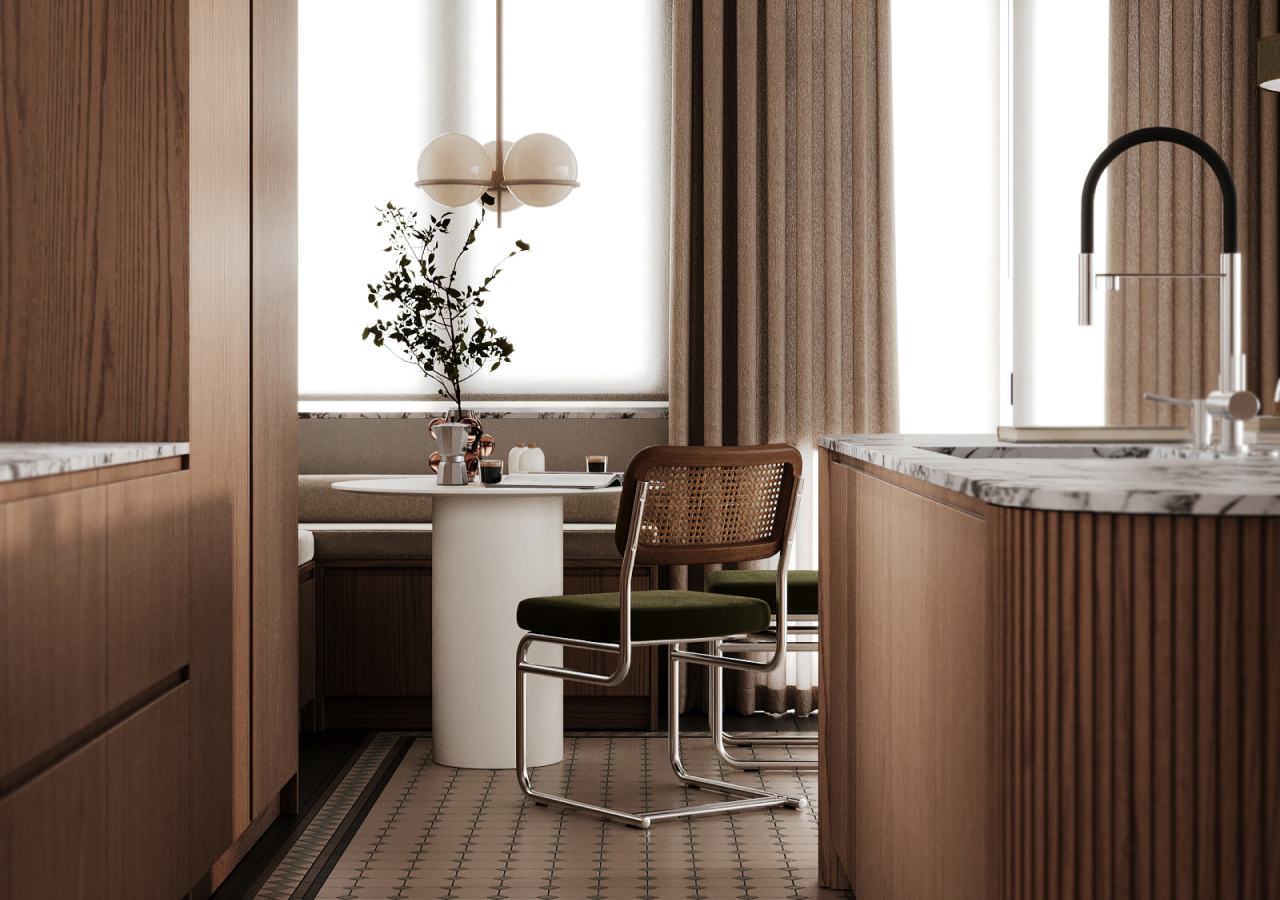
There are many situations where a straight kitchen layout will perform better. In small kitchens, where every inch of storage matters, curved elements often take away space without giving enough back in return. Galley kitchens can be especially difficult because the walkways are already limited, so introducing curves may reduce clearance or make the layout feel less efficient.
Budget is another major factor. Curved kitchens usually involve more custom work, which means higher cabinetry and fabrication costs. They also tend to be less practical in kitchens that depend heavily on drawer storage and internal organization, since straight runs are easier to plan and use efficiently.
In renovation projects, added fabrication complexity can also create practical issues, especially if the design team, cabinetmaker, and stone fabricator are not fully aligned. When the curve does not improve function, it often ends up being an expensive visual move with limited practical value.
Curved Island vs Straight Island: Which Is More Practical?
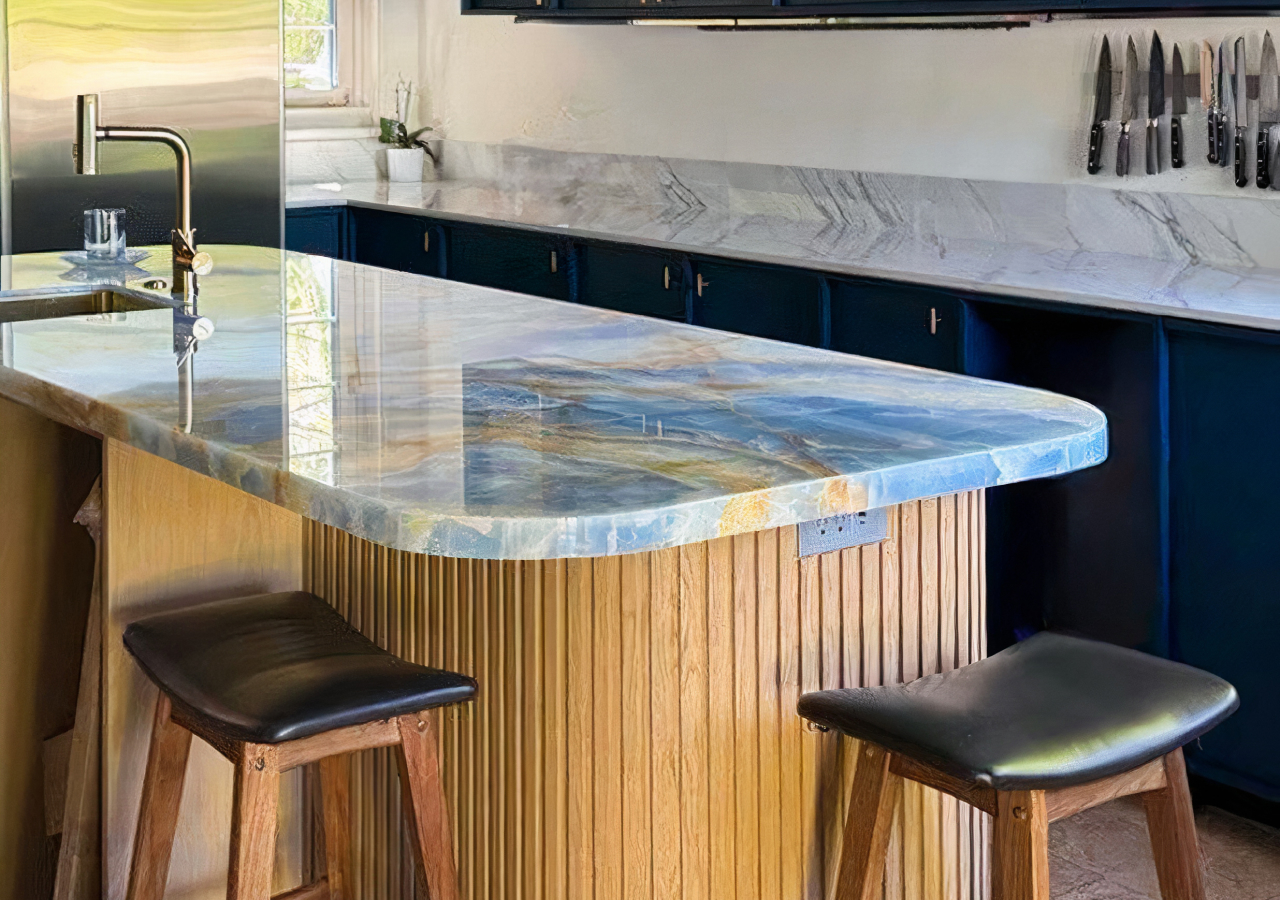
The better option depends on what the island needs to do. A curved island can improve movement and soften the overall feel of the kitchen, especially in open-plan spaces where the island is visible from several angles. A straight island is usually more efficient, easier to build, and better for storage. Neither is automatically better. The right choice depends on whether you are prioritizing flow, visual softness, storage, or budget.
In practice, many kitchens benefit from a middle-ground approach. A straight island with one curved end or a curved seating edge can improve movement and soften the look without giving up the storage efficiency and build simplicity of a standard island.
Questions to Ask Before Choosing a Curved Kitchen
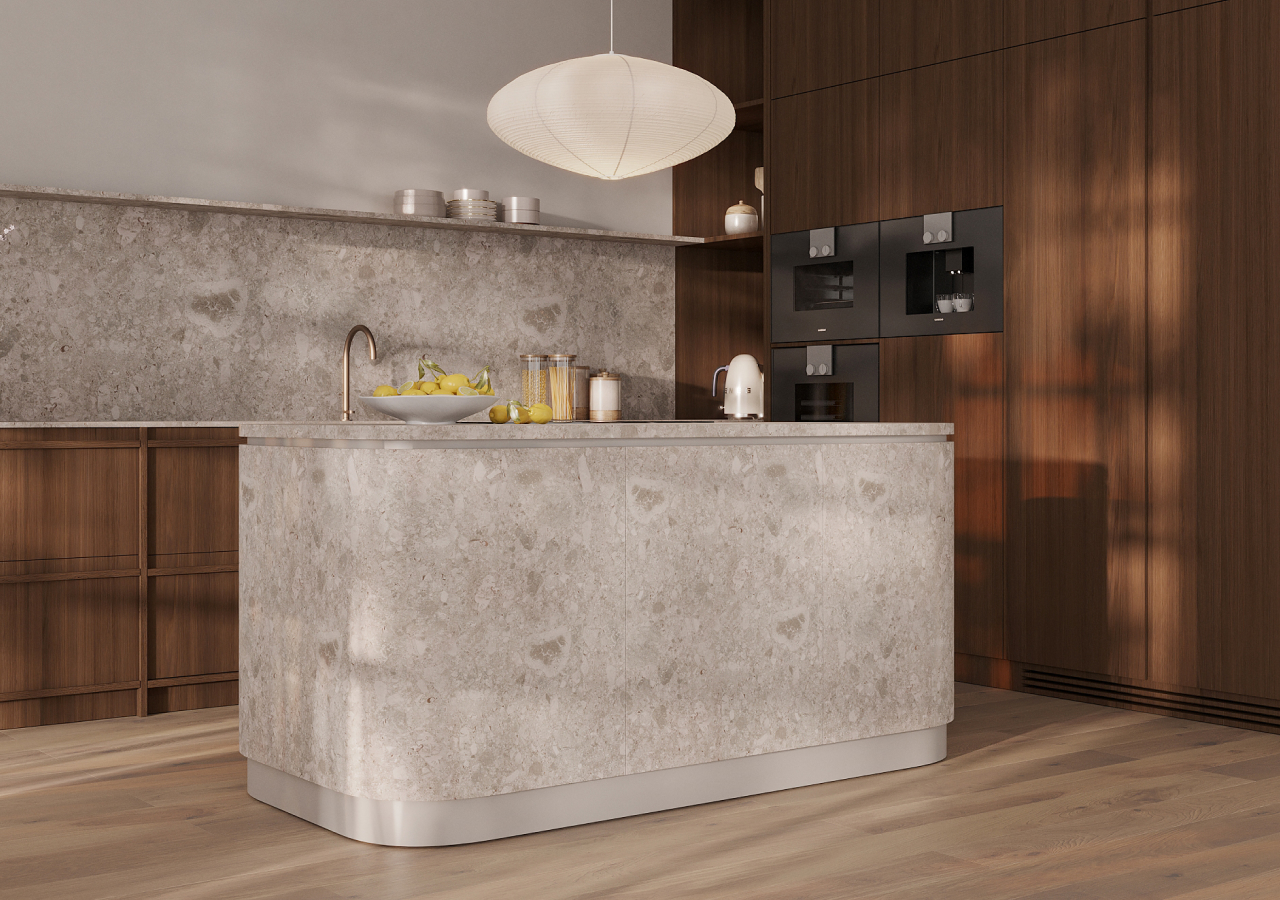
Before choosing a curved kitchen, it helps to step back and look at what the curve is actually doing. The first question is whether it improves movement or simply changes the appearance. From there, it is worth asking whether usable storage is being lost to achieve the shape, and whether the remaining layout still feels comfortable once stools, doors, and everyday movement are taken into account.
It is also important to think about execution. A curve only works if the cabinetmaker and stone fabricator can build it cleanly, so the design has to match the reality of fabrication. Cost matters too, because curved elements are usually more expensive and should be justified by how the kitchen will be used.
Finally, it helps to look at the kitchen as a whole and ask whether the curve is repeated in a way that feels intentional, or whether it appears once and feels disconnected from the rest of the design. If too many of these questions do not have a clear answer, that is usually a sign that a simpler solution will work better.
Conclusion
Curved kitchens can improve how a space feels and functions, especially in open layouts where the kitchen connects to the rest of the room. They soften harder lines, can make circulation easier, and often create a more comfortable seating zone around an island. At the same time, curves come with real tradeoffs. They usually cost more, require more complex fabrication, and can reduce storage efficiency if overused.
That is why the strongest curved kitchens are usually the most controlled ones. In many cases, a rounded island end or a softened corner is enough to change the feel of the space without complicating the whole layout.
If you are considering a curved kitchen, the goal should not be to follow a trend, but to improve how the kitchen works and moves. Seeing how curved elements are used in real kitchens can make that decision much clearer.
.webp)