
.webp)
A custom kitchen goes beyond nicer cabinets or more finish choices. The design starts with your room dimensions, appliance specifications, storage needs, and daily routine, then brings those decisions together into one coordinated system.
The goal is practical: cleaner lines, smarter storage, better appliance integration, and an installation that follows detailed drawings rather than relying on decisions made on site.
This guide explains Corner’s process from the first 3D proposal through production and installation support. It also outlines realistic planning timelines, the main cost drivers, and when design changes are easiest to make.
What Custom Means in Practice
.webp)
Custom cabinetry adapts to the room instead of forcing the room to fit a fixed set of cabinet sizes. Widths, heights, and depths can respond to the available space, while appliance openings, panels, fillers, and clearances are planned around the selected equipment.
Storage is also considered from the beginning. Drawer configurations, pull-outs, internal organizers, lighting, hardware, and appliance integration are coordinated with the overall layout rather than added after the cabinet plan is complete.
Custom design works best when the kitchen is treated as a system. Measurements, cabinetry, appliances, finishes, technical details, and installation all need to work together.
The Corner Process From Start to Finish
Initial 3D Proposal and Estimate

The first stage is designed to establish direction before the project moves into detailed design. After an initial call, you can share architectural plans or a measured sketch, ceiling height, appliance information if available, and a short brief about how you use the kitchen. Inspiration images are useful but not required.
A dedicated designer develops the layout in 3D, considers different planning directions, and reviews cabinet organization, appliance locations, clearances, and mechanisms. You receive an initial 3D proposal and detailed estimate, then review the concept together before deciding whether to move into the full design phase.
Design Phase, Iterations, and Samples
.webp)
Once the project moves forward, the design becomes more detailed. Cabinet proportions, internal storage, finishes, lighting, appliance integration, and other functional details are refined together. Most projects reach approval after two to three focused rounds of revisions within the agreed scope.
Render variations can help compare directions such as walnut versus light oak or warmer versus cooler neutral finishes. Physical samples make it easier to judge color, texture, and reflectivity in the actual room.
The $500 design deposit covers the detailed design phase, technical work, and physical samples. It is credited toward the final cabinet invoice if the project proceeds. If the project stops before ordering, the deposit is refunded minus sample shipping costs.
Technical Drawings

Once the layout, appliances, and finishes are confirmed, the project moves into technical documentation. The drawing set covers cabinet construction, panels, fillers, hardware, lighting details, appliance requirements, and relevant site conditions.
This stage reduces decisions during installation. Sloped ceilings, uneven conditions, fillers, plumbing locations, disposal requirements, ventilation, and appliance service clearances can be addressed before the cabinets enter production.
Production and Quality Control
.webp)
Production typically takes about four weeks after the final drawings and specifications are approved.
Before shipping, the kitchen goes through a pre-assembly quality-control step. The factory checks the cabinet set, documents it with photos or video, then disassembles and packages the components for delivery. This provides an additional opportunity to identify issues before the order leaves the factory.
Shipping and Delivery Planning
.webp)
The estimate includes a delivery line covering packing, freight, import duties, and customs brokerage, giving you a clearer view of the landed cabinet cost before ordering.
Shipping time depends on the destination and freight method. Sea freight is generally more economical but takes longer. Air freight can shorten transit time at a higher cost. Available options can be reviewed for the individual project.
Installation Support
.webp)
Corner supplies the cabinets, technical drawings, and installation support, but does not directly perform the installation.
In Chicago, Corner can often introduce installers familiar with the cabinet system. In other locations, the team can coordinate with your local contractor, answer cabinet-related questions, and provide clarification during installation.
Installation time varies with kitchen size, site conditions, and project complexity. A relatively straightforward kitchen may take around a week for cabinet installation, while more complicated projects should allow additional time.
Timeline at a Glance
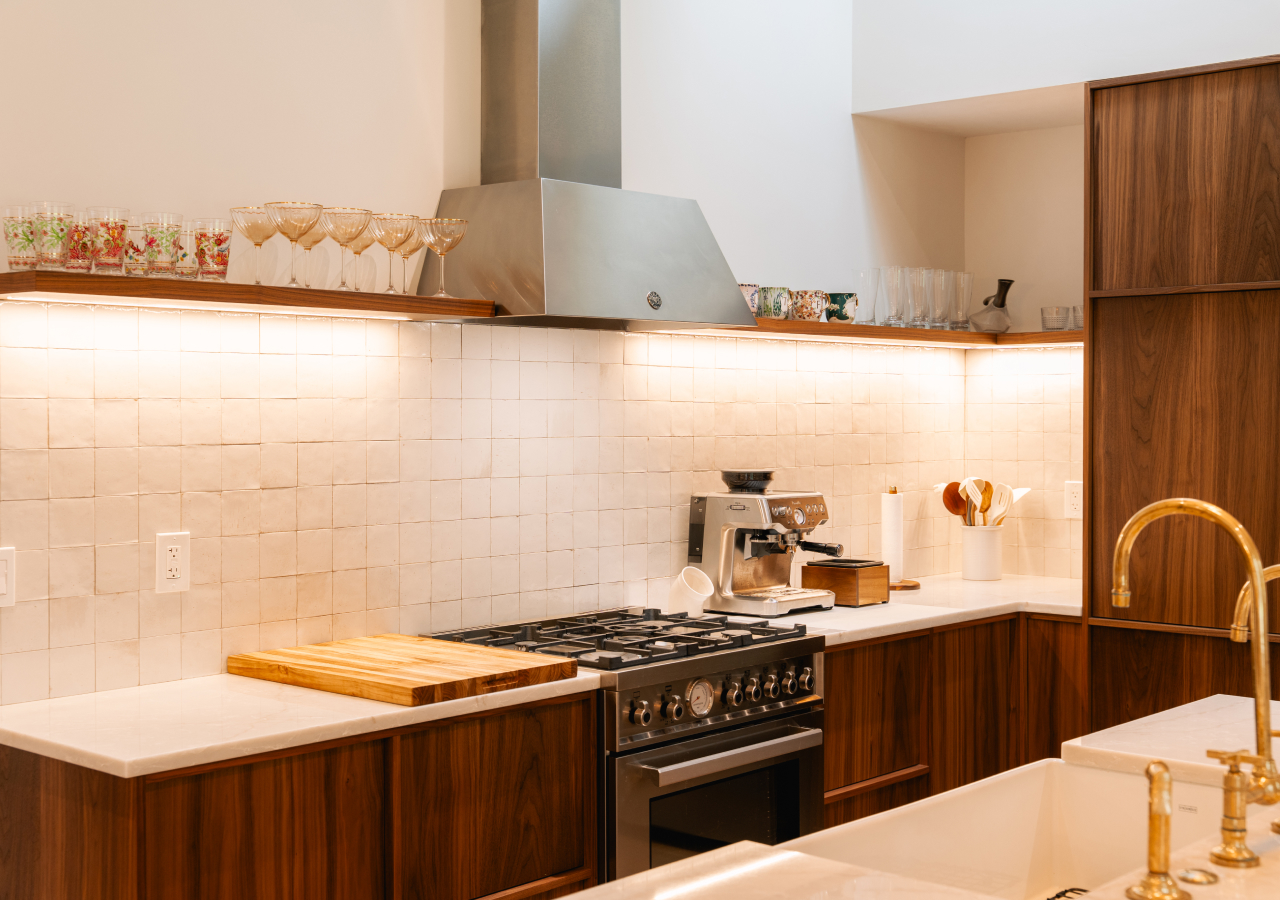
After the design and technical drawings are fully approved, a practical planning baseline is approximately four weeks for production and quality control, followed by shipping. Around eight weeks from sign-off to cabinet delivery can be a useful planning reference for some projects, but the actual schedule depends on freight method, destination, project complexity, and delivery conditions.
| Stage | What happens | Typical timing |
|---|---|---|
| Initial proposal | First 3D concept and detailed estimate | Often about 1 week |
| Design phase | Iterations, samples, and final design approval | Varies by scope and decision-making |
| Technical drawings | Construction details and final specification checks | After design approval |
| Production and quality control | Build, pre-assembly check, documentation, and packing | About 4 weeks |
| Shipping to site | Freight, customs, and delivery | Often a few weeks |
| From sign-off to delivery | Approved drawings through cabinet delivery | Around 8 weeks can be a useful planning reference, depending on the project |
The schedule becomes much easier to protect when appliance models, finishes, and major layout decisions are finalized before technical approval.
Cost Explained in a Clear Way
.webp)
Custom kitchen cost is influenced more by complexity than by the word “custom” itself. Integrated appliances, ceiling-height cabinetry, specialized storage mechanisms, mixed materials, lighting details, and unusual site conditions can all add engineering, material, or production work.
Corner’s cabinet estimate identifies what is included in the project scope. Appliances, countertops, installation labor, and local construction trades are generally handled separately, while Corner coordinates the cabinet-related specifications and drawings needed to make those elements work together.
What Is Included in the Cabinet Scope?
Always review the individual estimate, since the exact scope can vary by project.
Cost Drivers and How to Control Them
The most effective way to manage budget is usually to simplify selectively rather than remove every custom detail. Spend more where the feature affects daily use or the overall architecture of the room, then keep secondary areas quieter.
| Cost driver | What can increase cost | How to control it without cheapening the result |
|---|---|---|
| Layout complexity | Multiple corners, offsets, and unusual angles | Simplify cabinet runs and keep transitions intentional |
| Tall cabinetry | Full-height walls and appliance towers | Use tall cabinetry where it provides the most storage or visual impact |
| Appliance integration | Panels, specialty housings, ventilation, and clearances | Finalize appliance models early |
| Finish selection | Veneer matching and premium matte surfaces | Use one primary finish and limit unnecessary mixing |
| Storage hardware | Pull-outs, internal drawers, and corner mechanisms | Prioritize the areas used most often |
| Site conditions | Uneven floors, out-of-square walls, and irregular ceilings | Resolve fillers, scribes, and panels in the drawings |
Choosing Stock, Semi-Custom, or Custom
.webp)
Stock cabinetry can work well for simple layouts where speed and budget are the main priorities. Semi-custom provides more flexibility but still relies on a defined system of cabinet dimensions and options.
Custom becomes more useful when exact proportions, integrated appliances, ceiling-height cabinetry, unusual room conditions, or a more built-in architectural look matter to the project.
OptionBest forMain tradeoffsStockSimple layouts and speed-focused projectsMore fillers, fewer sizes, and limited integrationSemi-customProjects that need some flexibilityMore options, but still constrained by a preset systemCustomIntegrated appliances, tall runs, exact fit, and non-standard roomsMore planning and generally higher cost
For a deeper comparison, see our guide to stock, semi-custom, and custom kitchen cabinets.
Handling Changes Without Derailing the Schedule
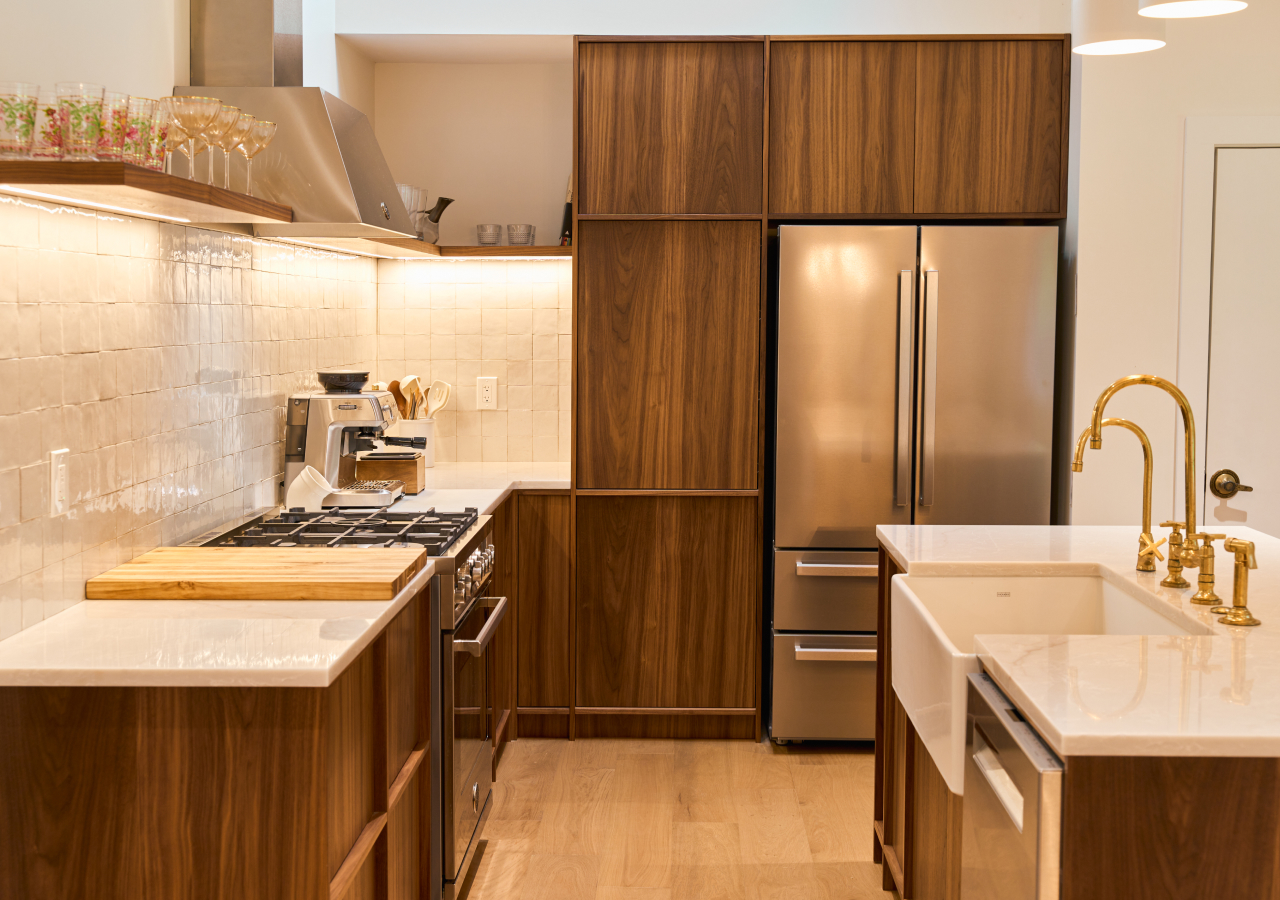
Design changes are easiest and least disruptive before technical approval. The design phase allows the layout, finishes, storage, and appliance integration to be refined before production dimensions are locked.
After technical sign-off, structural changes can affect drawings, materials, production, and the delivery schedule. Small accessory adjustments may still be possible depending on the item and production stage, but major changes should be resolved earlier whenever possible.
Appliance selection is particularly important. If models have not been chosen during the first concept, the design can begin with reasonable assumptions, but final appliance specifications should be confirmed before technical drawings are approved.
Conclusion
Custom kitchen projects are easier to manage when they follow a clear sequence: establish the layout, refine the design, confirm appliances and finishes, complete technical drawings, then move into production, quality control, shipping, and installation.
A measured sketch or floor plan, ceiling height, and a few references are enough to begin the conversation. From there, Corner can prepare an initial 3D proposal and detailed estimate so the next decisions are based on the actual project rather than assumptions.
Explore Corner’s completed kitchen projects and pricing examples, or book a consultation to review what your cabinet scope could include.


