
.webp)
Corner designer Agustina Ricci visited Salone del Mobile and EuroCucina 2026 in Milan, where one shift stood out clearly: kitchen design is becoming more functional and more expressive at the same time.
The strongest ideas were not just about new colors or finishes. They were about how the kitchen works as part of daily life. Islands are becoming more complex, materials are getting bolder, lighting is being built into the architecture, and stainless steel is making a visible return.
For Agustina, this was her first visit to Salone del Mobile, though not her first time at an international design event. She had previously visited Warsaw Home & Contract Expo, and while living in Argentina, she regularly attended Casa FOA. In Milan, the main takeaway was clear: the kitchen is no longer treated as a separate work zone. It is becoming a more layered, personal, and central part of the home.
The Main Kitchen Trends Corner Noticed in Milan

At Salone del Mobile and EuroCucina 2026, Corner noticed five kitchen design trends with real-home relevance: multifunctional islands, bolder natural materials, curved forms, integrated architectural lighting, and the return of stainless steel. The broader shift is toward kitchens that feel more functional, expressive, and connected to the rest of the home.
The Island Is Becoming the Kitchen’s Main Working Center
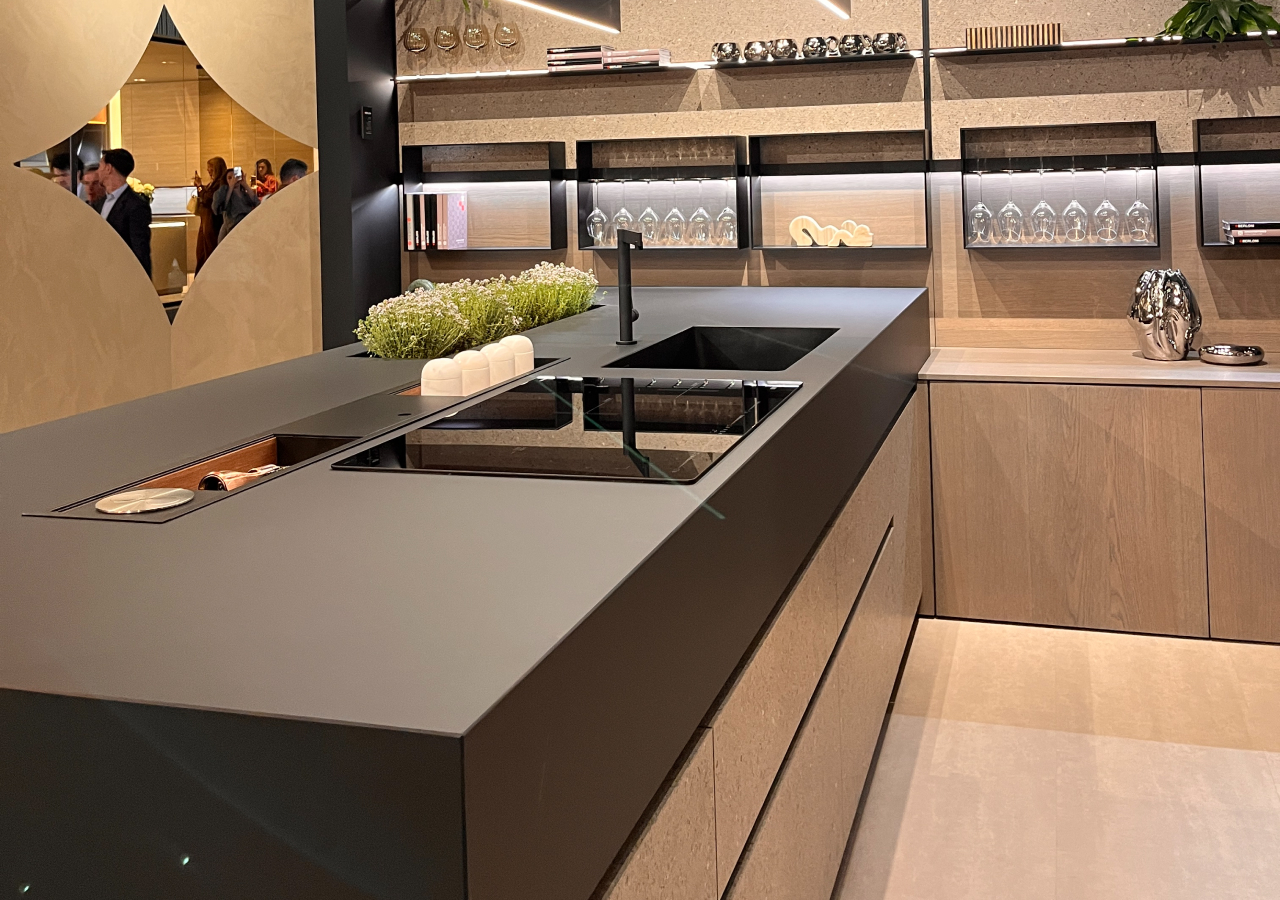
One of the clearest shifts Agustina noticed was the way brands are rethinking the kitchen island. It is no longer treated as a simple prep surface, dining table, or static block of cabinetry. More designs are turning the island into the main working center of the kitchen, with storage, prep, drainage, display, and gathering functions built into one structure.
“The kitchen island has evolved. It is no longer a simple table or a static block of cabinetry,” says Agustina Ricci, designer at Corner.
At EuroCucina, many islands were designed as multifunctional centers. Storage, drainage, display, and prep functions were built directly into the structure rather than added around it.
.webp)
Some islands included hidden drop-down elements in the middle of the countertop. Others had integrated draining boards, concealed storage, or open shelving built into the center of the island.
That open shelving detail felt especially relevant. It breaks up the mass of the island, gives everyday objects a visible place, and makes the island feel less like a heavy block and more like an architectural feature.
The bigger point is that the island should not be planned only around how it looks from the front. It should be planned around how people cook, gather, store, clean, and move through the kitchen every day.
Materials Are Getting Bolder, But More Natural
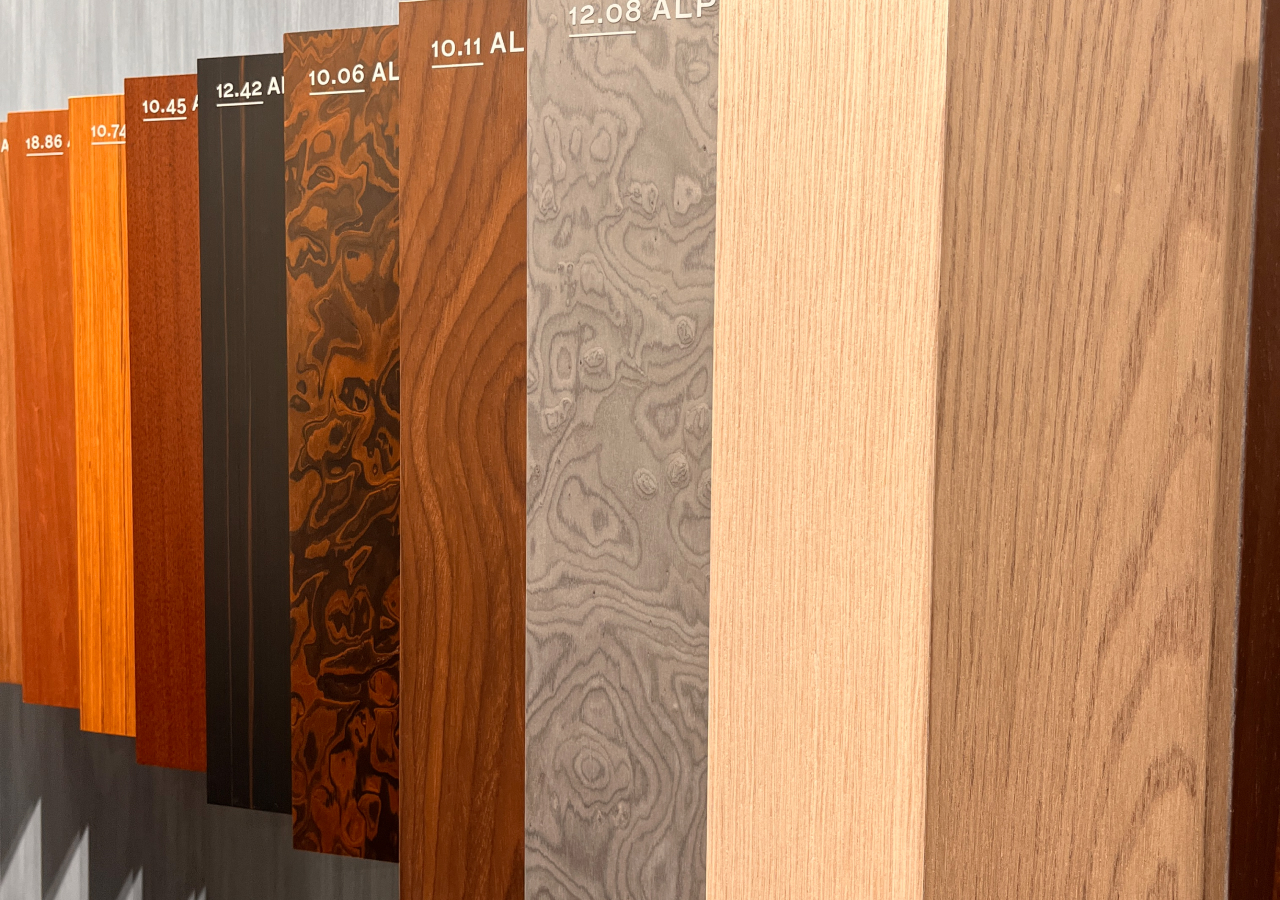
Another strong direction was the move toward more expressive materials. The kitchens Agustina saw were not relying only on quiet neutrals or flat minimalist surfaces. They used stronger textures, visible veining, glass, metal, and color in a much more confident way.
“We’re moving away from shy neutrals and seeing bolder forms, richer materials, and more expressive kitchens,” says Agustina.
This does not mean every kitchen needs to become loud. The more interesting shift is that materials are being allowed to show more character.

Stone appeared with heavier veining. Wood had more visible texture. Glass was used not only as a light surface, but as a material with depth. Metal accents added contrast and structure.
The result was less sterile and more tactile. These kitchens still felt refined, but they had more movement, texture, and visual weight.
This is where modern minimalism is changing. A calm kitchen does not have to be flat or empty. It can include a strong stone, rich wood tone, fluted glass, or sharper metal detail, as long as the overall composition stays controlled.
Curves Are Softening Kitchen Architecture

Curves were another clear trend at Salone del Mobile 2026. They appeared across islands, cabinet forms, transitions, and smaller architectural details. In kitchens, curved forms help soften the technical feeling created by straight cabinet runs, large appliances, stone surfaces, and storage walls.
“Curves and more curves are softening the traditional rigid lines of kitchen architecture,” says Agustina.
This matters because kitchen design can easily become very technical. Straight cabinet runs, large appliances, stone surfaces, and storage walls can make a space feel efficient but hard.
.webp)
Rounded forms change that feeling. A curved island, softened end panel, rounded shelving detail, or smoother transition can make the kitchen feel more human and more connected to the rest of the living space.
This is especially relevant for open-plan homes, where the kitchen is always visible. Softer shapes help the kitchen sit more naturally alongside dining and living areas.
Curves are not only decorative. They can help solve proportion, circulation, and visual weight. A curved island, for example, can make a large kitchen feel more approachable while still keeping the design architectural.
Lighting Is Becoming Part of the Kitchen Architecture
.webp)
Lighting was one of the clearest trends at EuroCucina. It was not treated as an afterthought or a final decorative layer. Instead, lighting was built into the kitchen itself, shaping cabinets, shelves, materials, and islands.
“Lighting in the kitchen is no longer just a detail; it is a main character,” says Agustina.
Agustina noticed lighting inside glass cabinets, along shelves, around textured surfaces, and above islands as a sculptural focal point. In many kitchens, light was used to define the shape of the design, not just to make the zone brighter.
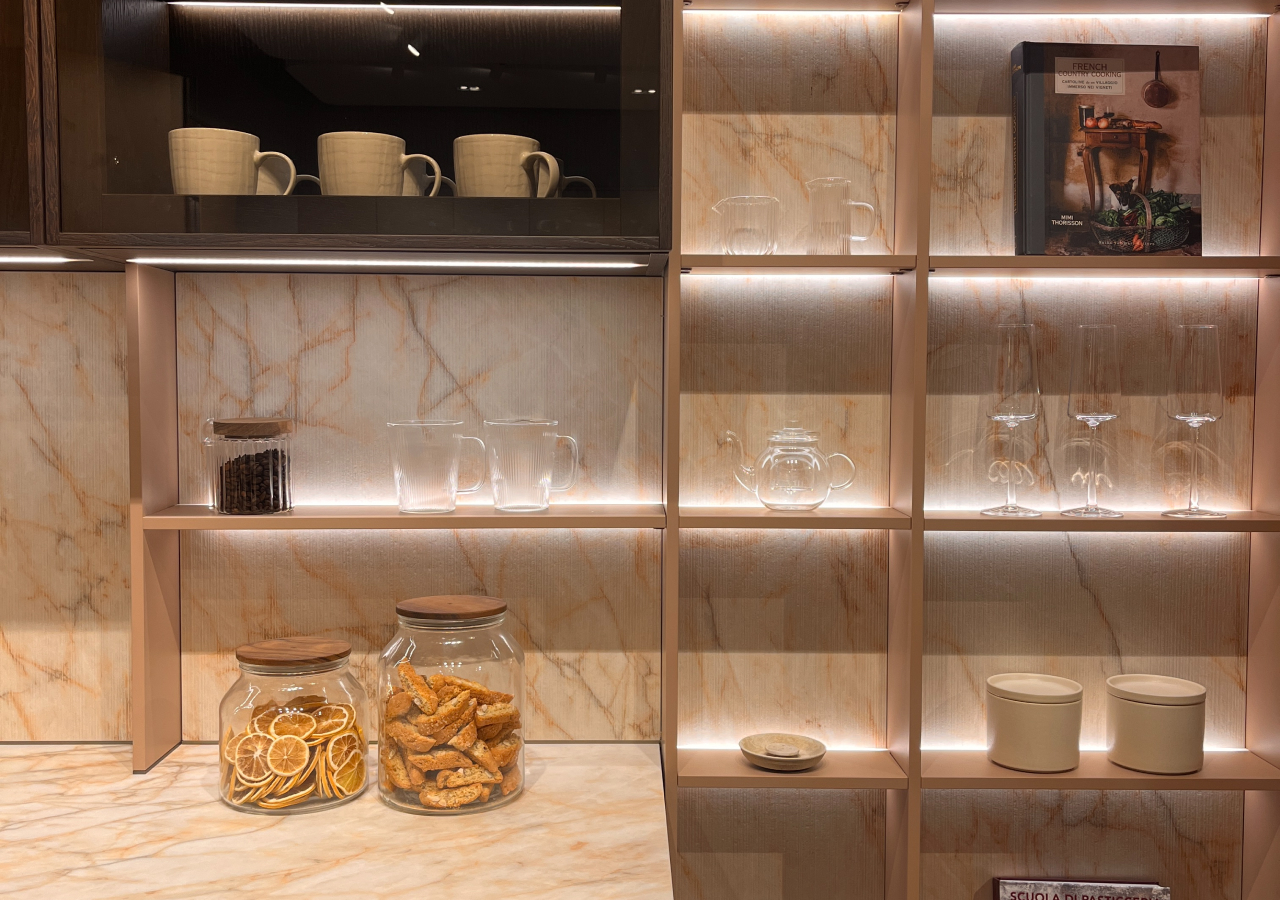
This shift is important because lighting changes how materials are experienced. A textured front, stone surface, or glass cabinet can look completely different when it is lit from within or highlighted from the right angle.
It also makes the kitchen more adaptable. Bright task lighting supports cooking and prep. Softer integrated lighting changes the mood in the evening, especially in kitchens connected to the living space.
This is one of the most practical trends to bring into real homes. Integrated shelf lighting, lit glass cabinets, under-shelf lighting, and carefully placed island lighting can make a kitchen feel more finished while also making storage and daily use easier.
Stainless Steel Is Back, But It Needs Warmth
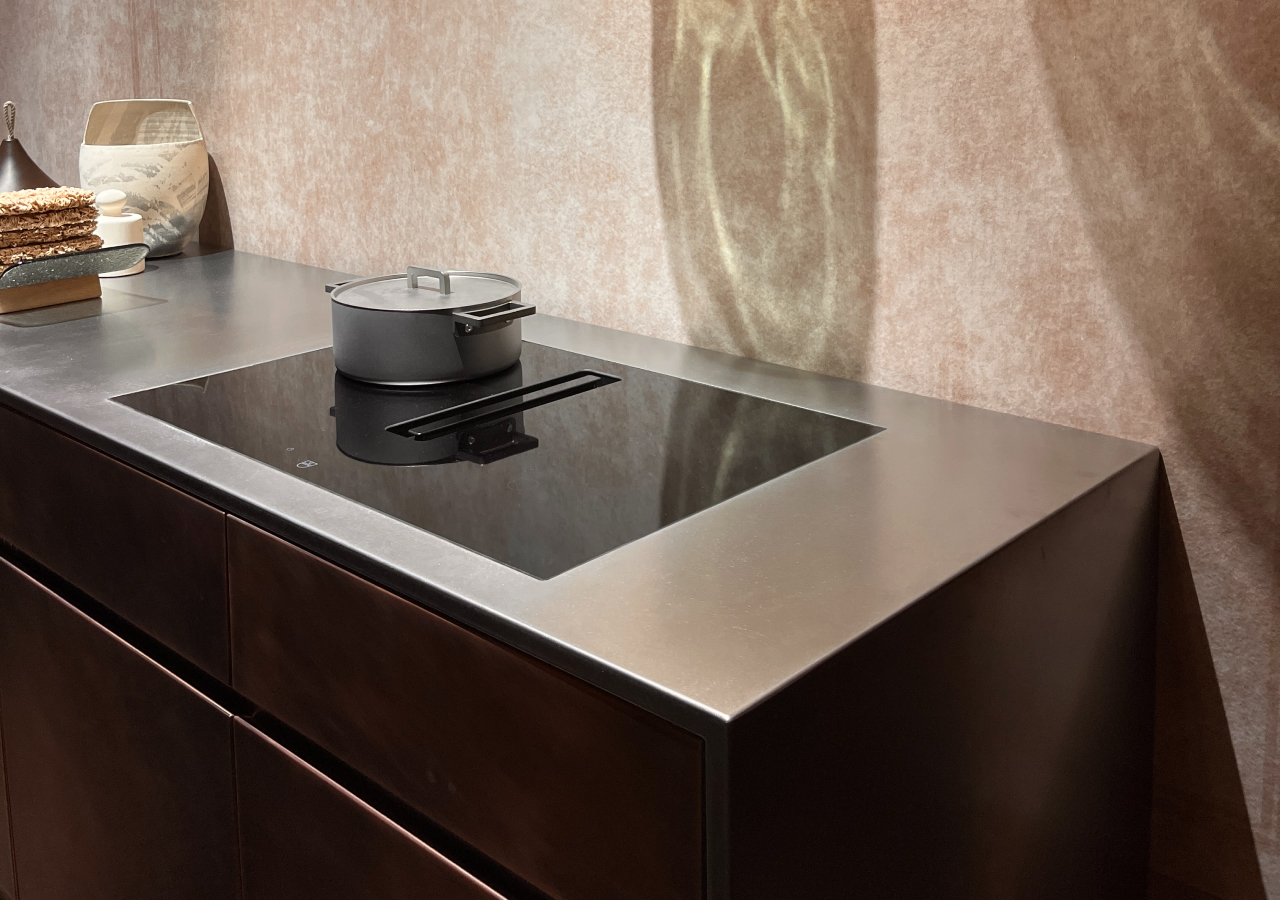
Another trend was hard to miss: stainless steel is returning to residential kitchen design. At Salone del Mobile and EuroCucina, stainless steel appeared as a sharper, more professional material choice, often bringing the feeling of restaurant kitchens into residential spaces.
“There’s an undeniable elephant in the room, and it is the return of stainless steel,” says Agustina.
The material immediately brought to mind professional restaurant kitchens. It feels functional, precise, industrial, and bold. That is also what makes it difficult. In a private home, too much stainless steel can feel cold or clinical. The most successful examples were the ones that balanced steel with warmer materials and softer forms.
.webp)
Wood, stone, warm lighting, curved shapes, and textured surfaces can all make stainless steel feel more livable. Used carefully, it adds a sharper edge to the kitchen without making the space feel harsh.
The more interesting challenge is how to adapt stainless steel for real homes. A steel-inspired detail, work surface, accent, or collection direction could bring a more professional and functional feeling into a kitchen while still keeping the warmth and balance that modern homes need.
What These Trends Mean for Real Kitchens

The most useful takeaway from Milan was not that every kitchen should become bolder, curved, or industrial. It was that kitchen design is becoming more intentional.
The best ideas were the ones where function, material, lighting, and form worked together from the beginning. Islands were not just visual centerpieces. They became storage, prep, display, and gathering zones. Lighting was not just decorative. It shaped the atmosphere and highlighted the architecture. Materials were not chosen only for color. They brought texture, depth, and character into the space.
That is what makes these trends relevant beyond the exhibition floor. A kitchen can be highly functional without feeling purely technical. It can be expressive without becoming loud. It can use stronger materials, softer forms, and more layered lighting while still feeling calm and livable.
Conclusion
At Corner, these ideas matter only when they can be translated into real projects. A trend from Milan has to work with the client’s layout, daily routines, materials, budget, and overall aesthetic.
That is where it becomes more than inspiration. Multifunctional islands, expressive materials, integrated lighting, softer forms, and a more considered use of steel are not ideas to copy directly. They are design tools that can be adapted to each home.


