
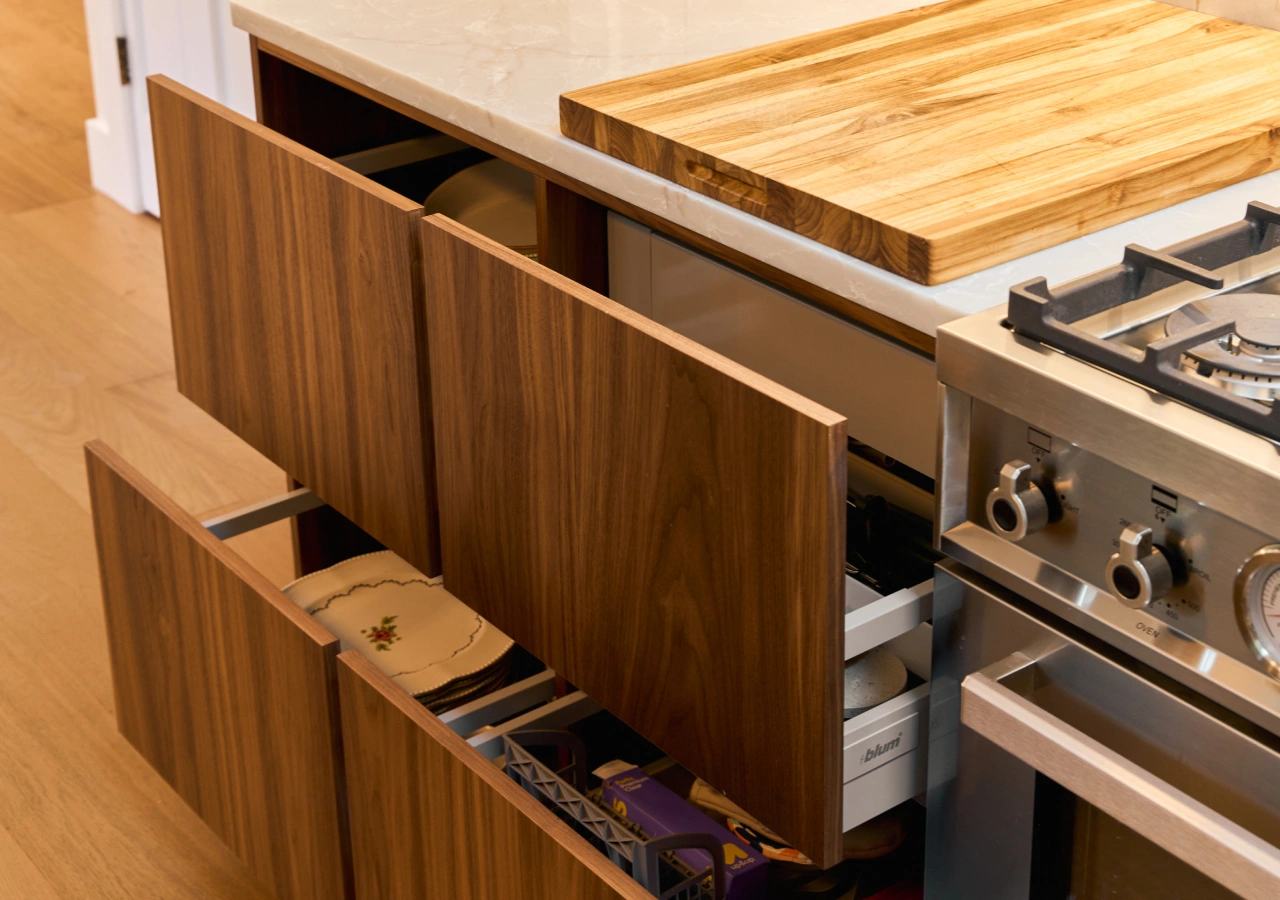
A Japandi kitchen can look restrained without being short on storage. The cleaner the room appears, the more important the organization behind the cabinet fronts becomes. Pots, dishes, pantry food, appliances, recycling, spices, and everyday tools still need convenient places to live.
The goal of Japandi kitchen storage is to place the right type of storage in the right zone so counters stay clear and daily items are easy to reach. Deep drawers, inner drawers, all-drawer islands, selective pull-outs, and organized pantry walls can carry much of that work while the exterior remains calm and composed. This guide is based on recurring storage questions Corner hears during kitchen planning conversations.
Start With Drawers Instead of Lower Cabinet Doors
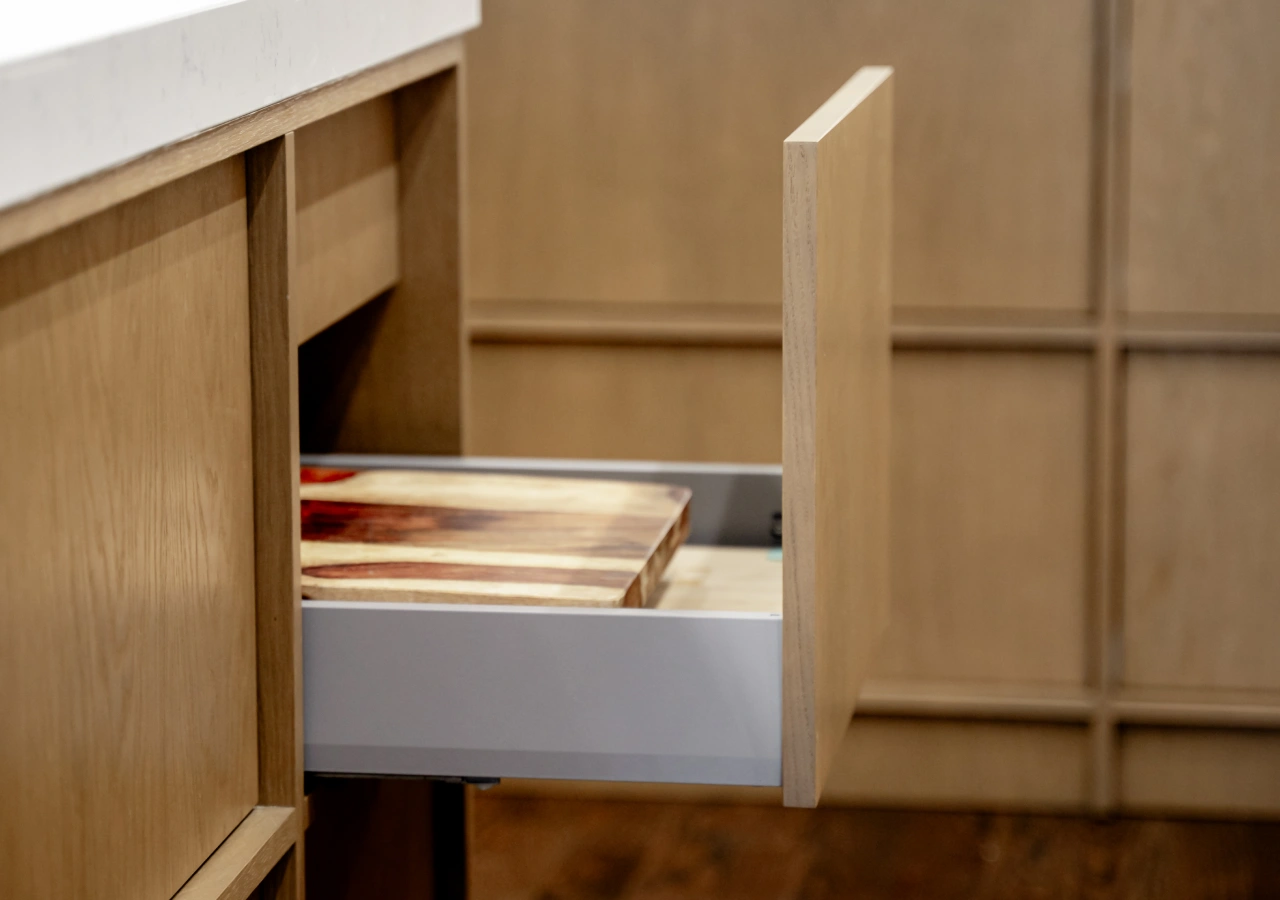
For most frequently used base storage, drawers provide better visibility and access than cabinets with doors and fixed shelves. You pull the contents toward you instead of crouching and reaching behind whatever is stored in front.
A drawer-first approach works best when drawer height and internal structure match what will actually be stored. Deep drawers can hold cookware, dishes, and pantry goods, while shallower drawers keep utensils and smaller tools organized. A more detailed kitchen drawer organization guide can help when deciding how to divide those categories.
This is especially useful in a Japandi kitchen with fewer upper cabinets. Instead of moving every item onto an open shelf, storage can shift into deep drawers, inner drawers, pull-outs, islands, and a defined tall-storage area. The same principle applies when planning a kitchen without upper cabinets, where lower and tall storage need to carry more of the everyday load.
Drawer-heavy lower cabinetry also supports accessibility. Frequently used items can stay at a more comfortable height, which is particularly useful for homeowners who want to reduce overhead reaching.
Japandi Kitchen Storage Planning Guide
The right combination depends on what you own, how often you cook, and which storage zones need the easiest access.
Use Deep Drawers Where Bulky Items Actually Live
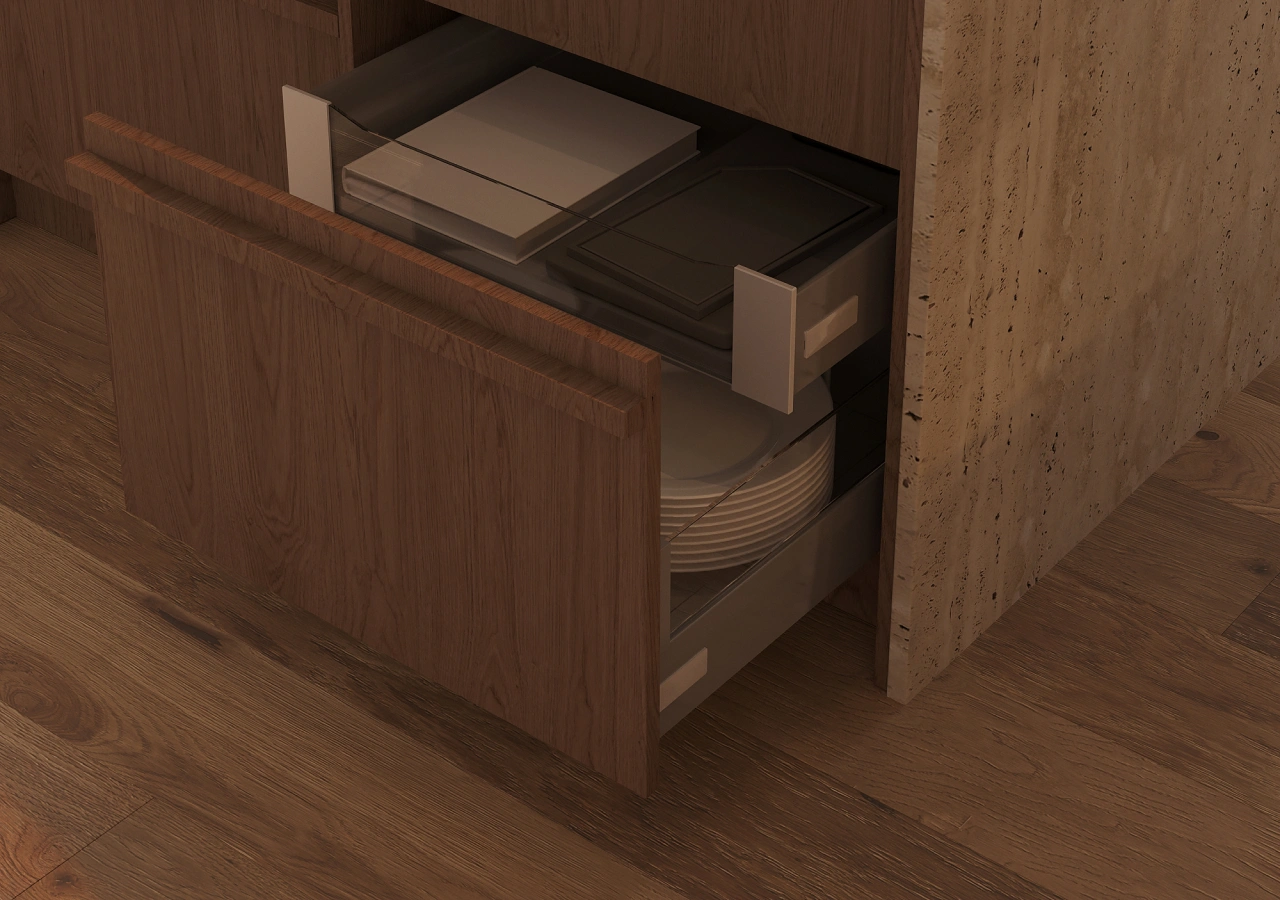
Deep drawers are most useful where objects would otherwise be stacked two or three layers deep inside a base cabinet. Cookware, bowls, food containers, plates, and some pantry categories become easier to see when the entire storage area moves outward.
Placement matters just as much as drawer size. Pots and pans usually make sense near the cooktop. Prep bowls and food containers work well near the main preparation area. Dishes can sit close to the dishwasher so unloading involves fewer steps. These are also useful considerations when working through a broader drawer organization plan.
Thinking in zones helps keep the design efficient. Storage should follow the routine rather than forcing the homeowner to adapt to a symmetrical but less practical cabinet layout.
Turn the Island Into an All-Drawer Storage Zone
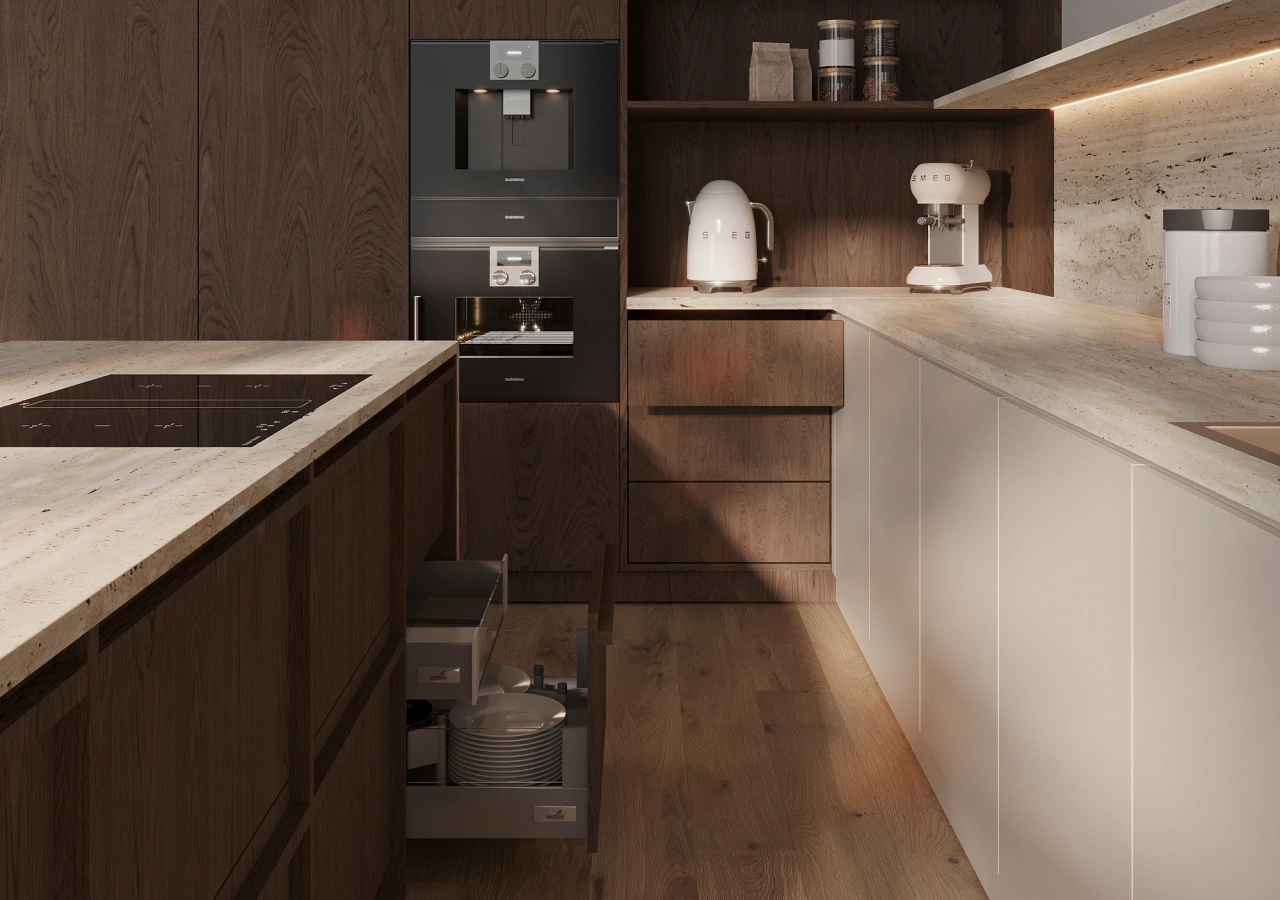
An all-drawer island can become one of the main storage centers in a Japandi kitchen. Instead of acting mainly as seating or a visual centerpiece, it can hold cookware, serving pieces, prep tools, bowls, food-storage containers, and other high-use items.
In a minimalist island, a drawer-first layout can carry substantial storage while preserving one simple exterior volume. Deep drawers can handle larger items, inner drawers can organize tools, and integrated waste can sit close to the prep area. This works especially well when planning a minimalist kitchen island around a clear functional role.
The important decision is to establish the island's job first. A prep-focused island needs different storage from one used mainly for serving or dish storage. Trying to fit every possible function into it can make both the cabinetry and countertop harder to use.
Use Inner Drawers for Organization Without Extra Exterior Lines
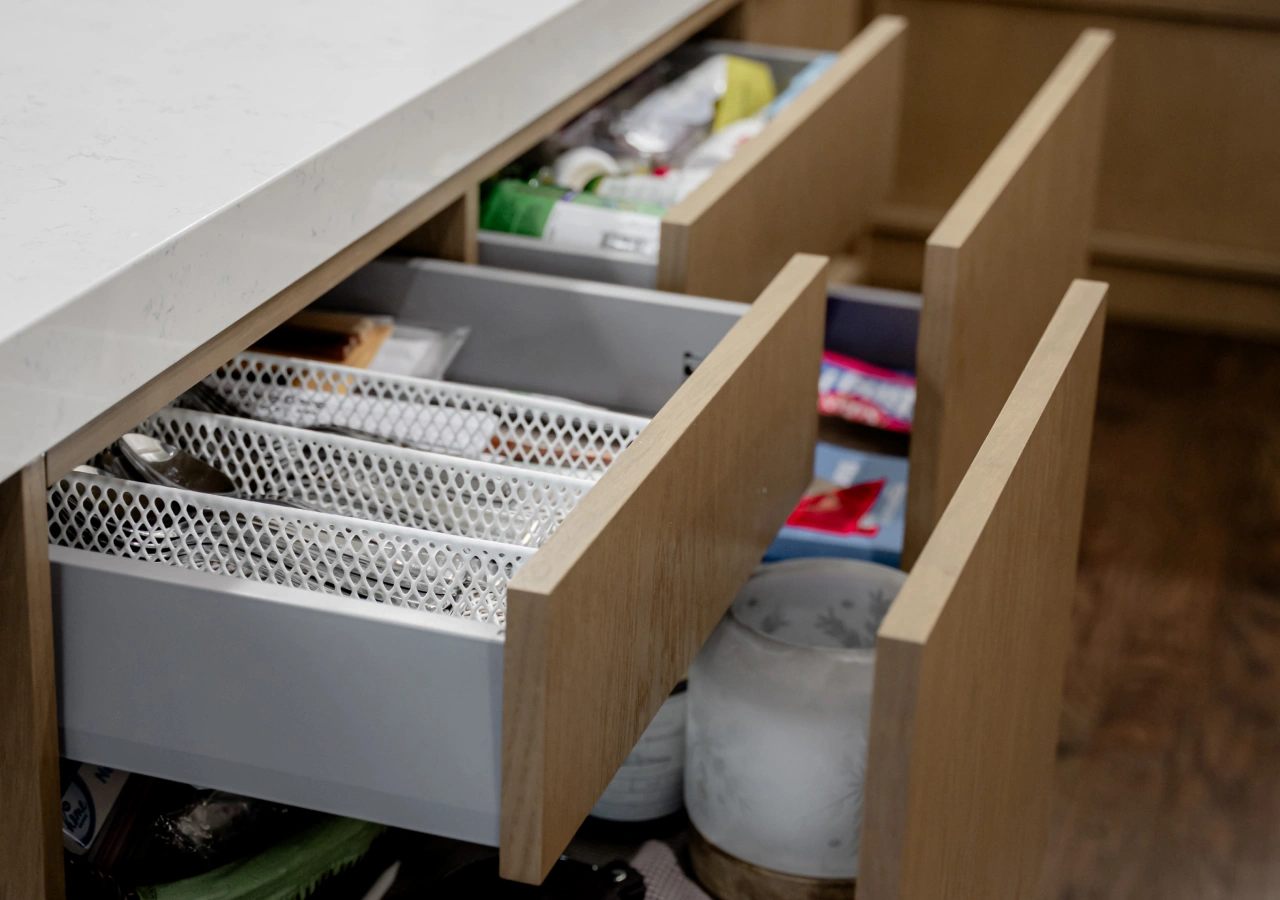
Inner drawers create several storage levels behind one larger exterior front. The kitchen keeps a consistent cabinet grid while utensils and smaller items remain separated inside.
They work particularly well for flatter categories such as utensils, trays, wraps, linens, and prep tools. An inner drawer can also sit above a deeper compartment for cookware or other bulky pieces. The choice also connects to the wider system of drawer hardware and internal organizers.
This is useful in a light oak, slab-front, or handleless Japandi kitchen where too many visible drawer fronts could make an elevation feel fragmented.
Inner drawers are not necessary everywhere. If an item is heavy, tall, or used constantly, opening an exterior front and then a second drawer may add unnecessary movement. Use them where hidden layering genuinely improves the layout.
Add Pull-Outs Where They Solve a Specific Problem
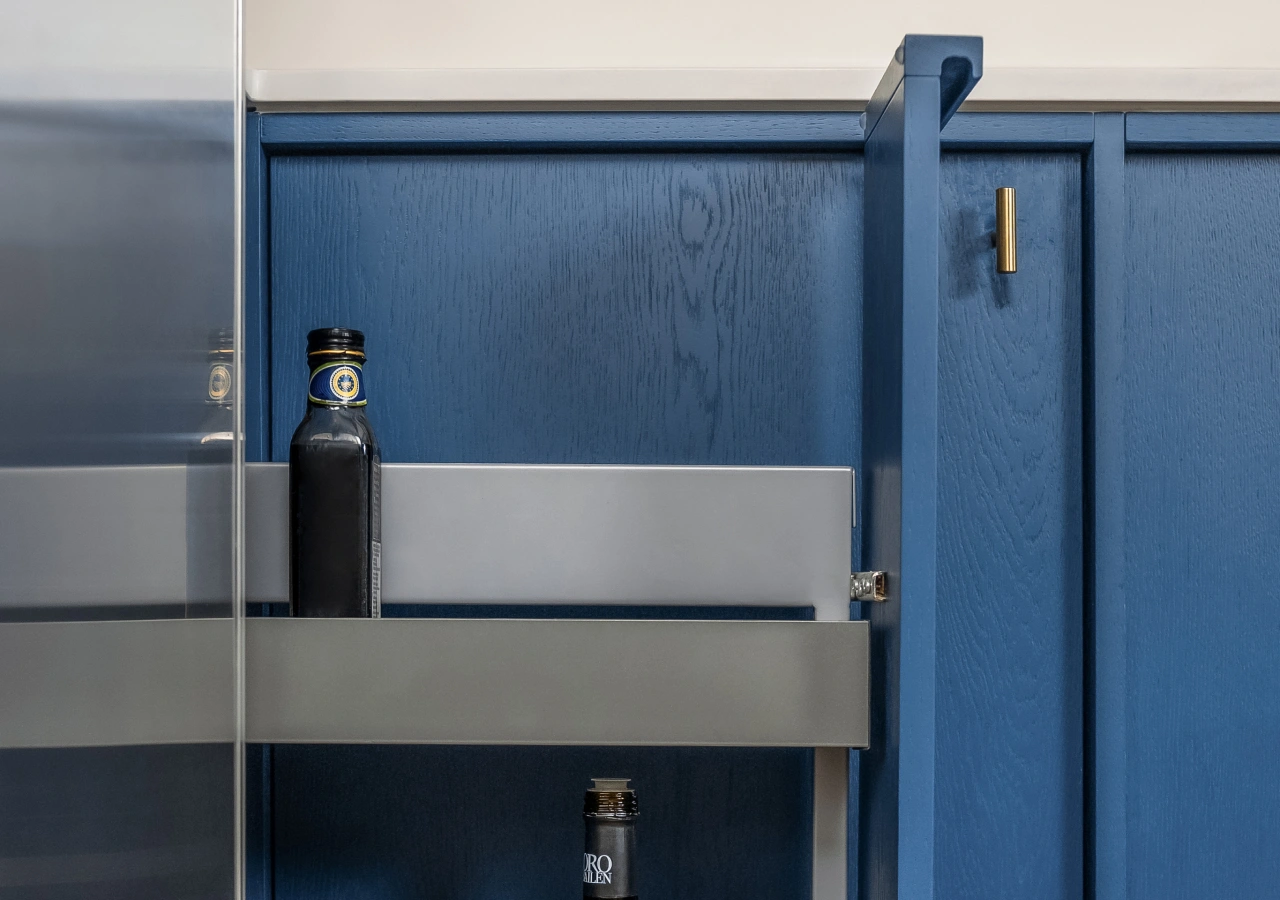
Pull-outs work best when they improve access to a specific category or difficult location. They should not be added simply because a narrow gap or spare cabinet width happens to be available.
A spice pull-out, for example, can work well near the range or main prep area when it keeps frequently used jars visible and easy to reach. Other kitchen storage ideas can be useful for comparing when a pull-out is worth adding and when a standard drawer is enough.
Trash, recycling, and compost pull-outs fit into the same planning system. Their role here is simply to keep waste close to prep or cleanup while preserving a clean cabinet elevation. The practical details are covered separately in the guide to kitchen trash-bin pull-outs.
Corner-cabinet pull-outs can also improve access where a standard corner cabinet would otherwise require reaching deep into the cabinet. The key is to use the mechanism where it meaningfully improves everyday access.
Let the Pantry Wall Carry More of the Storage
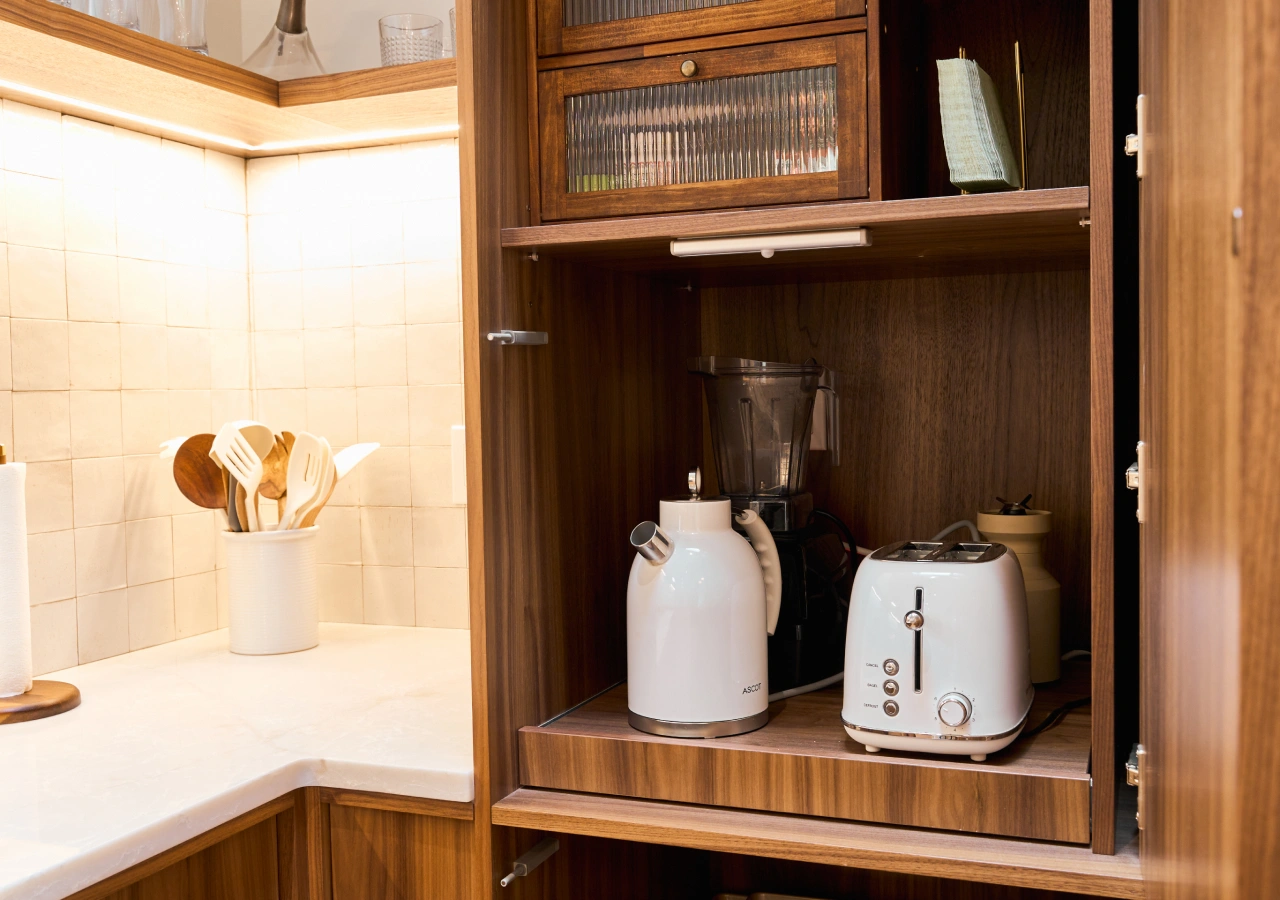
A tall pantry wall can concentrate a large amount of Japandi kitchen storage into one controlled architectural zone. From the room, it reads as a continuous cabinet surface. Inside, drawers, adjustable shelves, pull-outs, an appliance garage, and backstock storage can each have a defined role.
Combining shelves and drawers within tall storage is often more practical than relying entirely on deep fixed shelves. Frequently used or heavier items can stay lower and easier to reach, while bulk and less-used items move higher. Internal drawer systems and concealed kitchen organizers can help make this type of tall storage easier to use.
This also leaves open shelving free to do what it does best. A limited shelf can hold ceramics, glasses, cookbooks, or frequently used objects without becoming the primary pantry. Closed cabinetry remains better suited to mixed food packaging, appliances, and visually inconsistent everyday items.
Pay Attention to the Hardware You Feel Every Day
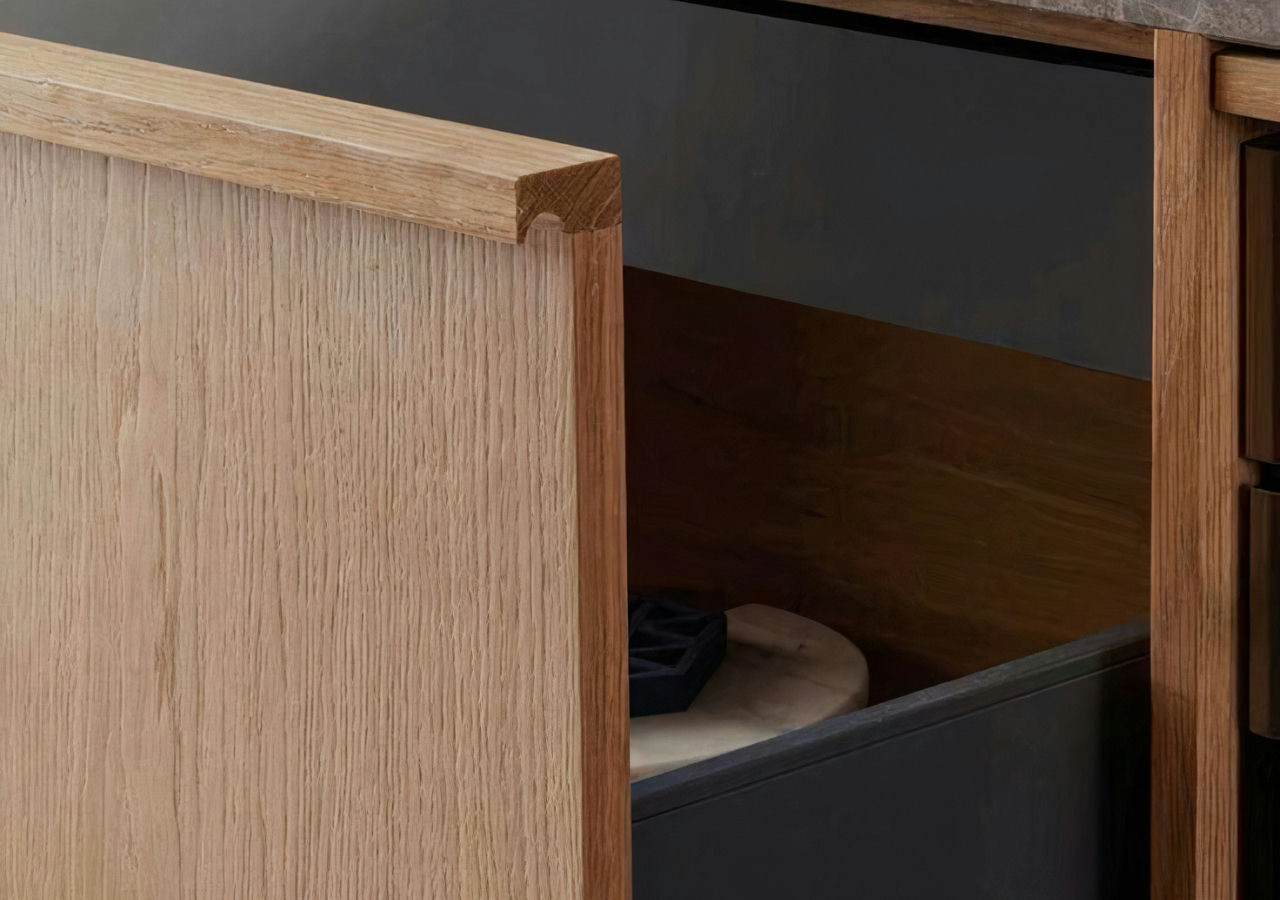
Good drawer hardware affects how the kitchen feels long after the finishes have been selected. Full-extension runners improve access to the back of the drawer, soft-close mechanisms control movement, and appropriate weight capacity helps drawers perform well when filled with cookware, appliances, or pantry items.
For homeowners comparing these details, a guide to kitchen hinges, drawers, and organizers can help explain what happens behind the cabinet fronts.
Alignment matters too. Japandi cabinetry often relies on consistent gaps and uninterrupted lines, so even small differences between neighboring drawer fronts can be noticeable.
Homeowners do not need to approach hardware like a technical catalog. Before ordering, confirm that the drawer system suits the expected contents, opens fully enough for comfortable access, and can be adjusted accurately during installation.
Conclusion
A functional Japandi kitchen is not created by removing storage. It comes from placing practical storage behind a calmer, more deliberate exterior.
Start with drawers for lower cabinets, use the island as a serious storage zone where the layout allows it, and add inner drawers where they preserve clean cabinet lines. Pull-outs should solve specific access problems rather than fill every available gap. A well-planned pantry wall can then handle backstock, appliances, and everyday items while a few open shelves remain light and intentional.
Specialized drawers and mechanisms require more planning and precise installation, so selective use usually produces the strongest result. Explore Corner Renovation's kitchen collections and completed kitchen projects for examples of concealed storage within minimal kitchen layouts.


