
.webp)
If you’re choosing European kitchen hardware, focus on what controls daily feel and long-term alignment: european hinges for kitchen cabinets that keep reveals consistent, drawer runners that stay smooth under real load, and european kitchen cabinet organizers and systems that give each category a fixed home so counters don’t become storage. In a frameless, full-overlay kitchen, hardware is the system, and precision install is what makes that system look right and keep working.
This guide shows how to select hinges and drawers that hold the cabinet “grid,” how to adjust european kitchen cabinet hinges without overcorrecting one door at a time, and which organizer setups actually reduce clutter in sink, pantry, corner, and inner-drawer zones. It also covers european kitchen handles versus handleless strategies so the cabinet lines stay intentional. Use the jump links above to go straight to the frameless basics, the Blum vs Hettich table, hinge adjustment, organizer planning, or handles.
Quick Decision Table: Pick Your Priorities in 30 Seconds
| If your priority is… | Start here | What to specify | Common mistake |
|---|---|---|---|
| Doors that stay aligned (no rubbing, no drifting reveals) | Hinges | 3-way adjustment, stable performance on tall doors | Treating hinges as “standard” on heavy/tall fronts |
| Drawers that feel smooth daily | Drawer runners + box system | Full extension, soft close, load performance | Spending on finishes but underspec’ing base drawers |
| A kitchen that resets fast | Organizers & internal systems | Sink waste, inner drawers, pantry mix (drawers + shelves) | Shelf-only pantries and dead under-sink space |
| Clean cabinet lines | Handles / handleless strategy | One consistent logic across runs | Mixing handle types mid-run |
European-Style Kitchen Cabinets: What “European” Actually Means
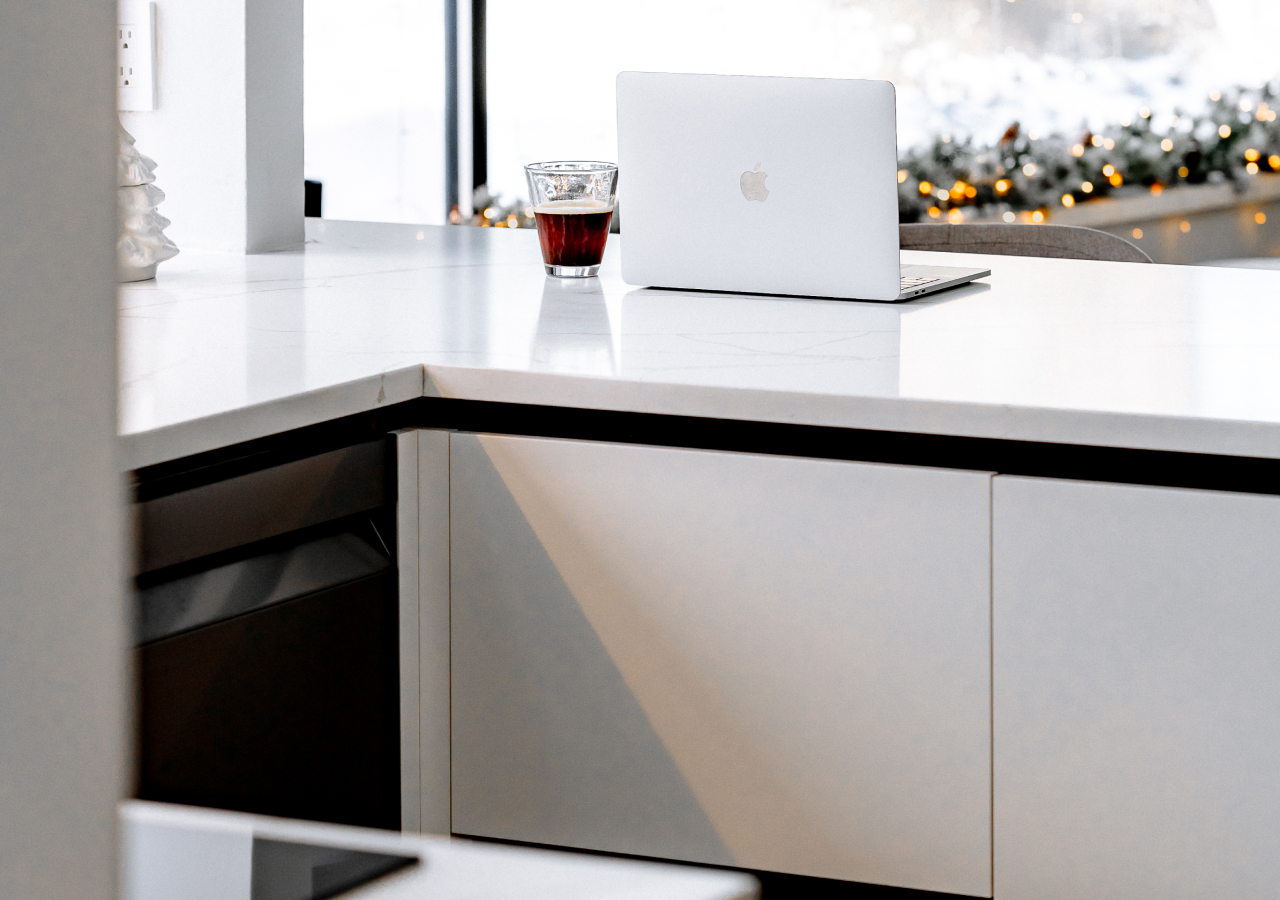
“European kitchen cabinets” describes a construction and planning approach, not a door style. Most often, it means frameless (full-access) cabinet boxes with full-overlay fronts. The benefit is practical: you gain usable opening space and clean, continuous lines across the room.
That construction changes the role of hardware. In frameless cabinetry, hinges and slides mount directly to the cabinet box, so motion, alignment, and consistency become the real quality test. Tight reveals, aligned runs, and modern elevations look expensive when the grid is disciplined, and they look “off” when floors, walls, or appliance clearances weren’t handled early.
European Hinges and Lift Systems: The Detail That Protects the Grid
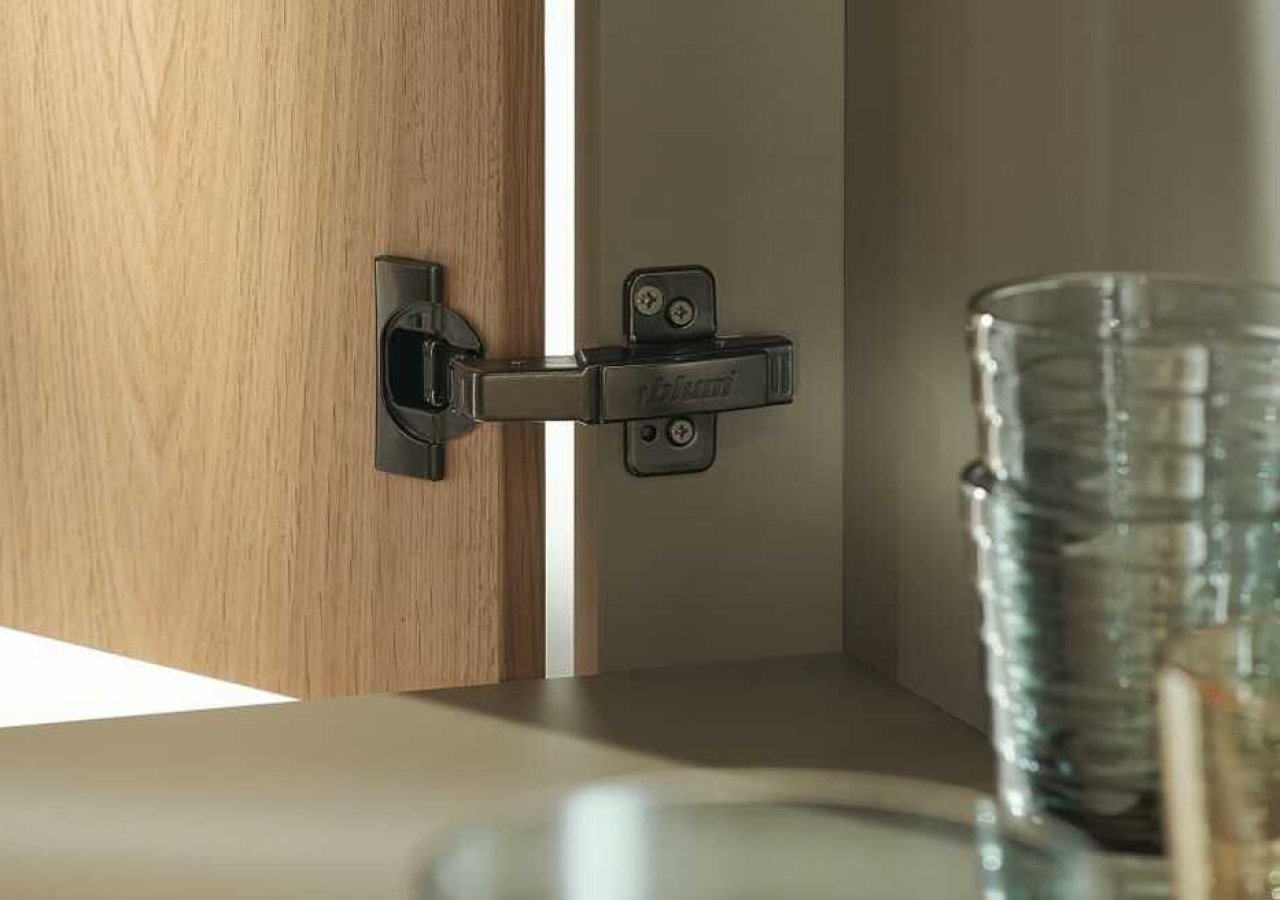
In frameless kitchens, the hinge is not a minor accessory. It controls how the door sits when closed, how it moves, and whether reveals stay consistent across a full elevation. When doors start to sag, rub, or drift out of alignment, the kitchen reads less architectural even if the materials are beautiful.
This matters most on tall doors and “furniture wall” compositions where the eye tracks long lines. Pocket doors are the clearest example: they open like a normal door and then retract into the cabinet, which makes hinge choice and adjustment range part of the pocket-door system.
Corner’s pocket-door hinge guidance maps to three checks that keep tall-door systems stable over time:
- Confirm door size and weight so the hinge set matches the load.
- Choose an opening angle that supports smooth engagement with the mechanism.
- Prioritize hinges with 3-way adjustment so alignment can be tuned as the kitchen settles into real use.
Adjust European Kitchen Cabinet Hinges: A Non-Repetitive, Grid-First Method
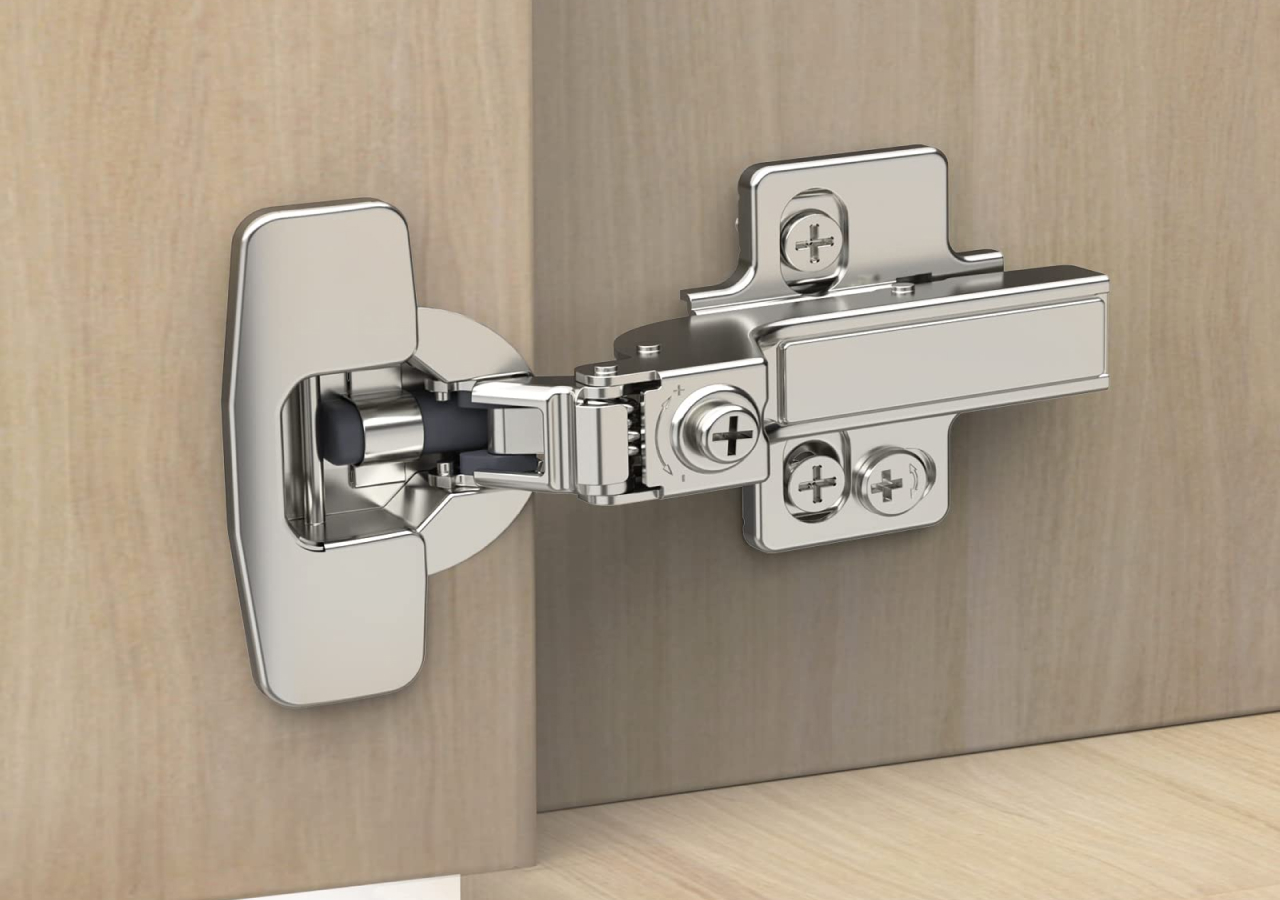
People search adjust european kitchen cabinet hinges when something is visibly wrong: uneven gaps, a door that isn’t flush, or a door that rubs. European hinges are designed for fine-tuning, but the goal is not “perfect one door.” The goal is consistent alignment across the whole cabinet plane.
A practical approach that avoids chasing your tail:
- Check the pattern across the run. If multiple doors drift the same direction, suspect install level/plumb before blaming a single hinge.
- Make small changes, then step back. Micro-adjustments add up; read the full elevation from a few steps away.
- Tune for consistency, not heroics. A slightly imperfect door that matches the grid reads better than one “perfect” door next to mismatched gaps.
- Treat tall doors as performance. On heavy or pocket doors, alignment protects function (smooth travel and clean engagement), not just appearance.
If hinge tweaks don’t hold, the usual cause is a cabinet box or door that’s fighting the site conditions.
Drawer Runners and Box Systems: Where European Kitchens Win Daily
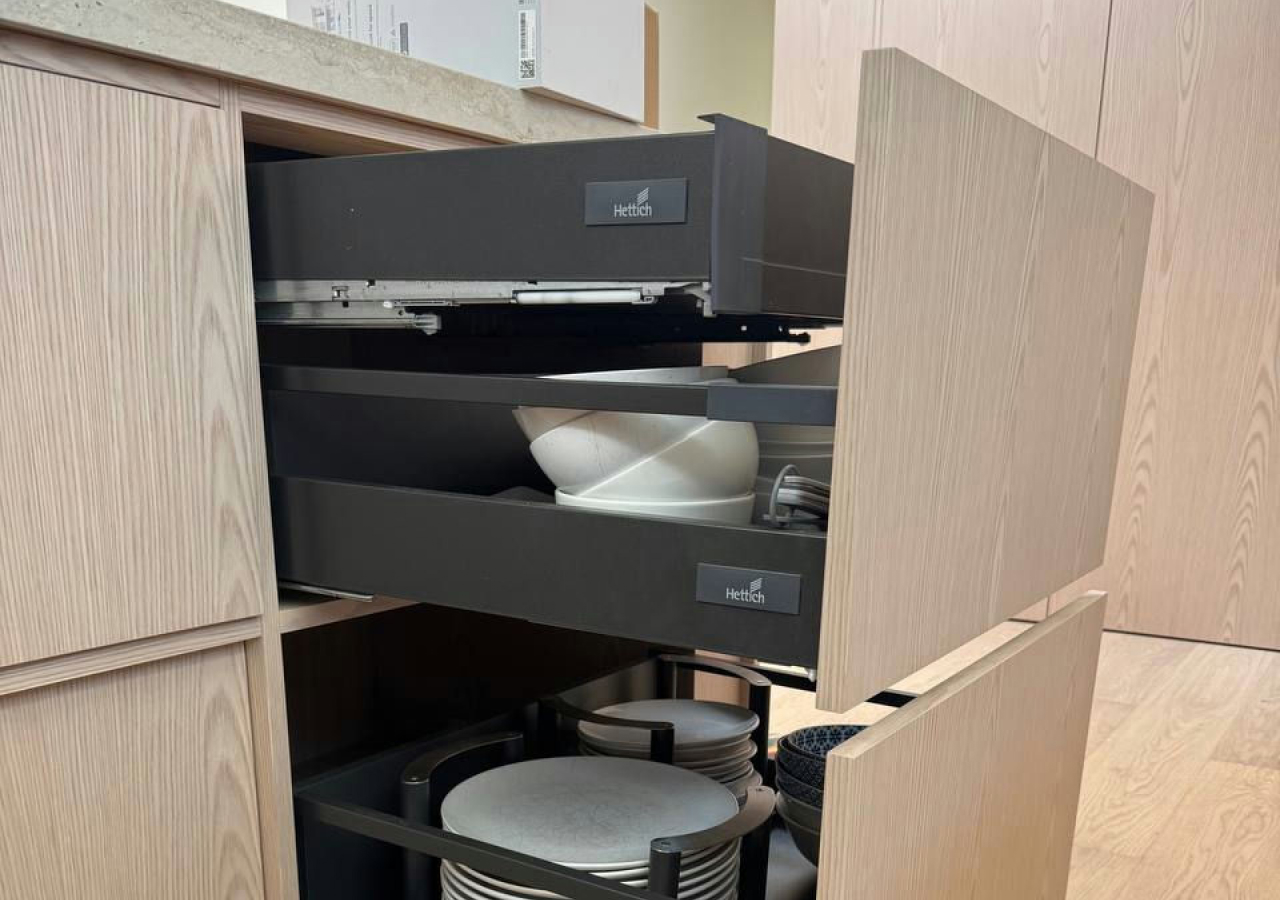
European kitchens tend to be drawer-forward because drawers move the entire category toward you. That reduces digging, stacked shelves, and countertop parking. The “European system” is the runner + box platform and the motion features that define the feel.
Three specs matter in real use:
- Full extension: access the back without unloading the front.
- Soft close: quieter, controlled closing that doesn’t punish the cabinet.
- Load performance: drawers should stay stable when filled with cookware, appliances, or pantry goods.
A simple implementation rule: prioritize drawer performance in the base run first. That’s where you have the highest open/close cycles and the heaviest loads.
Blum vs Hettich: A Practical Comparison Table (Not a “Best Brand” Claim)
.webp)
Both ecosystems can deliver excellent results in a frameless kitchen when the system is compatible and the installer can dial it in cleanly.
| Category | Blum | Hettich | What to prioritize |
|---|---|---|---|
| “System” feel across the kitchen | Strong ecosystem across hinges, drawers, lifts | Broad modular range across drawer platforms and runners | Consistent feel and parts compatibility |
| Adjustment + service | Predictable tuning across product lines | Flexible options depending on runner/box selection | Installer familiarity matters more than brand myths |
| Drawer experience | Known for smooth motion and integrated soft-close behaviors | Strong range of drawer systems with different runner classes | Match load needs to the right runner/box |
| Best fit when… | You want one unified ecosystem with straightforward long-term service | You want flexibility in drawer formats or runner options by use case | Choose for use-case + supportability |
If you’re choosing between these two, the most practical question is: which system will your installer adjust confidently and service over time in a frameless, alignment-sensitive install?
European Kitchen Cabinet Organizers and Internal Systems: Make Storage Automatic
European kitchen cabinet organizers and systems work when they reduce “decision fatigue.” Categories have a dedicated home, access is fast, and the countertop stops becoming the default landing zone. The best organizers are the ones you use without thinking.
Inner Drawers and Hidden Compartments
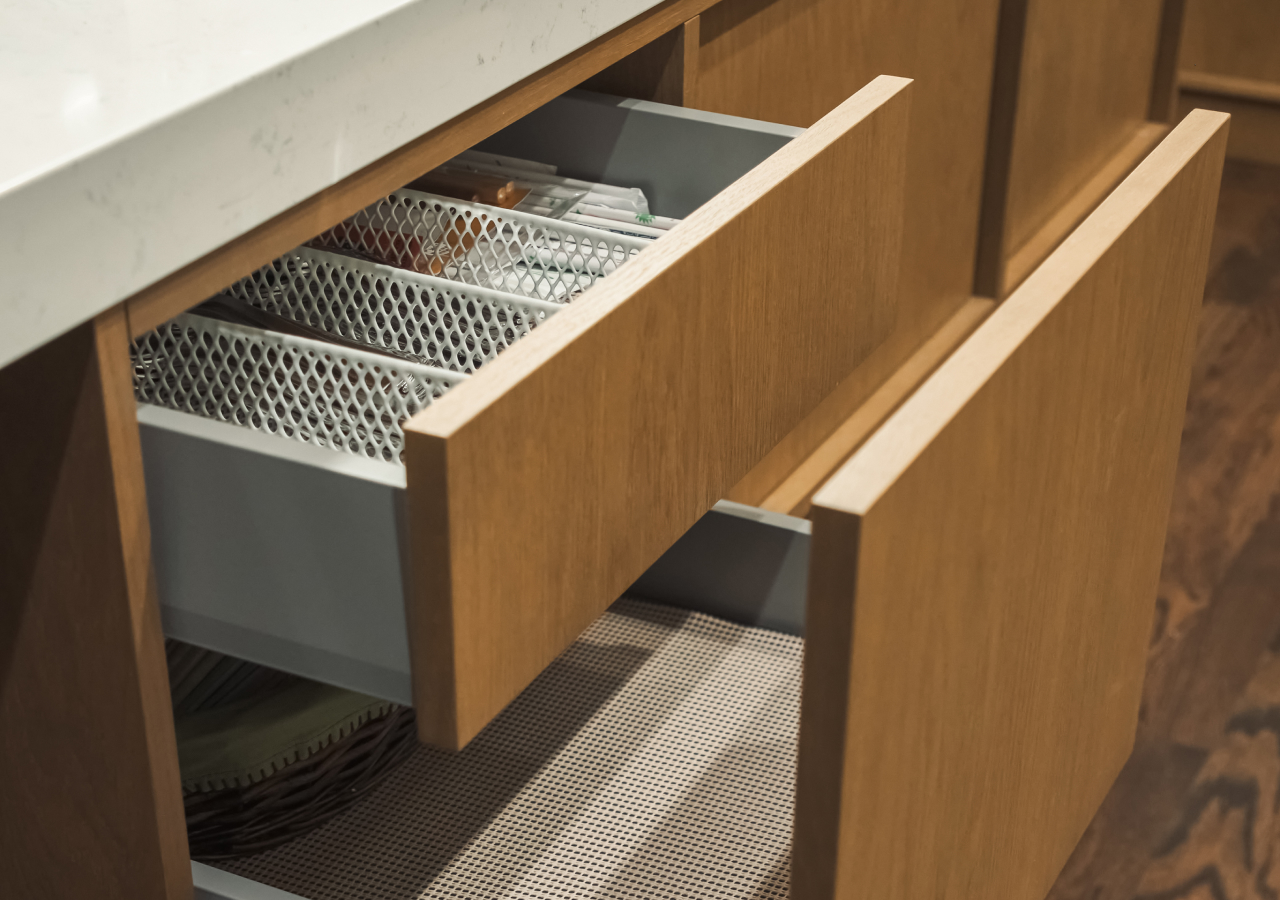
Inner drawers (hidden drawers) increase capacity while keeping the exterior calm. They’re especially useful in high-use zones, like under-cooktop storage for tools and utensil, because you get fast access without breaking the cabinet grid with extra exterior lines.
Pantry Pull-Outs and Full-Access Storage
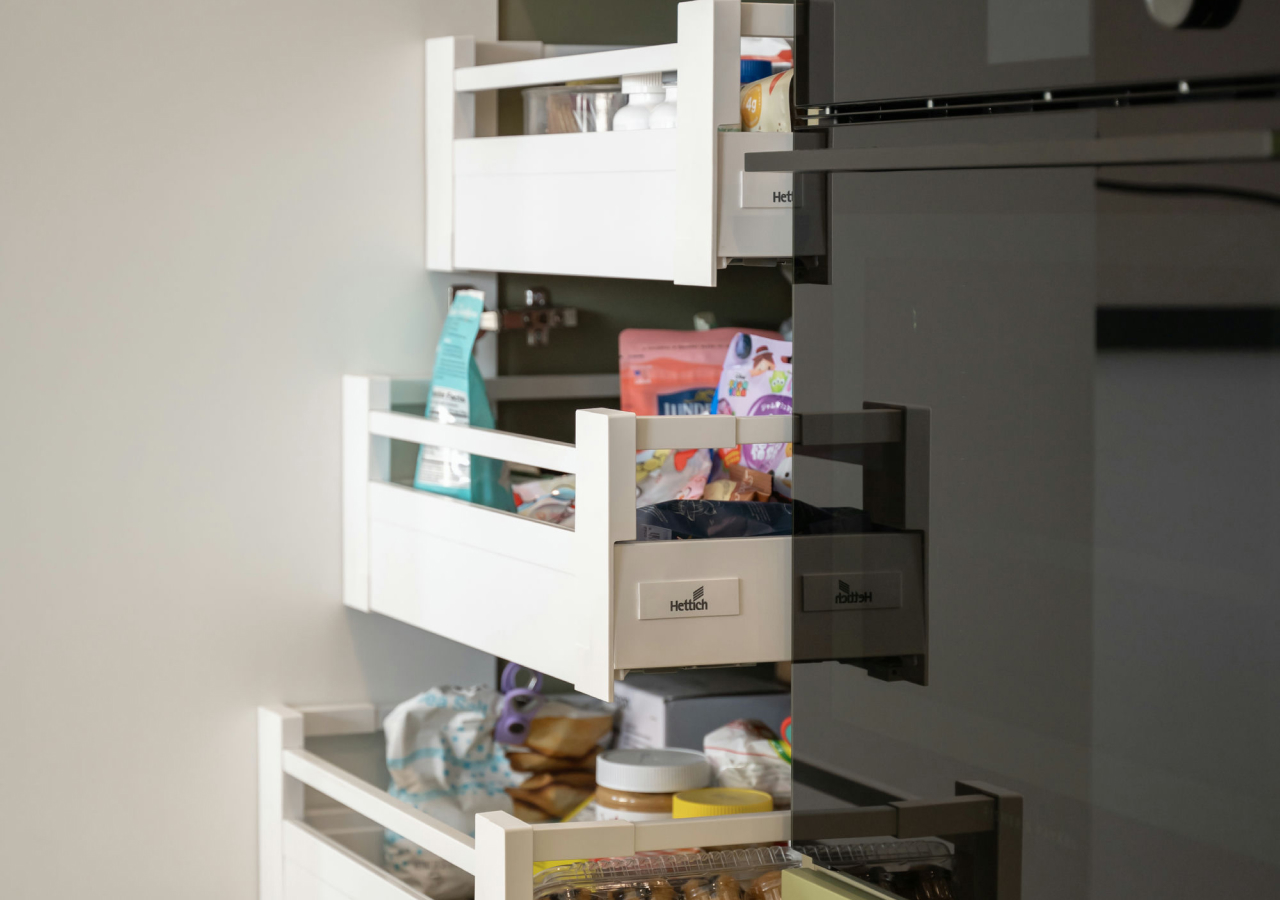
Deep pantry shelves fail when items stack behind each other. A mix of shelves and drawers usually performs best: drawers for heavy and frequently used items, shelves for bulk or occasional items. A practical rule is to keep heavier categories lower so you don’t lift awkward loads from above waist height.
Under-Sink Storage and Integrated Waste Systems
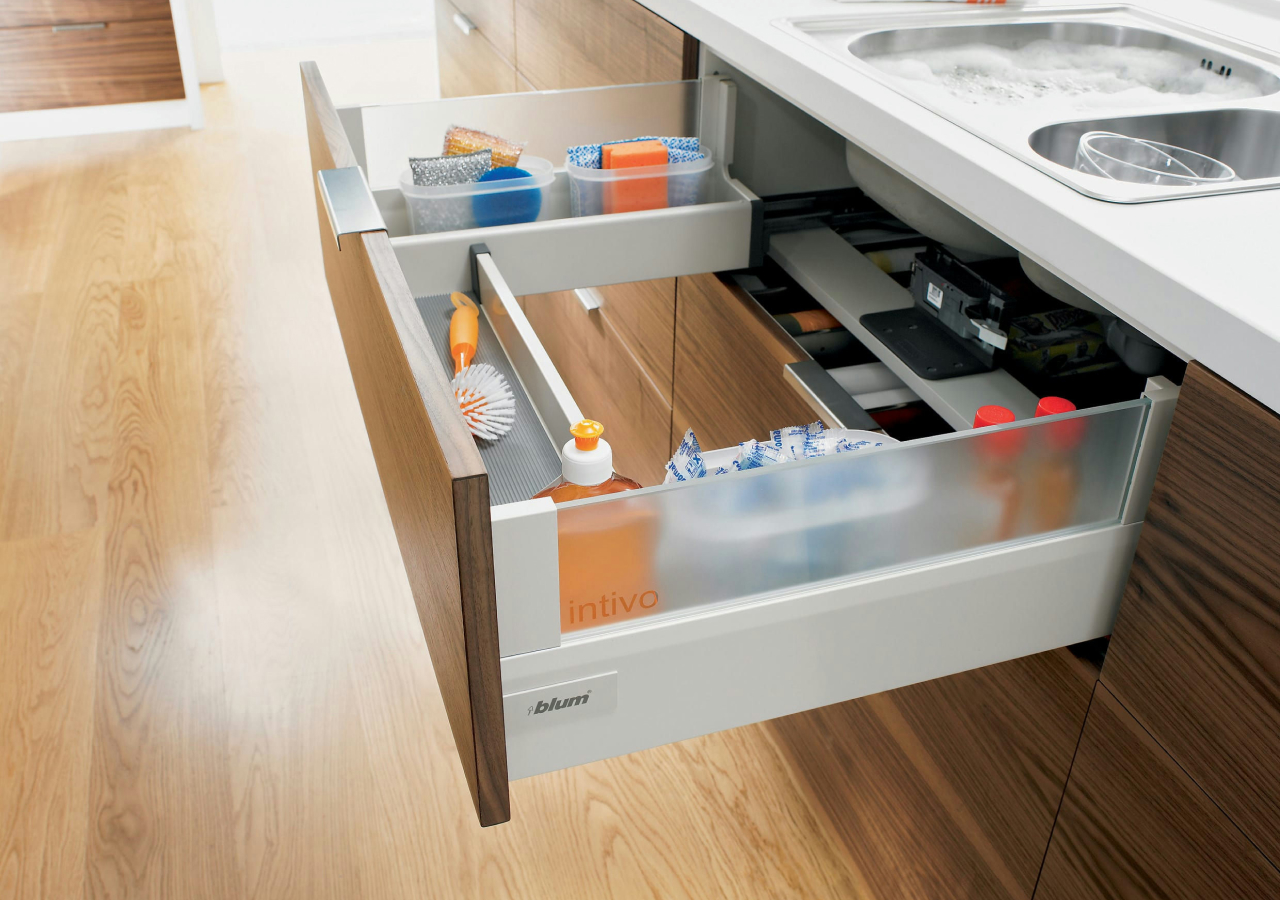
European kitchens don’t pretend the sink zone stays pretty on its own. Under-sink drawers and pull-out waste keep cleaners, sponges, trash, and recycling close to where the mess happens, while staying hidden behind closed fronts. That shortens the cleanup loop and prevents the sink area from turning into a clutter magnet.
Corner Solutions That Prevent Dead Space
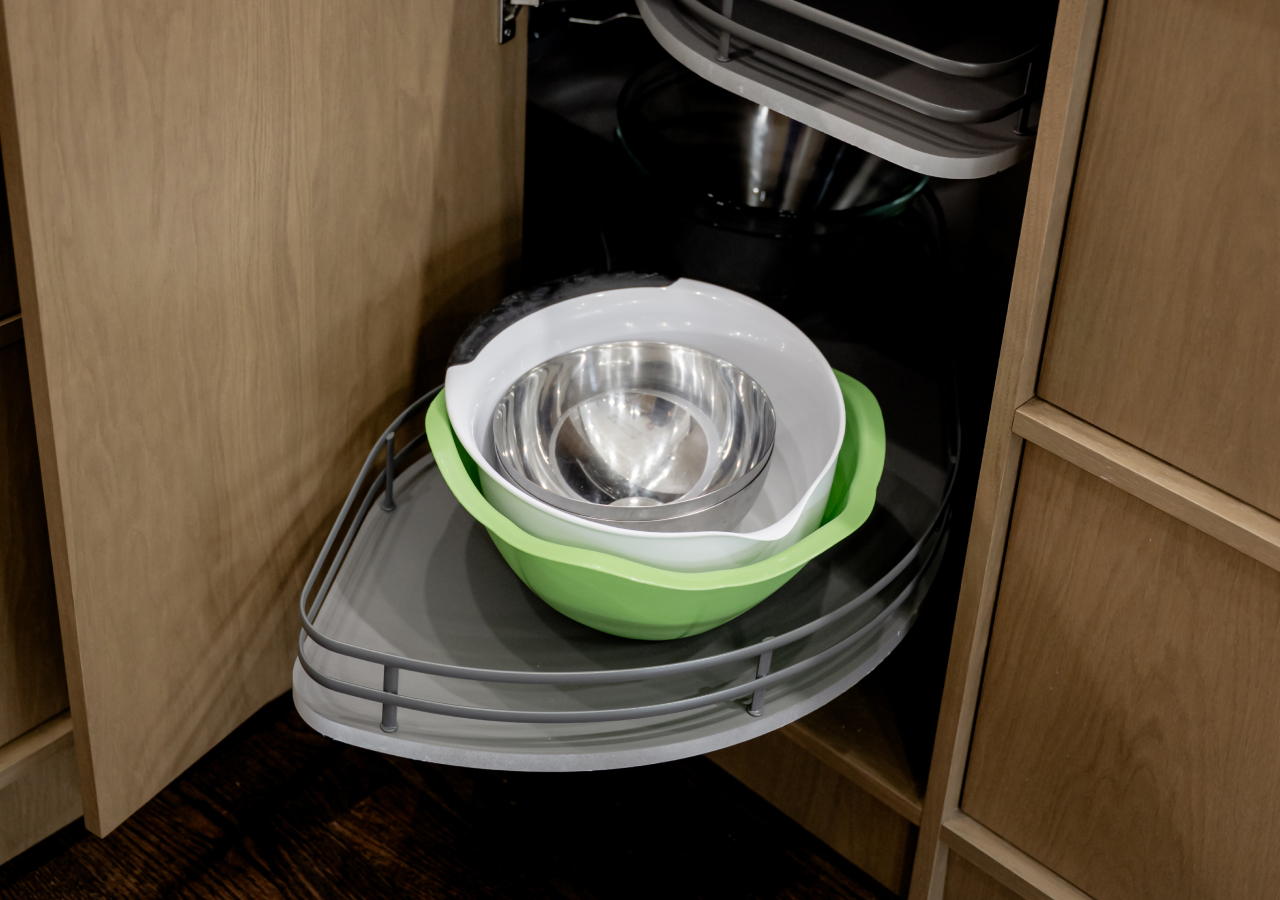
Corners are where kitchens lose function unless you plan for them. Corner drawers and purpose-built corner systems convert awkward volume into usable storage, especially for larger items you don’t want to stack. The right solution depends on behavior: if you never want to kneel and reach, choose a system that brings items toward you.
European Kitchen Handles: One Strategy, One Grid
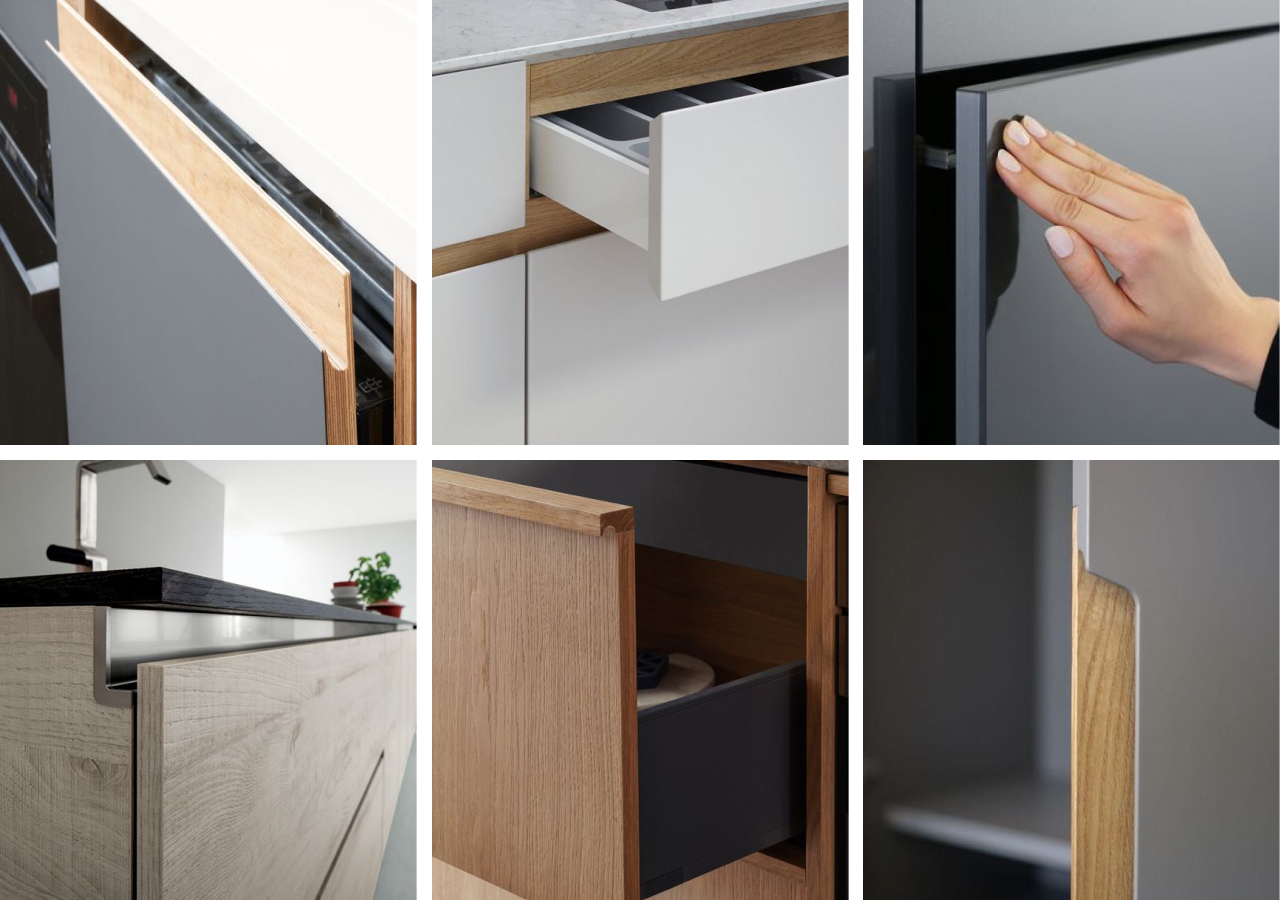
European kitchen handles matter more than they seem because they sit on top of the cabinet grid. In European kitchens, consistency is the win: one strategy that supports the cabinet lines instead of competing with them.
Handleless can create seamless surfaces and clean geometry, especially in modern minimalist layouts. It can also be easier to wipe down because there are fewer protrusions. The important point is that “handleless” is not one thing: profiles, cut-outs, and push-to-open systems differ in ergonomics, feel, and maintenance. Choose based on real use: high-touch daily zones should feel effortless, not finicky.
Keep It Looking Intentional
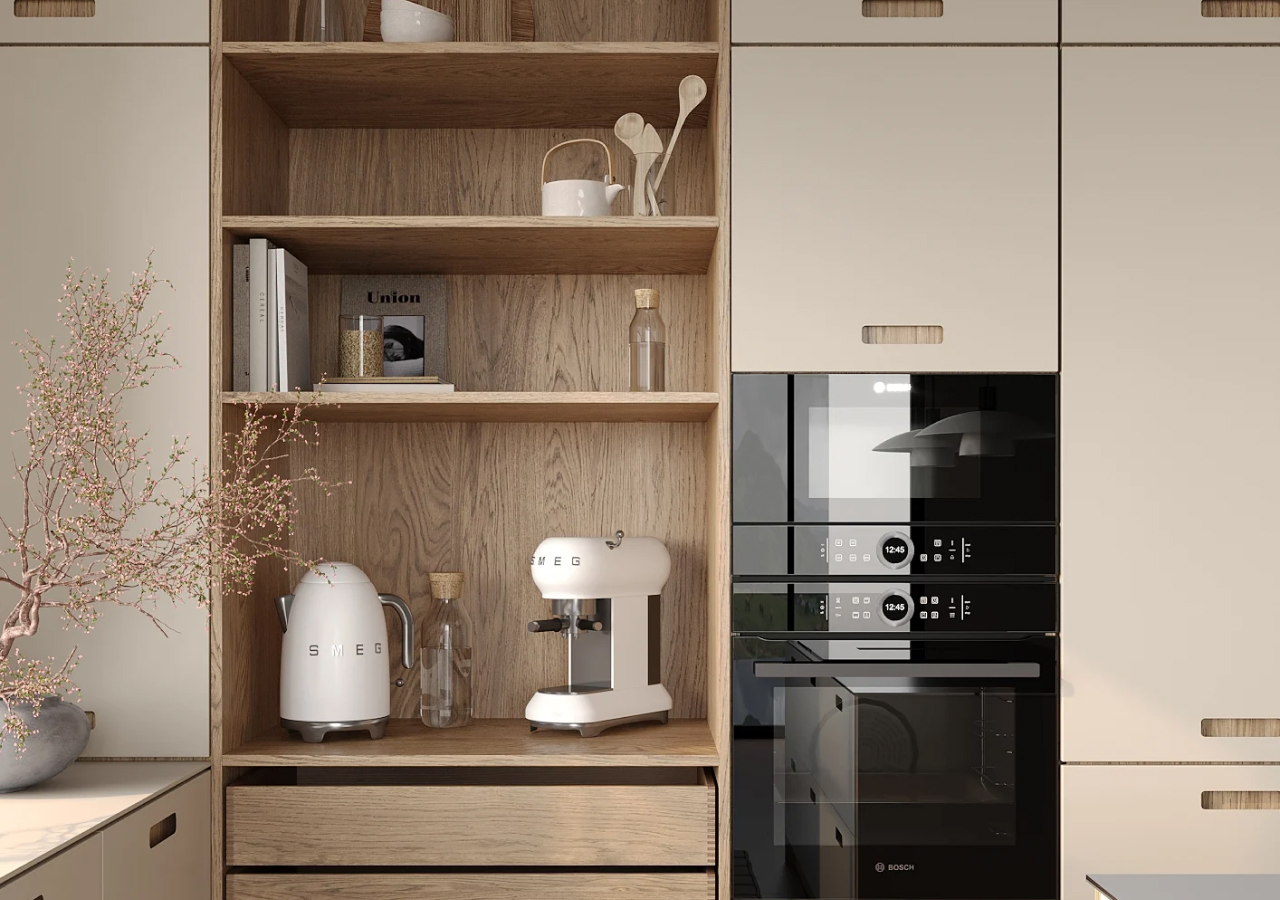
If you want the “furniture wall” effect, commit to one logic across the main runs: consistent alignment, consistent handle strategy, consistent spacing. Mixing handle types or switching approaches mid-run is one of the fastest ways to make a frameless kitchen feel busy even when the finishes are strong.
Why Frameless Kitchens Demand a Precision Install
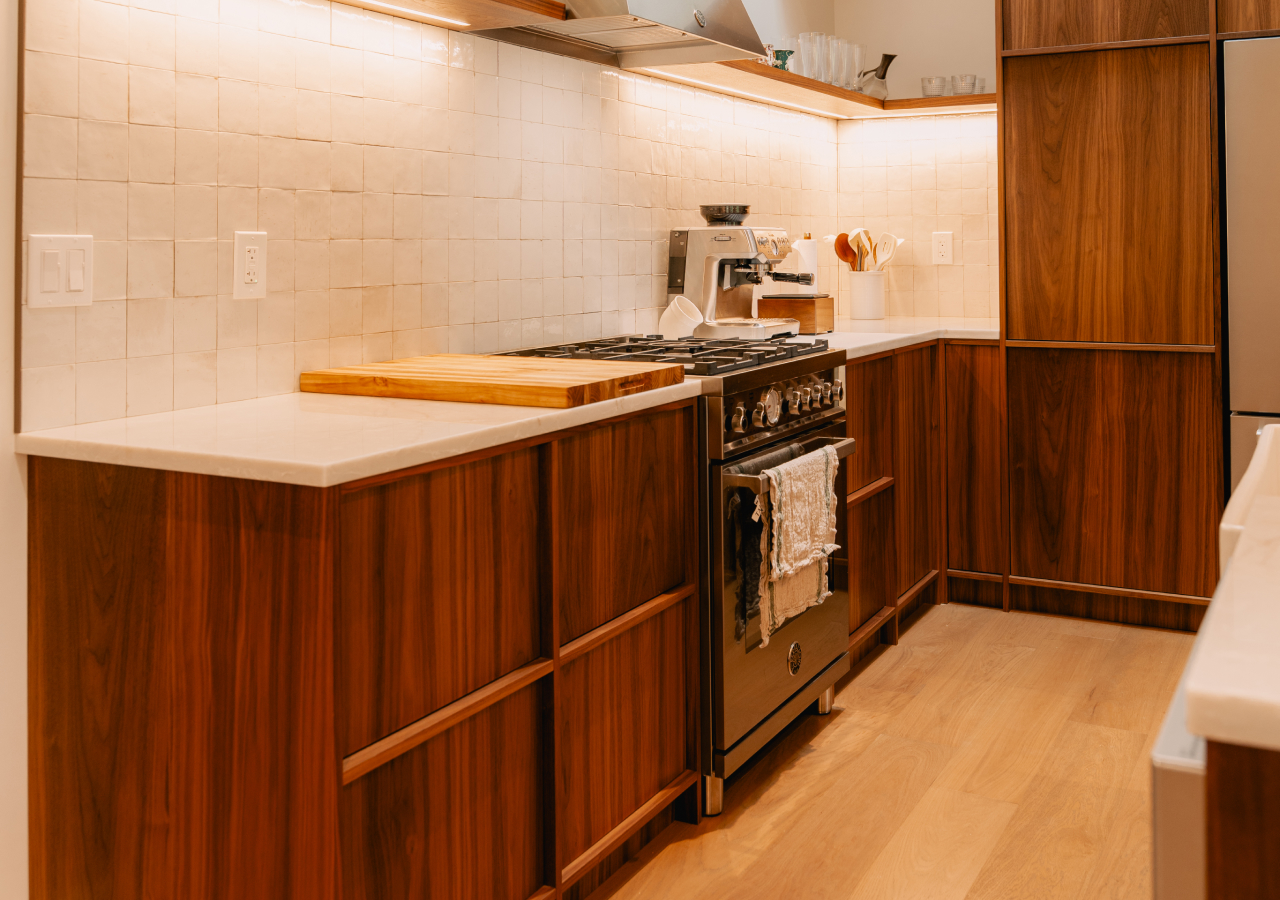
Frameless kitchens look expensive when the cabinet faces read as one continuous composition across tall units, base runs, islands, and integrated appliances. That same discipline is why installation matters more: tight reveals and clean lines make small errors obvious.
A planning sequence that protects the outcome:
- Lock the cabinet grid and zones.
- Choose the internal systems that match your routines.
- Confirm appliances and clearances early (especially for integrated fronts).
- Install with frameless-level precision so the hardware performs and the grid stays aligned.
If you want the calm look and the calm daily experience, this is the part you can’t shortcut.
How to Adjust European Cabinet Hinges (5 steps)
- Identify the problem. Confirm whether the issue is an uneven gap, a door that isn’t flush, or rubbing.
- Check the run first. If several doors drift the same way, suspect cabinet install level/plumb before chasing individual hinges.
- Adjust left/right (side). Match the gap to adjacent doors in tiny increments.
- Adjust in/out (depth). Bring the door flush with the cabinet plane.
- Adjust up/down (height). Level the top edge across the elevation, then re-check gaps.
Conclusion
European kitchen hardware is never “extra.” It’s the mechanism that makes the style livable: hinges that keep alignment stable, drawers that glide under real load, and organizers that give daily items a permanent home so counters stay clear. Frameless, full-overlay cabinetry creates the calm exterior, but the engineered storage logic is what makes the kitchen feel effortless day after day.
If you’re planning a renovation, treat hardware and internals as a first-order decision. If you want help translating these choices into a kitchen that fits your space and routines, explore Corner Renovation’s collections or book a consultation.
FAQ: European Kitchen Cabinet Hardware


