

Base cabinets do more than support the countertop. They shape how the kitchen works every day because this is where most practical storage happens: pots, pans, plates, cutlery, food prep tools, cleaning supplies, and waste sorting.
Kitchen drawer organization works best when storage is planned by drawer type, paired with the right insert type, and sized for the items stored inside. In most modern kitchens, the most useful system combines cutlery drawers, deep drawers, under-sink drawers, and inner drawers, along with wood, metal, or adjustable inserts.
Why Drawers Work Better Than Shelves
.webp)
Lower drawers are easier to use than shelves behind doors because the storage comes out to you. Instead of bending down and reaching into the back of a cabinet, you can pull the contents forward and see everything at once.
That is why modern European kitchens often rely on drawer-based base cabinets instead of traditional lower cabinets with shelves. Drawers improve visibility, access, and everyday use, especially in the prep, cooking, and cleanup zones.
Drawer Types and How to Use Them
Kitchen drawer organization works best when each drawer type has a clear job. Once the storage purpose is defined, it becomes much easier to choose the right size, insert, and location.
Cutlery Drawers
.webp)
Cutlery drawers are shallow top drawers used for forks, knives, spoons, and everyday utensils. They usually work best near the sink or dishwasher so unloading feels direct and natural.
A cutlery drawer should stay simple. Once it starts sharing space with cooking tools, batteries, clips, and random accessories, it becomes harder to use. A fitted tray or divider is what keeps it functional.
Deep Drawers
.webp)
Deep drawers are the main storage drawers in most modern kitchens. They are typically used for pots, pans, mixing bowls, food containers, plates, or small appliances.
They are more practical than shelves because they expose the full contents when opened. They also need internal structure. A large deep drawer without dividers or bins often turns into catch-all storage very quickly.
Under-Sink Drawers
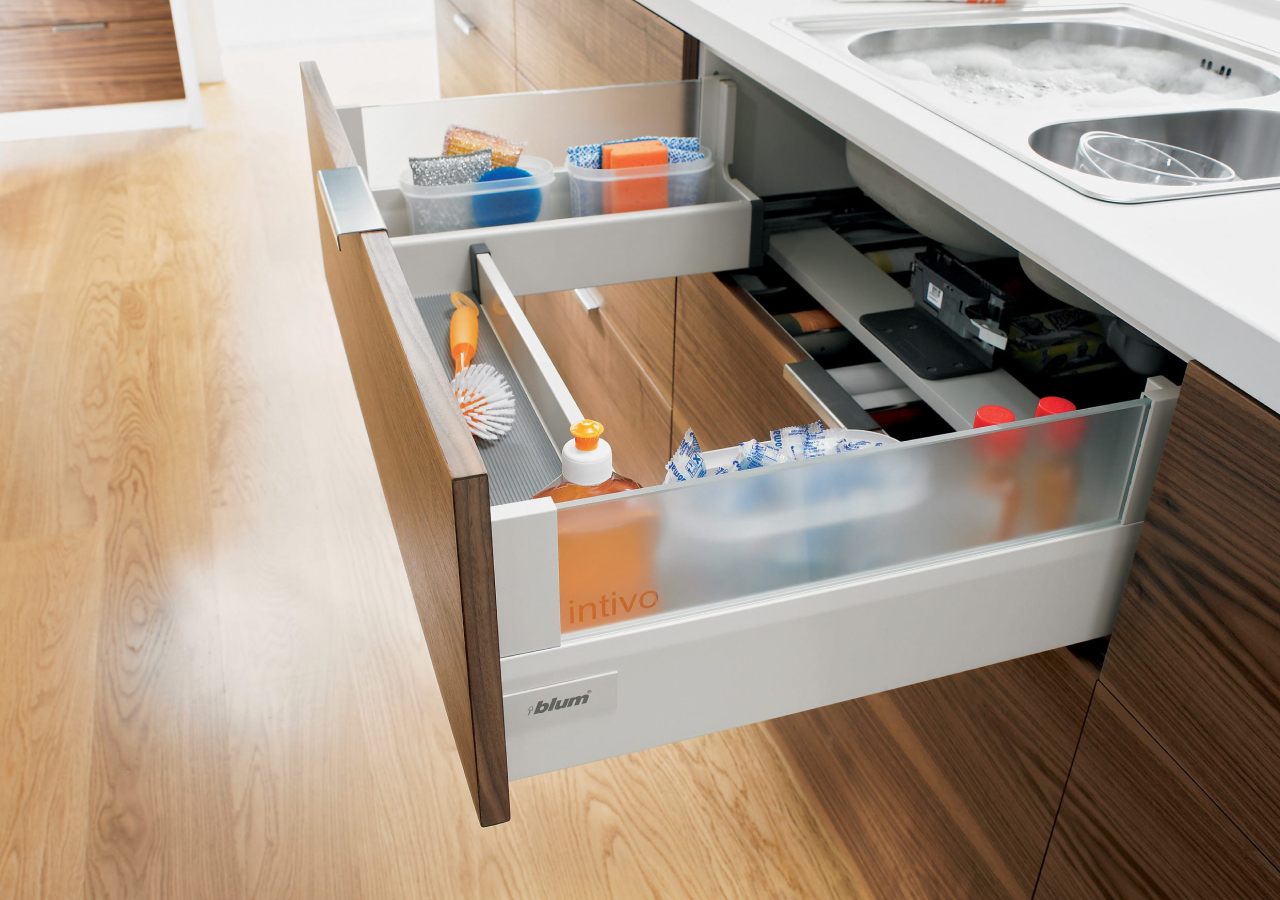
Under-sink drawers are shaped around the plumbing and make use of a space that is often wasted in standard sink cabinets. They are especially useful for cleaning products, dishwasher tablets, sponges, cloths, gloves, and smaller utility items.
A proper under-sink drawer needs to be planned early. Its shape depends on the sink, drain placement, and plumbing layout, so it works best when designed as part of the cabinet system rather than treated as an afterthought.
Inner Drawers
.webp)
Inner drawers sit behind a larger drawer front or behind a cabinet front, creating a second layer of storage without interrupting the outside look of the kitchen.
They are useful for smaller items that would get lost in deeper drawers, including spices, wraps, trays, kitchen linens, or secondary dish storage. In handleless kitchens, inner drawers are especially useful because they add storage while keeping the facade visually cleaner.
Drawer Inserts: What Actually Works
Inserts are what turn drawers into organized storage instead of open boxes. The right insert depends on what the drawer stores, how often it is used, and whether the storage plan needs to stay fixed or flexible over time.
Wood Inserts
.webp)
Wood inserts feel warmer and more furniture-like. They work well for cutlery, knives, utensils, spice jars, and smaller items in kitchens where the interior detailing matters.
They usually look more refined than plastic alternatives, but they are less flexible once installed. They make the most sense when the storage layout is clear from the start.
Metal Inserts
.webp)
Metal inserts are durable, easy to clean, and better suited to heavier or harder-working storage. They are especially useful in deep drawers used for pots, pans, plates, bottles, or waste systems.
They also fit well in minimalist kitchens where the focus is on durability and function rather than decorative detail.
Adjustable Inserts
.webp)
Adjustable inserts offer the most flexibility. They make sense in kitchens where storage needs may change over time or where one drawer serves more than one person.
This type of insert works well for utility drawers, larger deep drawers, and spaces where fixed compartments would be too limiting.
Drawer Sizing and Planning Rules
Kitchen drawer organization is not just about ideas. It depends on dimensions. A drawer can be in the right place and still work poorly if it is too shallow, too deep, or too wide for what it needs to hold.
Drawer Height by Use
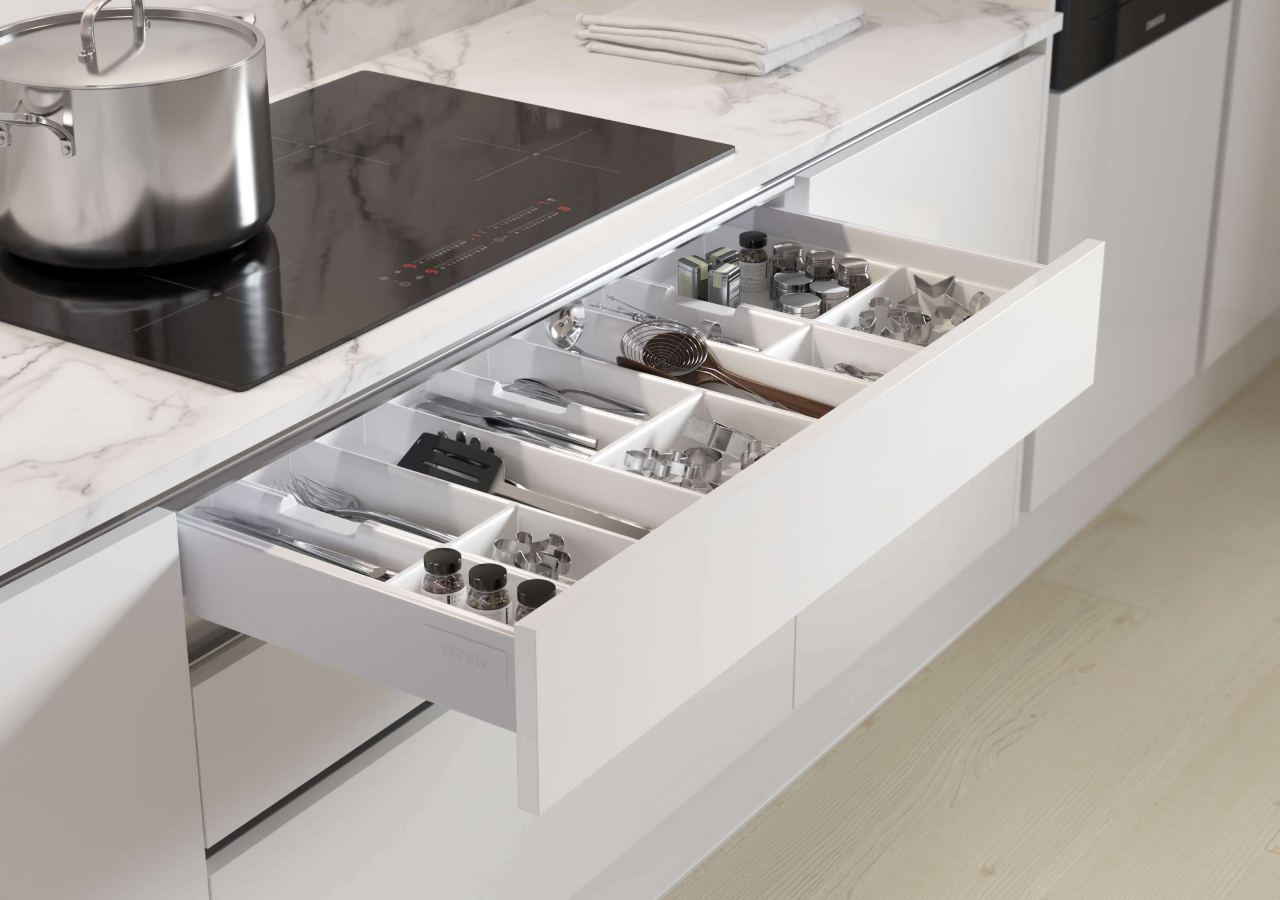
Shallow drawers are best for cutlery, flat utensils, wraps, and smaller tools. Deep drawers are better for cookware, bowls, stacked dishes, containers, and small appliances.
As a general rule, shallow drawers often fall around 80 to 120 mm internal height, while deeper storage drawers often work in the 180 to 300 mm range, depending on the item category and hardware system. Exact dimensions vary by manufacturer, but the principle stays the same: the drawer height should match the stored items, not just the cabinet module.
Wide Drawers and Internal Division
.jpeg)
Wide drawers create generous storage, but they also need better organization inside. Without dividers, bins, or peg systems, the contents move around every time the drawer opens and closes.
That is why wider drawers usually perform best when dedicated to one category, such as pots, plates, or food storage containers, with clear internal division to keep everything stable.
Where to Store Heavy Items

Heavy cookware, stacked plates, and countertop appliances should usually be stored lower down. This makes lifting easier, improves safety, and keeps the upper parts of the kitchen lighter and easier to use.
In practical terms, the heaviest daily-use items usually belong in deep drawers below the countertop rather than in upper cabinets or on open shelves.
Real Layout Ideas by Zone
.webp)
Drawer organization works best when it follows the kitchen workflow. The most practical layouts group storage by activity rather than scattering items across the room.
Prep Zone
The prep zone usually benefits from a shallow top drawer for knives, peelers, graters, and measuring tools, with a deeper drawer below for mixing bowls, cutting boards, food containers, or prep accessories.
This keeps the tools for chopping, measuring, and assembling meals in one place instead of spreading them across several cabinets.
Cooking Zone
Near the cooktop, shallow drawers can store utensils, while deeper drawers below can hold pots, pans, lids, and cooking oils. If space allows, spice storage also works well here.
The goal is to keep the main cooking tools within one step of the hob or range.
Cleanup Zone
Near the sink and dishwasher, drawers can hold cutlery, plates, detergents, cloths, and waste sorting systems. Under-sink drawers are especially effective here because they turn a difficult cabinet into useful daily storage.
This zone works best when unloading the dishwasher and cleaning up feel direct rather than scattered.
Practical Drawer Setup Ideas
.webp)
The most effective drawer setups follow the way the kitchen is actually used. A cutlery drawer near the dishwasher makes unloading faster and keeps everyday utensils close at hand. A deep pot drawer under the cooktop is usually more practical than a shelf cabinet because heavy cookware stays visible and easier to reach. Plates and bowls are also often better in lower deep drawers than in upper cabinets, since they are easier to access and involve less lifting.
Inner drawers help organize flatter items such as trays, wraps, foil, placemats, and kitchen linens that tend to get lost in larger open drawers. Under-sink drawers turn an awkward cabinet into useful storage for detergents, brushes, gloves, and dishwasher tablets. Integrated waste drawers also improve daily use by keeping trash and recycling hidden, freeing up floor space, and maintaining a cleaner visual line across the kitchen.
What to Avoid
.webp)
Most drawer organization problems come from planning by cabinet size instead of storage purpose. Too many shallow drawers may look organized at first, but they leave larger cookware, dishes, and appliances without a practical place to go. Deep drawers without internal dividers also tend to become disorganized quickly because the contents shift and stack poorly over time.
The sink base is another common missed opportunity. It is often treated as dead space even though it can become one of the most useful cabinets in the kitchen when properly planned. It also helps to avoid treating every drawer the same. A better system comes from matching drawer height, insert type, and internal structure to the actual items being stored.
Conclusion
Kitchen drawer organization works best when it is planned as part of the layout, not added afterward as a set of accessories. The most effective kitchens combine the right drawer types, the right inserts, and the right dimensions from the start.
At Corner, we design drawer layouts around how the kitchen will actually be used. That includes deep pot drawers, inner drawers, under-sink solutions, integrated waste systems, and inserts sized to fit real storage needs rather than generic cabinet templates.


