

A built-in trash pull-out keeps waste, recycling, or compost inside the cabinet run instead of leaving a bin on the floor. It can improve workflow, free up visible space, and make the kitchen feel cleaner, especially in modern and minimalist layouts.
The quality of the system matters. Runners, frames, bin capacity, cleaning access, and opening style all affect how the pull-out performs during daily use.
What Is a Built-In Kitchen Trash Bin Pull-Out?
.webp)
A built-in kitchen trash pull-out is a cabinet accessory that holds one or more removable bins on a sliding frame. The frame moves forward on metal runners, bringing the bins out of the cabinet for easier access.
Some systems connect directly to the cabinet front. Pulling the front opens the entire unit in one motion. Other systems sit behind a hinged cabinet door and must be pulled out separately.
Built-in systems can hold trash, recycling, compost, or a combination of waste types. The exact configuration depends on the cabinet and the selected hardware.
Functional Features of Built-In Kitchen Trash Pull-Outs
Full-Extension Runners
.webp)
Full-extension runners allow the bins to move completely beyond the cabinet opening. This makes it easier to reach the back bin, replace liners, and remove the containers for cleaning.
Partial-extension hardware may leave part of the rear bin inside the cabinet. This can make tandem-bin systems more difficult to use, especially when both containers are full.
The runners should move smoothly under the system’s maximum recommended load. Check the manufacturer’s weight rating rather than judging the hardware by appearance alone.
Durable Frames and Hardware
.webp)
Trash pull-outs are used frequently and may carry considerable weight. The runners, frame, mounting screws, and cabinet connections must be strong enough for repeated opening and closing.
A reinforced metal frame helps keep the bins stable when the pull-out is fully extended. It can also reduce side-to-side movement that may cause the unit to rub against the cabinet.
A well-built system is less likely to need early replacement or adjustment. Hardware quality is particularly important for door-mounted systems because the cabinet front moves together with the full weight of the bins.
Soft-Close Operation
.webp)
Soft-close runners slow the pull-out before it reaches the cabinet. This reduces noise and prevents the cabinet front from slamming against the cabinet box.
Gentle closing also reduces repeated impact on the mounting hardware, frame, and cabinet connections. This can help the unit stay aligned over time.
The pull-out should still close smoothly when the bins are full. If it becomes difficult to operate, the frame may need adjustment or the load may be too heavy.
Removable Bins
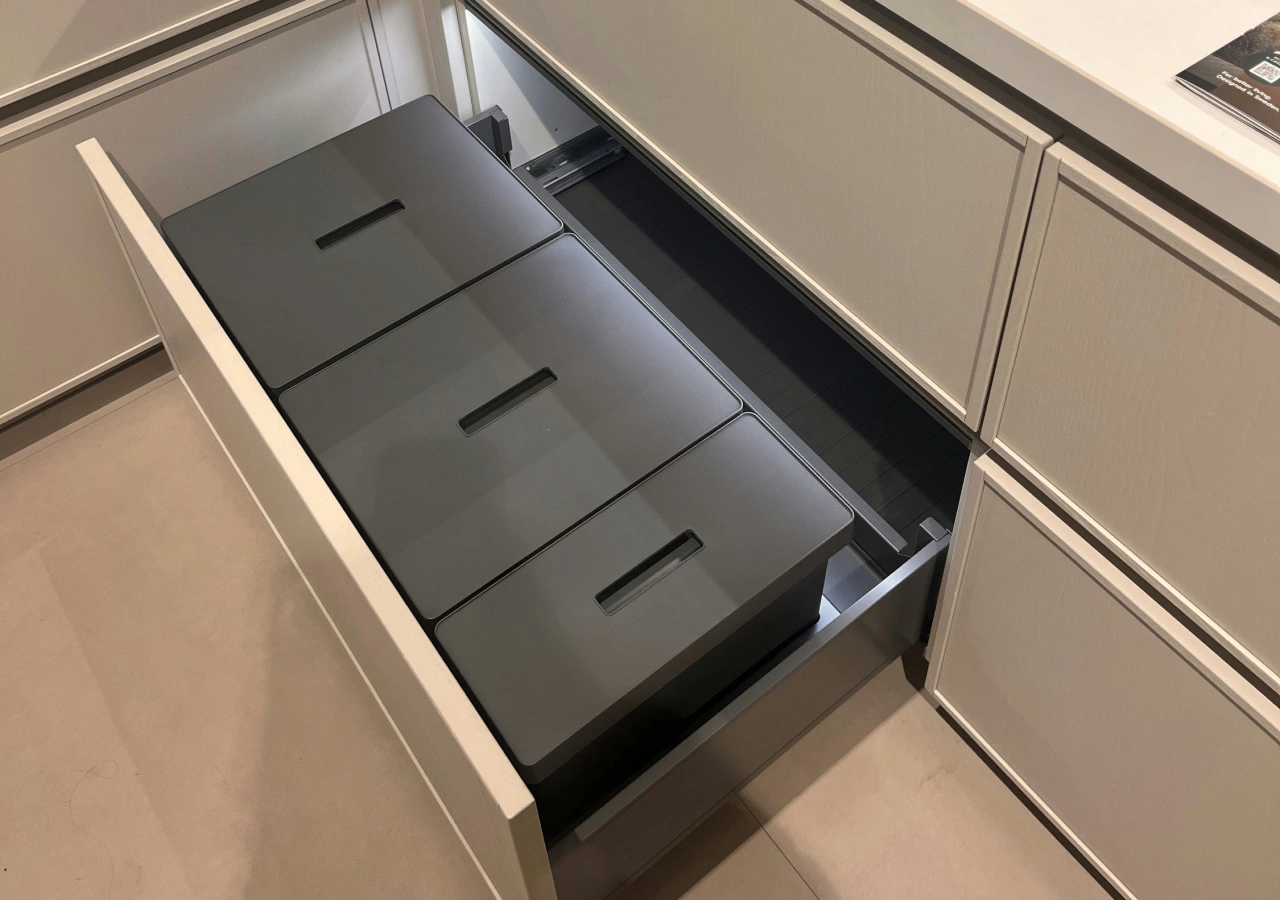
Removable bins make it easier to empty waste, change liners, and clean spills. Containers with smooth surfaces and rounded interior corners are generally easier to wash.
The bins should lift out without requiring the frame or runners to be taken apart. There should also be enough clearance above the containers to remove them comfortably.
Replacement-bin availability is another useful consideration. Standard or manufacturer-supported sizes are easier to replace if a container becomes damaged.
Dual-Bin and Multi-Bin Setups
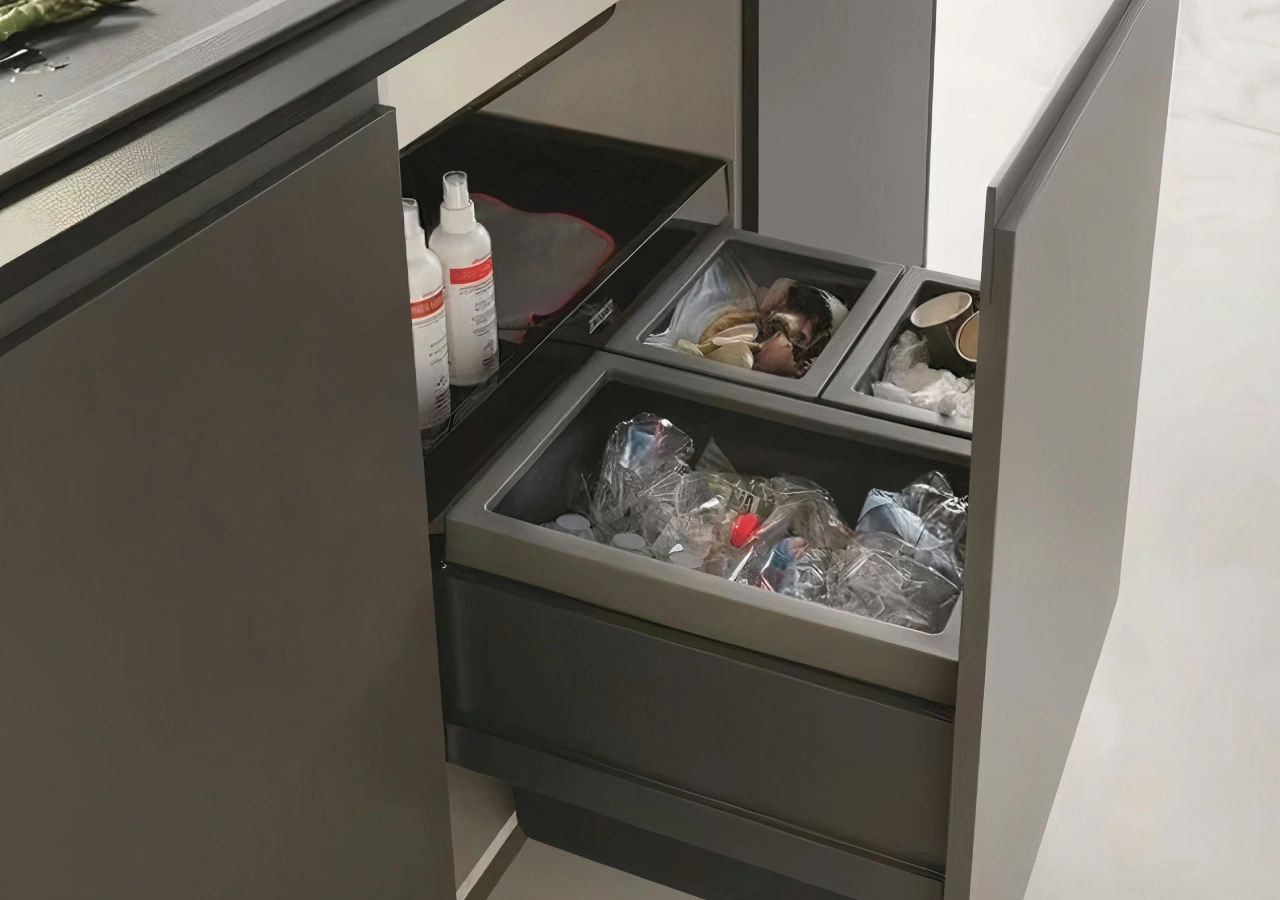
Dual-bin systems separate two waste streams within one cabinet. They are commonly used for trash and recycling, but they can also support compost or other local sorting requirements.
Some systems use two equal containers. Others combine one larger bin with a smaller secondary bin. The better configuration depends on how much of each waste type the household produces.
More containers do not always mean better organization. Dividing the cabinet between several small bins can increase how often each one needs to be emptied.
Lids and Odor Control
.webp)
A built-in cabinet does not eliminate odors by itself. Food waste can still create smells inside the enclosed space, especially when the bin remains full for several days.
Lidded or well-fitted bins can help reduce odor, especially when trash is emptied regularly. A separate sealed container may be more appropriate for compost and food scraps.
The cabinet interior should remain easy to clean. Spills and residue around the frame, runners, or cabinet floor can create odors even when the bins have lids.
Strong Weight Capacity
.webp)
The weight rating should cover the frame, containers, liners, and the waste inside them. A system that works smoothly when empty may bind or sag when the bins are full.
Higher-capacity containers require stronger runners and secure mounting. This is particularly important when the cabinet front is attached directly to the pull-out.
Do not assume that all drawer-style hardware is suitable for a waste system. Use hardware designed and rated for the selected pull-out configuration.
Door-Mounted Frames
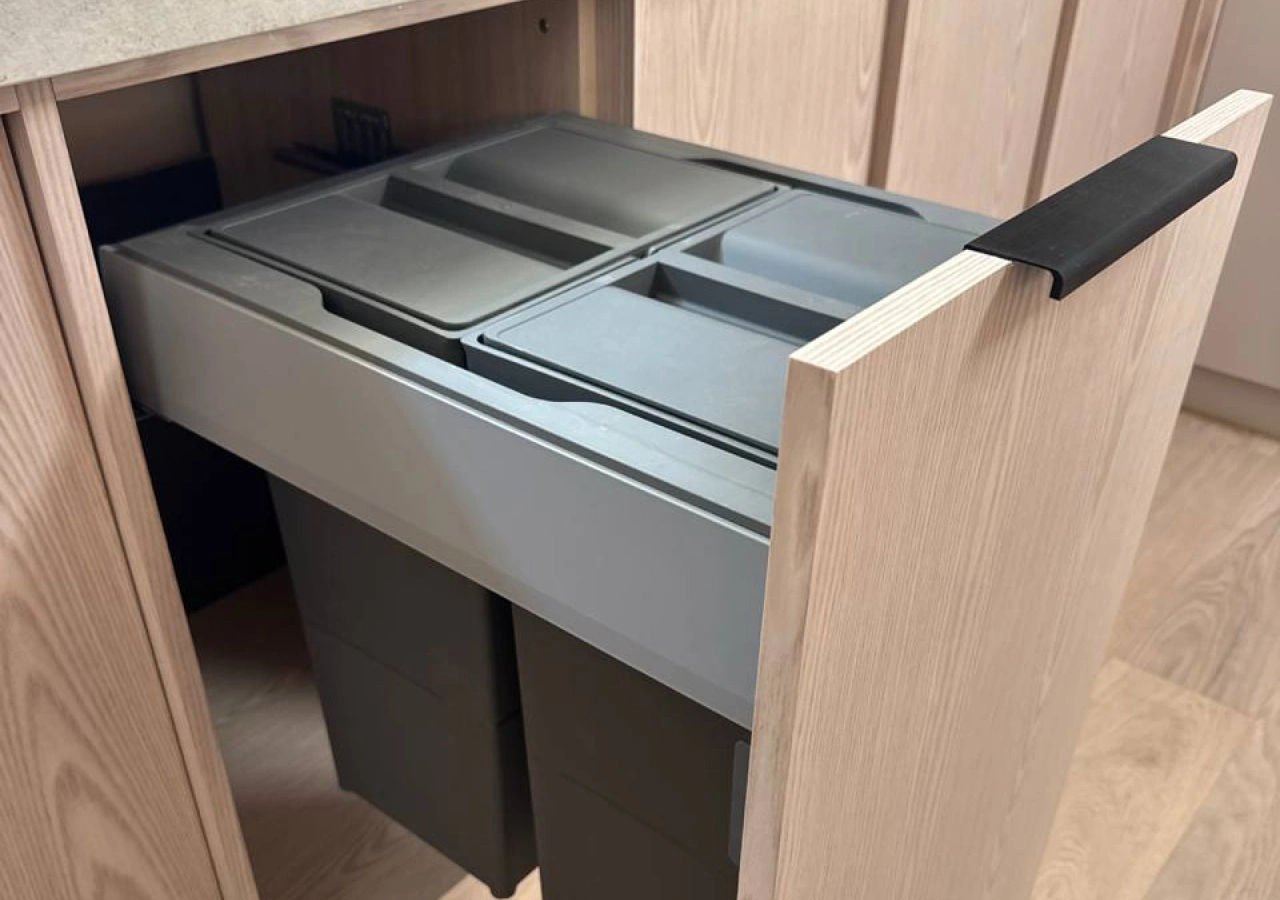
A door-mounted frame attaches the cabinet front directly to the pull-out. The user pulls the cabinet front, and the entire system opens in one motion.
This design provides fast access and creates a clean, integrated appearance. It also removes the need to open a hinged door before reaching the bins.
Accurate installation is important. Poor alignment can create uneven cabinet gaps, rubbing, or difficulty closing the pull-out.
Benefits of a Built-In Trash Pull-Out
Cleaner Cabinet Runs
.webp)
A freestanding trash can can interrupt the appearance of a continuous cabinet run. A built-in system keeps the bins behind a matching cabinet front.
This is useful in open-plan kitchens where the waste area is visible from nearby dining or living spaces. It also supports minimalist, Scandinavian, and Japandi interiors that use fewer exposed accessories.
The trash system remains accessible without becoming a separate visual element in the room.
More Open Floor Space
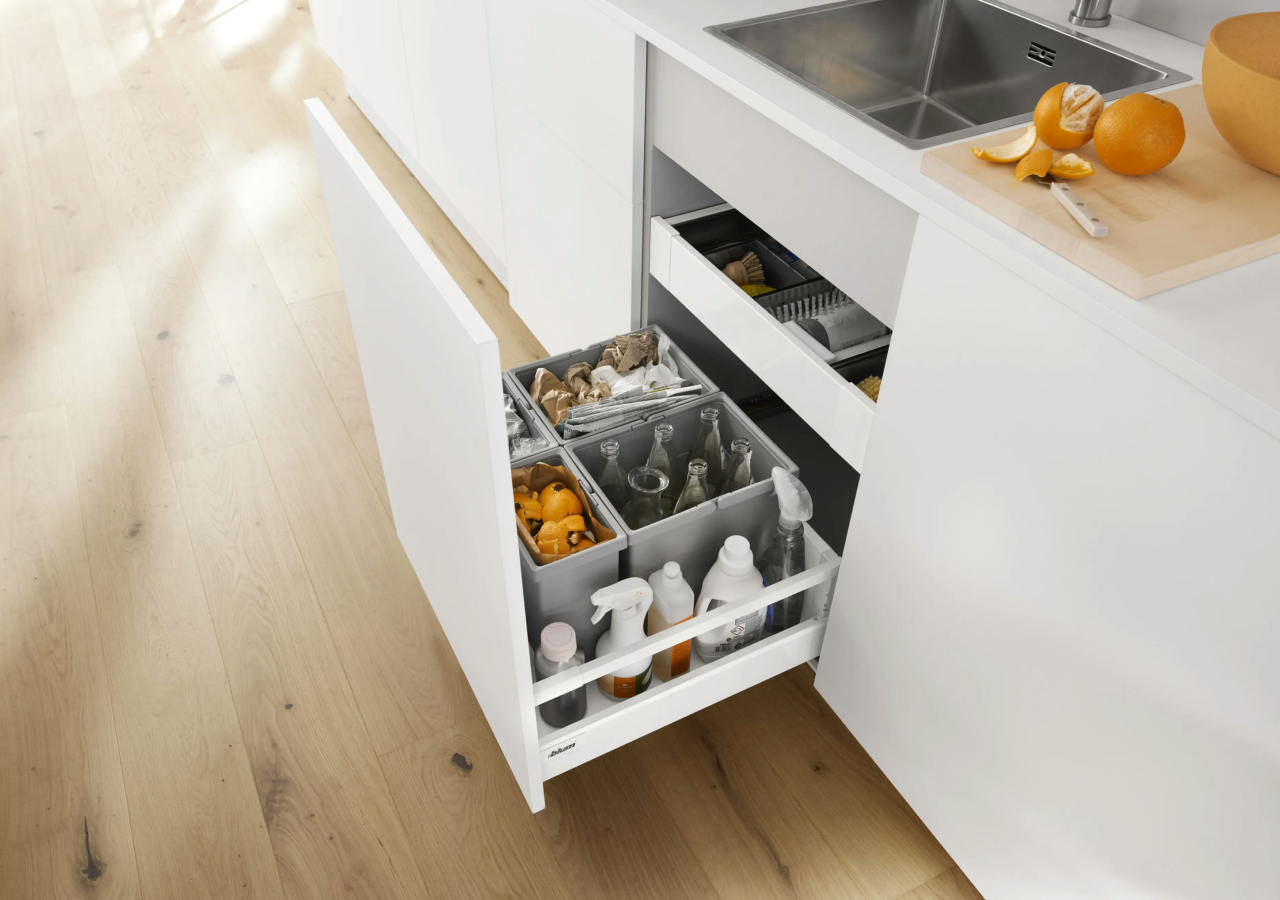
Moving the trash bin into a cabinet removes it from the floor. This can make narrow walkways and smaller kitchens feel less crowded.
The benefit is most noticeable when a freestanding bin would otherwise sit at the end of a cabinet run, beside an island, or near a frequently used doorway.
A built-in system does use cabinet space, so the tradeoff should be considered during the overall storage plan.
Easier Waste Separation
.webp)
A pull-out can keep trash and recycling together without requiring two visible containers. The bins remain clearly separated but are accessed from the same cabinet.
This can make sorting easier during food preparation and cleanup. It may also reduce the number of separate bins placed around the kitchen.
Labels or different liner colors can help household members identify each container when several waste types are stored together.
Convenient Daily Access
.webp)
A pull-out brings the bin toward the user instead of requiring them to reach into a cabinet. Full-extension access is particularly useful when a second container sits behind the first.
Door-mounted systems can often be operated with one hand. This is helpful when holding food scraps, packaging, or a cutting board.
The runners should open easily without requiring excessive force, even when the containers are partly full.
Easier Cleaning
.webp)
Removable containers can be lifted out and washed separately. The open frame also provides access to the cabinet floor and surrounding surfaces.
Regular cleaning is important because food residue can collect around the liners, frame, and cabinet base. Wiping these areas helps control odors and protects the cabinet finish.
A leak-resistant tray beneath the bins can provide additional protection in systems that handle food waste or compost.
Door-Mounted vs Internal Pull-Out Systems
Door-mounted and internal systems provide similar waste storage, but they open differently.
A door-mounted system usually feels more integrated. An internal pull-out may be easier to add when working with an existing cabinet and door.
Pull-Out Trash Bins vs Freestanding Trash Cans
A built-in system is generally a stronger choice when concealed storage and open floor space are priorities. A freestanding bin may be more practical when cabinet storage is limited or the waste location needs to remain flexible.
Installation and Maintenance
.webp)
Trash pull-outs can be included in new cabinetry or added to some existing cabinets with a retrofit kit. These kits usually include the bins, sliding frame, runners, and mounting hardware.
Installation requires accurate measurements and secure mounting. The frame must remain level and aligned so it does not rub against the cabinet or place uneven pressure on the runners.
For detailed placement planning, see our kitchen trash pull-out layout guide. That article covers sink, island, prep-zone, recycling, compost, cabinet width, and clearance decisions in more detail.
Routine Maintenance
.webp)
Remove and wash the bins regularly. Wipe the frame, cabinet floor, runners, and surrounding cabinet surfaces when spills occur.
Check mounting screws and door alignment if the unit begins to move unevenly. Small adjustments can prevent additional strain on the runners and cabinet front.
The runners should usually be cleaned according to the hardware manufacturer’s instructions. Avoid applying oils or cleaning products that could attract dirt or interfere with the soft-close mechanism.
Conclusion
A built-in kitchen trash pull-out can keep waste storage concealed while making trash, recycling, and compost easier to access. Its usefulness depends on features such as full-extension runners, removable bins, strong hardware, soft-close operation, and adequate weight capacity.
The best system is one that performs reliably when full and remains easy to clean. Hardware quality and bin configuration matter more than adding the largest possible number of containers.
Explore Corner Renovation’s kitchen collections and completed projects to see how built-in waste storage can be coordinated with cabinet fronts, islands, and other kitchen storage features.


