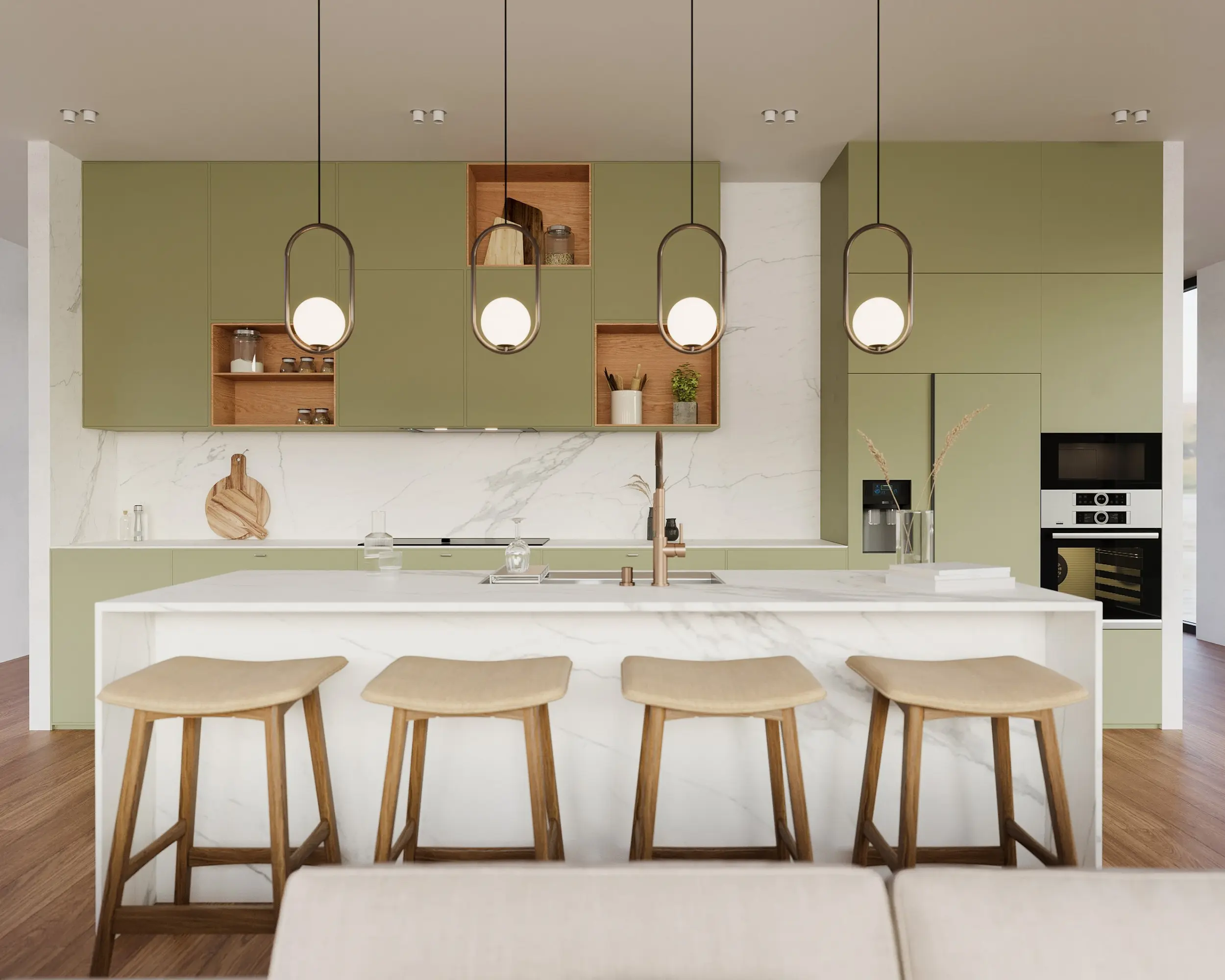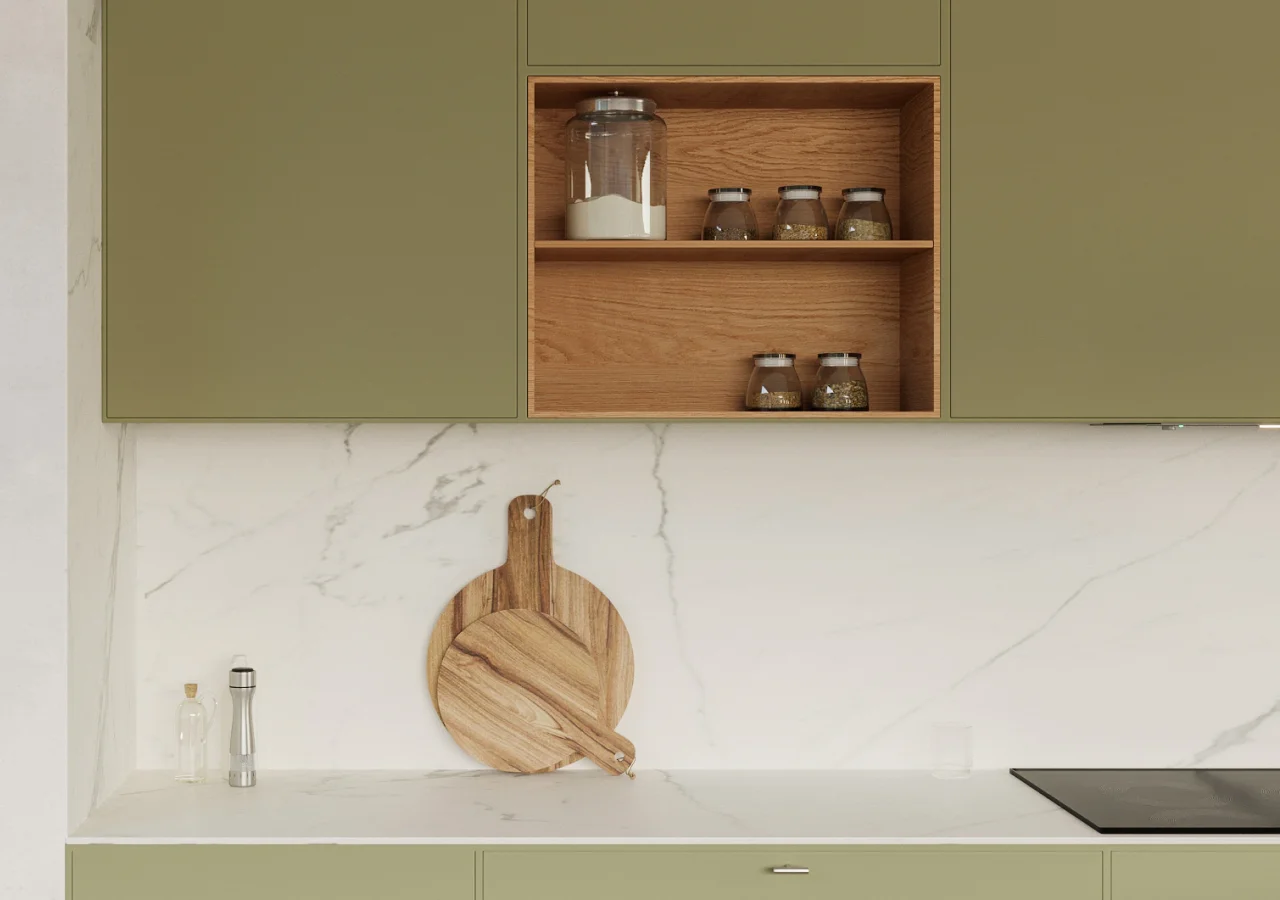
A built-in kitchen cabinet niche can break up a continuous run of closed fronts, introduce a contrasting material, or keep frequently used items within reach. But an opening that looks attractive in a rendering may be less practical once it is filled with everyday objects. Here, a cabinet niche means an open section integrated into cabinetry, not necessarily a recess in a structural wall or a set of separate wall-mounted shelves.
Good kitchen organization depends on balancing accessible items with enough concealed storage. Every niche replaces space that could otherwise sit behind a door. The important question is where to introduce that opening, what it should hold, and whether keeping the surrounding cabinets closed would work better.
Give the Niche a Specific Job
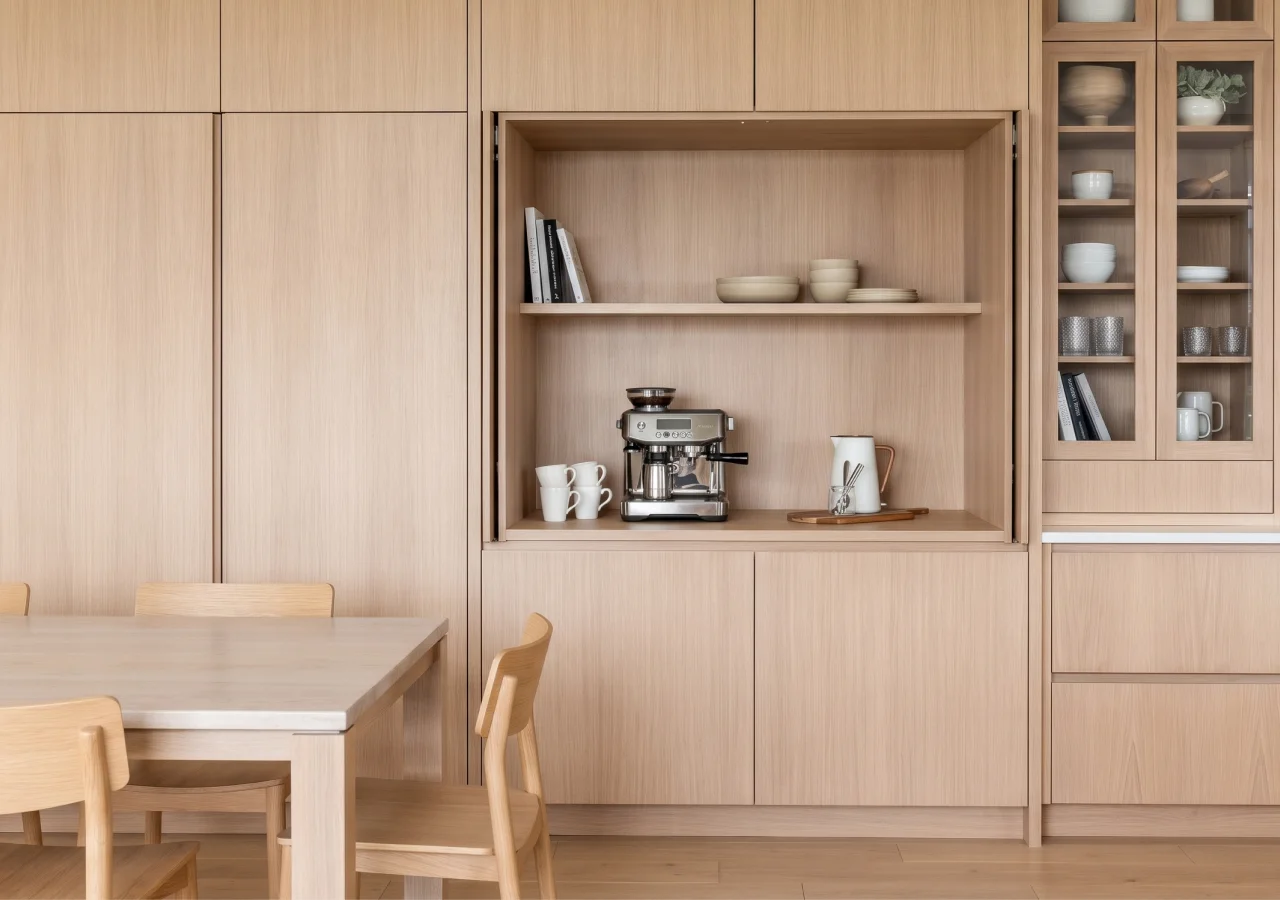
Start with what you want to keep in the opening. A display niche for ceramics has different requirements from everyday storage for mugs or cookbooks. An appliance niche needs additional planning around equipment dimensions, power, and access.
Choose the contents before deciding the dimensions. Measure the items, then consider how they will be placed and removed. Cookbooks need sufficient shelf height and depth. A coffee machine may require space for filling its water tank, opening a lid, and accessing removable components.
An open section also replaces potential closed storage. If that space would otherwise hold groceries, spare dishes, or cleaning supplies, decide where those items will go. A guide to minimalist Scandinavian kitchen design explores the balance between visible and concealed storage. With a built-in niche, that balance also determines where the cabinet run should be interrupted.
Choose Where to Open Up the Cabinet Run
Three locations are worth considering, depending on the items you want accessible and the cabinet space available.
Within a Tall Cabinet Wall
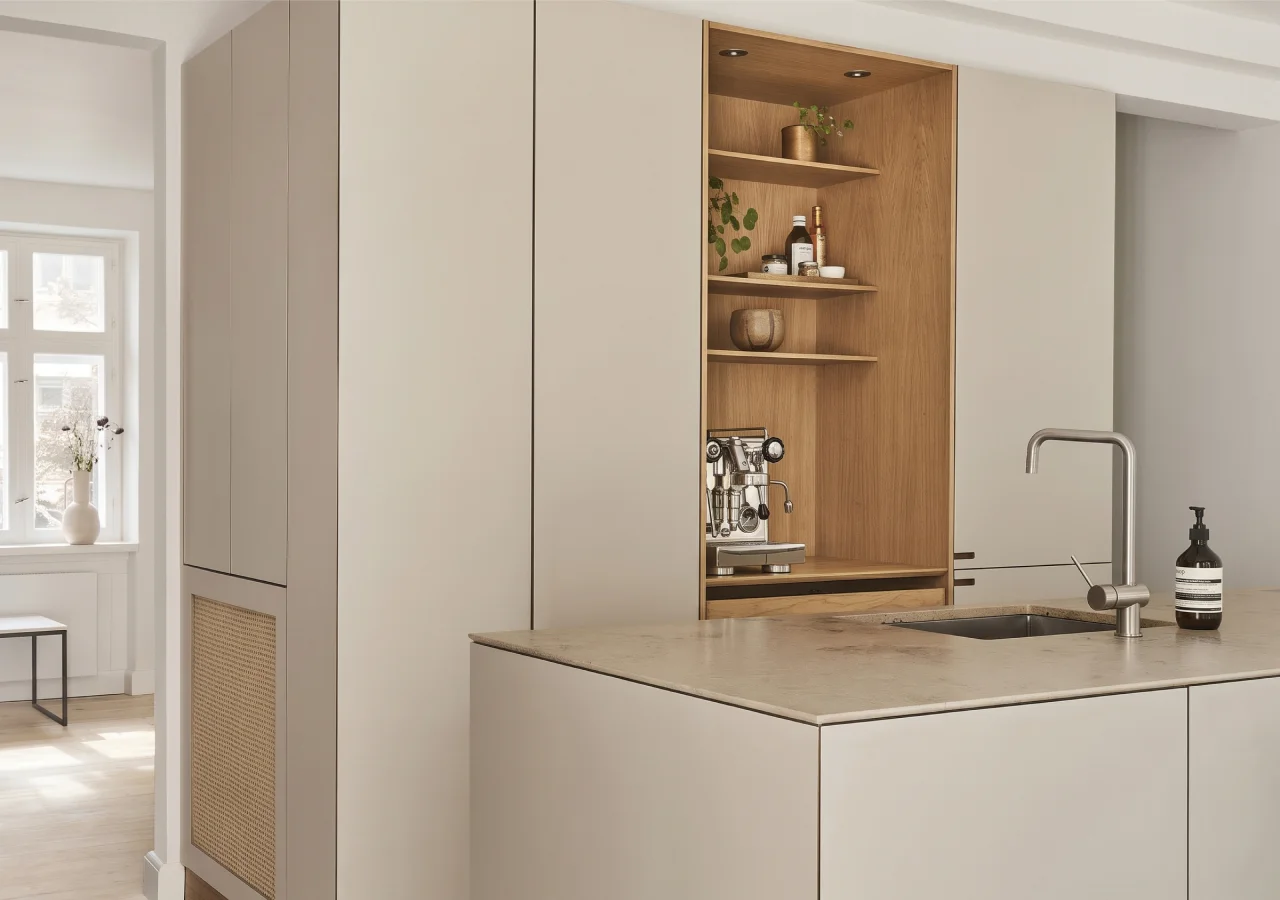
A niche can interrupt a continuous wall of tall cabinets while retaining enclosed storage around it. It might hold everyday dishes, selected objects, or cookbooks, depending on its height and proximity to the main working areas.
The opening should be positioned for its intended use. A shelf too high for everyday cups may work better for occasional display. For example, an accessible niche could hold frequently used mugs while neighboring full-height units remain closed for pantry storage.
Its location should also relate to the surrounding cabinet divisions. It may sit between full-height units or occupy part of a cabinet bay, but neither arrangement requires perfect symmetry or a standard width. Review the complete elevation alongside the kitchen storage wall layout before deciding which section to open.
At the End of an Island
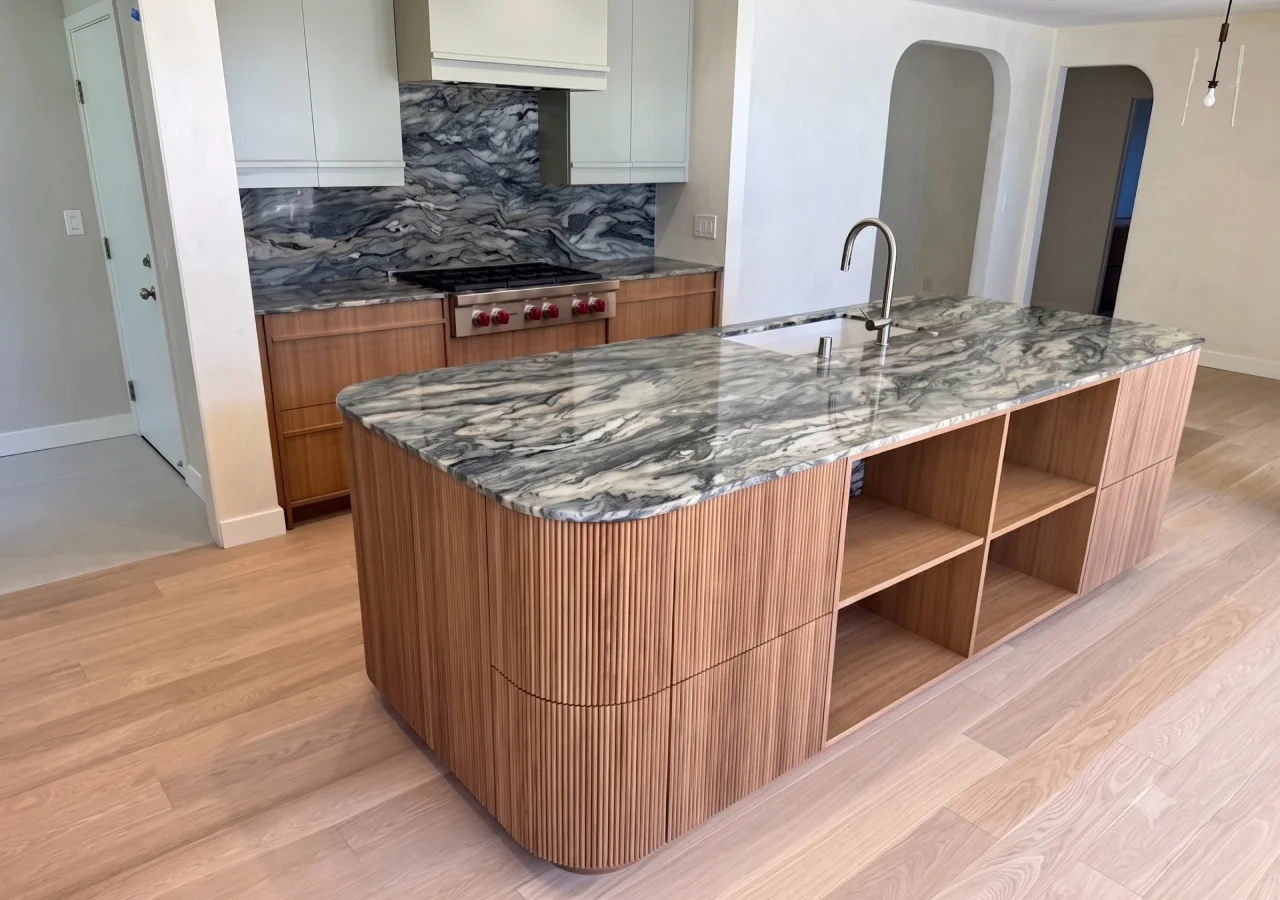
An open niche at the exposed end of an island can provide storage for cookbooks or serving pieces without interrupting the main working surface. It can also make these items accessible from the dining area.
The tradeoff is the space it occupies. An end niche may reduce enclosed storage or compete with seating and countertop details. In one consultation, cookbook shelving was discussed along the open side of an island while preserving room for stools. Although this was a side arrangement rather than an end niche, it highlights the importance of balancing open storage with other island functions.
For an end niche, check the available cabinet depth, shelf access, nearby seating, and any countertop overhang or waterfall panel. The opening should fit the island's construction rather than forcing changes to more useful features.
At Counter Height
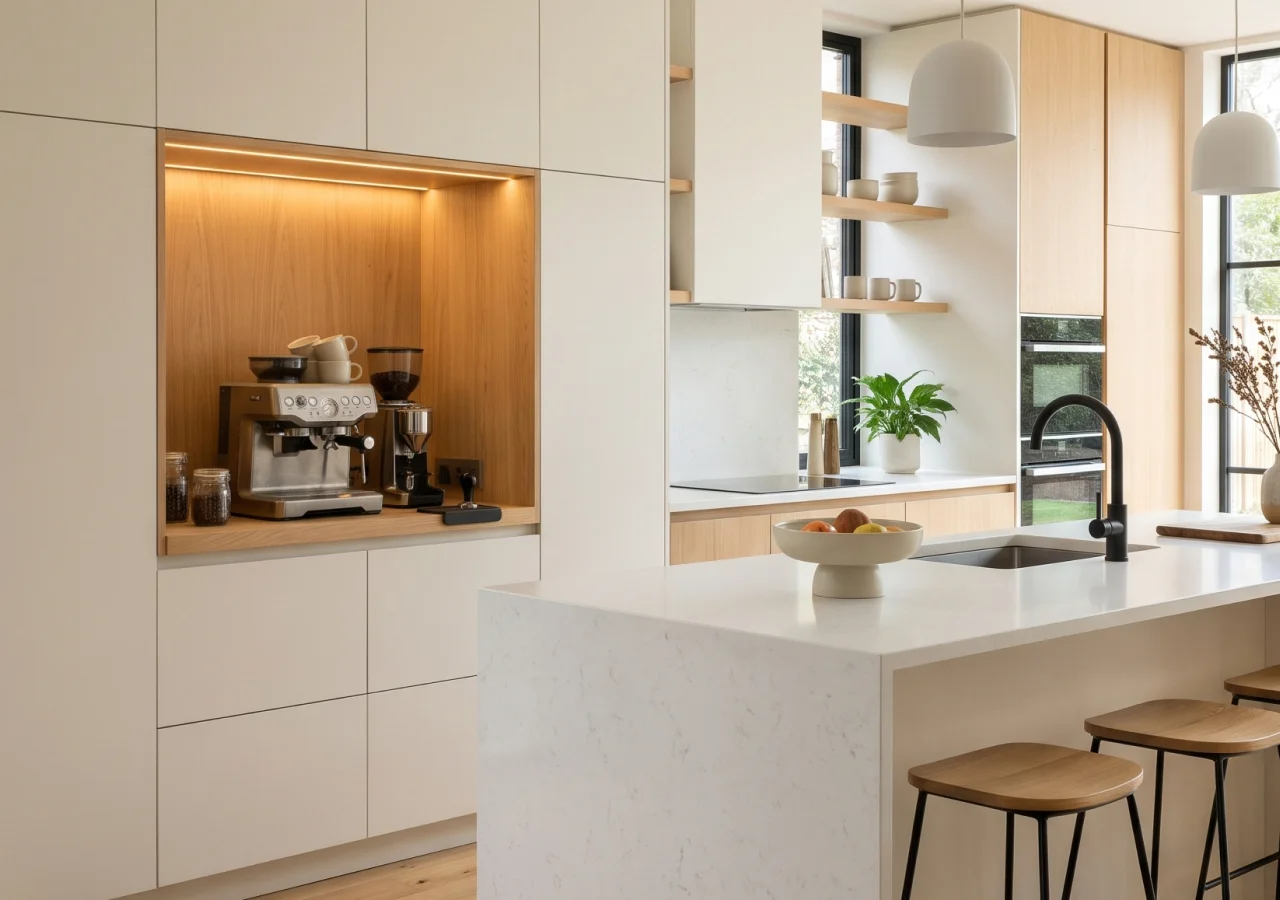
A counter-height niche can keep a coffee machine or other frequently used equipment accessible without requiring cabinet doors to remain open during use.
In one design discussion, removing the doors of a coffee station was considered because wide-opening doors could obstruct the passage between the counter and island. The proposed arrangement included an open section, a drawer below, and an upper cabinet above. It remained a design option awaiting visualization and a final decision.
An open station can eliminate that door-swing conflict, but the appliance still needs accessible power, working clearance, and suitable finishes. Check the manufacturer's requirements for heat, steam, ventilation, and operation before finalizing the cabinetry. If concealment remains important, compare the alternatives in appliance garage door guide.
Coordinate the Opening With the Surrounding Cabinets
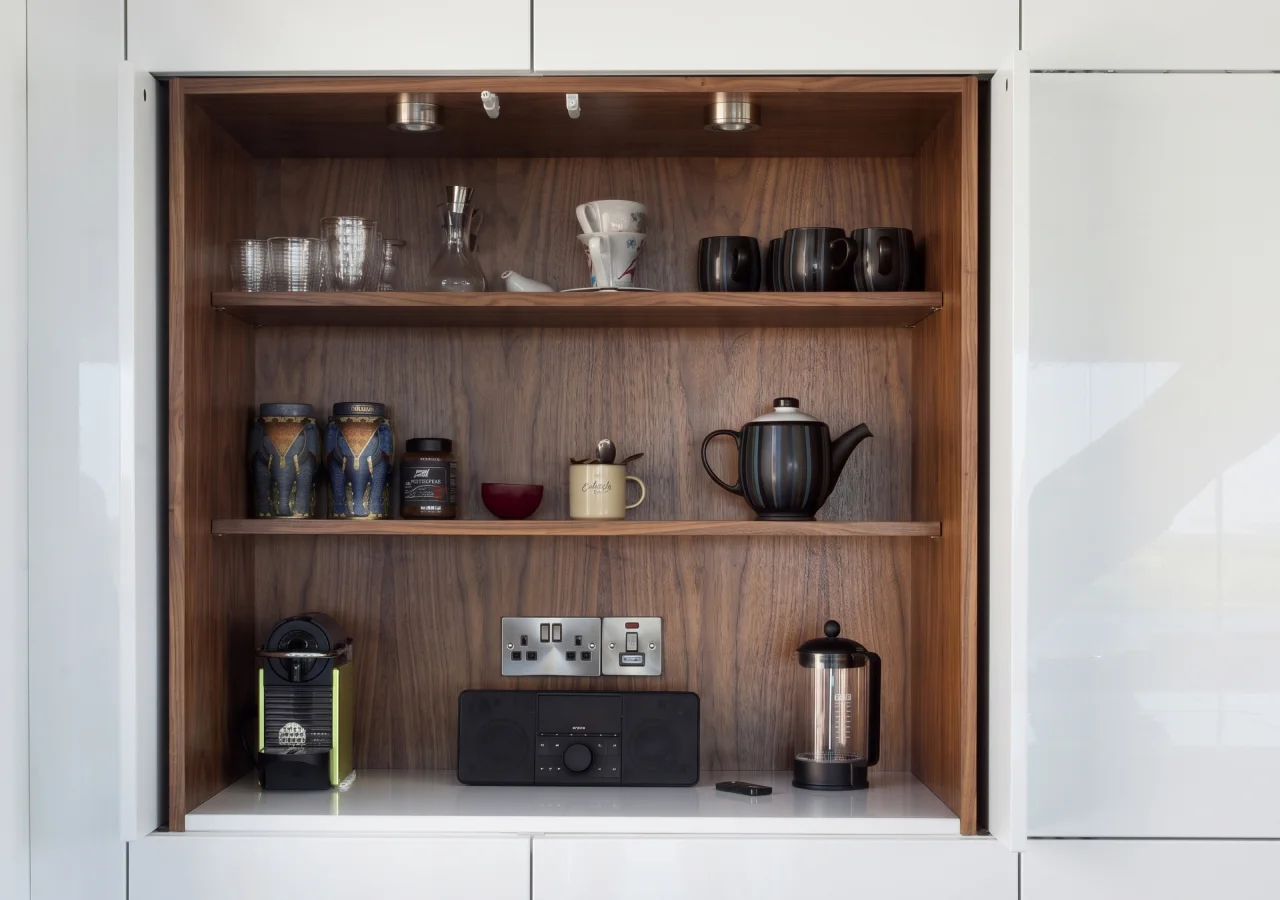
A built-in niche should have a clear relationship with the surrounding fronts. Its width, depth, shelf divisions, edges, and back panel all affect the composition. It does not need to be centered, but its boundaries should follow the intended design.
Material choice also changes how noticeable the opening becomes. In one design proposal, a predominantly solid-color kitchen included two wood-look niches in the upper cabinetry. The contrasting sections offered a way to introduce a wood appearance without changing the entire cabinet palette. This was a proposed alternative, not a completed installation.
A matching interior can create a continuous appearance, while a darker back panel or contrasting wood finish draws more attention. A visible niche is not necessarily visually lighter. Crowded shelves, cables, or colorful packaging can make it the busiest part of the kitchen.
Check the opening from the main viewing position, whether that is the entrance, dining table, or living room. Before production, also confirm shelf support, cleanable finishes, usable internal dimensions, and space for integrated lighting if included. Kitchen cabinet alignment guide covers the broader relationship between adjacent cabinet divisions.
When to Keep the Cabinets Closed
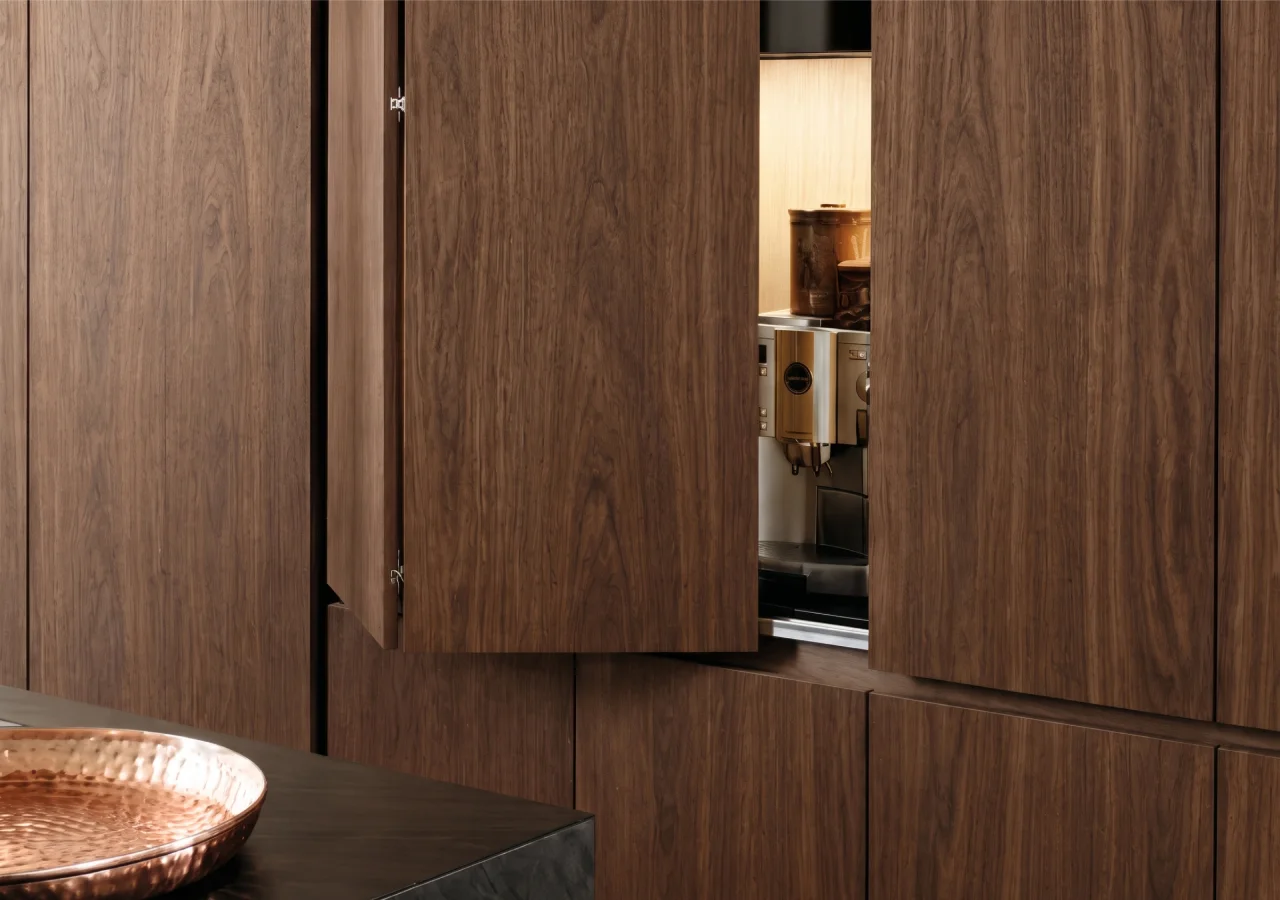
Not every kitchen benefits from an open niche. A continuous run of closed fronts may be more practical when storage is limited, the proposed shelves would be difficult to reach, or the contents would create clutter in a prominent view.
If removing a cabinet means losing convenient space for groceries, cookware, or small appliances, the niche needs to offer a clear benefit in return. Additional enclosed storage may be more valuable than a decorative opening, particularly in smaller kitchens.
Closed cabinetry also makes sense when equipment, cords, or infrequently used objects are better kept out of sight. If a niche has no specific purpose, or would require constant rearranging to look tidy, keeping the cabinet run closed may be the better choice.
Conclusion
Built-in kitchen cabinet niches can introduce material contrast, improve access to everyday items, or solve a practical problem such as an obstructed cabinet door. Their value depends on where they sit within the cabinetry and what they are intended to hold.
Every opening involves tradeoffs. It reduces potential closed storage, exposes its contents, and introduces surfaces that need cleaning. Custom materials, lighting, and exposed-edge details may also affect the project quote and fabrication requirements.
A single well-placed niche may be more useful than several decorative openings. Before approving the design, check the contents, usable dimensions, surrounding storage, and main viewing angles.
Explore Corner Renovation's kitchen collections and completed kitchen projects for inspiration on combining cabinetry, materials, and practical storage.