
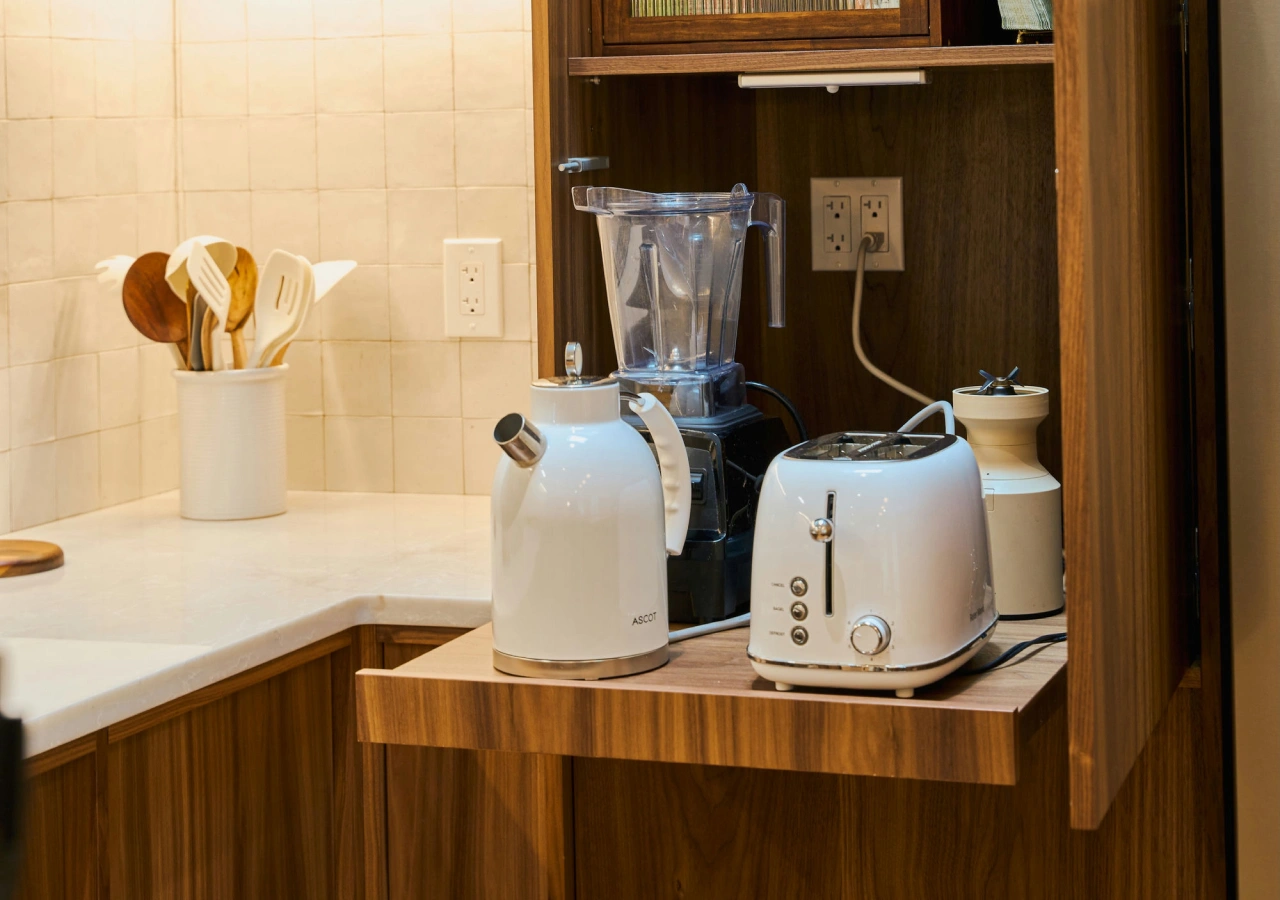
An appliance garage sounds simple: give the toaster, coffee machine, blender, or microwave a place to disappear when it is not being used. But the real question is how easy the appliance will be to use every day.
A good appliance garage is about access. If the door gets in the way, the cabinet is too narrow, or the appliance has to be pulled out every morning, the clean look will quickly feel frustrating.
For modern kitchens, especially calm minimalist, Japandi, and Scandinavian-inspired spaces, appliance garages can help keep the countertop clear without making the kitchen feel sterile. The key is choosing the right opening style for the way the station actually works.
Quick Answer: Which Door Option Works Best?
Compare the Three Options

Choose based on how the appliance garage works when open, not just how it looks closed. Daily use, door clearance, and access matter most.
An open niche is easiest for frequent use, but the appliance stays visible. Swing doors hide appliances well, but can block walkways or drawers when open. Pocket doors keep the station accessible without doors in the way, but they cost more, need side space, and require precise planning.
The best option for functionl kitchen design is the one that fits the routine, not necessarily the most expensive one.
Open Niche and Open Shelves
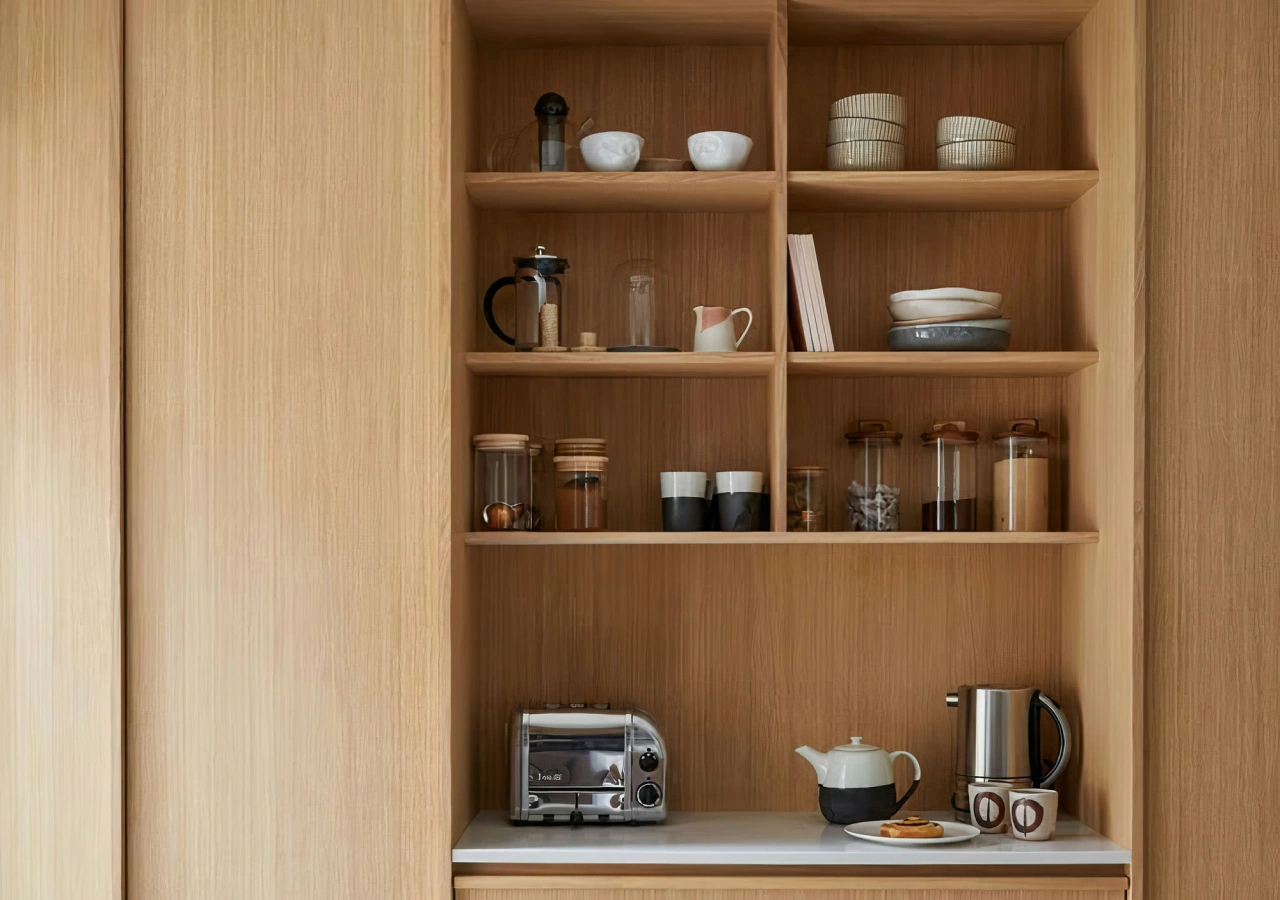
An open niche is the simplest appliance garage option. It creates a dedicated appliance space in a pantry wall, cabinet run, countertop zone, or shelving area.
It works best for appliances used several times a day because there is no door, swing clearance, or hardware to manage. The tradeoff is visibility, so the setup needs to look intentional.
Plan the outlet, cord path, shelf height, and surrounding materials carefully. This keeps the niche feeling built in instead of cluttered.
Swing Doors
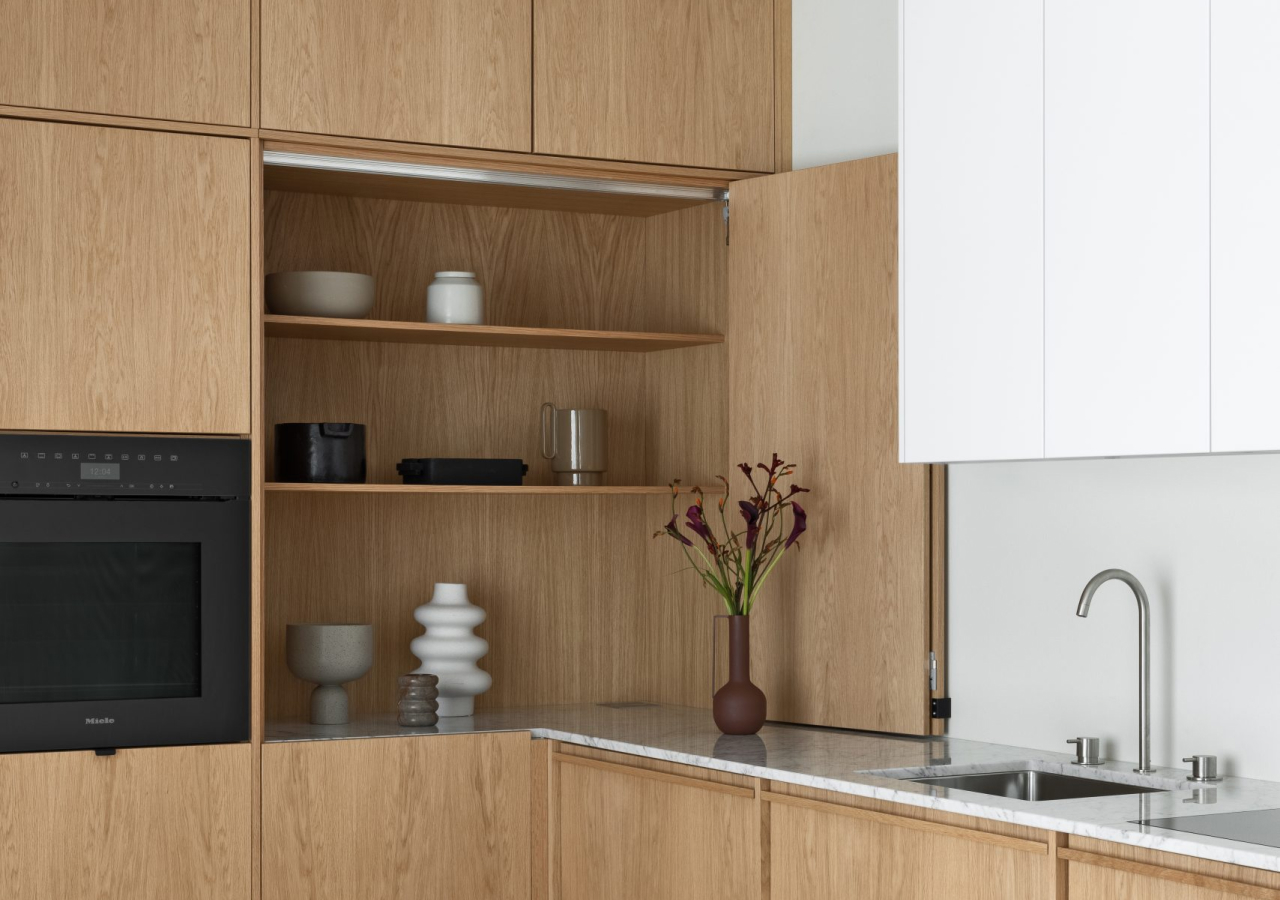
Swing doors are a practical middle ground. They conceal the appliance and use familiar cabinet hardware, making them simpler than pocket doors.
They work well for appliances used briefly and then closed away, such as a toaster, blender, or small breakfast station. The main drawback is that the doors project into the kitchen while open.
In wide areas, this may not matter. In narrow walkways, near islands, or beside drawers, swing doors can feel like they are always in the way.
Pocket Doors
.webp)
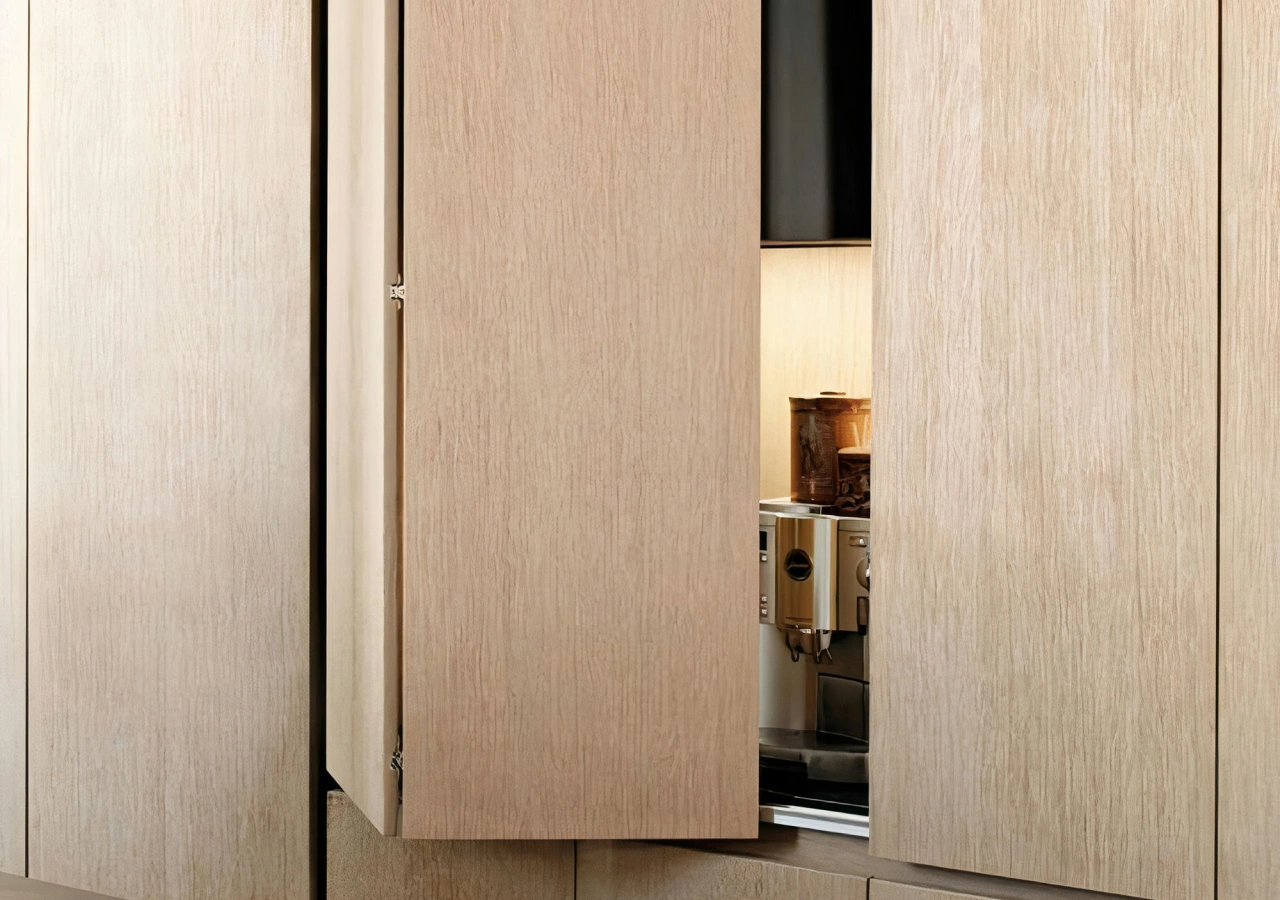
Pocket doors create the cleanest built-in look. When closed, they help the cabinet wall feel seamless; when open, the doors slide into side pockets.
They are best for high-use stations that stay open for longer periods, especially coffee or espresso setups. They keep the work area accessible without blocking movement.
The tradeoff is cost, side-pocket space, and installation precision. Pocket doors make the most sense when the station is used often and the closed look matters.
Short Notes: Coffee Stations and Microwaves
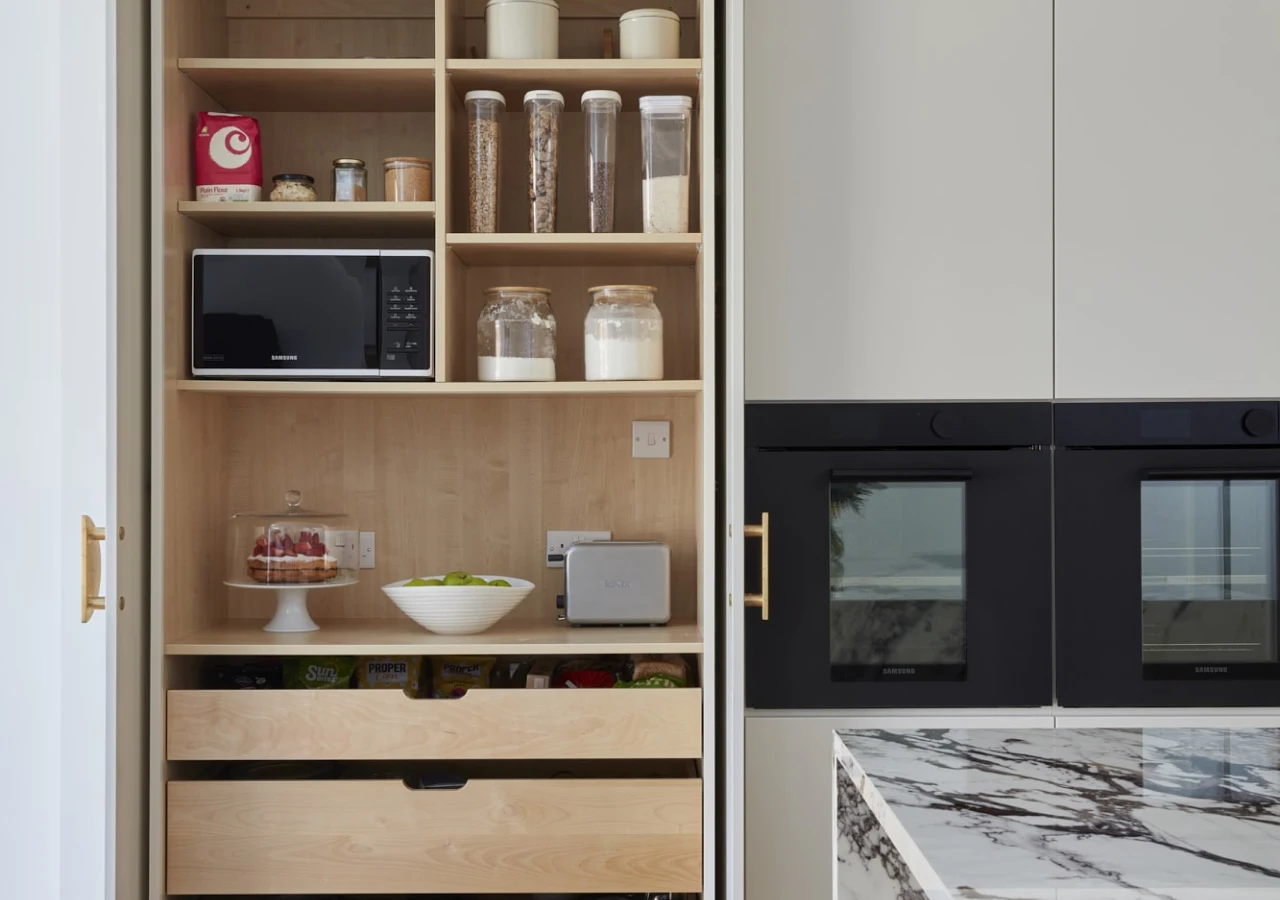
For a coffee appliance garage, the door choice should be based on how long the station stays open. Check the machine height and depth, water tank access, steam or heat clearance, outlet location, and whether the doors can remain open comfortably while coffee is being made. If the doors need to stay open during the whole routine, pocket doors often make more sense than swing doors.
Outlets should be planned before the cabinet drawings are finalized. Electrical placement should be confirmed with your contractor or electrician so the outlet location, access, and local code requirements are handled correctly.
If the garage will hold a microwave, confirm the exact model, manufacturer ventilation requirements, clearances, and electrical access before designing the cabinet. Not every countertop microwave can be enclosed behind doors.
Common Door-Planning Mistakes
The most common mistake is choosing pocket doors only because they look premium. They can be a beautiful solution, but they are not automatically the best one.
Other common mistakes include forgetting side-pocket space, choosing swing doors where they block the prep zone, making the garage too narrow after hardware is added, and not checking the appliance height and depth before the cabinet is designed.
Ventilation and electrical access also need to be handled early. A clean appliance garage still has to work safely and comfortably. If the appliance needs clearance, airflow, or a specific outlet location, those details should guide the cabinet design from the start.
Conclusion
An appliance garage should make the kitchen easier to use, not just cleaner to look at. Open niches give the fastest access and work well for attractive daily-use appliances. Swing doors are simple, practical, and cost-effective for smaller garages. Pocket doors create the cleanest concealed look and are strongest when the station stays open during use.
The right choice depends on use, location, and budget. Choose the door style based on how the appliance station will behave in real life, not only on which option looks most custom in a rendering.
To plan this detail well, explore Corner Renovation’s kitchen collections, view real project examples, or book a consultation to design an appliance garage that fits your space and daily routine.


