

There is no doubt that the kitchen countertop is one of the most important elements of a modern kitchen design. It is where much of the kitchen’s daily work happens, but it also plays a major role in how the whole room looks and feels. Choosing the right countertop is about finding something that fits the way you cook, the level of maintenance you are comfortable with, and the kind of wear your kitchen will see over time.
This guide is designed to help you make that decision more clearly. It looks at countertop materials through three practical lenses: daily use, visual style, and long-term risk. That means thinking about questions like whether you regularly set down hot cookware, whether you want a low-maintenance surface, whether you prefer soft matte finishes or expressive veining, and how comfortable you are with things like seams, staining, chipping, or limited repairability. Since a number of factors shape the right choice, we put this guide together to make the process easier and more useful.
Main Factors for Choosing a Kitchen Countertop
Several qualities are paramount when selecting a kitchen countertop: durability, maintenance, resistance to heat and stains, appearance, and price. These factors work together, and the best choice usually depends on which tradeoffs fit your kitchen best.
Now let’s take a closer look at each factor so the choice becomes easier and more grounded in real use.
Durability
Almost all well-known countertop materials can work well in a kitchen, so the real question is not simply whether they are durable, but how that durability matches your daily habits.
What to ask yourself:
Do you want a surface that can handle a lot of daily traffic with minimal worry?
Are you comfortable with a material that may wear beautifully over time, or do you want it to stay visually consistent?
What usually wins:
Quartz, quartzite, and Dekton are often strong choices for households that want high durability with fewer day-to-day concerns. Stainless steel is also extremely resilient in working kitchens, though it tends to show surface marks as part of normal use.
Stones like quartz, granite, and marble are often considered some of the best countertop choices because of their toughness, though each performs differently. Quartz is one of the most reliable all-around options for kitchen use because it combines strong everyday durability with easy upkeep. Quartzite is also very durable and has the added appeal of being a natural stone.
Engineered materials like Dekton and Fenix are also popular choices. Dekton has strong resistance to scratches, stains, and heat in normal kitchen conditions, though like many rigid surfaces it can still chip if hit hard on an edge or corner. Fenix performs well in daily use and resists fingerprints beautifully, but it should still be treated as a design-forward surface that benefits from careful handling rather than rough abuse.
Metal is also a strong contender, especially stainless steel. Its solid, non-porous surface is one reason it is so widely used in restaurant kitchens and other high-use environments.
Opting for a durable countertop can also be cost-effective over time, since it reduces the chance of early replacement.
Maintenance of Kitchen Countertop

Few people want a countertop that demands constant attention, so maintenance should be considered early rather than treated as an afterthought.
What to ask yourself:
Do you want a wipe-and-go surface, or are you comfortable with periodic sealing and more careful cleaning?
Will a little patina bother you, or do you want the surface to stay looking more uniform?
What usually wins:
Quartz, Dekton, and stainless steel tend to be easiest for day-to-day care. Marble and quartzite can also work beautifully, but they usually ask for more awareness and, in some cases, sealing.
Stainless steel is one of the easiest materials to maintain. It is hygienic, easy to wipe down, and typically needs only warm water, mild soap, and a soft cloth. Though it is highly resistant to food and drink stains, it still helps to wipe spills sooner rather than later.
Stone countertops can also be manageable, but each one comes with specific care rules. Marble is more sensitive to acidic cleaners and spills, while quartzite is usually recommended to be sealed periodically. Quartz is simpler because it does not require sealing and can usually be cleaned with a soft cloth and mild cleaner.
Fenix and Dekton are also appealing for homeowners who want relatively simple care, but neither should be framed as “worry-free” under all conditions. Fenix especially benefits from regular cleanup of grease and residue so the surface stays looking fresh.
Either way, every countertop material lasts longer and looks better when it is cared for with the right products and habits.
Resistance to Heat and Stains

Resistance to heat and stains has a major effect on how relaxed or careful you can be in daily use.
What to ask yourself:
Do you tend to set hot pans down directly, or do you usually use trivets?
Are spills cleaned right away in your kitchen, or do they sometimes sit for a while?
What usually wins:
If high heat tolerance is important, Dekton and stainless steel usually stand out. If stain resistance and easy cleanup matter most, quartz and Dekton are often strong choices. For marble and quartzite, sealing and quick cleanup matter more.
Dekton performs very well with heat in normal kitchen use and is often chosen by homeowners who want a highly resistant surface. That said, it is better to describe it as highly heat-resistant rather than completely immune to damage. Strong impacts remain a bigger risk than everyday cooking heat, and repairs are usually limited depending on the damage.
Fenix is also often discussed for its technical surface qualities, but it should not be treated like a surface meant for direct contact with hot cookware as a routine habit. It performs well in a kitchen, but using trivets and avoiding unnecessary heat exposure is still the safer approach.
Stainless steel is another highly heat-tolerant option, which is one reason it is used so widely in professional environments. It is also resistant to stains because of its non-porous surface.
If you prefer stone, quartz is often recommended as a practical middle ground because it offers good stain resistance and easy maintenance. Still, it is not heat-proof, so hot pans should not be placed directly on the surface. Marble and quartzite can also perform well, but they usually demand more attention to sealing, acidity, and cleanup.
Appearance of Kitchen Countertop

If you have already decided on the overall style and palette of your kitchen, the appearance question becomes much easier.
What to ask yourself:
Do you want the countertop to feel quiet and minimal, or more expressive and veined?
Do you prefer matte softness, a polished stone look, or a reflective industrial finish?
What usually wins:
Quartz and Dekton offer wide design flexibility. Marble and quartzite are often chosen for natural movement and character. Fenix suits soft, matte minimalism especially well, while stainless steel fits a cleaner, more architectural or professional look.
Quartz can be produced in a wide range of colors and patterns, including designs that echo marble or stone. Quartzite often comes in white, gray, or mineral-rich tones with natural variation. Marble remains one of the most admired options because of its veining, softness, and timeless appeal.
Dekton and Fenix both offer strong contemporary appeal. Dekton ranges across stone-inspired and minimalist surfaces, from matte to more reflective finishes. Fenix is especially attractive for kitchens that want deep matte color, visual calm, and a soft-touch surface.
Stainless steel is sleek, bright, and practical, but it is more versatile visually than many people assume. Depending on the finish, it can feel professional, understated, or even architectural.
The final choice comes down to how you want the kitchen to feel. Some homeowners want expressive stone movement, while others prefer quiet surfaces that let the cabinetry lead.
Countertop Prices
.jpeg)
Budget always matters, but price is best understood in relation to lifespan, maintenance, and the look you are trying to achieve.
What to ask yourself:
Are you optimizing for the lowest upfront cost, or for long-term value?
Would you rather spend more now for lower maintenance and a longer service life?
What usually wins:
Quartz, Dekton, and Fenix often sit higher in the market because of performance and finish quality. Marble and quartzite vary depending on source and selection. Stainless steel can start lower, though custom fabrication can raise the cost.
Some materials cost more because they offer stronger performance or a more refined look over time. Quartz, Dekton, and Fenix are often positioned as premium materials because of their technical qualities and design appeal. Quartzite can also vary significantly depending on the slab. Marble ranges widely based on type, origin, and visual quality. Stainless steel can be a more budget-friendly starting point, especially in simpler prefabricated versions, though made-to-measure installations cost more.
The best decision is not always the cheapest material. It is the material whose performance, look, and maintenance expectations match the way you actually use your kitchen.
Popular Materials for Kitchen Countertops
Now that we’ve covered the main factors for choosing a kitchen countertop, it becomes easier to understand how these materials differ in performance, look, and upkeep. Below is a closer look at the most common options.
Quartz
.webp)
Quartz is often seen as one of the best all-around materials for kitchen countertops. It combines natural stone content with resins and pigments, which gives it durability, design flexibility, and easier maintenance than many natural stones. Because it comes in many colors and patterns, it works well across a wide range of kitchen styles.
Quartz is easy to care for and usually needs only a soft cloth and a gentle cleaner. It can cost more than some alternatives, but many homeowners feel the combination of practicality and appearance justifies the price. Its main caution point is heat: quartz handles daily use very well, but hot cookware should not be placed directly on the surface.
Quartzite
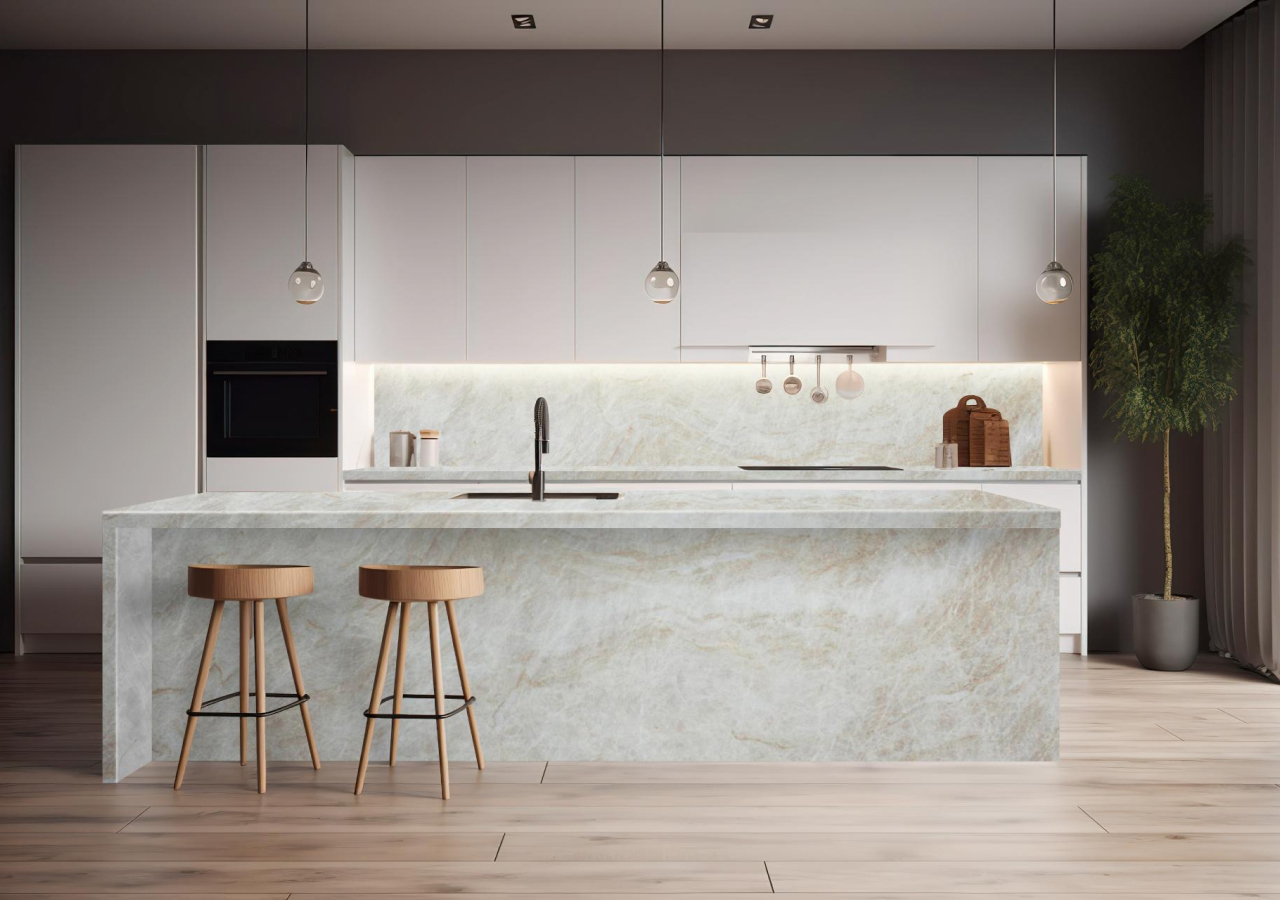
Unlike quartz, quartzite is a natural stone. It is often chosen by homeowners who want the look and variation of real stone with stronger durability than marble. It is one of the harder natural materials used for countertops and can hold up very well over time.
Quartzite is also valued for its natural beauty and can work especially well in bright, layered kitchens. It usually needs sealing and benefits from proper care, but in return it offers a more organic look than engineered surfaces.
Marble
.webp)
Marble is one of the most beautiful and expressive countertop materials. Its veining and softness can give a kitchen a timeless and elevated feel. It is especially loved by homeowners who are willing to accept a little wear in exchange for visual richness.
At the same time, marble is more porous than some alternatives and can be more vulnerable to staining, etching, and surface wear. It also stays naturally cool, which makes it appealing for baking and pastry work.
If aesthetics matter more to you than low maintenance, marble can still be a compelling choice.
Dekton
.webp)
Dekton is a modern surface made from a blend of raw materials used in glass, porcelain, and quartz production. It is known for its sleek appearance and very strong performance in kitchens that demand resistance to heat, stains, and daily wear.
Corner has worked with this material for a long time and often recommends it for contemporary kitchens. Dekton performs very well in demanding environments, but it is still important to explain its tradeoffs clearly. It is highly resistant, not indestructible. Strong edge impacts can cause chips, and repairs are not always straightforward depending on the damage.
Its refined finishes and stone-inspired patterns make it especially well suited to Scandinavian, Nordic, and modern minimalist kitchens.
Fenix NTM
.webp)
Fenix NTM is an Italian-made material developed by Arpa Industriale and has become popular because of its advanced matte surface and soft-touch feel. It is made through a high-pressure lamination process with acrylic resins and curing technology that gives it a distinctive ultra-matte finish.
Fenix NTM works especially well in kitchens that prioritize visual calm, deep color, and a more minimal expression. It resists fingerprints well and can handle everyday use nicely, but it is best described as a surface for careful, design-conscious kitchens rather than one that should absorb every kind of abuse without consequences. Prompt cleaning and sensible use help preserve its finish.
For homeowners who want a warm minimalist kitchen with an especially soft matte look, Fenix NTM can be a very attractive option.
Stainless Steel
.webp)
If you use stainless steel cookware, you already know part of the appeal. Stainless steel countertops are practical, hygienic, and timeless in a very clean, understated way. They are especially useful in kitchens that see heavy daily cooking or where homeowners want a more professional feel.
The material performs extremely well against moisture, heat, and bacteria. It is easy to maintain with a damp cloth and mild soap. The tradeoff is that it can show scratches and marks over time, though many people see that as part of its lived-in character rather than a flaw.
Stainless steel can also work better visually than many people expect, especially in modern or architectural kitchens.
Preparation and Installation
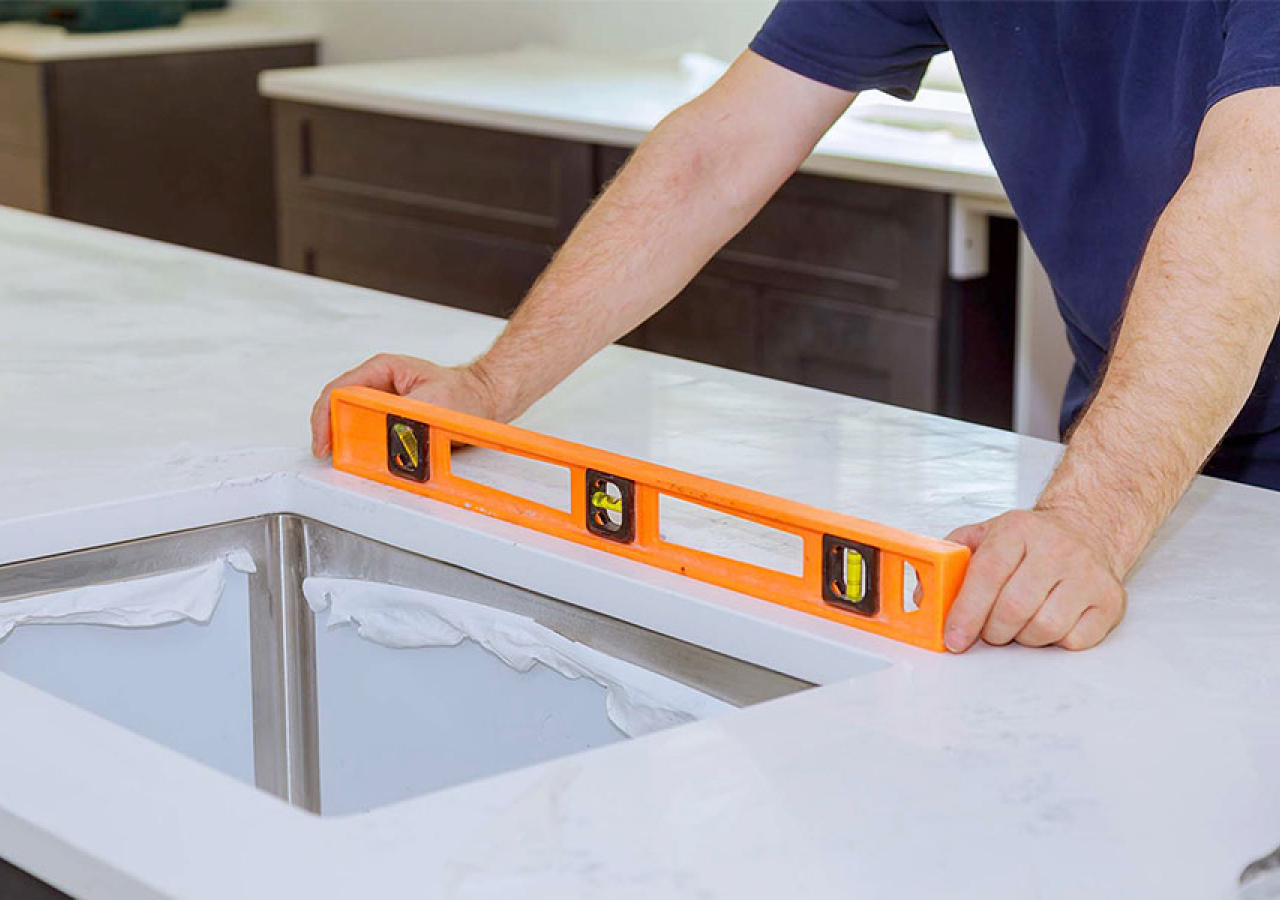
Once you have selected the material and design for your kitchen countertop, the next question is timing.
Before countertop installation, professionals usually wait until the flooring and cabinets are installed and appliance positions are confirmed. Even when appliances are standard sizes, small differences in placement can affect the final template. If you want the countertop to fit cleanly and align properly with the rest of the kitchen, those details need to be resolved first.
After that, measurements are taken based on the installed cabinetry and any surrounding design elements. Once the exact dimensions are confirmed, fabrication begins. Some materials can move through production in parallel with parts of the cabinetry process, but final templating usually happens after the cabinet installation is complete.
When the countertop is ready, contractors return to install it at a scheduled time. Depending on the material, installation details can vary, especially around seams, sink cutouts, edge profiles, and any large-format sections.
Choosing the Right Expert and Purchasing Your Countertop
Even with a detailed guide, countertop selection can still feel difficult because so much depends on your kitchen, your habits, and the look you want to create. That is where expert advice can help.
Our company handles both the organizational side of production and installation and the consultation side that helps customers make the right decision. During a meeting with our expert, you can discuss your design direction, the performance you need, your maintenance expectations, and the cost of different options. We can guide you through the process from selection to ordering to installation.
Working with professionals who understand both design and practical use makes the process clearer and helps ensure the final result fits the way you actually live.
Conclusion
Choosing a kitchen countertop depends on several connected decisions, not just one. The right surface should fit how you cook, how much maintenance you are comfortable with, the kind of visual mood you want in the room, and the level of risk you are willing to accept around heat, stains, seams, or wear over time. Each material has its own strengths and care requirements, and the best result comes from matching those traits to real daily use. By assessing durability, maintenance, appearance, and price together, you can create a kitchen that feels beautiful, practical, and lasting.


