
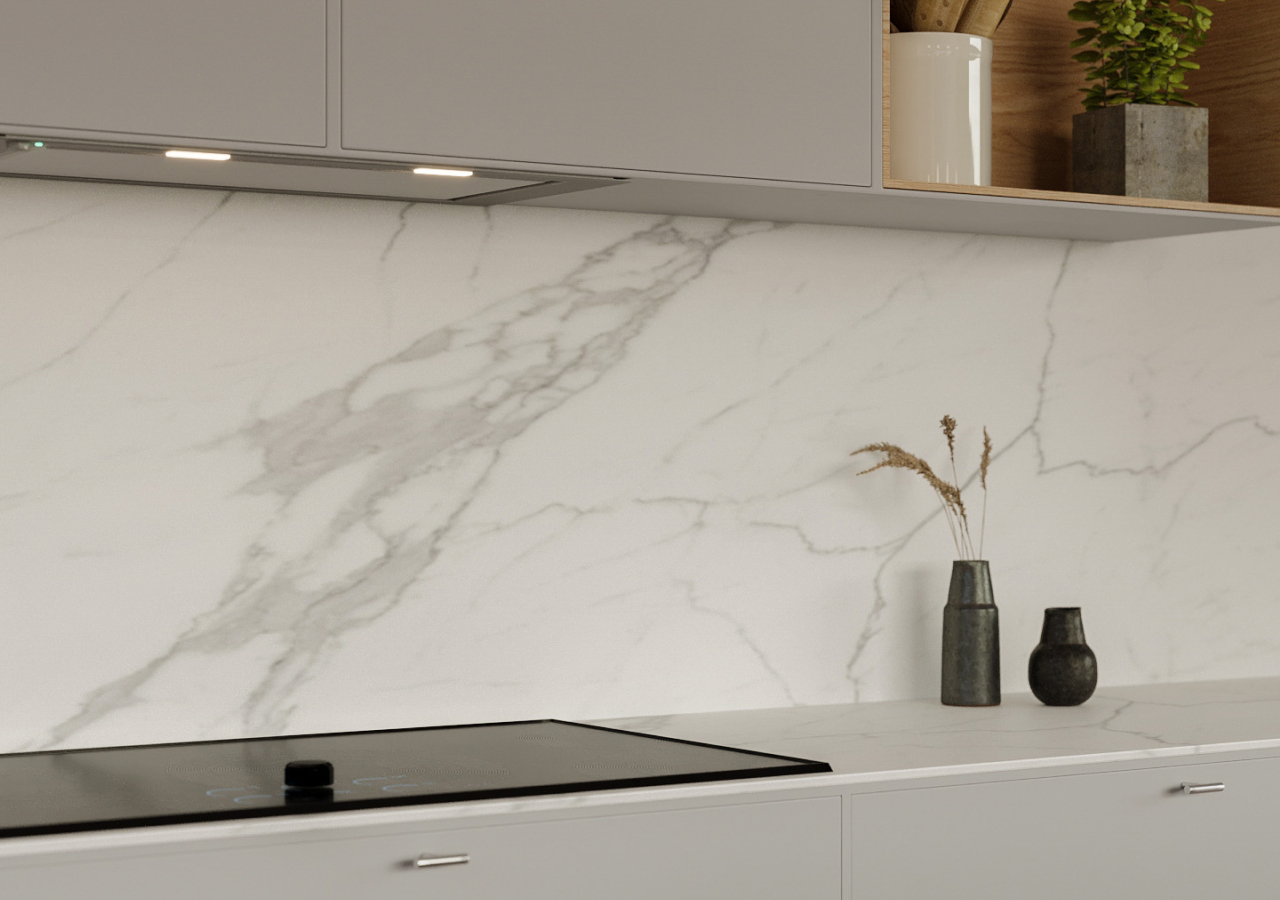
Using the same material for your countertops and backsplash is one of the easiest ways to make a kitchen feel more complete. Instead of breaking the wall with a separate tile, grout pattern, or accent material, the counter surface continues upward and creates a cleaner, more architectural look.
This approach works especially well in modern kitchens, Japandi kitchens, Scandinavian-inspired spaces, and minimal layouts where the goal is to reduce visual clutter. It can also make cleaning easier, depending on the material, because there are fewer grout lines and fewer small transitions around the work zones.
Before choosing the material, decide how the backsplash should function. Will it run just a few inches above the counter, cover the full wall, or only continue behind the range? Do you want no grout at all, or are you comfortable with large-format panels? Are you choosing the material mainly for durability, warmth, color, or a strong design statement?
Matching Countertop and Backsplash Materials
| Material | Best For | Maintenance | Heat / Splash Zone Fit | Watch-Outs | Best Look |
|---|---|---|---|---|---|
| Slab stone / quartz | A seamless, high-end kitchen look | Usually easy to wipe, but depends on material | Good for general backsplash use; check heat limits behind ranges | Quartz is not marble; natural stone may need sealing; seams and slab size matter | Elegant, classic, full-height backsplash |
| Porcelain / large-format panels | Thin, durable, low-maintenance surfaces | Very easy to clean | Strong choice for splash zones and full-height walls | Fabrication and installation quality matter; edges need planning | Modern, clean, stone-look kitchen |
| Dekton | High-use kitchens, full-height backsplashes, heat-prone areas | Low maintenance | Strong heat and scratch resistance | Seams, edges, and installer skill still matter | Minimal, refined, architectural |
| FENIX / HPL | Matte modern kitchens and lower-glare surfaces | Easy daily wipe-down | Better for general backsplash zones than intense heat zones | Confirm use near cooktops, edge detailing, and moisture management | Soft matte, warm minimalist |
| Stainless steel | Industrial, professional, or highly functional kitchens | Easy to wipe, but marks show | Excellent behind ranges and heavy splash zones | Fingerprints, water spots, and patina are part of the look | Brushed, satin, industrial-modern |
Benefits of Matching Countertops and Backsplashes

Matching the countertop and backsplash gives the kitchen a more unified look. Instead of dividing the design into separate horizontal and vertical surfaces, the material reads as one continuous plane. This can make the kitchen feel more intentional, especially in open-plan homes where the kitchen is visible from the living or dining area.
It also reduces visual noise. A busy tile pattern, strong grout contrast, or too many material changes can make a kitchen feel smaller or more fragmented. A matching backsplash keeps the eye moving across the cabinets, worktop, and wall without interruption.
There is also a practical benefit. Large slabs and panels are usually easier to wipe down than small tile with grout lines. This matters most behind the sink, prep zone, coffee station, and range, where splashes, oil, and daily cleaning are part of the routine.
The main decision is not simply whether the material “matches.” It is whether the material works for how you cook, clean, and use the kitchen every day.
Material Options for a Unified Kitchen Look
Slab Stone, Quartz, and Solid Surface

Stone and stone-look materials are among the most common choices for matching countertops and backsplashes. They create a polished, high-end look and work especially well when the veining or pattern continues from the counter up the wall.
Quartz is a popular option for a marble-look kitchen, but it is important to understand that quartz is engineered stone, not marble. It is usually easier to maintain than natural marble, but it may have heat limitations, especially near ranges. For full-height backsplashes behind cooking zones, always confirm the manufacturer’s recommendations.
Natural stone, such as marble, quartzite, granite, or limestone, can create a beautiful full-height backsplash. It often has more variation and depth than engineered surfaces, but it may need sealing and more careful maintenance depending on the stone.
Solid-surface materials, including acrylic-based options, can also create a smooth, continuous look. These are often useful when seamless transitions and easy repairability are important, though they may not be the best choice for every heat-heavy area.
The key with any slab material is planning. Slab size, seam placement, edge detailing, veining direction, and fabrication quality will affect the final result as much as the material itself.
Porcelain and Large-Format Panels
.webp)
Porcelain and large-format panels are a strong choice when you want the look of stone with a thinner, lower-maintenance surface. They are often used for full-height backsplashes because they can cover large wall areas with fewer grout lines than tile.
Porcelain can be very practical in the kitchen. It is generally resistant to stains, heat, and daily cleaning wear, which makes it a good fit for splash zones. It also comes in many stone-look finishes, from soft limestone effects to dramatic marble veining.
The main watch-out is installation. Large-format panels require experienced handling, precise cutting, and good planning around outlets, edges, and seams. The material itself may be durable, but the final result depends heavily on the installer.
FENIX and HPL Backsplashes
.webp)
FENIX and other high-pressure laminate surfaces can be a good option for a modern kitchen where you want a matte, low-glare look. They can pair beautifully with flat-panel cabinets, wood veneer, handleless doors, and warm minimalist interiors.
This type of surface works best when the goal is a clean, design-forward wall rather than a dramatic stone feature. It can be especially effective in kitchens where the countertop, backsplash, and cabinetry are planned as one quiet composition.
FENIX and HPL are usually easy to wipe down for daily use, but they need to be specified carefully. Heat exposure, cooktop proximity, edge detailing, and moisture management all matter. Before using them behind a range or cooktop, confirm the material’s technical limits and installation recommendations.
Best for: low-glare modern looks and easy daily wipe-down
Watch-outs: heat habits, hot pans, backsplash detailing, edges, and moisture protection
Dekton

Dekton is often chosen for kitchens that need a durable, refined surface with a more architectural feel. It works well for countertops and full-height backsplashes because it offers strong resistance to heat, scratches, stains, and daily kitchen use.
It is a good option for homeowners who want a stone-like or minimalist surface without the maintenance concerns of some natural stones. Dekton can also work well behind ranges and in busy cooking areas, provided the installation is handled correctly.
The important thing is not to treat the material as automatic. Seam planning, edge details, slab size, finish selection, and fabrication quality still matter. Matte finishes may feel softer and more modern, while glossier finishes can look more polished but may show more marks depending on the color and lighting.
Stainless Steel
.webp)
Stainless steel is one of the most practical choices for matching countertops and backsplashes, especially in kitchens with an industrial, professional, or minimalist look. It works particularly well behind ranges, sinks, and prep zones because it is durable, heat-resistant, and easy to wipe clean.
The look is very specific. Stainless steel brings a more utilitarian edge to the kitchen, especially when paired with integrated appliances, flat-panel cabinets, or dark wood. It can also make a kitchen feel sharper and more professional.
Fingerprints, water spots, small scratches, and patina are normal with stainless steel. For most homes, a brushed or satin finish is easier to live with than a highly polished finish because it hides everyday marks better.
Choosing the Right Color
Color has a big impact when the countertop and backsplash are the same material. Because the surface continues onto the wall, the color becomes a larger part of the kitchen than it would with the countertop alone.
For a calm kitchen, soft whites, warm grays, beige, taupe, sand, cream, and subtle stone patterns tend to work well. These colors are especially useful in Scandinavian, Japandi, and minimalist kitchens where the goal is warmth without visual clutter.
For a stronger statement, choose dramatic veining, deep stone colors, dark porcelain, stainless steel, or a bold Dekton finish. These can work beautifully, but they need balance. If the countertop and backsplash are visually strong, the cabinet fronts, flooring, and hardware should usually be quieter.
Wood-look finishes can add warmth, but they should be used carefully around heat and water. They work best when the technical material is appropriate for the location and the color connects naturally with the cabinet finish.
When Matching Countertops and Backsplashes Is Not the Best Idea
.webp)
A matching countertop and backsplash is not always the right choice. In some kitchens, contrast works better.
If the countertop has very busy veining, continuing it up the wall may make the kitchen feel too heavy. A quieter backsplash can give the counter more room to stand out.
Cost can also be a factor. Full-height slab backsplashes require more material, fabrication, handling, and installation time than a standard backsplash. If the budget is tight, using the material only behind the range or choosing a shorter backsplash may be more practical.
Matching may also be less useful if you want the backsplash to be the main accent. In that case, tile, glass, plaster, or another wall finish may bring more character than repeating the countertop.
The best choice depends on the role you want the backsplash to play. It can disappear into the kitchen, become a focal point, or create contrast. Matching is just one way to get there.
How to Choose Matching Countertops and Backsplashes
- Pick the backsplash height. A matching backsplash does not always need to cover the full wall. You can use a short upstand, a standard-height backsplash, a full-height backsplash, or a feature panel only behind the range. Full-height backsplashes usually look the most intentional, especially with stone, porcelain, Dekton, or stainless steel.
- Decide how much grout you can tolerate. If the goal is a seamless look, slab or large-format materials are usually better than small tile. Tile can still be beautiful, but once grout is part of the design, the backsplash becomes more textured and segmented.
- Choose the material based on maintenance and heat habits. Think about how you actually use the kitchen. If you cook often with high heat, the area behind the range needs more attention than the area behind a coffee station.
- Match undertones with cabinets and flooring. A matching countertop and backsplash will take up a lot of visual space, so undertones matter. The goal is to make sure the entire kitchen palette feels connected.
- Plan seams, outlets, and edges early. Outlet locations, slab seams, range hood alignment, floating shelves, window trim, and side returns can all affect the final look.
- Confirm the installation sequence. Cabinets are usually installed first, then the countertop area is templated, fabricated, and installed. If the backsplash uses the same slab or panel material, it may require separate templating and coordination.
Conclusion
Matching countertops and backsplashes can make a kitchen feel cleaner, more continuous, and more intentionally designed. It is especially effective in modern kitchens where fewer material changes help the space feel calm and cohesive.
The best material depends on how you use the kitchen. Stone and quartz create a classic full-height look. Porcelain and Dekton offer strong durability with a refined finish. FENIX and HPL can support a matte, minimalist design. Stainless steel works well when practicality and a professional look matter most.
Before choosing, think through backsplash height, seams, outlets, heat exposure, cleaning habits, and how the surface will work with your cabinets and flooring. A matching surface looks simple when finished, but the best results come from careful planning before fabrication.


