
Japandi Kitchen Island Ideas by Wood, Shape & Finish
A Japandi kitchen island can either blend into the cabinetry or stand out as the main feature of the room. Its shape, finish, and proportion determine how strongly it defines the space.
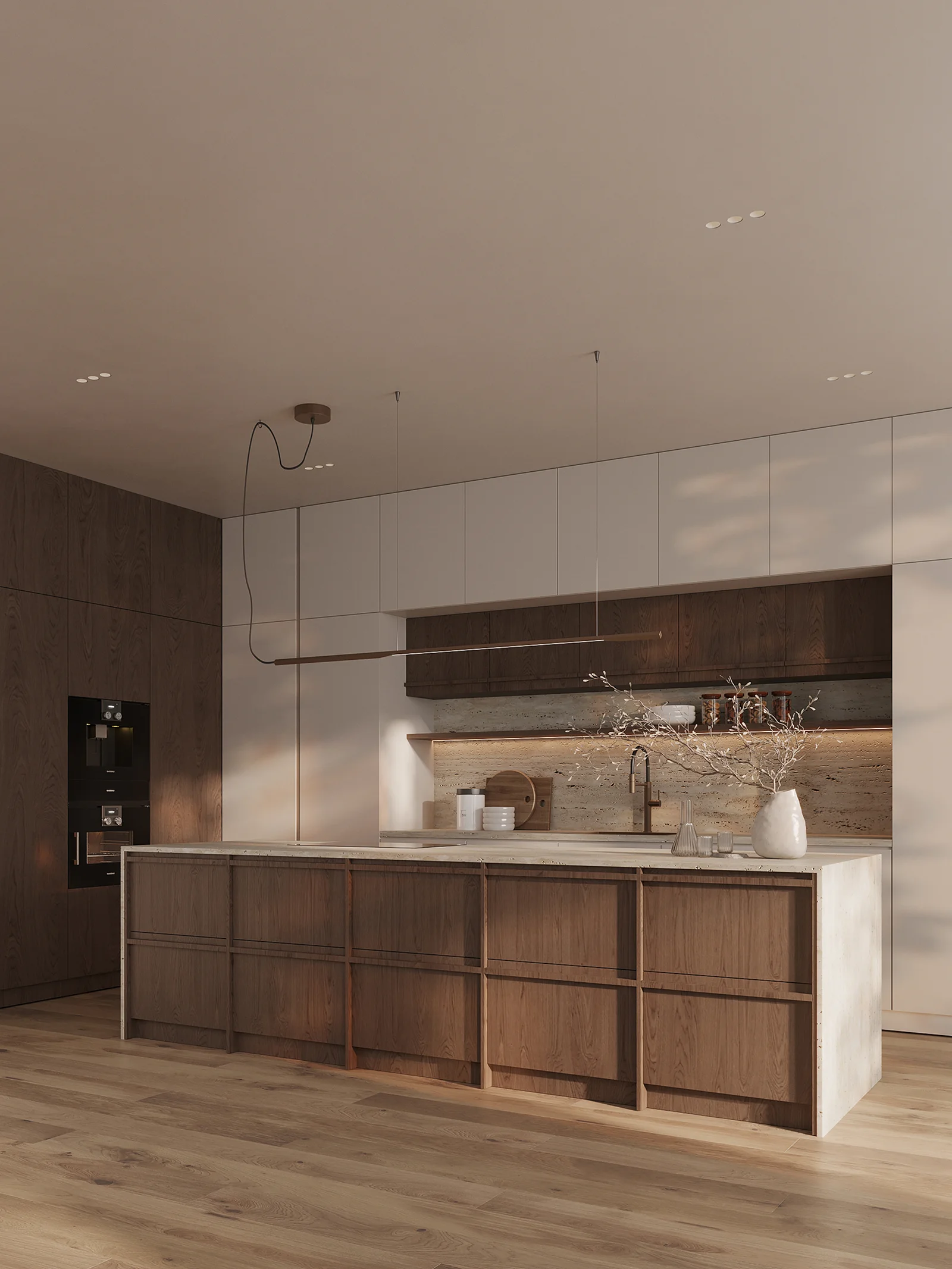
Wood-fronted islands can repeat the cabinetry while stone sides give the composition a sharper edge.
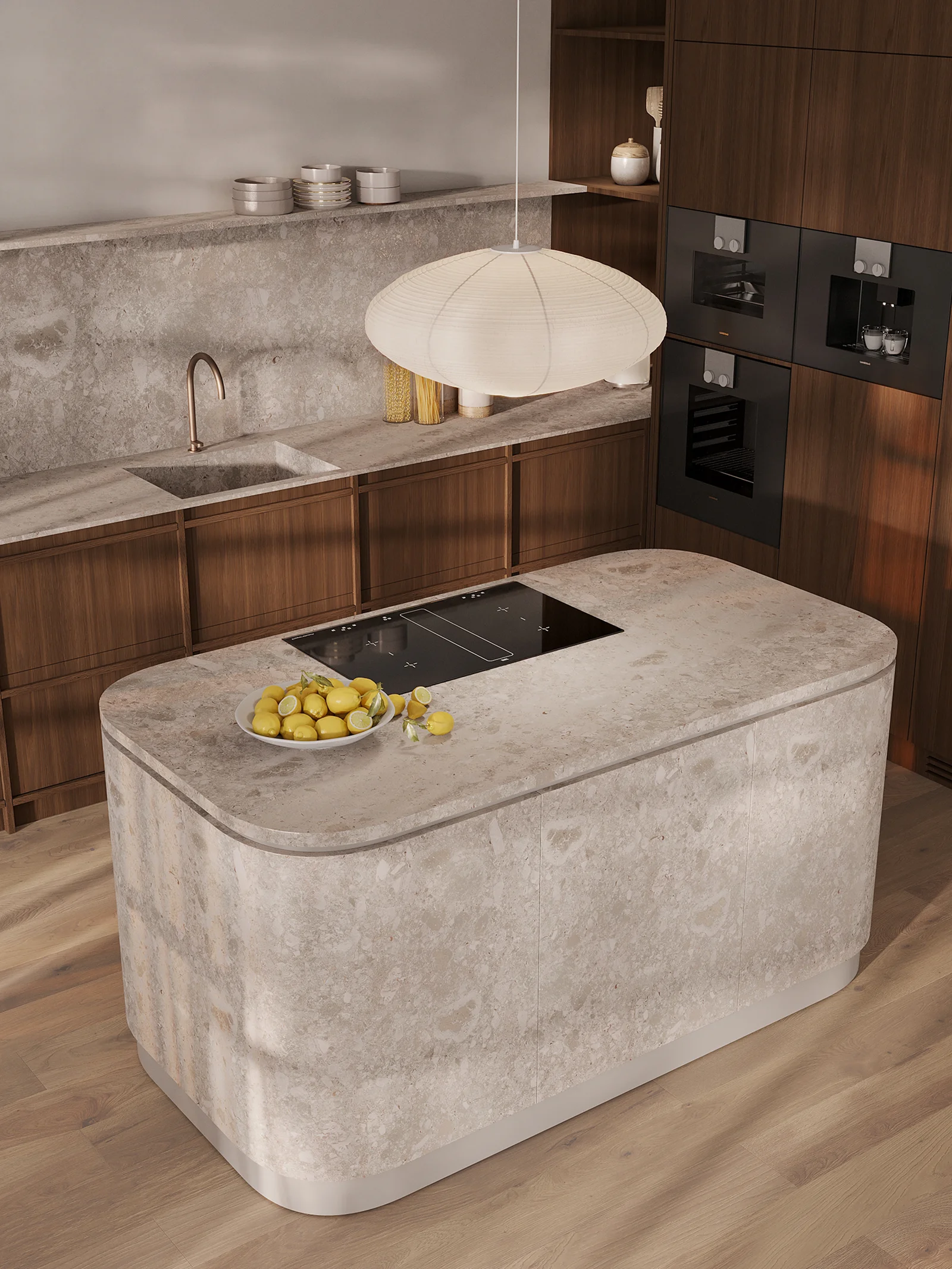
A fully wrapped stone island makes the island read more like a sculptural centerpiece than another cabinet run.
Light Oak Japandi Kitchen Island
Light oak gives the island a softer appearance and works especially well with pale stone and white surfaces. The wood grain remains visible, while framed fronts or subtle detailing can give the island more structure. See this approach in our Oak Japandi Kitchen in Dallas.
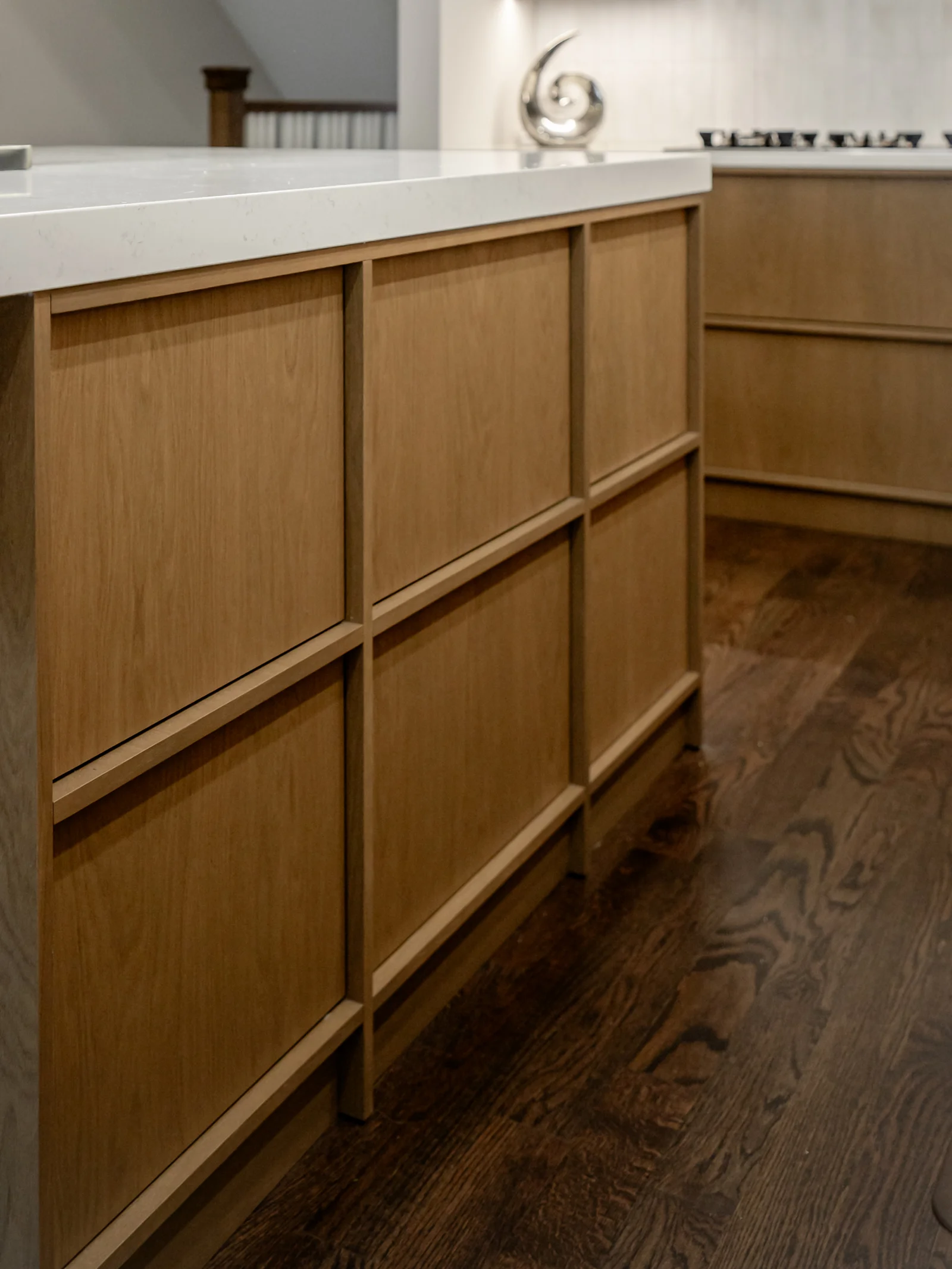
Framed slab oak fronts give the island a more structured look without visible handles.
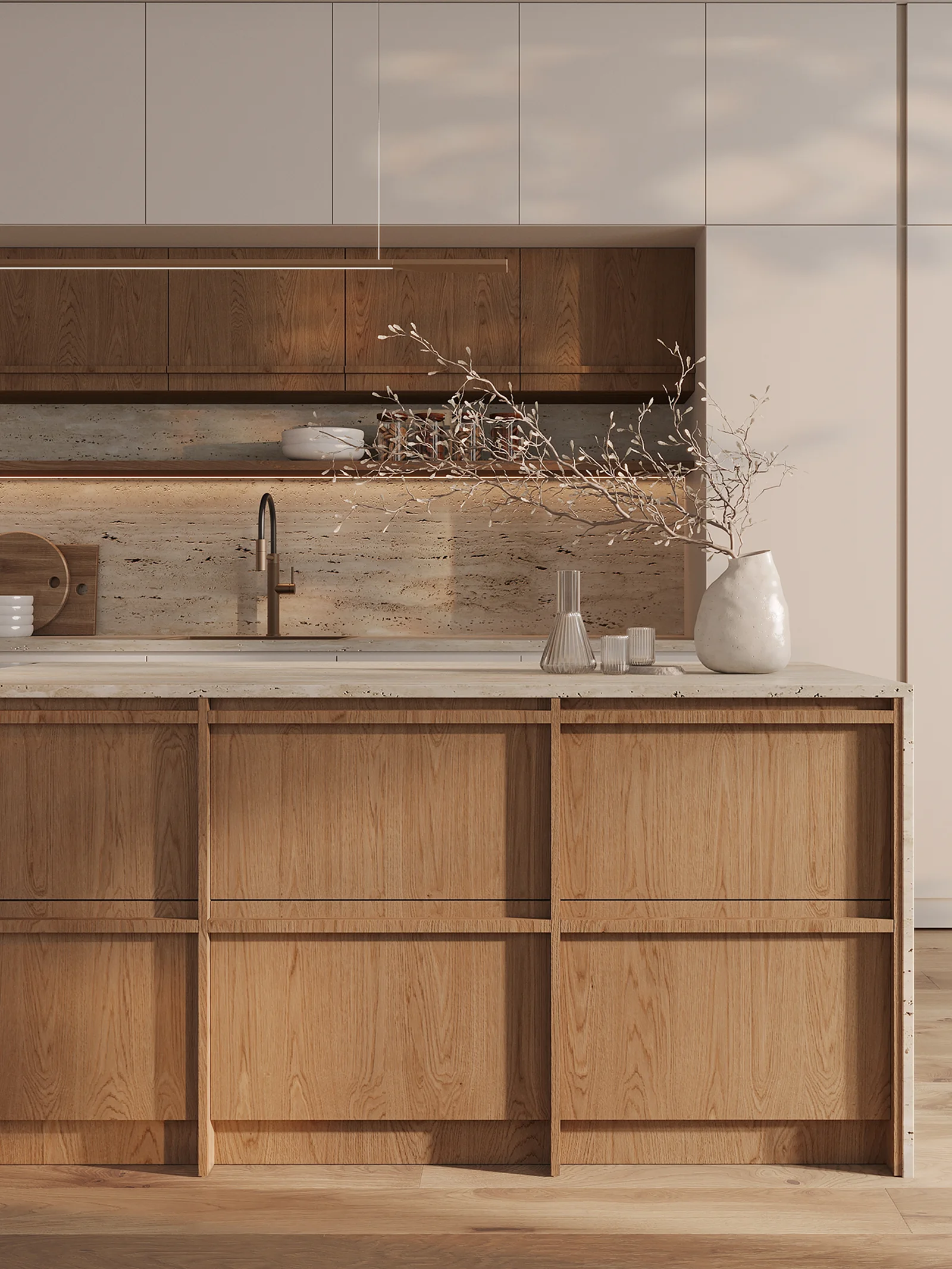
Matching light oak fronts on the island and wall cabinets make the kitchen feel more unified.
Dark Oak and Walnut Kitchen Islands
Darker wood gives the island more visual weight and makes it stand out against lighter floors, walls, or countertops. Walnut brings a richer grain, while dark oak creates a more restrained, architectural look. See how dark wood and stone are combined in our Dark Oak Japandi Kitchen in Bulgaria.
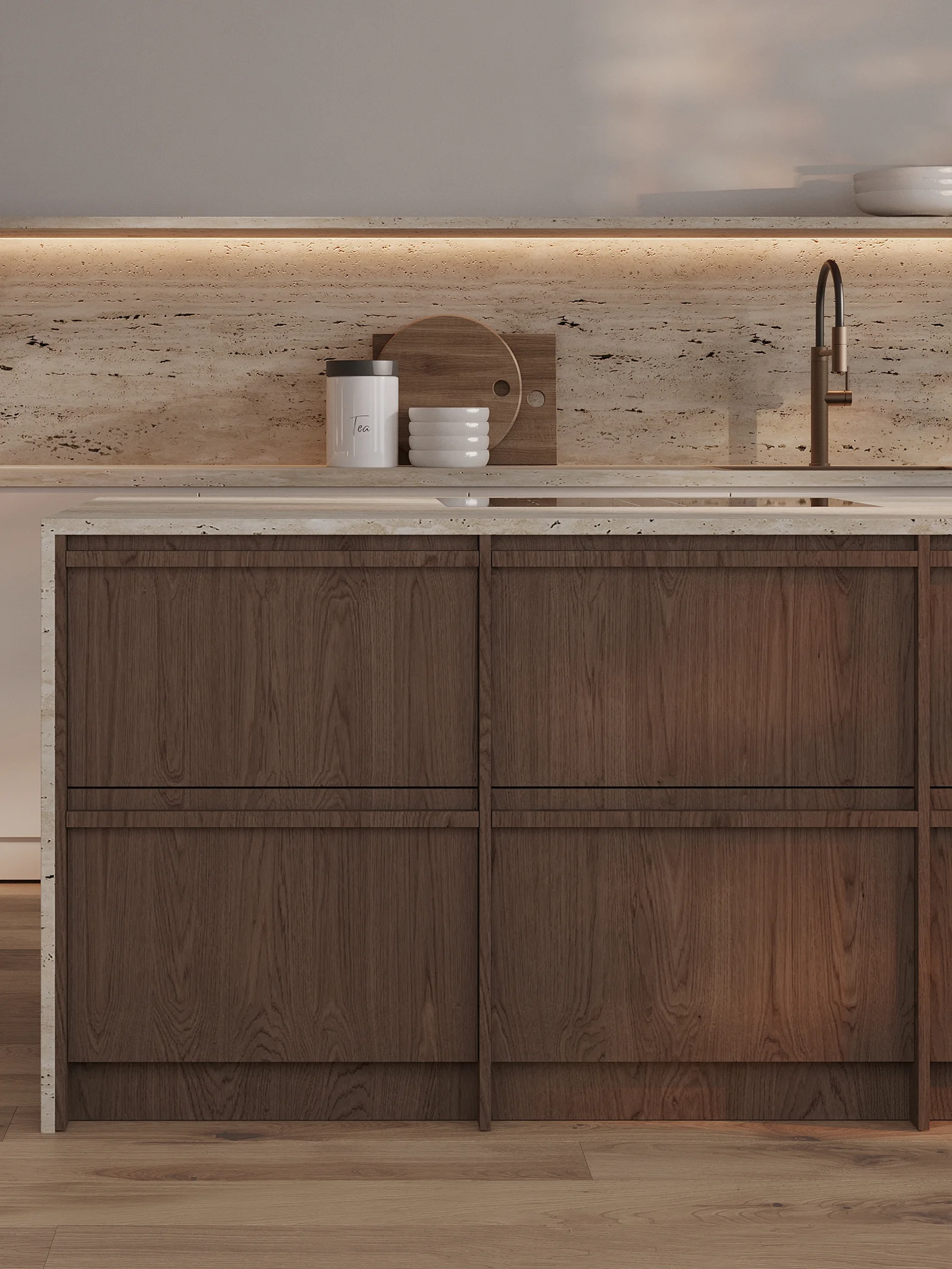
Dark oak cabinet fronts add depth to the island, while the light stone counter keeps the composition balanced.
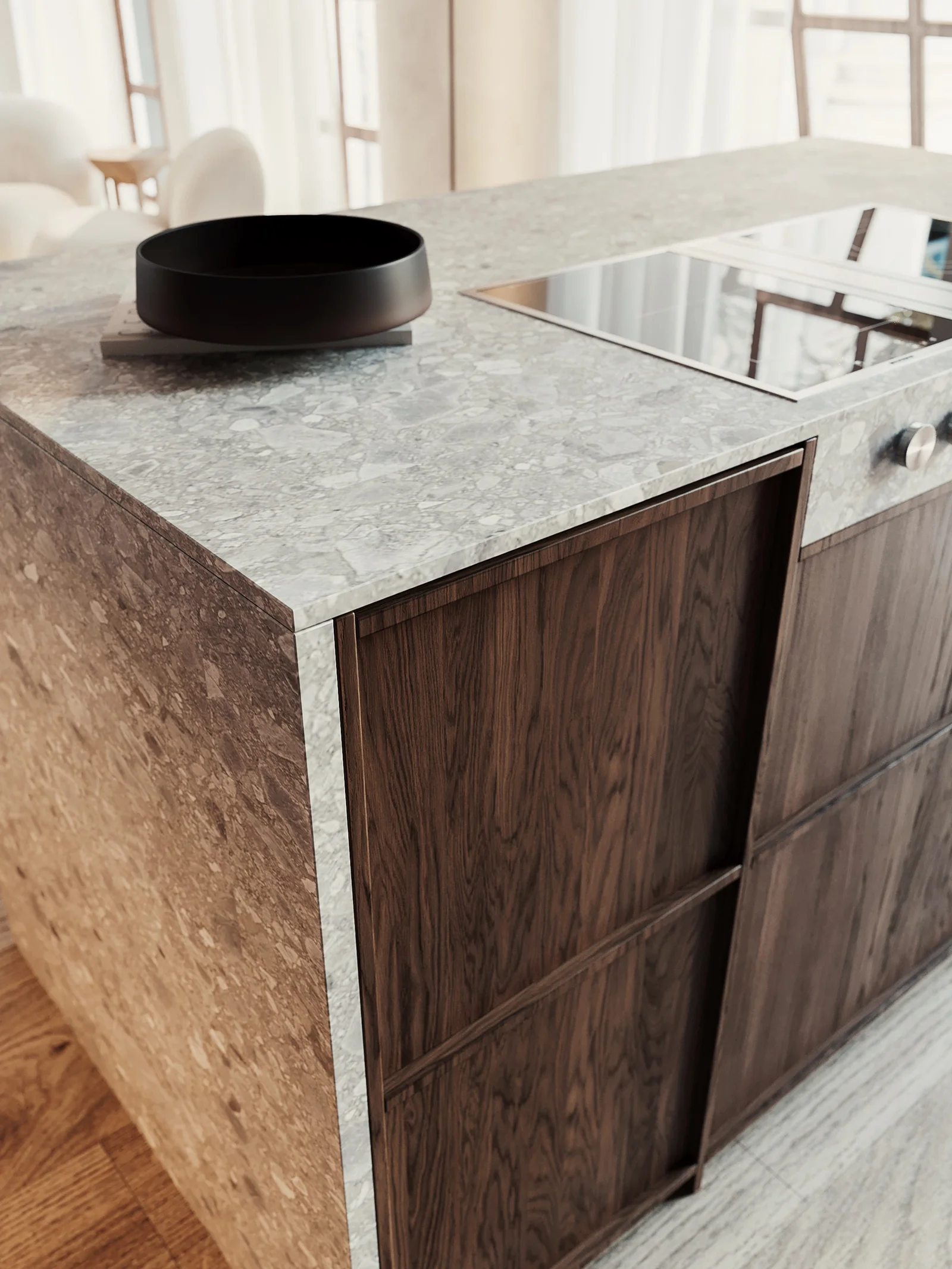
Dark oak works well with stone-wrapped island sides, giving the kitchen a warmer and more grounded look.
Curved Japandi Kitchen Island
Rounded corners make the island feel less rigid and introduce a softer shape into a kitchen built around straight cabinet runs. Curves work especially well with wood, reeded fronts, and stone tops. See how this approach was used in our Curved Japandi Kitchen in San Mateo.
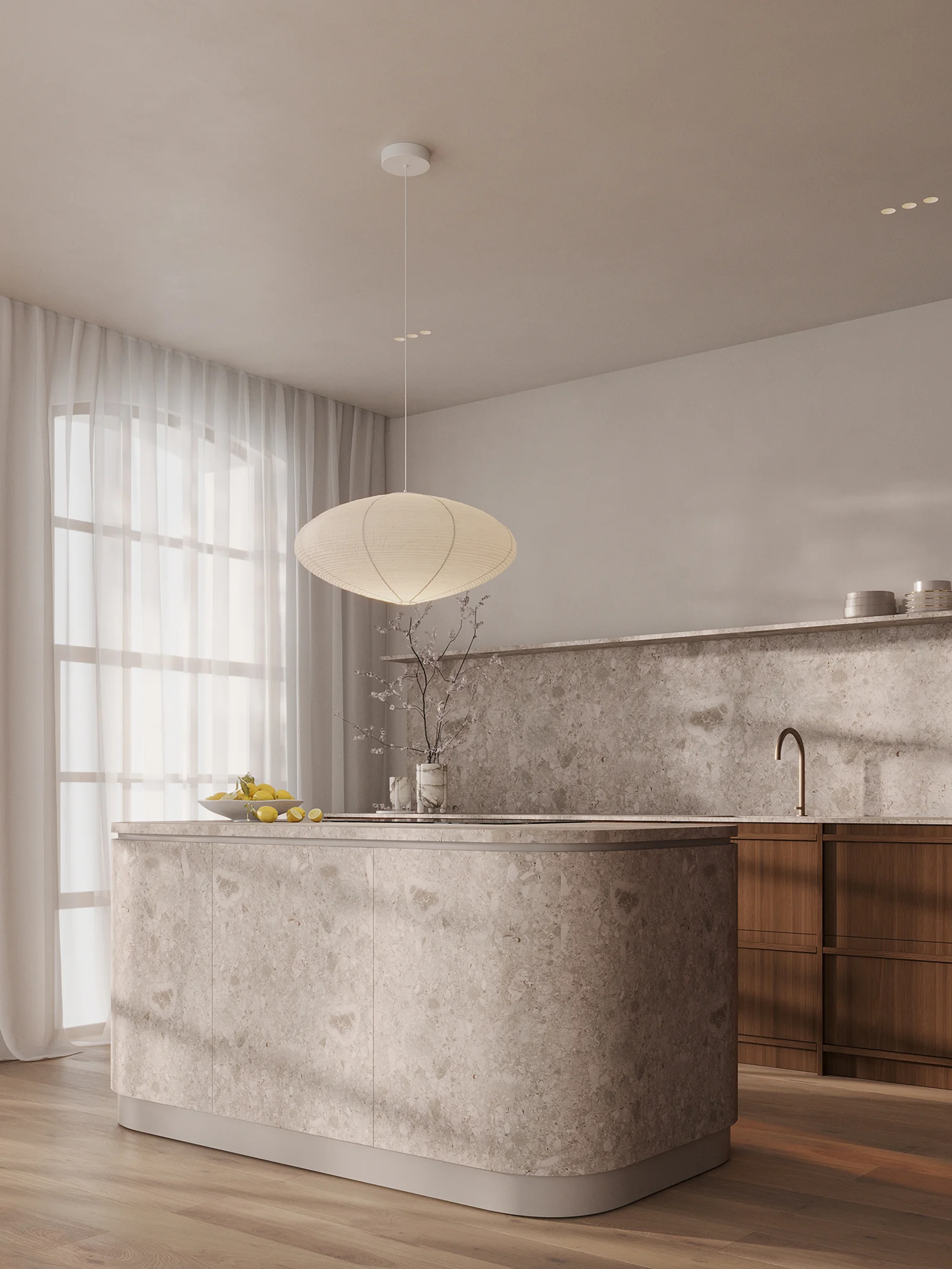
A rounded stone island gives the kitchen a softer silhouette than a standard rectangular form.
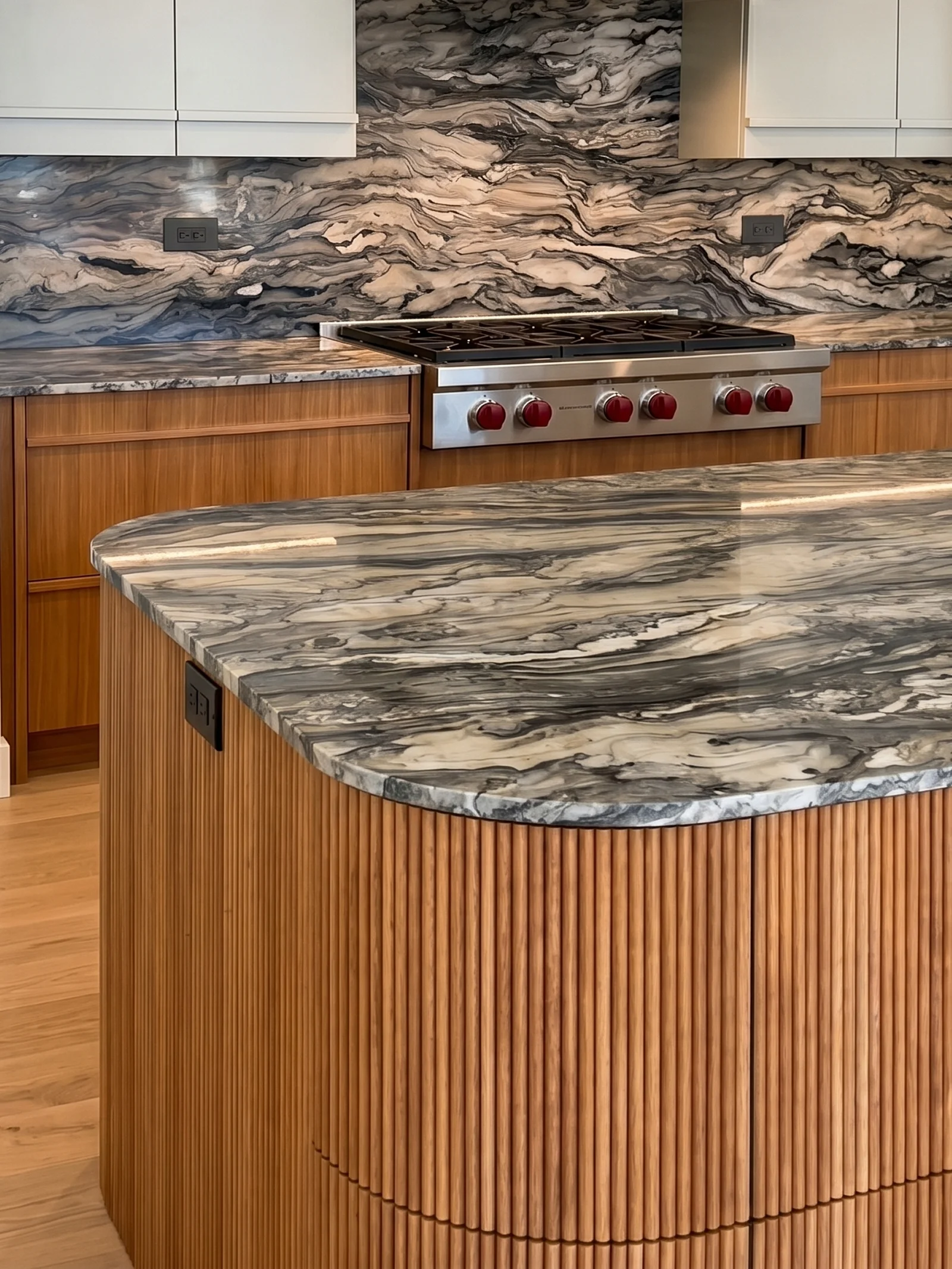
Fluted wood follows the curved corner of the island and makes the shape more pronounced.
Fluted Japandi Kitchen Island
Fluted panels add rhythm and depth to a Japandi kitchen island without relying on decorative hardware. The detail works especially well on curved ends, where the vertical lines follow the shape of the island.
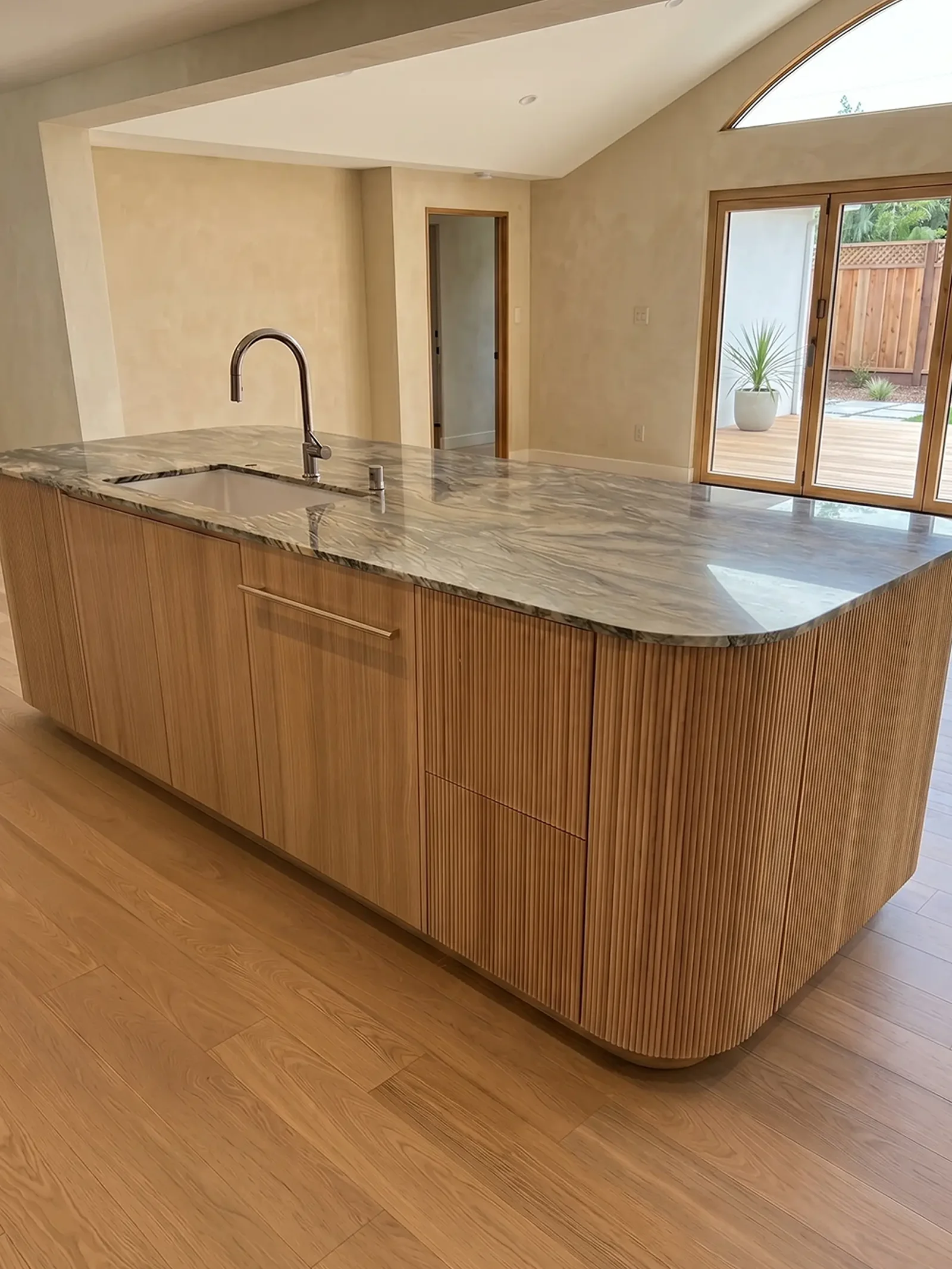
Fluted oak wraps the rounded end of the island and emphasizes its curved form.
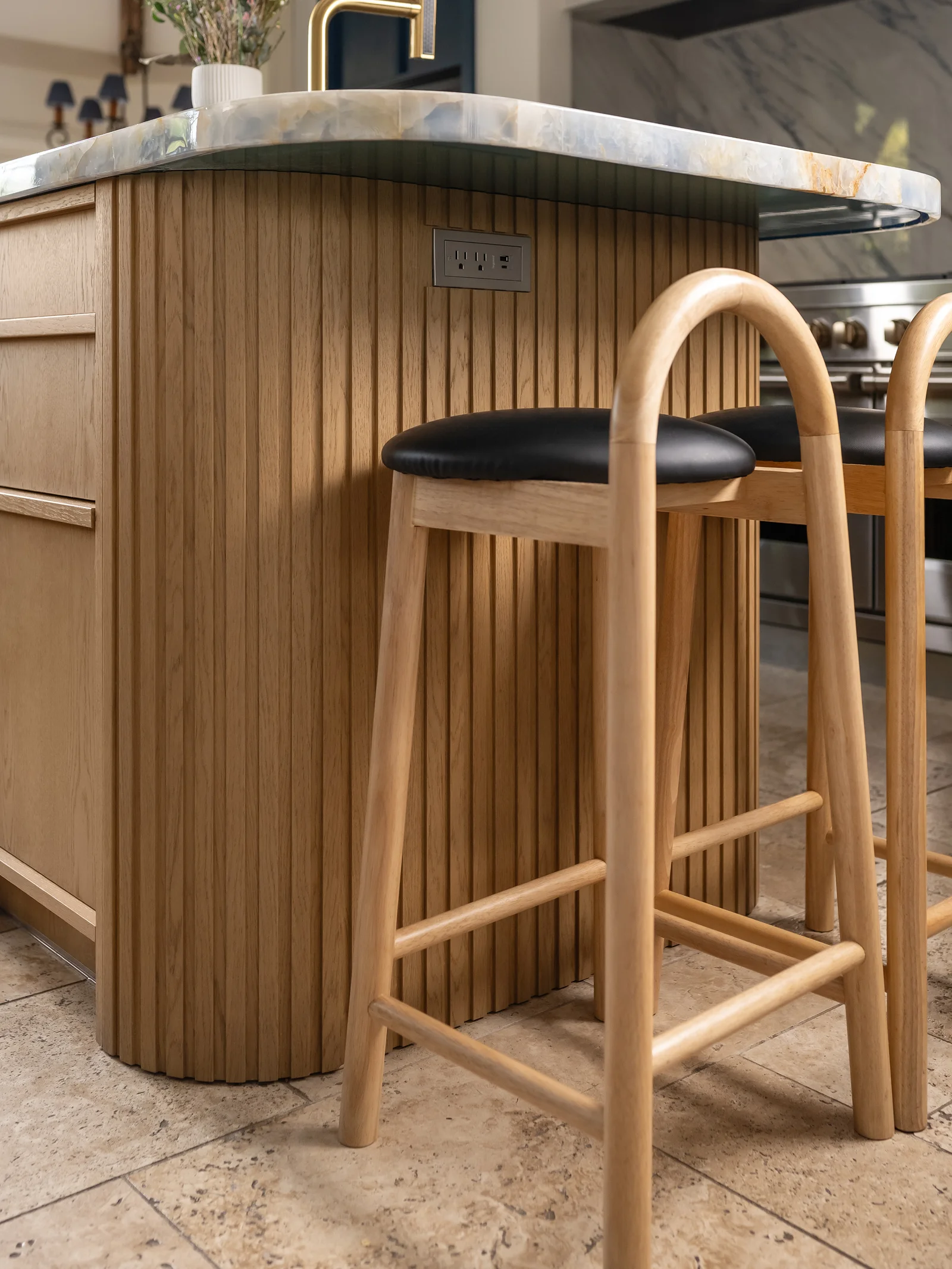
Vertical fluting gives the island more texture while keeping the overall shape simple.
Japandi Kitchen Island with Open Shelving
Open shelving breaks up a large island and creates space for books, ceramics, or everyday items. It works best when the shelving is integrated into the overall shape rather than added as a separate feature.
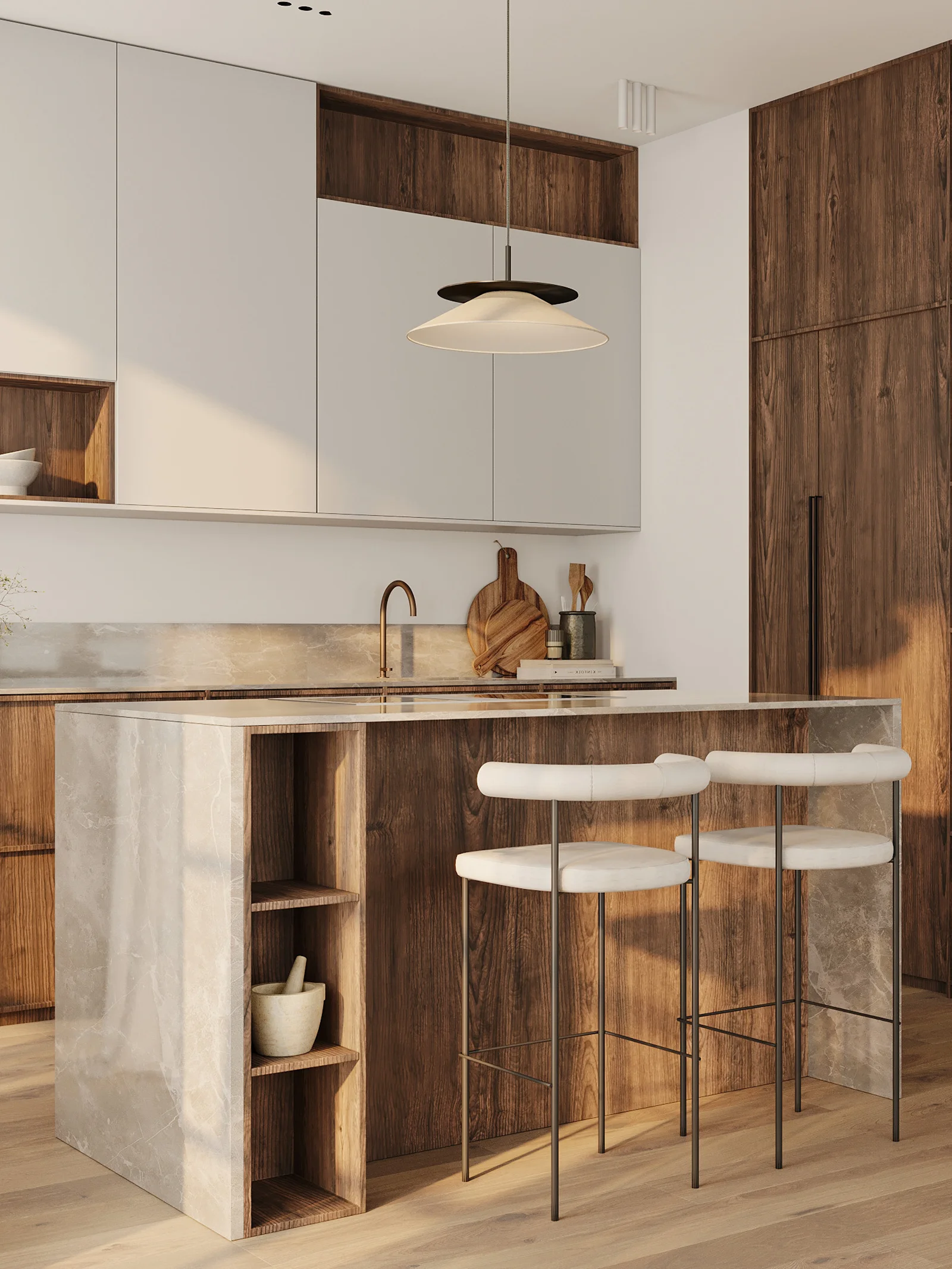
Open shelving built into the island creates space for display without adding separate furniture.
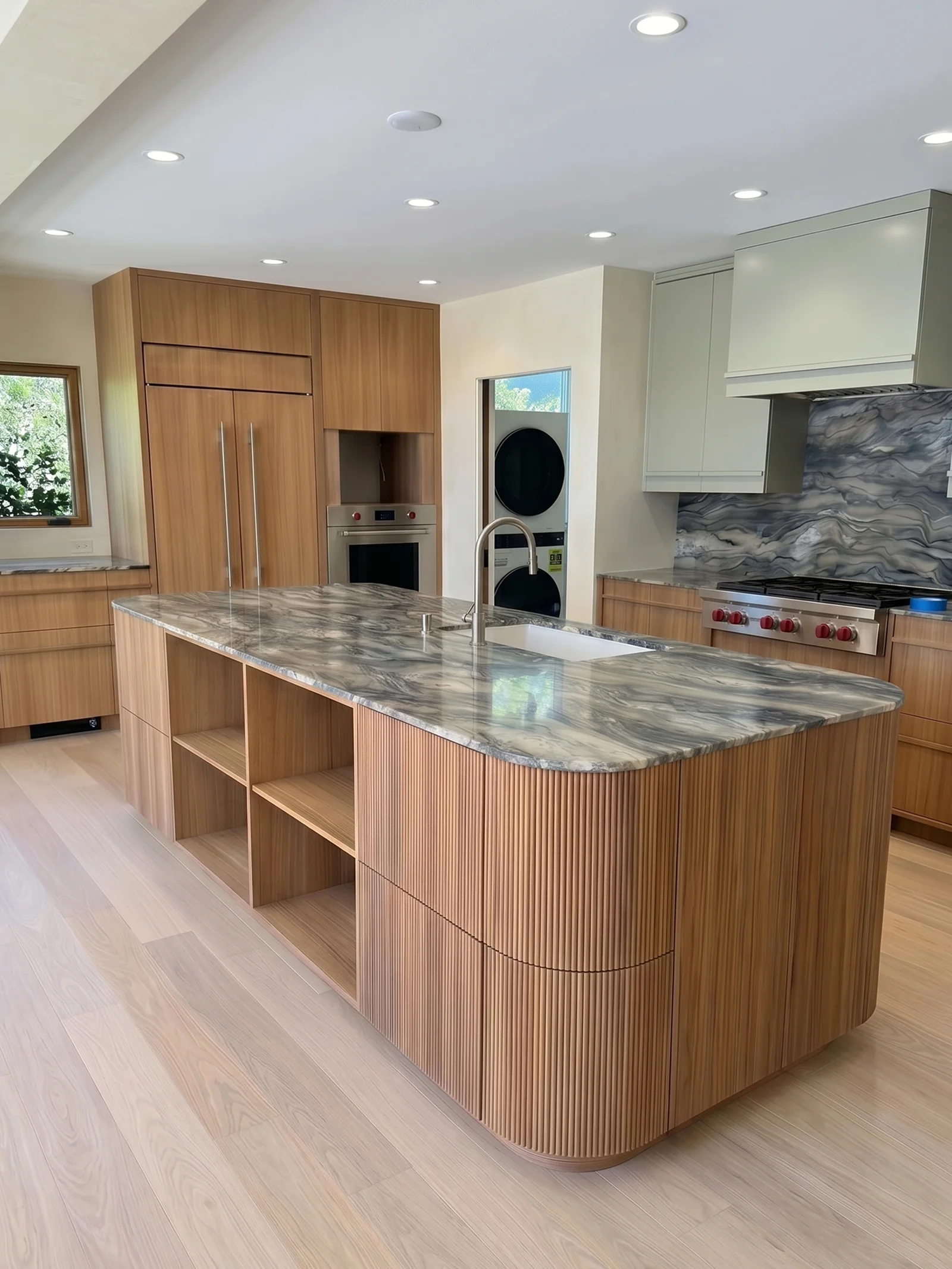
Open shelves break up the wood front and make a large island feel less solid.


