
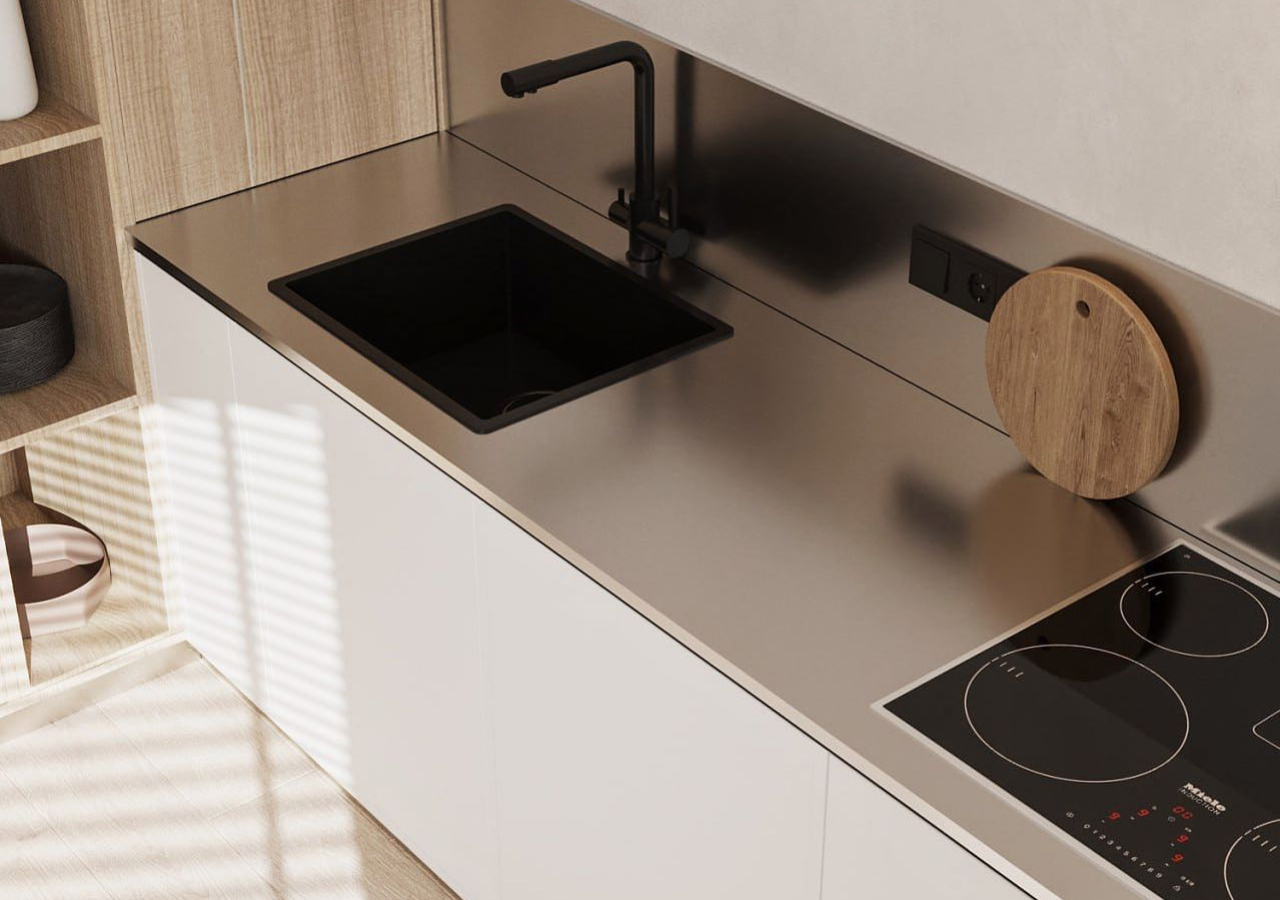
Choosing a kitchen countertop is not only about finding the most durable material. It is also about how the surface looks, feels, ages, and fits into daily use. A countertop has to handle cooking, cleaning, spills, heat, and constant contact, but it also shapes the whole mood of the kitchen.
Stainless steel, natural stone, and FENIX NTM are three very different countertop options. Stainless steel gives a kitchen a clean, professional feel. Natural stone brings pattern, depth, and a one-of-a-kind surface. FENIX NTM offers a very matte, soft-touch finish that works especially well in modern and handleless kitchens.
None of these materials is perfect for every project. The best choice depends on how you cook, how much maintenance you are comfortable with, and what role the countertop should play in the design.
Quick Comparison
| Material | Best For | Main Strength | Watch Out For |
|---|---|---|---|
| Stainless steel | Modern, professional-style kitchens | Hygienic, durable, and easy to clean | Scratches and patina become visible over time |
| Natural stone | Timeless kitchens with character | Unique pattern, depth, and natural variation | Some stones can stain, chip, or etch |
| FENIX NTM | Matte modern kitchens | Soft-touch, low-reflective, anti-fingerprint surface | Not the same as stone for heat, cuts, and heavy impact |
Choose the material based on daily use and maintenance expectations, not appearance alone.
Stainless Steel Countertops

Stainless steel is a strong option for homeowners who want a durable, hygienic work surface with a clean professional look. It has long been used in commercial kitchens because it is practical, non-porous, and easy to wipe down.
In residential kitchens, stainless steel works especially well in modern, industrial, minimalist, or European-inspired spaces. It pairs naturally with wood cabinets, dark cabinetry, concrete floors, open shelving, and integrated appliances.
The surface will change over time. Small scratches, marks, and a soft patina are part of the material’s character. For some homeowners, that is part of the appeal. For others, it can feel too visible, especially if they expect the countertop to stay perfectly uniform.
Best for
Stainless steel is best for kitchens where function comes first, but the design still needs to feel sharp and intentional. It is a good fit for serious home cooks, open-plan kitchens with professional-style appliances, and spaces where hygiene and easy cleaning matter.

Pros
Stainless steel is non-porous, easy to clean, and naturally resistant to rust and corrosion when properly specified. It does not absorb liquids the way some porous surfaces can, and it can handle everyday kitchen use well.
It also has a clean reflective quality that can make a kitchen feel brighter, especially when paired with wood, matte cabinetry, or natural stone.
Watch outs
Stainless steel can scratch. The surface will not stay showroom-perfect, especially in a busy kitchen. Over time, the scratches usually blend into a more even patina, but that lived-in look needs to be expected from the start.
It can also show fingerprints, water marks, and streaks depending on the finish. Hot pans should still be handled carefully, and cutting directly on the surface is not recommended.
Care tips
For daily cleaning, use a soft cloth and mild detergent. Wipe in the direction of the brush or grain to avoid uneven marks. Avoid harsh acidic cleaners, abrasive pads, and steel wool. Drying the surface after cleaning can help prevent streaks and water marks.
Natural Stone Countertops

Natural stone countertops are chosen for their character. Granite, marble, quartzite, and other stones each have their own movement, veining, color variation, and depth. No two slabs are exactly the same, which makes stone appealing when the countertop is meant to be a visual feature.
Stone can work in many kitchen styles, from traditional to minimalist. A bold marble can become the focal point of the room, while a quieter granite or quartzite can add texture without feeling dramatic.
The main thing to understand is that “natural stone” is not one material. Marble behaves differently from granite. Quartzite behaves differently from limestone. Some stones are more forgiving, while others need more care.
Best for
Natural stone is best when you want a countertop with visual depth, natural variation, and a timeless feel. It is especially strong when the stone is part of the kitchen’s design identity, such as a waterfall island, full-height backsplash, or statement work surface.

Pros
Natural stone can bring richness and individuality to a kitchen. Granite is generally more resistant to scratches and chips than marble, while marble offers a softer, more classic look. Quartzite can offer a strong natural surface with beautiful movement, though performance depends on the specific slab.
Stone also has a naturally cool surface, which some homeowners like for baking and food preparation.
Watch outs
Some natural stones need sealing. Marble and limestone are more sensitive to acids, so vinegar, lemon juice, wine, and certain cleaners can cause etching or discoloration. Even stronger stones still need proper care around stains, impact, and harsh cleaning products.
The other watch out is cost and installation. Natural stone is heavy, and slab selection, fabrication, seams, edge profiles, and installation quality all matter.
Care tips
Use pH-neutral cleaners made for stone. Wipe acidic spills quickly, especially on marble or limestone. Avoid abrasive products and harsh chemicals. Depending on the stone, sealing may be needed periodically to help protect against stains and moisture.
FENIX NTM Countertops

FENIX NTM is a modern interior surface material known for its extremely matte appearance, soft-touch feel, low light reflectivity, anti-fingerprint properties, and thermal healing of superficial micro-scratches. It is often used for cabinet fronts, panels, furniture, and selected countertop applications.
In kitchens, FENIX NTM is most interesting when the goal is not a stone look, but a softer and more seamless matte surface. It pairs well with handleless cabinets, slab fronts, tall storage walls, and modern layouts where the finish needs to feel quiet and refined.
FENIX NTM should not be treated as a direct replacement for stone in every situation. It has different strengths. It is more about surface feel, visual softness, and low reflectivity than heavy-duty mineral hardness.
Best for
FENIX NTM is best for modern kitchens where the countertop or work surface needs to feel matte, smooth, and understated. It works especially well when used alongside matching or complementary cabinet fronts, appliance garage doors, panels, or vanities.
It can also be useful in kitchens where fingerprints and glare are a concern, especially on larger dark or muted surfaces.

Pros
FENIX NTM has a very distinctive surface quality. It feels soft to the touch, reflects little light, and helps reduce the visibility of fingerprints compared with many glossy or standard matte finishes.
Another advantage is that superficial micro-scratches can be thermally treated according to the manufacturer’s care instructions. This does not apply to deep cuts, chips, or impact damage, but it can help with minor surface marks.
Watch outs
FENIX NTM is not a zero-maintenance material. It still needs correct cleaning and normal countertop protection. Sharp tools, heavy impact, repeated extreme heat, and abrasive cleaning products can damage the surface.
For countertop use, the construction, edge details, and installation quality matter. It should be selected carefully, especially in high-use cooking zones.
Care tips
Clean FENIX NTM with warm water, a soft cloth, and mild household detergent. Rinse with a damp cloth and dry with a clean cloth to avoid residue or streaks.
Avoid abrasive pads, metal scrapers, bleach, strongly acidic or alkaline cleaners, and products that leave a film. Use cutting boards and trivets, especially when FENIX NTM is used as a work surface.
Which Countertop Material Should You Choose?

Choose stainless steel if you want a modern, hygienic, professional-style surface and do not mind visible scratches or patina over time. It is practical, durable, and easy to clean, but it will not stay visually perfect.
Choose natural stone if you want unique pattern, depth, and a timeless countertop with natural variation. Granite and quartzite can be more forgiving, while marble needs more care around acids and staining.
Choose FENIX NTM if you want a matte, soft-touch, low-glare surface for a modern kitchen. It is especially useful when the surface needs to work visually with slab fronts, handleless cabinets, and a quieter design language.
The best countertop is the one that matches both the design and the way the kitchen will actually be used.
Conclusion
Stainless steel, natural stone, and FENIX NTM each bring a different kind of value to a kitchen. Stainless steel is practical and professional. Natural stone is expressive and timeless. FENIX NTM is matte, soft-touch, and visually quiet.
Instead of choosing the material that sounds “best,” choose the one that fits your kitchen’s layout, daily habits, and design direction. If you are planning a kitchen renovation, Corner can help compare countertop materials with your cabinet finishes, backsplash, appliances, and overall budget so the whole space feels considered from the start.


