
.jpeg)
The key to timeless kitchen design is creating a space that combines harmony, functionality, and beauty for years to come. A well-planned kitchen adapts to your lifestyle, combining modern practicality with an elegant character that doesn’t age out with the next trend cycle.
Timeless style starts with clear organization, quality materials, and a balance between functionality and aesthetics. In this guide, we’ll walk through eight core principles that define a truly timeless kitchen.
Timeless vs Trendy Kitchen Design
A timeless kitchen isn’t about avoiding personality; it’s about building a calm base that can evolve. Trends are usually louder and more specific. Timeless decisions are quieter and easier to live with for a decade or more.
You can think of it as two directions:
| Element | Timeless Direction | Trend-Heavy Direction |
|---|---|---|
| Door style | Slim shaker or slab fronts | Ornate profiles, heavy molding |
| Colors | Warm white, greige, light wood tones | Extreme contrast, very saturated accent colors |
| Metals | Classic brass, black, or stainless | Very niche or iridescent finishes |
| Backsplash | Simple tile or stone in calm patterns | Busy, high-contrast patterns or novelty shapes |
| Island | Simple, well-proportioned forms | Highly sculpted or quirky “statement” shapes |
If you love a timeless Scandinavian look, let the permanent surfaces stay calm and use smaller pieces—stools, art, textiles—to bring in trendier color or pattern. Those are easy to change later.
1. Neutral Color Palette: The Foundation of Calm
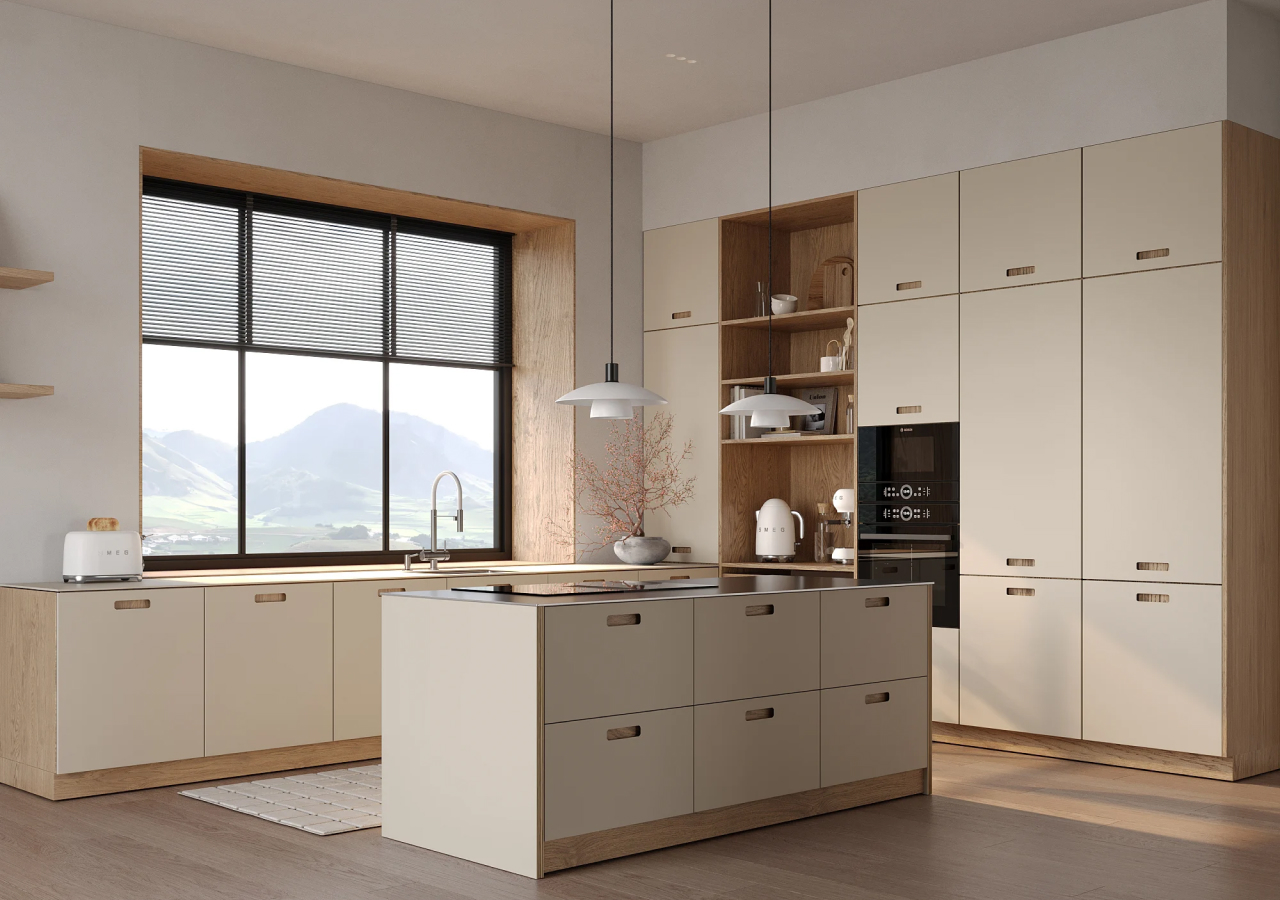
Soft whites, greiges, beiges, and light grays reduce visual noise and reflect light, creating a calm backdrop that works with different materials and styles. A neutral base lets wood, stone, and metal read clearly and adapts to new accents without a remodel.
A well-chosen palette also improves light distribution and makes the room feel more spacious. Timeless kitchen cabinet colors usually sit in the softer range: warm white instead of optic white, mushroom instead of harsh gray, light oak instead of strong orange-toned wood. These tones make it easier to shift decor over time without fighting the cabinets.
To keep the space from feeling flat, pair neutral fronts with tactile materials such as honed stone countertops, warm oak or ash, and brushed or matte metals. Color comes in through chairs, decor, and art rather than the entire cabinet run.
For more practical guidance on shades and undertones, you can read our broader kitchen color guide.
2. Natural Materials: Authenticity That Ages Gracefully
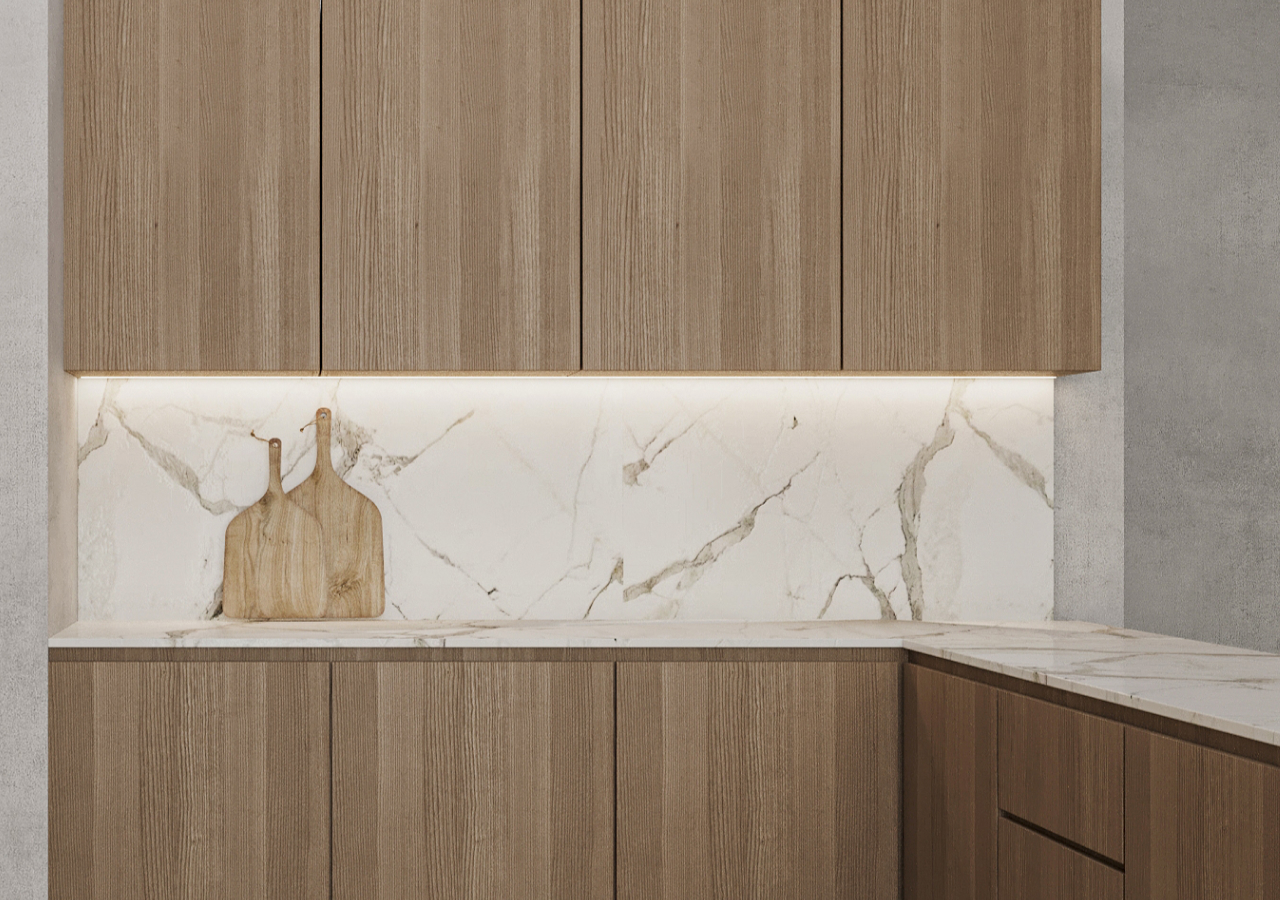
Real materials are at the heart of timeless kitchen materials. Oak or walnut veneer paired with natural or sintered stone brings warmth, tactility, and subtle variation that becomes richer over time rather than dated.
Wood veneer gives you the precision of modern fabrication with the depth of natural grain. Composite surfaces like Dekton add durability and color stability, which is useful in high-traffic kitchens. A simple combination—oak cabinets with a light beige or soft gray stone, for example—often looks better in year ten than it did in year one.
The goal is to keep the material palette focused. One primary wood, one main stone, and one or two metal finishes are usually enough to create a layered, timeless feel. If you’re leaning toward a warm but timeless Japandi palette, this is where light oak, soft beige stone, and gentle contrast come together.
3. Simple Cabinet Styles: Elegance in Restraint
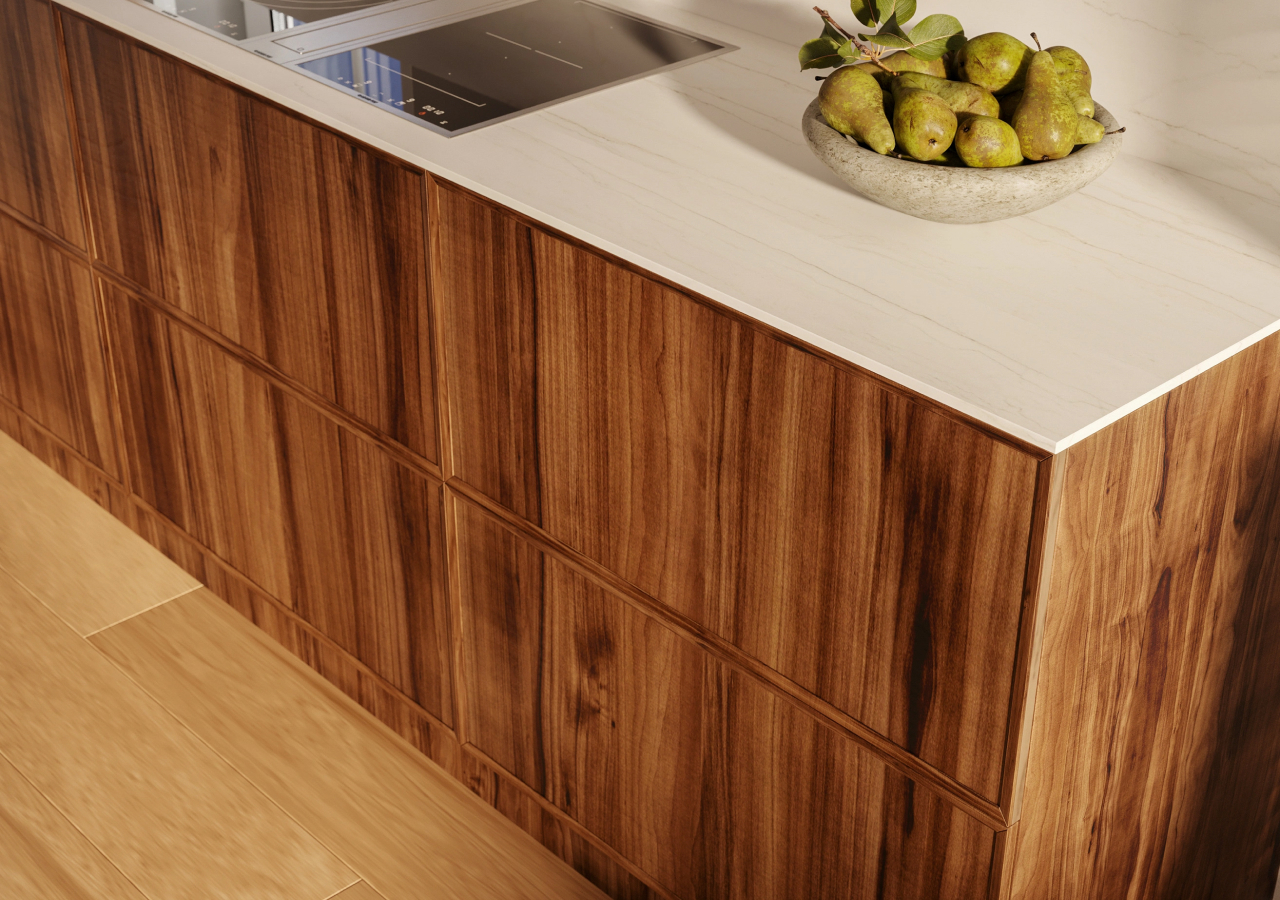
Simple cabinet styles tend to age well. Slab, slim shaker, and handleless profiles keep the lines quiet so that proportions and materials can lead.
Corner’s Scandinavian-inspired collections embody this: refined geometry, consistent reveals, and finishes that feel calm rather than busy. Simplicity here doesn’t mean the absence of detail; it means precision instead of decoration for decoration’s sake.
Handles can follow the same logic. Straight bar pulls, minimal rail handles, or a clean Gola system will look current long after heavily stylized knobs feel dated. Panel-ready fronts for tall appliances help keep tall runs reading as one composition rather than a patchwork of different units.
If you want to explain style differences more deeply, this is a natural place to reference your article on how modern vs contemporary design ages.
4. Functional Layouts: Flow That Works for Life
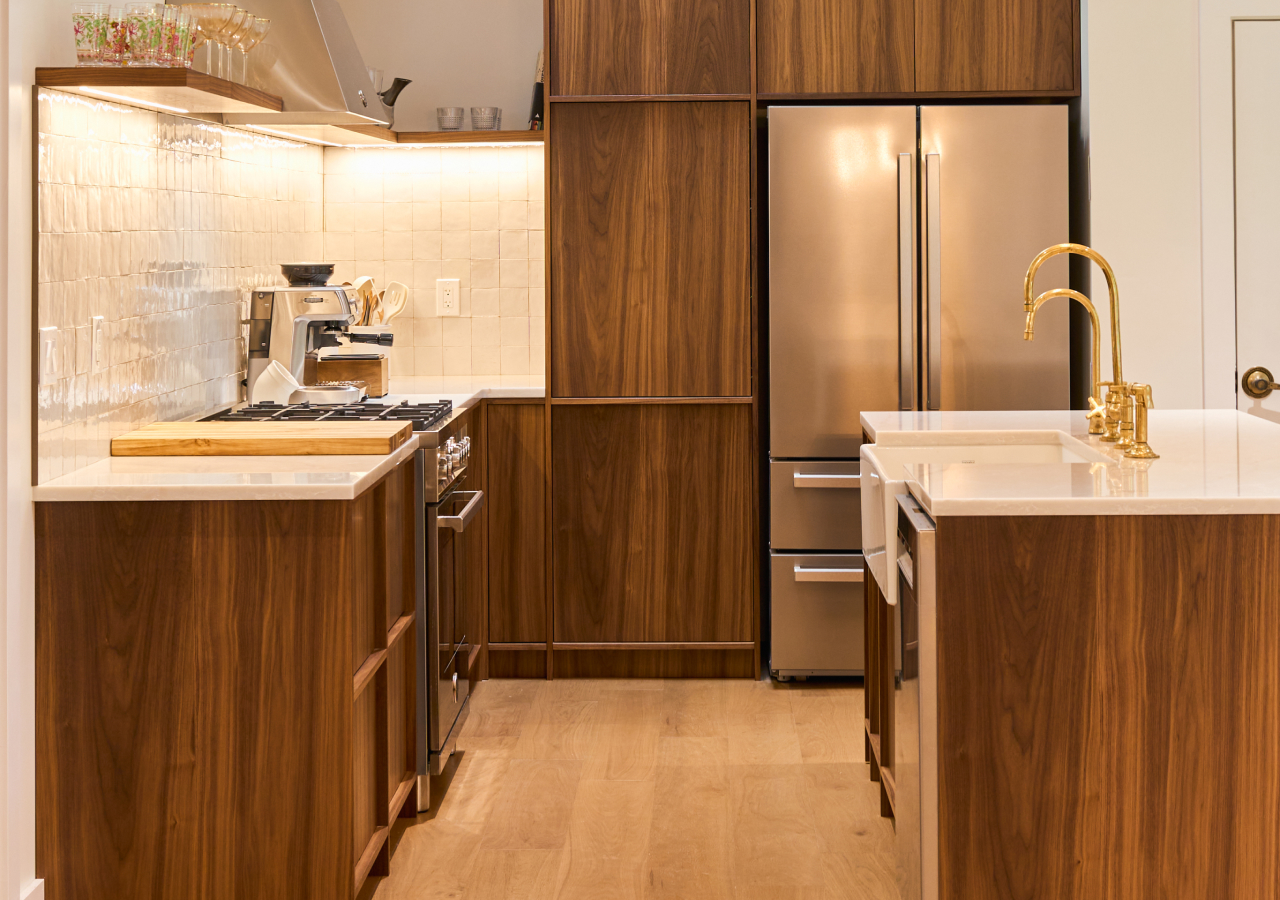
Timeless kitchens feel good to use. Clear circulation paths and intuitive positions for sink, cooktop, and refrigerator make daily tasks smoother and safer. Storage should support how you move, not fight it.
L-shaped or galley layouts often offer the best balance between accessibility and open space. Drawer-first bases near the cooktop, sink, and dishwasher keep everyday items in easy reach. Tall pantry and utility cabinets can be grouped into one calmer wall rather than scattered around the room.
Key clearances also help the kitchen feel generous instead of tight:
| Area | Recommended Clearance | Notes |
|---|---|---|
| Work aisle (single cook) | 36–42 in. | Aim higher in busy kitchens or near tall units |
| Work aisle (two cooks) | 42–48 in. | Comfortable passing and door clearances |
| Island to cabinet run | ~42 in. | 36 in. tight minimum; 48 in. for high traffic |
You don’t have to memorize the numbers, but using them as a reference keeps islands from becoming obstacles and walkways from feeling cramped.
For readers who want to go deeper on planning, you can steer them toward your 15 Kitchen Design Mistakes and 10 Kitchen Upgrades articles—this section pairs well with both.
5. Integrated Lighting: Layered Illumination That Defines Mood
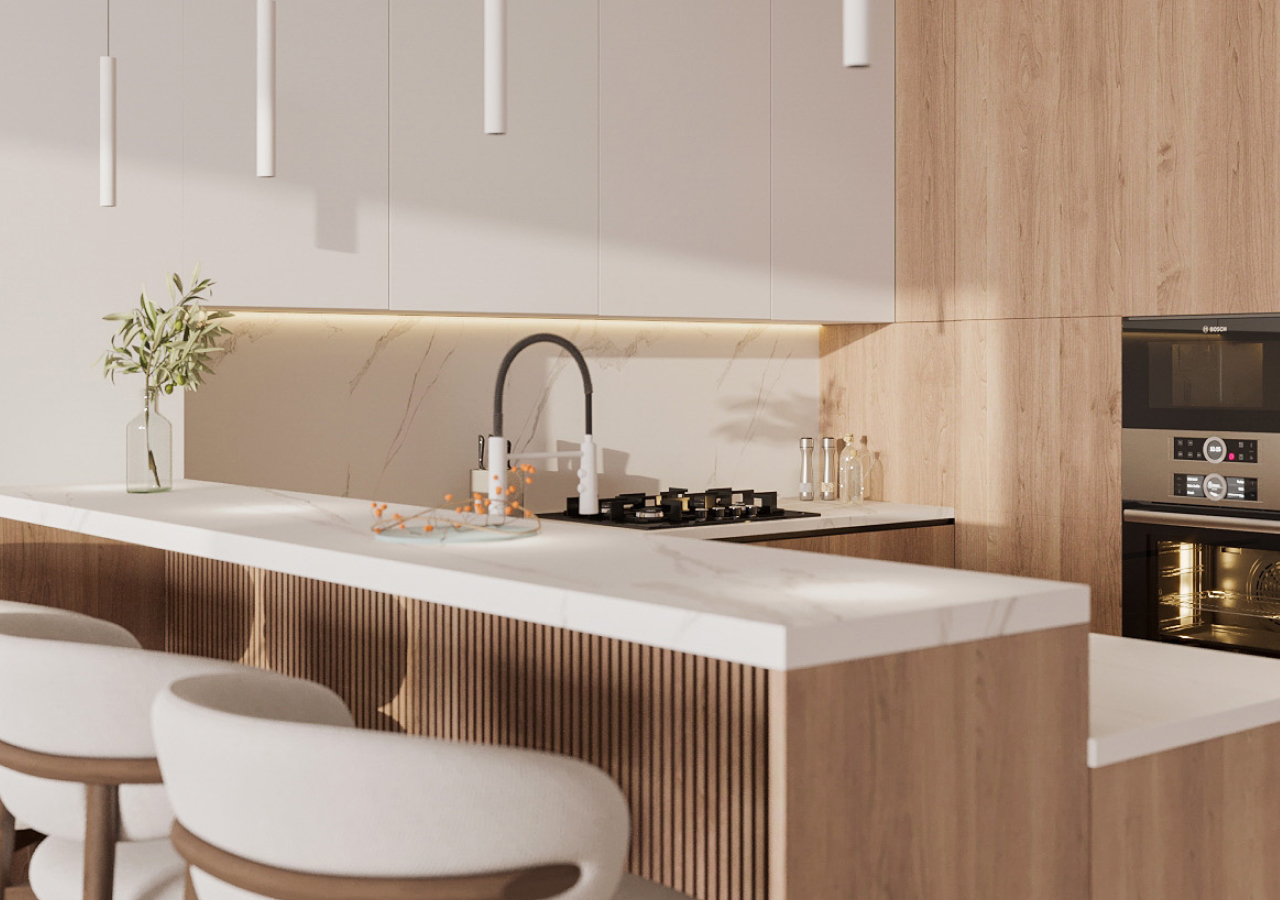
Lighting is one of the quiet forces behind timeless kitchens. Instead of one central fixture, a layered approach lets you adjust the room throughout the day.
Task lighting makes prep safe and comfortable: under-cabinet strips above the main counters, good light at the sink, and focused lighting around the cooktop. Ambient lighting—recessed or flush-mount fixtures on dimmers—fills the room without glare. Accent lighting introduces depth: shelf lighting, in-cabinet lighting behind glass, or a soft glow at the toe-kick.
Warm color temperatures (around 2700–3000K) tend to feel softer and more forgiving over time than very cool light. Choose pendants over the island that are simple and well-proportioned instead of overly sculptural; they should support the architecture, not compete with it.
6. Light and Dark Balance: Contrast That Feels Natural
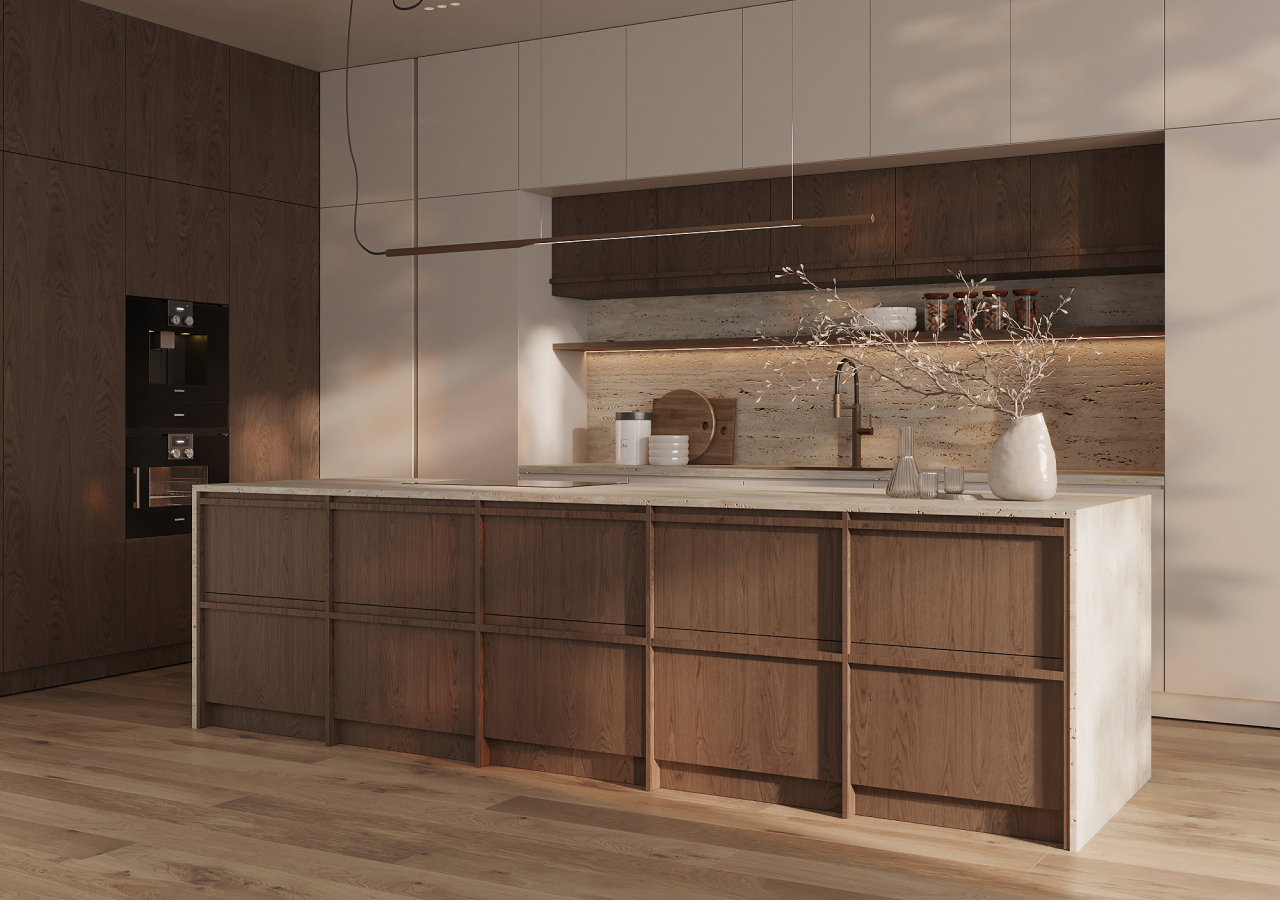
Some of the most timeless kitchens balance light and dark instead of choosing one extreme. Darker elements ground the room; lighter ones keep it open and airy.
Corner’s Japandi kitchen collections show this well: dark oak bases with pale stone, or deeper tones on a tall wall with lighter cabinets elsewhere. The idea is similar to what you see in nature—darker tones underfoot, lighter tones at eye level and above.
You can anchor the space with darker base cabinets or a slightly deeper floor tone, then use timeless kitchen cabinet colors like warm white or soft greige on the uppers and walls. Countertops that sit between the two—soft gray, beige, or cream—help everything read as one calm story rather than a high-contrast statement.
This is also where a timeless Scandinavian look or a warm Japandi palette can really shine: layered neutrals, gentle contrast, and materials that feel natural.
7. Quality Craftsmanship: The Invisible Luxury
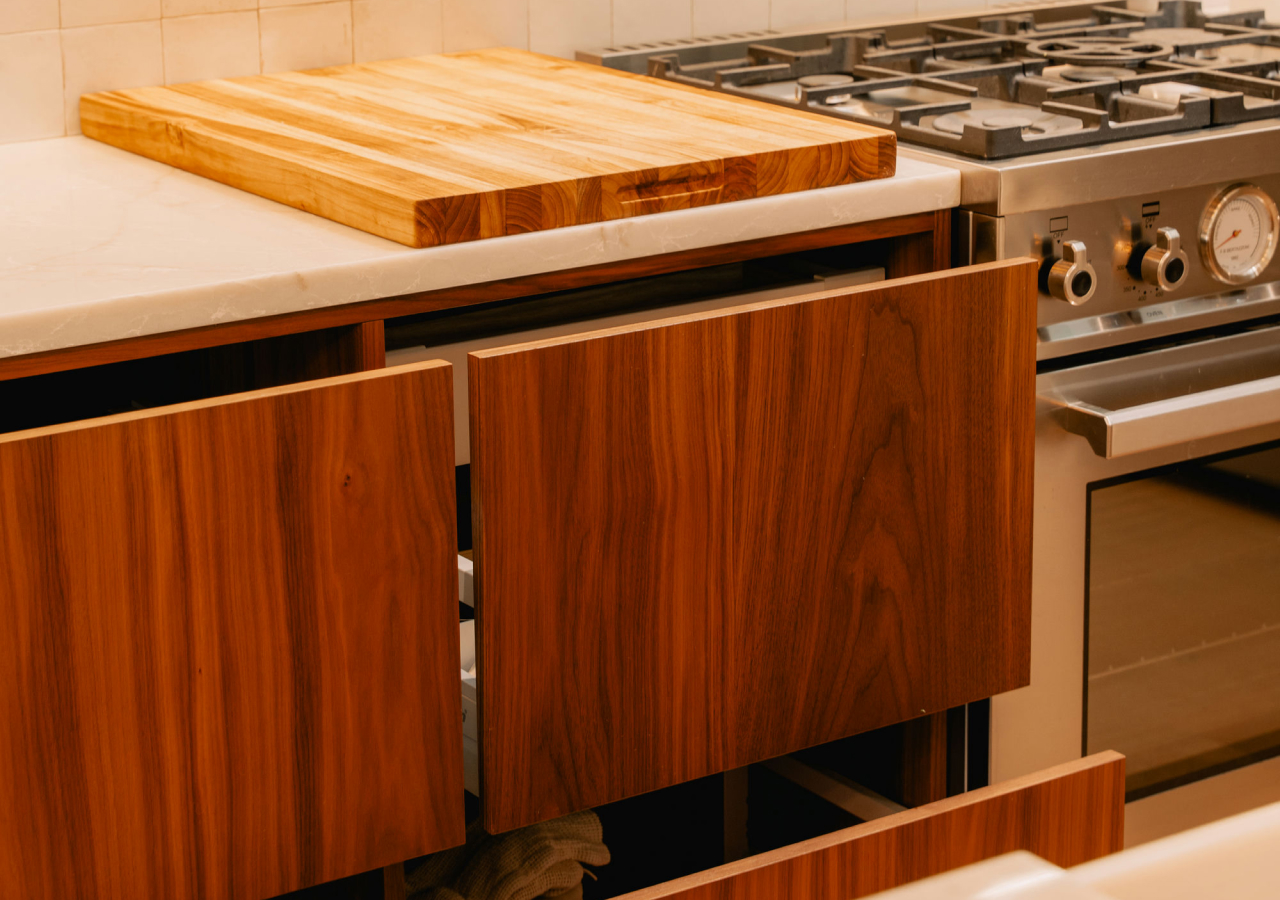
Much of what makes a kitchen feel timeless is invisible at first glance. Stable carcasses, high-quality hinges and runners, accurate reveals, and durable finishes all add up to quiet, everyday luxury.
Soft-close European hinges and full-extension drawer runners keep motion smooth and silent. Moisture-resistant finishes near the sink and dishwasher help fronts and boxes hold up over time. Careful veneer alignment, consistent gaps, and crisp edges make the space read as one piece of built-in architecture instead of a collection of boxes.
You don’t necessarily see these decisions in photos, but you feel them in use, especially after a few years. A timeless kitchen isn’t just one that looks current; it’s one that still feels solid and easy to live with after thousands of open-and-close cycles.
8. Form and Function in Harmony

In the end, timeless kitchens keep form and function in balance. Beauty without comfort fades quickly; function without warmth can feel clinical. The most lasting spaces do both.
Islands are a good example: they don’t have to be oversized to make an impact. A well-proportioned island offers enough prep space, a bit of seating, and storage that supports your routines. Inner drawers, appliance garages, and pull-outs help hide small items and machines so the surfaces stay calm without turning the kitchen into a showroom.
Use open shelves carefully: one focused area for everyday items or a few loved objects is usually more timeless than an entire wall of open storage. The goal is a room that looks composed even when it’s in real use, not a space that only works when it’s staged.
If someone is drawn to this balance, Japandi warmth article is a natural next read.
How to Start a Timeless Kitchen Refresh
You don’t have to rebuild everything at once. Start with a few high-impact moves:
- Set the base. Choose one or two neutrals and one natural material that can carry the room—warm white cabinets with light oak, for example.
- Edit the layout. Make sure prep, cook, and clean zones are clear, and aim for comfortable aisles around islands and tall runs.
- Improve lighting. Add or upgrade under-cabinet lighting and put ceiling fixtures on dimmers so the room can shift from task mode to evening mode.
- Upgrade storage and hardware. Inner drawers, pull-outs, and quality hinges and runners will make the kitchen feel calmer and more solid immediately.
Each step moves you closer to a kitchen that feels intentional and easier to live in, even if you’re working within an existing shell.
Conclusion
A timeless kitchen is based on principles, not temporary trends. Neutral shades, natural materials, and thoughtful planning create a foundation that flexibly adapts to changes in life. The best kitchens look unique but always remain relevant—warm, functional, and modern.
At Corner Renovation, we create kitchens that are designed to last for years, combining precision engineering with a cozy atmosphere. Explore our new collections or book a consultation to create a space that is not only beautiful but also reflects your style and remains relevant over time.
FAQ: Timeless Kitchen Design


