.webp)
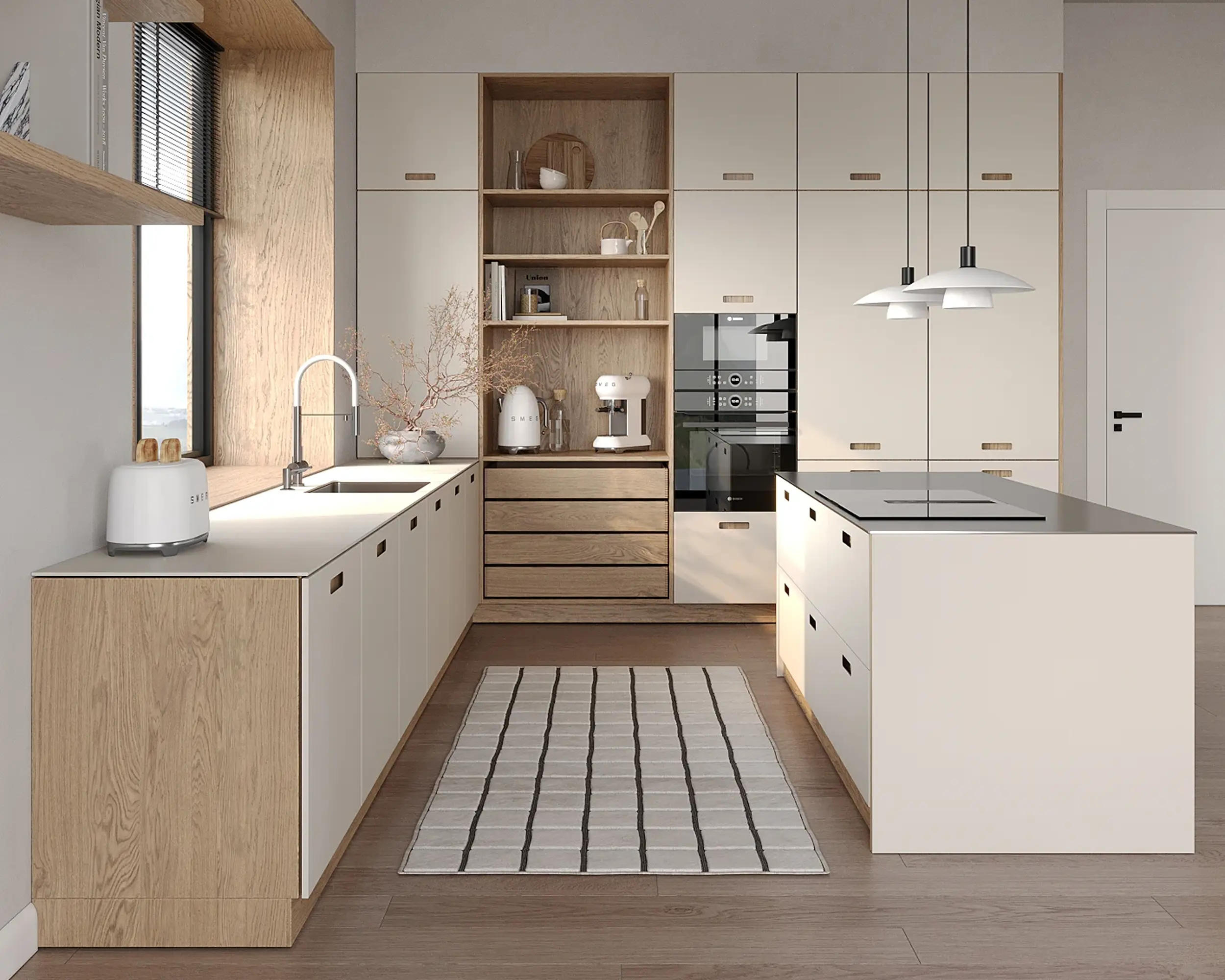
A Scandinavian galley kitchen uses two parallel runs of cabinetry to make a narrow room feel efficient, bright, and visually calm. It works especially well in small homes because it maximizes storage, shortens the work path, and supports the light, restrained character of Scandinavian design.
Why Scandinavian Design Works So Well in a Galley Kitchen

Many kitchens are long and narrow. These spaces often become corridor kitchens, with cabinets lining two parallel walls and a walkway in between. At first, this layout can feel limiting. With careful planning, though, a galley kitchen can become one of the most efficient and stylish kitchen layouts.
Scandinavian design is especially well suited to this kind of space because it emphasizes light, simplicity, and clean surfaces. Those qualities matter in a narrow room. Instead of crowding every wall with heavy cabinets or decorative features, Scandinavian kitchens use clean lines, natural materials, and smart storage to create a sense of calm. Even in a small Scandinavian kitchen, the room can feel open and balanced when visual distractions are reduced.
This is one reason the Scandinavian galley kitchen works so well in small homes and apartments. With the right layout choices and practical storage, it can turn a compact space into a peaceful, efficient kitchen that feels bigger than it is.
What Defines a Scandinavian Galley Kitchen
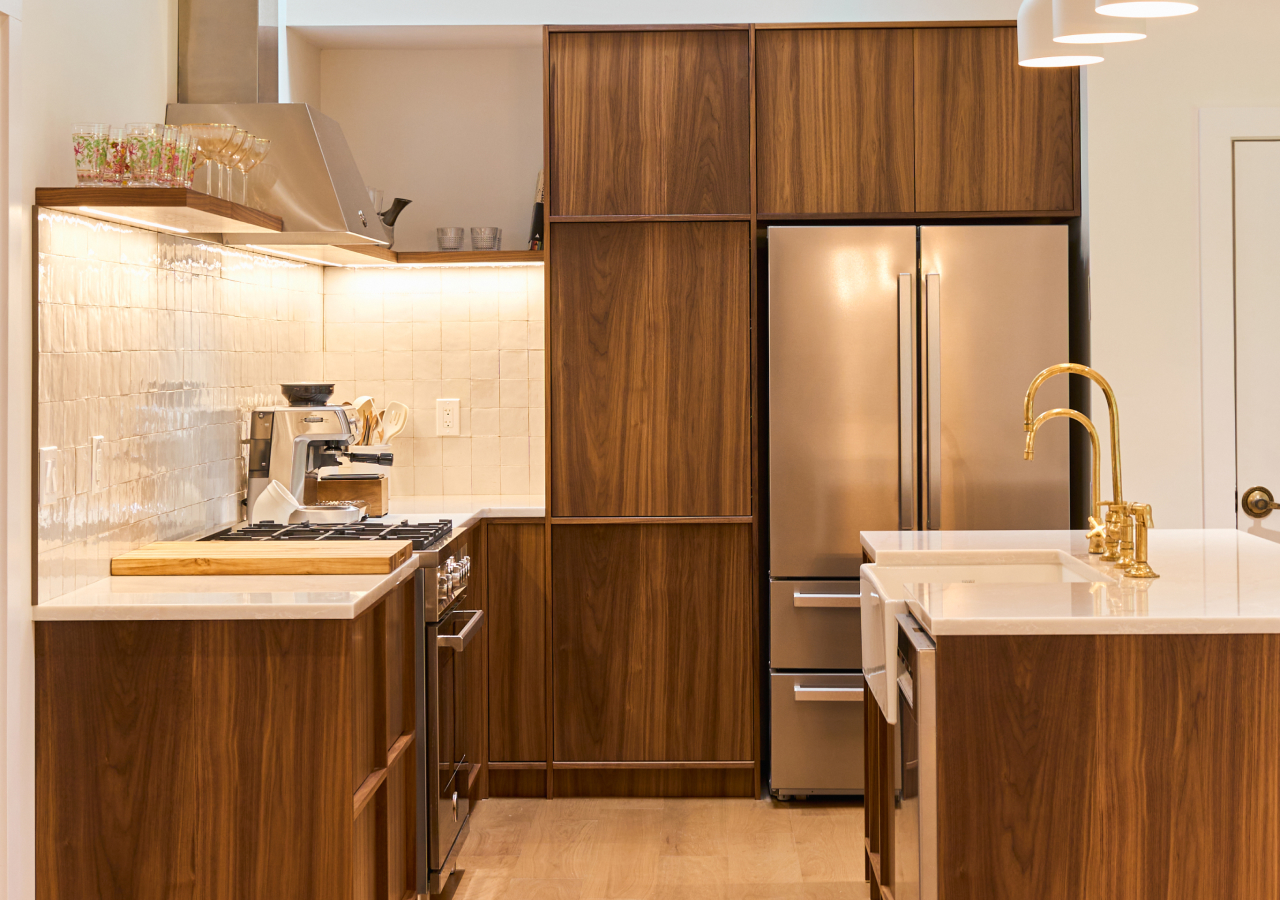
At its core, a galley kitchen is defined by two parallel runs of cabinetry. The arrangement creates a compact work zone with minimal distance between appliances, storage, and prep areas. For cooks, this can be extremely efficient because everything sits within a few steps.
A Scandinavian galley kitchen, however, is more than just two rows of cabinets. The Scandinavian approach adds visual calm and material warmth, which keeps the room from feeling like a dark corridor. The design language usually includes light or softly toned cabinetry, natural wood surfaces or veneers, simple cabinet fronts, minimal hardware, and very little countertop clutter.
The goal is not only storage efficiency, but visual clarity. Scandinavian kitchens emphasize breathing room. Even in a narrow layout, cabinetry lines stay simple and continuous, materials remain natural, and decorative elements are restrained. That is what separates a Scandinavian galley kitchen from a generic galley. Instead of feeling compressed or purely utilitarian, the room reads as calm, warm, and intentionally designed.
How to Tell if a Galley Layout Works for Your Space

Before planning cabinetry, it helps to understand whether a galley layout suits your room. The quickest way to read the space is to look at three things: the width of the room, the placement of doors and windows, and the main circulation path. If the room is long and narrow, a galley layout often delivers the best storage density per square foot.
In most cases, homeowners aim for a working aisle of roughly 36–42 inches between cabinets. This provides enough clearance for drawers, appliances, and comfortable movement while keeping the work zone compact.
Recommended Clearances for a Scandinavian Galley Kitchen
If the room is extremely narrow, alternative configurations may work better, such as one wall of cabinetry with a prep peninsula or one run paired with a small dining ledge or table. But when the proportions are right, a Scandinavian galley kitchen can outperform most other layouts in terms of storage efficiency. The parallel runs allow designers to place drawers, tall units, and appliances in tight, logical sequences without wasting wall space.
Layout Strategies That Make a Narrow Galley Work
.webp)
A Scandinavian galley kitchen works best when the cabinetry is organized thoughtfully. Instead of scattering tall elements randomly, it helps to group functions in a way that keeps the room calm and easy to navigate.
One of the simplest ways to improve a narrow kitchen is to concentrate tall pieces, such as the refrigerator, pantry, and oven tower, at one end of the room. This creates a storage wall instead of spreading vertical mass along the corridor. The result is a kitchen that feels more open in the center while still offering plenty of storage.
It also helps to give each run of the galley a clear job. One side might include the sink, dishwasher, and main prep space, while the other houses the hob, ovens, and pantry storage. This creates cleaner work zones. Instead of crossing the aisle repeatedly while cooking, tasks stay grouped along each side, which makes the kitchen feel more intuitive and efficient.
Windows and openings deserve careful treatment too. Natural light plays a big role in Scandinavian interiors, so if a window sits at the end of the galley, that area usually benefits from fewer upper cabinets, a short open shelf, or lighter materials. If the galley opens into a dining or living space, cabinetry often looks better when it ends cleanly rather than extending as far as possible. A finished end panel or shallow shelf can help the kitchen transition more smoothly into the next room.
Some homes also benefit from a broken galley, where one run turns into a short peninsula. This can work well when the kitchen connects to a living area and needs a little more prep space or seating. The main priority is still flow. If the peninsula makes the aisle feel cramped, the extra surface is rarely worth it.
Storage Ideas That Make a Narrow Galley Feel Bigger
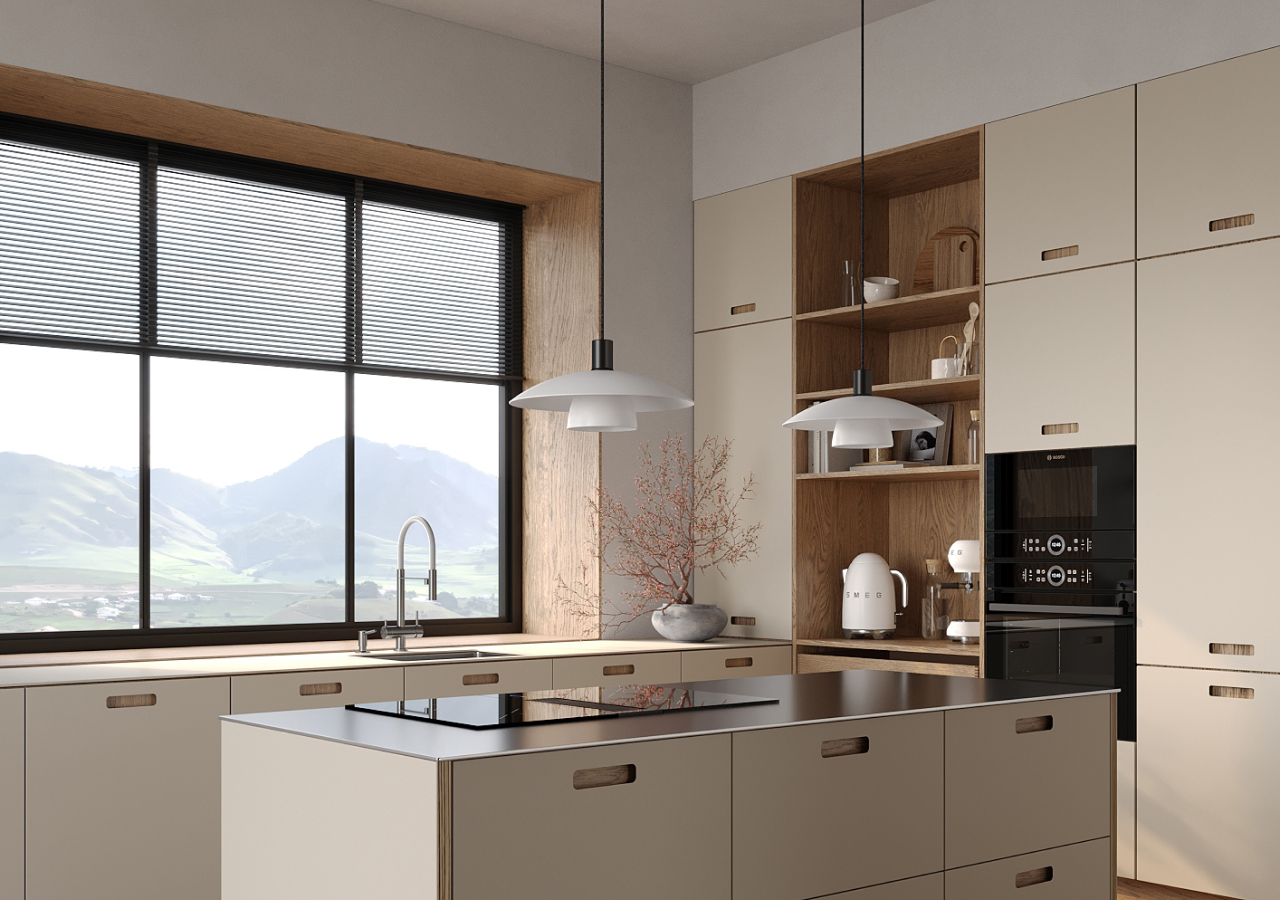
Storage planning is where Scandinavian kitchens really stand out. Instead of crowding the room with oversized cabinets, the goal is to use storage formats that improve access while keeping the kitchen visually calm.
In a narrow Scandinavian kitchen, drawer-first storage usually does the most work because it improves access and reduces countertop clutter. Tall units, pull-outs, and under-sink organization then help fill the gaps efficiently without making the room feel overloaded.
Light, Color, and Materials That Expand a Narrow Kitchen
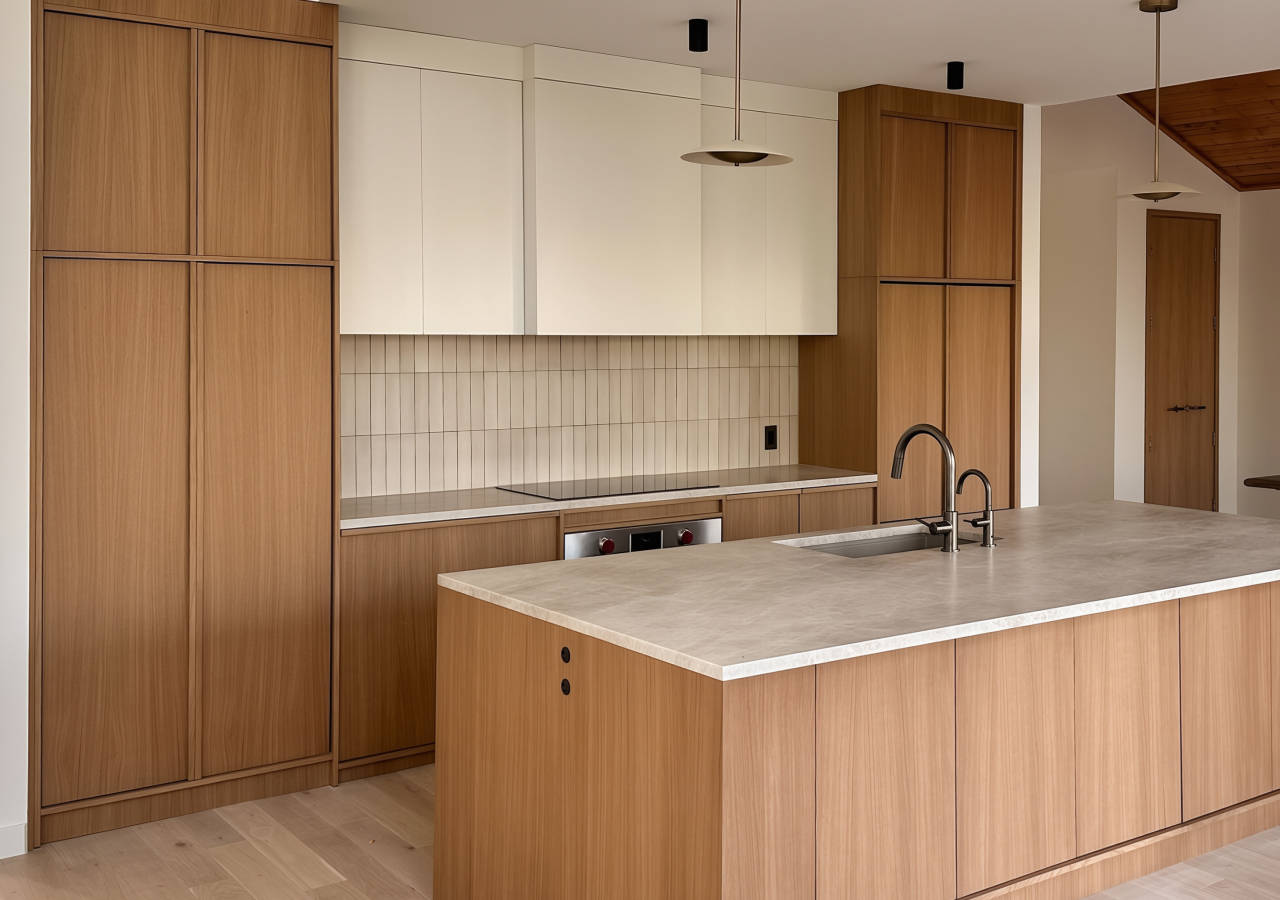
Visual design has a big impact on how a narrow kitchen feels. Scandinavian interiors use a few simple moves to make tight rooms feel brighter and wider.
Many Scandinavian kitchens combine one natural wood tone with a soft cabinet color. Light oak, pale ash, or warm walnut often pair well with white, soft grey, or muted beige. In a narrow kitchen, it usually helps to keep upper cabinets lighter than lower ones, or reduce upper cabinetry along part of one run, so the room feels less top-heavy. Highly contrasting patterns or bold materials can easily overwhelm a tight space, so countertops and backsplashes are usually kept quiet and understated.
Simple cabinet lines also matter. Continuous runs make the kitchen feel longer and less fragmented. Matching heights, keeping door sizes consistent, and using minimal hardware all contribute to a calmer rhythm. Handleless or subtly integrated pulls reinforce that effect.
Lighting should brighten the workspace without cluttering the ceiling. Under-cabinet or under-shelf lighting is often the most important layer because it lights the countertop directly. Slim ceiling spots or track lighting can provide general illumination along the length of the galley. If the kitchen opens to a dining area, a pendant usually works better outside the main corridor rather than inside it.
Flooring and backsplash choices can support that same feeling of openness. Flooring that runs along the length of the galley helps visually stretch the room, while subtle stone, soft tile, or lightly patterned surfaces keep the background calm.
Common Scandinavian Galley Kitchen Mistakes
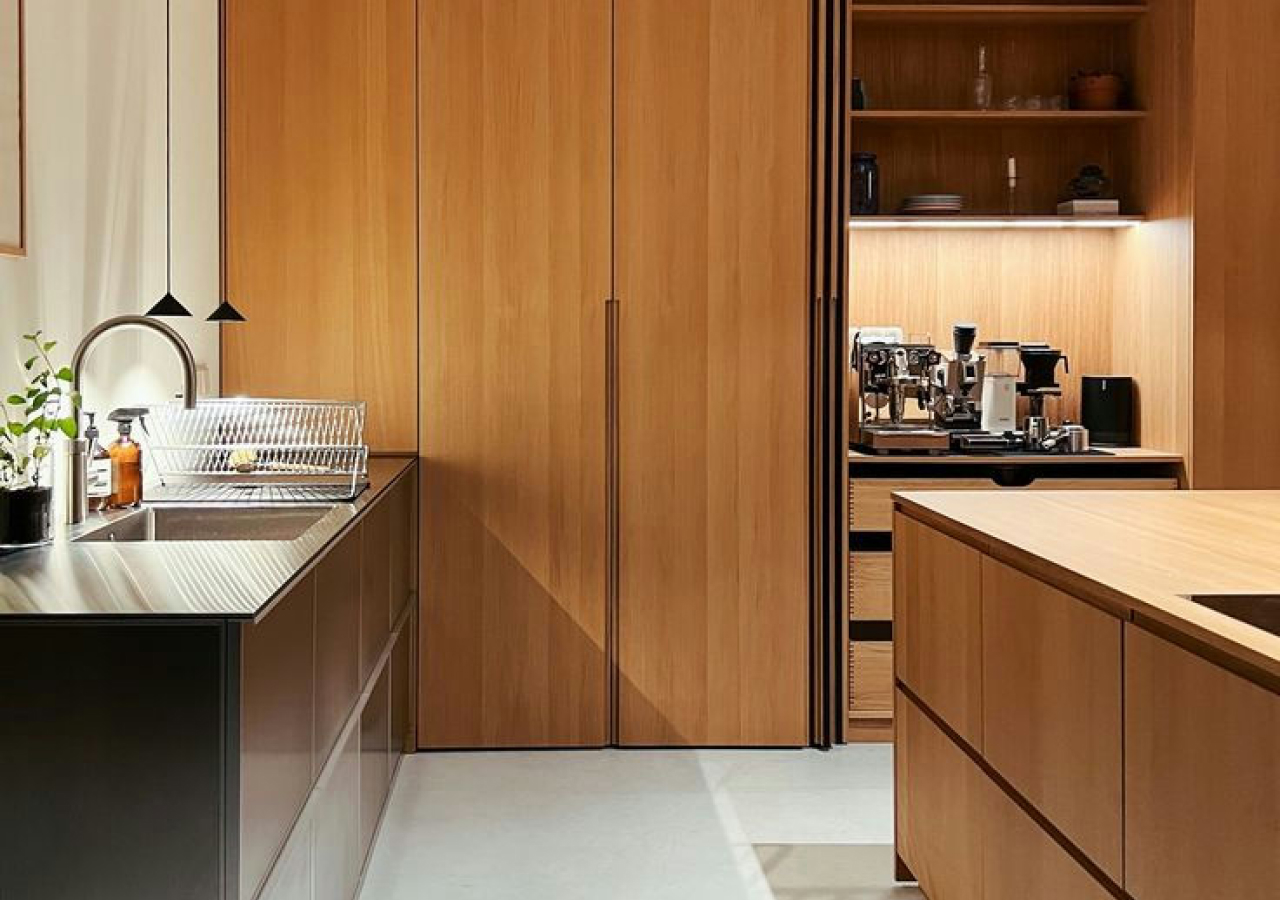
Even well-intentioned designs can create problems in a narrow kitchen. The most common issue is too many upper cabinets on both sides of the galley. That often makes the room feel heavy and boxed in. Reducing uppers along part of one run or adding a small shelf segment usually helps.
Dark or busy finishes can also shrink the corridor visually. Darker tones can still work, but they are usually best kept lower in the room and balanced with lighter surfaces above.
Another common issue is countertop clutter. Without dedicated storage for appliances and everyday items, surfaces fill up quickly. Drawer-based storage, internal organizers, and appliance garages can help preserve the clean Scandinavian look.
Appliance placement matters too. Refrigerators, dishwashers, and oven doors should never block the main aisle more than necessary. Moving larger appliances closer to the open end of the kitchen often improves circulation.
This kind of sequence keeps the design focused and helps avoid unnecessary complexity.
Conclusion
A Scandinavian galley kitchen works best when layout, storage, and materials all support the same goal. Narrow rooms do not have to feel cramped. With thoughtful zoning, drawer-first storage, and a calm palette, these kitchens can feel bright, efficient, and welcoming.
Many of the most functional kitchens rely on the galley layout because it puts everything within easy reach while maximizing storage along two full walls. If you are planning a narrow kitchen renovation, starting with room dimensions, circulation, and storage priorities can make the possibilities much clearer. At Corner Renovation, we often help homeowners explore Scandinavian layouts through collections like Nordic and Essence, balancing warm materials with highly functional cabinetry systems.