

Scandinavian kitchens are known for their bright, airy, and visually uncluttered feel. That effortless look comes not only from cabinetry, but from the surfaces that do the quiet heavy lifting. Countertops and backsplashes set the tone for how calm a space feels, how light moves through it, and how much day-to-day cooking disrupts (or respects) the aesthetic. For modern homeowners, these choices are just as functional as they are visual: good materials make prep easier, handle heat and cleaning, and support storage layouts that keep the room clear.
Organization plays a major role in Scandinavian design: deep drawers, appliance zones, and concealed storage let surfaces stay open and wipe clean. When Scandinavian kitchen counters aren’t filled with spice racks, kettles, or chargers, the backsplash and countertop become part of the architecture rather than busy decor. This blend of quiet practicality and warm minimalism is why Scandinavian kitchens endure across styles and decades.
The Surface Logic of a Scandinavian Kitchen: Light, Quiet, Functional
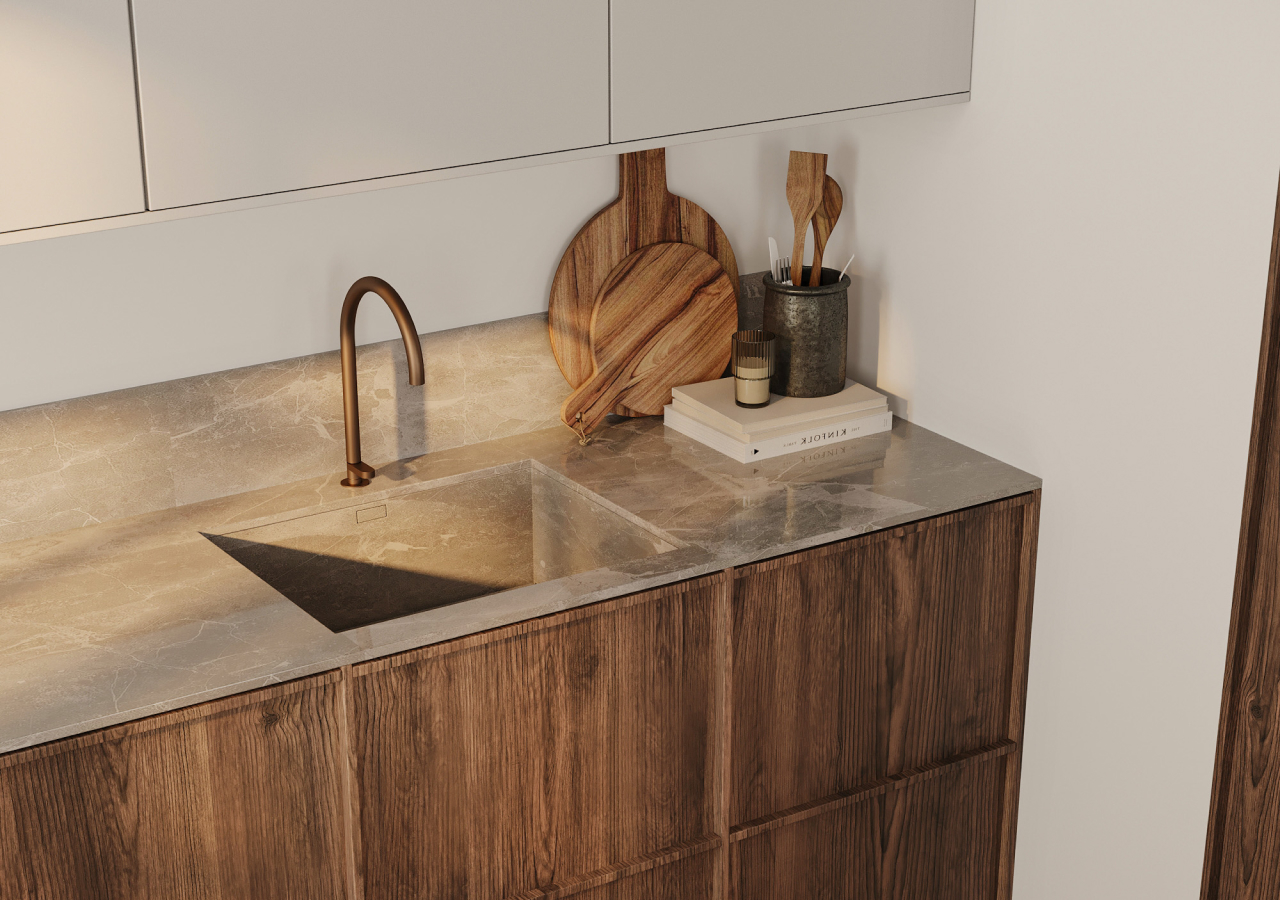
A Scandinavian surface palette is built on soft, low-contrast materials that reflect light and keep the room visually quiet. A Scandinavian kitchen feels calm and intentional when color, texture, and sheen are kept soft and consistent, so the room has space to breathe. Instead of high-contrast marble veins or glossy tile grids, Scandinavian kitchens lean toward matte surfaces, pale stone tones, low-contrast quartz, and full-height slabs that diffuse light and visually elongate the room. These materials help reflect daylight (important in Nordic interiors where winters are dimand) and keep kitchens from feeling heavy.
Function feeds the aesthetic. When surfaces resist stains, scratches, and heat, homeowners don’t need to add clutter to protect them. Meal prep can stay on the island; coffee cups slide across counters; backsplash slabs wipe clean with minimal effort. This is why the Scandinavian palette tends to favor durable engineered stone or ultracompact materials where the look stays consistent over time. The result is a kitchen that feels both gentle and hardworking.
Countertops for a Scandinavian Kitchen
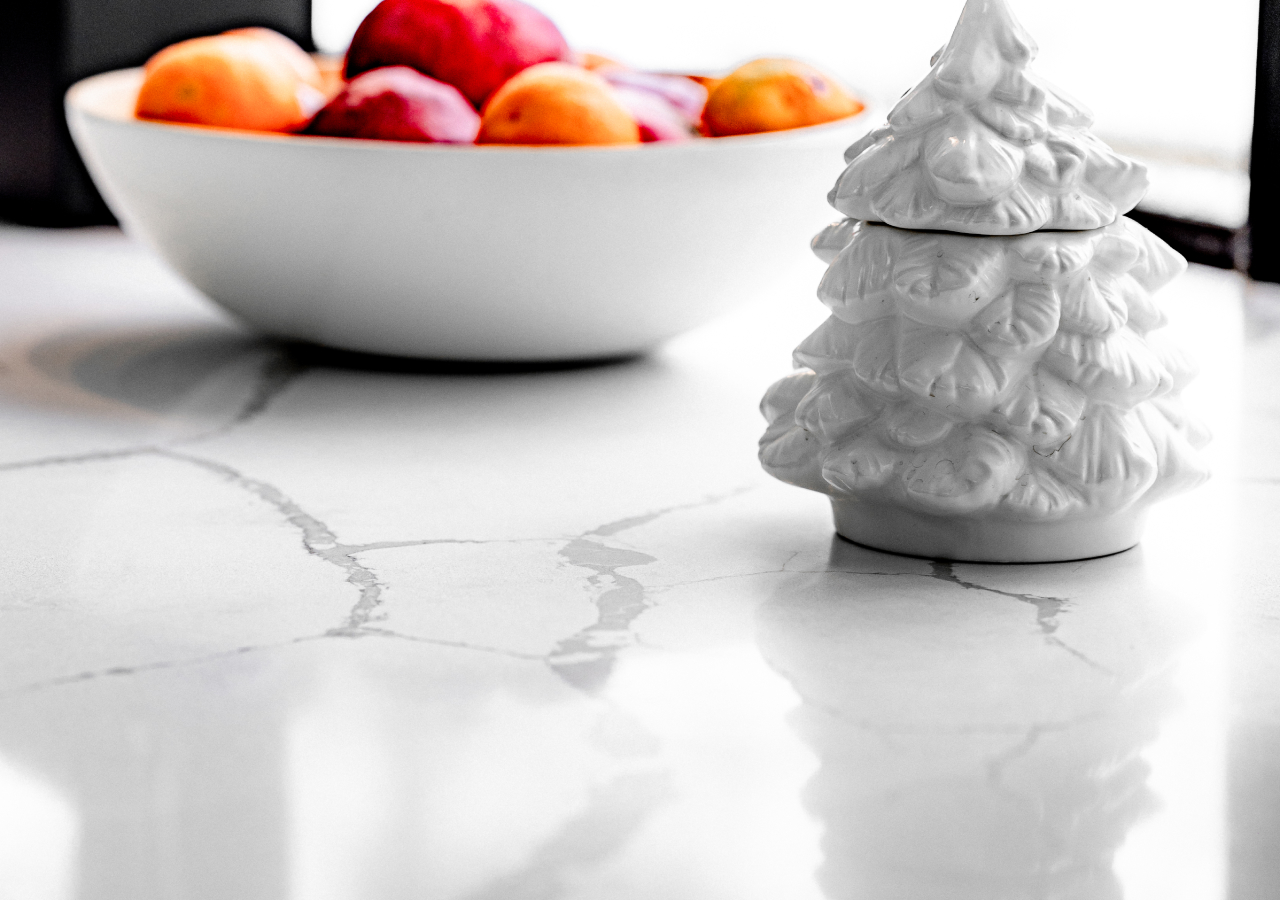
A Scandinavian kitchen countertop is typically pale, matte, and low-contrast in pattern so it feels calm even on busy days. In Scandinavian kitchens, countertops often use quartz and Dekton because they offer quiet tones—warm whites, soft beiges, taupes, greiges, and light grays—with just enough movement to keep the surface interesting without overpowering the composition. Natural stone like honed marble or quartzite can also fit beautifully, as long as the veining is quiet and the finish is soft.
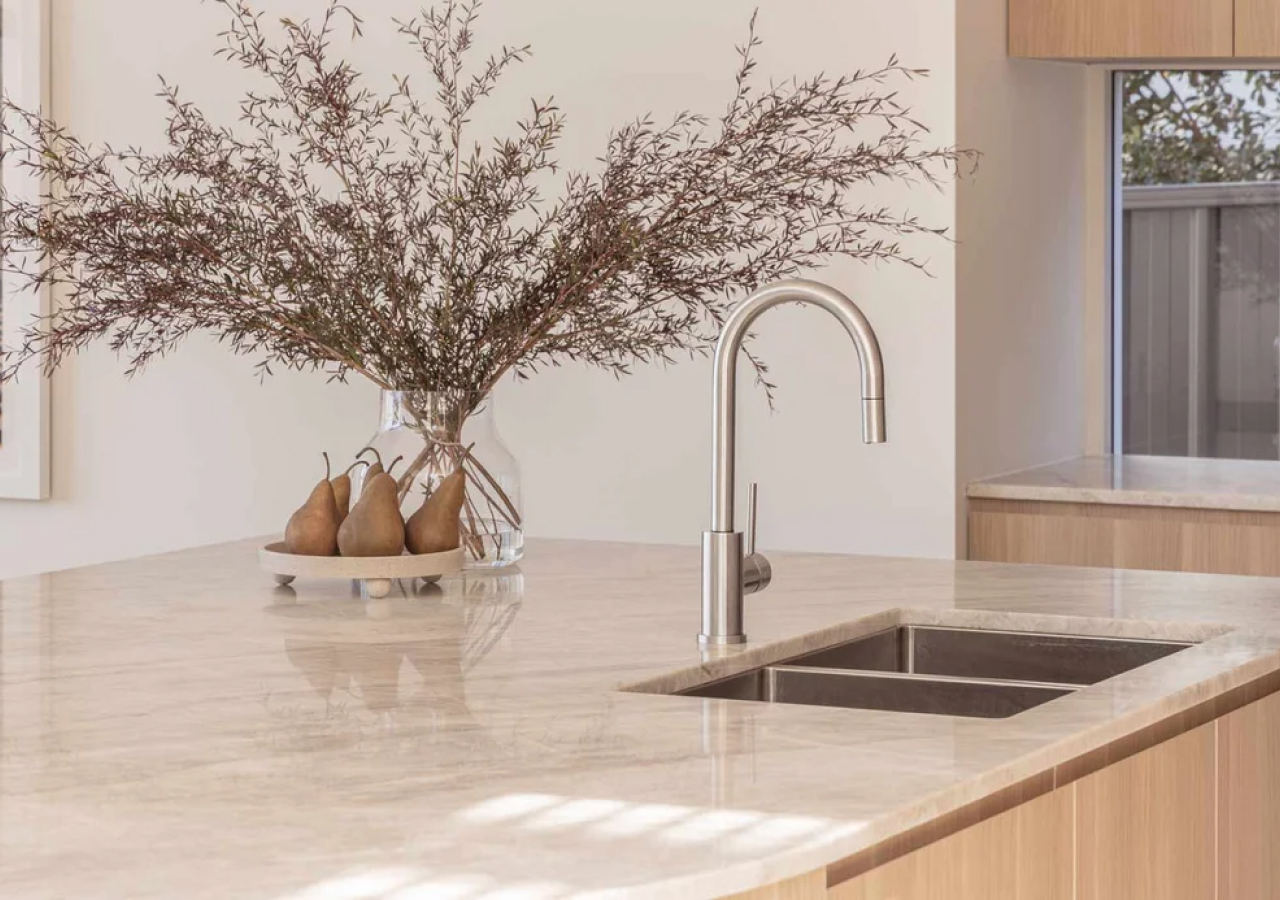
Functionally, these countertop materials support how Scandinavian kitchens are used: they’re prep surfaces, breakfast stations, workspace, and social zone. Quartz holds up to daily wear and offers easy maintenance; Dekton excels around high-heat cook zones and pairs well with full-height slabs; natural stone adds warmth and depth when thoughtfully sealed and maintained. Thickness matters, too: thin profiles (often 12–20 mm) create a more contemporary line and lighten the visual mass of the island or perimeter run.
In practice, Scandinavian kitchen counters work best when paired with deep drawer storage below, keeping cookware and daily items in the near zones. This makes it easier to stay organized, reduces countertop clutter, and reinforces the calm minimalism that defines the style.
Quick comparison of Scandinavian-friendly countertop materials:
| Material | Best For | Look & Feel | Maintenance Notes |
|---|---|---|---|
| Quartz | Everyday prep and family kitchens | Matte or satin, low-contrast pattern | Very low maintenance; avoid direct high heat |
| Dekton/porcelain | Cooktops, full-height slabs, outdoor use | Ultra-matte, stone- or concrete-like | Highly heat- and scratch-resistant; needs pro fabrication |
| Honed stone | Warm, character-rich Scandinavian kitchens | Soft, natural veining, tactile | Needs sealing; expect some patina over time |
Backsplashes for a Scandinavian Kitchen
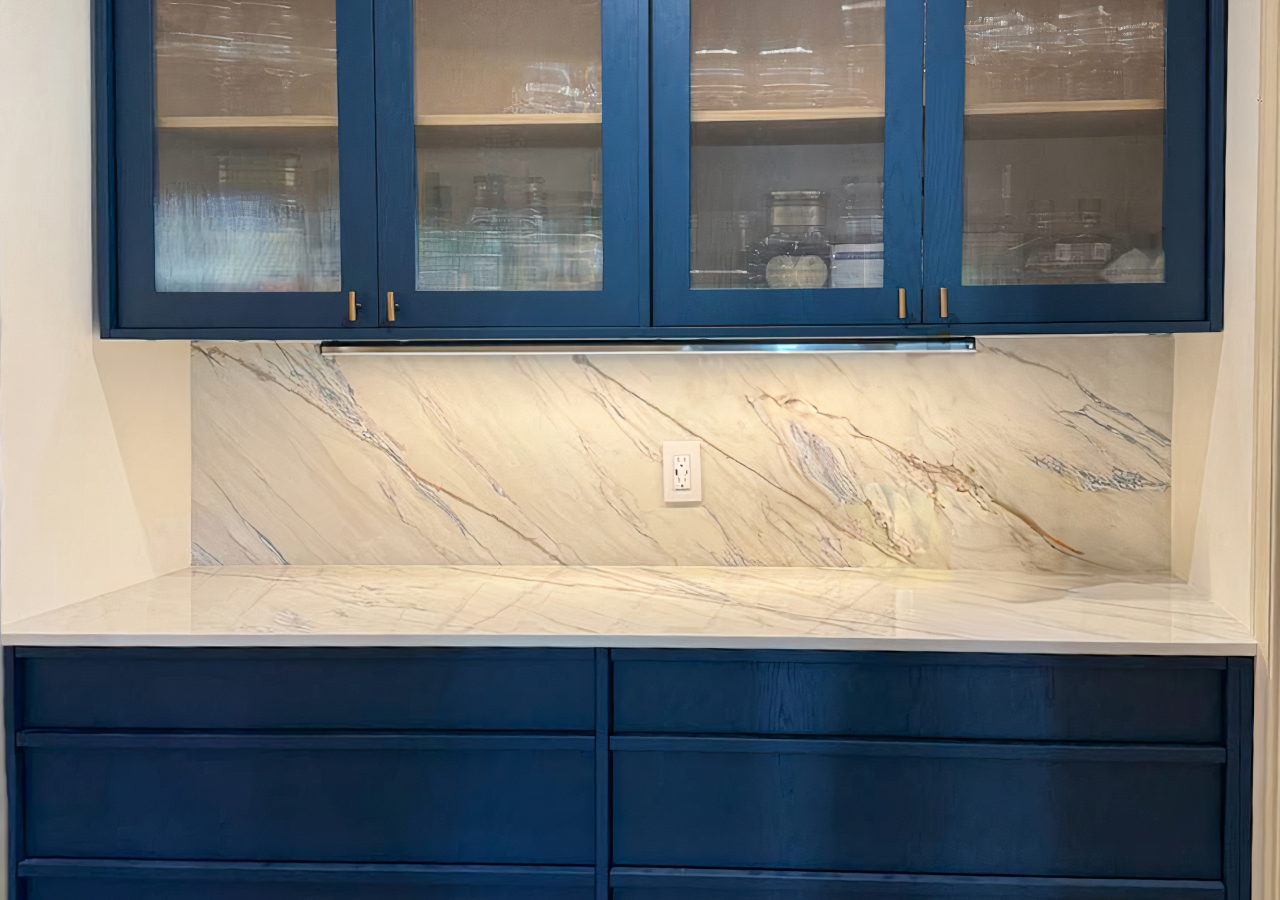
A Scandinavian kitchen backsplash usually extends the countertop material or repeats its tone so the wall feels calm and architectural. In many designs, backsplashes in Scandinavian kitchens serve as a visual continuation of the countertop rather than a decorative accent. Full-height slabs in quartz, stone, or Dekton are common because they create a seamless plane, reduce grout lines, and make cleaning quicker. When slabs aren’t used, low-contrast tile is the next move: matte finger tile, 2×8 or 2×10 vertical stacks, or soft white subway tile with minimal contrast grout. The key is subtlety, that's why tiles shouldn’t read as loud geometry.
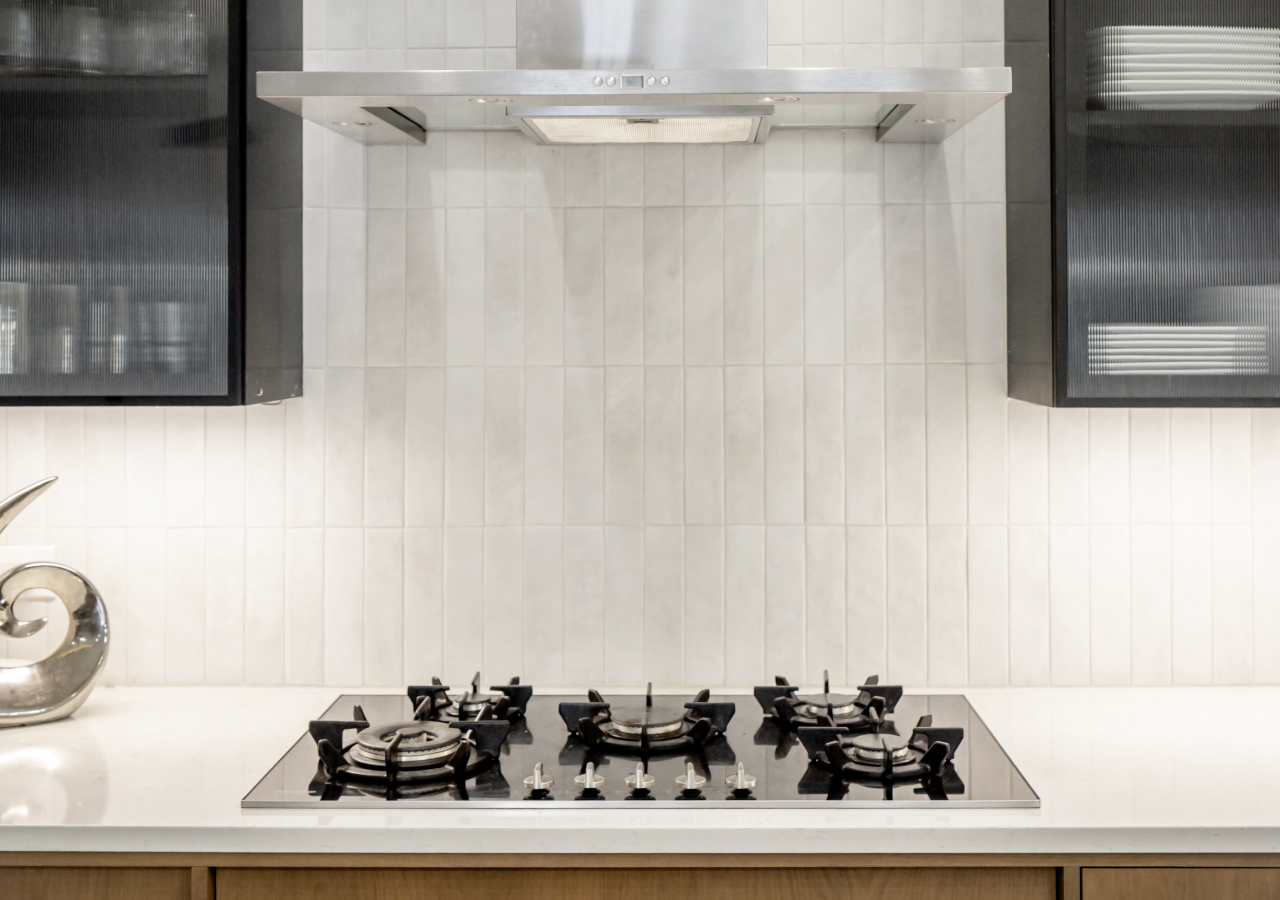
A Scandinavian kitchen white backsplash works especially well because it reflects light, bridges between wood cabinetry and stone surfaces, and keeps the composition fresh without drawing attention to itself. Warm white tiles with a handmade texture add character without becoming busy; pale greige or bone-colored tiles blend into oak cabinets; satin or matte glaze keeps the surface from feeling glossy or stark. With darker cabinets, light backsplashes keep the room balanced.
Implementation matters in real kitchens. Behind cooktops, slab backsplashes make wiping oil and steam residue easier; behind sinks, tiles or slabs resist water spots and cleaning products. When you’re choosing a backsplash for Scandinavian kitchen layouts, details like quiet edges and integrated receptacles help reduce visual interference along the wall. When surfaces don’t fight each other, the cabinets and lighting can take the lead.
How to Combine Countertop & Backsplash for a Calm Scandinavian Look
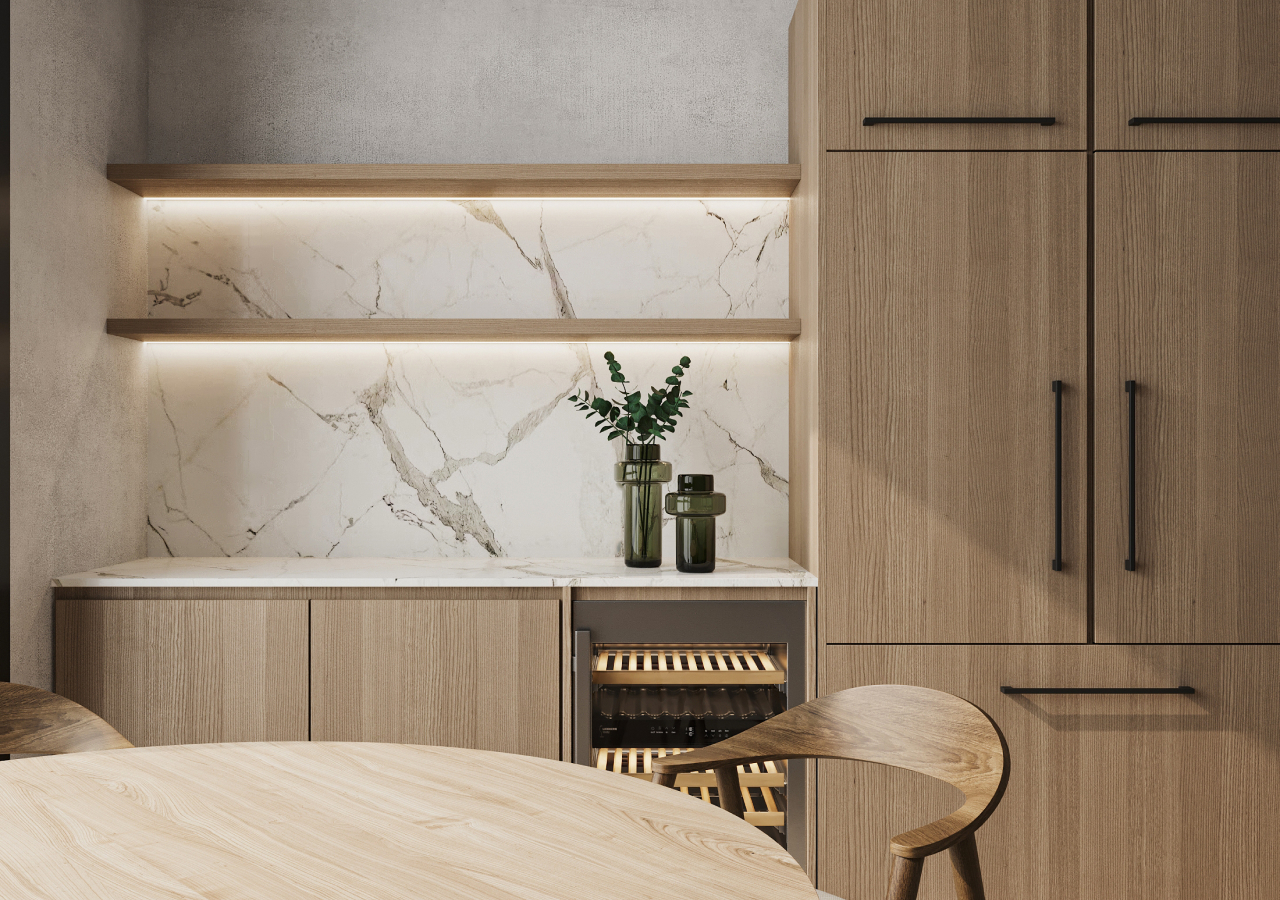
The Scandinavian palette works because it is restrained. Backsplashes and countertops usually share a color family or undertone, which keeps the vertical and horizontal planes calm. Pairing a warm white quartz counter with a matching slab backsplash creates a continuous field of light; pairing marble-look quartz with a soft matte tile in a similar hue adds texture without noise. What Scandinavian kitchens avoid are sharp contrasts: dark counters with bright backsplashes, or veined stone against patterned tile.
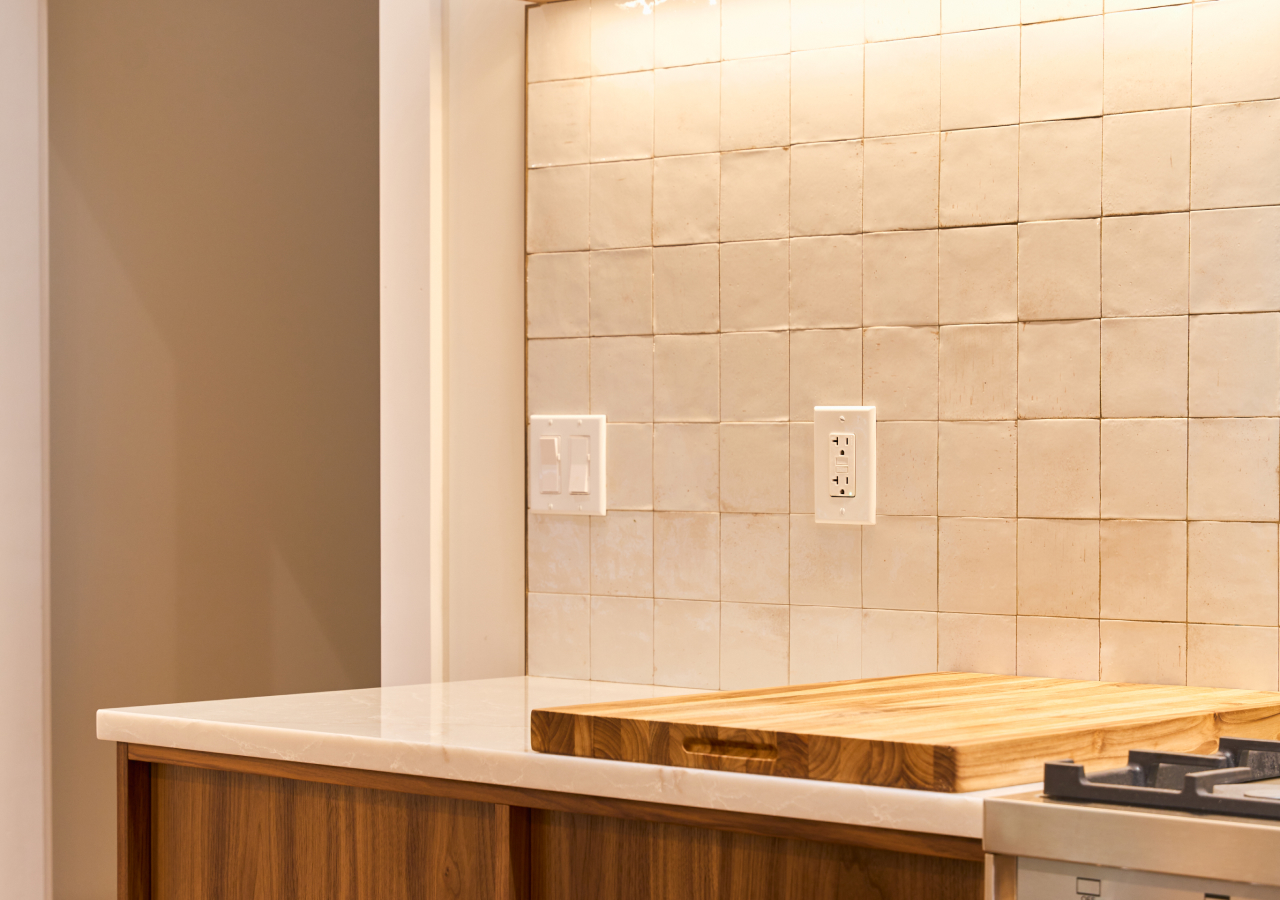
Wood cabinetry plays a central role in Scandinavian kitchens, and the surface palette should respect it. Oak, ash, and walnut read cleanly against warm whites and pale stones; beige or greige counters soften matte white cabinets; even a quiet gray can look refined in an all-white room. Texture can be introduced through honed finishes, ribbed tiles, or fluted island panels, but the goal is always balance, not drama.
Lighting often seals the composition. Under-shelf or under-cabinet LEDs skim across slabs and tiles to reveal subtle texture and add warmth at night. When counters and backsplashes are low-contrast and matte, the light reads soft rather than reflective, enhancing the Scandinavian sense of calm.
Practical Surface Choices for Real Life
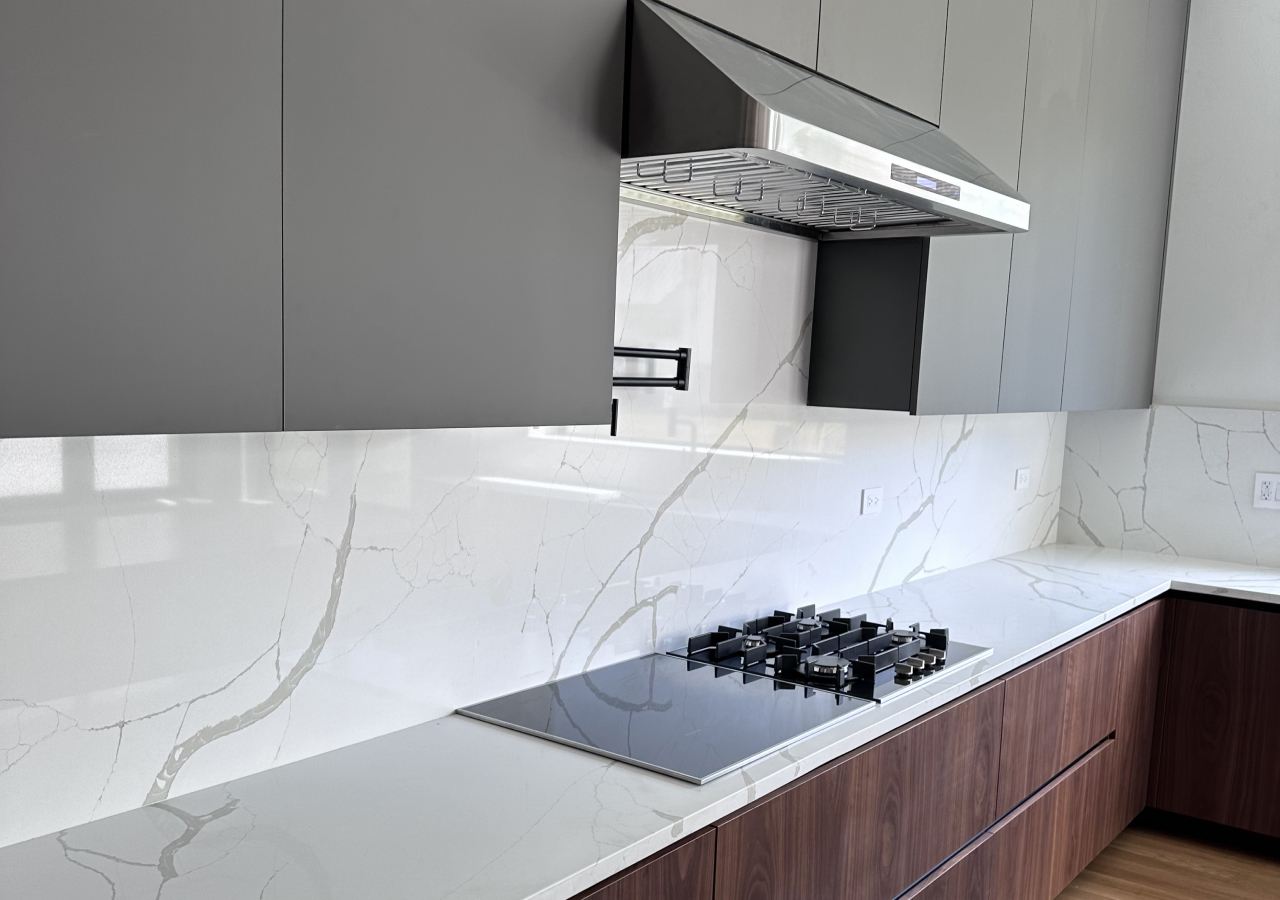
Scandinavian kitchens may look serene, but the surfaces are chosen to handle real daily cooking. Countertop materials with strong stain resistance, heat tolerance, and scratch resilience let homeowners live without fuss. Dekton and porcelain slabs excel behind cooktops and on island overhangs; quartz handles everyday prep and busy family routines well; honed stone looks beautiful when homeowners appreciate patina and texture.
Organization supports the look as much as the materials. Deep drawers beneath counters store cookware, utensils, and small appliances so the backsplash and counter stay empty. Charging drawers keep cables off the slab; appliance garages hide coffee setups; integrated trash and recycling solutions keep waste from becoming visual clutter. When surfaces stay open, Scandinavian minimalism feels effortless rather than forced.
These choices also help long-term maintenance. Matte finishes hide microfiber streaks; slab backsplashes reduce grout scrubbing; and neutral palettes age gracefully as cabinetry and hardware styles evolve. The result is a kitchen that stays relevant, warm, and highly livable.
How to Choose Countertops and Backsplash for a Scandinavian Kitchen
- Assess your natural light. Check how much daylight the kitchen gets throughout the day and decide whether you need warmer or cooler light tones to keep the room bright.
- Choose a calm, matte countertop material. Pick quartz, Dekton/porcelain, or honed natural stone based on your cooking habits and maintenance comfort level.
- Dial in color + thickness. Choose a countertop color with undertones that work with your cabinets and flooring, and keep the profile light (around 12–20 mm).
- Pick the backsplash direction. Decide between a full-height slab backsplash for a seamless look or a low-contrast matte tile backsplash for quiet texture.
- Match by tone, not contrast. Keep countertop and backsplash in the same color family and avoid sharp contrast or competing patterns.
- Test samples in real light. Lay out countertop, backsplash, cabinet, and flooring samples together in natural light at different times of day and remove anything that feels too loud or off in tone.
- Plan lighting + outlets early. Design under-cabinet lighting and outlet placement so fixtures and receptacles stay discreet and do not visually interrupt the slab or tile.
Conclusion
A Scandinavian kitchen is built on calm, functional surfaces. Countertops and backsplashes do more than complete the look. They shape how the room feels in daylight, how easy it is to clean, and how naturally it stays organized. Pale stone, matte quartz, full-height slabs, and low-contrast tile support the Scandinavian goal: bright, soft, and quietly minimal spaces that welcome daily living without visual noise.
For homeowners planning a renovation, thoughtful surface choices go a long way. Explore materials, look at undertones in natural light, and decide how the countertop and backsplash will work with cabinetry and storage. If you’re designing your own Scandinavian kitchen, Corner Renovation can help you choose surfaces that feel warm, calm, and tailored to how you cook and live.
FAQ: Scandinavian Kitchen Backsplashes & Countertops


