

Modern European kitchens are known for clean cabinet lines, efficient storage, integrated appliances, and a more precise approach to planning. Instead of treating the kitchen as a collection of separate cabinets and appliances, European kitchen design usually focuses on the whole system: layout, cabinet proportions, hardware, panels, lighting, and daily workflow.
That is what makes the style feel so calm. The kitchen is not trying to show every detail at once. Appliances can be built in. Storage can be hidden behind clean fronts. Tall cabinets can make the room feel more architectural. Drawers can replace hard-to-reach lower cabinets. The result is a kitchen that looks simple, but works very intentionally.
What Is a Modern European Kitchen?

A modern European kitchen is usually a kitchen built around clean lines, efficient cabinet construction, integrated appliances, and carefully planned storage. The look can be warm, minimal, Scandinavian, Japandi, contemporary, or more architectural, but the design logic is similar: fewer visual interruptions, better use of space, and more attention to how the kitchen functions every day.
This does not mean every European kitchen looks the same. Some use light oak, walnut, matte white, soft beige, dark laminate, or stone-effect surfaces. Some have handles, while others are fully handleless. Some are very minimal, while others feel warm and layered. The difference is not only the style, but in the way the kitchen is planned.
A modern European kitchen often feels more built-in, more precise, and more connected than a traditional kitchen assembled from separate cabinets, appliances, fillers, and decorative details.
European vs Traditional American Kitchens
This comparison is not about one being better in every situation. Traditional kitchens can be beautiful and well made. The difference is that modern European kitchens usually put more emphasis on integration, precision, and hidden function.
1. Frameless Cabinet Construction

One of the clearest differences in many European kitchens is frameless cabinet construction.
In a framed cabinet, a face frame sits on the front of the cabinet box. In a frameless cabinet, that front frame is removed. This allows the cabinet fronts to sit closer together and creates the tighter, cleaner lines often associated with modern European kitchens.
The difference is practical too. Without a front frame taking up part of the opening, drawers and pull-outs can feel easier to access. This matters most in kitchens where storage is planned around daily use, not just around cabinet count.
2. Integrated Appliances
.webp)
Modern European kitchens often make appliances feel like part of the cabinetry rather than separate objects placed around the room.
A refrigerator can sit behind cabinet panels. A dishwasher can disappear into the lower run. A hood can be hidden or treated as part of the architecture. This approach is especially useful in open-plan homes, where the kitchen is visible from the living or dining area.
The cleaner look depends on careful planning. Appliance specifications, panels, ventilation, electrical access, and clearances need to be coordinated before the cabinets are produced. When that work is done early, the final kitchen feels simple rather than patched together.
3. Full-Height Storage

Full-height storage is another reason modern European kitchens often feel more architectural.
Instead of stopping cabinets short and leaving open gaps above them, the design often uses tall storage walls or full-height cabinet zones. This gives the kitchen cleaner sightlines and makes better use of vertical space.
In a small kitchen, that extra height can replace cluttered lower storage. In a larger kitchen, it can create a strong visual anchor for the room. The goal is to give storage a clear and intentional place in the layout.
4. Drawer-First Lower Cabinets
.webp)
Many traditional kitchens rely heavily on lower cabinets with doors. They can work, but the deepest part of the cabinet is often the part people stop using over time.
Modern European kitchens often favor drawers for lower storage because they bring the contents forward. Pots, dishes, containers, and everyday items become easier to see and reach. This changes how the kitchen works in a very practical way.
Instead of bending down and searching inside a base cabinet, you open a drawer and see the contents from above. It is a small shift, but it can make the kitchen feel much easier to use.
5. Hidden Organization
.webp)
A modern European kitchen can look minimal on the outside while doing a lot of work inside.
This is where interior storage matters. Deep corners, under-sink areas, pantry zones, trash storage, and small appliance storage can all be planned behind clean cabinet fronts. The kitchen still looks quiet, but the function is built into the cabinets.
That balance is important. A minimal kitchen should not mean less storage or less convenience. The best European kitchens hide the busy parts of daily life without making them harder to reach.
6. Minimal Hardware and Handleless Fronts

Hardware has a major effect on how a modern European kitchen feels.
Some kitchens use slim pulls. Others use handleless systems, recessed channels, beveled edges, or push-to-open hardware. The goal is usually the same: reduce visual interruption and let the cabinet surfaces feel more continuous.
Handleless fronts are especially common in minimal, contemporary, and Japandi-inspired kitchens. Still, they are not the right choice for every layout. Some kitchens work better with a discreet pull, especially where comfort, appliance placement, or heavy drawers are involved.
The best hardware choice should support the design, not call attention to itself.
7. Durable Materials and Finishes
.webp)
Materials in a modern European kitchen need to support both the look and the daily use of the room.
Matte fronts can make the kitchen feel softer and more understated. Wood veneer can add warmth without making the room feel heavy. Laminate, FENIX, quartz, sintered stone, and other durable surfaces can help create a clean modern look while standing up to everyday use.
The hidden parts matter too. Hinges, drawer runners, lift systems, and pocket door hardware affect how the kitchen feels long after installation. A kitchen can look beautiful in photos, but daily quality is felt in how smoothly everything opens, closes, and aligns.
8. Better Planning Before Production
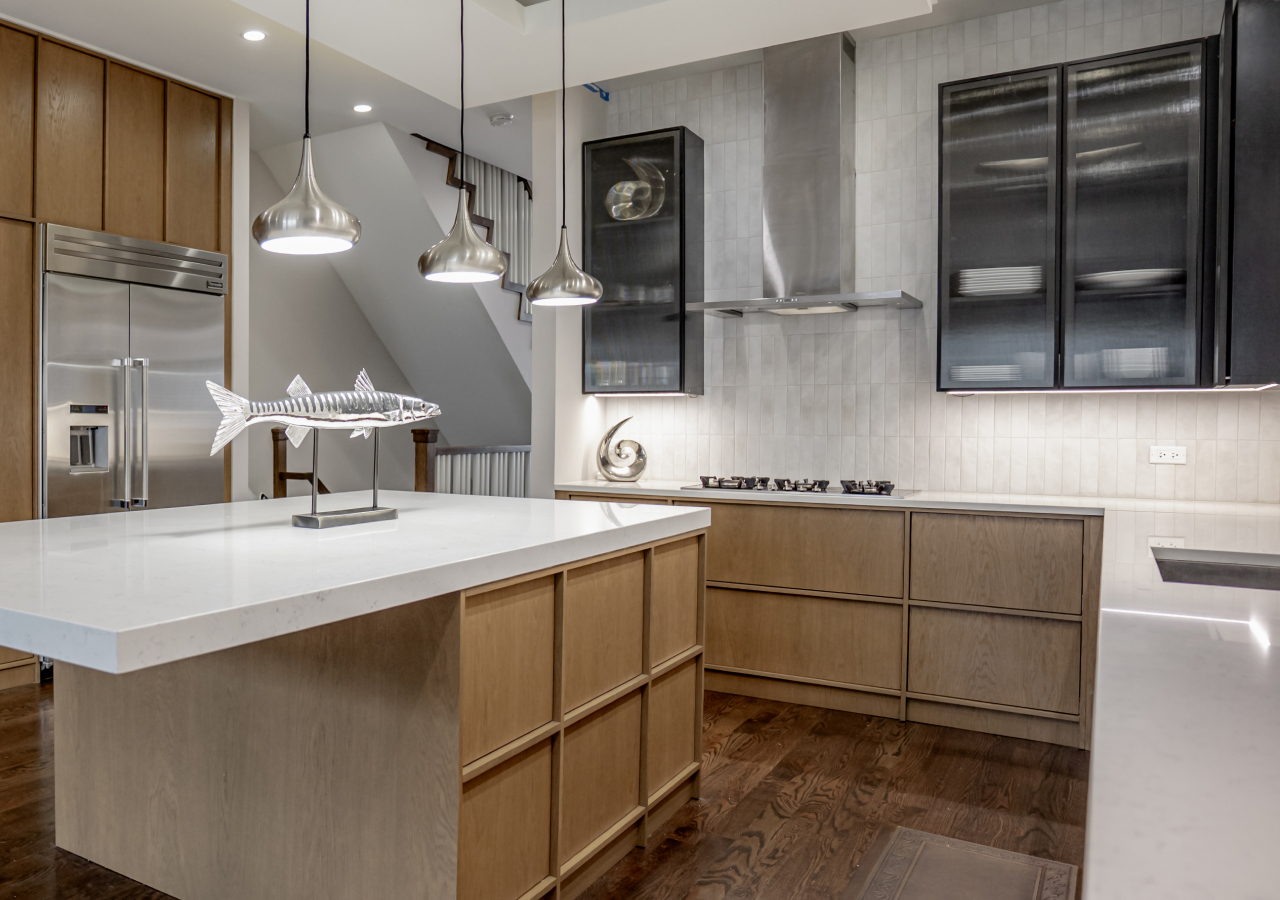
Modern European kitchens usually require more precise planning before anything is made.
This is especially true when the design includes integrated appliances, tall storage walls, panel-ready fronts, handleless openings, or tight cabinet reveals. Measurements need to be accurate. Appliance details need to be confirmed. Electrical and plumbing locations need to match the final cabinet plan.
This planning is not just technical. It affects the finished look. A panel-ready appliance needs the right surrounding panels. A tall cabinet wall needs to relate to the ceiling, floor, and nearby walls. A handleless opening system needs enough room to work comfortably.
The cleaner the final kitchen looks, the more important the planning behind it becomes.
Are European Kitchens Worth It?

European kitchens are worth it for homeowners who want a clean, integrated, custom-feeling kitchen with strong daily function. They are especially helpful when the kitchen is open to the living area, when storage needs to be highly organized, or when appliances should feel built into the room.
They may not be necessary for every remodel. If the project is very simple, highly budget-driven, or focused only on replacing basic cabinets, a full European-style planning process may be more than the kitchen needs.
The value is strongest when the homeowner cares about precision, storage, materials, and a quieter visual result.
Conclusion
A modern European kitchen is quite a unique way of planning the room. Frameless cabinetry, integrated appliances, full-height storage, drawer-first lowers, hidden organization, minimal hardware, durable materials, and precise planning all work together. The result is a kitchen that feels calmer, cleaner, and easier to use.
For homeowners who want a kitchen that feels custom, efficient, and visually quiet, a modern European kitchen can be a strong direction. The key is to plan it as one connected system, not as separate cabinets, appliances, and finishes.
At Corner, we design kitchens around that full system: layout, storage, cabinet fronts, materials, appliances, hardware, and installation planning. That is what helps a modern European kitchen feel simple in the best way.


