

Small kitchens feel challenging for two reasons: circulation tightens quickly, and visual clutter builds up faster than expected. Limited depth and poorly planned storage push everyday items onto countertops, shrinking the room visually.
A compact kitchen performs well when two principles guide the layout: protect the walkway and design storage from the inside out.
This guide focuses on kitchens under roughly 120–150 sq ft, narrow galleys, and one-wall layouts. You’ll find 10 focused upgrades, a quick comparison table, and a short planning checklist that helps prevent common layout mistakes.
For a deeper dive into compact European-style layouts and drawer-first planning, see our guide to Small European Kitchens.
Small Kitchen Moves That Matter Most
1. Open Shelves for Small Kitchen Storage

Open shelving reduces visual heaviness in tight kitchens, especially when full upper cabinets would crowd the room. A short run above a counter can create breathing space while keeping daily-use items accessible.
Keep shelving limited. Two to four linear feet is often enough in compact layouts. Beyond that, visual clutter builds quickly and defeats the purpose.
The most common mistake is treating open shelves as primary storage. In small kitchens, closed storage should carry most of the load.
2. Custom Cabinetry for Perfect Fit in Small Kitchens

In compact spaces, precision matters more than decoration. Custom cabinetry solves awkward inches between walls, ceilings, and appliances that standard modules leave behind.
Older homes with uneven walls benefit most from tailored solutions. Even reclaiming 1–2 inches along a wall can convert into a pull-out or vertical storage strip.
Avoid adding customization that doesn’t improve workflow. Every modification should increase usable storage or improve circulation.
3. Slim Profile Custom Cabinets for Small Kitchen Layouts
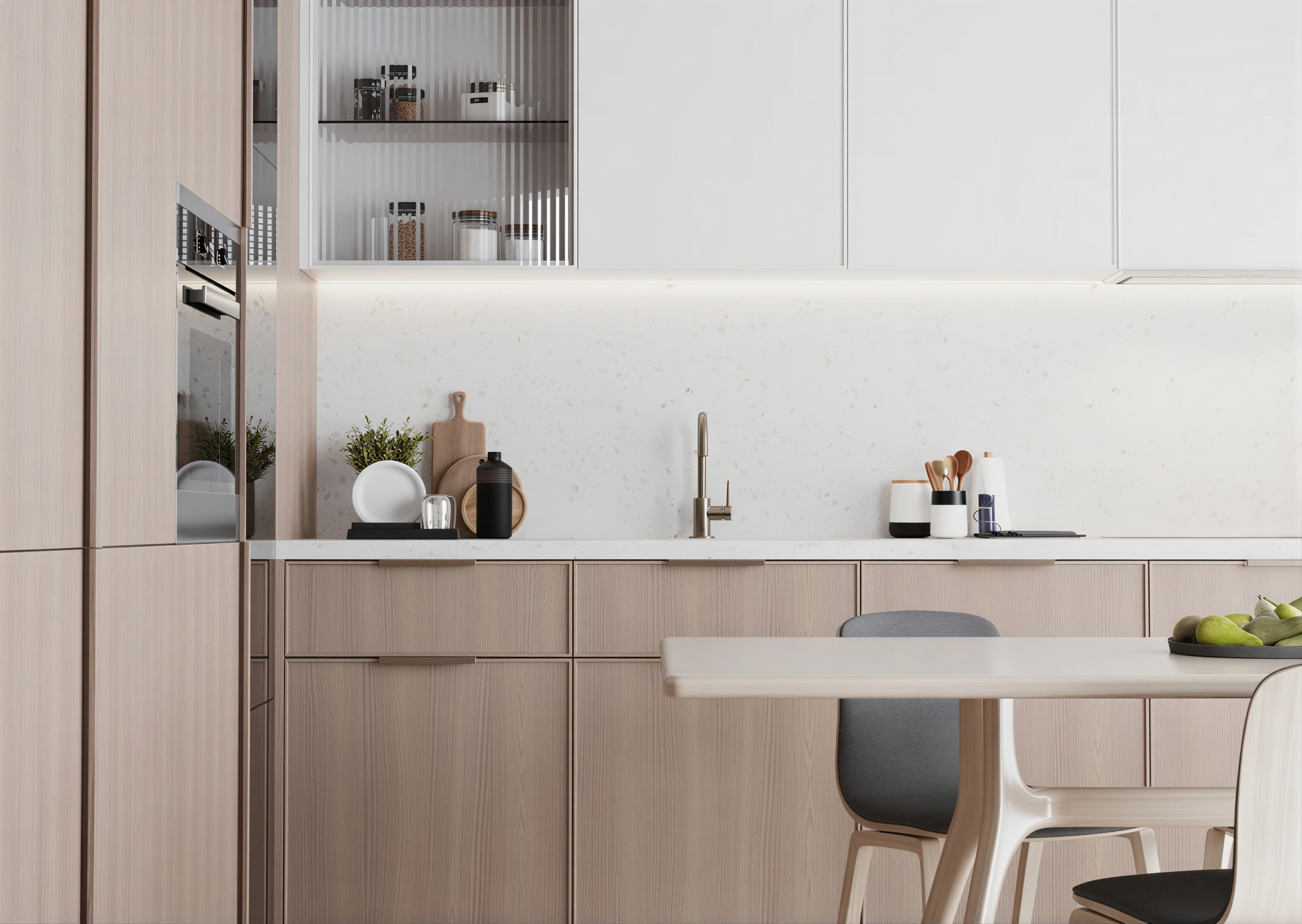
Cabinet depth directly affects circulation. In narrow galleys, reducing depth from 24 inches to 21 or even 18 inches can protect the walkway without eliminating functionality.
Shallow pantry pull-outs (12–15 inches deep) perform especially well in tight layouts. They provide visibility without demanding full cabinet depth.
Mixing shallow and full-depth cabinets without a clear elevation plan creates uneven sightlines. Depth decisions should be intentional across the entire wall.
4. Floor-to-Ceiling Custom Cabinets in Small Kitchens

Vertical expansion increases storage without consuming floor area. Taking cabinets to the ceiling reduces dust gaps and strengthens visual continuity.
Ceilings above 8 feet benefit most from full-height cabinetry. Uppermost shelves can hold seasonal or rarely used items.
Lighting becomes critical when cabinets extend upward. Under-cabinet lighting prevents tall walls from feeling heavy.
5. Custom Cabinets with Hidden Features for Small Kitchen Organization

Hidden storage increases functional density while keeping surfaces calm. Interior organization determines how efficient the kitchen feels daily.
High-impact features include inner drawers behind a single front, pull-out waste bins, tray dividers, and appliance garages. These systems reduce stacking and speed up reset.
Avoid adding mechanisms without purpose. Each feature should solve a daily friction point.
6. Utilize Corner Cabinet Units in Small Kitchen Spaces

Corners are frequently underutilized in L-shaped layouts. Mechanical corner systems convert inaccessible volume into usable storage.
Swing-out systems, rotating shelves, or blind-corner pull-outs each serve different cabinet widths. Selection depends on door swing and available clearance.
A fixed shelf in a deep corner wastes significant space. Corner optimization often produces one of the largest functional gains in compact kitchens.
7. Under-Sink Drawers for Small Kitchen Efficiency
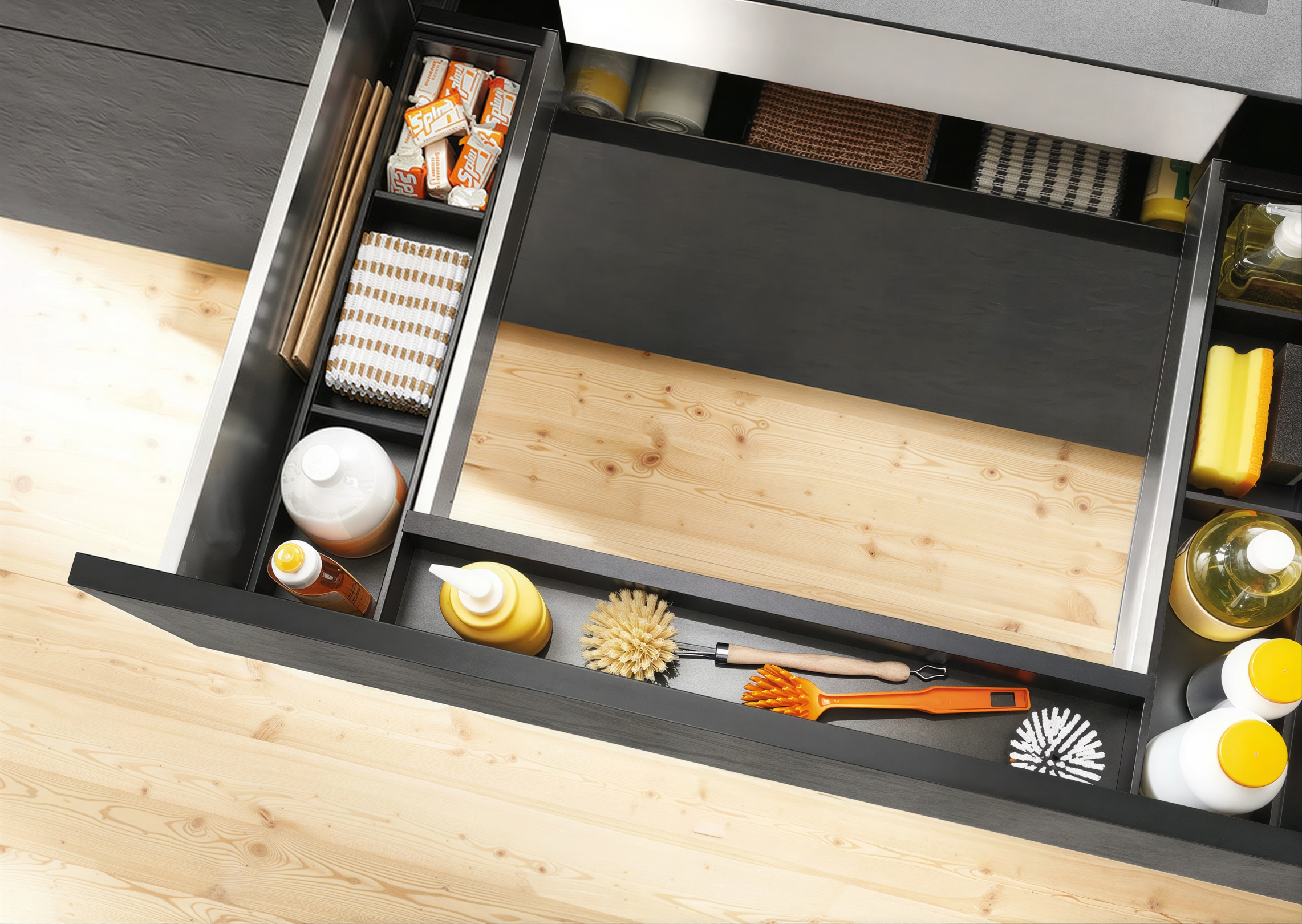
Drawer-based storage increases visibility and reduces stacking. In small kitchens, that efficiency prevents countertop overflow.
Under-sink drawers reclaim space typically lost to plumbing. Toe-kick drawers provide shallow storage for linens or trays.
Plumbing layout must be coordinated early for under-sink systems. Retrofitting limits performance.
8. Optimize Small Kitchen Island with Custom Cabinets

An island succeeds only when circulation remains protected. Clearance defines viability more than aesthetics.
Minimum workable aisle width is 36 inches. Daily comfort improves at 40–42 inches, especially with seating.
If clearances fall below these numbers, a peninsula or compact worktable performs better. Oversizing the island is one of the most common small kitchen mistakes.
9. Slide-Out Pantry for Storage Efficiency in Small Kitchens

Vertical pull-outs maximize storage within narrow footprints. Installed beside refrigerators or in filler zones, they provide full visibility without expanding cabinet depth.
Weight capacity and door clearance should be verified before finalizing placement. Poor positioning can block adjacent drawers.
Tall pull-outs are among the most space-efficient upgrades in compact layouts.
10. Functional Backsplash Accessories for Small Kitchen Utility

Backsplashes can support light storage through rails, magnetic strips, or compact shelves. Used sparingly, they reduce drawer crowding.
Limit visible tools to daily-use items. Overloading the wall increases visual noise and makes the kitchen feel busier.
Wall storage should reduce friction, not add distraction.
Compact kitchens succeed when movement feels natural and surfaces remain clear.
Conclusion
Small kitchens reward precision and restraint. Protect circulation first, then layer storage vertically and internally. Drawer-first bases, depth control, and ceiling-height cabinetry consistently outperform decorative upgrades.
Efficiency creates calm. When storage supports daily habits, even compact kitchens feel organized and intentional.
At Corner, we design small kitchens from the inside out, aligning storage logic, circulation, and long-term usability into one cohesive system.


