

European kitchens are known for clean cabinet lines, integrated appliances, efficient storage, and a limited material palette. These features stay relevant because they improve the layout and daily use rather than relying on decoration alone.
Some choices are easier to live with long term than others. Drawers, concealed storage, wood fronts, and integrated appliances usually adapt well as tastes change. Open shelves, strong colors, oversized islands, and visible technology need more careful planning.
European Kitchen Elements Worth Keeping
The most reliable European kitchen features improve access, storage, appliance placement, or material balance. They can also be updated later without rebuilding the entire room.
Clean-Lined Cabinetry
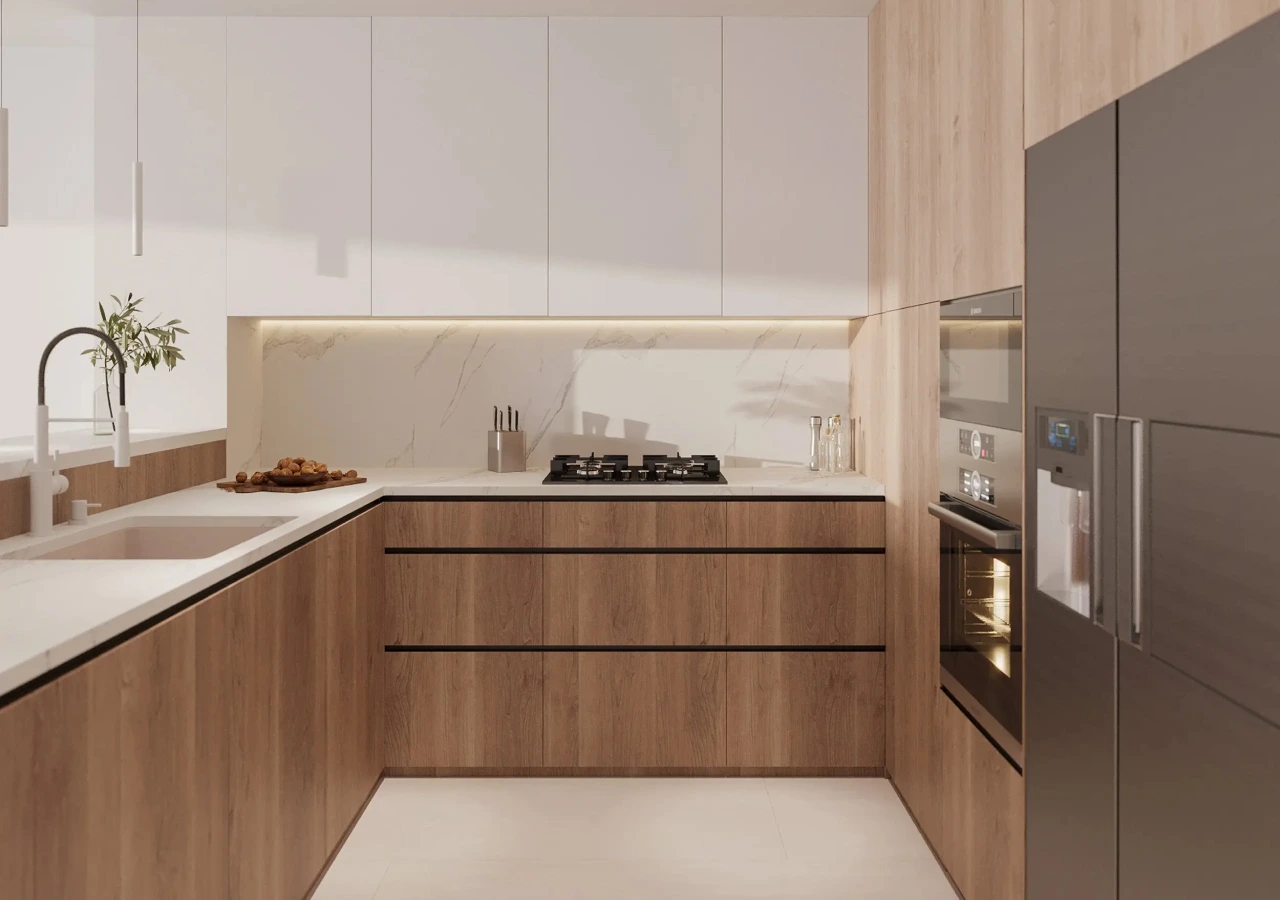
Clean-lined cabinetry usually uses slab fronts, restrained hardware, narrow gaps, and often frameless construction. Because the look depends on proportion and finish quality rather than decorative mouldings, it can work with many countertops, backsplashes, and flooring materials.
Handleless fronts are one option, but not the only one. Slim pulls, integrated handles, J-pulls, Gola profiles, and push-to-open systems can all suit a European kitchen. The opening system should be comfortable to use and appropriate for the size and weight of the front.
Integrated Appliances
.webp)
Integrated appliances support the same approach. A panel-ready refrigerator, concealed hood, built-in oven column, or integrated dishwasher reduces visual breaks and helps the kitchen connect to nearby living and dining areas.
Appliance integration still requires technical planning. Ventilation, clearances, electrical connections, service access, and replacement dimensions should be resolved before cabinetry enters production.
Drawer-First and Hidden Storage

Drawer-first storage makes lower cabinets easier to use because the contents move toward you instead of remaining at the back of a shelf. Deep drawers can hold cookware, dishes, food containers, and pantry items, while shallow drawers keep utensils and preparation tools visible.
Hidden storage extends the same principle. Appliance garages, pantry pull-outs, waste systems, inner drawers, tray dividers, and corner mechanisms keep the worktop clear without making everyday items difficult to reach.
These systems are most useful when they reflect real routines. A waste pull-out should sit near the sink or preparation zone. An appliance garage should fit the actual coffee machine, toaster, or mixer. Storage should solve a clear problem rather than add mechanisms for their own sake.
Warm Wood Fronts

Wood keeps a European kitchen from feeling too flat or clinical. Oak, walnut, ash, and stained veneers add grain and variation to slab fronts, islands, tall storage walls, base cabinets, and appliance panels.
Wood veneer works particularly well on large flat fronts because it combines a real wood surface with a stable panel. Grain direction and continuity should be planned across neighboring doors and panels.
Limited Material Palette
.webp)
The surrounding palette matters just as much. A European kitchen often works best with one main wood tone, one painted or laminated cabinet finish, one worktop material, and one restrained backsplash.
This does not mean every surface must match. A contrasting island or tall cabinet wall can give the layout more depth. Problems begin when several woods, stones, metals, and patterned finishes compete within the same room.
European Kitchen Elements to Use Carefully
These features can add personality and function, but they depend more heavily on scale, placement, and maintenance.
Open Shelves

Open shelves can lighten a cabinet run and provide space for ceramics, glasses, cookbooks, or coffee items. They are most successful in one selected area rather than across a full wall.
The main drawback is maintenance. Shelves collect dust and cooking residue, and they are not ideal for mixed pantry goods or rarely used equipment. A single shelf above a backsplash or beside tall cabinetry is usually easier to manage than a large open display.
Rich Cabinet Colors

Rich cabinet colors also work better with restraint. Deep green, navy, burgundy, rust, and dark brown can add depth to an island, pantry wall, or lower cabinet run.
A strong color across every surface may feel heavy, particularly in a smaller kitchen with limited daylight. Muted colors are generally easier to combine with wood, stone, and metal than highly saturated shades.
Multifunctional Islands

A kitchen island can combine preparation space, storage, seating, a sink, or a cooktop. It adds value when those functions support the main workflow and leave enough room around the perimeter.
An oversized island can do the opposite. It may block appliance doors, narrow walkways, or create unnecessary distance between the sink, cooktop, refrigerator, and pantry. In narrower rooms, a peninsula or galley layout may provide a better result.
Visible Technology
.webp)
Kitchen technology needs the same practical test. Integrated outlets, under-cabinet lighting, charging drawers, and well-positioned controls can remove repeated inconvenience. Screens, exposed controls, and highly specialized devices may become obsolete faster than the surrounding cabinetry.
Technology tends to age better when it remains in the background and performs a clear task.
Japandi as an Influence, Not a Theme

Japandi combines Japanese restraint with Scandinavian materials and function. Its influence can be seen in light wood, quiet colors, natural textures, simple cabinet forms, and limited decoration.
These principles fit naturally within many European kitchens. The weaker approach treats Japandi as a collection of accessories. Pale pottery, bamboo objects, and open shelves do not create the style on their own.
Use the influence through materials, storage, proportion, and a smaller number of carefully chosen details rather than trying to reproduce a themed look.
What Can Make a European Kitchen Feel Dated?
.webp)
A European kitchen usually feels dated when one visual idea is repeated too heavily or when appearance starts to interfere with daily use.
Too much open shelving can make the room harder to maintain. A saturated color on every cabinet may become tiring. A large island can restrict circulation instead of improving it. Several unrelated wood, stone, tile, and metal finishes can make simple cabinetry feel busy.
Handleless fronts can also become frustrating when they are difficult to open or poorly aligned. Flat white cabinets may feel harsh when paired with cool lighting and no natural texture.
The problem is rarely one feature by itself. It is usually an imbalance between storage, movement, materials, lighting, and maintenance.
Conclusion
European kitchens age well when storage, movement, and appliance placement guide the design. Clean fronts, accessible drawers, integrated appliances, concealed storage, wood finishes, and a limited palette can adapt as colors and styling change.
Open shelves, bold colors, large islands, smart features, and Japandi details can still work when their scale and purpose are clear. Corner can help plan these elements as one system, from cabinet finishes and internal storage to appliance integration and installation details.


