
%2520(1).webp)
Minimalist kitchen cabinets are a system that protects your countertops from becoming permanent storage. When cabinet fronts appear as a single, clean plane, handles remain visually unobtrusive, and storage is designed around real habits, the entire kitchen feels calmer and easier to reset. Minimalism is often considered an emptiness, but it's not. It’s an intentionally edited kitchen with a clearer layout and smart storage that keeps everyday items accessible while keeping them mostly out of sight.
In other words, minimalism isn’t something you "decorate" your way into. While it’s possible to create a bright, airy minimalist kitchen, it starts with the cabinet design itself: fewer visual breaks, fewer awkward dead zones, and fewer opportunities for clutter to accumulate on the counter in the first place.
Why Custom Cabinets Make Minimalism Easier
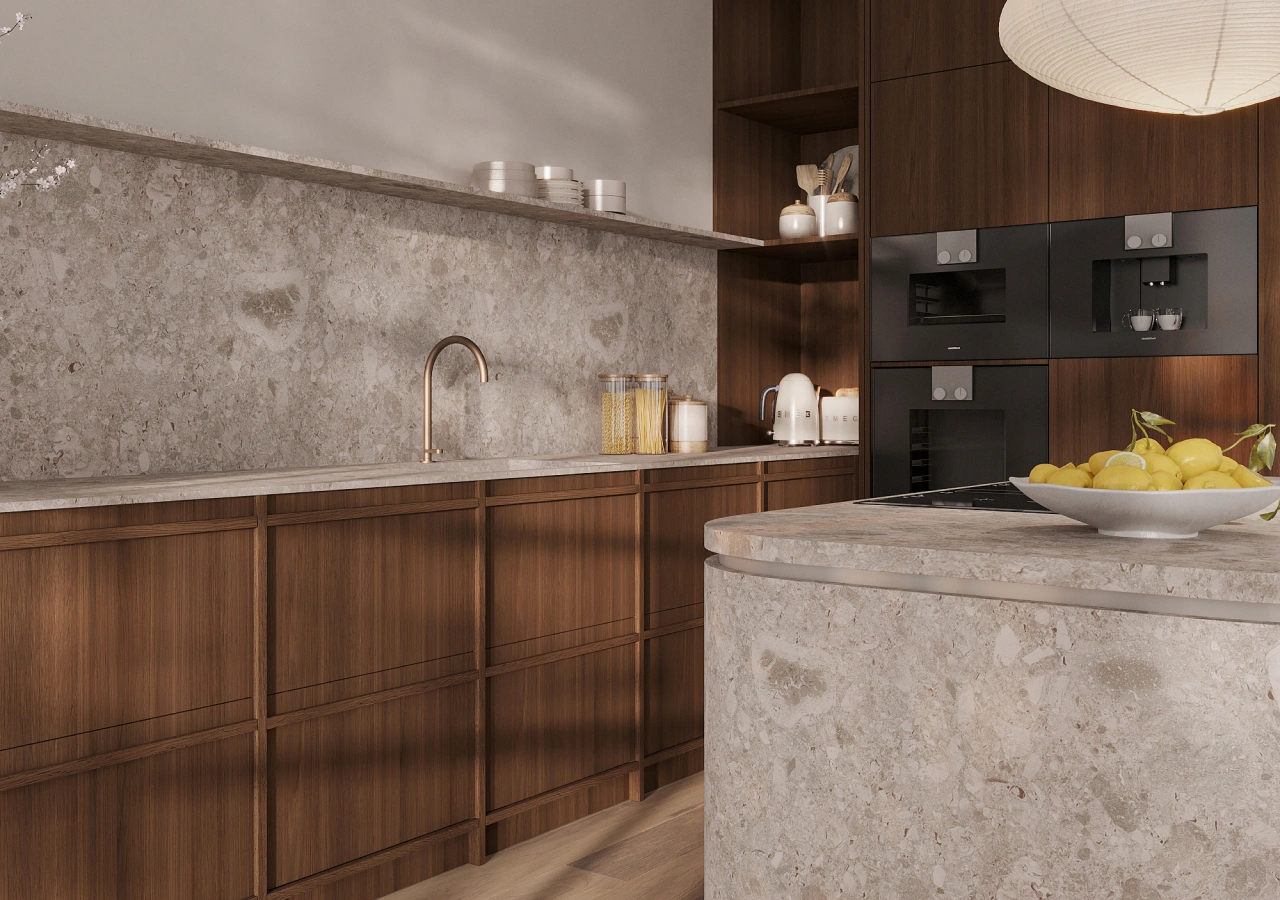
Minimalist cabinetry is defined by fewer visual breaks and better storage capture. A kitchen reads calm when the exterior stays consistent and the interior does the heavy lifting: drawers that prevent stacking, integrated waste that intercepts mess, and closed zones for daily appliances.
Custom or semi-custom cabinet planning helps because it lets you align widths, keep reveals consistent, and design around real routines (coffee, prep, cooking, dishes) rather than forcing habits into stock cabinet gaps.
The practical payoff is simple: when storage matches habits, the kitchen stays tidy with less effort. Minimalist cabinets are not only about a look. They’re a workflow tool.
Minimalist Cabinet Front Styles
Minimalist cabinet fronts work when they maintain a controlled surface language across the room. The goal isn’t a blank kitchen; it’s consistent geometry, so your eye rests and materials look intentional up close.
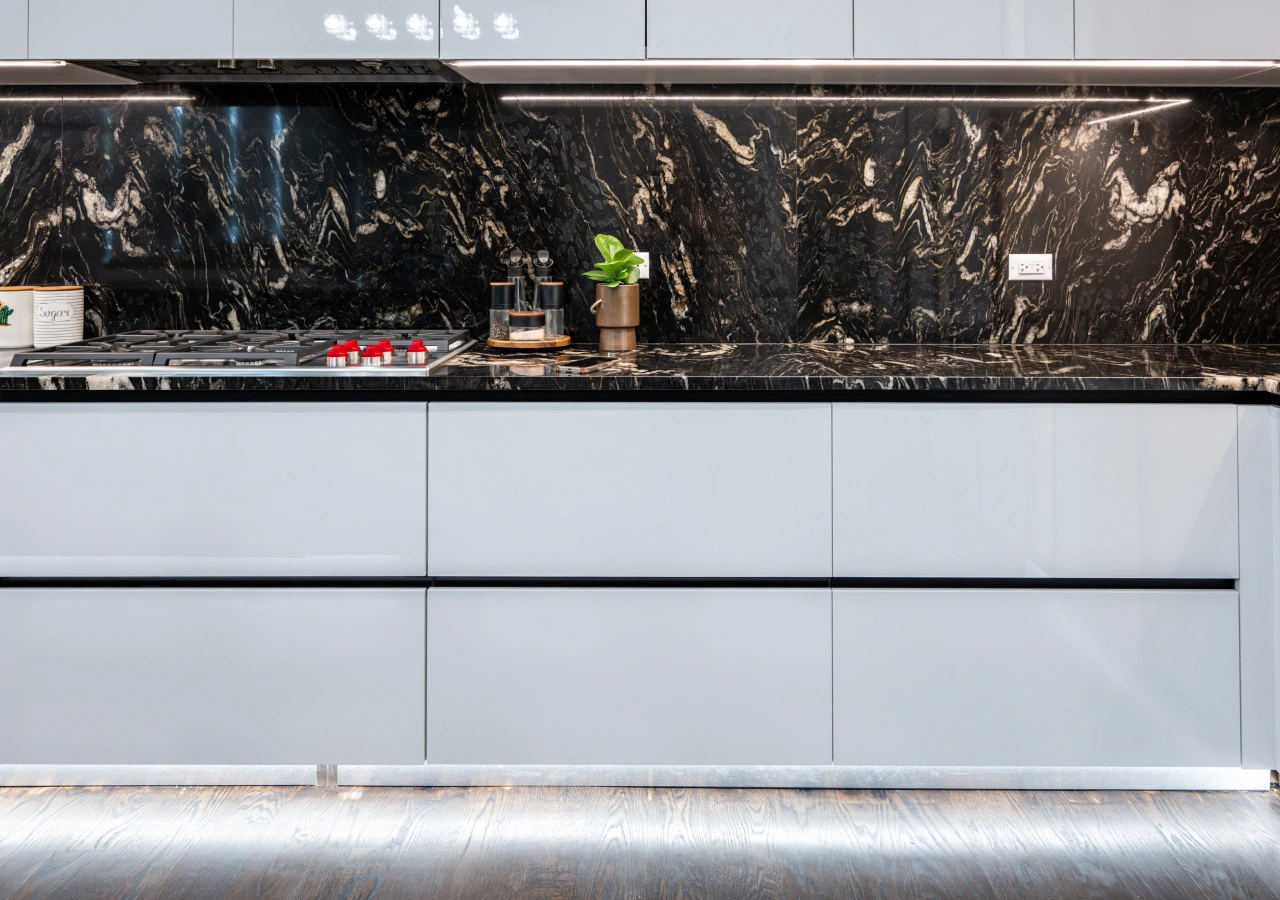
Slab fronts are the cleanest route to a minimalist read. They’re especially effective when appliance panels, tall units, and base runs align into long, uninterrupted lines. To make slab look “expensive” instead of plain, prioritize clean reveals, consistent spacing, and a few intentional breaks (like one tall bank) rather than lots of small interruptions.
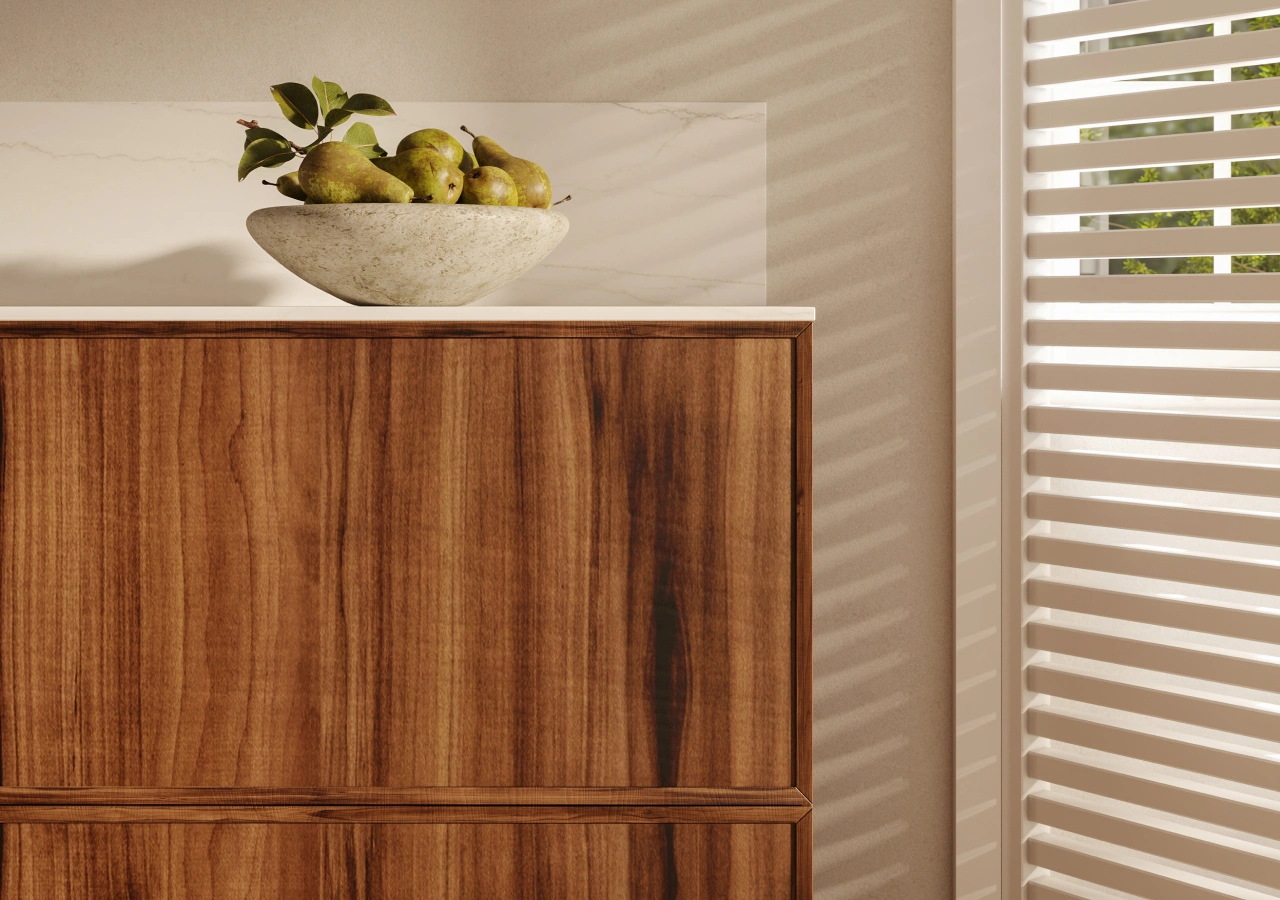
Slim shaker fronts are a strong compromise when you want calm without sterility. The slight frame adds depth and shadow so the kitchen feels softer in real light. The key is restraint: keep the frame slim and repeat it everywhere so it reads as a single system, not a mix of styles.
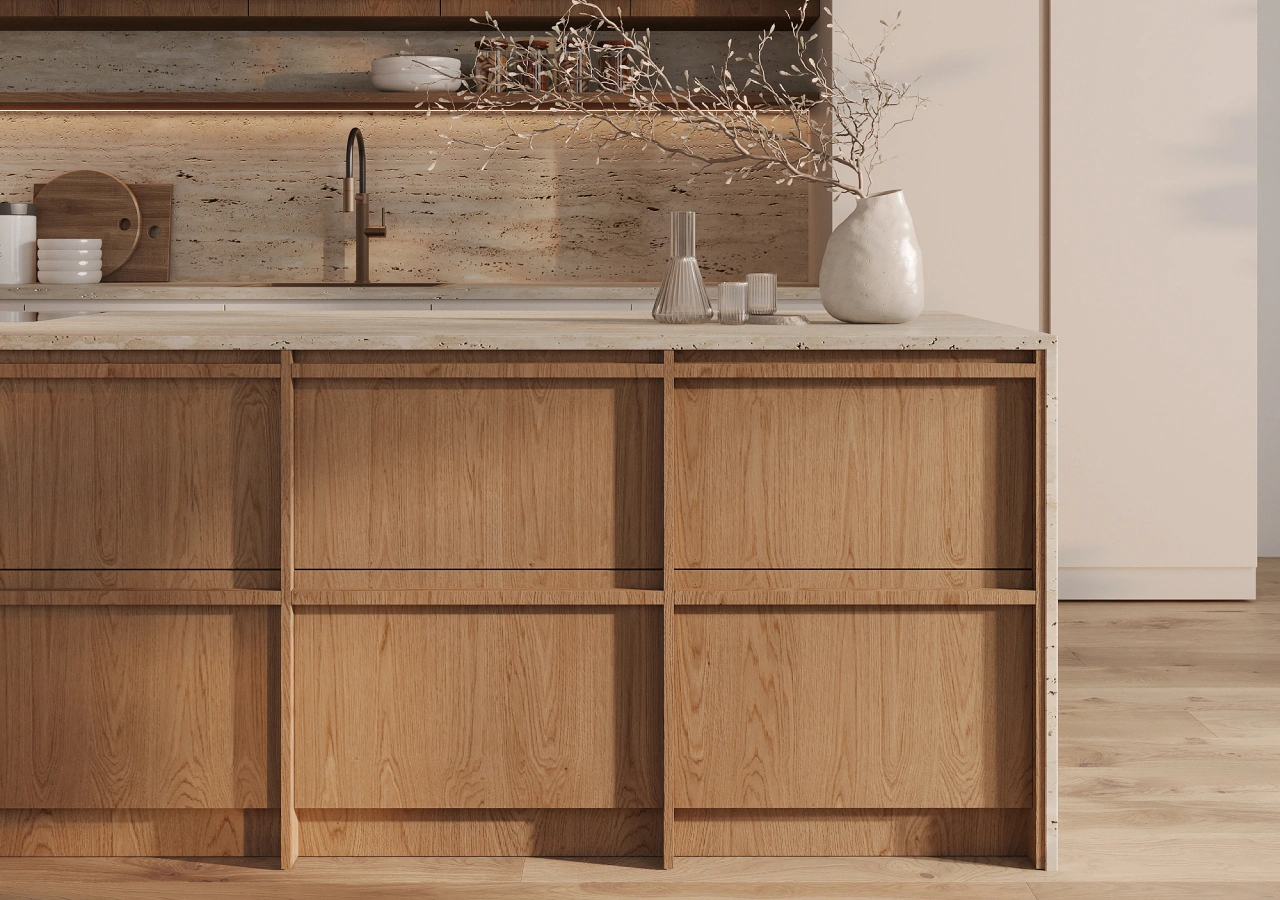
Japandi fronts sit in the sweet spot between Japanese restraint and Scandinavian warmth. The grain becomes your “pattern,” so everything else should get quieter: fewer competing textures, simpler hardware choices, and controlled countertop movement.
If you want one controlled texture moment, use glass intentionally. Reeded glass in a limited upper run can lighten the wall visually without turning storage into open-shelf clutter.
Slab vs Slim Shaker vs Japandi Fronts
| Front style | What it is | Best for | Watch-outs |
|---|---|---|---|
| Slab (flat) | Flat, frame-free plane | Most architectural, best for long runs + open-plan | Shows alignment errors; fingerprints depend on finish |
| Slim shaker | Subtle frame + depth | Calm but warmer/less “clinical” | Too-wide frames start reading traditional |
| Japandi wood-led | Grain-forward minimal | Warm minimalism, natural texture | Grain becomes the “pattern” — keep other elements quieter |
| Reeded glass (limited) | Textured glass in select uppers | “Air” without open-shelf clutter | Too much becomes visual noise fast |
Minimalist Kitchen Handles
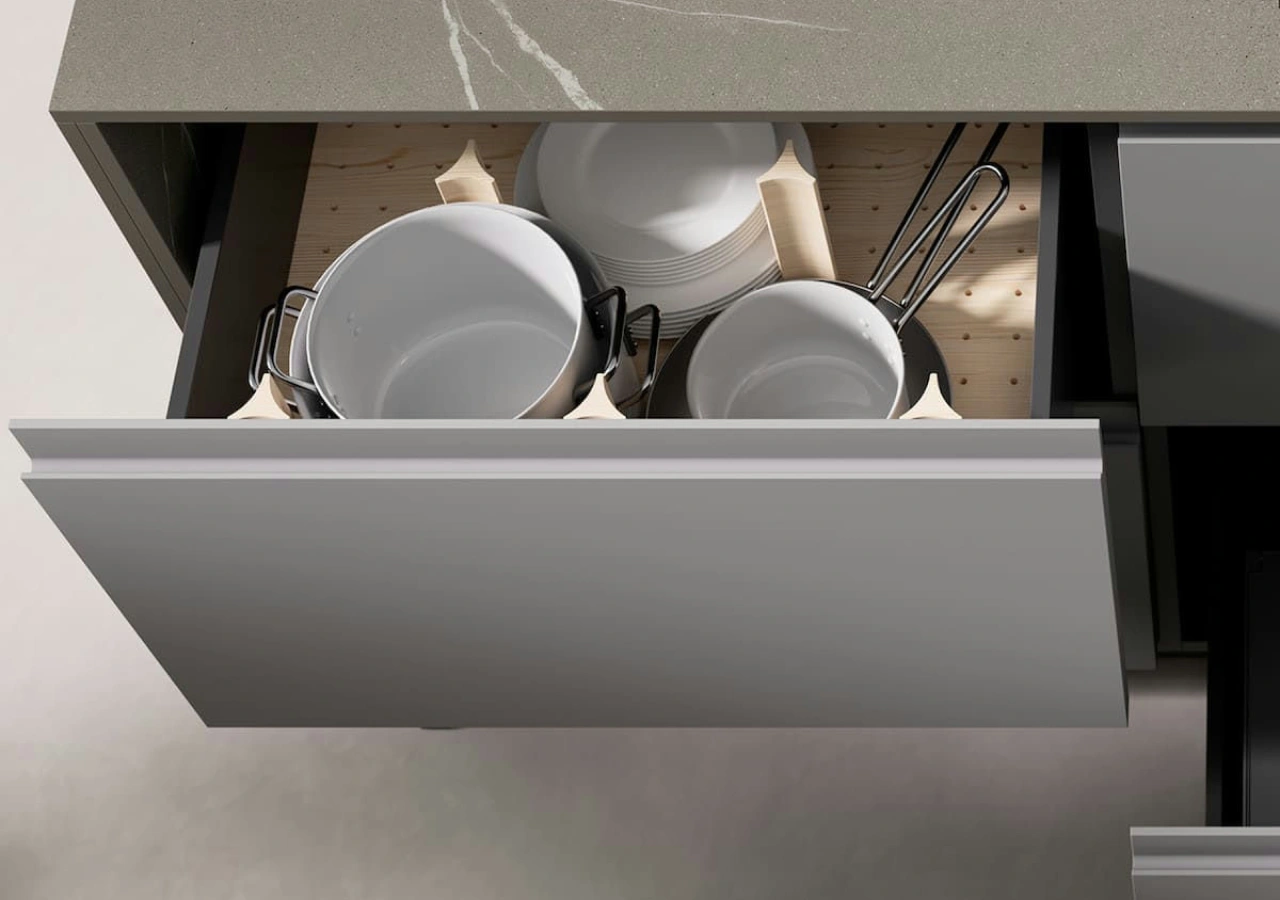
Minimalist hardware should do two things at once: work effortlessly every day and avoid creating noise across the cabinet plane. The fastest way to break a minimalist kitchen is inconsistent pulls (different sizes, finishes, or placements) that chop up the clean read.
Recessed handles are a core strategy because they eliminate visual interruptions while still functioning like a normal grip. Recessed handles are grooves or channels built directly into the cabinet front, designed to preserve surface continuity. They can also be safer in smaller kitchens because you reduce the chance of snagging or bumping into protruding pulls.
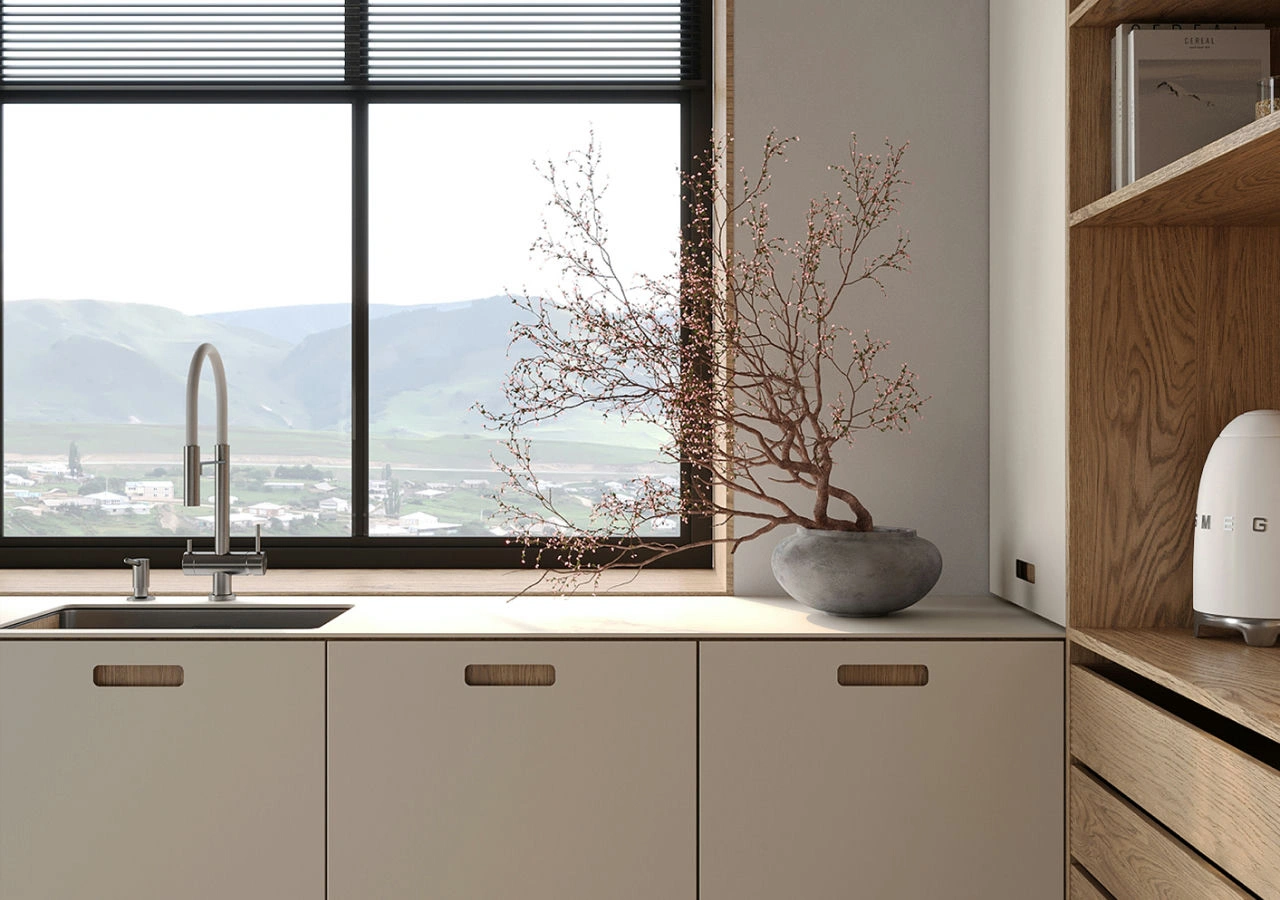
Recessed options (J-pull and cutouts) keep faces visually clean because nothing protrudes. They’re also friendlier in tight layouts where handles can snag clothing or bump hips.
- J-pull is usually the most practical “handleless” feel for daily use because it’s quick and reliable without adding mechanisms. The main watch-out is maintenance: recesses can show fingerprints and dust, and shallow profiles can feel less comfortable on very heavy drawers.
- Cutout handles remove hardware entirely and can look especially good on wood fronts. They’re durable, but crumbs and debris can gather in the cutout, and ergonomics depend heavily on placement and depth.
If you want one controlled texture moment, use glass intentionally. Reeded glass in a limited upper run can lighten the wall visually without turning storage into open-shelf clutter.
J-Pull vs Cutout Handles
| Option | Visual effect | Daily usability | Cleaning | Best use case |
|---|---|---|---|---|
| J-pull | Integrated without extra mechanisms | Fast access; depends on grip depth | Recess collects dust/fingerprints | High-use drawers; handleless look |
| Cutout | Hardware-free, sculptural | Ergonomics depend on placement | Crumbs can collect | Wood-led kitchens; craft-forward minimal |
| Minimal pulls | Adds a deliberate “line” | Very easy | Easy | When you don’t want full handleless |
| Push-to-open | Cleanest face | Extra steps; less ideal for heavy drawers | Easy | Low-use doors; feature moments |
Minimalist Cabinet Storage That Protects Countertops
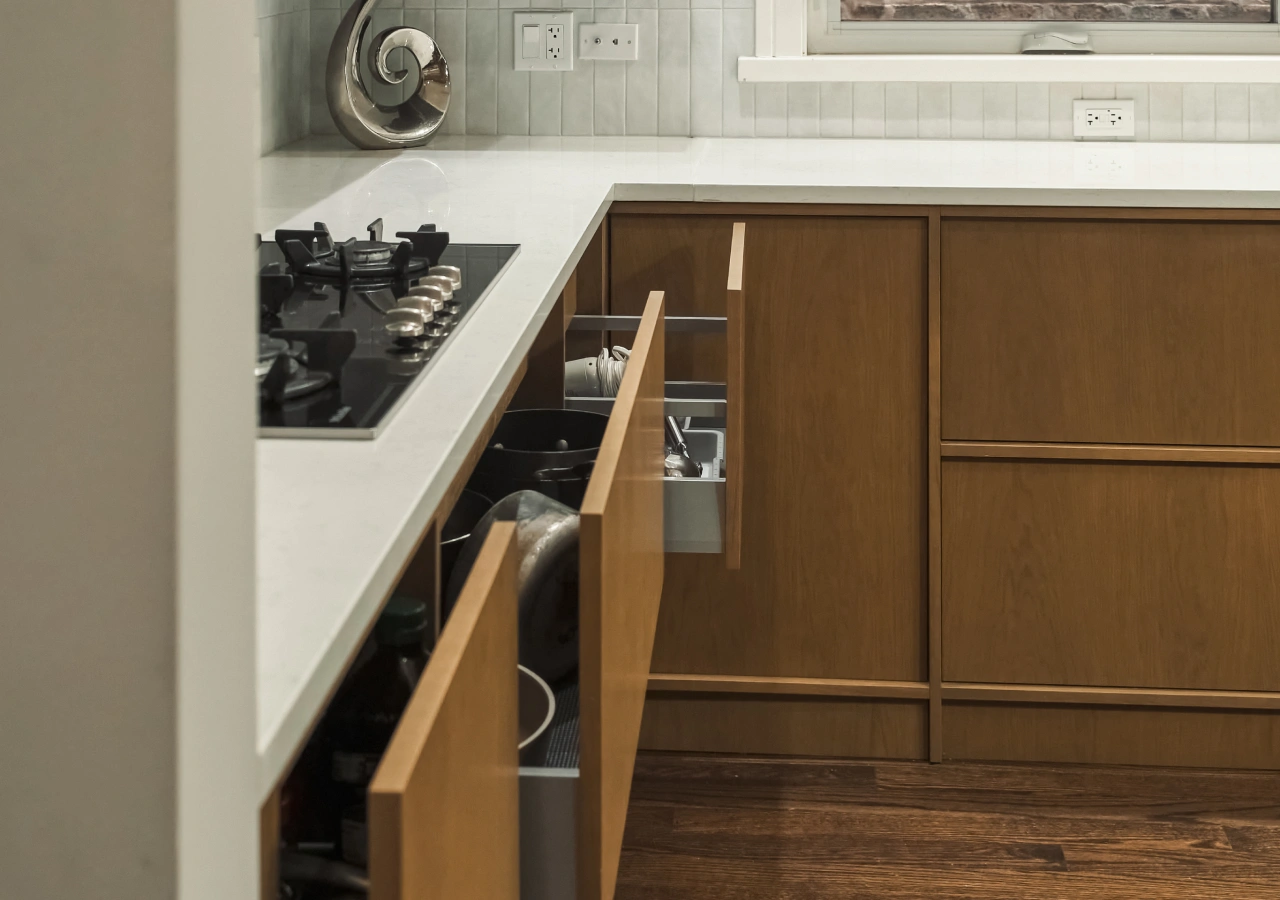
A minimalist kitchen only looks calm when storage is engineered to “catch” the mess before it hits the counter. The minimalist framework prioritizes decision-making in a clear order: layout first, storage second, and materials and finishes last. Storage plays a crucial role as the anti-clutter system, ensuring everything has its place.
Start by designing storage around zones (prep, cook, clean, pantry). When zones are logical, the room stays calmer because items land where they belong and paths stay clear.
| Zone | Interceptor | What it prevents | Placement rule |
|---|---|---|---|
| Prep | Deep drawer for tools + boards | Tool sprawl on counters | Within 1–2 steps of main prep surface |
| Clean | Pull-out waste + recycling | Trash living on the countertop | Beside sink or main prep run |
| Sink base | Under-sink drawers/organizers | “Dumping ground” cabinet | Plan for detergents + bins from day one |
| Pantry/coffee | Closed appliance garage / coffee station | Appliance clutter | Near outlets; doors that stay open while in use |
| Corners | Corner pull-outs / blind-corner solution | Dead-space “black hole” | Only if the corner is truly needed storage |
From there, use storage types that reduce rummaging. Deep drawers consistently outperform deep shelves in real kitchens because you get visibility and access without digging. Corner’s small-kitchen guidance describes deep base drawers as “high usable volume + full visibility,” and they’re a minimalist win because you get fewer front breaks than multiple small doors. More broadly, drawers often create more usable space than shelves because shelves waste height and force stacking, while pull-out drawers let you reach items without changing position.
| Storage type | Best for | Why it supports minimalism | Watch-out |
|---|---|---|---|
| Deep drawers | pots, plates, pantry items | full visibility + fast reset; fewer cabinet breaks | needs dividers to stay organized |
| Shelves behind doors | rarely used items | simple and lower cost | back becomes a “black hole” without pull-outs |
If you want open shelving, think of it as a controlled accent rather than a storage solution. The key to a compact kitchen is simplicity: open shelving can work, but it requires discipline. Keep shelves shallow, curate the items on display, and limit the number of shelves to maintain an airy feel without overwhelming the space with visual clutter.
Finishes and Materials for Minimalist Modern Cabinets
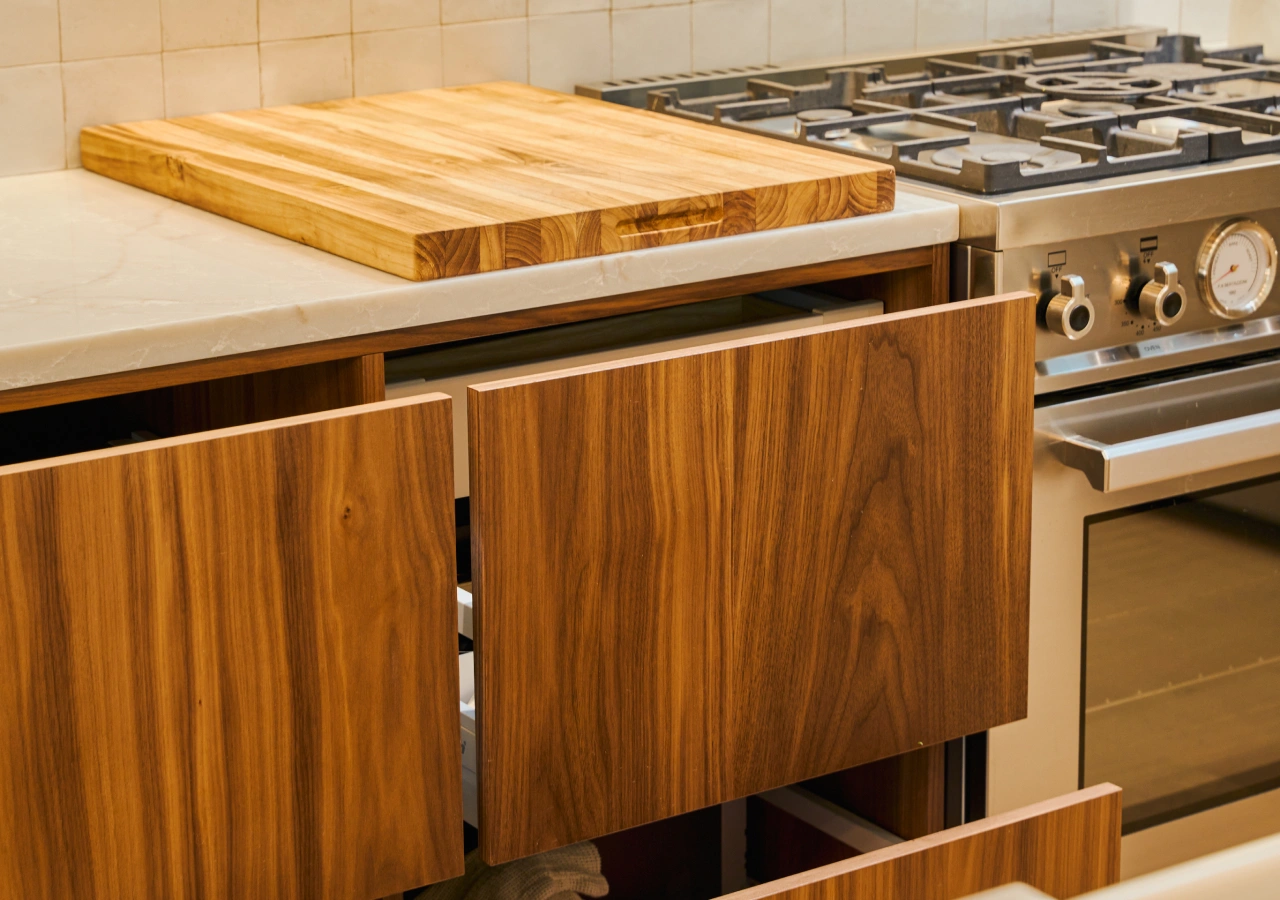
Minimalist modern kitchen cabinets may appear simple, but that simplicity exposes everything. This is why minimalist design is often described as “material-forward”: when ornamentation is removed, the materials and proportions themselves define the experience. For cabinet finishes, choose surfaces that look appealing up close and stay calm under real lighting. Real wood veneers (like American walnut or light oak), matte laminates, soft-touch surfaces, and stone-like countertops with controlled movement are all excellent minimalist choices.
In terms of construction, MDF offers flexibility for both flat and relief surfaces, while wood veneer fronts bring warmth and texture while keeping the overall design refined.
Color plays a critical role in maintaining the timelessness of minimalism. Sticking to restrained, neutral palettes and natural woods ensures a versatile and calming atmosphere.
A simple rule for achieving minimalist style in real homes: commit to one main cabinet tone, one wood tone, and one countertop material, then keep the rest understated. This approach prevents “accents from multiplying” and ensures the kitchen remains true to its minimalist essence.
Layout Rules That Keep a Minimalist Kitchen Calm

Minimalist cabinet design isn’t complete without a disciplined layout. A truly minimalist kitchen requires a design that supports daily tasks, with clearly defined zones for prep, cooking, cleaning, and storage. This is especially important in small kitchens, where clutter is always visible and circulation mistakes are immediately noticeable.
In compact spaces, prioritize layouts that reduce circulation waste and increase drawer-access efficiency. The one-wall and galley plans often maximize usable storage per linear foot, while L-shapes and compact U-shapes add flexibility if you can optimize corners. If you have a galley, avoid the “tunnel effect” by keeping tall units to one end and limiting open shelving.
A few micro-details make a big difference in how “calm” the cabinets feel:
- Long, uninterrupted lines with fewer visual breaks make the kitchen read larger and more architectural.
- Integrated appliances help the room read as a single composition instead of a mix of stainless boxes and cabinet runs.
- Quiet lighting layers (ambient + under-cabinet task + one simple feature) keep materials looking soft rather than flat or clinical.
Finally, remember the “do not confuse minimalism with emptiness” rule. Corner’s minimalist dos-and-don’ts article makes this point directly: warmth comes from natural materials, subtle texture, and a few intentional pieces, not from filling every surface.
How to Plan Minimalist Cabinets (Step-by-Step)
- Map your daily workflow. List everyday tasks like coffee, prep, cooking, and dishes, and note where clutter currently builds up. This gives you a realistic brief for how your cabinets need to work.
- Choose a layout that supports zones. Define prep, cook, clean, and pantry zones before you pick door styles or colors. Get the flow and function right first, then layer in aesthetics.
- Plan storage to protect counters. Design in deep drawers, a pull-out waste zone, under-sink organization, and a closed appliance or coffee station so most items can live behind fronts instead of on worktops.
- Pick one front style and one handle strategy. Choose your cabinet front (slab, slim shaker, or similar) and a single handle or handleless approach, then apply them consistently for one calm, unified read.
- Lock a restrained palette and add lighting. Commit to one cabinet tone, one wood tone, and one counter material, then layer task and ambient lighting to keep the minimalist palette feeling warm rather than stark.
Conclusion
Minimalist kitchen cabinets work when they are designed as a complete system: calm fronts, quiet hardware, and high-efficiency storage that keeps everyday items out of sight. If you plan in the right order (layout first, storage second, then materials and finishes), you get a kitchen that feels calmer every day, not just in photos.
To see how this can work in a real space, start by exploring styles like Recess (recessed, tactile minimalism) or Rebel (soft-touch painted minimalism), then choose the handle strategy that best suits how you cook and move. If you need help translating “calm surfaces” into a layout that fits your lifestyle, you can browse Corner Renovation’s collections and book a consultation for guidance.
FAQ: Minimalist Kitchen Cabinets


