

Small minimalist kitchens can feel like the ultimate design paradox: you want less visual noise, yet you need more storage per square inch than anyone with a walk-in pantry. The good news is that minimalism actually helps small spaces: when the layout is clean, surfaces stay clear, and storage is designed to disappear into the architecture, a compact room feels calmer and bigger.
Corner’s approach to compact minimalism leans on intentional choices: streamlined cabinet lines (often handleless), unified materials, and smart internal organization that keeps everyday tools close but out of sight. The goal isn’t “less stuff” in theory; it’s less visible stuff in practice.
What Makes a Small Minimalist Kitchen Feel Effortless?
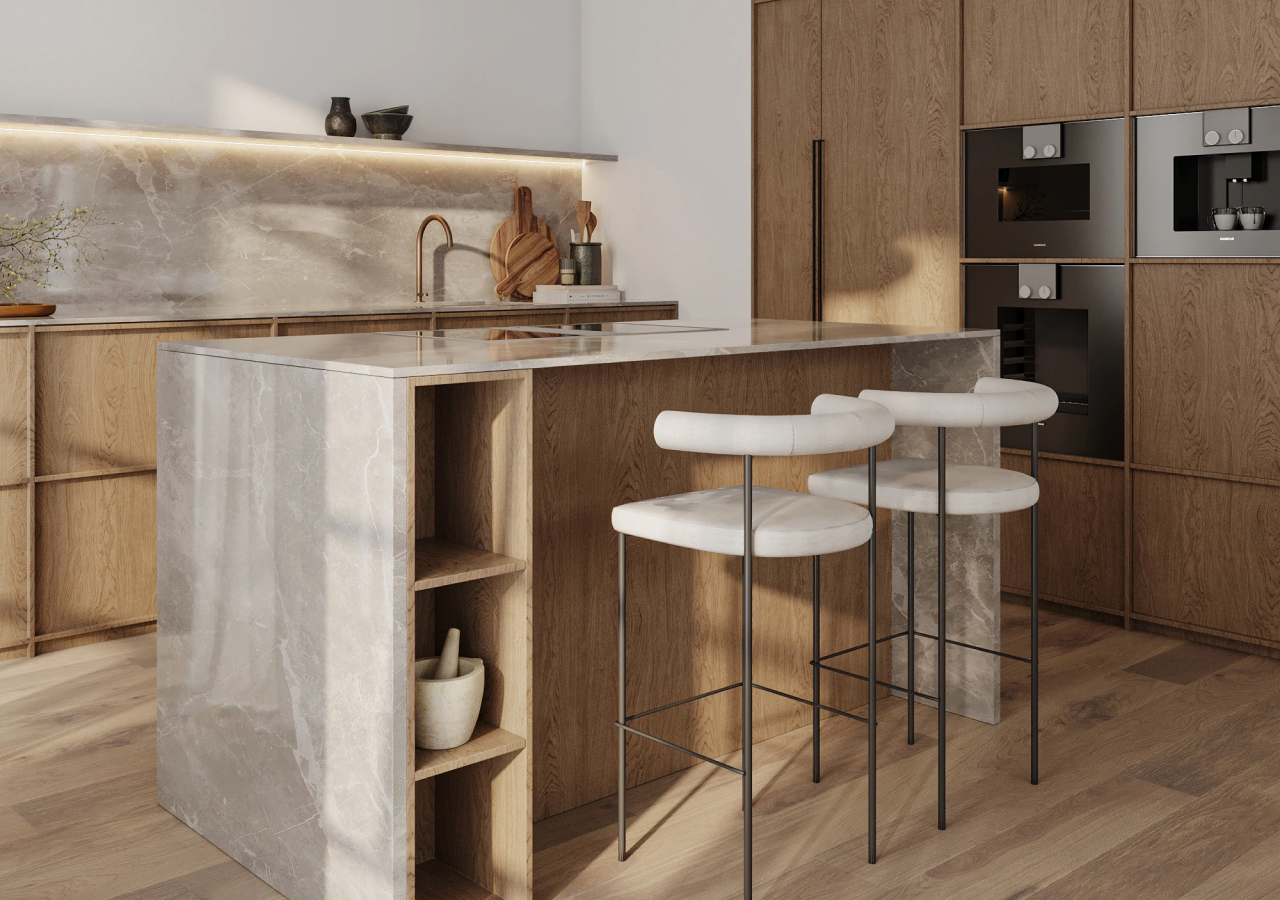
A small minimalist kitchen feels effortless when clarity and movement matter more than decor. In practice, this means fewer visual breaks, more hidden storage, and a layout that supports daily cooking without crowding counters.
Whether your influence is Japanese restraint, Scandinavian simplicity, or a warm blend of both, the principle stays the same: calm surfaces + high-efficiency interiors. Built-in baskets, under-sink systems, and well-planned shelving create function without adding visual noise.
From a purely practical standpoint, the design should be based on real tasks. A small modern minimalist kitchen is, first and foremost, a comfortable working area. Handle-free fronts or quiet fittings remove unnecessary accents and let shapes and materials define the character of the space.
Best Minimalist Kitchen Layouts for Small Spaces
Small kitchens benefit most from layouts that reduce circulation waste and increase drawer-access efficiency. One-wall and galley plans usually maximize usable storage per linear foot, while L- and compact U-shapes add flexibility when the room allows corner optimization.
| Layout | Best for | Strengths in small spaces | Watch-outs | Corner-style optimization |
|---|---|---|---|---|
| One-wall | Studios, narrow apartments | Simplest footprint, clean “architecture wall” effect | Can lack prep zone separation | Use deep base drawers, integrated appliances, unified backsplash |
| Galley | Long, narrow rooms | Highest storage density + efficient workflow | Tunnel effect if overbuilt | Keep tall units to one end, limit open shelving |
| L-shaped | Compact open plans | Opens room visually, easy dining/peninsula option | Corner can become dead space | Add corner pull-outs, split storage by zones |
| Compact U-shaped | Serious cooks in small rooms | Strongest work triangle + counter capacity | Can feel enclosed | Use one short run for tall storage, two runs for deep drawers |
| Open concept | Studios + combined living | Makes kitchen read as furniture/architecture | Clutter is always visible | Prioritize panel-ready appliances, appliance garage, quiet hood |
One-Wall Minimalist Kitchens
.webp)
A one-wall layout is often the most realistic solution for studios and compact apartments. It keeps the plan simple, allowing you to dedicate the rest of the room to living or dining. The key to making this minimalist small kitchen feel premium is continuity: matching cabinet fronts, a unified backsplash, and integrated appliances where possible. When the entire “kitchen wall” reads as a single clean plane, the space feels architectural rather than cramped.
To increase function without adding clutter, prioritize deep base drawers over multiple small doors. Deep drawers make a one-wall setup feel surprisingly spacious because you can fully access cookware and pantry items without creating a mess on the counter. Add under-cabinet lighting to brighten the work zone while keeping the fixtures visually quiet. Corner consistently recommends layered lighting that supports function without stealing attention.
Small Minimalist Galley Kitchens

A minimalist galley kitchen is one of the most efficient small-space formats. With two parallel runs, you get strong storage density and a compact, logical workflow. Corner’s functional planning guidance aligns with the idea that a well-structured relationship between sink, cooktop, and fridge makes daily movement easy, especially in narrow rooms where wasted steps are noticeable.
To prevent a galley from feeling tight, keep the visual language simple: flat or handleless fronts, limited open shelving, and a restrained palette. Even small adjustments (like placing tall storage at one end rather than both) can reduce the tunnel effect. The goal is a space-saving minimalist kitchen that feels like a clean corridor of purpose, not a storage hallway you have to squeeze through.
L-Shaped Small Minimalist Kitchens
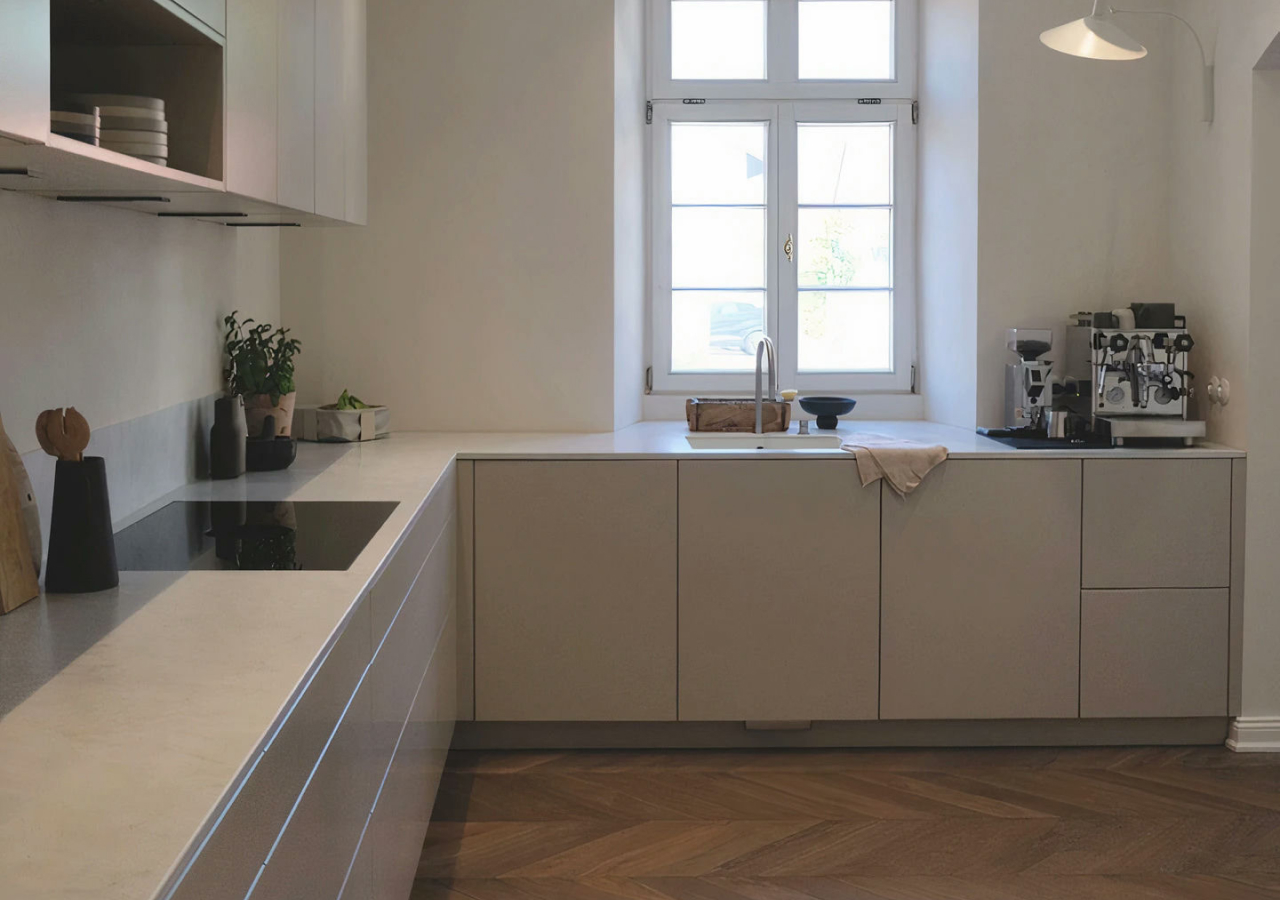
An L-shaped kitchen design is a favorite for compact homes because it opens up the room and creates a natural spot for a small table or peninsula. This layout also makes it easier to preserve breathing space and avoid crowding aisles. If you’re aiming for a small kitchen minimalist design with warmth, this is a great format for subtle contrast: light fronts paired with natural wood accents, or soft neutrals that keep the corner light and calm.
The biggest advantage here is how well L-shapes support layered storage: drawers along the main run, a tall pantry near the entry, and specialized corner solutions that protect your minimalist look by hiding bulkier items. Done right, the L-shape design gives the feeling of an open plan without the chaos of everything being on display.
Compact U-Shaped Kitchens

A compact U-shaped kitchen is a powerhouse for storage, which makes it a smart choice for serious cooks in small apartments, if the proportions are respected. This layout can deliver a highly efficient workflow when the main zones are placed logically, and the counters remain uncluttered. But because U-shapes can feel enclosed, the minimalist strategy should focus on lightness: consistent finishes, subtle hardware, and avoiding too many contrasting materials.
In a small minimalist kitchen design for a U-shape, consider using one short run for tall storage and the other two for deep drawers and prep space. This keeps the room from feeling like a cabinet box. Crisp planning plus quiet lighting can make even a tight U-shaped room feel intentional, not overbuilt.
Minimalist Open Concept Kitchens
.webp)
A minimalist open concept kitchen is less about adding features and more about editing the visual boundaries between cooking and living. In studios, the kitchen is often always on display, so clutter management becomes a design requirement. Handleless fronts, panel-ready appliances, and a consistent palette help the kitchen read like part of the architecture of the apartment rather than a separate utilitarian zone.
Ventilation also matters more than people expect. In an open layout, a quiet, properly planned hood prevents odors and grease from becoming part of your living room experience. This is one of the easiest “hidden wins” in small-space planning: it protects comfort without changing the visual style.
Storage Ideas that Preserve the Minimalist Kitchen Look
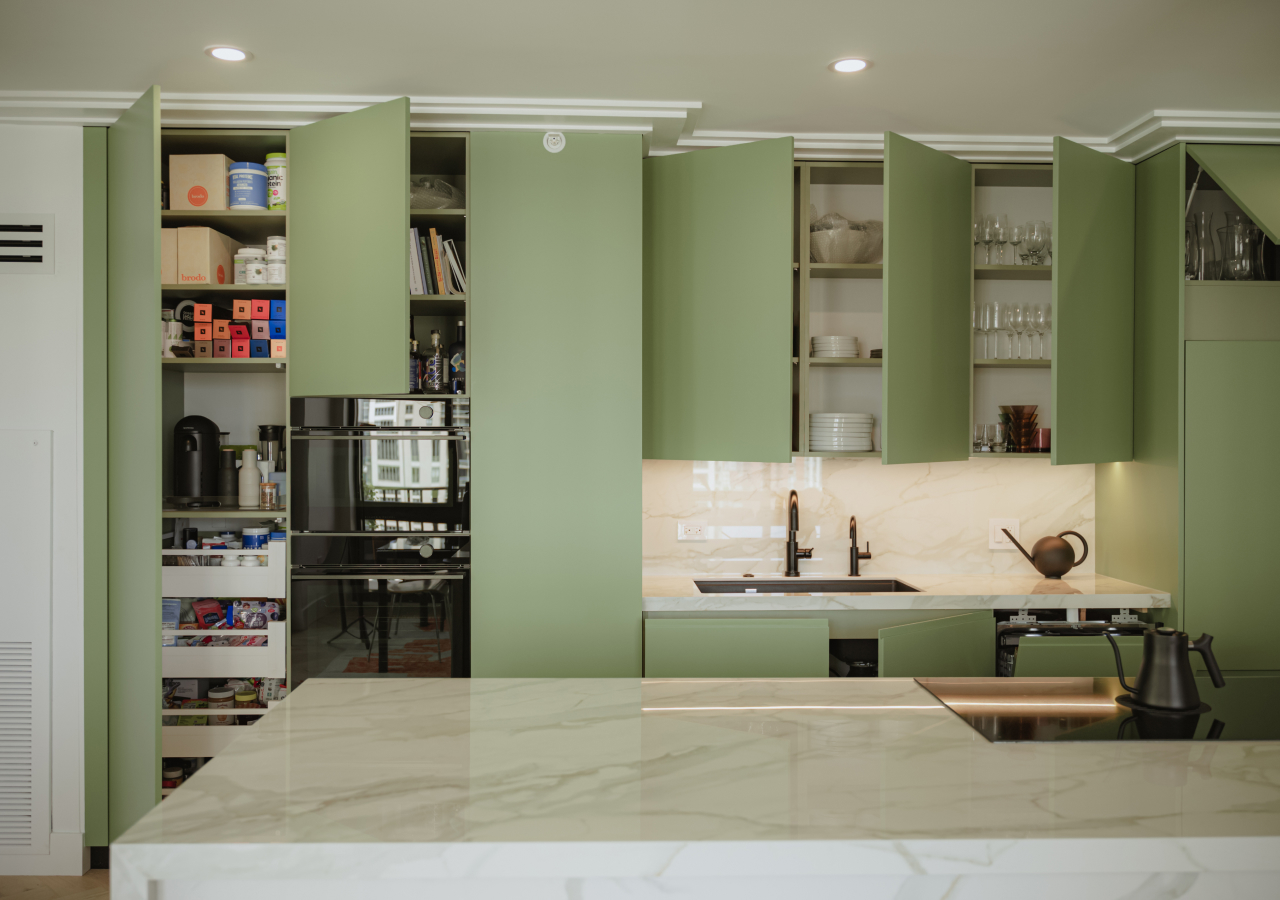
The best minimalist kitchen design for small spaces relies on invisible efficiency. That includes integrated waste solutions, pull-out organizers, and under-sink systems that turn awkward zones into daily-use storage. Corner’s organization guidance for compact kitchens emphasizes vertical thinking, modular inserts, and pull-out solutions because they increase capacity without increasing visual clutter.
| Storage element | Why it matters in small kitchens | Minimalist benefit | Best use case |
|---|---|---|---|
| Deep base drawers | Highest usable volume + full visibility | Fewer front breaks vs many doors | Cookware, pantry, daily tools |
| Pull-out waste & recycling | Removes countertop clutter | Keeps bins hidden | Beside sink/prep zone |
| Under-sink organizers | Converts awkward void into prime storage | Zero visual cost | Cleaning supplies, sponges, backups |
| Corner pull-outs | Recovers dead space efficiently | Hides bulkier items | Pots, appliances, pantry overflow |
| Appliance garage | Adds “instant calm” to counters | Conceals daily-use small appliances | Coffee, toaster, blender |
| Vertical inserts | Makes narrow cabinets functional | Reduces stacking mess | Trays, cutting boards, baking sheets |
Open shelving can work in a small minimalist kitchen, but only with discipline. Keep shelves shallow and limit displays to curated everyday ceramics or a small set of glassware. In tight rooms, one short run of open shelves can feel airy, while an entire wall often turns into visual noise.
How to Design a Small Minimalist Kitchen (Step-by-Step)
- Map daily tools and zones. List what must be accessible every day (coffee, pans, plates, cleaning supplies) and group them by prep, cook, clean, and serve.
- Choose the most efficient layout. Use one-wall and galley layouts for maximum space efficiency; choose L- or compact U-shape if you need more prep area and can optimize corners.
- Prioritize drawers over doors. Plan deep drawers for cookware and pantry items to reduce rummaging and prevent counter spillover.
- Convert “dead zones” into storage. Add under-sink systems and corner pull-outs to recover high-value capacity without adding visual noise.
- Design for a single visual read. Keep cabinet fronts, backsplash, and appliance surfaces aligned so the “kitchen wall” reads as one calm, uninterrupted plane.
- Add quiet lighting layers. Combine under-cabinet lighting with soft ambient sources to highlight materials and improve function without decorative clutter.
Common Mistakes in Small Minimalist Kitchen Designs
.webp)
Most problems in minimalist small kitchens come from overcorrecting. Homeowners sometimes strip away too much: removing storage, relying heavily on open shelving, or choosing aesthetics over ergonomics. Corner’s broader design “don’ts” emphasize avoiding crowded aisles, oversaturated material mixes, and layouts that break functional flow. Minimalism is not emptiness; it’s purposeful reduction.
Another common issue is ignoring the logic of daily movement. Even in a tiny apartment, the sink-cooktop-fridge relationship still matters. When these zones are too far apart or awkwardly placed, cooking feels inefficient and messy, and in a small room, that frustration is immediate. A clean layout is the foundation of a calm aesthetic.
Finally, lighting is often treated as an afterthought. But good minimalist lighting is less about decorative fixtures and more about quiet layers that support tasks and elevate materials. Under-cabinet lighting, subtle ambient sources, and minimal pendants (if any) help a compact kitchen feel warm and considered rather than flat.
Conclusion
A small minimalist kitchen is at its best when it feels like a smart system wrapped in calm design. The right kitchen layout should reflect how you move, cook, and store essentials in real life. Deep drawers, under-sink solutions, corner pull-outs, and concealed appliance zones let you keep the minimalist look without sacrificing day-to-day comfort. Pair that with a restrained palette and thoughtful lighting, and a compact kitchen can feel quietly luxurious rather than compromised.
If you’re exploring your next remodel, browse Corner Renovation’s minimalist and Japandi-inspired collections or book a consultation to map a layout that’s as efficient as it is serene.
FAQ: Small Minimalist Kitchens


